…and hello 2026

I intend to write something substantial for the site every month this year, but it’s nearly midnight on the 31st of January and nothing is finished for January, so here are some disparate notes and thoughts instead.

Despite the non-appearance of the big January post I’ve actually written quite a lot this January – 22, 546 words (not including these ones) in fact; that’s about half a novel, length-wise, but it was split between ten reviews, five articles of various types for my substack and, more unusually for me, a little bit of fiction.

In January I also enjoyed various things, so here are a few of them; I suppose you could think of them as recommendations, so the heading shall be…

Recommendations
my book of the month, why not?

I read several good books in January. One of them was Ramsey Campbell’s Scared Stiff, a collection of sex-themed short horror stories from the 80s. You may have come across some of my thoughts on Campbell before. The short version is; I want to like his work a little bit more than I generally do. He is I think the most critically acclaimed British horror author of his generation (unless you count Clive Barker, who was born just six years later but who seems to belong to a slightly younger generation. Maybe best to say that Campbell is the most acclaimed author of straightforward horror fiction of his generation, since at this point Barker’s reputation is based more on his imaginative/fantastical writing than his early horror work.) But anyway; Campbell is an acclaimed author and while I think that’s nice and I’m glad about it, more often than not I find there’s a surprisingly unremarked-on awkwardness to Campbell’s prose that mars it for me. Having said that, Scared Stiff included some of the best stories I’ve read by him and if it was a slightly mixed bag, it was a very enjoyable and genuinely chilling one, though I never really need to read the word ‘dwindled’ again.

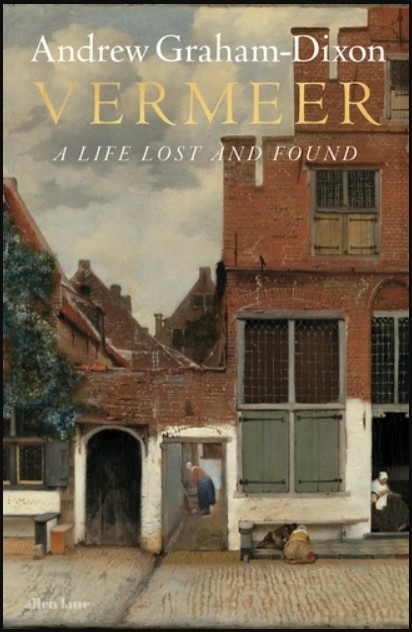
I also read and enjoyed (in translation, naturally) Monsieur Proust by Céleste Albaret, which was fascinating and enlightening and occasionally (not Madame Albaret’s fault) a little disappointing. I’m very glad to have read it even though a little part of me preferred the Marcel I had imagined from reading his work to the more mundane but also much more rounded and believable human being that came across in Monsieur Proust. Almost the exact opposite happened when I read Andrew Graham-Dixon’s revelatory biography Vermeer – a Life Lost and Found, in which the mysterious and opaque Vermeer of the imagination. As Jonathan Richman sang in No One Was Like Vermeer (2008):

Vermeer was eerie
Vermeer was strange
He had a more modern colour range
As if born in another age
Like maybe a hundred or so years ago

What’s this? A ghost in the gallery?
Great Scot! The Martians are here!
These strange little paintings next to the others
No-one was like Vermeer

Unexpectedly, to me at least, Andrew Graham-Dixon dispels much of the mystery, without undoing any of the magic; the Vermeer he describes is a man very specifically of his time and milieu, but ultimately to me that makes his particular kind of alchemy more rather than less extraordinary; maybe it’s just because I’m lacking in ‘negative capability,’ but for me knowing that the Girl With the Pearl Earring and the rest have a meaning and function that was highly specific to 17th century Delft, but which still communicate their human quality of warmth, empathy and connection down the ages is the miracle of art.
I also watched some good films this January, most recently, Jonathan Glazer’s The Zone of  Interest (2023), which I had seen before, but watched two nights in a row, utterly hypnotised by it, just like the first time. By now it’s already a cliché to use the phrase ‘the banality of evil’ – but it also feels slightly wrong. In a way it’s the banality of the characters itself, especially Hedwig and Rudolf Höss, brilliantly played by Sandra Hüller and Christian Friedel – but also their children and the assorted businessmen and soldiers – that is what’s evil about them. At first it seems that to Rudolf Auschwitz is just his job, and to Hedwig it’s just her husband’s job – which is bad enough. But the genius of the film is the way that Glazer undercuts their blasé attitude by showing that they do understand not just the reality but the implications of what’s going on in the camp and that it’s not some kind of inexplicable mass hysteria; Hedwig’s own mother, though presumably just as unthinkingly loyal to her homeland and its government as her daughter is almost immediately struck by the utter wrongness of Auschwitz; Rudolf and Hedwig get it too; they just don’t mind.

The feeling of being hypnotised by a film is a rare one for me, but coincidentally(?) I watched two of the very few others that have that effect on me this January too. I watched Gus Van Sant’s Elephant (2003) several times last year and then watched it twice in January too. The first time the feeling is all about the suspense of not knowing how events will unfold, but obviously that can’t be true when rewatching it. And yet for me it remains just as appallingly gripping and sad every time, The same is true in a very different way of Oliver Hirschbiegel’s 2004 film Der Untergang. I watched that in January too, only once, but for the third or fourth time in the past few years. Key to its hypnotic quality is the great Bruno Ganz, but also the brilliant pacing, editing and performances of the whole cast. It feels like a thriller, even though it’s mostly  people squabbling in a bunker.

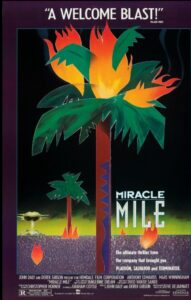
New to me though, was a film I’ve wanted to see since 1988 when I first read about it in (I’m fairly sure) FEAR magazine; a confusing memory because I clearly remember the picture of Anthony Edwards below (though in black and white), which is a still from the film. And I remember the  headline was ‘Miner Miracles‘ and part of the article related to Steve Miner. But as far as I can see, Steve Miner (director of the great Warlock (1989) has nothing whatever to do with Miracle Mile, which was written and directed by Steve De Jarnatt. So maybe it was a general film roundup that mentioned both Miracle Mile and Warlock, which was definitely promoted in/by FEAR.
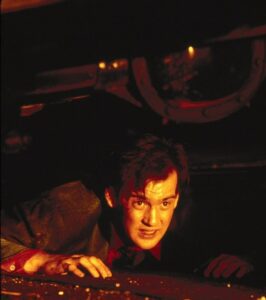
Anthony Edwards in Miracle Mile

Anyway, I loved Miracle Mile and found it completely gripping and kind of sweet and heartbreaking and in a weird way nostalgic for the expected nuclear holocaust of my childhood. Partly it was nostalgic because it was like a cross between two different things from the 80s, both of which I love. Firstly, the kind of teen romance movie most associated with John Hughes (Pretty in Pink, Some Kind of Wonderful etc) and secondly Jimmy Murakami’s adaptation of Raymond Briggs’ cosily apocalyptic comicbook When the Wind Blows. I loved the glossy, 80s way it was filmed (especially the opening, idyllic shots of Miracle Mile itself) and its goofy humour and especially the two leads. I knew Anthony Edwards from a few things (though not his 80s work, oddly. I never liked and barely remember Revenge of the Nerds and I’ve never seen Top Gun) but I thought he was perfect in this; likeably dorky but also sincere – and I love Mare Winningham. She’ll always be Wendy from St Elmo’s Fire (1985 – one of my favourite 80s teen movies) to me, so it was strange at first, seeing her as cool-quirky rather than nerd-quirky. Anyway, loved it (and watched it three times). I’m glad/surprised the studio didn’t chicken out on the perfect ending. Oh. and it had the great Brian Thompson (Kabal from Doctor Mordrid) in a small but vital role; it couldn’t be more 80s and yet less typical of 80s Hollywood at the same time. Great Tangerine Dream soundtrack too.

Blot – but will it be as good as I remember?

Music-wise I heard a lot of things but especially liked a vast (101 track) compilation of bands associated with the legendary New York club CBGB, ranging from the obvious (Ramones, Blondie, Talking Heads, Patti Smith) to 70s oddballs like the Dictators and the Harlots of 42nd Street to classic 80s hardcore like Bad Brains and the early Beastie Boys. I’m cautiously excited about a reissue of Mactatus’s 1997 album Blot but haven’t gotten round to listening to it yet so don’t know if it’s retained it’s old potency. And I still haven’t listened to the new Ulver album, so there’s that.

Anyway; I’ll try to get at least one of those more substantial things finished and posted in February.

..
Anatomy of an Earworm

Despite the title, this isn’t really about earworms as such – although they certainly have a place here – this is to do with the background music/soundtrack to your – or my – life. There are serious, life-changing conditions like ‘Musical Ear Syndrome” (kind of a musical tinnitus) where the sufferer constantly hears music and in the cases of artists like Kristin Hersh or Nile Rodgers, these kinds of phenomena (not that theirs are the same, as far as I know) can be part of what fuels their creativity. That isn’t me. What I – and I suspect many people – have, is songs I already know, playing ‘in the background’ more or less constantly.

I decided to try to keep track, for a day, of what those songs were. Not an easy task, as trying to remember them if one doesn’t make a note of it is extremely difficult, once the moment has passed – and also because it seems likely that focusing on that background noise might well alter the experience.

Be that as it may, I tried to make a note whenever I could throughout the day, of what was ‘playing’ – and it’s an odd mixture. Most surprising to me are how few of the songs are ones I would normally listen to, or like, or have listened to or heard (to my knowledge) recently. Also surprising is the segue from one to another, which happens mostly without noticing and which seems to have no logic to it that I can see. The medleys are even stranger. Also odd that events like conversations, concentrating on work, watching TV etc seem to have little or no impact on the flow of the music, it just gets quieter for a bit.

So here, with many gaps, and with a few notes and repeat offenders marked in red – is my internal playlist for today. It is still ongoing of course (currently James Taylor’s cover of Tom Waits’ Shiver Me Timbers). I don’t see any patterns, but I do notice that most of these songs are surprisingly cheerful given what I mostly listen to on purpose; so that’s nice.

The day began around 6am with a shower; a key place for earworms and related music, in my experience – without further ado…

  • Barbizon by Debz
  • Don’t You Want Me by The Human League (I have never liked this song)
  • Young Hearts Run Free by Candi Staton
  • What’s The Frequency, Kenneth, by R.E.M.
  • Keep on Running by The Spencer Davis Group (but with silly alternative lyrics relating to what I was doing at work at the time)
  • Ob-La-Di, Ob-La-Da by The Beatles (one of the few Beatles songs I really dislike)
  • Van der Valk theme tune (I have never seen Van der Valk, why do I know the theme tune??)
  • Save Your Love by Renée and Renato
  • Street Life by The Crusaders
  • I Wanna Be Your Boyfriend by The Ramones
  • Smokebelch I by The Sabres of Paradise (mainly just the bass)
  • Your Smiling Face by James Taylor
  • Orfeo ed Euridice – a particular bit from (I think) Act 1 of Gluck’s baroque opera
  • The Invisible Man by Elvis Costello
  • Knock Out Eileen by LL Cool J & Dexy’s Midnight Runners (strangely likeable mashup given my hatred of one of these songs – found on youtube)
  • Theme to Monty Python’s Flying Circus
  • Only Shallow by My Bloody Valentine (actually a non-existent, jaunty , squeaky synth-pop cover of the tune of the verse to this song, I’d like to really hear it)
  • jingle from a TV advert for Mitchell’s Self Drive c. 1981 (with the lyric that kids used to sing to it: ‘Mitchell’s Self Drive/Where people eat pies”)
  • I Only Want To Be With You by Dusty Springfield
  • It’s A Shame by Bilbo Baggins
  • Temples of Syrinx by Rush
  • Rockit by Herbie Hancock
  • NIB by Black Sabbath
  • Car Thief by The Beastie Boys
  • Hook It Up by The Donnas
  • How Deep Is Your Love by The Bee Gees (the verse of this song gets stuck in my head often)
  • Your Woman by White Town (genuine earworm that was stuck in my head for days, I had no memory of what it was, didn’t remember the lyrics and had to search for ages to discover what it was; irony – hated it then, hate it now)
  • The Eye of the Witch by King Diamond
  • Good Times, Bad Times by Led Zeppelin
  • Georgie Girl by The Seekers
  • Uh-Oh, Love Comes To Town by Talking Heads
  • Bergerac theme tune (not actually seen Bergerac since the mid 80s)
  • I’ve got a lovely bunch of coconuts (just the tune, but still!???)
  • The World In My Eyes by Depeche Mode
  • medley: You Can Call Me Al by Paul Simon & Down Under by Men At Work (had this bizarre medley playing in my head every morning for months; oddly when it’s not ‘playing’ I can’t work out where the segue happens)
  • The Neverending Story by Limahl
  • Good Times by Chic
  • Fascination by David Bowie
  • Lovely Day by the Pixies
  • Graceland by Paul Simon
  • Shiver Me Timbers… but that you know.

Hmm.


Album Review: Rachel Mason – Das Ram

 Rachel Mason

‘Das Ram’

Matthew Spiegelman

Cleopatra Records (LP) / Practical Records (cassette)

Release date: 18 November 2016

Rachel Mason has done so much work in so many fields (performance art/non-performance art/filmmaking/music/etc/etc – check out her website for a cross-section) that it’s easy to immerse oneself in her work. In music alone she has amassed a vast and varied discography within just a few years.

Where her earlier albums like the couldn’t-be-more-my-cup-of-tea work of towering genius Gayley Manor Songs (2015) were simple, home-made, stark, and direct and the conceptual The Lives of Hamilton Fish (also a film) was sprawling and dramatic, Das Ram is a full-blown modern pop-rock album, full of catchy songs with a flamboyant, very New York flavour, reminiscent at times of the Yeah Yeah Yeahs, Talking Heads or even (at its most pop) Lady Gaga.

rachel-mason-1-credit-chris-carlone

photo by Chris Carlone

Opening track ‘Roses’ launches the album with a dramatic, lilting and atmospheric intro before kicking into gear with new wave-ish guitars and a rock/dance beat. It’s catchy and full of pop hooks, but Mason’s excellent vocal perfectly delivers the troubled, even mournful lyric (‘I sometimes think that life is evil/it’s just something that fills me with dread’) that uses the rose as a symbol not only of beauty and romance, but also of the pain and transience of life. As a lyric, it’s perfectly judged; as densely layered as poetry, while as simple and direct as the best pop music. ‘Heart Explodes’ by contrast feels less spontaneous, carrying on with the metaphysical preoccupations in a more theatrical, almost Kate Bush-like way, Mason’s expressive voice(s) bringing the song to a chorus that is a peculiar crescendo made from conventional romantic language, genuine wonder, exultation and distress.

Mason’s voice is again at its most powerful on the less-straightforwardly-satisfying ‘Sandstorm’ on which she winds together enigmatic images of miscommunication (‘I believe in lies about the world’) with escalating intensity  over a prowling skeletal electronic funk that wouldn’t be out of place on a Grace Jones record, building tension but never quite releasing it. For a sense of release, the strutting electro-pop/funk cabaret fantasy of single ‘Tigers In The Dark’ follows; a kind of Talking Heads/Franz Ferdinand/Lady Gaga hybrid that, unlike her earlier folk/acoustic work feels 100% the work of a performance artist; the song is great, but the delivery, the theatricality is everything. As with Bowie (among others), the artificiality expresses the soul of the performer/character far more than something more apparently earnest would.

https://youtu.be/-Uw4oC9iouc

By comparison, the pulsating electro-pop of ‘Marry Me’ feels more like a vehicle for its complicated, beautifully detailed lyric and less an embodiment of it, although the contrast between the long, passing-of-time-obsessed verses and the simple, plaintive chorus (‘marry me/carry me over the hearth where a lost soul can hide’) grows more poignant as the song wends towards its end. A highlight of the album, it makes up in naked vulnerability what it loses to ‘Tigers…’ in glitzy disco-ness. ‘Queen Bee’ is one of the more penetrable lyrics on the album, using the image of the queen bee as a straightforward metaphor for loneliness, alienation and dependency (‘those friends were never real friends’) and the music captures the lyric in its stolid, regimented plod, with some very effective buzzing textures to reinforce the central image and some folk-inflected singing from Mason.

For a few dissonant seconds, ‘Cancer’ seems set to be the album’s darkest track, but then it unexpectedly breaks into a kind of rockabilly trot, albeit one spattered with peculiar squelches, squeaks and sound effects. Although not as grim as expected, it’s not the easiest-on-the-ear song on the album, sounding at times like two or three songs being played at once, and its chant-like vocal and slightly atonal chorus make it one of the more nerve-jangling songs in her catalogue.

Das Ram ends on a relatively more harmonious, if abrupt note with the angular funk verse/sweeping chorus of ‘Heaven’, which has a kind of early 80s, Ippu-do feel, before ending suddenly after the somewhat expected hedonistic refrain of ‘you and I are getting high.’

rachel-mason-2-credit-kerwin-williamson

photo by Kerwin Williamson

Taken as a whole, Das Ram, is a bold, exciting and accessible album, utterly different from the acoustic/folk rock textures of Mason’s earlier works like Hamilton Fish…, Turtles or indeed the raw, homemade quality of Gayley Manor Songs.  In fact it’s not like any Rachel Mason album I’ve heard (though I haven’t heard them all). Only a handful of artists have convincingly made a gesamstkunstwerk in the idiom of popular music without falling into the trap of overblown pretension – and most of those have spread from the music world outwards. With the confident, powerful Das Ram, Rachel Mason has become one of an even more select group – an artist who has learned to express herself with equal authority in whatever medium she chooses – and who seems to have fun doing it.