real horrorshow

Then there was the close-up gulliver of this beaten-up starry veck, and the krovvy flowed beautiful red. It’s funny how the colours of the like real world only seem really real when you viddy them on the screen.
Now all the time I was watching this I was beginning to get very aware of like not feeling all that well… But I tried to forget this, concentrating on the next film which came on at once, my brothers, without any break at all. This time the film jumped right away on a young devotchka who was being given the old in-out by first one malchick then another then another then another, she creeching away very gromky through the speakers and very like pathetic and tragic music going on at the same time. This was real, very real…
What it was now was the starry 1939-45 War again and it was a very blobby and liny and crackly film you could viddy had been made by the Germans. It opened with German eagles and the Nazi flag with that like crooked cross that all malchicks at school love to draw… Then you were allowed to viddy lewdies being shot against walls, officers giving the orders, and also horrible nagoy plots left lying in gutters, all like cages of bare ribs and white thin nogas. Then there were lewdies being dragged off creeching… Then I noticed, in all my pain and sickness, what music it was that like crackled and boomed on the sound-track, and it was Ludwig van, the last movement of the Fifth Symphony, and I creeched like bezoomny.”  Anthony Burgess – A Clockwork Orange (1962), Penguin Modern Classics, p.70-78

In the twenty or so minutes before I had breakfast this morning, I looked at my phone and saw an armour-wearing police officer in Brussels attempt to assault a peaceful protester who was walking away from him and then saw the officer be knocked out by a less peaceful protester and left lying in the street, I saw a photograph of dozens of dead protesters in Iran in body bags, read a warning (or rumour?) that prisons in Iran are overwhelmed and so the authorities are releasing prisoners after injecting them with some kind of potassium-based agent which causes them to die within 48 hours of their release, I saw a really amazing 1984 live performance by John Cale that I’d never come across before, I saw a moronic incel-type video where a grown man was ‘educating’ young people (you’d assume men, but I think its intended audience was actually young girls) about the “Madonna-Whore complex,” though the presenter either didn’t realise or preferred not to acknowledge that Freud coined the term to describe a psychological disfunction and not to describe the natural state of humankind, I saw a funny old clip of the Young Ones, I saw an artist showing off a powerful and moving new painting, while explaining that their work was being stolen by AI companies, I read horrific details of abuse from the Epstein files, and heard so far unfounded claims about outlandishly horrific things that are imagined to be in the Epstein files, I saw/heard two outstanding actors being subjected to inadvertent racist abuse at the BAFTA awards, I saw old photos of atrocities in the Belgian Congo, a funny clip of Alan Partridge performing Kate Bush’s “Wuthering Heights”, I saw a short video about how Emerald Fennell’s Wuthering Heights film is not like the book and that’s okay and another video about how Emerald Fennell’s Wuthering Heights whitewashes Heathcliff’s ethnicity and isn’t okay, I saw an alarming report about how AI will soon cause a global water shortage, I saw a great old interview clip with the artist Francis Bacon, an AI video purporting to be the sex-trafficker Ghislaine Maxwell enjoying her freedom, a real video of dead children in Gaza, I read details from the Epstein files of a successful plot to replace the British Prime Minister Theresa May, I saw old (but less old than you’d hope) postcards showing lynchings in the Southern United States with onlookers smiling at the camera while a corpse hangs in front of them, I saw a nice old clip of Slowdive performing “Catch the Breeze” in the early 90s, saw horrendous photos of a dead Iranian child killed by the regime there, read an explanation for the slow-of-thinking of why carpet bombing Iran wouldn’t actually help the Iranian people, saw a video of the latest Russian assault on Ukraine on the fourth anniversary of Russia’s invasion of that country, read an ‘explanation’ of why the whole Ukraine war is Fake News, saw a video about how the whole Royal Family is culpable for Prince Andrew’s predatory behaviour, another video about how Andrew’s arrest is an overreaction, footage from this year of a peaceful protester being shot by ICE agents in the USA, a German metal musician telling the crowd at Wacken that his band opposes racism, homophobia and right-wing extremism, heard a prominent extreme right wing politician in the UK stating that only his party can protect the UK from right-wing extremists, saw someone suggest that AI videos of fake sexual abuse might actually be helpful in reducing real sexual abuse, read an explanation of why AI altered videos of women and children is obviously harmful, saw some incredible art by artists who were complaining about censorship on social media sites, saw but didn’t take in lots of stuff about sports, watched a great old clip of Captain Beefheart and his Magic Band, scrolled past what seemed to be disinterested videos about how great AI is, but which were actually advertisements for AI. All of this was of  all of course punctuated by many, many commercials that I didn’t take in enough to remember. It was real horrorshow.
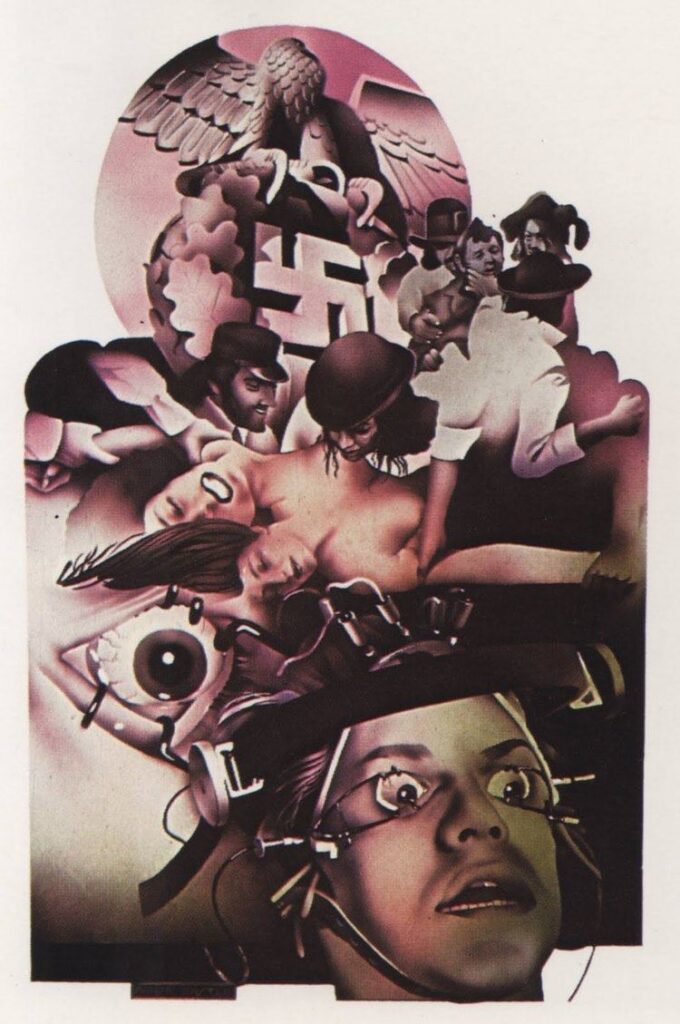
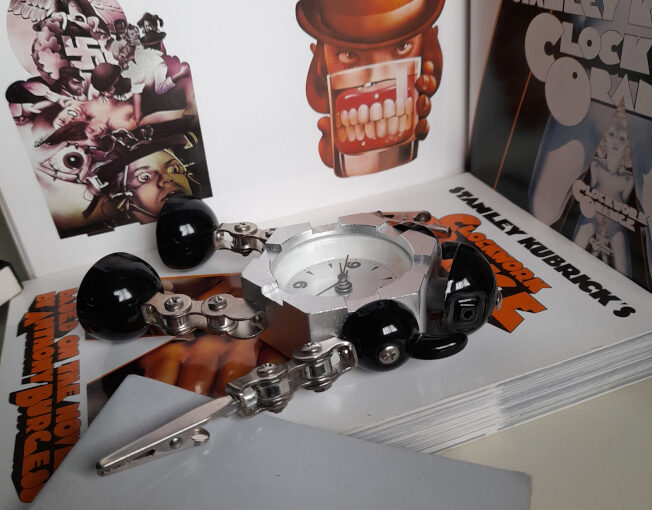
One of artist Philip Castle’s promotional paintings for Kubrick’s A Clockwork Orange (1970)

Unlike Anthony Burgess’s Alex, who is being subjected to the fictional Ludovico Technique, a kind of aversion therapy, I was voluntarily exposing myself to this barrage of beauty and horror, and also unlike him I was free to stop it whenever I wanted to, which doesn’t of course prevent one’s brain from processing it – you can’t unsee a picture any more than you can un-ring a bell. A Clockwork Orange was written at the beginning of the 1960s, at the tail end of the 1950s paranoia about the way the media – meaning in those days mostly cinema, magazines and pop music – were fuelling juvenile delinquency. That paranoia exacerbated the generation gap which had already been made more prominent by the dividing line of World War Two. A reading of something like Hamlet suggests that there’s always been a generation gap, but it was in the 50s and 60s that it became a permanent, deliberate and indeed lucrative feature of western consumer culture.

In 1970, the year that Stanley Kubrick’s film of A Clockwork Orange was released, one of Burgess’s peers, JG Ballard wrote The Atrocity Exhibition. Nothing about social media in 2026 would have surprised Ballard. If A Clockwork Orange was partly the product of society’s fears about rock ‘n’ roll, beatnik culture youth violence and communism, The Atrocity Exhibition was incubating during a period of widespread concern that a generation of young people was growing up seeing unfiltered images of the horrific events of the Vietnam War, intercut with commercials and entertainment features as they ate their breakfast every morning.

JG Ballard’s experimental novel The Atrocity Exhibition

That was unprecedented – nearly everything is generally unprecedented it seems – and the fear was that, on the one hand these children would grow up inured to violence and horror and unable to differentiate between reality and entertainment, and on the other that their daily intake of atrocities was unconsciously being absorbed in a way that would eventually manifest itself as generational trauma. That was a natural concern at a time when it had only recently become acknowledged that World War One had left scars not just on those who survived it, but the whole of culture, and when the unprocessed horrors and consequences of World War Two were leading to a rise in neo-Nazism alongside a trivialisation of actual 1930s Nazism. Trauma begets trauma and trauma never ends, it seems, and that Vietnam experience has become the normal way of things in the social media age. The fact that some of the most powerful men in the world belong to that war-and-breakfast generation may or may not be relevant to where we are now.

So is my pre-breakfast bombardment a bad thing? Who knows, but it doesn’t seem like it could be a good thing. As Martin Amis wrote, when the (really quite tame) schlock horror movie Child’s Play 3 was being implicated in two different murder cases, “It’s nothing to boast about, but there is too much going on in my head for Chucky to gain much sway in there. Probably the worst that Chucky could do to me is to create an appetite to see more Chucky, or more things like Chucky.” He goes on to say that in the case of people already predisposed for whatever variety of reasons, to commit murder, “Chucky is unlikely to affect anything but the style of your subsequent atrocities.”* That seems right; the problem with seeing atrocities day in, day out isn’t that it wants to make normal people commit them. It is very depressing though. And the thought that my wearying daily experience might be – probably is – mirrored in the life of a deprived or abused child with nothing to look forward to but more deprivation and abuse is deeply unsettling.

*Martin Amis – The War Against Cliché (2001), p.17.
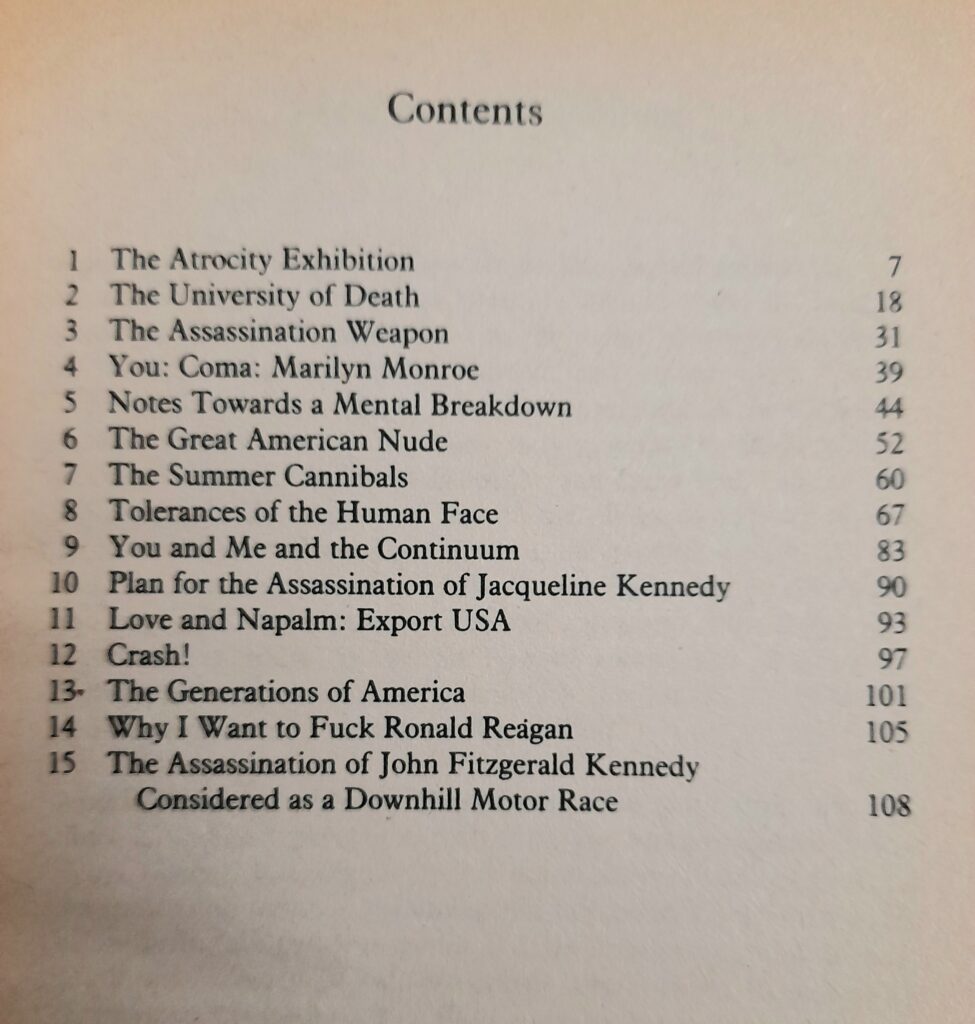
The Atrocity Exhibition contents page, the experience of scrolling through social media embodied in satirical poetry

So why do it? Partly conditioning I suppose; in my case my morning look at social media not doom-scrolling, though I’m as guilty as anyone of periods of that. In A Clockwork Orange, the presence of Beethoven’s music – the only thing that Alex uncomplicatedly loves – appearing in the films that make up his therapy is an unfortunate coincidence, but in my case the nice things – the songs, the interview and comedy clips are there because they are the kind of things I consciously search for and the algorithm that wants to keep me there therefore supplies more of them. And it fills the gaps with whatever people I follow are talking about – Iran, Gaza, copyright infringement – and whatever its owners want to push at any given moment. Which right now, seems to be right-wing politics, salacious conspiracy theories and AI.

It feels like there should be some conclusions to be drawn from all this, but I don’t know what they are; maybe it’s too soon. But it seems deeply ironic that something very close to what was envisioned sixty years ago as an extreme and inhumane form of aversion therapy should be willingly engaged in by millions of people as part of their daily routine. When Anthony Burgess gave his sociopathic but jovial teenage narrator the slang term real horrorshow to denote enthusiastic approval he knew what he was doing.
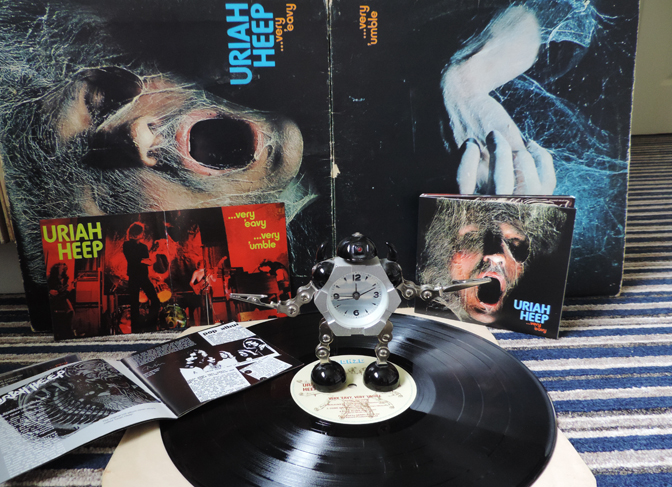
Ride On A Golden Wave: Uriah Heep’s …Very ‘Eavy …Very ‘Umble

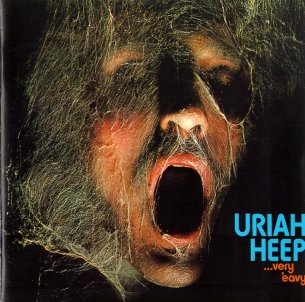
Very ‘Eavy …Very ‘Umble (Vertigo/Mercury, 1970; Bronze shortly thereafter)

This year (2016), BMG begins an extensive reissue campaign of releases by one of the original Spinal Tap-influencing ‘rock dinosaur’ bands, the mighty Uriah Heep. Along with an anthology, the first of these releases is, logically enough, the band’s 1970 debut – one of my favourite albums of all time – …Very ‘Eavy …Very ‘Umble. This album is probably not cool. Judging by the mostly negative reviews it got in 1970 (‘If this group makes it I’ll commit suicide’ and ‘it’s too loud, too repetitive, too predictable’ are representative quotes) it never was cool, but 46 years later it can stand proudly alongside any of the hard rock, blues rock, progressive rock or rock-rock albums of its era.

And it was an era of rock; bear in mind that that particular year also spawned Deep Purple In Rock, Black Sabbath AND Paranoid, Led Zeppelin III and many more and, while the mighty Heep are perceived to be a relatively underground cousin of Deep Purple & co, they too ponced around the US in Lear jets and limos in a way that few new rock bands do nowadays. Judged on those 1970 albums alone, the band were clearly up there with the best. Slightly less heavy (but who wasn’t?) than Black Sabbath, more jazzy and poetic than Deep Purple, more riff-centric and bluesy than (1970-era) Led Zeppelin,  …Very ‘Eavy… is monolithic but nimble, straightforward but, except in its most bludgeoning moments, not at all simplistic.

Unlike most decades, the 60s is often felt, culturally, to have a clear and decisive ending; from the perspective of nowadays, the Stones at Altamont and the Manson Family in Death Valley ended the peace & love/flower power era that was already shaken by the revolutionary events and protests of 1968. But the pre-Uriah Heep story, that of a band called Spice, (essentially Heep sans organist Ken Hensley), talent-spotted while playing in ‘The Blues Loft’ in High Wycombe, could not be more redolent of the hippy era. To me, the best work of Uriah Heep always has a hazy aroma late 60s underground optimism and …Very ‘Eavy …Very ‘Umble is a kind of time capsule of a world almost as distant and quaint now as the Victorian Age. This was a time when – as the great Charles Shaar Murray wrote (in a Cream magazine T-Rex article in 1972, just as the world moved into another cultural phase) – “Any gentle freak who believed that Nostradamus and King Arthur were alive and well in a UFO hovering somewhere over Glastonbury Tor, or who read Tolkien and Moorcock over his brown rice and apple juice, just had to own the Tyrannosaurus Rex albums...” It was these kind of freaks, one assumes, who in their less gentle moments, wanted to rock out to Spice. In High Wycombe. Incidentally, it may be this very hippy-hangover aura that prevented Uriah Heep from being as influential on the metal scene as their contemporaries, Black Sabbath (whose musical background in blues rock was very similar). Indeed, I can personally testify that the whole flared-trousers-and-moustaches vibe of the Heep (as well as the slightly bland rock they were putting out at the time) was enough to prevent some 80s metal kids from checking out their older work.

spice

Anyway; Spice became a pretty well known band on the progressive rock circuit in the dying years of the 60s. In fact, their music as preserved on the first few LPs is very much ‘progressive’ in the late 60s blues rock sense (in which sense Led Zeppelin were also progressive), but not in the sense that ‘prog’ came to mean as the 70s wore on. Mick Box, founder, guitarist and, to this day the real heart of Uriah Heep, began as a jazz player and it was perhaps this more than anything, that coloured the heavy blues rock that Spice played; parallel to the British Blues boom but not really part of it, the band used elements of the blues, but they were never constrained by its structures.

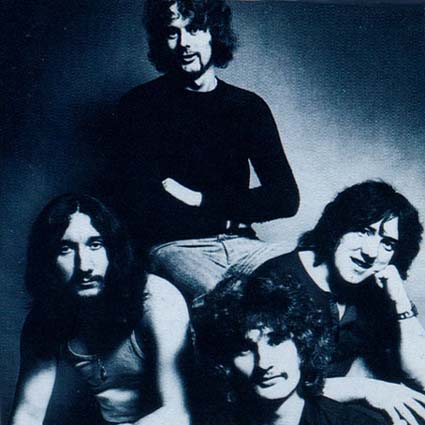
The Band

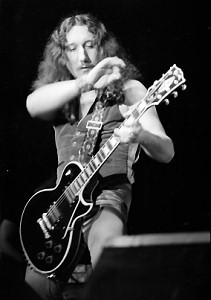
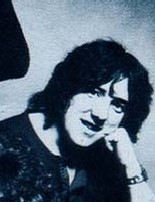
Mick Box: guitar

mick

(highly underrated as player, composer & all-round riffmeister)


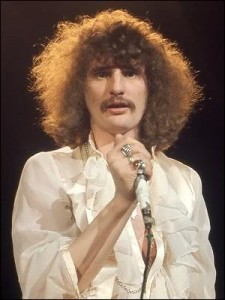
David Byron: vocals

DByron

(a versatile, very English-sounding rock voice, equally at home with swaggering, earthy blues-rock vocalising and delicate fantasy


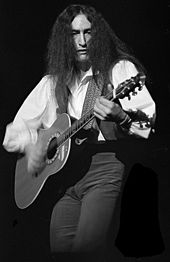
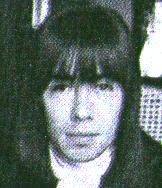
Ken Hensley: organ, guitar, vocals etc.

kenhen

(Without Hensley Uriah Heep would have been far more like a standard late 60s blues-rock band)


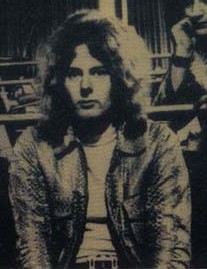
Paul Newton: bass, vocals

newton

(in the classic 70s tradition the bass is loud, clear & occasionally funky on this album; co-wrote lots of the songs.)


Alex Napier – drums (on half of the album)

alnapier

(great, agile and subtle drummer, not as thunderous as some contemporaries, but for my money up there with the best; retired after leaving the band I believe)


Nigel “Ollie” Olsson: also drums, plays on a few songs

olsson

(another great drummer; went on to play with Elton John after his stint in the Heep)


THE ALBUM

1. Gypsy (Mick Box/David Byron)
The perfect opening track; after the busy little intro the simple, bludgeoning guitar/organ riff provides an excellent backing for David Byron’s authoritative vocal, establishing the Heep as a band of (for the time extremely) heavy sound and somewhat whimsical, romantic preoccupations; hippies in fact. Excellent organ and guitar soloing and harmony backing vocals by pretty much everyone make this a superb manifesto for the band’s approach. 70s heavy rock par excellence

2. Walking In Your Shadow (Paul Newton/David Byron)

An excellent funky drum intro which should be (has been?) sampled leads into a dynamic blues-rock song with another perfect vocal by David Byron. The song is a relatively understated version of the kind of pleased-with-itself blues rock swagger that Whitesnake were to excel in later in the decade, and it has an excellent Mick Box solo too.

3. Come Away Melinda (Hellerman/Minkoff)

A delicate and drama-filled version of the much-covered melancholy anti-war folk/protest song. Byron’s clear enunciation and expressive voice make the most of the (possibly slightly twee and pretentious) post-apocalyptic lyrics. Lovely mellotron-flute intro and lovely acoustic guitar; the key word is ‘lovely’. The great vocal is made even better by imaginative use of stereo.

4. Lucy Blues (Mick Box/David Byron)

A somewhat quizzical and sad blues-rock song, Lucy Blues is, despite occasional claims at the time that they were Led Zep clones,  the closest Uriah Heep comes to Led Zeppelin on this album; not all that close. And with all respect to the iconic Robert Plant, David Byron managed the same kind of expressiveness without the melodramatic whimpering and screaming. As the original sleevenote remarks; ‘hardly unpredictable but rather pleasant’. Nice piano work adds to the barroom blues feel, far less epic than the usual Heep sound. Byron’s English accent gives the song a strange and unique flavour, as it tends to do on all of the more blues-based material – one of the features that makes early Uriah Heep so distinctive. Meanwhile, Ken Hensley proves himself master of the classic blues Hammond organ solo too.

5. Dreammare (Paul Newton)

Side two commences with one of the heavier songs on the album. Dreammare has an ominous organ intro, a strangely funky, reverby riff and a suitably feverish quality, enhanced by the speaker-to-speaker shimmer on the vocals. A nicely bad-tempered, squalling guitar solo too. This is perhaps the only song where the claims of sheer noisy unpleasantness could be deemed fair enough; for non-rock fans anyway.

6. Real Turned On (Mick Box/David Byron/Paul Newton)

Proto-Whitesnake swagger again (but even more so), Real Turned On is a cocky mid-tempo blues-rock tune with an angular riff, several good solos, tons of slide guitar by Ken Hensley and a good naturedly sleazy David Byron trying to lure a young woman with wine and so forth. Unreconstructed 60s freewheeling sexual (and arguably, but arguably not, sexist) revolution rock, it ends, oddly, with screeds of apocalyptic feedback.

7. I’ll Keep On Trying (Mick Box/David Byron)

Archetypically 70s flared-jeans hard rock, with organs, screaming guitar and an impassioned David Byron vocal. The tune skips between sinister-toned, portentious organ and wailing vocals and nimble-fingered fiddlyness during which every band member gets to show off, before settling into a heavy blues riff. There are tranquil interludes and dramatic, siren-like guitar and even a Zappa-esque wah-wah solo. If you don’t like this, you probably don’t like Uriah Heep; fair enough.

8. Wake Up (Set Your Sights) (Mick Box/David Byron)

The final track on the album is also the most ‘progressive’, jazzy one, which manages to encapsulate all of the facets of early Heepdom in six minutes. The intro has David Byron intoning ‘aaahhh’s over a bass and organ scales before a dramatic, grandiose verse about justice prevailing, before the music becomes a kind of hoppity, percussive jazz with some excellent bass playing and very understated guitars. As the song builds (with some enjoyably silly vocalising; ‘justice, justice, just-iiiice‘ etc) it breaks not into rock but another jazzy verse/chorus and then a lovely soft pastoral interlude before fading out. Byron’s vocal is highly theatrical and generally one of the best he ever recorded and it’s just an excellent, dynamic end to a superb album that people don’t like as much as I do; their loss.

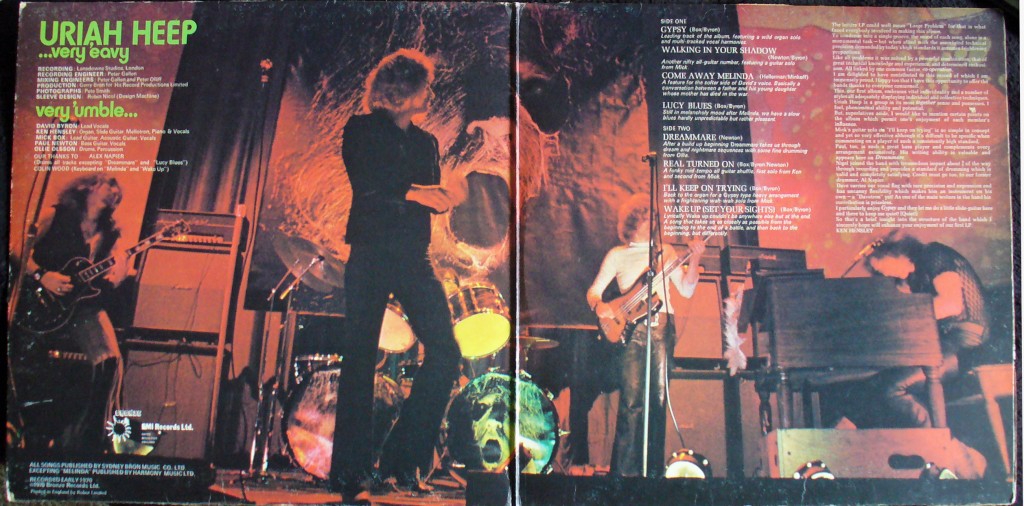
daheepAs if all this wasn’t enough, the album is housed in one of the great rock sleeves of the era: a fallen warrior (David Byron in fact) covered in cobwebs, the darkness surrounding him only broken by the (superbly-fonted) logo and title. The gatefold features a photo of the band onstage.
heepin

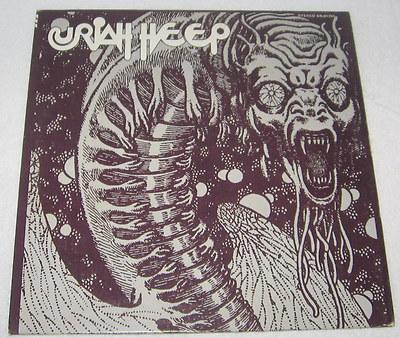
The album was released in the US in a different and slightly inferior form (missing Lucy Blues, and featuring instead the great Bird of Prey from the band’s second album, Salisbury). The US album is simply called Uriah Heep and its cover – a kind of dragon/wyrm thing – is not one of the great rock sleeves of the era.

usheep

——————————————————————————————————

Although …Very ‘Eavy …Very ‘Umble is one of those rare perfectly formed albums that can only be marred by adding bonus tracks to, it is also one of those albums I have to own on multiple formats, and the 1996 CD release adds bonus tracks, thus:

Gypsy (single edit)
What is says; a shorter version, omitting the organ intro & so forth. Pretty great, though unnecessary

Come Away Melinda
An early version recorded by Spice before they changed their name to Uriah Heep. Interesting, not hugely different from the album version really, but  Byron’s vocal has less feeling and it’s generally not quite as good.

Born in a Trunk
A rocking Spice tune, this features the kind of dynamics that early Heep excelled in, plus another strangely English David Byron vocal and some great funky drum breaks.

BMG’s latest version is in all regards superior to the 1996 version: wisely retaining the whole of the original album (but with beautifully remastered sound) as disc one of two, it adds an entire (and to be fair, slightly inferior) version of the album on disc two. These are unreleased (earlier or alternate takes) of most of the songs, plus the US mix of Bird of Prey and a nice Spice track called Magic Lantern.

Although the earlier versions are, naturally, mostly not quite as good as the finished ones, they are nearly there and, while Spice without Hensley can never equal Uriah Heep, that late 60s atmosphere, an indefinable (and you would think incompatible) mixture of unpretentious ‘let’s just get up and play’ attitude and love of airy, fantastical romance is present in its most concentrated form.