…it’s time for another annual roundup. Participating in end of year ‘best of’ lists is fun, but as my previous few ‘albums of the year’ features for this site (each probably more perfunctory than the last) and this essay on my substack illustrate, over time I’ve found the idea of the best [thing] of the year less and less relevant, not because the things aren’t good but because it doesn’t really matter that they came out this year. There’s a reasonable chance that I haven’t even heard my favourite album of last year, or of 2015 or of 1981 yet. My most listened-to artist of 2025 was probably Kevin Ayers, dead for over a decade now, and my most watched films and TV shows and most read books even more zeitgeist-resistant.
But here are a few things and thoughts anyway. My favourite new albums of the year included several I reviewed for Spectrum Culture, including:
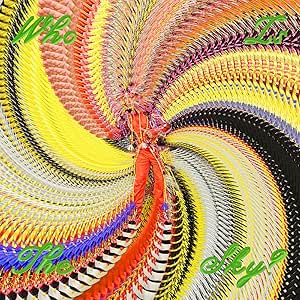
a cover as horrible as the album is pleasant
David Byrne’s Who is the Sky? More modest, more personal and more enjoyable to me than American Utopia, though I understand that it seems less ambitious and therefore less impressive in a way.
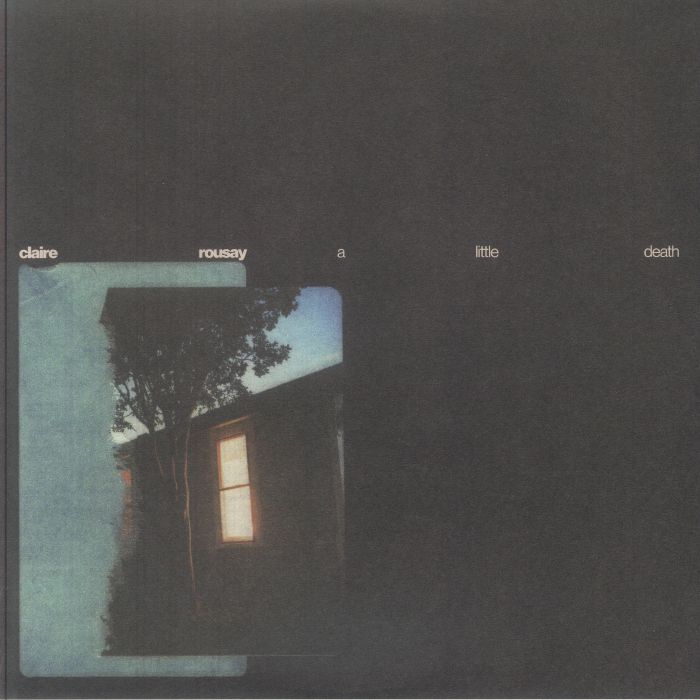
a suitably enigmatic cover
Claire Rousay – a little death – sometimes blurring the boundaries between music and just sound, I thought this was really arresting and intimate and moving but hard (as you see) to write about well.
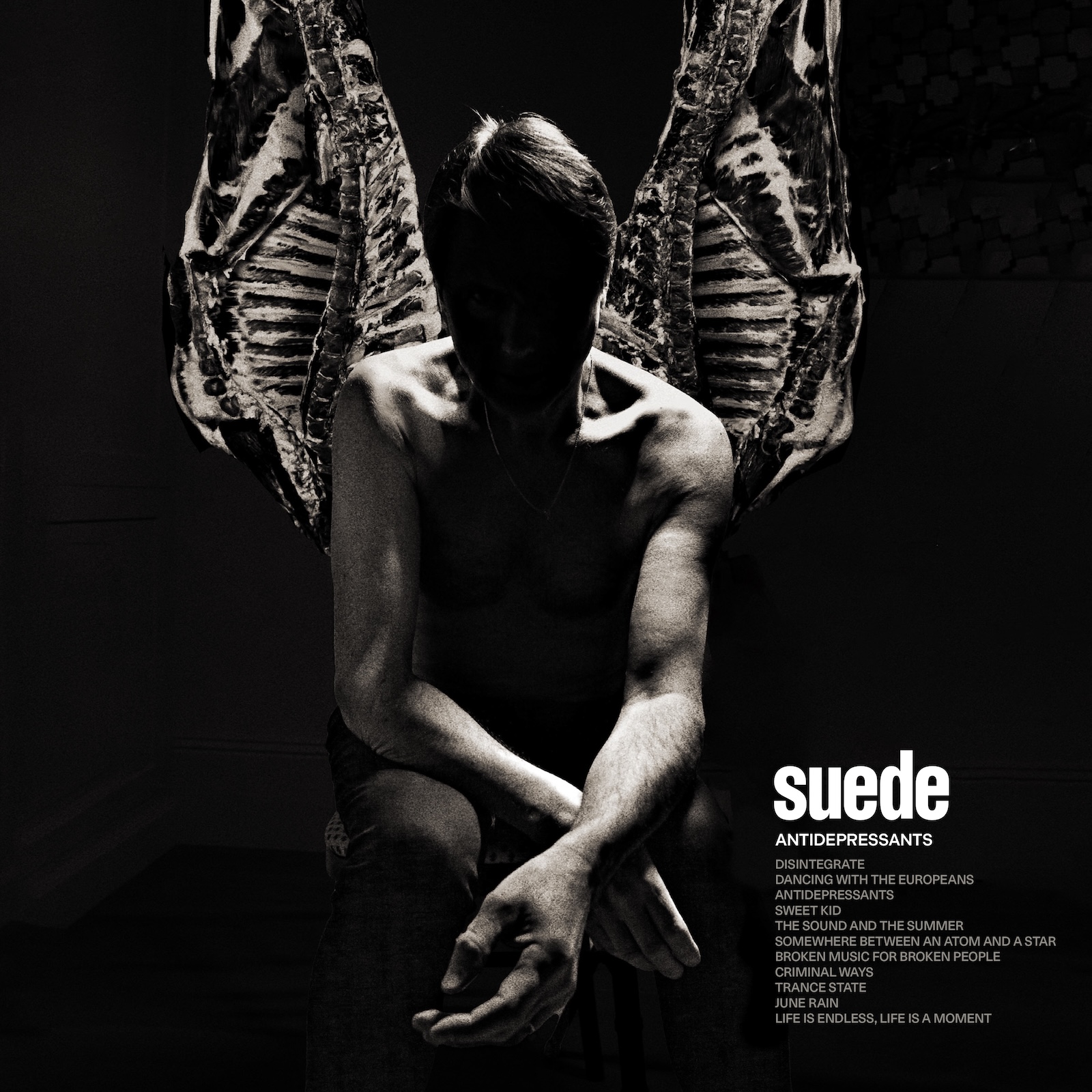
a perfectly Suede-like cover
Suede – Antidepressants– Suede in 2025 are not central to my musical life like they were in 1993 and therefore Antidepressants did not have the impact that Suede did (or at least that I expected it to; in fact I only loved about half of it), but it’s is probably a better, deeper and more rounded – and certainly a more consistent album than Suede was, even if the high points are less iconic
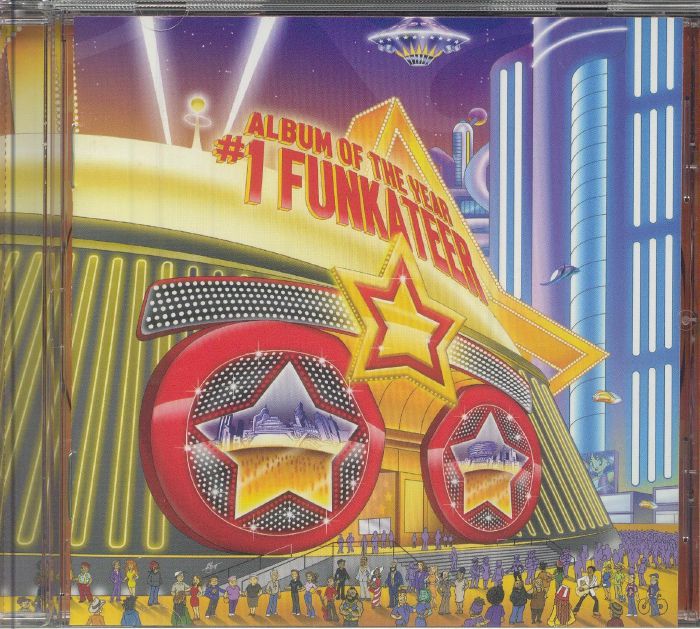
Bootsy; business as usual
Bootsy Collins – Album of the Year #1 Funkateer– this was sprawlingly creative, fun and of course funky. The P-funk style that made Booty’s name seems fundamentally 70s but here he slips it over the top of the idioms of the 2020s and it fits like a glove with no hint of ‘retro’
I didn’t write about these next ones for Spectrum Culture, but they are up there with my favourites of the year too:
Ghost World – Armadillo Café – So far Ghost World haven’t (for me) surpassed the music of their first two albums, Ghost World and Spin, but repeatedly putting on Armadillo Café while consciously ignoring the fact that it’s a concept album about a café, it turns out to be another collection of idiosyncratic and loveable indie pop songs. The concept is fun but detracts from rather than strengthens the quality of the individual songs.
Anna Von Hausswolff – Iconoclasts. I wouldn’t say Anna Von Hausswolff goes from strength to strength; she’s always been great – but her work remains consistently interesting, challenging and gripping and Iconoclasts pretty much picks up where 2018’s Dead Magic left off, but absorbing rather than sidestepping the sombre majesty of her 2020 instrumental album All Thoughts Fly. Basically, she makes the kind of music you’d hope someone with the name Von Hausswolff would make.
Draugveil: gesamtkunstwerk
Draugveil – Cruel World of Dreams & Fears– I haven’t had to listen to a lot of black metal for work this year, which ended up rekindling my love for the genre and especially its typical, rather than outstanding or experimental adherents. The promotional material for the latest release by Ukrainian one-man project Draugveil release promised “A new era of romanticism, love and death…” and the album artwork shows him resplendent/despondent in corpsepaint and armour – the exact kind of objectively absurd thing that invites mockery from both inside and outside of the metal world; and I love it. Keats wrote that he was “half in love with easeful death…” but the romanticism of death that was such a notable part of the culture of the 16th, 17th and19th centuries lost its traditional allure post-World War One and at some point in the intervening years has become seen as kind of an adolescent trope, but why not? The songs on Cruel World of Dreams & Fears have titles like “Beneath the Armor I Rot”, “Wolves Feast on Forgotten Dreams” and “My Sword Points to the Past”* – and the tunes are likewise a mixture of yearningly romantic and crushingly doomladen and anguished. I have the feeling that, like the Smiths, but to the power of ten, this is the kind of thing that people either just respond to or really don’t. “Beneath the Armor I Rot” is the “Girlfriend in a Coma” of black metal; possibly immature, patently ridiculous, but irresistible, if it happens to be your cup of tea.
Interesting side note: some genius has perfectly gauged the kind of fanbase Draugveil is likely to appeal to and produced an action figure. Too pricey for me but entirely desirable.
* these titles make me think of an old Fry & Laurie sketch where a teenager writes a poem called “Inked Ravens of Despair Claw Holes in the Arse of the World’s Mind” – which kind of proves my point about the adolescent-ness of thanatophilia(?maybe the right word?) but I’ve remembered that title since I was at high school, which probably means something too.
its existence pleases me
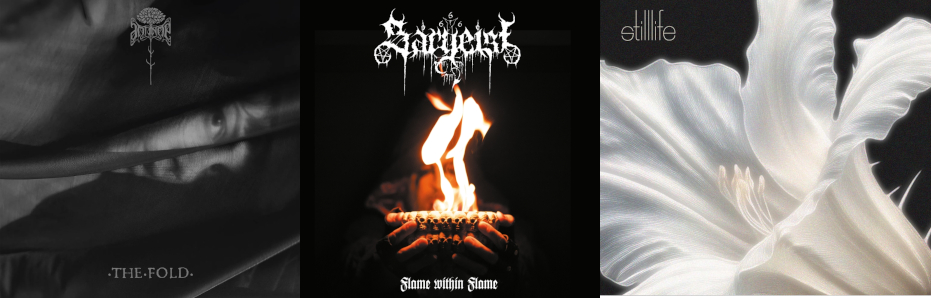
Honourable mentions that I like almost as much as the above but have run out of the will to write about include Kariti’s lovely album Still Life, the beautiful and deeply enigmatic album The Fold by Antinoë, which I’d recommend to anyone who likes the Anna von Hausswolff record and Sargeist’s Flame Within Flame, which is black metal with much of the absurdity drained out and replaced with venomous energy.
One of the discoveries of the year for me was podcasts – obviously I knew they existed, but I’d rarely been tempted to check them out. It turns out that mostly they aren’t for me, but there are a few I really like and one I love. That one is Origin Story, which I came to because I loved Ian Dunt’s brilliant 2021 book How to be a Liberal. The point of Origin Story, a podcast by Dunt & Dorian Lynskey (more below) is to “explore the hidden histories of the concepts you thought you knew.” It’s general focus is socio-political I suppose, but it takes in subjects as varied as zombies, comics, George Orwell, economics, history, etc etc (the latest season was a history of socialism) which you might think could be quite dry, but in fact is exciting, funny and entertaining; love it. Other favourites are Katie Hessel’s The Great Women Artists, Mark Kermode’s Kermode on Film and theTime Team podcast
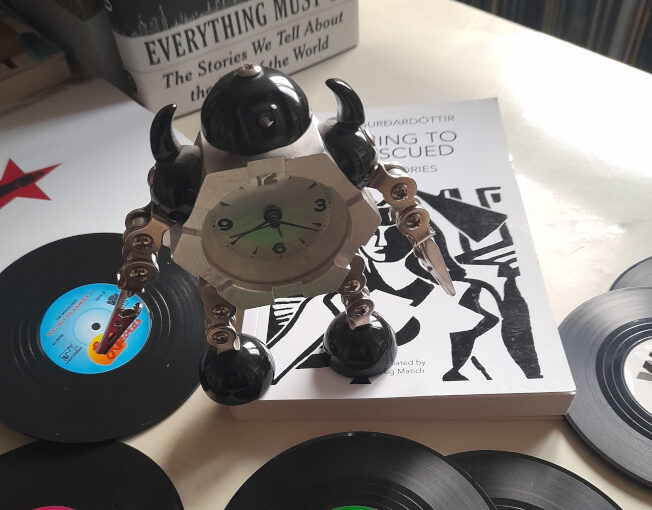
With books – unless, presumably, one is a publisher or a more than occasional book reviewer, the ‘of the year’ part is even less relevant. As it happens, I did read one book published this year that I thought was outstanding – Dorian Lynskey’s Everything Must Go – The Stories We Tell About the End of the World which I reviewed here and chose here, but I read many other books whose publication dates I’d have to look up. Most recently, I loved Nothing to be Rescued, a collection of sad and bitter short stories by Ásta Sigurðardóttir, a 2025 discovery for me, but Ásta died in 1971 and most of the stories pre-date her death by a decade. Even this collection, translated into suitably stark but beautifully readable English by Meg Matich, and which features Ásta’s own illustrations, is a couple of years old already. But just as the music that sounds best this year will sound the same next year, these stories, which have already outlived their author by more than half a century will continue to feel just as vivid and alive…
Between me thinking about writing something about what home and belonging means and actually starting to do it, it’s become a far more topical subject than I expected, which seems to be how these things go these days.
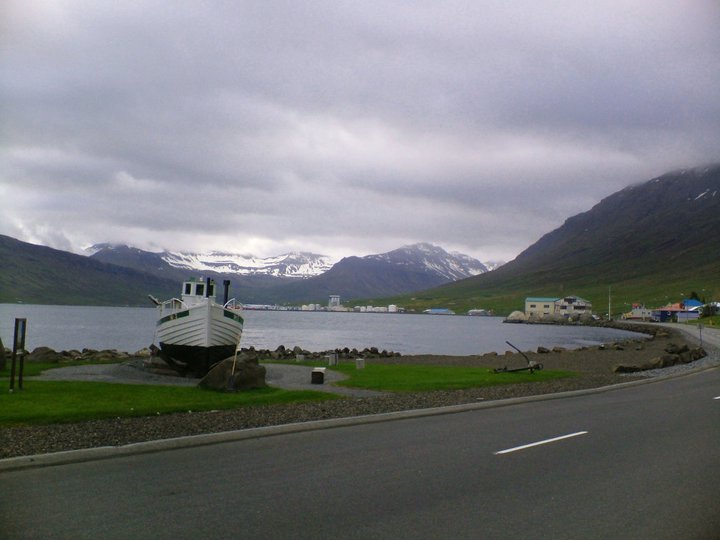
the outskirts of Neskaupstaður, Iceland
The initial impulse to write it came from several unconnected things; some photos I took in Iceland over a decade ago; the lyrics to the R.E.M. song “(Don’t Go Back to) Rockville;” a beautifully evocative description of a rundown railway station in a dusty, remote part of Austria-Hungary in the 1900s. That description felt especially poignant because Austria-Hungary is a country (and the Habsburg Empire an Empire) that no longer exists, but which must have felt permanent in its day and which people in the 1900s felt just as patriotic and loyal towards or just as ambivalent about as people now do towards the constituent parts of the United Kingdom or/and the UK itself. But all of that has retreated into the distance a little because as I write this, up and down the country – even in this little corner of rural Scotland – people are engaged in a protest of sorts. Unusually for a protest, it takes the form of doing something which has always been entirely acceptable to do and which no one has ever tried to discourage the protesters from doing; hanging up flags.
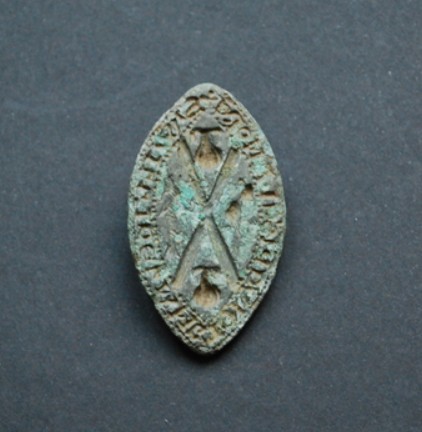
The seal matrix of Bishop William de Lamberton from the 1290s, the oldest extant physical use of the Saltire in Scotland
The flags that have made it onto the news – especially from the recent, ironically-named “Unite the Kingdom” right-wing rally in London, are mostly St George’s cross (the flag of England), interspersed with Union flags. In this village the flag fliers tend, naturally to instead display the Saltire/St Andrew’s cross (the flag of Scotland, reputedly the oldest national flag in Europe – which if its semi-mythical origins are correct actually predates the Kingdom of Scotland itself by a couple of centuries) and the Union flag.
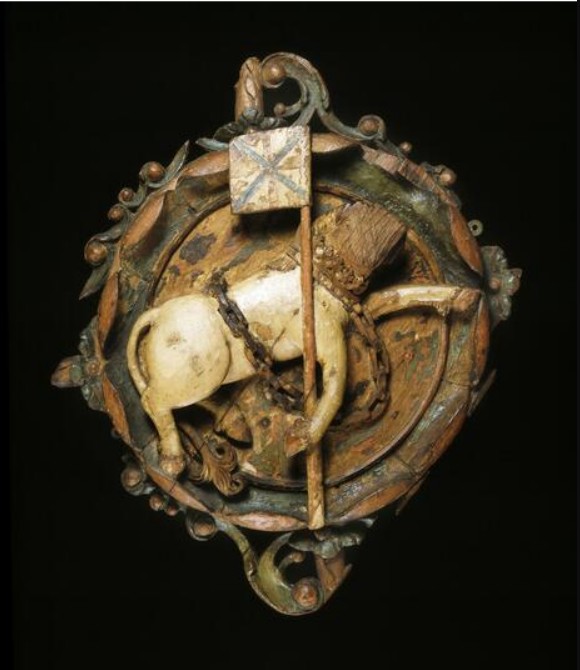
Flags are, by design, simple and very easy to identify, but they are also kind of a blunt instrument when it comes to signalling. Other people in this area have been displaying the Saltire and the medieval Scottish flag (the Royal Banner; a rampant red lion on a yellow ground) with no Union flag. I presume this is some kind of anti-unionist/nationalist counter-protest but I may be wrong; to be sure I’d have to ask the flag fliers, and who wants to do that? Whatever else they are, national flags tend not to be especially inviting, particularly when displayed in their country of origin. Nearby I’ve also seen – in a more obvious counter-protest – people displaying Palestinian and Pride flags.
carved wooden ceiling boss of a unicorn carrying the Saltire from Linlithgow Palace, c.1617
It’s a regularly remarked-on (and ultimately meaningless) irony that the historical St George was a Turkish man of Palestinian descent, but less remarked on (though similarly meaningless in this context) that St Andrew, who the saltire represents, was born in what is modern day (Israel-occupied) Syria. Lions (though not red ones) are native to sub-Saharan Africa and India. And yet, for the people waving, wearing, hanging, painting or generally displaying the flags, these symbols of Syrian and Turkish-Palestinian saints and these African/Indian mammals (1 for Scotland, 3 for England, though confusingly the English ones were historically referred to as leopards, which scans less well for a football song lyric) are symbols, I presume, of home. And therefore the people displaying them for patriotic, political or intimidating purposes mostly don’t care what their origins are, which is fair enough. It’s my home too, but although I have no special feelings about the flags of Scotland or the UK, seeing them all over the place, rather than just on official buildings or big hotels is oddly alienating, just like seeing the stars and stripes on every other street on a trip to the USA was.
The flags of your nation, displayed in that nation, tell you two things; firstly, where you are – which you already know – and secondly, that somebody wants you to be very aware of where you are, which you still already know. Theoretically, people display flags for themselves and not for anybody else, but a flag by its nature is a signal and for most of the time, the person who flies it outside their home or paints it on the street or on some historical landmark, or puts a sticker on a bus shelter can’t see it, but anyone passing by can.
Because so many of the people involved in the current protests are xenophobic (not really derogatory; many of them are explicitly saying they are protesting against “migrants”. “I belong here,” is not a protest; and anyway nobody is disputing it. “You don’t belong here” is mostly what the protest is about) there’s been a lot of discussion about what kind of symbols our flags are and what, beside dead saints, they represent. Obviously, flags themselves aren’t racist, or at least are only as racist as the people displaying them. There are possibly a few exceptions; most obviously, I feel like any Jewish or Romany person has the right to feel victimised if someone is displaying a black swastika in white circle on red ground; I wouldn’t think it was outlandishly sensitive if an African-American person felt offended by someone waving a Confederate flag at them. Still, it’s strange the extent to which seeing the flag of your country everywhere makes that country feel like a different place from the one you grew up in.
But home is a strange thing anyway and ‘feeling at home’ in the comfortable sense of being where you are supposed to be, in the place that it feels natural to be, isn’t universal; clearly the protesters don’t feel it or they wouldn’t be protesting.
Philip Larkin in 1943 by Bruce Montgomery, looking like he should be on a Smiths album cover
The poet Philip Larkin – often seen as a definitively (I refuse to use the word ‘quintessentially’) English figure and sometimes derided as a ‘Little Englander,’ made some interesting observations about home that demonstrate how one-dimensional that (otherwise not unfair) assessment of him is. In The Importance of Elsewhere (1955), he argues (well, it’s a poem, not an argument; anyway, he says) that feeling lonely and out of place is a normal, appropriate and even a comforting response to being in alien surroundings (specifically Belfast) – “Strangeness made sense. The salt rebuff of speech,/Insisting so on difference, made me welcome.” The strangeness of the place itself “went/ To prove me separate, not unworkable.” On the other hand, feeling lonely and out of place in the place you come from and where you theoretically do belong does the opposite; and it possibly says unpleasant things about the place itself, too.
Larkin was right; for himself at least and therefore it’s not surprising to find that a slightly earlier poem (Places, Loved Ones, 1954) begins “No, I have never found / The place where I could say / This is my proper ground / Here I shall stay…..” A few years later, he obliquely questioned whether the idea of home is even desirable at all, since ‘belonging’ to anything can only ever be transitory – “Home is so sad. It stays as it was left, / Shaped to the comfort of the last to go” (Home is so Sad, 1958). Eventually and unexpectedly, he did find that place where he could say this is, etc, etc – which turned out to be Hull. He celebrated the city in a 1961 poem called Here – the title is surely a self-referential one, looking back to that fourth line of Places, Loved Ones, quoted above, Here is one of Larkin’s very few poems of belonging, but inevitably he celebrates the town for what would normally be considered its negative traits; inaccessibility, neglect and, if not actual unfriendliness, then at least a distant kind of reserve; “Here is unfenced existence: / Facing the sun, untalkative, out of reach.” He really was the Morrissey of 20th century English poetry.
Coventry was where Larkin came from, but though he wrote about it several times, it was never in the sense of feeling at home there. But if “feeling at home” means some kind of existential peace and contentment, there’s no real reason why that you should have any particular connection with the place you’re originally from, unless you happened to have an idyllic childhood. Equally, there’s no special reason why where you currently live should be where you feel at home, unless you are contented there like, presumably, the angry people with their flags and paint. But if they really love their country they certainly hide it well, not just because of their anger, but also how they treat the place and the mess they leave behind; they really do protest too much.
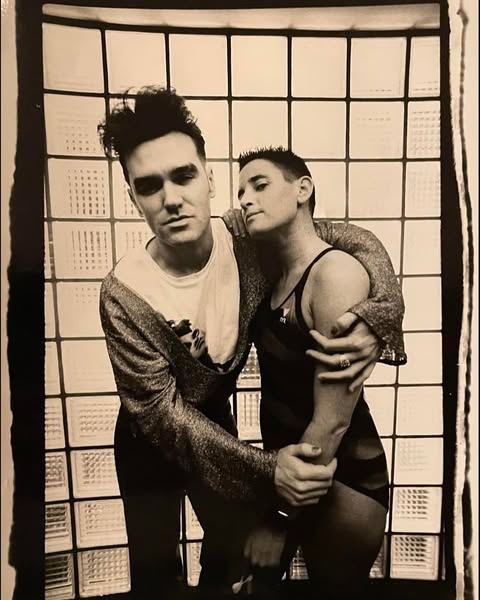
Morrissey with the American singer Phranc in 1992 by the great Kevin Cummins. Moz really is an unlikely right-winger
I’m loath to mention Morrissey again but a short side note seems relevant. For all his apparently xenophobic Englishness, Morrissey doesn’t (in common with many xenophobic, wealthy ‘patriots’) love England enough to actually live there. But to be fair, he rarely claims to love it at all; Morrissey is, thankfully, far more Larkin than Farage. The question of his (unusually complex but now undeniable) right-leaning politics goes back a long way, but when in 1992 he released the album Your Arsenal and alarm bells rang in the NME offices at the title of the song “The National Front Disco“, those NME scribes did him a disservice. He’s not foolish or racist enough to write a song actually glorifying the NF, though the song is definitely and maybe deliberately an uncomfortable one. In the lyrics he puts his finger (sympathetically or otherwise; it’s impossible to say) on the mentality of the kind of people currently waving placards telling foreigners to get out of “are country” (wish I was making that up). “There’s a country, you don’t live there / But one day you would like to / And if you show them what you’re made of / Then you might do.” That is really the essence of the march that happened last week in London and the smaller versions of it across the UK, including, dismayingly, one in Falkirk (one likes to think Scotland is above that kind of thing but realistically nowhere is, people being what they are).
‘Home’ is only on the most mundane level the place where you live, and the less mundane ideas of home are far more mysterious and often very personal. Without wishing to delve much into etymology, ‘home’ is a concept which even in its basic form as a noun (The place where a person or animal dwells, as the OED slightly creepily puts it) includes meanings that I don’t think I was aware of; “figurative. With reference to the grave or one’s state after death. Frequently with preceding adjective; ‘long home‘.” Apparently ‘long home’ was a common usage in Old English – and if you don’t belong in your grave then where do you belong? The long home is where the heart is; which makes me think of the last line of Wuthering Heights – surely one of the most beautiful endings to any deeply unpleasant novel:
I lingered round them, under that benign sky: watched the moths fluttering among the heath and harebells, listened to the soft wind breathing through the grass, and wondered how anyone could ever imagine unquiet slumbers for the sleepers in that quiet earth.Emily Bronte, Wuthering Heights, 1847
And then there’s home as in ‘too close to home,’ ‘coming home to roost,’ ‘the Home Office’, a point being ‘driven home,’ ‘home truths,’ ‘Home Rule,’ ‘make yourself at home’ (I have vague memories of a comedian or comedy character introducing their act by saying something like ‘Make yourself at home. Unless you’re in a hotel in which case make yourself in a hotel.‘ Vic Reeves? Alan Partridge? No idea).
Relatedly, belonging is a strange, unpredictable and entirely personal sensation. Larkin seems not to have felt he belonged anywhere until he found somewhere suitably impersonal and forbidding. Morrissey seems to thrive as an eternal outsider in Los Angeles, though it’s hard to think of anyone who seems more like an embodiment of Manchester. Belonging (I don’t say this self-pityingly, I’m comfortable with it) isn’t a feeling I’ve felt especially often and when I have it’s been at random times and sometimes in unexpected and unlikely places. Just recently, out walking in the area where I live and where I mostly grew up, I had one aspect of belonging; the exact kind of weather I obscurely feel most at home in; mild, grey, windless, with a low, quilted-looking heavy sky that didn’t quite threaten rain and let no ray of sunshine through. I like muggy weather and have never yet met anyone else who does. It’s kind of the other side of Larkin’s The Importance of Elsewhere – if not feeling at home ‘at home’ makes you unworkable (as he puts it), maybe the conditions that you feel the most at home in equally say something, possibly something unflattering, about you? Enjoying blue skies and sunshine (which I do too, although less so) just seems more positive somehow.
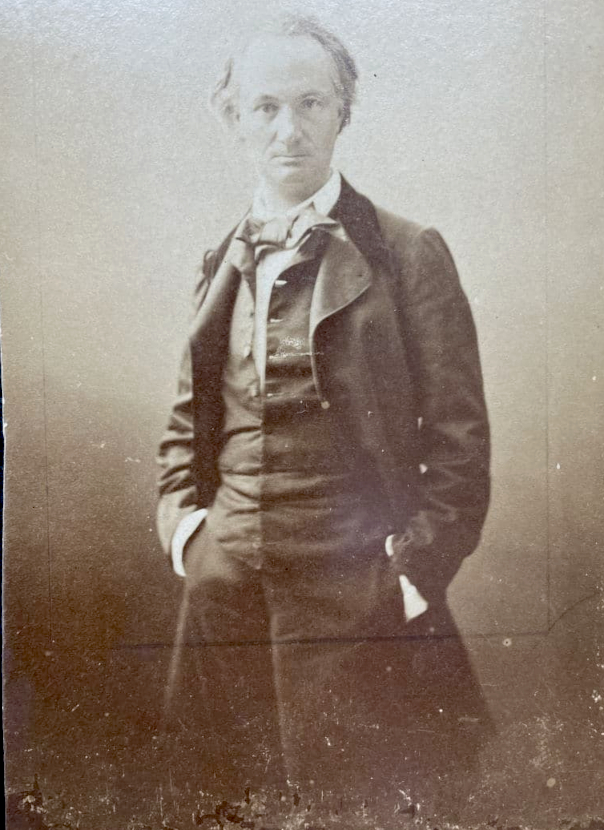
Baudelaire looking effortlessly cool & French in 1862 by Félix Nadar
Clearly for the protesters, ‘belonging’ is as much about people – a homogenous group of people – as it is about place. That’s the opposite of the vague kind of belonging that I sometimes identify with, the kind of thing expressed (very romantically) by Charles Baudelaire when he writes about ‘the flâneur’ in The Painter of Modern Life (1863). “To be absent from home and yet feel oneself everywhere at home; to view the world, to be at the heart of the world, and yet hidden from the world […] The spectator is a prince who rejoices everywhere in his incognito. … The lover of universal life enters into the crowd as into an immense reservoir of electrical energy. One might compare him, also, to a mirror, immense as that crowd; to a kaleidoscope endowed with consciousness which, with its every movement, conveys the multiplicity of life, and the grace in motion of every element of that life.” Well, I rarely feel as enthusiastic as that, and I generally don’t like being in a crowd with a specific purpose, even a benign one like the audience at a concert. But on the other hand, though I rarely feel at home anywhere, I never feel like my home has been stolen or invaded, and I don’t feel threatened because I see or hear people who are different from me. So that’s nice.
Xenophobia is kind of stranger than misanthropy, which is at least understandable, because human beings can be destructive and unpleasant like no other species. But although humanity has apparently infinite variety on the personal level, that variety, though it seems to terrify some people, is on every other level, extremely limited. However many names we choose to give this geographical (rather than political) area; the British Isles, the United Kingdom, Scotland, Wales, England, Ireland, Northern Europe – the population is, -whichever newcomers may arrive, and wherever they arrive from – pretty homogenous, because the human race is pretty homogenous. I was interested to hear my vague gut feeling given scientific validity by the archaeologist Dr Helen Geake (on the Time Team podcast of 9th September this year.) In response to a question about the diversity of the population of Anglo-Saxon England (following the discovery of a skeleton with African ancestry in an Anglo-Saxon cemetery) she said, “I’m not wanting to say ethnically diverse, partly because […] there’s so little genetic variability between humans that I don’t think we have anything like ethnicities or races or whatever. I just don’t think that makes any sense when you look at the science. I think it’s more of a diversity of appearance and origin.” When you consider the inter-species variation between, say a lion (since I mentioned them before) and a housecat, or a chihuahua and a Saint Bernard, it’s clear that the gradations between human beings are far more subtle. And when it comes to people you feel an affinity with, you’re as likely to feel at home (that expression seems stranger the more you consider it) with someone you met by chance recently (or even met virtually online), as with someone you’ve known since you were a child. Interestingly (there’s a euphemism!) I read just this morning that a “Race Science Institute – ie debunked Nazi bullshit – funded by one of the world’s richest men is currently trying to be influential in UK politics.
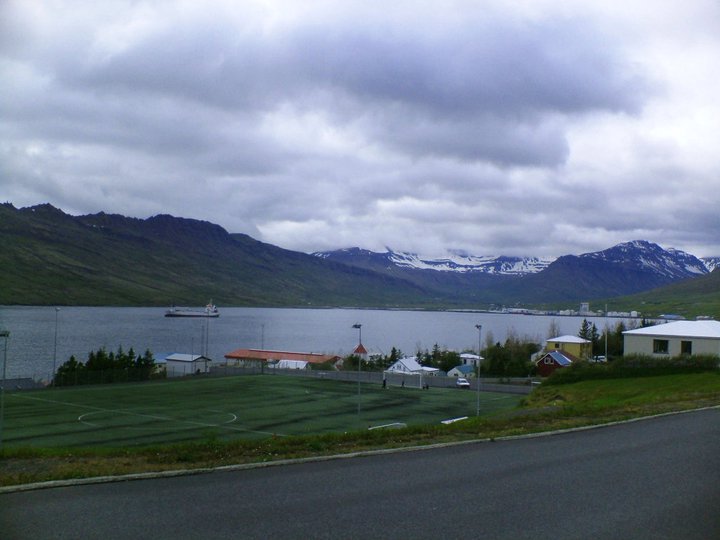
mouldy football pitch by the fjord, Neskaupstaður, eastern Iceland, around 4.30 am
Randomly – although it’s the thing that made me think about writing all this in the first place – I don’t think I’ve ever had that ‘at home’ feeling more strongly than I did when walking in the outskirts of a small town in Iceland at 4.30 am one July, during a night where the ‘midnight sun’ felt more like perpetual dusk. Why should that be? I have no idea. The conditions were right I suppose – not unlike the flat grey day mentioned earlier. Iceland is very beautiful but although this stretch of road ran alongside a fjord at some points, it mostly wasn’t something so picturesque that you’d put it on a postcard. It featured details as apparently uninspiring (but weirdly loveable to me) as a mouldering football pitch and a school or some kind of municipal building. At one point there was a boat on a platform, which did give more of that sense of ‘elsewhere’. What did ‘at home’ feel like? You know it when you feel it I suppose – a kind of vaguely melancholy contentment that may partly have come from having had a few drinks plus 24 hours or so without sleep; it was comfortable and it didn’t feel like exhaustion.
that mildewed football pitch in more detail
If I tried to express that feeling to some of the protesters, quite possibly they’d say something like “If you like it so much why don’t you go and live there” (British people have a long history of telling people if they don’t like the country they can just leave, and yet they rarely feel like they themselves should leave if they don’t like the country). It occurs to me now that when racists, xenophobes or (popular current euphemism) “concerned citizens” scream at people to go back where they came from, when they wrap themselves in the flags of their own country and wield their national identity at people, what they are doing may partly be asserting how they feel about their home, but what they really want is for everyone they oppose to not feel at home. And when, at the best of times, ‘feeling at home’ is a fleeting and precarious emotion, that’s kind of a shitty thing to do.

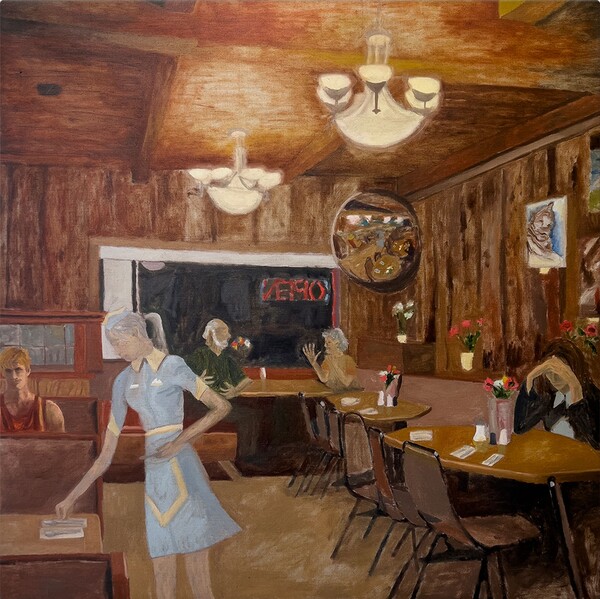 Ghost World – Armadillo Café – So far Ghost World haven’t (for me) surpassed the music of their first two albums, Ghost World and Spin, but repeatedly putting on Armadillo Café while consciously ignoring the fact that it’s a concept album about a café, it turns out to be another collection of idiosyncratic and loveable indie pop songs. The concept is fun but detracts from rather than strengthens the quality of the individual songs.
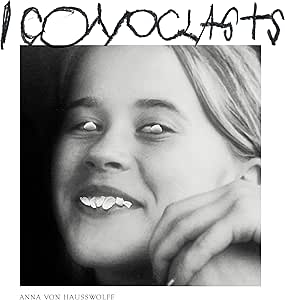 Anna Von Hausswolff – Iconoclasts. I wouldn’t say Anna Von Hausswolff goes from strength to strength; she’s always been great – but her work remains consistently interesting, challenging and gripping and Iconoclasts pretty much picks up where 2018’s Dead Magic left off, but absorbing rather than sidestepping the sombre majesty of her 2020 instrumental album All Thoughts Fly. Basically, she makes the kind of music you’d hope someone with the name Von Hausswolff would make.

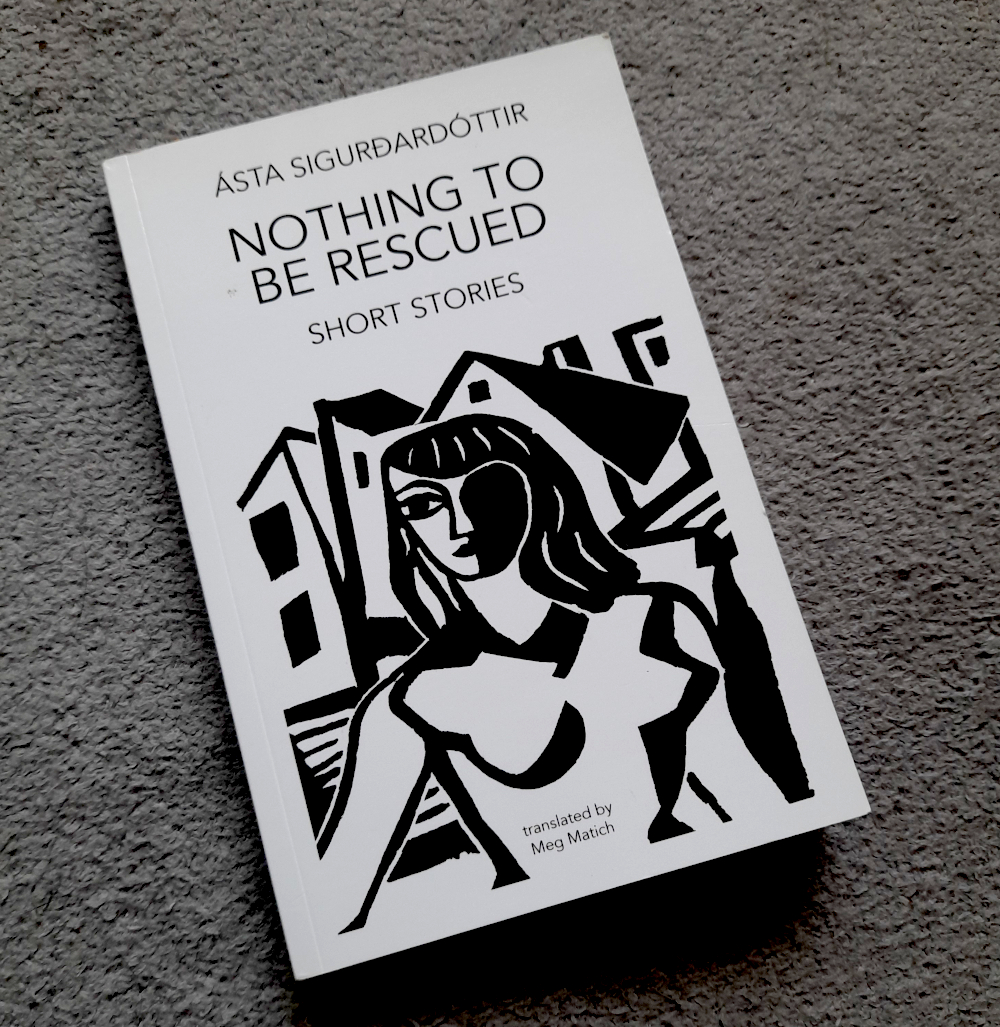 With books – unless, presumably, one is a publisher or a more than occasional book reviewer, the ‘of the year’ part is even less relevant. As it happens, I did read one book published this year that I thought was outstanding – Dorian Lynskey’s Everything Must Go – The Stories We Tell About the End of the World which I reviewed here and chose here, but I read many other books whose publication dates I’d have to look up. Most recently, I loved Nothing to be Rescued, a collection of sad and bitter short stories by Ásta Sigurðardóttir, a 2025 discovery for me, but Ásta died in 1971 and most of the stories pre-date her death by a decade. Even this collection, translated into suitably stark but beautifully readable English by Meg Matich, and which features Ásta’s own illustrations, is a couple of years old already. But just as the music that sounds best this year will sound the same next year, these stories, which have already outlived their author by more than half a century will continue to feel just as vivid and alive…