the vanishing everything of everywhere – elegies and illusions

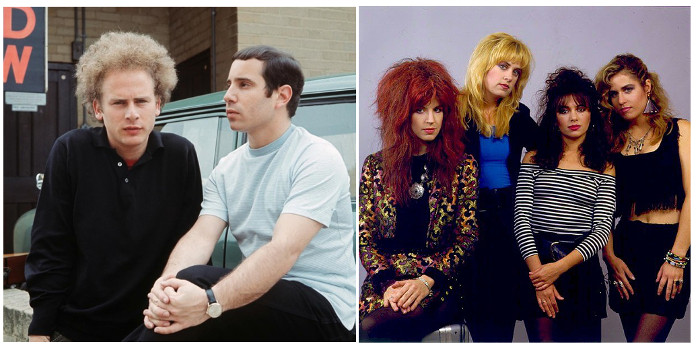
“Time, time, time, see what’s become of me…” When The Bangles covered Simon & Garfunkel’s A Hazy Shade of Winter in 1987, the song was 21 years and one month old, and now (January 2018) The Bangles’ version (from the underrated – according to me – movie of Bret Easton Ellis’ Less Than Zero)  is 30 years and one month old; time flies, another year draws to an end etc etc etc. It took until the early 1990s for 60s nostalgia to really take hold and, true to form 30 years on from the 1980s, 80s nostalgia is everywhere; in music, in fashion and (especially) in film and television. Even the tired, terrifying old tropes of the cold war are back; excellent stuff.
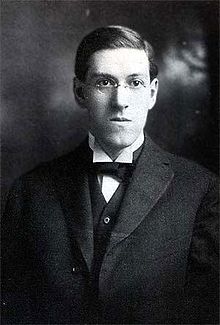
It’s approximately 90 years since HP Lovecraft wrote, “The oldest and strongest emotion of mankind is fear, and the oldest and strongest kind of fear is the fear of the unknown.” (in the essay Supernatural Horror in Literature (1926-7)), and it’s got to be something like 25 years or so since I first read those words (in the HP Lovecraft Omnibus Vol 2, Dagon and other Macabre Tales, Grafton Books, 1985, p.423 ). So what about it?

Lovecraft might well be right about fear; but more pertinent to my intro is that possibly the oldest emotion preserved in literature – at least (major, major caveat, based on my ignorance) in the literature of Europe – is nostalgia, and the feeling that things were better in the past. (see also here for an excellent & thoughtful look at nostalgia) The literature of the ancient Greeks makes clear that the age of heroes already lay in the distant past. The pride and arrogance of Imperial Rome was tempered – formally, at least – by the belief that it was a pale imitation of the Republic which the Empire supplanted. The earliest literature in (old) English makes it clear that the inhabitants of what was one day to become England were a) not entirely sure of what had come before, but b) knew that it was in many ways ‘better’ and certainly more impressive than the present day of the 8th century:

“The work of the Giants, the stonesmiths,/ mouldereth…
And the wielders and wrights?/Earthgrip holds them – gone, long gone”

The Ruin, (Translated by Michael Alexander, The Earliest English Poems, Penguin Classics (3rd edition, 1991, p. 2)

Even closer to home (for me), the earliest literature of Scotland, the Goddodin of the poet Aneirin, does something similar. The poem dates from somewhere from the 7th to 10th century and is written in the ancient British language now called Old Welsh (which it is of course, but it is also, geographically, old English and old Scots, since it seems to have been spoken in a far wider area than modern Wales). The Goddodin is a series of elegies mourning the loss of the warriors of the eponymous ancient kingdom (which spread roughly over what are now the modern Scottish regions of Lothian and Borders) in battle, and with them the heroic culture of their era.*

*a perennial theme that crops up in a very similar form in the Fortinbras subplot of Shakespeare’s Hamlet, preserved at one remove from the earliest known version of the story, Saxo Grammaticus’ elemental/mythological 13th century version from his Gesta Danorum. But even this is assumed to be derived from an earlier, lost source, probably Icelandic.

To say that nostalgia as opposed to fear may be mankind’s oldest emotion is problematic. Logically it’s difficult (chicken/egg innit), but also, for all of its obvious dominant ingredients – sadness/regret and happiness – a large component of nostalgia can be fear, and, specifically, Lovecraft’s ‘fear of the unknown’ (in this case the always unknowable future). That’s problematic for many reasons. In the examples of nostalgia noted above, the glamour (not intended to have its old, magical meaning, but actually that’s probably even more appropriate) attached to the past is partly because it can’t come again. If the people of “now” were as noble, heroic etc as the people of “then”, then somehow the past and the ancestors – a vital component of the values of most non-Christian and pre-Christian cultures – are devalued and not receiving their due reverence.

Although it seems almost incomprehensible to someone of my generation, there seems to be a similar, ‘don’t disrespect the ancestors’  unease nowadays in some circles that’s manifested in an unwillingness to condemn wholesale the expansion/existence of the British Empire. And really, it’s not very complicated  – it is entirely possible to be impressed by and/or grateful for the innovations of the Victorian era – flushing toilets, railways and whatnot – while also seeing the culture and times for what they were; repressive, oppressive, misogynistic, racist, ignorant. It shouldn’t be difficult, because it’s happened before. Christianity made it easy for previous ages to condemn the pagan empires of Rome, Greece, Egypt and co (and indeed the ancient Arabic civilisations) without abandoning the inventions and innovations of those same ‘decadent’ civilisations. Indeed, even at the height of Christian belief in Europe, interest in the cultures of the pagan empires remained high, even if Christian scholars felt the need to inflict a version of their own value system onto their researches. There’s no reason that people now shouldn’t be able to do the same with the ages we have left behind, or are hopefully in the process of leaving behind. Yes, good things come from bad cultures or societies, but not because of the bad, but just because (most) human beings are extraordinary.

In 2017 there seemed to be – as I suppose there always must be – an ever-increasing number of warring nostalgias and counter-nostalgias, the latest being for the Russian Revolution in 1917 – a violent event, with vast and oppressive consequences and therefore definitely negative, but like most revolutions, born of aspirations and ideals which are hard to dismiss. In fact, Dickens’ famous opening to A Tale Of Two Cities seems uncannily prophetic, because Dickens – as he explicitly realised – could see that human nature and human actions remain fairly constant:

“It was the best of times, it was the worst of times, it was the age of wisdom, it was the age of foolishness, it was the epoch of belief, it was the epoch of incredulity, it was the season of Light, it was the season of Darkness, it was the spring of hope, it was the winter of despair, we had everything before us, we had nothing before us, we were all going direct to Heaven, we were all going direct the other way – in short, the period was so far like the present period, that some of its noisiest authorities insisted on its being received, for good or for evil, in the superlative degree of comparison only”

I think it’s probably true that it’s always the best of times, for somebody, in some respect. It’s certainly always the worst of times for other people; which sounds complacent or at least fatalistic, but only if one doesn’t try in some way to improve things. This kind of impersonal nostalgia – for ‘better’ times – is, necessarily selective. (in fact, all nostalgia is, because perception is selective – hmm, it seems like this just started copying the thing about realism I wrote recently, but bear with me) and relies to a large degree on ignorance and/or self-deception in order to be nostalgia at all.
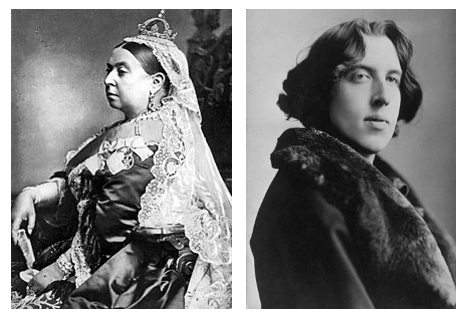
History isn’t really a subject, history is everything; people, peoples, cultures, societies, but, necessarily “history” as it’s taught, or absorbed through popular culture, filters and simplifies. That’s important, because when people in Britain talk nostalgically about ‘Victorian values’ you can (usually) assume that they don’t intend any reference to the exploitation and subjugation of untold millions of people, child prostitution and child labour, the life expectancy of the average Victorian person etc. And, as always, history is more complex than its popular image. The Victorian era may be symbolised for British people by the building of railways or the expansion of the Empire, or by Jack the Ripper, or Queen Victoria being unamused, or by the establishment’s treatment of Oscar Wilde; but it was also the era that produced and shaped Jack the Ripper, Queen Victoria and of course, Wilde himself, as well as the whole decadent movement. Interestingly, Sigmund Freud was only two years younger than Wilde; an apparently value-free but perhaps significant observation.

This kind of complexity is what makes history more interesting than it’s sometimes given credit for. The Scottish Enlightenment was a wonderful, positive, outward-looking movement, but it coexisted in Scotland with a joyless, moralising and oppressive Calvinist culture. Time and nostalgia have a way of homogenising peoples and cultures. The popular idea of ancient Rome is probably one of conquest, grandeur and decadence, but what is the popular idea, if there is one, of ‘an ancient Roman’? Someone, probably a man, probably from Italy, in a toga or armour; quite likely an emperor, a soldier or a gladiator, rather than say, a merchant, clerk or farmer. But even within this fairly narrow image, a complex figure like the emperor Elagabalus (who was Syrian, teenage, possibly transgender) defeats the obvious school textbook perceptions of ‘Roman-ness’ (as, perhaps, it did for the Romans themselves). Even in our own time, the fact that older generations from the 60s/70s to the present could lament the passing of times when ‘men were men & women were women’ etc is – to say the least – extremely disingenuous. Presumably what they mean is a time when non-‘manly’ men could be openly discriminated against and/or abused and women could be expected to be quiet and submissive.

Similarly, throughout my life I have heard people – and not only right-wing people – talk about the economic success that Hitler brought to Germany. But you don’t have to be the chairperson of a financial think-tank to see that a programme of accelerated militarism that requires war in order to function isn’t really a viable economic model for anyone who doesn’t espouse the ideology of Nazism or at least some kind of Imperial expansionism. But people seemingly want to believe that if it wasn’t for all those pesky Nazi faults Hitler could have been a great leader. He couldn’t, though, because he was a real person, his beliefs were inseparable from everything he did and he really did exist and do the things he did and therefore wasn’t a great leader.

As I’ve said too many times already, history is complex, but nostalgia is too. It’s impossible to express in a single word other than itself, though interestingly, its original Greek meaning (‘homecoming pain’) is actually more specific than the word itself has come to be in English. Possibly because of this hard-to-express quality, most European languages tend to use variations of the word ‘nostalgia’ rather than having a word of their own with the same meaning. But despite that complexity, it tends to have a simplifying quality.

The reason for that simplifying is because, for many people, nostalgia equals safety. Political reactionaries always look to the past for examples of stability and they’ll always find them – but that stability is an illusion, caused by the fact that the past itself is stable, but only in the one sense of being unchangeable. And until the invention of the time machine it will remain unchangeable – but even so, through endless re-interpretations, re-evaluations and new points of view, the picture we have of it fluctuates almost daily. I think it’s fair to assume that (as Dickens implied) every ‘golden age’ masks a dark age but the temptation to look at the past fondly is hard to resist. It often seems otherwise, but people are, by and large fairly positive and want to look back with fondness, even if it’s a melancholy fondness. And the result of that is a softening and distancing of the darker aspects of history. A quote from the great Scottish singer/songwriter Alex Harvey strips away the soft-focus effect that the distorting lens of nostalgia puts on the past:

“Nobody ever won a war. A hundred thousand dead at Waterloo. No glory in that. Nobody needs that.” (quoted in Charles Shaar Murray’s Shots From The Hip, Penguin Books, 1991, p.71)

Numbers aside, that seems indisputably true; but evidently it isn’t, because people are entirely capable of being nostalgic about almost any negative event. ‘The Blitz Spirit’ is remembered fondly in Britain, because the few people still alive who remember it survived it, and because it happened decades ago and bombs are no longer raining down on the UK. Cinema and television is full of nostalgia for even the darkest times, largely because people are supposed to be entertained by these things and structures, stories and likeable characters are imposed on the past to make it controllable and enjoyable. And that’s just as true for the harrowing ‘war is hell’ type of film as it was for The Dirty Dozen and just as true of the revisionist ‘elegiac’ Western as for the old John Wayne kind. The revisionist Westerns tend to focus on the dying days of the ‘old West’ in grimly realistic detail, but while barely acknowledging the genocide and horror that is the real historical backdrop of the period. In a way, that’s fair enough – those stories are not about that subject – but when there are not only no (or very few) films about that subject, and it is barely even acknowledged by ‘official’ narratives of taught history, it’s a stark and telling omission.

It’s my personal feeling that nothing truly good is produced by adversity, or at least that if it is, that doesn’t offset what may have been lost. Which isn’t to deny that people are amazing, resourceful, resilient and inspiring; they are. If every golden age masks a dark age, it’s probably true too that every dark age is shot through with some elements of positivity, although I won’t scrutinise that statement too closely. Countries which were colonised by the British Empire (or indeed any empire) manage to grow and assert their independence and define their own cultures, which is good; but we can never know what or who was lost when their histories were derailed.

I love blues music (and indeed the whole phenomenon of western popular music which mostly grew from it), but again; we can never know what would have been, or what would exist now, had those creative energies not been re-directed by a couple of hundred years of slavery and exploitation. Individuals are capable of achieving almost superhuman feats of bravery and resourcefulness when facing adversity; escaping from abusers and kidnappers, rescuing people from disasters etc. But no-one in their right mind would – I hope – recommend that young people undergo these kinds of ordeals in order to fully achieve their potential.

I don’t think it’s particularly useful for individuals (although governments and institutions are a very different thing) to feel guilty about the deeds of the people of the past (or to be proud of the achievements of the past, really), but I also see no need to pretend that – for example – because India has a big railway network, the British Empire did something positive by oppressing the country’s people and culture and stealing its resources. Countries that weren’t colonised by the UK or Belgium or France or Russia have railways too. Nothing good came of the British in India. India survived anyway, just as people survive catastrophes everywhere and achieve amazing things in doing so. But you don’t celebrate an earthquake because people survive it and thrive afterwards.

Lou Reed and Rachel in 1977 (Mick Rock)

So much for impersonal nostalgia – the personal kind is in many ways very similar, if less destructive. I’ve always been a nostalgic person; both for things I don’t remember, or that were long before ‘my time’ (you name it; silent movies, the 1960s, the Weimar Republic, Hong Kong cinema of the 70s, the Northern Renaissance, the Scottish Enlightenment, 80s teen movies) and, more naturally perhaps, for things within own experience. One of the things that initially made me write this was a reference in Anthony DeCurtis’ biography Lou Reed – A Life (John Murray, 2017)* about Reed’s 70s partner/muse Rachel, a fascinating figure who seems to have vanished into history. In Googling her I discovered various sites about vanishing/vanished aspects of New York and, because old photographs are endlessly fascinating, somehow segued from that to the vanished Jewish East End of London and the vanished and vanishing everything of everywhere. But if the Jewish East London of the 1960s and the underbelly of 70s New York are irretrievable, then so is one’s own childhood, not that one wants to retrieve it, exactly.

* It’s an excellent book, but one which illustrates some of my points; Lou Reed spent most of his adult life complaining about his conservative 1950s childhood, but DeCurtis himself has a more rose-tinted view of the period, saying “In stark contrast to the identity politics of today, assimilation was the order of the day…and none of Reed’s friends, Jewish or not, recall incidents of anti-Semitism or bias” (p.14) – fair enough you would think, except that just 22 pages later he also says, ‘Richard Mishkin was a fraternity brother of Allan Hyman’s in Sigma Alpha Mu, a so-called Jewish fraternity because at the time Jews were not permitted in many other fraternities.” (p.36)

Most of the polaroids etc that make up the ever-browsable (later note; but sadly diminished) Internet K-hole appear to be American, but any child of the 80s will recognise the texture and aura of the era we grew up in. When George Orwell wrote (I think in The Lion and the Unicorn, but I might be wrong; I’ll check) – “What have you in common with the child of five whose photograph your mother keeps on the mantelpiece? Nothing, except that you happen to be the same person” he was putting his finger on one of the strange paradoxes of culture, heritage and nostalgia. The memories I have of the 1980s are made up of a distorted, child’s-eye view of events and culture which is truly mine, plus things I know now that I didn’t know then, plus other peoples’ memories, TV and films. The most potent sources of nostalgia seem to be – as the makers of shows like Stranger Things and Dark, and films like Super 8 and (too many to list) are very aware –  the things you didn’t notice that you had noticed, the most ephemeral details; jingles from adverts, fonts, packaging, slang.

It’s an interesting point. The fleetingness with which you experience things has nothing to do with their power as memories. I have no idea what the first horror film I saw was, but I do know that a scene on some TV show where skinheads (or possibly a single skinhead) glued a man’s hands to the wall of a lift/elevator scared me as a child and stayed with me for a long time. Maybe that was because I used to see skinheads around on the streets (you had to watch the colour of the laces in their Doc Martens to see if they were ‘bad’ skinheads or not – though they were probably kids too, I now realise). I also know now (but didn’t then) that these were the second wave of skinheads, which is why I also saw Oi! written on various walls around the town; at the time I don’t think I ever made the connection. Again, when one thinks of the impact of very small occurrences it shows how impossible a really objective view of history is. I no longer bear any high school grudges, but without really thinking about it, there are many small and/or random sneers and insults from my youth that have stayed with me in vivid detail, along with the people and places involved. Similarly (but nicer) I will eternally feel grateful to two beautiful black girls in Camden in (I think) 1990 or 91 who made remarks to me which, even at the time were ‘not politically correct’ but which pleased me immensely; it is among the very few teenage memories that boosted rather than eroded my confidence. A tiny thing, barely even an ‘incident’, but a big deal to a painfully shy adolescent. What to make of such a minor, slightly embarrassing episode? I can still vividly remember – although it was not a rarity – my whole face burning when I blushed. People often remarked on the redness of my blushes and I remember – not even slightly nostalgically – being compared to a tomato, being told I looked like I would ‘burst’ etc at high school. And thinking about it, there’s no real conclusions to draw from that memory except that real nostalgia, unlike the nostalgia industry (“it was the 70s: Buckaroo!“, to quote Alan Partridge) is particular, not general. The Camden episode includes references to youth, gender, race etc, but it has nothing important to do with any those factors and I doubt if the two girls remembered it even days later. These are not the kinds of incidents which are worthy of a biographer’s attention;  but they define my youth every bit as much as the music I listened to, the sweets I remember that no longer exist, or the clothes I wore.

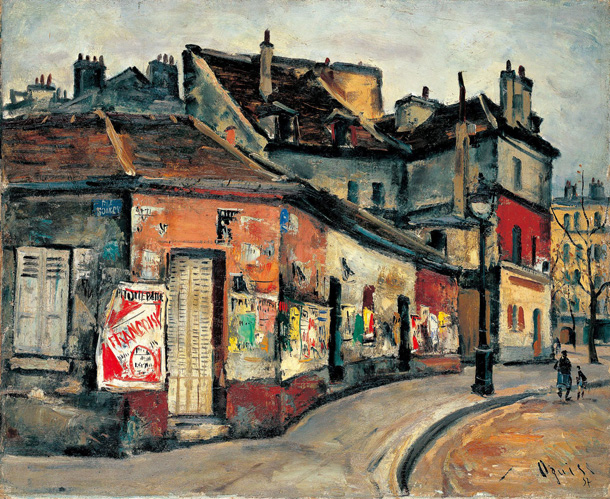
My particular 80s nostalgia has less to do with “the 80s” in the sense it that it appears in TV shows and films as it does a litany of gloomy-sounding things: the urban decay of 60s and 70s council estates, indoor markets, army stores, arcades, brutalist churches that harmonised with those reinforced concrete towers that the fire brigade used for practise. This is a kind of eeriness as nostalgia; reflected in my liking for empty streets and art that represents empty streets: Algernon Newton, Maurice Utrillo, Takanori Oguiss , the photography of Masataka Nakano and taken to its extreme, Giorgio de Chirico, where the emptiness isn’t truly vacant so much as  it is pregnant , reminding me always of  – nostalgia again – the ruined city of Charn in CS Lewis’ The Magician’s Nephew (by far my favourite Narnia book) – which made a huge impression on me as a child. Charn may even be where my liking for such things as ‘urbex’ photography, like that of Andre Govia, and of course, The Ruin, quoted way back in the first paragraph, comes from.
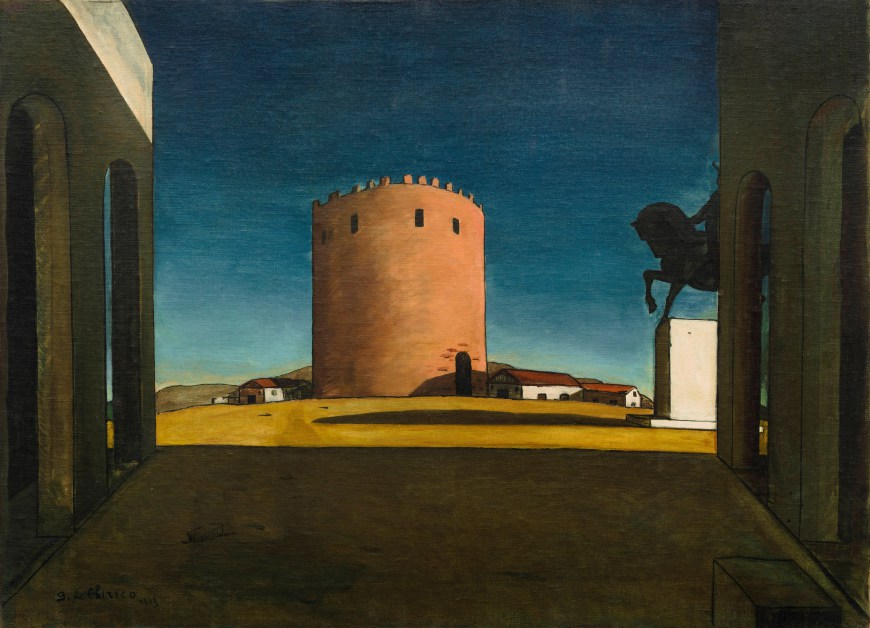
The Red Tower by Giorgio de Chirico
Street scene by Takanori Oguiss

“The passing of time and all of its crimes, is making me sad again” – sadly, one of those crimes is that when I first heard that line (from Rubber Ring by The Smiths) in 1989 or thereabouts, Morrissey seemed to be on the side of the downtrodden and marginalised, whereas now he seems to be one of that increasing number of people who pretends that the mainstream of British culture is itself somehow being marginalised; which is not only patently ridiculous but impossible – and nostalgic, of course.

There’s a whole culture industry with its own cultural shorthand that has been constructed to bolster the standardised view of any given period. Nowadays, there’s whole genre of TV shows where any decade can be summed up by some B-list cultural commentator or celebrity (often not old enough to remember what they are “remembering”) saying “He/she/it were mad, weren’t they?” about some figurehead of the era. Not so great of course, when that figurehead turns out to be Jimmy Savile or Rolf Harris, at which point even nostalgia, like history, has to be revised.

The beauty of all nostalgia is that it’s selective. The 70s that Morrissey seems to  feel nostalgic about (in the true, mixed feelings sense; witness the whole of Viva Hate, which I love) wasn’t ‘better’ than nowadays, but the writer of its songs was young then; he isn’t now. There are younger people who are also nostalgic about the 70s, or the 80s, because they see the partial versions of those era(s) preserved by those who were there then, or who pretend to have been. The people who mourn the loss of the blitz spirit are really no different from me wishing I’d seen the Beatles. The people who are nostalgic for the Empire will (hopefully) never have to deal with being in charge of a mass of powerless, subject people whose resources they are stealing (or be the subject of the same), but they can enjoy the things that Empire brought to all of our lives. The ‘glory’ of Empire, like the mythical ages of Greece and Rome, and the giants that the Anglo-Saxon poet pondered over, only exists now as the faded, distorted memory of a faded, distorted memory. Like the 70s, like the 80s, like the 2010s, like yesterday, they are wonderful and terrible because they can never come again.

Happy New Year!


A note on the text above: throughout this article  (and many others) I refer to ‘people’ and ‘humankind’ in what is intended to be an inclusive kind of way, referring to people of all races, genders or indeed lack of gender. I probably also refer to gender in a binary sense, partly due to context, partly no doubt through laziness. However, I do have a tendency to not use the term ‘cis’, unless absolutely necessary – for me personally, the word ‘women’ includes trans women and the word men includes trans men. I don’t intend any offence by this, but I also don’t really mind if anyone is offended. I think it’s a shame that something as basic (if not simple) as a person’s gender should be a matter of opinion, but so it seems to be. My own view is that the contents of someone’s underwear is none of my business unless they explicitly make it so.
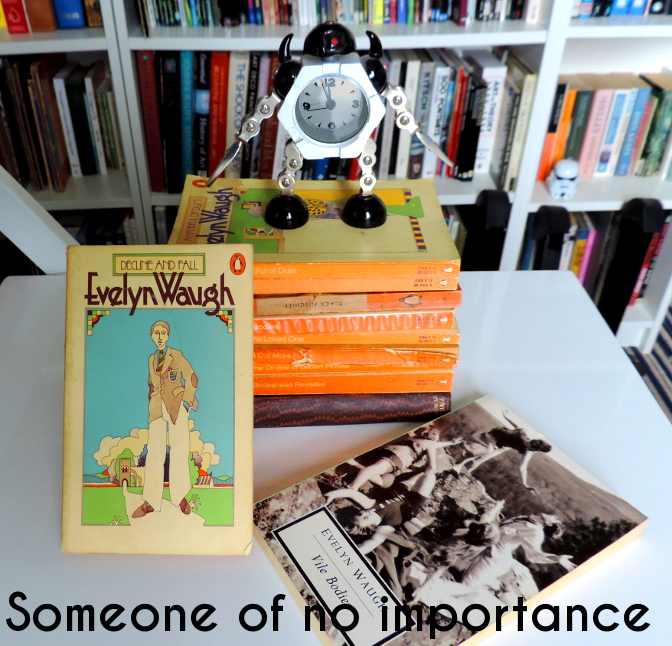
Someone Of No Importance: Evelyn Waugh and inter-war Futilitarianism


The news that one of your favourite novels is being made into a film or TV show is never straightforwardly pleasurable; yes, there’s an excitement about seeing scenes from the page (and from your own imaginings of them) on screen, but there’s a certain amount of apprehension too. Nobody will look right (at first anyway), they may not sound right, and if you don’t like them you may be stuck with them whenever you re-read the book (especially if you didn’t have a particularly clear image of them in your mind in the first place or if, like me the image you do have often bears strangely little relation to the writer’s actual descriptions). Then there’s the tone and authorial voice/point of view, the inner life of the characters… It’s actually surprising there are any good adaptations of books. But there are many, the best of which (to me at least) are those that capture the essence of the book without necessarily being ‘faithful adaptations’ (Catch-22, Ghost World) or which use the book as a launchpad for the filmmakers’ own ideas (Blade Runner, Jaws). Most adaptations are of course neither of these. Which brings us to the BBC’s ‘not bad’ version of Evelyn Waugh’s Decline and Fall.

It’s first of all a strange book to have chosen; a black comedy whose fans – as with fans of JG Ballard’s Crash, William Burroughs’ Naked Lunch and Bret Easton Ellis’ American Psycho – know in advance to expect an approximate, rather than precise rendering of. Decline and Fall is not an extreme book in the graphic sense that those three are, but, like at least two of them, its humour is grounded in its unremitting unpleasantness and in the end it’s a bleak, essentially misanthropic, nihilistic kind of comedy, tellingly completed before Waugh’s conversion to Roman Catholicism. For a variety of reasons, though, ‘bleak’ isn’t how the TV version feels.

But before moving on to the show, it’s worth looking at why the book is the way it is. Firstly, and most importantly, it’s an exaggerated reflection of certain aspects of its creator’s personality and an expression of his sense of humour. Even post-conversion, when there is a modicum of compassion for some of the characters in his work, Waugh’s books – with the exception of Brideshead Revisited – are mostly funny but extremely mean-spirited black comedies full of caricatures and snobbishness made extremely funny by his writing style, and in his first few novels that’s pretty much all there is. The surprising depth of feeling in even these books comes from the fact that Waugh allows that his characters – even a relative cipher like Decline and Fall’s bland non-hero Paul Pennyfeather – have human emotions, even if they are rarely respected by others or the author. In Decline and Fall , the snobbishness, misogyny and the – to modern readers – strange treatment of child abuse in which certain pupils seem partly culpable in their encouragement of the paedophile (I hope that most of us would now agree that the victim of child abuse can’t really be complicit in it), can be explained pretty simply: it was the milieu that the young Waugh knew. His education at an all-boys public school and his subsequent university life and work as a teacher in (again) an all-boys public school were overwhelmingly male experiences and child abuse was, if not actually legal or even acceptable, then at least a tacitly accepted if not much written about part of public school life. Nowadays, we might find it odd for a writer to include that kind of thing in a book where the original author’s note reads ‘Please bear in mind throughout that IT IS MEANT TO BE FUNNY.’ but although the novel was self-consciously outrageous, the aspects that most trouble modern readers; abuse, misogyny, racism, were probably not that much dwelt upon in the late 20s.

The reason that Waugh’s comedies are so rarely successfully adapted into other formats is that their action is farcical, but not complicated. In 1920s comedy, PG Wodehouse is the obvious star, and his work lends itself naturally to stage and television adaptation thanks to his intricate joke-like plots (complete with a punchline at the end). The comedy is there in the story and the writer’s style is the dressing that brings it to life. Waugh’s early plots meanwhile are loosely constructed to non-existent and chaotic and often implausible (yet somehow also more realistic than Wodehouse) and his writing style is everything. It’s a weird, slightly unworkable comparison, but now that I’ve made it; with Wodehouse, his stories are like a kind of pantomime or fairytale, played out by characters the author loves and which are completely ludicrous but make perfect sense on their own terms. With Waugh, it’s often as though a real (perhaps even tragic) story about real people is being told by someone who finds the whole thing funny and has little to no sympathy for the fools and the predicaments they find themselves in. Wodehouse orchestrates the events like a stage director, while Waugh reports them like a condescending gossip. To me, he is the funnier of the two, but his presence is also necessary; if you remove Wodehouse the narrator from his stories, you are left with characters that embody the warmth and silliness of the narrator’s voice, acting out stories which are in themselves funny. If you remove Waugh you are left with people you never really know making fools of themselves in painful ways. If you had never read Waugh but only watched adaptations of his work, one might expect his books to read something like a posh version of Tom Sharpe; which they definitely don’t.

The other main reason that Waugh’s early books are the way they are is because he was part of that couple of generations who lived through the First World War, but who were too young to take part. The impact this had is undeniable and the British literature of the 20s and 30s is filled with very different books by very different writers which nevertheless have various things in common with each other and which I like very much.  The early 21st century may be in some ways a far more cynical time than the 1920s, but in effect it is both nicer and nastier. Most of us no longer accept the inequalities of the class system, or discrimination in race and gender. We are also no longer surprised that human beings can slaughter each other in their millions in mechanised ways; but while being used to that idea, it’s also true that, unlike Waugh’s generation, we (at least we in the UK) haven’t had the experience of half of the adult males that were there in our early childhood simply not existing anymore, or living in a country where almost every town and village doesn’t have a monument to those killed in a war we remember. A large part of the literature of the 20s and 30s consists of writers either trying to find meaning in a society whose way of life has been changed forever, whose old beliefs; in religion, in tradition, no longer seem to have any meaning, or of trying simply to escape the realities of modern life altogether. In the mid-to – late 1930s, politics would take centre stage in British literature, but for a period from around 1920 to 1935 the anxieties of the country’s younger writers were revealed in a series of strangely formless but oddly similar novels, which were once labelled ‘futilitarian’.

booox

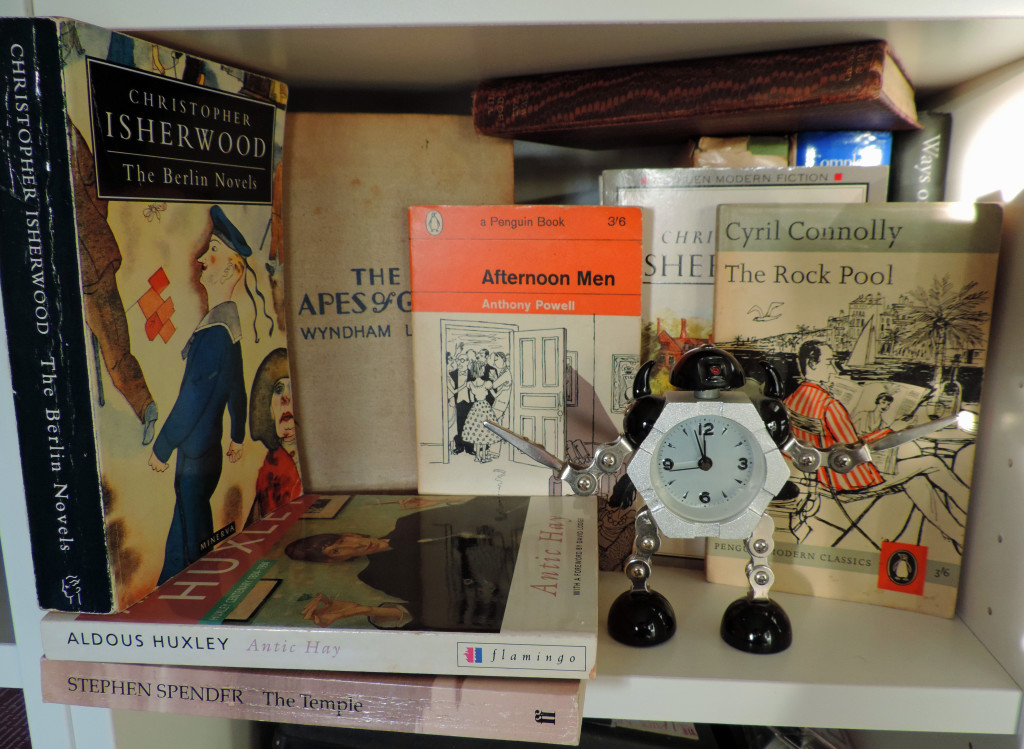
These are my favourites, might as well do this chronologically…

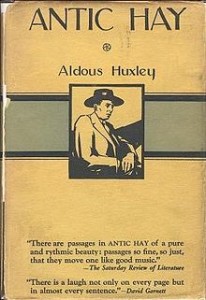
Aldous Huxley – Crome Yellow (1921), Antic Hay (1923) and Point Counter Point (1928)

antic

Huxley was in fact slightly older (20 when WW1 broke out, whereas Waugh was only 11) but he could not take part in combat due to his chronically bad eyesight. His early novels (I think Antic Hay is the best) make a very interesting comparison with Waugh’s, because at first they seem fairly similar; modern comedies where the storylines (such as they are) mostly revolve around the social lives of young, wealthy and irresponsible people. But the tone and content is very different. While Waugh was at school during WW1, with not only all the jingoism and propaganda that that entailed, but also the noticeable absence of adult male teachers and role models, for Huxley, WW1 was the period of Bloomsbury (he worked as a farm labourer at Garsington Manor, home of the society hostess and patron of the arts Lady Ottoline Morrell. For him, social life meant intellectual conversation; the discussion of art and modernism, conscientious objection, philosophy, pacifism. The comedy in novels like Antic Hay comes mainly from his satirical portrayals of the kinds of people he was mixing with but they are funny in both a broad way (the hero Theodore Gumbril’s invention of ‘pneumatic trousers’) and a deeper one (relationships and their difficulties). The main difference from Waugh is that whereas the comedy in a book like Waugh’s Vile Bodies arises from the somewhat desperate attempts of the main characters to have fun in the face of the meaningless void underlying modern life, in Huxley’s works the comedy arises from the characters’ often farcical and pretentious attempts at finding meaning through conversation, art and philosophy. The contrast between Huxley’s novels and an apparently very similar one – Wyndham Lewis’ great satire The Apes of God (1930) is especially striking because the milieu the books are set in almost identical (they knew many of the same people) and because, like Huxley, Wyndham Lewis was not nihilistic. He was however, immensely negative and the fact that he had seen active service in WW1 and was also himself a pioneering artist made him extremely impatient with what he saw as the wishy-washy dilettantism of the Bloomsbury artists and writers and their detachment from real life. The contrast between Antic Hay and The Apes of God is the difference between an affectionate Max Beerbohm cartoon and a merciless James Gillray caricature.

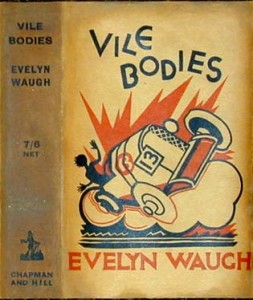
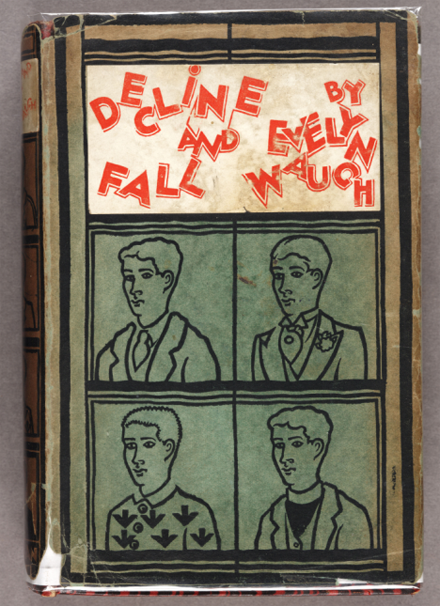
Evelyn Waugh – Decline and Fall (1928) and Vile Bodies (1930)

Viles_Bodies

What makes these books distinctively post-WW1 is the nihilism at their heart. The younger generation of the 1920s were probably more different from their parents (products of the Victorian era) than any generation before or since (excepting maybe that of the 60s) and the tone of Waugh’s novels is resolutely modern and, despite its insistence on/preoccupation with social class, the feel is one of fragmentation and instability, especially in comparison with pre-War literature. When older people are presented, it is almost always as an archaic survival from a distant era. If the war is mentioned at all, its in an almost nostalgic way by people for whom it was the backdrop of their youth or childhood. The most surprising thing about Waugh’s books is the unexpected poignancy that comes from his mostly unsympathetic handling of his characters; Vile Bodies, probably his most determinedly unpleasant book, is also his funniest (aside from the grotesque later masterpiece The Loved One).

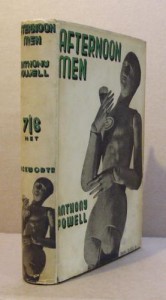
Anthony Powell – Afternoon Men (1931)

afternoon men

Of all the books here, Afternoon Men feels perhaps the least ambitious, but makes me laugh the most. I have read some of Anthony Powell’s other books (and started but not finished his Dance to the Music of Time series), but they just aren’t the same. The story is almost identical to those of Huxley and Waugh – a group of young people meet up socially and drink a lot, have affairs etc – although the social class of Powell’s protagonist William Atwater is lowly enough that he actually has a normal, office-based job – a rarity in any of these books. Atwater’s friends and acquaintances are the usual mixture of bohemian high society people but it is Powell’s abrupt, lightly modernistic writing style and feel for dialogue that makes it work so well:

“’I work in a museum’, said Atwater. He was getting sleepier and felt he ought to say something. He had begun to be depressed.

‘That must be very interesting work, isn’t it?’

‘No.’

‘Isn’t it really?’

‘I often think of running away to sea.’

‘I think it must be very interesting.’

‘Do you?’

* * * *

‘What about your books?’ Atwater stood up. He could not do all the stuff about the books. He was too sleepy. He said:

‘There are these. And then there are those.’”

(Afternoon Men, p.35-6, 1963 Penguin edition)

As a writer, Powell is far more deadpan and less misanthropic than Waugh, but he creates a similarly poignant effect; it would be quite possible to film this novel and, used verbatim, the dialogue might still be funny, but what essentially makes the book work is the style in which it is written.

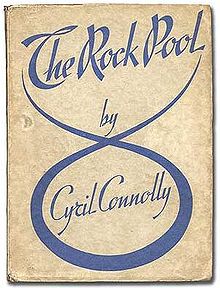
Cyril Connolly – The Rock Pool (written 1935. published 1936)

220px-Rockpool

The Rock Pool is the only novel by Connolly – best known as a literary critic – and it is one of my favourite books. Connolly was the same age and (more or less) social class as Evelyn Waugh, and the novel is the portrait of a snobbish young man of means who goes to the French Riviera to observe life in an artist’s colony, with the explicit intention of writing a period piece about the kind of carefree1920s-style life of leisure that no longer existed in the London of the 30s, but might still be going on there.  In fact, it isn’t  – and instead he finds himself drawn into the lives of the impoverished artists, conmen and bar owners there until it becomes clear that he is not the detached ironic observer he imagined, but has in fact found his niche and his people, whether he wants to have or not. In comparison with Waugh and even Huxley, Connolly is far more sympathetic to his characters and the tone is completely different from Waugh’s slightly contemptuous detachment:

“’Tell me, why do you come here if you are such a snob?’

‘Who said I was a snob?’

‘Why, everybody… I’m sure it must be very amusing.’

He felt old and miserable, going through life trying to peddle a personality of which people would not even accept a free sample.”

(The Rock Pool, p.90-91, Penguin edition, 1963)

The fact that The Rock Pool is a product of the mid-30s and not the 20s is part of its charm. While Connolly’s contemporaries and peers were becoming interested in philosophy and science (Huxley), religion (Waugh) or politics and social commentary (George Orwell, Christopher Isherwood, WH Auden etc), Connolly accepted, with insight, the aimless, aesthetic worldview of his 20s generation, even as it became obsolete.

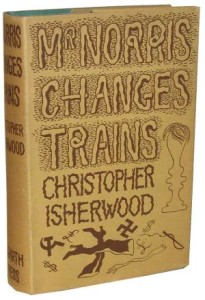
Christopher Isherwood –  Mr Norris Changes Trains (1935)

mr norris

Isherwood’s first two novels, All The Conspirators (1928) and The Memorial (1932) are also relevant here, but Mr Norris… (probably best known, with its semi-sequel Goodbye To Berlin (1939) as being the inspiration for the musical Cabaret) have more in common with the books described above. While both of his earlier books dealt specifically with the generation gap that had resulted from the First World War (and The Memorial is explicitly concerned with the effects of WW1 on British society), Mr Norris is, although very different in tone, essentially similar to The Rock Pool – a comical story about the adventures of a young upper class person out of his element. Although famous for its evocation of the politics and life of late Weimar and early Nazi Berlin, the novels were born from Isherwood’s desire – in 1929/30, rather than the mid-late 30s of the novels – not for any kind of social or political commentary, but to escape the milieu of upper class England and experience the hedonistic lifestyle of Berlin. As with most Waugh and Powell, the book’s main protagonist is less vividly drawn than the more extreme characters who surround him, and in many ways Isherwood accomplishes a kind of heightened, occasionally grotesque realism something like the Neue Sachlichkeit artists (Otto Dix, Georg Grosz, Rudolf Schlichter, Christian Schad etc) who were working in Germany in the same period, and whose paintings have often adorned the covers of his books. The fact that his books are partly autobiographical (and written in the first person, as ‘William Bradshaw’, Isherwood’s own middle names) means there is little of the distancing effect of Waugh and although there is much humour in Isherwood’s early novels, often at the expense of his characters, they are written with a warmth and compassion that makes them translate to the screen without losing too much of the feel of the novel – with the exception of the narrator himself, who suffers by being mostly a nondescript bystander, so that in Cabaret, the Christopher Isherwood/William Bradshaw character has to become the very different Brian Roberts.

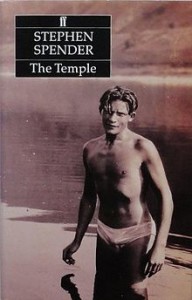
oh – not chronological now, but also – Stephen Spender – The Temple (written 1929, published 1988)

220px-TheTemple

While Isherwood was in Berlin with WH Auden, their friend Stephen Spender found his way to Hamburg, seeking not only the hedonistic freedom of Weimar Germany, but also freedom from censorship. As Spender wrote in the introduction to the (very) belated first edition of The Temple, England in 1929 was a country where James Joyce’s Ulysses was banned, as was Radclyffe Hall’s The Well of Loneliness. In going to Germany, his motives were at least partly artistic, and as he noted, “The Temple is pre-thirties and pre-political.” The same could be said of all of the novels discussed here. In that sense, The Temple sits strangely, but appropriately, in the company of the books of Waugh, Anthony Powell and co. In comparison with Isherwood’s Berlin stories, Spender’s novel is far more concerned with the inner life of its narrator and his Hamburg is less vividly drawn, but at the same time the book is far more explicit about sex than Isherwood (though to be fair Spender revised The Temple before publication in the 80s so it isn’t clear how much of the explicitness existed in 1929 – enough to prevent it from being published though). It’s a summery, if slightly troubled book, not improved by the author’s retrospective awareness of how fleeting the freedom it describes would be. Also, although Spender was himself far from humourless, there’s an earnest quality that makes the tone of the book unique in this list; it’s far more of a considered portrait of a time, than a story about some young people.

Decline and Fall – the TV show

decandeff

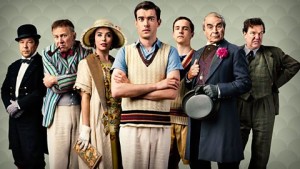
So, finally – to that TV adaptation of Decline and Fall. It wasn’t actually bad at all (vastly better than the mystifyingly titled 1969 movie adaptation, Decline and Fall…of a Bird Watcher), but despite all the positive reviews it wasn’t (to me anyway) right either; how come? Firstly, the book was published in 1928 and had a contemporary setting. That means that it is now a period piece, which on the screen, gives an instantly distancing effect. The twenties in particular (actually, the twenties and thirties; TV rarely discriminates between the two) has evolved a certain lighthearted and somewhat cosy screen presence on television over the years, from the nostalgic adaptation(s) of Waugh’s very different Brideshead Revisited to gentle Sunday evening drama of The House of Elliot to Jeeves and Wooster and even You Rang M’Lord.

Thanks to these shows and others like them (not to mention films like Bugsy Malone and The Great Gatsby in its various versions) there’s a kind of visual shorthand for the twenties, consisting of; striped blazers, flapper fashions, art deco, the Charleston and hedonistic and/or gormless aristocrats, the fantasy of being independently wealthy, plus the odd Moseley-inspired fascist and monocled lesbian; all of which fits Decline and Fall pretty well, in a superficial kind of way. But while nostalgia is, appropriately, an element in all of the aforementioned programmes (not so much The Great Gatsby, ironic given how the film version traded on the visual aspects of its high society settings etc), it should really have no place in Decline and Fall. Nostalgia can’t help being present though, just through the accumulation of period detail and the kind of broad acting that a comedy set among the upper classes in the 20s seems to require. This broad approach is again fair enough in a way, since Decline and Fall is essentially a novel where the characters are close to being caricatures anyway.

The most obvious place the book differs from the television adaptation is that in the book, the mostly innocent and bland fish-out-of-water main character, Paul Pennyfeather doesn’t have to be – and often isn’t – particularly likeable; the reader doesn’t have to like him or identify with him to find his story funny and anyway, Waugh makes it explicit that we are not seeing Pennyfeather at his best or most typical or indeed in his element at all. Considering the ridiculous (and at times heartbreaking) circumstances he finds himself in, his outbursts of bitterness are surprisingly few and far between. Presenting a not-very-likeable character having misadventures with even less likeable characters is not, however a particularly ratings-grabbing idea, so it’s not surprising the BBC didn’t play it that way. It would never have occurred to me to cast the comedian Jack Whitehall in the leading role, but the hapless/diffident/youthful/naive sides of Pennyfeather’s nature are not that far removed from Whitehall’s usual persona and I don’t mean it as an insult when I say he captures the somewhat one-dimensional, nonentity-like aspect of Pennyfeather quite well.

But, in the bigger picture, the fact that the BBC is spending money on an Evelyn Waugh adaptation at all may not really be a good sign. As Jon Savage wrote in 1986 (re. the TV adaptation of Brideshead Revisited):

“Waugh’s elevation into legend – as the house god of literary London – has come at the same time as, and may have fuelled, a concerted ideological attack on the social gains of the whole post-war period.” (Jon Savage, Waugh Crimes, The Face, September 1986, in Time Travel – Pop, Media and Sexuality 1976-99, Chatto & Windus 1996, p. 206).

The adaptation of Decline and Fall in 2017 says as much about the current rise of conservatism as the success of Brideshead Revisited did about Margaret Thatcher’s mid 80s, both about the nature of the conservatism itself, and the ways society has changed since the last strengthening of the right.  The choice of Brideshead to capture a conservative zeitgeist was an obvious and safe one; Waugh’s least characteristic, if most successful novel, it is (or at least it can be easily adapted as) a straightforward nostalgic paean to/romanticisation of the leisured life of the aristocracy in the pre-WW2 period, the last time they could be seen as  the leaders of fashion and in a real sense ‘the ruling class’, with an Empire and subordinate classes to (literally) ‘lord it’ over. Then as now, the appeal of traditional ‘Britishness’ was strong, both with the kind of conservative, older elements in society/in charge and those who see progressiveness only in terms of threatening change/instability. Back in 1986, the ‘golden age’ of Brideshead Revisited was still remembered by the older generations, including many who were still active in the political life of the country.

But although the BBC made a costume drama, perhaps the most conservative television form, and although Waugh was a lifelong conservative and reactionary, Decline and Fall the novel, as discussed above, is hardly conservative at all; it doesn’t stand for anything, and its guiding principle seems to be that people are foolish and stupid and ruin their own lives and the lives of others without caring or even noticing. It’s a book which mostly gets away with its casual misogyny and racism because of its overwhelming misanthropy; if these people are laughable and stupid and ridiculous then at least he doesn’t show us anyone that isn’t; the fact that one of the book’s most likeable comic characters is a teacher who is not only a bad teacher, but a serial child abuser shows just what an odd choice it is for a BBC costume drama. The way the BBC tackled the more problematic aspects says a lot about where society is in 2017. In the novel, the (in modern terminology) paedophile teacher Captain Grimes’ abuse of the children in his care is seen by the other characters as distasteful and disreputable, as well as criminal, but is still seen as something one can be funny about. Somewhat surprisingly, this element made it to the screen more or less untouched, albeit without the flirtatiousness of Grimes’ favourite victim (as we, but not he, would see it), Clutterbuck. It is interesting though, to note that when reviewing the show, the word paedophile has almost always been replaced by the equivalent but somehow less inflammatory word ‘pederast’; somehow enjoying the comical exploits of a fictional paedophile might not be okay. It’s presumably the respectability of the source material (Decline and Fall may be outrageous, but Waugh is a pillar of British literature), the broadness of the comedy and the relative vagueness of the acts that makes it acceptable. And I think that’s right in a way; the element is there in the novel, it’s supposed to be and is uncomfortably funny in the novel (Waugh really was a kind of anti-Wodehouse at that point in his career), even though child abuse itself is obviously not funny. It can be assumed I think that the makers of the programme are not condoning anything, and hand-wringing self-censorship would not make the programme better; but there seems to have been a certain amount of that anyway, as we shall see.

Jack-Whitehall-Decline-And-Fall

As the misanthropy of the novel is reduced in the TV version largely because of Jack Whitehall’s sympathetic portrayal of Paul Pennyfeather, the misogyny of the book more or less evaporates onscreen, largely because the female characters are no more or less caricatures than the male ones, and are played by real women. In the book, the women are mostly predatory in one way or another and are strictly there to be admired, feared or despised – and the admiration always ends in disillusion. In Waugh’s mature books (even his best ones like A Handful of Dust) it could be argued that this feeling never significantly changes.

Where the BBC seems to have been most squeamish is with the novel’s racism. Although the anti-Welsh feeling made it to the screen more or less unchanged and again, partly neutralised by the fact that almost all of the characters were played so broadly, the episode featuring Margot Beste-Chetwynde’s African-American boyfriend Sebastian “Chokey” Cholmondley is more problematic. In the adaptation, Chiké Okonkwo plays the character exactly as written; he is articulate, urbane and enthusiastic about ecclesiastical architecture; but, when he says in the novel, “You folk think that because we’re coloured we don’t care about nothing but jazz. Why, I’d give all the jazz in the world for just one little stone from one of your cathedrals”, it’s supposed to be funny, not just because of the naivety of the lines, but because they comes from a black character. His entry into the book as Margot Beste-Chetwynde’s companion at the school games sets the tone for the whole episode:

“’I hope you don’t mind my bringing Chokey, Dr Fagan?’ she said. ‘He’s just crazy about sport.’

‘I sure am that,’ said Chokey.

’Dear Mrs Beste-Chetwynde!’ said Dr Fagan; ‘dear, dear Mrs Beste-Chetwynde!’ He pressed her glove, and for a moment was at a loss for words of welcome, for ‘Chokey’, though graceful of bearing and irreproachably dressed, was a Negro.” (Decline and Fall, p. 75)

Throughout the scene that follows, Chokey talks about church architecture, music and his race, and did so in the TV version, but the fact of his articulacy and the idea that his presence among high society people is in itself funny remains inescapable in the novel.  Also, what the BBC understandably didn’t include, was the way that almost every other character present comments on Chokey’s presence, or the abusive terms they use when doing so. I’m not sure what else they could have done while remaining at all true to the novel. On the one extreme, removing the single black character from a TV show in the name of  not upsetting people with racism would make no sense, and on the other, having Jack Whitehall say, as Paul Pennyfeather does in the novel, “I say Grimes, what d’you suppose the relationship is between Mrs Beste-Chetwynde and that n—–?” would – to say the least – have spoiled the show and made Pennyfeather a less sympathetic character than the BBC want him to be. But possibly they should have?

When writing about Waugh in 1986, Jon Savage wrote;

“It is extremely important that British culture develops a way of addressing the present and the future rather than the past, that recognises our pluralistic, multiracial society and our position, finger-in-the-dyke of trends in world politics” (Time Travel – Pop, Media and Sexuality 1976-99, Chatto & Windus 1996, p. 207)

and that’s still true – indeed, it’s more true now than it was even five years ago. But Decline and Fall isn’t it. Obviously, its anarchic vision isn’t as straightforwardly nostalgic and conservative in 2017 as Brideshead was in the 80s, but that’s partly because popular culture, post-Brass Eye, post-I’m A Celebrity and post-Operation Yew Tree is massively more coarse and more receptive to deliberate bad taste than the 80s was, or the 20s were for that matter. In its concern with period detail and its twee Jeeves and Wooster-ish execution, the makers of Decline and Fall have swapped the viciously funny nihilism of Waugh’s 1920s for a slightly cosy bad taste pantomime world which is equally as uncomfortable in its own very different way and leaves a comparable, but again different funny taste. Still; it wasn’t awful.

waugh_decline_440


a reading of Orwell in the 21st century


I started writing this thing about George Orwell ages ago and never got it finished, but suddenly it seems possibly relevant, so here it is, not quite in the final form intended, extremely long-winded, but hopefully more-or-less coherent. I should also point out that lots of  my own views are expressed here, because I can.

george

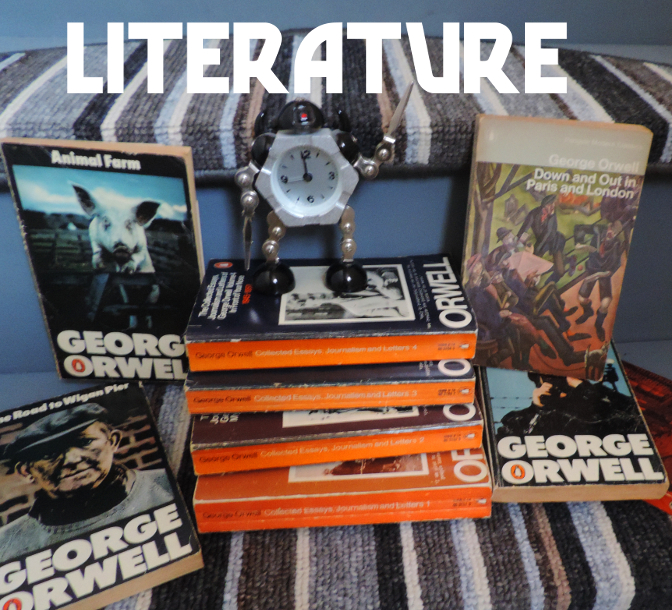
Sales of 1984 have risen sharply lately; but although there is definitely no wrong place to start reading Orwell, to me the most relevant of his works for the present day (coincidentally, also my favourite writings of his) are to be found in the four-volume Collected Essays, Journalism and Letters of George Orwell, published by Penguin in the 60s and I assume still in print. I got the four volumes in a charity shop about fifteen years ago for 80 pence; as Orwell himself said about buying bound volumes of Punch, it was one of the best bargains I have ever had. I’ve read and re-read them more than almost any other books I own and there’s never a time when I can pick them up without finding something there to grip me.

The essays are also intensely relevant to this particular part of the 21st century, because the preoccupations that led to his writing 1984 and Animal Farm are there in their rawest form;

“The era of free speech is closing down. The freedom of the press in Britain was always something of a fake, because in the last resort, money controls opinion; still, so long as the legal right to say what you like exists, there are always loopholes for an unorthodox writer.” (Why I Joined the Independent Labour Party, 1938, vol 1, p. 373)

As it happened, the era of free speech never did quite close down (so far anyway), but it should be remembered that Hitler and even more so, Mussolini, were far from universally reviled in Britain, right up to the start of World War Two. As late as 1940, Orwell could write;

“It is a sign of the speed at which events are moving that Hurst and Blackett’s unexpurgated edition of Mein Kampf, published only a year ago, is edited from a pro-Hitler angle… He had crushed the German labour movement, and for that the property-owning classes were willing to forgive him almost anything.” (Vol 2, p 27)

“The British ruling class were not altogether wrong in thinking that Fascism was on their side. It is a fact that any rich man, unless he is a Jew, has less to fear from Fascism than from either Communism or Democratic Socialism. One ought never to forget this, for the whole of German and Italian propaganda is designed to cover it up.” The Lion and the Unicorn, 1940 (Vol 2, p. 92).

The idea of Fascism is very much still with us, but it’s interesting to find that, despite Mussolini’s explicit adoption of the word, it was no more clearly defined in 1944 than it is now;

“Except for the relatively small number of Fascist sympathisers, almost any English person would accept ‘bully’ as a synonym for ‘Fascist’. That is about as near to a definition as this much abused word has come.”
“…it is impossible to define Fascism satisfactorily without making admissions which neither the Fascists themselves, nor the Conservatives, nor Socialists of any colour, are willing to make. All one can do for the moment is to use the word with a certain amount of circumspection and not, as is usually done, degrade it to the level of a swearword.”
As I Please, 1944, vol. 3 p. 138-9

In fact, it’s surprising (and a bit alarming) to find just how relevant much of Orwell’s wartime writing is – the continuity of life in the UK is still, a world war and a sexual revolution later, surprisingly noticeable. For instance, a quote from the Daily Mail in 1932 shows that, despite being written and edited by entirely different people, the newspaper’s character has hardly changed almost a century later:

“With that rather morbid commiseration for fanatical minorities which is the rule with certain imperfectly informed sections of British public opinion, this country long shut its eyes to the magnificent work that the Fascist regime was doing. I have several times heard Mussolini himself express his gratitude to the Daily Mail as having been the first British newspaper to put his aims fairly before the world.” Daily Mail, quoted in Who Are The War Criminals?, 1943, vol 2, p. 365)

george-orwell

Orwell changes with the times. Much of the current referencing of Orwell has to do with language; ‘newspeak’ and government propaganda, whereas a few decades ago it was more to do with surveillance & ‘big brother,’ but he remains a constant source of reference, in a way that very few writers of his generation are. It’s noticeable that people nowadays seem, paradoxically, to be more sceptical than ever about the information given out by the media and government (which is in itself a fairly healthy thing) but also almost unbelievably credulous when it comes to any old nonsense that comes from unverified (mostly online) sources. This would not have surprised Orwell, who, reflecting on the ‘truth’ of the Spanish Civil war, wrote;

“Even if Franco is overthrown, what kind of records will the future historian have to go upon? And if Franco or anyone at all resembling him remains in power, the history of the war will consist quite largely of ‘facts’ which millions of people now living know to be lies. One of these ‘facts’ for instance, is that there was a considerable Russian army in Spain. There exists the most abundant evidence that there was no such army. Yet if Franco remains in power, and if Fascism in general survives, that Russian army will go into the history books and future schoolchildren will believe in it. So for practical purposes the lie will have become the truth.” As I Please, 1944, (vol.3 p. 110)

Also, the age of ‘nasty’ and ‘difficult’ women and ‘deplorable’ people would not have shocked him;

“Someone could write a valuable monograph on the use of question-begging names and epithets, and their effect in obscuring political controversies. It would bring out the curious fact that if you simply accept and apply to yourself a name intended as an insult, it may end by losing its insulting character.” As I Please, 1945, Vol 3 p.372

The moral of this seems to be that, if you want your insults to hurt, choose an epithet that no remotely normal person would embrace; easier said than done perhaps.

Orwell was writing in a time when political ideas, on both the extremes of left and right, were being expressed with absolute conviction, but without much sense of reality, let alone any humanistic thought. Orwell’s own writings are notable because above all else, he accepts the basic fact about human beings; we are all the same because we are all different. He was therefore an enemy of totalitarianism, because no abstract system of thought can allow for humanity in all its illogical, unpredictable variety. He was a socialist, but of an extremely undogmatic type, probably because his own upper class background (he was educated at Eton and was afterwards a member of the Imperial Indian Police in Burma) meant that his egalitarian beliefs were not obviously in his own interests. The fact that he had direct experience of the colonial system of rule meant that he couldn’t overlook – as most left-leaning political theorists did – the fact that the oppressed majority that made up the working class at home was mirrored by a far vaster, even more oppressed majority elsewhere. An early essay, A Hanging (1931) – based on his experiences as a policeman in Burma – is important for the development of his socialist beliefs because, as is the case in all of his writing, he confronts his own attitudes, rather than simply judging others’ attitudes based on the political system he has adopted. It’s also a brilliant piece of writing;

“He and we were a party of men walking together, seeing, hearing, feeling, understanding the same world; and in two minutes, with a sudden snap, one of us would be gone – one mind less, one world less.” (Vol 1, p.68-9)

The truth that he acknowledges here, that (to unfortunately/accidentally quote USA For Africa) ‘we are the world’, or more accurately but far more awkwardly – the world as we understand it is the result of our own perceptions of it – is to me a vitally important part of any political discussion. I have sometimes been a bit dubious of my belief in individualism, a philosophy (not that it is a philosophy to me really) which has often had right-wing (and always has selfish) connotations; but the (Conservative) Prime Minister attacked it recently, which is encouraging. To me – I have no idea if Orwell would have agreed – individualism automatically entails a wider humanistic view. The idea that if I am this particular collection of thoughts, feelings and perceptions suggests that other people, in their different ways, are this too. We are either all important or none of us are. 1984, Animal Farm and many of Orwell’s essays stress the loss of individualism in any Totalitarian philosophy. But while we still live in a relatively free society, his writing on the undercurrents that have their end point in totalitarianism are (to me) even more important. In 1945 he wrote;

“Nationalism, in the extended sense which I am using the word, includes such movements and tendencies as Communism, political Catholicism, Zionism, Antisemitism, Trotskyism and Pacifism. It does not necessarily mean loyalty to a government or a country, still less to one’s own country, and it is not even strictly necessary that the units in which it deals should actually exist. To name a few obvious examples, Jewry, Islam, Christendom, the Proletariat and the White Race are all of them the objects of passionate nationalistic feeling: but their existence can be seriously questioned, and there is no definition of any one of them that would be universally accepted.” Notes on Nationalism, 1945, vol 3, p. 412

This seems to me to hold as true now as it did then. Phrases of the moment, like ‘take our country back’ or ‘Make America Great Again’ are so open to interpretation as to be almost meaningless; but that doesn’t prevent people from taking them extremely seriously. This quote, from the same essay (and with the same disclaimer as to what he means by ‘nationalism’) seems even more appropriate;

“Nationalists have the power of not seeing resemblances between similar sets of facts. A British Tory will defend self-determination in Europe and oppose it in India with no feelings of inconsistency. Actions are held to be good or bad, not on their own merits but according to who does them, and there is almost no kind of outrage – torture, the use of hostages, forced labour, mass deportations, imprisonment without trial, forgery, assassination, the bombing of civilians – which does not change its moral colour when it is committed by ‘our’ side.” (p.418-9)

Orwell is – and he almost always is – careful to delineate exactly what he means when discussing issues such as nationalism, because then, as now, the world was full of people who wilfully misunderstand anything vaguely ambiguous that they don’t like the sound of. Then, as now too, there was a tendency, especially among extreme leftist groups, but not limited to them, to acknowledge one obvious wrong by pointing out other, similar and/or worse abuse, without addressing the original issue at all; evasive nonsense in fact. A recent example; it was World Holocaust Day, so people were naturally sharing a lot of stories about the experience of Jewish people in WW2 on TV and online. As one would expect, the moron minority of Nazis made their usual remarks* but the internet was also full of things like ‘think of that story and substitute ‘Jews’ for ‘Palestinians’” but how about, if you can’t just acknowledge one particular atrocity, substituting it for HUMAN BEINGS? It’s perfectly possible to – and I would say impossible not to – be appalled by the inhumane treatment of people by other people, whatever the origins of both parties. It is entirely possible to be critical (for example) of the policies of the Israeli government without extending that criticism to “Israel” or to Judaism; lots of Jewish people do it in fact. Just as it’s possible to criticise I.S. and Islamic extremism and Hamas without condemning Islam – lots of Muslims do that. It’s entirely possible to flag up the plight of Yemen (and its causes) without also ignoring and/or dismissing the plight of, say, Syria. Unless one has a specific quota of compassion that gets used up, it’s not only possible to do these things, it’s obvious and necessary. It’s important to be specific; the enemies of freedom always are.

*Holocaust denial by people who like the Nazis and don’t like Jews has to be among the most confusing and confused phenomena of our age. These people show their true colours by their assumption that the Holocaust would somehow be less bad if instead of 6 million, there was ‘only’ one million, or a few hundred thousand dead people at the end of it.

also

But it’s easy to point out the faults of one’s arch-enemies – it’s worth remembering that when Orwell wrote a review of F. Borkenau’s The Totalitarian Enemy in 1940, he was pointing out not only the truth about Nazi Germany, but also of Stalin’s Russia, which was still, at that point the main inspiration for British socialists, with whom Orwell himself was uncomfortably allied;

“As for the hate campaigns in which Totalitarian regimes ceaselessly indulge, they are real enough while they last, but are simply dictated by the needs of the moment. Jews, Poles, Trotskyists, English, French, Czechs, Democrats, Fascists, Marxists – almost anyone can figure as Public Enemy No. 1.”

“Simply in the interests of efficiency the Nazis found themselves expropriating, nationalizing, destroying the very people they had set out to save. It did not bother them, because their aim was simply power and not any particular form of society.” (Vol 2, p. 41)

It’s not surprising to find that, in the years surrounding the Second World War, Antisemitism was a particularly touchy issue. But again Orwell did not shy away from the fact that Britain itself had a long history of Antisemitic thought (which had in fact been considered entirely respectable in earlier generations) and that, although it seems contradictory, knowledge of the Holocaust initially made British Antisemitism worse because it made people ashamed of their own prejudices, rather than removing those prejudices;

“Whenever I have touched on the subject in a newspaper article, I have always had considerable ‘come-back’, and invariably some of the letters are from well-balanced, middling people – doctors for example – with no apparent economic grievance. These people always say (as Hitler says in Mein Kampf) that they started out with no anti-Jewish prejudice but were driven into their present position by mere observation of the facts. Yet one of the marks of antisemitism is an ability to believe stories which could not possibly be true.” Antisemitism in Britain, (vol 3 p. 385)

At the same time, Orwell’s belief in free speech was not diminished by the fact that people inevitably use it for a variety of ends. When, in 1949 Ezra Pound, a Fascist supporter in the 20s and 30s and a lifelong antisemite, was awarded the Bollingen Prize for poetry despite his earlier ostracisation from the literary world, Orwell expressed his feelings in a response that still feels appropriate;

“Antisemitism… is simply not the doctrine of a grown-up person. People who go in for that kind of thing must take the consequences.”
“I think the Bollingen Foundation were quite right to award Pound the prize, if they believed his poems to be the best of the year, but I also think that one ought to keep Pound’s career in memory and not feel that his ideas are made respectable by the mere fact of winning a literary prize…
“…since the judges have taken what amounts to an ‘art for art’s sake’ position, that is, the position that artistic integrity and common decency are two separate things, then at least let us keep them separate and not excuse Pound’s career on the ground that he is a good writer. He may be a good writer (I must admit that I personally have always regarded him as an entirely spurious writer), but the opinions that he has tried to disseminate by means of his works are evil ones, and I think that the judges should have said so more firmly when awarding him the prize.” (vol 4, p.552)

As I mentioned at the beginning of this article, I have been reading these books for years now; but the fact is that reading them in the past decade has been a far less comfortable experience than it was before that. At the same time, the key subtexts running through Orwell’s work – especially the idea that political ideology is the enemy of individual freedom – remain important lessons to learn. And here I go off on my own tangent, but I’ll come back to Orwell eventually.
I have always been a left-wing liberal with some libertarian leanings and recent events have only confirmed me in my beliefs. More and more, it feels like no one, let alone any political party, can speak on my behalf. Which is a good thing – because the current surge in right-wing extremism has, weirdly, coincided with, on one hand, a willing shirking of responsibility from people who don’t like the things they themselves have voted for, and on the other, a willingness to project that responsibility onto others from the media and parts of the public. That was a long, badly-constructed and confusing sentence, so here’s a concrete example:

In the UK Brexit referendum (which I have zero desire to write about, but it’s an obvious reference point, as is the US presidential election), people voted for Brexit; some got what they wanted and others got what they wanted in theory, but didn’t like it afterwards. They then complained that they were lied to by politicians. This may be true, but it’s deeply disingenuous because –
1) people in the UK, for as long as I can remember, have ALWAYS assumed that politicians lie to them, and more importantly
2) even though the government at the time wanted Brexit and campaigned for it, they made no attempt whatsoever to prevent people from finding out the likely consequences of the vote, or in fact doing any kind of investigation for themselves. The people who complain they were misled and voted through ignorance are one small step away from saying that they shouldn’t be trusted to make important decisions. There are enough powerful people in the world who agree with that to make it a worrying sentiment.

At the same time, a certain part of the media colludes with these idiots. According to these kinds of broadcasters and newspapers the blame for (in this case) Brexit regret somehow lies neither with the people who voted for it, nor with the people who are supposed to have deceived them, but with the last 60 years of liberal thought – of people like Orwell in fact – who have sidelined the views of bigots and Nazis and tried selfishly to foist equality on the world. There are so many reasons this is bullshit, but the most obvious one is just logic. If you leave your front door open while you are out and someone steals your furniture and then police catch the burglar, who should go to prison? The burglar? You, for leaving your door unlocked? Or the rest of society for somehow failing to indoctrinate you in the art of door locking? And if that’s a false analogy (it is, a bit), it’s because the comparison between a positive thing; sixty years of striving towards equality among human beings, each as unique and important as the other, and a neutral thing – leaving one’s door unlocked, is ludicrous. Its patent ridiculousness highlights the malignancy of thought behind the pretence that progressive people have brought right wing extremism on themselves. Rather than making excuses for wilfully ignorant people, Orwell suggests what seems to me a far more sensible response (here in reference to the treatment of Polish and Jewish refugees in postwar Britain);

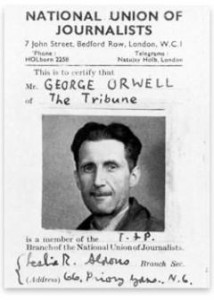
“I think it is a mistake to give such people the excuse of ignorance. You can’t actually change their feelings, but you can make them understand what they are saying when they demand that homeless refugees should be driven from our shores, and the knowledge may make them a little less actively malignant.” Tribune, 24 January 1947 (vol 4, p.316)

The nonsense spouted now in the press and elsewhere is not just stupidity, it’s stupidity with its own creepy conservative agenda and every day it feels like damage is being done to society by people pretending to speak on the behalf of others. A particularly annoying point because often these people are pretending to speak on the behalf of people like me. As a white, male, working class British person who wasn’t raised in a metropolitan area and still doesn’t live in one, the paternalistic statements continually being made by people who for the most part are metropolitan (no bad thing in itself) and aren’t working class (ditto) are far more oppressive to me than the idea that I should respect the people I have to share the earth with.

It may surprise the people who claim to be championing me, but even people of my class and background have TV, the internet and relatively high standards of literacy. I am not confused or outraged to see people of different races, genders/no gender or different faiths being represented in the media, even if I didn’t grow up in a particularly multicultural area. One of the many mistakes these kinds of commentators make is assuming firstly that the working class (though I belong to it I doubt if there really is such a thing still) is patriotic – which may or may not be true – and that patriotism is by its nature insular and/or xenophobic, which is far less obviously true. To me personally, it is 100% patriotic to want your country to be defined by inclusiveness, diversity & vibrant non-stagnant interactions with other cultures. Or to feel patriotic to the land as actual land and therefore to want to do as little damage to the material fabric of the country as possible. Patriotism was an important topic for Orwell; as he pointed out often, the British intelligentsia of the inter-war years were not only not patriotic, but tended to be embarrassed by appeals to patriotism, a dangerous thing in an era when the worst elements in the world were (and they still are) very aware of the power of appealing to nationalistic sentiment. Orwell’s work is often imbued with a love of Britain and British culture even though he was not at all blind to or uncritical of its inequalities. He was always careful, too, to separate patriotism from nationalism, which he abhorred.

“Nationalism is not to be confused with patriotism… By ‘patriotism’ I mean devotion to a particular place and a particular way of life, which one believes to be the best in the world, but which has no wish to force upon other people. Patriotism is defensive, both militarily and culturally. Nationalism, on the other hand, is inseparable from the desire for power. The abiding purpose for every nationalist is to secure more power and more prestige, not for himself, but for the nation or other unit in which he has chosen to sink his own individuality.” Notes on Nationalism, 1945 (vol 3, p. 412)

“Patriotism has nothing to do with conservatism. It is devotion to something that is changing but is felt mystically to be the same.” My Country Right or Left, 1940 ( Vol 2, p.591)

He says a lot more on the subject, and really it’s worth reading his essays, because he is aware of the appeal of the things he doesn’t like in a way that is exceptionally rare in political journalism. My own disliking of nationalism has something to do with the (it seems to me) artificial divisions it seems to involve. I have been to several countries; all of them were beautiful, all of them had wonderful people and less wonderful people, all of them had interesting cultures, and were distinctively but at the same time not deeply different to my own culture. Also, nationalism seems to entail making generalisations which I’d rather not make. I am not someone who really likes belonging to things. I don’t like watching or participating in sports, I’m not interested in the monarchy. I don’t really enjoy being in any crowd that has a purpose (though oddly I quite like being in aimless crowds on streets etc) and while I am happy to support specific things and causes, when faced by a group with more than one aim – like a political party – I tend to be dubious.

I have a lot of sympathy for William Blake’s statement “To Generalize is to be an Idiot; To Particularize is the Alone Distinction of Merit.” Admittedly, Blake also wrote “a Horse is not more a Lion for being a Bad Horse”; but that’s genius for you. But I think he was right about generalising, though perhaps Mark Twain was even more right when he said in his smartass way “all generalizations are false, including this one.” I believe personally that valuing what is most individual about us is important, in part because it is impossible to have any kind of equality while seeing people as less than the equivalent of yourself. And it’s important, especially when so much of the media is willing to overlook the fact, to point out that civil defence movements like Black Lives Matter and groups like the Women’s Equality Party are doing no more (and no less) than insisting on something that almost everyone apart from the stupidest elements in society automatically agrees with; that humans are created equal. The only generalisation about humanity worth making is the platitude so perfectly coined by Depeche Mode; people are people. To categorise beyond that only diminishes the personhood (what a horrible word) of those you are talking about.  Kristin Hersh puts it thusly;

“Is there a difference between male and female people? Is there? Seriously. I have yet to identify a single character trait I would attribute solely to one gender or the other.” (Rat Girl, 2010, p. 198)

Me either. Since I have descended into this kind of thing, here are some brief bullet pointed things that I believe, that I am sure not everyone agrees with. I list them for clarity, since at least 80% of this article is waffle:

  • Inclusivity isn’t a favour to be bestowed from on high to various groups out of all proportion with their numbers, it is exactly what every adult human being expects, and should be able to expect, from a healthy society.
  • People can and should think whatever they like; but states and governments should be concerned only about the welfare of all of the people that make up that society– otherwise why should those people contribute to it?
  • Cultures like that of Britain are not undermined by diversity. It is in their nature to be diverse, they always have been and always will be.
  • The simple idea that everyone is equal does not exclude anyone except for those who wish to exclude themselves, for whatever deluded reason.
  • Anyone who thinks that the advances in equality since the 60s have in some way altered society to the detriment of ‘ordinary’ people have a) been walking around with their eyes closed their whole life and b) have a narrow & distorted view of what ‘ordinary’ people are.
  • Other peoples’ rights are your rights. If people express themselves harmlessly in ways you don’t like, it’s none of your business.
  • there are ideas/philosophies that can’t be reconciled or compromised with. The worst people in history have always believed that, so everyone else has to, too.

ANYWAY: all this was mainly to say, if you are interested in George Orwell but haven’t read him, by all means read 1984 and Animal Farm, but if, as well as seeing a nightmare vision of where we could end up you also want insights into how the world got to where it is right now, as well as lots of interesting, funny and above all, well written articles on a variety of topics (not just politics, but popular culture, food and drink, murder, literature, to name a few), try his Collected Essays, Journalism and Letters.

“It is not possible for any thinking person to live in such a society as ours without wanting to change it.” Why I Joined the Independent Labour Party, 1938, (vol 1, p. 374)”

One of the appropriate responses to being alarmed by events is to do whatever it is you are good at doing in order to try to improve the situation; what Orwell did was to understand, and to write.

next… more inane stuff about music, thankfully


Weekly Update: Halloween Horror – Outsider Music & Venusian Death Cell

It’s Halloween next week; and what better time to write a few words about the parallel universe of outsider music? ‘Outsider music’ is one of those nebulous but still quite useful terms that litter the language of music. Like “singer-songwriter”, it doesn’t really denote a specific style, genre or sound, but also like “singer-songwriter”, it conjures a specific image, or set of images; the lonely, perhaps crazily talented, perhaps technically inept, perhaps emotionally unstable or mentally ill musician or songwriter who definitely has something unique to communicate; but not something that the majority of listeners will want to hear, and therefore not something that the mainstream (or even non-mainstream but still commercial) music industry thinks it can sell, at least initially.

keyoz

The (relatively speaking) successful outsider artist garners an inevitably niche/selective/small fanbase over time (the definition of a ‘cult following’) and these fans are drawn to their music for a variety of reasons; various hues of sheer curiosity, amusement, a genuine love of the outré qualities of the artist’s work, or just a recognition that, however it has expressed itself, there is a genuine talent at work, albeit one working outside of the usual boundaries of popular music and/or taste. Every now and then an outsider artist even becomes genuinely successful and achieves ‘insider’ status (I just made that up; Christ knows what ‘insider music’ would be), but mostly even the successes; Syd Barrett, Captain Beefheart, Daniel Johnston, Tiny Tim – end up inhabiting a kind of twilight zone version of fame that is far removed from the experience of the mainstream artist. People usually discover their work because of its notoriety; by chance, or by reputation, but rarely because it’s played in public spaces, on the radio or on MTV (or Spotify, for that matter).

Jandek's 'Staring at the Cellophane' (1982)
Jandek’s ‘Staring at the Cellophane’ (1982)

It’s notable too, that outsider artists are rarely made famous in the first instance by the public (honourable exception; Tiny Tim, but it seems fairly likely that the public at the time saw him – not surprisingly – as a comedy novelty act, rather than the genuinely peculiar character he seems to have been.) Mostly, it is musicians, followed by critics, who initially recognise the appeal of outsider artists; probably because on the whole they tend to listen more closely to a greater volume/quantity of music than most people and are therefore attuned to listen for something different, whereas those within the talent-spotting wing of the music industry also hear lots of music but have, by and large, been listening for something similar to whatever is successful at the time, or at least something saleable. In a few cases (mostly those already mentioned, but also, far more shockingly, Jandek; a fascinating artist whose massive body of work is surely one of the most forbiddingly bleak and uncommercial in the ‘singer-songwriter’ sphere) the musicians enjoy some critical acclaim and are invited to come in from the cold, to play some shows and gently erode their mystique. In becoming something more than outsiders, but something far less than mainstream celebrities, the classic outsider artist loses something of their appeal, perhaps because entertaining (or ‘entertaining’) a real audience, made up of fans and interested parties leads to a significantly different kind of music from communicating with oneself or, at best an imaginary and perhaps ideal audience. It’s basically the same process that happens with any artist when they exchange whatever their lives and inspirations were, for the life and experiences of a successful musician.

Naturally, there isn’t a vast amount of literature on outsider music; or demand for a vast amount songzof literature on outsider music, but for a highly readable and well-researched overview, Irwin Chusid’s Songs in the Key of Z, The Curious Universe of Outsider Music (Chicago Review Press, 2000) (and the associated compilation album) is still pretty unbeatable (although the old RE/Search books ‘Incredibly Strange Music’ vols 1 & 2 from the early 90s are also packed with great stuff, not all ‘outsider’, but all worth a look).
Not appearing in any those pages though, is one of my favourite purveyors of outsider music, the one-man (David Vora) Irish band Venusian Death Cell. I’m slightly reluctant to write about VDC because (a) I have only heard a fraction of his music and (b) labelling someone as an ‘outsider artist’ feels a bit harsh in a way. Theoretically (and perhaps actually at some point, judging by his extensive bio below) some kind of metal band, there is no metal to be heard on any of the VDC albums I own, perhaps because (judging by sound alone) it’s difficult to approximate heavy metal with one guitar, no distortion/effects pedals, a small drum kit, a four-track recorder and one man working everything, and also hard to be metal-to-the-max when singing about soya desserts or ‘actor Ian McCulloch’ and when one’s cover art – though on its own terms highly evocative and suited to the music – is not quite up to the standard of the archetypical Derek Riggs style metal album cover.

bio

So, the appeal of VDC – in the albums I have – is mainly not its metallic or heavy element. Sonically, the artist Vora’s music most resembles is the aforementioned Jandek , but – and it’s a crucial part of the appeal of outsider music generally – the personality/atmosphere and themes imbued in Venusian Death Cell’s work are entirely unique. Whereas Jandek’s work was/is lo-fi as music but mysteriously professional (or at least not hand-made) in its presentation (back in the early 80s he was putting out vinyl albums with picture sleeves just like (well, not just like) any small indie band on an actual label, Vora’s is unashamedly home-made, distributed on CD-Rs with photocopied artwork and lyrics. He is also a more accessible person, insofar as his own name, address and email address appear on the album inlays, while Jandek works through the austerely impersonal facade of the quasi-corporate  ‘Corwood Industries’.

aband

The VDC discography as far as I can make it out is below, it may not be complete and titles of the measly few albums I own are in bold. I will get more of them eventually. Some names may be wrong; I got them from the bio above and they aren’t all easy to read.

p a r t i a l  d i s c o g r a p h y

1996 – Reap Invert (tape)

1997 – Natural Harmony (professional 24-track studio recording!)

2000 – Mystery

2001 – Moods(?)

2002 – Fiends

2003 – The Darkest Globe

2004 – VDC/Shitoba?/Miasma/Colin Cross (4-way split tape, P.O.P. Shitcords)

2005 – Half Born Dead

2006 – The Devil’s Land

2009 – Abandon The Desolate

2010 – Fines?

2011 – Raging of the Blind Mice

2011 – The Eagle

2012 – Schizophrenia

2013 – Collector of Death Metal

2013 – Day

2013 – Halloween V: Halloween Horror

Halloween V was my introduction to Venusian Death Cell and is possibly my favourite of the three I have. It’s definitely the least aggressive-sounding, more like a one-man version of The Shaggs than the metal I expected, despite the imagery and songs with titles like ‘Lucifer’, Cold Cancer’ and ‘Zombie Flesh Eaters’ (full lyric below, just because). It also has some oddly wistful, quite affecting songs like the haiku-esque ‘For You’ – “You are depression/Breaking free/Now Happiness/You were alone/Now you’re happy/Lovely for you.” 

2013 – Abandonned Race (sic)

Far more chaotic and noisy, mainly because it has far more and louder percussion and therefore more shouted vocals, Abandonned Race is also a far less happy experience than Halloween V, but as good in its way.  Topics are bizarrely wide-ranging, from religion, black metal and relationships to mental health and soya products (‘Milkland Millennium’)

2014 – Honey Girl

The most recent of the VDC albums I’ve heard, Honey Girl  is also the shortest (8 songs in approx ten minutes) and is very much in the mould of Abandonned Race; sonically slightly harsher than Halloween V, it’s a bracing blend of performance poetry, crude proto-noise-metal and therapy; the lyrics are preoccupied with what were presumably Vora’s circumstances at the time:

“Heavy drugs, weight gain/Strange happenings/Psychosis and madness” – Psychotic

Terrible paranoid fear/affecting my happiness/eating my mental health…” – Terrible Fear

Despite the explicit unhappiness, Honey Girl isn’t the harrowing experience one might expect. Vora’s art is cathartic, rather than suffocating, and the cheerful note on the back of Honey Girl‘s booklet – “Honey Girl is a labour of love! Thanks for listening, hope you enjoyed!” captures the feeling of the music; in unloading his woes, somehow Vora doesn’t dump them on the listener. And that, at least partly, is the appeal of the not-very-musical music and apparently random subject matter of Venusian Death Cult. The seeming lack of any kind of artifice is, given the sophistication of most popular music, very appealing. What Irwin Chusid refers to as “the outsider sine qua non of earnestness” is present everywhere in Vora’s music. When he writes in the sleevenote to Abandonned Race, “Abandonned Race is a musical journey mainly for my own pain & pleasure rather than proving anything to those who happen to hear it.” it rings absolutely true. And this is not a kind of quasi-childlike ‘innocence’; Vora’s lyrics may not be written in the usual rock music language, but they are highly sophisticated, albeit in a matter of fact way:

Romancy – 1871 Lunacy Act in Ireland/Governs consent issues – /100% capacity to decide or none/Court makes all decisions about your life/(Criminal Law Act 1993)/Offense to have intercourse with mentally impaired/outside marriage (Halloween V: Halloween Horror) The explanatory note after the lyrics reads; “Lyrics are about those with extra support needs and their relationships”. 

lyrix

There are also forays into both Irish-language and French-language lyrics; which mean nothing to me, alas, but again underline that this is not a naive talent, just an unorthodox one. Whatever the language, VDC’s songs are mostly not all that easy (for me) to relate to; Vora’s preoccupations are not necessarily shared by everyone, or very many people at all – but that doesn’t make them less engaging. In fact, it’s the feeling that the listener is getting a glimpse into the normally private world of another human being – a sometimes troubled mind in all its seemingly unedited variety, brought to you by the medium of (nearly) music, that makes hearing Venusian Death Cell – and outsider music generally – such a refreshing experience. In the universe of Venusian Death Cell, with its seemingly random connections, weird logic and strangely semi-familiar landscapes, you (or at least I) and your everyday world are the outsider. It’s an interesting sensation.

Zombie Flesh Eaters

Ian McCulloch stars in films/Zombie Flesh Eaters, Zombie Holocaust and Contamination

Chorus: Zombie Flesh Eaters x 3

Daughter goes to find father/With Ian, the journalist/Zombie adventures on an island

Repeat Chorus

Video…nasties/Eye…gouged/Shark and zombie fight

Repeat Chorus

Notes: Lyrics are about the film Zombie Flesh Eaters, video nasties and the actor Ian McCulloch

back-cov