“Nothing was to be seen of the Castle hill; fog and darkness surrounded it; not even the faintest glimmer of light was present to suggest that the Castle was there.” Franz Kafka, The Castle, translated by Jon Calame & Seth Rogoff, 2014, Vitalis Verlag
“The Castle hill was hidden veiled in mist and darkness, nor was there even a glimmer of light to show that a castle was there.” Franz Kafka, The Castle, translated by Willa & Edwin Muir, 1930, my edition Penguin Modern Classics, 1984
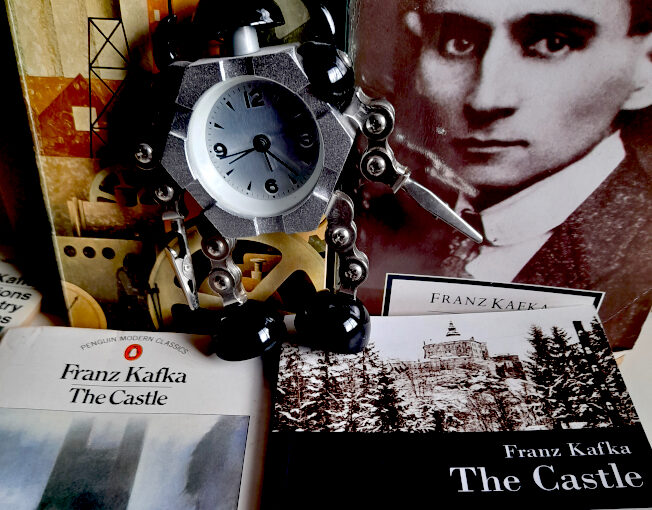
The Castle (Penguin, 1984) vs The Castle, (Vitalis, 2014)
I have a possibly bad habit of buying multiple copies of books I love, if I see them for a good price, especially if they have a cover that I like and don’t already have. Fairly often, I won’t actually read the new-to-me edition unless I happen to be in the mood for that particular book at the time of the purchase, because after all, it’s the same book. Or at least it usually is. I’ve had my 1984 Penguin Modern Classics paperback of Kafka’s The Castle for decades, though it was already second hand when I bought it. I first read the book at high school, a falling-to-bits old hardback from the school library. I have no idea which edition that was, but when I read it again in my early 20s, the novel seemed just as I remembered, just as obscurely relatable and with that specific atmosphere that is a big part of what makes something ‘Kafka-esque’. That school version was almost certainly some edition of the 1930 translation by the fascinating Scottish couple Willa and Edwin Muir. They were the first translators of Kafka in English and theirs was and to some extent still is the standard version. Indeed, it was that couple who introduced Kafka and his particular aura to the English-reading world; which is quite a big deal when you think about it.
Recently, in a charity shop, I came across a copy of The Castle that I hadn’t seen before, with a cover I was immediately drawn to. It’s from 2014 and though it’s in English it’s was put out by by Vitalis books, a publisher which, judging by its Wikipedia entry, sounds uniquely suited to disseminating the works of Kafka, a German-speaking Czech Jew who was raised in a Yiddish-speaking household:
Vitalis Publishing is the only German literary publisher in the Czech Republic. Founded in 1993 by Austrian-born physician and medical historian Harald Salfellner, it harks back to the cultural heyday of the fin de siècle before 1914, a period of shared German, Czech, and Jewish influence. The publishing program features Czech (Jan Neruda, Božena Němcová), German (Gustav Meyrink, Rainer Maria Rilke), Jewish (Oskar Wiener, Oskar Baum), and Austrian (Adalbert Stifter, Marie von Ebner-Eschenbach) authors as common representatives of Bohemian literature.
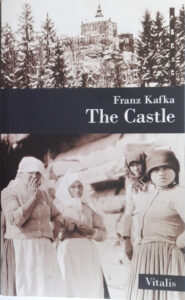
Lots there to be curious about, but let’s stick to Kafka for now. My old Penguin paperback of The Castle, which features two chapters not included in the original 1930 UK edition (which were separately translated by Eithne Wilkins & Ernst Kaiser), is from of my least favourite stylistic phase of the Penguin Modern Classics series. At that point in the early 80s, the spines of the books, in a nostalgic nod to the classic early days of Penguin, were orange and white, while the covers were white with (mostly) modernist paintings chosen to more-or-less fit the books. The Castle does have a nice cover illustration, by Elizabeth Pyle, but otherwise the design is a little drab. The book is 298 pages of fairly but not unreadably small print. The Vitalis edition is far more stylish and the cover artwork uses a beautifully evocative photograph of (Bohemian?) “Peasant women” from 1918 and a photograph of Friedland (or Frýdlant) castle in Czechia. The type looks around the same size as the Penguin edition, but though the book is slightly bigger than the Penguin, it has 382 pages.
Even allowing for the fact that the Vitalis Castle includes nice, dark, moody and scratchy illustrations by Karel Hruška, it’s a noticeably longer book, and the reason for that is revealed in the two quotes at the top of the page. The Muirs’ prose – like Edwin Muir’s own poetry, which is worth checking out – is terse and spare, but also flexible and evocative. It’s the “voice” that Kafka has had for me since I was a teenager. It also has the benefit – or at least I think it’s a benefit, more later – of having been translated close to Kafka’s own time. When that first British edition of The Castle was published and Edwin Muir wrote in his introduction “Franz Kafka’s name, as far as I can discover, is almost unknown to English readers,” he was talking about an author who had only been dead for six years, and the book itself had only been in print in Kafka’s own language for four years.
Calame and Rogoff’s writing is slightly more lyrical to my ears/eyes, a little more long-winded, but in its way just as precise. I very much appreciate the two semi-colons in the first sentence of the passage above. The cumulative effect of their translation is a book which feels familiar but gently different. Another comparison, this time the opening of chapter 10:
“K. stepped out into the windswept street and peered into the darkness.” (Willa & Edwin Muir) versus “K. stepped outside onto the wildly windswept steps and peered into the darkness.” (Calame and Rogoff)
Which is the better sentence is just a matter of taste; the Muir version doesn’t feel especially superior to me, but on the other hand it does feel more ‘Kafka-esque’ – but is it? And what about this, from the end of chapter 15?
“And he pressed her hand cordially once more as he swung himself on to the wall of the neighbouring garden.” (Muirs) versus “He was still pressing her hand fervently as he swung himself onto the fence of the neighbouring garden.” (C&R)
Well; ‘cordially’ and ‘fervently’ are two very different things aren’t they? To me, that word choice significantly changes the tone of the passage. And this time, it’s the modern version that feels more redolent of Kafka as I think of him; which isn’t the same as saying it’s a better translation of the original text.
I have no idea whether it impacted on Calame and Rogoff or not, but modern translations of Kafka are made in a world where ‘Kafka-esque’ is a thing, and where Kafka himself – his image, with those big, dark, suspicion-filled eyes and his hypersensitive personality as revealed in his personal writings, prone to intense feelings of harassment and persecution – colour how we see his work. The Trial in particular feels like that persona, that image, in the form of a novel, and surely nobody embarking on a new translation of the book could be uninfluenced by its familiar Kafka-ness, regardless of how faithful or otherwise they were to the original text.
Faith and Faithfulness
witty (if dated) wordplay in Asterix
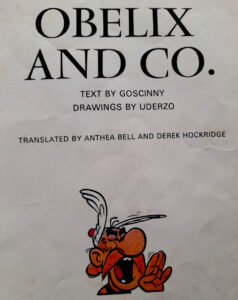
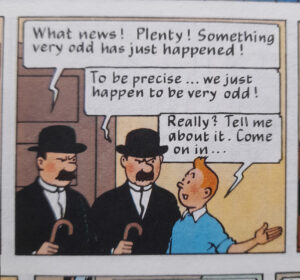
There’s a mystery to what faithfulness even means in translation – Google translate and AI are perfectly capable of making word-for-word translations of texts, but they seem somehow unable to make living, readable prose out of them. When I think of books that I’ve only ever read in translation (and I’ve never read more than maybe 6 or 7 pages of text in any language other than English or Scots, alas), going all the way back to childhood and the Asterix (René Goscinny, trans. Anthea Bell & Derek Hockridge) and Tintin (Hergé – Leslie Lonsdale-Cooper & Michael Turner) series’, I realise how much of the character of those books is owed to their translations.
In those particular cases the translations seem almost miraculously good. To capture witty wordplay, puns etc while also keeping the original narrative flowing is a formidable skill. I can’t help thinking that if I read literal translations of Tintin and Asterix, or learned to read French myself (let’s not get carried away) and read the originals, I would discover a new respect for both the translators and the original authors.
wordy whimsy in Tintin
Translating from one language to another seems like it should be a practical rather than artistic thing, but the extent to which Kafka’s work is ‘Kafka-esque’ in English is in some ways a choice, and as time goes on more and more choices are available to the translator of any text. The obvious choices – whether to be true, word-for-word, to an author’s text, or to their ‘voice’ and atmosphere, whether to provide a faithful translation or a ‘good read’ have always been there. But as time goes by, arguably just as important is the decision of whether to make a novel or piece of writing true to its time and place or to our own. This isn’t a small thing, it’s both the readability and the character of a book. The right thing to do presumably varies from book to book, but in my experience, you don’t really know what you prefer until you come across something you don’t like.
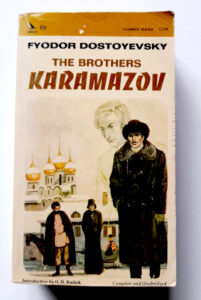
Dostoevsky presented as a trashy airport novel (with no translator credit)
With The Castle, although the more modern text felt different to me, it wasn’t a difference that spoiled or significantly altered my enjoyment of the book, it was just something I noticed. But those translation choices can be jarring. A recent example of this came when reading two novels by the Finnish author Arto Paasilinna – The Year of the Hare (1975) and The Howling Miller (1981). Both were (which I find obscurely annoying) translated into English from French translations rather than from Finnish, but while The Howling Miller (which I read first) was written in straightforward, simple and clear English prose which felt a bit basic, but entirely appropriate to the subject, the translator of The Year of the Hare made the (completely valid) decision to translate the casual, slang-filled prose of the French translation (and presumably the Finnish original) into supposedly modern and slang-filled British English, which was deeply irritating and also damaged the integrity of the novel. Standard phrases like “bloody hell” or whatever are one thing; so familiar as to seem timeless and universal. But slang dates quickly and is often generationally specific and can be weirdly embarrassing to read, if it’s not your slang.
Even worse in narrative terms, using regionally specific terms when you don’t change the distinctively ‘foreign’ names of characters or the setting of a book can give a feeling of unreality to the whole text. Quite possibly it’s just me, but reading a passage where a character called Kaarlo Vatanen, living in rural Finland, refers to having “twenty quid” in his pocket is kind of like reading Crime and Punishment and coming across something like “Shit! It’s the pigs!” hollered Raskolnikov. Don’t do that please. Similarly, recently reading a (very) American translation of Georges Bataille’s notorious 1928 novel TheStory of the Eye made it a different kind of uncomfortable from the kind I remembered. Seemingly I’m okay with the murder, depravity, perversity etc, but somehow repeated references to the unnamed narrator and his fellow protagonists “jerking off” just took me too far out of early 20th century France to be enjoyable.
But even though I didn’t like the idiom the translators used for The Year of the Hare and The Story of the Eye, the arguments for doing it are pretty sound. When adapting a foreign, unfamiliar book for a new audience, making it accessible is clearly important. The Year of the Hare was published in 1975 and implicitly set in that period, so there’s nothing technically wrong with writing it in modern, slangy English, except that it’s not set in Britain and so it feels wrong to pedants like me. There presumably is a 1920s French slang term for masturbation, but ‘jerking off’ feels so specifically American that it’s jarring – and I don’t think that’s just anti-Americanism, I feel like ‘wanking’ would have had a similar effect. Related, but probably more difficult is translating a classic novel into modern English. I’m not really a Dickens fan, but when I think of the few books of his that I’ve read, his prose seems entirely inseparable both from his stories and from his period. Does that mean that Tolstoy or Zola’s works should be translated into “Victorian” English? Annoying as that might well be, I’m tempted to say that for me, the answer is yes.
Positives and negatives
It’s a different kind of translation, but making books into films brings these kinds of questions into sharper focus. There have been several film adaptation of HG Wells’ The War of the Worlds, but for all of their virtues, if you return to Wells’s novel it seems obvious within the first few pages that though it’s eminently adaptable, any film of the novel set in 1898 would be far better (but presumably ridiculously expensive to make) than the existing versions. Similarly, no adaptation of Nineteen Eighty-Four except the venerable BBC adaptation starring Peter Cushing has quite captured the stark, bracing post-war, entirely British greyness (in a good way) of Orwell’s prose. That Cushing version feels right, but has its own negative points, especially cheapness, lack of definition (because old TV). But the tone is right. And it’s that tone, as much as anything, that people think of as “Orwellian,” even though outside of Nineteen Eighty-Four and (to a far lesser extent) Animal Farm, it’s really not the usual tone of his writing.
The other dystopian novel frequently paired with Nineteen Eighty-Four is Aldous Huxley’s Brave New World, but despite the relative closeness of age, class and education of Orwell (born 1903) and Huxley (born 1894), they could hardly be tonally further apart. As someone who first read and loved Huxley’s early, satirical social comedies like Antic Hay (1923) (still my favourite) and Point Counter Point (1928), the thing that struck me most when I first read Brave New World (1932) is how similar it is in its prose. Although, unlike The War of the Worlds but like Nineteen Eighty-Four, it’s set in the future, any film of it should really be set in a 1930s future and have a slightly old fashioned, ‘Boy’s Own adventure’ flavour which seems completely at odds with the book’s grim dystopian reputation. When reading the novel, its tone (which feels more post-WW1 1920s than pre-WW2 1930s), feels entirely natural and is a part of what makes the book so readable. But is that tone there in modern foreign translations of the book? Possibly not, and when you think about it, why would it be?
The Bible and the Bloody Countess
John Donne: a portrait of the poet as a young dandy
As anyone who has had to “do” Shakespeare at school – or who likes reading him – will know, 16th/17th century writers had a respect for and love of puns that is far removed from their current status as vessels of knowingly lame humour (that said, ‘brave new world’ is from Shakespeare, isn’t it?). It’s sad that that love of wordplay has become so debased, because even though I personally love puns even just as lame humour, it means we have to consciously think or analyse in order to appreciate the breadth of allusions and associations – and therefore feelings – that a writer could evoke in their readership (or a playwright in their audience) without having to labour a point.
Partly, it was easier to pun meaningfully before spelling was fully standardised. When John Donne wrote The Sun Rising* , it was risqué in the mild way it still is – the poet complains about the sunrise because he doesn’t want he and his girlfriend to have to get out of bed – but also in a far more daring way. To a Jacobean audience the sun (or sunne, or sonne) rising would automatically create an association with the son (of God) rising, a pun that transforms and strengthens the meaning of the poem, since, then as now (actually far more than now), the earthly representatives of God were not especially keen on young unmarried couples lying in bed together.
*published in 1633 but necessarily written earlier – he died in 1631 – and probably quite a lot earlier since he was known as a poet in his youth but a priest and preacher from 1615
And that textual richness isn’t just intended meanings and associations. As language evolves so does meaning, and so, whether one likes it or not, do associations. Since the 1960s, seeing the title The Sun Rising may well make people think of Rolf Harris’s 1960 novelty pop hit Sun Arise – a kind of well-intentioned but not unproblematic pastiche of Aboriginal Australian music that was a big hit all over the English-speaking world. Harris’s subsequent career as a popular children’s entertainer and, latterly, a hugely unpopular sexual predator make the already iffy song even more dubious, but even that creates its own set of unexpected cultural associations. Back in 1971, before settling definitively on a kind of bad taste, pantomime horror modus operandi, Alice Cooper (then the name of both the American rock band and its singer) experimented with a kind of general absurdist, transgressive approach. To that end, on their third (but first commercially successful) album Love It To Death, alongside paeans to troubled teendom (I’m Eighteen, Is It My Body?) and old horror movies (The Ballad of Dwight Frye), the band recorded an amusingly straight-faced cover of Sun Arise, just to be smartasses. Only 40 years later did the song turn out to be a masterstroke that unexpectedly fit in with their macabre and tasteless raison d’être after all; patience is a virtue, clearly.
But anyway, the idea of translating The Sun Rising, with even its intended meaning intact, into a language that doesn’t share common roots and words with English makes me think of Philip Larkin saying* (wrongly, I think) “A writer can have only one language, if language is going to mean anything to him.” It makes sense in a way – there can be an impersonal quality, especially when reading poetry in translation, that makes lots of translations feel the same as each other, not that that’s always a bad thing necessarily.
*in a 1982 interview with Robert Phillips in the Paris Review (Philip Larkin, Required Writing, p.69)
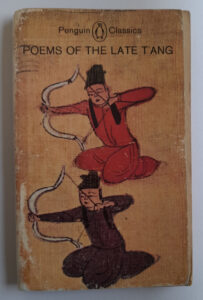
On that topic, another Penguin Classics book I love is the 1965 collection Poems of the Late T’ang, in which A.C. Graham translates the works of seven Chinese poets whose lives span more than a century, from 712 to 858 AD. In his introduction, Graham stresses the differences between poets, contrasting the ‘bare, bleak style’ of Meng Chiao (751 – 814) with the ‘strange and daring’ poetry of Meng Chiao’s friend Han Yü (768 – 824) but although I love both, I don’t really find a huge tonal difference between them (just to quote the first examples of each that he publishes):
Above the gorges one thread of sky: Cascades in the gorges twine a thousand cords (opening lines of Sadness of the Gorges)
And
A frosty wind harries the wu-t’ung, (parasol tree) The crowded leaves stick wilting to the tree (opening lines of Autumn Thoughts)
It might just be me, but I don’t even detect major differences between the poetry of between Tu Fu, writing in the 750s or 60s –
The autumn wastes are each day wilder: Cold in the river the blue sky stirs (opening lines of The Autumn Wastes)
and Li Shang-Yin, who was writing almost a century later:
The East wind sighs, the fine rains come: Beyond the pool of waterlilies, the noise of faint thunder. (Untitled)
I wouldn’t expect poets in English, centuries apart, to write this similarly, but of course the words I am reading are AC Graham’s and not Tu Fu’s or Meng Chiao’s. These are beautiful poems and if there’s a deficiency in them it’s mine, not the poets’ and certainly not the translator’s. In poetry this compressed and distilled there must be a whole world of meaning, allusion and subtlety – the sort of thing I can see (when forced to think about it) in Donne – that AC Graham was aware of but could only explain in footnotes and appendices. And I’m sure that’s exactly what Larkin referred to in his strictures about language. But if a writer can have only truly have one language, “if language is going to mean anything to him,” what about translators, who are almost always also writers in their own right? And what about unusual cases like JRR Tolkien or Anthony Burgess?
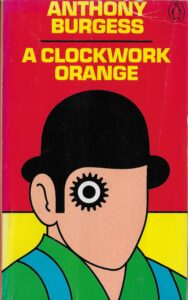
Burgess’s A Clockwork Orange is one of my all-time favourite novels – it’s also the product, very obviously, of someone who could speak and think, fluently, in a lot of languages. Ten is the number he usually gave, ‘with bits and pieces of others’. Burgess created the book’s slang, Nadsat, in order to write about ‘the youth’ in a way that didn’t date like real slang and it definitely worked. Rightly, I think, Burgess didn’t want a glossary of Nadsat terms in the book. Some publishers have added one anyway, but the book works far better if the reader just immerses themselves in the narrator’s voice and his disorienting world. But Burgess was only human, and in perhaps the novel’s weakest moment (because it takes us out of that world) he couldn’t resist pointing out that the language his young narrator Alex speaks isn’t just whimsy on the part of the author:
‘Quaint,’ said Dr Brodsky, like smiling, ‘the dialect of the tribe. Do you know anything of its provenance, Branom?’ ‘Odd bits of rhyming slang,’ said Branom, who did not look quite so much like a friend any more. ‘A bit of gipsy talk, too. But most of the roots are Slav. Propaganda. Subliminal penetration.’ ‘All right, all right, all right,’ said Dr Brodsky, like impatient and not interested any more.
I’ve always felt that Brodsky’s impatience is really Burgess’s mild embarrassment at finding himself pointing out how clever he is, but who knows? How A Clockwork Orange works in translation I can’t imagine, especially in countries with the Slavic languages Burgess borrows from, but I can imagine it must be both a joy and a nightmare to translate.
I hope for the sake of its readers that the translators who tackle A Clockwork Orange come up with words as horribly effective as Burgess’s. When Alex and his gang (yes, I know they are his droogs) come across a rival gang attacking a child, Alex says that they were “just getting ready to do something on a weepy young devotchka they had there, not more than ten, she creeching away but with her platties still on,” The word “creeching” is clearly just “screeching” without the s, but somehow it seems harsher, more intense, implying a rawness related as much to a croak as a screech; Burgess knew what he was doing. So, in his very different way, did Tolkien, another linguist, who gives the cultures and places of Middle Earth their individual, believable textures via languages that draw on real prototypes in the same way as Burgess’s Nadsat does. It’s also worth comparing Tolkien’s beautifully translated Beowulf with Seamus Heaney’s very different, but equally beautiful one. Both writers have a reverence for the original text and their interpretations are similar enough to suggest fidelity to the original – but they are also different enough to demonstrate just how flexible language can be.
That flexibility suggests that no text is truly beyond translation, and the fact that fictional cultures can be realistically portrayed by the words they and their creators use hints at the power inherent in language. Like any power, it can be used in negative ways as well as good ones. Translations can, or at least could, be withheld when it was felt expedient to do so, though the internet has probably made that more difficult. It seems trivial, but something that was (up until the 1960s I’d guess) fairly common and which I’ve occasionally come across in older books, are translations of foreign texts where the narrative lapses into its original language – or occasionally into French in books actually written in English – when the writing becomes ‘obscene.’
trashy 70s paperback of non-trashy 50s meditative biography
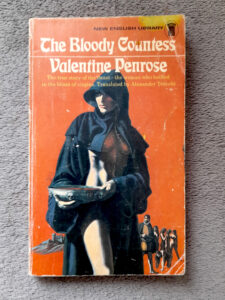
An example that springs to mind, because I have it, is the 1957 biography of the notorious medieval Hungarian Countess Erzsébet Bathory, written by the surrealist poet Valentine Penrose (nee Hugo). In its English translation – by the also somewhat notorious Scottish writer Alexander Trocchi – Penrose’s text is rendered into sensual English, except, that is, when Bathory’s predatory exploits against young peasant women in her orbit become too explicit, at which point the text lapses into French. No doubt the publisher, John Calder – who specialised in avant-garde literature and especially previously banned books – was wary of obscenity charges, which he would later fall foul of with Alexander Trocchi’s Cain’s Book and Hubert Selby Jr’s Last Exit to Brooklyn. Ironically, my 1970s NEL edition of The Bloody Countess, though by design a trashy, titillating exploitation-type paperback, reproduces the Calder text, elisions and all. It also features a lazy, sensationalist blurb on the cover which reveals that the publisher didn’t know that Valentine Penrose was a woman, which is unnervingly slapdash.
But even if British publishers self-censored for mostly legal reasons, the clear lesson that comes from old editions of transgressive texts is that those with a classical education – that is, the upper classes, who routinely learned Latin, Greek and French at school, but only they – could be entrusted to read all the sex and violence they liked. I’m in two minds over whether the reason for that is the literally patronising one of ‘protecting the children’ or the more generally patronising one that the upper class could be trusted with that kind of thing but the more animalistic and irrational lower classes might be led astray by it. Either way it’s kind of ironic, given that centuries earlier, the impetus for publishing anything at all in English was to allow the expanding literate population to read the Bible in their own language.
And if the translation of a modern text into modern English can create variations as different as a ‘cordial’ vs a ‘fervent’ hand-hold* imagine the pitfalls inherent in making the translation of an ancient text central into something comprehensible to a modern civilisation. And in the important case of the Bible, not just ‘an ancient text’ but a collection of various ancient texts, partly written in an obscure and difficult language. And add to that that key books of the text purport to be eye-witness accounts – but which are however written in Greek, reporting on sermons and parables originally delivered in spoken Aramaic, it’s clearly beyond the grasp of Google translate.
*if that seems trivial, imagine receiving an invitation to some kind of gathering that begins, “you are cordially invited to… versus “you are fervently invited to…” The second would seem a little offputting to me
We’re used to the fact that almost everything in the Bible is open to interpretation, partly because by now ‘the Christian church’ is actually hundreds of Christian churches, each with its own version of what the Bible means, and that’s just talking about the Bible as it stands now. Taking into account the dubious question of how accurately modern translations relate to the original text, and how accurately the original text relates to the events it describes, it was always going to be a minefield. It doesn’t take much reading to discover that things as fundamental to the faith as the monotheistic nature of the Old Testament god, or how literally the Virgin birth should be taken in the New Testament are dependent on translations which may be approximate rather than precise. Just for one example, writers – both scholarly and crank-ish – have observed that the word used to describe Mary’s state, “parthenos” in ancient Greek texts generally means ‘a young woman’ and not necessarily, not even usually, a virgin. We’re immediately in murky waters. Because of that interpretation of that word it’s been credibly suggested (by Jane Schaberg, among many others) that in the Gospels God therefore only blesses Mary’s pregnancy, rather than causing it himself. Credibly, that is, if one’s main issue with the story of Jesus is the Virgin birth, rather than the existence of God in the first place.
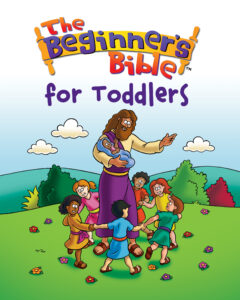
possibly less begetting and smiting in this bible
However one chooses to interpret it, interpretation is required when looking at the texts of the Bible. It’s a record of events which has come down to us in much the same way as Homer’s Odyssey, and with as many different voices involved along the way. Even if one takes the Bible at face value – notoriously difficult, in its contradictory entirety – and accepts it as truth, it’s a deeply problematic text, to say the least. The Gospels were written down by followers of Jesus – who they knew personally, and worshipped – in the aftermath of his early death. For the parts of his life pre-dating their association with him, they are presumably relying on accounts given to them by the man himself. These would be based on his own memories of his youth and childhood – but for the circumstances of his own birth, thirty-three years earlier, he presumably only had the accounts of his parents (whether earthly or divine) to rely on. Unless Jesus spoke Greek (I feel like they would have mentioned it if he had), those memories were then translated into a different language with different allusions and associations from his own, before being subjected to centuries of edits and deletions, only later being given ‘authoritative’ editions (and different ones for different countries and sects), each of them offering its own truth, rather than one definitive truth.
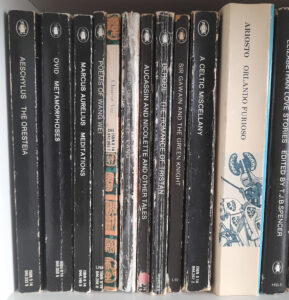
So, whether we are reading Homer or Ovid or the Gospel of St Luke, or The Castle, or Asterix the Legionary in English, we are reading an adaptation, a work imagined into existence by more than one writer and if we’re lucky it’s Willa and Edwin Muir or Anthea Bell and Derek Hockridge. If we’re not so lucky we may end up inadvertently worshipping a false idol or something and, who knows, even facing eternal damnation if you believe in such things. It’s an important job.
credit where its due: the translators get (almost) equal billing with the authors
This article (like several others) came out of a conversation with my friend Paul, and he writes better than I do about 80s horror (and many other things) at Into the Gyre
The 1980s was, famously, the decade when pop culture became corporate, encapsulated in the omnipresent corporate or corporate-style logo. Obviously, both corporations and logos long pre-dated the 80s, but it was in that era that it became an all-encompassing ideal. In the 1960s, the first really modern teenagers* had written the names of their favourite bands on their school books or bags; twenty years later their children were doing much the same thing, only they were painstakingly copying logos from album sleeves or tape inlay cards.
* 1950s teenagers were the first, but they were pioneers; the 60s generation was the first to grow up with the expectation of being teenagers, with all that entailed in terms of pop music and rebellious teenage behaviour
Corporate gloss was everywhere. As a young horror fan in the mid-to-late 1980s, one of the things that made the notorious video nasties of the previous generation (Last House on the Left is possibly the most representative example) seem so alluringly grimy and disreputable was their lack of slickness. 1980s horror franchises – in themselves a symptom of the decade of accelerated capitalism – even ones with their roots in the 70s independent cinema boom like Halloween – had logos. They had mascots like Freddy and Jason and Pinhead, they had rock songs on the soundtrack – they were corporate and – to young teenagers at least – they were cool. There was no way to make a grotty, un-theatrical, special effects-free film like I Spit on Your Grave seem cool. There was an attempt to make a franchise out of the Texas Chain Saw Massacre, but Leatherface wasn’t iconic in quite the way that Jason was, let alone an almost cartoon character like Freddy Krueger. Murderous, inbred yokels in rural Texas might well be scary but they weren’t easily assimilated into glossy hair metal videos.
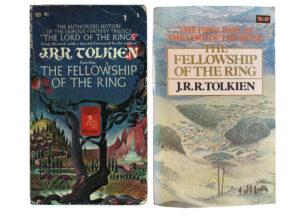
the flamboyant 60s/70s Fellowship of the Ring vs its more businesslike 80s update
The publishing world was no different. In the fantasy realm, the hippyish typefaces and sometimes grotesque psychedelic imagery of the great 60s and 70s paperbacks were replaced with foil letters in block type and tastefully elevated landscapes. ‘Tasteful’ is of course a relative term and within a decade, that utterly 80s look – a publishing counterpart to magnolia painted walls and a beige Laura Ashley aesthetic – which married an almost clinical sense of restraint, as if embarrassed by the childishness of elves, wizards and dragons, with bold, business card-style, metallic sans-serif lettering – would seem just as trashy in its way as the more florid 70s fashions had at the time.
70s horror classics redesigned for the 80s
But, unlike fantasy fiction, where the biggest name in the 80s remained the late J.R.R. Tolkien, the horror genre had star writers who transcended the genre and became part of the pop cultural zeitgeist, Most of the ‘big names’ in 80s fantasy, like Terry Brooks and Stephen R Donaldson, were writers whose key works belonged firmly to the post-Tolkien 1970s and never escaped a (very big) fantasy audience. Horror was different. Like the fantasy genre, its biggest names – Stephen King (everywhere) and James Herbert (especially in the UK, though his books sold millions worldwide) – had had their first successes in the first half of the 1970s, but as the 70s evolved into the 80s, both their work itself and the way it was packaged began to align with the spirit of the age.
The fanbase for horror broadened until the big horror novels became the big airport novels and big supermarket novels and the basis for successful Hollywood movies. The books themselves became bigger and more cinematic (but I talked about that here so won’t again) and their design more stylish, until they resembled the movie posters of the time; but with one major difference. There were of course iconic directors in the 80s, but even the biggest of them – Steven Spielberg, say, or Martin Scorcese – naturally didn’t dominate the posters for their films the way that Stephen King or James Herbert did on their books. In that respect, the authors were more like a combination of director and star actor, but whereas the blockbuster actors – Stallone or Arnold Schwarzenegger or even Tom Cruise were only one element, albeit a dominant one, in their star vehicles, with the books you knew that whatever you got would the real, unadulterated author, unless you happened to be a fan of Virginia (“VC”) Andrews, but she was a special case back then.
The first, strangely romantic adventure-looking Shining (with Warren Beatty-esque hero) and the classic 80s Stephen King logo edition
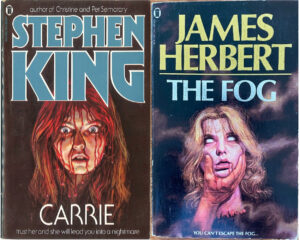
The extent to which it was the superstar authors, rather than the books themselves, that were the selling point, can be seen in their evolving covers. After a decade of disparate designs and variable artwork, often not especially horror-centric, publishers like New English Library, Futura and Star began treating books by horror authors as franchises, each with their own logo and aesthetic. Stephen King and James Herbert, to stick with the big two, demonstrate contrasting, but very 80s horror alternatives.
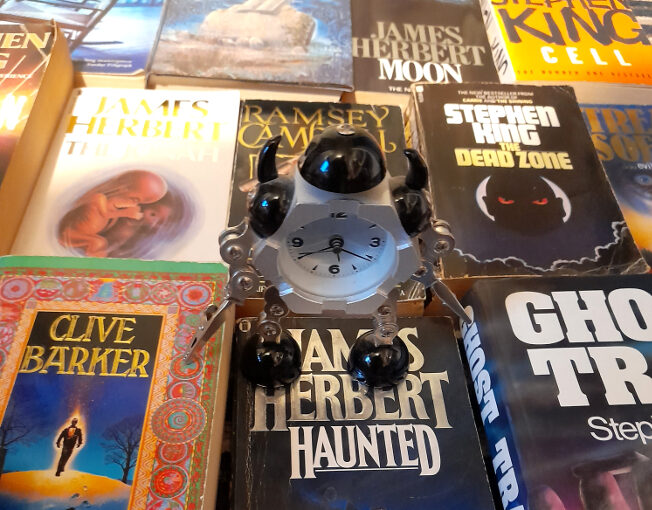
James Herbert – who, with a background in advertising and art direction, took a direct interest in how his novels were packaged – went with the 80s version of ‘classy’ as epitomised by mid-priced boxes of chocolates; a restrained palette dominated by either black or white, with lettering in gold or silver foil. They were eye-catching, moody and, to a teenager, adult looking.
New English Library offering James Herbert as a box of Black Magic chocolates and Stephen King as a hair metal album
Stephen King’s UK publishers (including Herbert’s publisher N.E.L. – but frustratingly, including several others; keeping one truly consistent image annoyingly out of reach) clearly realised that the selling point – the brand, in the parlance of the times – was King himself. To that end, the actual cover illustrations and even the prominence of the novels’ titles, took up less and less space, while the author’s name was treated to something like the logo of a metal band, and was big enough to be spotted across a crowded newsagent or bookshop. Sometimes the author’s name was in foil, sometimes it was embossed, but for at least a few years the covers of his main series of novels – as with James Herbert’s – had the uniformity of a corporate identity.
Stephen King’s Greatest Hits
Where the genre’s biggest stars and their publishers led, others followed. All of the big names of 80s horror tended to follow either the King or the Herbert approach. After wildly variable and sometimes lamentable 70s editions, Ramsey Campbell’s books took on the sleek, Herbertian image. American blockbuster authors like Dean R Koontz and Peter Straub’s books tended to follow the King blueprint.
80s gore (Richard Laymon & Shaun Hutson) vs 80s slickness (Shaun Hutson & Ramsey Campbell)
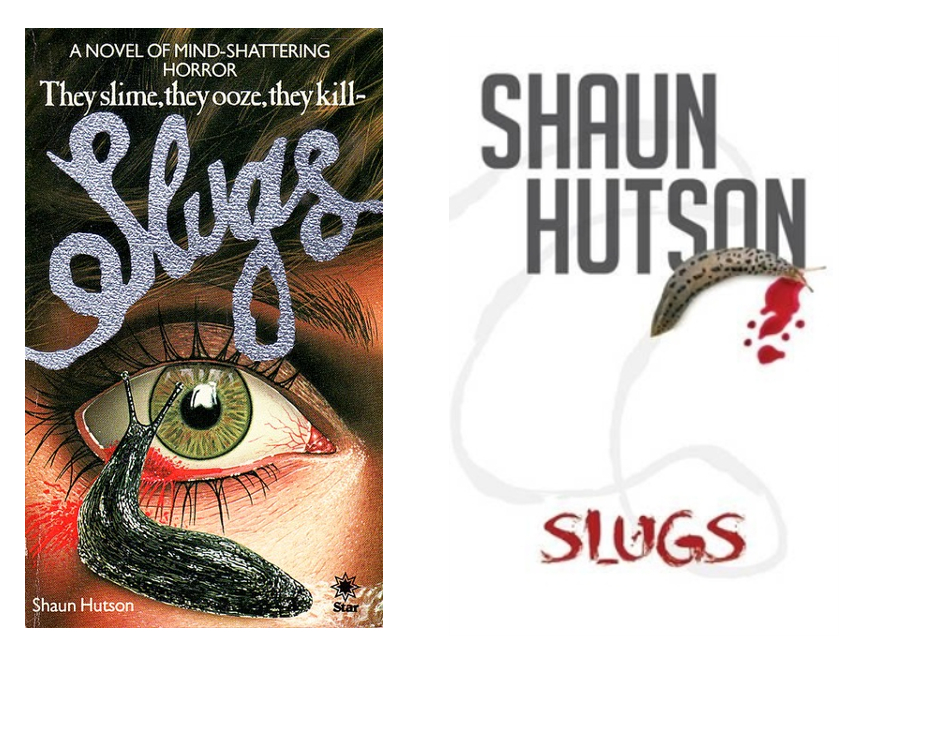
Gore authors had a kind of niche of their own. The early books of the UK’s most notorious horror author of the era, Shaun Hutson, played down the author’s name in favour of a gaudy movie poster look with the titles in a distinctive ‘slug trail’ font – and his US counterpart Richard Laymon’s works were very similarly packaged (the covers above both look like they could be the work of Danny Flynn, mentioned here, though I haven’t checked). As the sales of both authors increased during the boom years of the 80s, their packaging became – like their work – relatively more sophisticated. In the UK, Sphere mimicked the classy Herbert look for Hutson’s later 80s novels like Assassin and Victims, with the author’s name (embossed, in foil) becoming more of a focal point, while Laymon’s name became almost as logo-like as Stephen King’s.
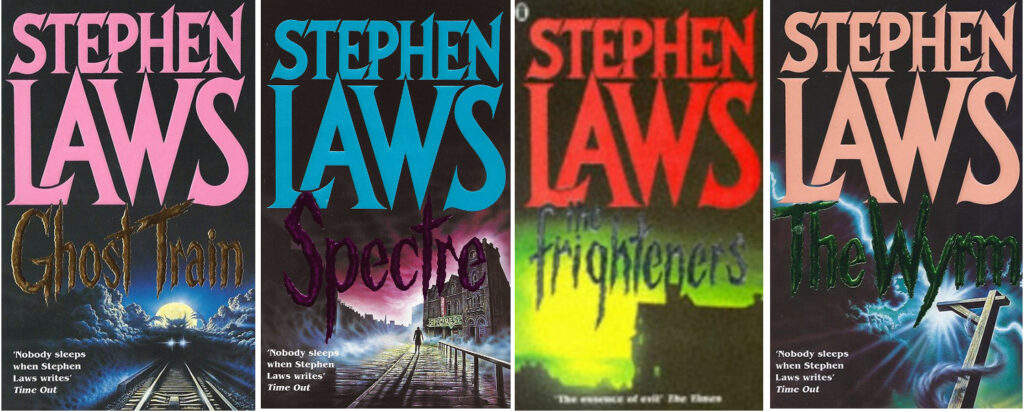
Laymon was far from alone in this. The brand-like identity of Stephen King, and the sheer volume of his sales, meant that the classic ‘logo’ look of his books was highly influential, to put it mildly. The range of King-influenced cover art ranges from the definitely ‘post-King’ 80s covers of authors like John Farris and Rex Miller, to the frankly imitative NEL covers for Stephen Laws, whose 80s books bring to mind the legal convention of the theoretical “Moron in a hurry” cited in cases of trademark infringement. Said moron would not necessarily have a bad time if they accidentally bought a Stephen Laws novel, any more than someone accidentally buying something that looked like Coca-Cola would find themselves with an undrinkable alternative – but they would quickly know they weren’t reading Stephen King.
the other Stephen of 80s horror
In almost all respects, Clive Barker was the outsider in the world of 80s horror – most definitely of it, but not defined by it. His debut novel The Damnation Game was initially packaged as typical, mid-80s horror stodge but it graduated, as his reputation grew, to Stephen King style packaging, even as Sphere Books simultaneously took the bold step of publishing his Books of Blood short story collections with Barker’s own fantastical (and in come cases gory) paintings on the covers, immediately putting the author in a dangerous-looking category of his own.
Clive Barker’s books appropriately looked both more graphic and more outlandish than the usual blockbuster horror authors’ works. From then until the end of the horror boom (which died around 1990-’91) his work coexisted in the two camps of mainstream and (for want of a better world) alternative horror. The packaging of the 1989 first edition of his short novel Cabal (filmed as Nightbreed) is pure, commercial 80s design; it looks more like a movie poster than the actual Nightbreed movie poster and is complete with logo-like title and gold foil for the author’s name. But around the same time, his dark fantasy masterpiece Weaveworld featured a more imaginative, sophisticated style, taking its lead from the Books of Blood. Weaveworld had a more formal design sense that was flexible enough to be applied to the rest of Barker’s oeuvre, so that when the horror bubble burst and everything 80s suddenly looked as cringingly tacky and dated as mullets and shoulder pads, Barker’s brand alone among his horror peers easily made the transition into the new decade.
Clive Barker as standard 80s horror author, blockbuster 80s horror author (x 2) weirdo 80s horror author and weird-but-classy fantasy author
From 1990 until at least until the turn of the millennium, Stephen King’s publishers experimented with everything from tasteful minimalism to gaudy dayglo colours, the only constant being the prominence of the author’s name on the covers. The sense of immediate brand recognition dissolved around the time of The Dark Half and has never been quite as strong since, and an 80s Stephen King collection still has a satisfyingly coherent look that isn’t matched by later editions. James Herbert mostly stuck with the ‘classy’ look of his late 80s books but with a sense of diminishing returns as the titles and cover images became less confrontational and the whole look less fashionable.
In the 90s, much of what had been packaged as full-blooded horror tended to be given more of a fashionable ‘urban thriller’ look, just as in cinema, the Freddy and Jason franchises limped to an ignoble (if temporary) end, while Hannibal Lecter emerged as a supposedly less cheesy horror villain. Horror movies were boring and passé, and when they were revived half a decade later they would be drenched in irony, allowing movies like Scream and its imitators to peddle the same tired, threadbare ideas that had killed the genre one more time, under the guise of a clever joke. Nobody wanted hair metal on their soundtracks anymore. It was a new age.
Slugs (1982) vs Slugs (2016) – eventually even the ultimate 80s trash schlock horror novel would be given the ‘tasteful’ treatment (which to be fair does look kind of cool)

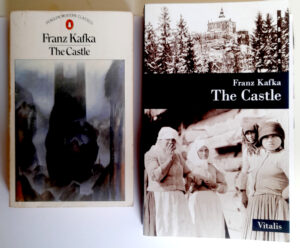
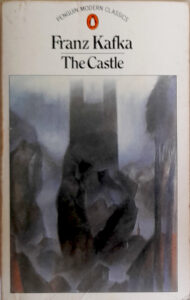 Lots there to be curious about, but let’s stick to Kafka for now. My old Penguin paperback of The Castle, which features two chapters not included in the original 1930 UK edition (which were separately translated by Eithne Wilkins & Ernst Kaiser), is from of my least favourite stylistic phase of the Penguin Modern Classics series. At that point in the early 80s, the spines of the books, in a nostalgic nod to the classic early days of Penguin, were orange and white, while the covers were white with (mostly) modernist paintings chosen to more-or-less fit the books. The Castle does have a nice cover illustration, by Elizabeth Pyle, but otherwise the design is a little drab. The book is 298 pages of fairly but not unreadably small print. The Vitalis edition is far more stylish and the cover artwork uses a beautifully evocative photograph of (Bohemian?) “Peasant women” from 1918 and a photograph of Friedland (or Frýdlant) castle in Czechia. The type looks around the same size as the Penguin edition, but though the book is slightly bigger than the Penguin, it has 382 pages.
 Even allowing for the fact that the Vitalis Castle includes nice, dark, moody and scratchy illustrations by Karel Hruška, it’s a noticeably longer book, and the reason for that is revealed in the two quotes at the top of the page. The Muirs’ prose – like Edwin Muir’s own poetry, which is worth checking out – is terse and spare, but also flexible and evocative. It’s the “voice” that Kafka has had for me since I was a teenager. It also has the benefit – or at least I think it’s a benefit, more later – of having been translated close to Kafka’s own time. When that first British edition of The Castle was published and Edwin Muir wrote in his introduction “Franz Kafka’s name, as far as I can discover, is almost unknown to English readers,” he was talking about an author who had only been dead for six years, and the book itself had only been in print in Kafka’s own language for four years.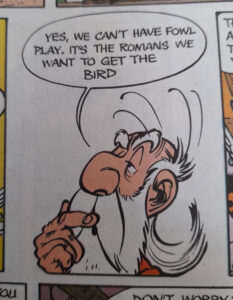

 Burgess’s A Clockwork Orange is one of my all-time favourite novels – it’s also the product, very obviously, of someone who could speak and think, fluently, in a lot of languages. Ten is the number he usually gave, ‘with bits and pieces of others’. Burgess created the book’s slang, Nadsat, in order to write about ‘the youth’ in a way that didn’t date like real slang and it definitely worked. Rightly, I think, Burgess didn’t want a glossary of Nadsat terms in the book. Some publishers have added one anyway, but the book works far better if the reader just immerses themselves in the narrator’s voice and his disorienting world. But Burgess was only human, and in perhaps the novel’s weakest moment (because it takes us out of that world) he couldn’t resist pointing out that the language his young narrator Alex speaks isn’t just whimsy on the part of the author: