it’s the Year of the Rat – here’s a mystifying detail from Bosch’s Garden of Earthly Delights (c.1510) with a friendly looking rodent
A new decade, and the year is flying past already. I intended to write something full of enthusiasm and positivity at the beginning of January, but at that point I was still clumping about in a walking boot and using crutches so it had to wait. I didn’t do my usual ‘records of the year’ for last year either (well I did, but not for this website), and the moment for that has definitely passed. For what it’s worth, my favourite album of the decade 2010-2019 was quite possibly Das Seelenbrechen by Ihsahn. But anyway, it’s Lunar New Year and I’m back in normal shoes, so Happy New Year!
I didn’t make any resolutions as such this year, my general aims though are to read more, write more and resist any of the normalisation of right wing extremism that seems to be carrying seamlessly over from last year. This week the BBC has a show where Ed Balls hangs around with various actual and quasi Nazis (maybe in the name of balance they should send Michael Portillo to hang around with some communists? On a train, if that’s what it takes*), while Channel 4 seems to think what Britain needs is more TV shows about Nigel Farage, presumably trying to get the most out of him while he still has any kind of relevance as a public figure.
* at this point,Around The World With Alan Partridge In A Bullnose On The Left barely feels like parody
So anyway, I am as always working on long, convoluted articles on various topics that aren’t yet finished, so this will be more in the nature of some brief notes and so forth.
In the holidays I re-read (the first time since childhood) the first three books in Joan Aiken’s Wolves Chronicles, set in an alternative early 19th century Britain where the Stuart monarchy was never deposed and “Jamie III”, sits on the throne. As the series starts, the country has been overrun by hungry wolves fleeing the Russian winter that have arrived through the recently completed channel tunnel (younger readers may need to be reminded that it was in reality completed in 1994). I mention the books (which are much as I remember them; entertaining, well-written and a bit silly) mainly for this passage near the beginning of The Wolves of Willoughby Chase, which, like the young heroine, I have remembered all my life (so far) – although I didn’t know where it was from and vaguely thought it must be Leon Garfield or even CS Lewis. The book is also, it turns out, the place I remember possets (Victorian hot curdled drinks) from. I’ve still never had one – they sound revolting – but reading about them made them seem desirable again.
There was something magical about this ride which Sylvia was to remember for the rest of her life – the dark, snow-scented air blowing constantly past them, the boundless wold and forest stretching away in all directions before and behind, the tramp and jingle of the horses, the snugness and security of the carriage, and above all Bonnie’s happy welcoming presence beside her Joan Aiken, The Wolves of Willoughby Chase, 962, p.44-5
In the sadly non-alternative present, Britain has a ridiculous prime minister every bit as pantomime-villain-like as Aiken’s villains are (she goes in for the kind of Dickensian villain names that seem to preclude the character from being good: “Miss Slighcarp” being the classic example) and the government is issuing with a typical and, presumably deliberate sense of bitter irony, this coin to commemorate the victory of insularity, xenophobia and – most importantly – protecting the financial interests of a small coterie of people at the centre of power:
indeed
In non-alternative Britain, somehow accusations of child abuse do not constitute a ‘royal crisis’ while two of its members making vague gestures towards some kind of unobjectionable normal life does; and maybe this is right. The idea at the heart of monarchy and aristocracy (that is, aristokratia; ‘rule of the best’) is by definition about not being ‘normal’ so perhaps, as we get further and further from the days when the monarchy involved some kind of mystical aspect and what Monty Python (RIP Terry Jones) called ‘supreme executive power’ we should expect all kinds of by-normal-standards transgressions to appear and not be seriously acknowledged by the royals and their fans, while (admittedly approximate) attempts at living ordinary lives will be punished.
I have no intention of going into serious political discussions here because I don’t want to, but 2020 has seen a minor shift in my own political views, insofar as, although I still regard (and I guess always will) nationalism of any kind as regressive and illogical, if there was to be another independence referendum in Scotland tomorrow, I would vote in favour of independence. Not without regret, as I fundamentally believe in internationalism and the principles mocked on the Brexit coin; but at some point, if the government that people vote for is not the one they get – and despite the apparent landslide won by Johnson and co, their support in Scotland is minimal – then something is fundamentally wrong with the system. That said, I’d be wary of writing off the Tories’ 25% of Scotland’s vote as insignificant; 690,000 people is a lot, even in a country of over 5 million. Overall in fact, the Scottish election results echo those of Britain as a whole, with the most noticeable feature being the collapse of anything resembling a left wing movement, depressingly. But anyway; in the unlikely event that a referendum is given by the current parliament, I hope the lessons of Brexit will be learned and that an independence campaign can well-informed and practical, but also optimistic and aspirational, rather than overwhelmingly negative and defined by the things people don’t want/like/believe in. Too much to ask, perhaps.
Onto more positive things; my friend Paul, who introduced me to the Nouveau Roman, has written a nice introduction to the movement here, which means I have more things I need to read; luckily, I have rejoined a library for the first time in over a decade. And the experimental string group Collectress have finally followed up my favourite album of 2014 (Mondegreen) with Different Geographies, out on 6 March via Peeler Records. It’s a beautiful, mysterious, allusive and elusive record; I’ve not really absorbed it yet, but here’s a nice video –
So, to sum up; it’s all a bit of a mess, but it’s a new year and a new decade, so one might as well be positive and try to do good things. Will write more soon.
Sitting down to write this, a month after breaking my leg and having to grapple with hitherto-unconsidered questions like ‘how do I usually sit on a toilet’? and one week before a General Election where my preferred of the apparently plausible outcomes is an unsatisfactory coalition government, it feels strange and maybe wrong to be looking backwards. But, disturbing and reassuring in more or less equal measures, I think it’s a good way to look forward to whatever happens next.
I remember as a child, looking at a stamp album that had belonged to (I think) my dad (or maybe his dad) when he was a child. Even for someone with no interest in stamps, and less interest in collecting them, it was a peculiar and fascinating book; unfamiliar places, people, even currencies. The thing that stands out the most in my memory though is a stamp from Bosnia, a name which at the time I hadn’t heard before and which sounded as unlikely and frankly made-up as countries like Syldavia and Borduria that I knew from Tintin books. That memory itself has a strange and silly quality now, but at the time (somewhere in the mid-80s would be my guess) Bosnia was as fantastical to a child (or me at least) as I expect the Socialist Federative Republic of Yugoslavia would be to Primary school pupils now.
classic cold war artefact: Iron Maiden behind the Iron Curtain laserdisc (1985)
30 years on from the series of revolutions that symbolically culminated in the destruction of the Berlin Wall (the free opening of the Brandenburg Gate itself happened 30 years ago last month) it’s perhaps only natural that those who remember those times should be thinking of them. If you grew up with the cold war in the background (that is, any time really from the years after world war two up until the end of the 80s), the war itself may have constantly ebbed and flowed, but the communist eastern bloc was, monolithically (technically at least duolithically, but that’s not a thing) omnipresent in a way that now seems as unlikely and distant as the Austro-Hungarian Empire. It was there at school (we had to learn about “East Germany” (the GDR or DDR), “West Germany” (FRG or BRD) and the differences between the two, the USSR /CCCP, the space race, the arms race, ‘Mutually Assured Destruction’ etc etc etc), it was there in sports (especially the Olympics, but “West Germany” was quite a big deal during the ten minutes that I liked football) and in entertainment. Usually this meant sinister, emotionless and robot-like communists being the bad guys in endless numbers of films and TV shows (classic example; Rocky IV, but see alsoRed Dawn, Red Heat ad infinitum – it was interesting, in a depressing kind of way to see this old view of ‘reds’ adopted, without irony in the third, inferior season of Stranger Things this year), but it wasn’t all bad – sometimes bands made a point of playing behind the Iron Curtain and talked about how great the audiences were; I remember Iron Maiden played in Poland, Hungary etc in the mid-80s which presumably was a logistical nightmare, but nice for their fans who mostly would only have been able to hear their music through unofficial or even (the same thing really) illegal channels.
A few things have brought that period, and specifically the GDR, back to me recently; Tim Mohr’s superb book Burning Down The Haus – Punk Rock, Revolution and the Fall of the Berlin Wall (Dialogue Books, 2019), the work of the German photographers Ute and Werner Mahler and the Ostkreuz photography group, interviewed by Kate Simpson in issue 90 of Aesthetica Magazine (August/September 2019), the TV shows Deutschland 83 and Deutschland 86 which I just watched, somewhat belatedly and a series of John le Carré’s classic spy thrillers, notably A Small Town In Germany (1968).
The central realities of all of these things is pretty much the same; in East Germany, the state (specifically the secret police, the notorious Stasi) was watching you, and not only did they not care if you knew it, they wanted you to assume you were being watched.
East Berlin punks at Planterwald, approx. 1981 by Harald Hauswald (Ostkreuz Agency)
One of the most chilling things in Tim Mohr’s book is the way that, from the beginning of the 80s until its end (punk seems to have had an extended lifespan in the GDR, partly because fashions were slower to take root and spread where the majority of the media was under state control, but also because it remained – from the music to the image – genuinely oppositional and rebellious, rather than being absorbed into mainstream pop culture) the punks were, as often as not arrested because of informants from their own families or even the bands themselves. Nevertheless, after a slow start, the bands multiplied, but in a planned economy with full employment its slogans were something like the opposite of the UK’s punk bands; Too Much Future being the classic East German punk statement; more info here. As Mohr notes, long before the advent of GDR punk, informing for the government was something like an epidemic. In fact, by 1952 – that is, just four years from the official founding of the nation – the Stasi had already recruited 30,000 informants (Burning Down The Haus, p.2), and that figure would rise exponentially throughout the decades. This was the reality that artists like photographer Ute Mahler were working in;
“Everyone knew that people were spying for state security. But nobody knew who. It could be anyone. We lived and breathed with this knowledge. In 1980, I stood at a May Day demonstration just below the grandstand. The demonstrators cheered at the government, which was on a podium above me. I got the impression that all the attendees were in agreement and were happy about it. Whilst editing the pictures, I discovered other faces in the crowd. That confirmed to me that you must look closely for what might be hidden.”
Ute Mahler, interviewed in Aesthetica, issue 90, p. 128
Action Force SAS figure, 1982: this creepy thing was one of the ‘good guys’
From a child in the UK’s point of view, the activities of the CND, the Greenham Common protestors, WarGames, Raymond Briggs’s When The Wind Blows and even silly things like the Frankie Goes To Hollywood Two Tribes video strengthened rather than diluted the sense that, beyond ‘the west’ there was a huge, sinister and implacable enemy. That video – bad lookalikes of Reagan and Chernenko wrestling – was absurd but actually made child me more aware of the seriousness of the global situation. For a start, I remember thinking the actors were bad lookalikes, but I knew approximately who they were meant to be and what it represented. Actually, although I was very familiar with Reagan I doubt whether I knew Chernenko by name; even now I had to look it up to write this as my only memories of a pre-Gorbachev Soviet leader relate to Andropov, for the simple reason that his name was funny. I vaguely remember him in association with a joking remark (when he died??) that “his hand dropped off”, but whether that was purely from the playground or from TV I don’t know. Even toys contributed to the doomladen atmosphere. The initial run of Action Force (the European release of GI Joe, although initially there was no back story or characters, just – as with the older UK Action Man – a lot of more-or-less accurate contemporary military equipment, including sinister SAS paratroopers with gas masks etc. As I was typing this, I remembered that I used to have a fairly extensive knowledge of the weaponry favoured by the Warsaw Pact vs. NATO troops, which is fun for kids. As far as I remember, although children’s entertainment in the UK wasn’t by and large as propagandist as Hollywood, there wasn’t anything much to counter the idea of the brainwashed, robotlike communist hordes, programmed by the state from birth. And, at no point before 1989 did it feel like that situation was about to change.
That feeling was as strong, or even stronger, inside the Eastern bloc, as Ute and Werner Mahler explain;
“The generations after us might find it hard to understand the complex workings of the GDR, as memory begins to move into the past. These new generations perhaps cannot imagine how one could live in such a country, where one could not officially say what we thought. … When we took pictures in the 1970s and 1980s, we would never have imagined that one day the GDR would not exist. At that time, we wanted to show life as we experienced it – just as it was. Today, the images act as documents from a vanished country. In this way, they are given a renewed sense of purpose.”
Ute & Werner Mahler, interviewed in Aesthetica, issue 90, p.124
Even, as Mohr explains, the day after the Berlin Wall fell, the Stasi were making arrests in something like the usual way, although the state quickly descended into chaos. But maybe everything feels permanent when you live through it; I remember when, what felt like 1000 years or so into Margaret Thatcher’s reich, we had had the Miner’s Strike, the Falklands war, there were millions of unemployed and it seemed like I had never met anyone who liked Thatcher, or anyone who voted for the Conservative Party and yet, come election time they still won. Maybe it’s more significant that I don’t remember anyone I knew being especially keen on Michael Foot or Neil Kinnock? But anyway; my memory is that by 1988, there was no feeling that the cold war was going anywhere; by 1990 it was over. Until I was 23 my only conscious experience was of a Britain run by a Conservative government, and then that was over.
symbol from an 80s cold war childhoodBob Light and John Houston’s satirical Gone With The Wind poster, c.1981 – vividly brings back the era to me
One of the stranger things to find, looking back on the phantom communist enemy of my childhood is that, contrary to what appeared to be the case on TV at the time, the people of East Germany, discontented though they obviously were, did not necessarily want to become westerners. As depicted vividly in Deutschland 83 and even more so in Deutschland 86, Communism as practised through the GDR’s dictatorship was a failed ideal, but it remained for many, something like an ideal. The bands documented in Burning Down The Haus, like the immediately post-Communist East German club scene that Mohr experienced himself, were ‘radically egalitarian’. These were, after all, people raised in a system which preached the power of the people, and even enshrined in law the freedom of expression, although in practice it didn’t allow either of those things. Often bands or musicians – people who were routinely arrested, beaten by the authorities, held in prison awaiting trial for months and so on – had opportunities to flee to the west (or were even encouraged to by the authorities who couldn’t cope with them) but chose to stay and work for change. Fascism and consumerism were seen, not just by the authorities, but by the punks, as the enemies of freedom, and even when the punk revolt happened it was often aided by (which seems odd but makes a kind of logical sense) the Lutheran church, which had an uneasy but respectable existence within the state. This meant that not only the punks (who tended towards anarchism in the 19th century sense politically), but also environmentalists, peace activists and other dissidents the church protected and to a degree nurtured, were working under the auspices of an institution which also had essentially anti-capitalist principles at its heart.
Rebelling against a de facto egalitarian state in itself creates a strange situation, as Ute Mahler recalls;
“In the GDR, when the collective was praised as an ideal, we were all lone fighters. In this new society where individuality is so important to so many people – coming together is the key” quoted in Aesthetica, issue 90, p.124-7
And this is not really a paradox, even to an individualist; if the contrasting but ultimately similar oppressions of the 20th century, whether Nazi Germany, Stalinist Russia, Communist China etc – have taught us anything, it’s that totalitarian power structures, of whatever political hue value conformity above individuality; but also that political progress requires subjected peoples to firstly insist on their individuality, but also to act in concert with each other, to combine their voices in order to be heard.
Perhaps because a general election is looming as I write this, reading about the lost world of the eastern bloc and its failures (mostly the same failures as capitalism to be fair; poverty, starvation, oppression etc etc) begs the question; what is the country that you believe in, if not a reflection of yourself and what you want? The Eastern punks were patriotic in the sense that they wanted the freedom to be themselves, in an East Germany that recognised the right to have dissenting voices and views, to improve the experience of East German citizenship for all. But, like everyone else, they shared their country with the other by-their-own-admission patriots who believed in a completely different country. If you consider yourself a patriot, you are probably living in a country with lots of other patriots whose country has the same name as yours, but whose beliefs and ideals are not the same as yours. Those who fought and died for [name a country] in [name a war] and those who fought and died for [name an opposing country] in [the same war] were fighting for the same thing, but they were also not fighting for the same thing. The people who fought for Britain against the Nazis and the people who fought for Britain against the Zulus both were and were not fighting for the same country, though on an individual level the end result – their deaths, and the deaths of their enemies – was much the same.
Somewhere in a previous, equally muddled* article I mentioned the poet Edward Thomas. Against the WW1 poetry of super-patriot Rupert Brooke, or the “What passing-bells for these who die as cattle?” humanism of Wilfred Owen, you have to balance the entirely personal patriotism of Edward Thomas;
At the age of thirty-six there was no strong pressure on him to enlist, but in August 1915 he finally made up his mind… When his friend Eleanor Farjeon asked him why, he scooped up a handful of earth and said, ‘For this.’ Andrew Motion, ‘An Imaginary Life’, in Ways of Life, Faber & Faber 2008, p.102.
And no doubt that was true. But what he fought for doesn’t change the fact that what he was injured for (he survived the war, minus an arm) was the global ambitions of the small group of people then running the British Empire. In the end his patriotism and theirs amounted to the same thing; but they were not the same thing.
Thomas’s kind of patriotism is the one that I think most matches my own; despite being a lefty internationalist I am quite a patriotic person. I love Scotland and value it not because it’s the ‘greatest country in the world’ (not that I’m saying it isn’t; just that the concept itself is utterly meaningless I think) and not because it’s beautiful – which it undoubtedly is, but so is every country I’ve been to – but because it is uniquely itself. It’s the big picture and the details; the texture and the atmosphere, the things I like and the things I don’t like. What I’m really saying I suppose is just that it’s the country I know best, the one where all of my responses to the world were shaped – which is of course not something to run up a flagpole and if one somehow did there’s no reason that anyone else in the world should want to salute it. But it is patriotism nonetheless. One of the many ironies of our particularly irony-ridden times is that on the whole, the conservative/nationalist parties of whom there are suddenly it seems very many indeed, are by and large those least committed to any kind of environmental/green policies. Strange because if, like the Conservatives nominally are, you are all about pride in your culture and your country and your history, but aren’t really concerned about the welfare of the actual, physical country as a piece of land then what do you even think you stand for?
So anyway; in the world of 1988, the world of 1990 seemed unthinkable, but it happened anyway, because people wanted it. I know that as 2019 draws to an end the world is full of people, in Chile, in Hong Kong, in Iran and Sudan, in the USA and the UK; in every country, who want thoughtful, compassionate, democratic government and not repression, corruption and leaders who are quasi- or actual dictators. Who want to be represented, not ruled. And it’s not impossible.
* when I read my writing it makes me think of that episode of Peep Show where a disgruntled lapdancer says “If you can’t sum up all the aims in the first line then they’re too diffuse.” I think my writing tends to be a bit diffuse.**
It’s been ages since I’ve posted a playlist, so I thought I’d change the format slightly. Background: I write about music a lot for various publications, but as a music journalist I also receive hundreds of promo type emails every week and, when something looks interesting I download it and save the release in a folder marked with the month, to be properly checked out later (sometimes much later). So I thought ‘going forward’ (I hate that phrase, what did people used to say?) that at the end of each month I’d go over the items of interest and see if they really were interesting, and write a little bit about them.
Now is as good a time as any to start, but to get it rolling I thought I might as well do a look back over the summer, which I think I did years ago on my old website. Anyway, let’s get on with it.
Going right back to the beginning of June, an album I really liked and have kept listening to is…
This vinyl-only release is the brainchild of acclaimed folk guitarist C Joynes, aided and abetted by a starry ensemble consisting of the Dead Rat Orchestra, plus fellow experimental guitarist/multi-instrumentalists Nick Jonah Davis and Cam Deas. The Borametz Tree takes its name from the fabled “Vegetable Lamb of Tartary”, a tree supposed to produce sheep as its fruit (also the title of one of the album’s best songs) and it’s a suitably exotic and otherworldly collection of tunes. Otherworldly is perhaps misleading; in fact the multi-textured music here is very much of this earth, often many different corners of it at once. The album opens with the richly reverberating “Triennale” which sets the scene with its atmospheric, droning combination of elements from different western, eastern and African folk music traditions; but which all gel beautifully to make a familiar yet alien whole. It’s incredibly elusive; the aforementioned “Vegetable Lamb…” begins sounding perhaps Scandinavian or even Scottish, but strangely could equally be Arabic; and this kind of melange characterises the whole album, somehow encompassing everything from bluegrass to the music of the steppes. Mysterious, wild and invigorating.
Transfigurationsis interesting, an album distilled from a multifaceted performance art project, it’s part experimental (but relatively orthodox) songs, albeit with the cello as the central instrument, part sound-collage, part social commentary, part spoken word performance. The album kicks off with ‘Rupture 1’ (the album is punctuated by five politically-charged Ruptures) featuring an excerpt from an old news report about the Black Panthers in the May Day protests of 1969, beginning a theme of civil unrest that runs through the whole album. At various times it reminded me of the mini-album Jarboe and Helen Money made together a few years ago; kind of an obvious comparison, but to me this was more satisfying. Although less indomitable than Jarboe’s, Cellista’s vocals are more melodic and the songs (or at least the handful of more conventional ones like ‘Confessions‘ and standout, ‘Look Homeward, Angel’ featuring Dem One) are straightforwardly affecting. The actual cello playing reminded me less of Helen Money than of the fantastic Julia Kent; atmospheric and (that word again) mysterious. The album is, deliberately, very timely (Cellista explained while promoting the work that “Transfigurations is a response to the world we inhabit. It is meant to allow us all, singularly and as a community, to see the ruptures that punctuate our place in the present”), but the framing of our time (specifically 2017 in fact) as a time when always-present tensions have risen to the surface reinforce the idea that the issues of our time are the issues of all time. It’s a good album.
Quite liked it in small doses, at least. It’s very nice and all, but taken as a whole its slightly twee and fragile retro, sometimes synth-pop indie style made me think of Philip Larkin on The Beatles; “like certain sweets, they seem wonderful until you are suddenly sick. Up till then it’s nice, though.” Philip Larkin, All What Jazz, Faber & Faber, 1970, p. 102
Speaking of retro (and what would pop culture in 2019 be without the ghosts of the 80s and 90s hanging over it?) I quite liked K. Michelle DuBois’ “summer single” ‘Waves Break’ which sounds weirdly like Jan Hammer producing The Cure c. Japanese Whispers but with the Bangles doing the vocals. I seem to quite like K Michelle DuBois against my will; I checked out her album Harness last year, decided it sounded like the kind of music you get on Buffy style teen soaps, ie not my cup of tea, but then ended up listening to it quite a lot anyway. Not at all sure about this video though.
One of the problems with promos is they are sometimes sent out so far in advance, for understandable reasons, that you tend to listen to and then forget about them before the release date is even near. The example that led to this observation is the unpleasant but extremely powerful new album by Margaret Chardiet’s industrial project, Pharmakon. The promo has been with me since June, the album itself (Devour) is out on August 30th via the reliably great Sacred Bones Records. I’m not sure I’d say I ‘like’ Devour, but it’s a hypnotically ugly record, paradoxically chaotic and controlled, emotional and yet kind of blank and icy. More tuneful than I had expected though; if you don’t like the single ‘Self-Regulating System’ then you probably won’t like any of it.
2019 is (to me at least) one of those times when the zeitgeist feels like an actual entity, less the ‘spirit of the age’ and more an actual ‘time-ghost’, a baleful Lovecraftian presence whose unseen influence poisons the atmosphere of the era, insidiously affecting the minds of influential people.
It’s a silly conceit perhaps (although few ancient civilisations would have thought so), but also a handy one; great swathes of history can be explained by the idea of the time spirit invisibly presiding over the earth like the Old Gods of the Cthulhu mythos; ages of empire and revolution and war and faith and enlightenment and (that ambiguous word) “progress” of various kinds.
Looked at as a succession of identifiable ages, the idea of zeitgeist (as an entity, or in the usual usage) has both pluses and minuses. On the one hand it gives us history in a usefully linear, easy-to-summarise, teach and learn kind of way, (too) neatly summarising otherwise amorphously opening and closing stretches of time. On the other hand, it removes to an extent the sense of individual and group responsibility that’s at the heart of all human activity and ventures.
This is almost fair; people have no choice but to act as products of their time and environment; but mostly it’s unfair, since whatever time people come from, ideas of good/bad (extreme ones anyway) remain somewhat static: people generally do know when they are acting badly. And while people are a product of their time, times even more so are a product of the people who inhabit them. The eternal problem is that even rational and enlightened human beings can be counted on to do irrational things. Some of these, like firing missiles at people who they don’t know and have no personal disagreement with, are simply harmful. Others, like voting for political parties which it is not in their own interest to have in power, or protesting by destroying the neighbourhoods they live in, when logic would dictate that they should attack those of the people who cause their woes etc, are self-harming too. Being swept up in the zeitgeist is a thing, and in a way the proof of that it is, is that it can be hard to justify afterwards, even to yourself.
Currently, the zeitgeist seems to desire that the people of the world should be drunk on bigotry and self-interest. The hangover from this kind of a binge we already know; bulldozing piles of bodies into pits and swearing it’ll never happen again. Only the next time, we (or they, depending on how events play out) may have to dirty our/themselves by doing the ‘bulldozing’ by hand, since ignoring impending ecological disaster in favour of increased profit (as I write, commercial whaling has been resumed after a thirty year cessation) is part of the whole bigotry/self-interest worldview.
In the UK, the two main political parties – theoretically irreconcilably different in almost every respect – are facing what, however it works out, is one of the biggest political challenges since World War Two (I mean Brexit, I suppose I’d better name it for reasons of clarity, much as I hate to) in exactly the same way. Not – as might be expected (or even quite reasonably demanded) – by taking steps to prevent the problems that are inevitably going to arise, or even (as might be reassuring, if perhaps comical) by plotting some utopian alternative Britain which will blossom in the aftermath of the upheaval. Instead they are just wringing their hands over the future of the parties themselves in the aftermath of the divisiveness they have helped to fuel, or at best not tried to heal. Oh well.
In 1826, William Hazlitt wrote (not in The Spirit of the Age, though that would have been neater:
…hating, like a poisonous mineral, eats into the heart of religion, and turns it to rankling spleen and bigotry; it makes patriotism an excuse for carrying fire, pestilence and famine into other lands: it leaves to virtue nothing but the spirit of censoriousness, and a narrow, jealous, inquisitorial watchfulness over the actions and motives of others.On The Pleasure of Hating from The Plain Speaker (1826) in Selected Writings, p. 400-1, Penguin Classics, 1982
The extent to which this is still a demonstrably true and relevant statement is depressing, suggesting that while ages may each have their own spirit, the ghost at the heart of them is humanity itself. Like businessmen (and they usually are men) polluting their own land and rioters destroying their own neighbourhoods, it suggests that, if catastrophe comes, it will be human nature that facilitates it, while at every stage, offering apparently valid reasons for doing so; as Hazlitt also noted, ‘Reason, with most people, means their own opinion’ (Ibid, p. 439)*
*he wrote ‘It is always easier to quote an authority than to carry on a chain of reasoning’(ibid; p. 449) too, which is perhaps even more relevant here; I’m doing it
Having said all that, although “the” zeitgeist is talked and written about, there never is only one spirit of any age. Against Adam Smith’s definitive statements of the Scottish Enlightenment like ‘Science is the great antidote to the poison of enthusiasm and superstition’. (The Wealth of Nations, 1776), you have to set Byron’s memories of childhood in Aberdeenshire at the end of that same century: “I remember a Methodist preacher who on perceiving a profane grin on the faces of part of his congregation – exclaimed ‘no hopes for them as laughs.’” (Lord Byron Selected Letters & Journals ed. Leslie A Marchand, Pimlico, 1993, p.352.
British life in the 1930s
Two of my favourite books, Cyril Connolly’s The Rock Pool and George Orwell’s The Road To Wigan Pier were published a year apart from each other (in 1936 and 1937 respectively – more about the former here), by people who were not only contemporaries, but who knew each other and went to school together and remained on friendly terms; a narrow focus you’d think, but they perfectly exemplify very different currents in European society of the time. The Great Depression and the precarious living conditions of working class people (Orwell), and the dying years of ‘jazz age’ decadence and the ennui of the moneyed class (Connolly) are almost opposites, but both were to fuel the coming war; are these two zeitgeists or one? Which brings up the question (because I’m bringing it up) of hierarchies of zeitgeist. As World War Two loomed, these two groups were the yin and yang of interwar Europe. There was the vast mass of the unemployed or poverty-stricken working class for whom the Depression meant impending starvation and the need for change in order to survive. Then there was the differently disaffected upper class, products of and heirs to decaying empires, with little desire to deal with the running of them in the aftermath of the seemingly hollow victory (Allied Powers) or disastrous defeat (Central Powers) of World War One. But are yin and yang one entity, or two? (both, inevitably)
Closer to our own time, what could be more 80s than yuppie culture, racism, Thatcherism and Reaganomics? But also, what could be more 80s than “alternative comedy”, Rock Against Racism and the miner’s strike? In the early 90s, rave culture peaked around the same time as Guns ‘n’ Roses; a disappointingly sturdy beast as it turned out. Zeitgeist lore would have you believe that a pincer movement of dance music and Nirvana’s Nevermind swept away cheesy trad rock and its stylings, but in fact “Slash” was miming a solo on an unplugged Les Paul in the desert in the video to a hit single just months afterSmells Like Teen Spirit had apparently rendered such things obsolete. So it goes; Mull Of Kintyre was the song that topped the charts as the year of punk came to an end. As with empires and revolutions, eras of whatever kind are rarely as neat as we’d like them to be retrospectively; and I say that as someone who owned, without any feeling of incongruity, albums by Nirvana and Guns ‘n’ Roses and the The Shamen.
in 2019, 80s nostalgia is at an all-time (or time to date) high; but, even in the western world, there was more than one 1980s
But away (partly) from music, the ways in which apparently opposed forces come together to define an era is always fascinating to look at. When they are violently opposed, as in the case of something like the hippies putting flowers in guns and then being shot at Kent State in 1970, it’s pretty black and white. Whether or not you think the hippies were ‘the good guys’, shooting unarmed protesters will always make you ‘the bad guys’. The two sides of the conflict couldn’t have been more clear. On the other hand, once you remove the life-and-death struggle, things become more ambiguous. To cite a very trivial example; the founding of the extremely successful label Earache Records in 1985 was part of a government sponsored enterprise scheme which essentially rebranded unemployed teenagers as entrepreneurs. It’s often celebrated as a kind of ironic victory of the anarcho-punk-crusty underground over nasty old Thatcherism – and that’s how label founder Digby Pearson saw it:
“… in the 80s, when you were unemployed in the UK, you had to go to visit the unemployment office every two weeks, and I didn’t fancy doing that. If you start a company, you get the same amount of money and you don’t have to visit the unemployment office every two weeks. You’re not unemployed anymore, so it’s a method for the government to reduce the unemployment figures…They didn’t care what business you did, as long as you did something… it was an excuse to say ‘Wow! I’m a record company!’ But the truth is I had no plans, nothing really.” quoted in Albert Mudrian, Choosing Death – The Improbable History of Death Metal and Grindcore, Feral House, 2004 p.121
BUT, much as one applauds any victory over Thatcherism, isn’t the phenomenal success of Earache Records (going strong over 30 years later, with offices in London and New York), for all its rebellious, anti-Thatcher stance, just what the government wanted to happen? Doesn’t it kind of prove that, in this one specific instance at least, Thatcherism worked? Bleh. A silly segue, but it makes me think of this achingly ironic note from Breaking Free (1989) by “J. Daniels” – a very entertaining revolutionary socialist (or perhaps more precisely, anarcho-syndicalist or some such thing) Tintin book in which Tintin and Captain Haddock help to bring down western capitalism.
Attack International: “we have copyrighted Tintin” – good luck with that
Apologies for abruptly bringing optimism into what has so far been apocalyptically downbeat, but the point here if there is one, is that people can and retrospectively do choose the zeitgeist they prefer. The changing critical fortunes of pop stars are always very interesting to observe from that point of view – the world is full of “the kind of people who had to wait until 1968, when it became chic to say that Brian Wilson was a genius, before they could admit that they liked The Beach Boys”* – so why not do it now, and in doing so strengthen the spirit itself? Against Trump, Farage, Brexit, rigid political ideology and religious dogma you can set Greta Thunberg, Katrín Jakobsdóttir, David Attenborough, Bonnie Greer, Alexandria Ocasio-Cortez, Stormzy, Carole Cadwalladr and really, so many more; this was a random, pulled-out-of-the-air list, in no way meant as definitive or even representative.
*Charles Shaar Murray in Creem magazine, 1972, from Shots From The Hip, Penguin books 1991, p.16
Marxist revolutionary Tintin
The current, sunnily optimistic issue of the alumnus magazine of my alma mater (well, why not? I’ve never written that phrase before!) pleased me – because if populism and intolerance are ‘the zeitgeist’, then so is this – and what’s more it is the future too. It’s hard to think of a more conservative (in the tradition-bound sense) institution than the University of St Andrews, but even aside from the cover story (Internationally Scottish; an exhibition celebrating diversity), the magazine regularly celebrates its award-winning graduates from all over the world, the globally important research undertaken at the university and, on a more intimate level, has a news column recording marriages and civil partnerships of its alumni. That is, it covers a hugely diverse mix of people from a multiplicity of backgrounds, doing a range of things. It celebrates diversity (have to admit that phrase is irksome though) – just like movies and TV shows and commercials and shops and organisations still now do – not because such things as internationalism and civil partnerships are either ‘politically correct’ or daringly edgy, or because it’s somehow forced on them (by whom, anyway?), but because it’s good business; because it’s society, it’s people, and what people do, how they live and what they want. When people stop being diverse, this will stop happening. And the point is that people always have been diverse, but the people in charge have not. But, almost against their will, they are starting to be.
15th century university in the 21st century
Looking at the bigger picture, it quickly becomes clear that all this apparently endless Brexit/Trump reactionary nonsense is just the foamy-mouthed dying throes of old ways of life. Despite the constant yammering about elites and freedom, these ways of life were established by people with an inflated sense of their own importance and exceptionalism (and/or that of whatever they identify with; nation, gender, ethnicity; the usual suspects) and a vision of freedom which only meant their own freedom to do whatever they want to do without interference.
That’s not to say that the dying throes of outworn cultures are harmless (see WW1 for instance), and I’m not naïve enough to say that all will be well; but in the end, the wave of reactionary negativity is doomed, because ultimately people don’t want authoritarianism unless they happen to be the ones in positions of authority and because people who have grown up and lived in relative freedom will not have it easily taken away; I hope anyway. In history there are very few analogues to the present time, which is probably why the geist of the Weimar Republic hovers so ominously.
Despite the current state of world and British politics, in most important ways, more things are probably better for more people – certainly in the western world (not, I realise, a minor caveat) – than they were in, say 1989 – and the bits that are worse are fixable, given the political will to fix them. The political class finding that will rather than being absorbed by its own power struggles and internal battles is always a problem, admittedly; and more and more I feel the will will have to be forced upwards from ‘ordinary’ people, somehow, though that ‘somehow’ presents a whole different set of issues.
But while looking forward, it’s instructive to look at what it actually is that people are nostalgic about. Yes, there are those who yearn for times when they could do whatever they wanted because of the class/country/whatever they came from, but there are also things like the wartime spirit, or the solidarity of the mining communities before Thatcher destroyed them. Nobody wants to be bombed, and few if any people actually enjoyed working in coal mines – what people generally miss is the sense of community that arises from adversity,* The thing to do then, is to try to create the missing sense of community without having to experience the adversity. And people are doing exactly those kinds of things; community projects, ecological movements, local groups, international organisations. Imagine the progress – in the sense of good things for the future of the world – that could be made if people tried to humanise entities like the EU, rather than breaking them apart or divorcing from them or viewing them as first and foremost business ventures. If hate groups are on the rise (and they always seem to be), then more positive movements are flourishing too. Personally, although I think it’s great, I don’t really feel comfortable belonging to things, but I’m glad other people want to. But as with the ever more arcane (and ever more necessary) rules about recycling and plastic-usage, I’ll get used to it. We can still be okay in the end, if we want to be. This wasn’t what I started out to write, but it’s a nice note to end on.
*Side note: it can be shocking for someone of my generation to realise the extent to which shared experience – already very much in the decline in the 70s and 80s, has changed and all but disappeared. To take a very trivial example (the main kind of examples I seem to give), if you were at school in the UK in the 1980s, and if your family was the sort where the TV was on in the evening, you could pretty much guarantee that you and almost everyone you knew would be watching one of 4 (or even 3) shows at any given time. Not only did you as a child know what was in the top 10 (possibly most kids still know that) but, thanks to Top of the Pops your parents did too, and possibly even your grandparents, if you had such things. I’m not saying it was better, but it was substantially different. What we now seem to have in place of that kind of boring, take-it-for-granted shared experience is vaguely similar but utterly different; instant familiarity. ‘Re-imaginings’, reboots, remakes, new songs that sound like old songs (I recently heard a hit song that blatantly “borrows” the melody of the verses from Dolly Parton’s Jolene and another which lifts the chord sequence of Every Breath You Take by The Police; these are not obscure reference points, but nor are they acknowledged as pastiches or homages, or credited as samples are, though presumably royalties are being paid). Familiarity, however much contempt it’s supposed to breed, is apparently comforting, or at least saleable.
As I write these words it’s the first day of summer and I’m sitting in my study (sounds pompous, but ‘room full of books and records where I work’ is less economical), with Atom Heart Mother playing, looking out at a beautiful sky of quilted dove-grey clouds receding towards the Lomond hills, over a typical rural Scottish landscape; a bit of wasteland filled with flowers and few decaying disused buildings and beyond, a park (the part I can see currently empty except for white goalposts) and then woods leading up to the hills. It’s nice. Despite the semi-optimistic whingeing of my last post I’ve really not been any more productive; at least I haven’t finished writing many things. But I’ve made lots of notes, and reading through them there seem to be some (perhaps tenuous) links and themes running through them. So here are a couple of them.
On work days part of my routine is to fill the bird feeders in the garden before breakfast. At around 6.30 am the bird traffic outside the kitchen window is pretty steady; for someone who has lived in rural areas my whole life I’m mystifyingly ignorant about nature, so I’m surprised to find how many birds I can identify. At the feeders (there’s a central metal lamppost-looking part with two hanging feeders and a tray, plus two smaller ones in the shape of flowers, a poppy and a daisy); uncountable numbers of sparrows (recently including puffed-up, demanding sparrow chicks, bullying their parents), a couple of blue tits (looking the worse for wear as apparently they do when they have young), a contrastingly pristine great tit, a robin, a tiny coal tit, a few increasingly bloated wood pigeons and a pair of elegant and extremely skittish collared doves. On the ground, feeding off the seeds the sparrows throw about the place; four (sometimes five) yellowhammers, the males like little canaries, the occasional chaffinch (I think always the same one), two big, luxurious-looking crows, more sparrows (of course), the odd magpie and a few blackbirds (a young one has taken to landing on the tray and flowers too, the first time I’ve seen one do that). In the last week or so, mysteriously less welcome, a small flock of starlings. The baby who came first was, to start with, a cute, rotund, almost kiwi-esque creature, but although the other birds mostly don’t seem to mind them too much, and though I would hate for them to starve, I’m not pleased to see them. Ted Hughes’s fault? I rarely read poetry nowadays, but I haven’t forgotten the note he wrote in Moortown Diary (by far my favourite of his books, it was published in 1989 as an expanded version of 1979’s Moortown) about his poem Poor Birds:
That winter, in particular, was doubly darkened – by bigger hordes of invading starlings than I have ever seen. All day long they would be storming down onto the field beside us, or roaring up, wired to every rumour, in a bewildered refugee panic, very disturbing , even slightly depressing, and somehow ominous, since they couldn’t be ignored… Moortown Diary, p.61, Faber & Faber, 1989
Although there are at most 6 or 7 starlings in the little flock that visits here, they bring something of that doom-laden quality, possibly just by association (I grew up on farms, where they are never welcome), or maybe just because of their oddly un-pretty greasy-looking speckled plumage. Dilemma; how to harmlessly discourage starlings without discouraging everyone else? Conclusion – you can’t, they have to eat too, it’s fine.
But then, this week, one morning I glanced out of the window just in time to see a collared dove take off in panic from the top of the feeder where it was perched, just as a bird of similar size and colour landed. I edged towards the window and standing there looking fairly furious was what I am reliably informed (corroborated by google) was a sparrowhawk (see bad phone photos taken at the kitchen window below). I assume it’s a young one, since it was about the same size as the dove it scared off and since ‘tis the season for young birds. It (I want to say he, but I have zero idea how one would tell the gender of a hawk – but in fact a friend pointed out to me that males are grey while females are brown, so I can reinstate his gender!) seems to have a very short visiting window, between 6.20 and 6.35 am, but after day two, when I looked just in time to see his claws, holding (I’m pretty sure) a dead fieldmouse, disappear into the air, he has returned every day. Not that I’ve seen him every day, but there is a particular, slightly unsettling stillness and tense silence in the garden after he has visited. At least, the silence feels tense to me, because it’s so unusual; even the near-constant chattering in the laburnum tree (more sparrows, I presume) is subdued for a while and I can hear the sound of traffic in the distance. And yet, I don’t feel the same dilemma as I did with the starlings; here is an actual predator who definitely means harm to the birds I feed, but while I would hate to think I’ve fattened up the sparrow babies to feed him, I don’t try to think of ways of scaring off the hawk without scaring everyone else. Of course, like the starlings and everyone else, the hawk needs to eat too. But, less altruistically, there’s something in me that would apparently rather see a single hawk than a whole flock of sparrows – understandable perhaps; I see sparrows every day, I didn’t even know what a sparrowhawk actually looked like until this week – but not a thought process one would want to extrapolate outwards into other areas too much.
But, coincidentally, I’m going to do that anyway…
If there’s a human equivalent of the sparrowhawk, I suppose it would be the apparently endlessly fascinating serial killer. There are people (they are easy to find online) who think that their fascination with serial killers marks them out as being in some way edgy and ‘different’, but the depressingly inexhaustible stream of TV shows, books and films about them (aside from the recent excitement about Zac Efron playing Ted Bundy, there are entire channels on TV now that seem exclusively to consist of shows with names like ‘I married a serial killer’, ‘the killer next door’ ‘killer kids’ etc) should be enough to show that, far from being different or marginal, this is a mainstream interest. It’s The Silence of the Lambs and Hannibal and Psycho and the majority of cop shows; it isn’t revelling in obscurity, it’s the same crap that everyone is interested in. The irony is (I’ve watched those kinds of shows too) that – I was going to say ‘in contrast to the feathered raptor’, but that’s just not right – the more you learn about genuine psychopaths, the more you realise that while people in general are unique, complex and incredibly varied, the psychopaths themselves have a strong family resemblance and are far more limited and in fact far less interesting than ‘normal’ people. If you remove the frisson of fear which is the real attraction of the films and books, take away the violence and horror; these are very boring people indeed. I don’t want to rob birds of emotions and personalities that I can’t prove they do or don’t have, but to the inexpert human eye (mine), sparrows seem like a fairly interchangeable bunch, they mostly do the same things in the same ways. Hawks may do likewise, but I rarely see them up close and they have a certain glamour and rarity value for that reason. Serial killers on TV are a constant, sparrow-like presence, their tiresome lack of empathy making them far more drab and uniform than their unfortunate victims.
Which is probably why there are so few documentaries about the psychopaths who don’t violently kill people. But actually – maybe there are. I don’t want to brand anyone a psychopath particularly, but thinking about the kind of reality shows which focus exclusively on interchangeable, self-aggrandising, egotistical ‘personalities’ who – irony – have no actual discernible personality as such, just an insatiable appetite for self-publicity, maybe the non-serial killer psychopath documentary is just as prevalent as the serial killer kind. It’s a possibility.
As you’ll have noticed I am not a nature writer, and it doesn’t come naturally (nice choice of phrase) to me. I don’t read much nature writing either, unless you count William Horwood’s Duncton books, which I read many years ago. You don’t? Well, if you are interested in reading nature writing by people who are actually good at it, and excellent analysis of their work, there are lots of good things to be found here.
It’s that time of year again; I’ve had to make some end-of-year lists for various places, so this will be a short-ish version. 2018, like most years, has been a year full of terrible and excellent music and mostly there’s no difference between the two except for the ears hearing it.
But anyway, because I’ve decided to limit my own list here to things I haven’t seen represented on as many other peoples’ lists as I feel I should have so far. Here are a few…
If you’re a regular reader you may remember that Ghost World’s self-titled album was one of my albums of the year last year. That album was a completely unexpected neo-grunge masterpiece – all the more unexpected as I don’t look back especially fondly on grunge in general; but the combination of great tunes, punky energy and the heartbreaking teenage melancholy of singer/guitarist Liisa’s performances make the comparison to 90s grunge kind of pointless; this wasn’t nostalgic pastiche, it was a vital, new band playing their hearts out. Spin, is a great, but very different album. This time Liisa & co aren’t playing grungy music at all, although the album still stylistically indebted to earlier eras. In their publicity, Svart Records claim – not wrongly – that Spin looks back to the guitar pop of The Byrds and Big Star, but to my ears, it has more of the feel of the 80s/90s UK indie bands who were themselves indebted to those bands; either way, it’s an album full of the same kind of catchy, melancholy pop songs as the debut, only without the frazzled guitars. At its best – like the beautifully miserable earworm ‘Nightgown‘ (which brings back my teenage years vividly, if that’s a good thing) its every part the equal of its predecessor, even if it’s less of a bolt from the blue.
I don’t remember how I first came across Rorex Records, a Japanese label run by Eifonen, an experimental musician who has a hand in many or most of the label’s extremely eclectic releases. When going through the label’s releases it feels like overall there’s a focus on experimental electronica and drone, but then something completely random and different – bizarre lo-fi rap, noise rock or mutated jazz. Just Like This is different again; minimalist, clean piano and vocals exercises – sometimes beautifully melodic, sometimes awkward, but always clean, clear and beautiful, even at its most alien. Can’t vouch for the lyrics (they are in Japanese) but I think it’s lovely.
Back in August when it was released, I didn’t really expect this dusty, gloomy, antediluvian Peruvian death metal album to be in this kind of list, but it stayed with me.
It’s the whole package; there’s something about the crude, hewn-from-rock quality of the monolithic riffs, the majestically rust-encrusted bass tone and frontwoman/drummer Kultarr’s brutal roar, plus the perfectly apt artwork that makes it satisfying long after many ‘better’ albums have worn out their welcome.
I wrote about this at length here, so will try not to repeat myself. I first heard Swim back in January and am still listening to it in December. Slightly woozy electronica, often with a lo-fi Ryuichi Sakamoto-meets-Vangelis feel, it’s ‘retro’ without being nostalgic, full of wistful, poignant atmospheres and familiar-but-elusive tunes that feel half-remember from childhood. I really love it; in fact if I had to choose (but I don’t) this might be my favourite album of the year.
There’s an extended version of Swim which I was initially slightly dismissive of (hate it when people mess with albums I think are perfect already), but actually it’s the version I listen to now.
There was lots of good, but not lots of great black metal around in 2018, but the spirit-sapping second album by Ireland/Iceland’s Slidhr was one of the great ones.
Best heard as a whole, the album is a relentless blast through furious, cavernous darkness, melodic enough to to be memorable and affecting, but with a distinctive, bitter taste that doesn’t exactly leave one wanting more; an odd recommendation but there it is.
This will be short. There are so many great tributes online today, written by people who know a lot about Aretha Franklin, or who actually knew her. I am much sadder at her passing than I expected, even given the inevitability of it after the last few days of reports. So anyway, I can’t think of much to say really. The facts; like most people of my age I have been aware of her music in some way or another (radio, films, TV; everywhere) my whole life. At some point in my late teens or early 20s I got two cheap ‘best of’ compilation tapes (‘the 60s’ – with most of her best known hits – and ‘the 70s’, which was a revelation) at which point she became, and has since remained, one of my favourite singers.
I don’t think it’s too much to say that those tapes changed the way I think about music. Music is of course completely subjective; how much you like some singer or some piece of music has little or nothing to do with how ‘good’ it is; but be that as it may, there has never been a better singer than Aretha Franklin, and there never will be either.
beautiful Aretha in the 60s. Haven’t found who the photographer is, but will credit when I do
What a shock; I haven’t even slightly kept up with weekly (or even monthly) updates on here and now we’re in July already. Everything in the world seems so grim that it’s hard to actually do anything at all so I shall fall back on music. Instead of the (not very) usual playlists and so forth here’s a kind of 6-month catch up/review or “summer summary” or some kind of alliterative roundup of my musical intake of 2018 so far.
These aren’t necessarily going to be in my ‘albums of the year’ in December (always assuming there is a December this year), but here’s a selection of things that I think are definitely worth checking out from the last 6 months:
Firstly, and most unexpectedly -I really didn’t expect to spend months listening to atmospheric, oddly queasy/wheezy electronica – this is just a fantastic album:
I don’t really have enough knowledge to give a rundown of what Swim is for fans of*, but to me the album has an extremely evocative atmosphere, though what exactly it evokes is hard to say. It has something of the retro-futuristic feel of Vangelis’ Blade Runner soundtrack, if it was spinning on a dusty turntable with a wobbly motor in a dimly lit room; not that the tempos are as wonky – or the music as formless – as that description suggests. Somehow though, its blend of warmth, melancholy and forlorn familiarity has made it the perfect soundtrack to our current dystopian age.
Facts that you might want to know: Phantoms vs Fire is Thiago C. Desant, a Brazilian composer and graphic designer living in Italy. An extended (and just as good but not better) version of Swim is available here and you can also buy his excellent prints from the Phantoms vs Fire website.
* Press release says Tycho, Com Truise, Youandewan, Bonobo, Philip Glass, Japan, Mike Oldfield, if that helps
For the last couple of months a great source of brilliant music has been the Portuguese dark folk label Equilibrium Music. One of the label’s key releases of recent times has been the great Urze de Lume album As Árvores Estão Secas e Não Têm Folhas; and it really is beautiful.
Earthy, elemental (though not primitive) folk that reminds me equally of Sangre de Muerdago and Wardruna (without sounding much like either one of them), the album is simultaneously soothing and invigorating, if that is possible.
It has been overtaken for me though by the Equilibrium release I least expected to like, namely:
This amazing album is actually the soundtrack for a Greek theatrical production of (obviously) Shakespeare’s Macbeth by the ancient Greek/neoclassical/neofolk duo Daemonia Nymphae. As you might expect, it makes for a very strange and eerily archaic dreamlike vision of dark age Scotland viewed (or heard) through a prism of ancient Greek ‘world music’. I love it, even if/especially because the bagpipey bits (there aren’t many) are weirdly alien.
This year has seen the very welcome return of the Acid Jazz legends Corduroy with their new and same-as-it-ever-was album Return of the Fabric Four.
Same as it ever was c. 1992-4 that is, as the album is far closer to the mostly instrumental sound of Dad Man Cat and (especially) High Havoc than the more pop-song-focussed The New You! etc. It’s a really nice collage of camp, kitsch cleverness. And good tunes, naturally.
A couple of outstanding metal releases so far this year are:
I am (as I think most people probably are!) quite fussy about death metal, but without being retro in any kind of self-conscious way, De Profundis make music that would sit happily in the late 80s/early 90s death metal scene. The Blinding Light of Faith is an album that can hold its own in the company of any of the big names of death metal; superb, intelligent musicianship and songwriting – it’s a seriously impressive album.
80s veteran(s) Lizzy Borden (both a singer and a band) seem always to suffer from being mis-pigeonholed, whether as a glam band (he/they did have the image), Twisted Sister clones (ditto), or some kind of Alice Cooper-esque horror-metal act (partly the name, partly the image innit), but if you listen back to the best of the band’s 80s work, especially Love You To Pieces, they were really a classic metal band, more Iron Maiden-meets-W.A.S.P. than Motley Crue. On the new album Lizzy himself takes centre stage, singing better than he ever has – no mean feat – and playing all the guitars on what is a very song-based album. It’s not very heavy – more a kind of homage to bands like Cheap Trick and Queen than the early 80s Lizzy Borden sound. But it’s really good if you like that kind of thing, and it’s great to hear Lizzy really going for it after a couple of slightly patchy, compromised-sounding, ‘not bad’ records.
Away from metal, this is a really interesting, good album if you like – well, what? “Film soundtrack music” isn’t really a genre, is it, but that’s what Fire Behind The Curtain makes me think of. I’ve seen it described as neoclassical and minimalist too, but neither of those feels quite right to me. It’s a beautifully cohesive-yet-eclectic collection of mostly-instrumental pieces vary from haunting and bleakly forbidding atmospheres to warm and embracing melodies.
I can’t really write an awful lot about this album from the always-dependable I Heart Noise label, as I’ve only just started listening to it really; but so far I love it. It makes me think of Lou Reed, or Alan Vega covering John Lennon’s Plastic Ono Band album; sparse, forlorn, world-weary and a little bit sleazy.
What else? Lots of other good things; oh – Grid of Points by Grouper is great, but I forgot about it until just now. I was a bit underwhelmed by the new Immortal and Marduk records, though they are both pretty solid. I really liked the new albums by Tunjum and Uada, there’s a great Souljazz compilation of old hip-hop etc, I’ve been quite impressed by the recent Ill Considered album though I haven’t gotten used to it yet and… well, I’ll come back if there’s anything great I’ve forgotten!
A wise woman once sang “It’s not real if you don’t feel it”* and as far as the arts are concerned it’s as good a measure of quality as anything. But what is “it” that you are feeling? Is everyone feeling the same thing? Clearly not. Even the opinions of people who do like the same song, the same book, the same film, the same painting, are likely to diverge when it comes to the detail of what they like and how it feels.
*The Goonies “R” Good Enough, (Cyndi Lauper, Stephen Broughton Lunt, Arthur Stead, 1985
Part of the mission of modernism in the early 20th century was to free art from associations; from sentimentality, from tradition, culture, religion, politics – and to define it for itself. That was necessary, in order to break the endless repetitive staleness of academicism and/or lowest-common-denominator entertainment, and also because photography and recorded sound and near-universal literacy had all become significant factors in western society. Looking at the visual arts; if all that art does is to repeat what is already popular, to record and represent and recreate the visual and the actual, then how can it compare or compete with something like the camera which captures that external reality? And if that external reality, in the form of contemporary society, is something the artist rejects or objects to, then why use its tools and its language at all?
It’s hard to imagine, a century after the modernist explosion (say 1900-1939), the extent to which the arts were in thrall to academicism. Presumably that was because, having fought first for freedom from the world of manual labour and craftsmanship back in the late middle ages and renaissance period, later artists were keen to stress their respectability, their links to nobility, aristocracy and wealth. But access to that world came – not surprisingly – with rules, manners and forms of behaviour which settled, over the course of a couple of centuries, into rigid artistic traditions. Therefore, the artists of the modernist era were, like any revolutionaries, especially concerned with making their own manifestos and statements. ‘Art for art’s sake’ is a nineteenth century, essentially romantic/bohemian idea which feels remote from the milieu of modernism, but at the same time a theory of ‘pure art’ is found more clearly in something like Kazimir Malevich’s The Non-Objective World (1926) than in anything written by Théophile Gautier or Edgar Allen Poe;
“Art no longer cares to serve the state and religion, it no longer wishes to illustrate the history of manners, it wants to have nothing further to do with the object, as such, and believes that it can exist, in and for itself, without “things”.’
Kazimir Malevich – Black Square (1915)
Though formulated later, this is the kind of theorising that helps partially to explain works like Malevich’s Black Square (1st version 1915). Un-controversially considered a masterpiece – and one that I myself like a lot – it nevertheless seems to me a work that gains enormously from some kind of context, even if all that context is, is the knowledge that it is in fact a painting by an artist. ‘Left to itself’, without any associations, if encountered ‘cold’, especially if it wasn’t in a gallery, it might just as easily not be ‘art’ at all. And while that isn’t a bad thing, a random black square encountered in one’s daily life doesn’t – depending of course on the individual who encounters it – have the intensity or pregnant quality that one can (repeat of previous caveat) feel standing in front of Malevich’s ‘Black Square’. But what Malevich does in his statement is to take the artist out of the art and anthropomorphise the art itself (“…it wants to have…”). This seems to me to negate – not unintentionally – what is meant by art at all. For myself, I prefer the German Expressionist Karl Schmidt-Rottluff’s statement which, while it doesn’t even slightly contradict the idea of purely abstract art, puts the artist at its centre, rather than treating art as a kind of self-creating phenomenon:
Karl Schmidt-Rottluff, Landscape (1910)
“I know of no new ‘programme’…. Only that art is forever manifesting itself in new forms, since there are forever new personalities – its essence can never alter, I believe. Perhaps I am wrong. But, speaking for myself, I know that I have no programme, only the unaccountable longing to grasp what I see and feel, and to find the purest means of expression for it.”
Karl Schmidt-Rottluff in Kunst und Kunstler (1914) quoted Wolf-Dieter Dube, The Expressionists, p.21 (T&H 1972, transl. Mary Whittall)
If a painting hangs in a forest…
The three key factors here (for me) are creator-work-recipient. If the artists (Schmidt-Rottluff’s ‘personalities’) are trying to communicate something specific to the recipient with their work, then they either succeed or they don’t. If the artist doesn’t succeed in communicating what they intended to communicate – or if they aren’t thinking of the ‘end user’ at all, and are expressing their own feelings/ideas purely for their own reasons – they may (and probably will) still transmit something of themselves; a personality, an emotion or group of emotions, a mood or idea. But although in either case the work may be imbued with that power, it only becomes power when someone else is there to experience and/or interact with it. In material terms, the great masterpieces of painting, be it the Mona Lisa (oil paint on wood), or the Black Square (oil paint on linen) have little more intrinsic ‘value’ than a few tubes of oil paint or a piece of wood or linen. After the lights go out and the visitors go home, those paintings basically cease to exist as art. The alchemy that takes place when art finds an audience is what makes it art; at least, so it seems to me.
Malevich’s paintings at the 0,10 exhibition, Petrograd 1915. Black Square hangs where traditionally a religious icon would be displayed
So can there be ‘good’ or ‘bad’ art? Short answer; intuition says yes, but experience says no. Alongside the disintegration of traditional academic rules, there has been the growth and persistence of the myth that, in order to break the rules of art, you must first understand and adhere to the rules. This idea has been strengthened by the fact that some of the iconic figures of modern art, like Picasso and Dali, have been immensely talented by the traditional, renaissance standards of art and could easily have made a career in academic painting; but so what? Would Guernica, looking exactly as it does, be a lesser work of art if it was the only painting Picasso had ever done, or if his immature works had been bland and unimpressive?
Top: Pablo Picasso – Science & Charity (1897) Bottom – Pablo Picasso – Guernica (1937)
Separating personal, aesthetic judgements of good and bad from objective judgements is almost impossible, A strong argument could be made for either one of the above images being ‘better’ than the other, especially since the emotional impact is entirely subjective. And separating these kinds of aesthetic judgements from moral ones can become even more complicated – can a work of art that is an expression of something ‘bad’ be good? If for example we discovered that Picasso was celebrating rather than mourning/protesting the slaughter and destruction at Guernica, would the painting be as good? And what does ‘good’ even mean in that sentence anyway? The idea that (for instance) a painting, or a song is “bad” is essentially meaningless, despite the fact that millions of paintings and songs are clearly very bad. They can never be demonstrably bad because, as Hamlet says, (and even the relatively short history of pop music proves) “there is nothing either good or bad, but thinking makes it so.” Even the most derivative, tuneless, unimaginative, moronic or amateurish song can and will be loved by someone, or many someones. And beyond people liking it, how can the quality of something like art truly be gauged? Yes, ‘liking’ can be a complex thing and is not the same as ‘admiring’ and yes, there are people with knowledge and expertise and highly developed critical faculties and so forth; but their opinion can no more prove a work of art is good than a restaurant critic can prove that a Michelin-starred chef’s finest creation tastes better than a Big Mac.
Despite the ‘golden ratio’ of the ancients, Hogarth’s ‘line of beauty’ and the Turner Prize, despite Grammys and Brits and Eurovision Song Contests, there is no logical ‘2 + 2 = 4’ type equation which can prove that “4” equals a good work of art. In architecture at least, a building either works as a building (ie it stands up and people can go inside) or it doesn’t, but even then, it would probably be easier to ‘prove’ that your local supermarket is logically ‘better’ as a building than Chartres Cathedral, rather than vice versa. But obviously (unless you are very lucky) it isn’t better than Chartres Cathedral. It feels too trite and easy to say ‘art is only as good or bad as an individual’s opinion of it’, but I can’t really do any better than that. You can’t make someone like something by telling them it’s good, however convincing your argument may be to you.
I also don’t think (though I am less convinced about this) there are good or bad reasons for liking a work of art, a song or a book, although there are certainly different levels of engagement. These are still subjective though; I like Citizen Kane but I love Robocop. Do I think Robocop is therefore the better film? Absolutely not. In the western world there is a kind of agreed pantheon of ‘great art’, codified by the way in which art history, English literature, cinema et al are taught in institutions and, at the lower end of the scale in books and websites of the corny ‘1000 albums/films you must hear/see before you die’ type, but in practice everybody constructs their own pantheon, with the ‘official’ ones being little more than a vague guide. I know that Robocop wouldn’t exist in the same form as it does without the innovations of Citizen Kane, but that doesn’t change the way I feel about either film. In reality, the only way to gauge (for example) the “greatest album ever recorded” is to have a public vote without offering a list of previously selected albums to choose from and then see who ‘wins’ – and I am sure I still wouldn’t agree with it.
Hans Holbein the Younger; Henry VIII (c.1537)
Over the years, it has often been considered that the ‘correct’ critical attitude is to remove sentimentality from judgements on the arts. That is one way – judging pictures on their composition, harmony etc, ignoring subject altogether, evaluating music on its structure, technical skill etc – but it is sometimes almost impossible to do. And really, thinking again of both the emotional satisfaction people get from songs, films, pictures they love, and the example of Malevich’s Black Square, is it even desirable to do so? Thinking of Black Square – to judge a work which has so much context; theoretical, spiritual, cultural and emotional – by the sum of its basic physical attributes is reductive, as well as boring. Likewise, a great portrait in no way relies on the viewer knowing anything about the sitter, but even so – is Holbein’s great Henry VIII (1537) more interesting and engaging as flat masses of colour laid out in a particular, intricate design on a two-dimensional surface, or as the impression and interpretation of one human being through the eyes, mind and skill of another? The answer for me is the latter, which is really both, since the technical aspects of the first option are anyway incorporated in the second.
Pogo and the Black Square
A debate that rears its head fairly often – and I guess will increasingly do so as information about everything becomes more readily available – is whether ‘bad’ people (or just bad people) can make good art. Unlike art, and despite the murkiness of morality (influenced as it is by essentially amoral and anyway changeable concepts like tradition, religion and culture) there are some people that we can probably agree are bad, or at the very least, ‘not good’. Here’s an uncontroversial opinion; John Wayne Gacy, the ‘killer clown’, rapist and murderer of around 33 young people, was – even if he was at the mercy of his own personality disorder – a bad person. He also made something that is as close to being ‘bad art’ as anything I can think of. The fact that his paintings are collected by people and have sold for serious sums of money has nothing to do with their quality as art and everything to do with their associations. You could of course say much the same about the Black Square. And if the imaginary passerby who unpreparedly encountered the Black Square also encountered one of Gacy’s paintings, how would the experience differ?
John Wayne Gacy – Pogo the Clown
Firstly, unlike the Black Square they would know immediately that Pogo the Clown was a painting made by a human being, and, if from a western background, they would probably recognise the subject matter. Because of this, Gacy is both at an advantage and disadvantage; an advantage because, no matter how the viewer feels about clowns, they have immediate ‘access’ to the painting – ‘I know what that is’. Disadvantage, because while the black square is a black square and therefore looks like a black square, Gacy’s clowns, portraits, skulls etc are – by the standards that most people judge art by – pretty amateurish. He wasn’t accomplished enough as an artist (I don’t mean just in a technical way) to communicate anything very deliberately. He wanted his paintings to bring joy into peoples’ lives; which seems unlikely, unless said people are serial killer fetishists or love clowns indiscriminately, so what the viewer is left with are essentially just his obsessions – or at least the ones he could express to his own satisfaction through his art.
Going back to my highly dubious creator-work-recipient idea of art, the creator, Gacy was (or said he was) trying to do something specific – to create bright and happy pictures to bring joy to the recipient. Whether he succeeded in this aim, regardless of who he was, depends on how one responds to childlike but sometimes enigmatic pictures of clowns. What he definitely did do was to transmit something of himself; a clear-cut but deeply alienated/alienating vision of the world; actually, without a world. His pictures don’t as one might expect, depict a simplified Norman Rockwell America, with the sun in the sky and a clown in the garden, but essentially just the clown; mostly in fact Pogo the clown, Gacy’s own alter ego, sometimes with an extremely cursory, but telling hint of a setting. Not a circus, or the suburbia of the childrens’ parties he haunted, but a hint of a dark, fairytale forest (the seven dwarfs appear in a particularly odd picture). These are clowns in the wild. The term ‘outsider art’ could have been coined for Gacy’s paintings. The other often-used term, ‘naïve art’ seems fleetingly appropriate, until one considers pictures like his paintings of Charles Manson, or even more so, of Tim Curry’s Pennywise from the TV adaptation of Stephen King’s IT. Gacy may not have been a good painter, he may have been to all intents and purposes insane, but he was not naïve; he knew that he belonged to a pantheon of famous murderers, that he was the original killer clown, and he was flattered by the association.
John Wayne Gacy – Pennywise the Clown (1993)
But Gacy was chosen as an deliberately extreme example; even more extreme would be Hitler. Hitler’s serviceable but bland and slightly lifeless paintings are also highly collectable, despite lacking even the visceral ‘disturbed’ quality of Gacy’s. Whereas the innocent buyer might just be attracted to Gacy’s clowns for their kitsch, weird, outsider quality, Hitler’s works are best suited for what they were meant to be – postcards, unambitious souvenirs, illustrations. The lack of frisson they have as images is an indicator that the reasons people have for buying them have little to do with the pictures themselves. For, hopefully, a variety of reasons, these people are not buying ‘art’ at all, they are buying history.
The art didn’t abuse…
The world of actual ‘high’ art also has its fair share of murderers, rapists and so forth, and the question of whether their lives and actions invalidate their work is never really answerable. Apart from anything else, what about the legions of artists, musicians, writers whose private lives and opinions we know little or nothing about? Or artists like Andrea del Castagno, known for centuries as a murderer because of a mistake (whether malicious or not we cannot know) in Giorgio Vasari’s biography of him? At this distance of time it doesn’t really matter, even when talking about a definite murderer like Caravaggio. We don’t expect historical figures to have views, opinions and beliefs that we would find acceptable in the 21st century, although people of the 16th century certainly felt at least as strongly about murder as we do now.
When we get closer to our own time, things become more complicated. For me, it’s easy to disregard the achievements of, say Eric Gill*, because even without the knowledge of his child (and animal) abuse, his work isn’t really my cup of tea; graceful and stylish yes, but, given that he was a contemporary of people like Jacob Epstein and Constantin Brâncuși, also a bit un-dynamic, insipidly faux-modern and backwards-looking. And then, adding the context, knowing about Gill’s religious beliefs, a bit churchy, and then, knowing about his abuse of his daughters, hypocritically pious too; it leaves a bad taste. Which doesn’t stop people from loving it, and nor should it; the art didn’t abuse anyone. (This short article by Waldemar Januszczak is very good on Gill I think).
Left:Jacob Epstein – Rock Drill (1913) Right: Eric Gill – Stations of the Cross (1913-18)
But one of the points about Gill is that even his apologists probably wouldn’t, these days, hold an exhibition of Gill the artist without at least acknowledging the problems with Gill the man. More my cup of tea, and more relevant to now, the Scottish National Gallery of Modern Art will be hosting an exhibition of Emil Nolde’s work this summer. German Expressionism (or in Nolde’s case, German-Danish Expressionism) is one of the areas of art I love the most and, although Nolde is not one of my favourite artists I will be excited to see his work. But. Emil Nolde was a member of the Nazi Party. That of course doesn’t change his paintings, but it makes them – and the exhibition – problematic for several reasons. The main reason for me, is that, in its pre-exhibition publicity at least, the NGS makes no mention of his Nazism whatsoever. That might still be okay, I suppose, if they didn’t include this little snippet in their bio:
“This exhibition…covers Nolde’s complete career, from his early atmospheric paintings of his homeland right through to the intensely coloured, so-called ‘unpainted paintings’, works done on small pieces of paper during the Third Reich, when Nolde was branded a ‘degenerate’ artist and forbidden to work as an artist.”
Elfriede Lohse-Wächtler – self portrait (c.1930)
There is a certain amount of schadenfreude in this detail. But there is also the ghost of fellow Expressionist Elfriede Lohse-Wächtler, murdered at Sonnenstein castle in 1940 as part of a government programme to eliminate the mentally ill, and of German-Jewish painters like Charlotte Salomon and the surrealist Felix Nussbaum, murdered in Auschwitz in 1943 and 44 respectively. As a member of the Nazi Party (and an enthusiastic one), Nolde was to an extent complicit in their deaths. For Nolde, ‘entartete kunst’, a policy that he didn’t necessarily oppose in general, meant he had to paint unobtrusively, in private and couldn’t exhibit his work until after the war. For those artists it meant a death sentence, for many others it meant harassment or exile. A more wide-ranging exhibition in which Nolde’s paintings bridge the gap between the work of his fellow ‘degenerates’ including perhaps some of Nussman’s Auschwitz paintings, and the art of Nazi-approved painters like Adolf Ziegler or Conrad Hommel would be a strange and indigestible (and chronologically back to front) thing perhaps, but I think that failing that kind of an overview we, at the very least, shouldn’t be encouraged to feel sorry for Nolde that he had to work in secret because of the actions of the government he supported.
Felix Nussbaum – Self Portrait with Jewish Identity Card (1943)
Is Nolde’s art then ‘Nazi art’? No, or at least not in the same way that state-sponsored art under Hitler was. It isn’t didactic, realist or heroic. Nolde saw expressionism and therefore his own painting as definitively German, and was deeply moved by colour, which he equated with emotion. The works of his which I like best (which, maybe coincidentally long pre-date even the idea of the Third Reich and belong to the period when he had recently been in contact with the younger artists of Die Brücke) translate that emotion into intense and visionary land- and seascapes. These pictures feel utterly free of the ideology of Nazism – but that said, even under Nazi rule, the German ideal of the nude Freikörperkultur (Free Body Culture) and ‘oneness with nature’ was respectable in a way that was unthinkable in the UK, so the apparent freedom of the painting need not be reflected in the kind
Emil Nolde – Autumn Sea (1911)
of egalitarian ideals that artists like Ernst Ludwig Kirchner expressed in their art. If expressionism can be seen as the ultimate kind of subjective painting; where the aim is ultimately to make the viewer feel what the artist feels by filtering a subject through the distorting lens of their individual perception, then Nolde’s paintings show the world as it was felt by someone who could write, in 1938;
As to the question of how easy it is to like Nolde’s ‘unpainted pictures’, I’ll have to wait for the exhibition.
How do you solve a problem like Morrissey (it solves itself)
The Nolde exhibition is only one reason that these issues have been on my mind recently; the other, more personal one is Morrissey. Now, Morrissey is clearly not John Wayne Gacy, or Adolf Hitler, or even Emil Nolde. Nor is he, unlike Varg Vikernes, whose music I also like some of, a murderer or actual Nazi. But I never felt let down by any of those people; with Varg I knew about him before I ever heard his music, I have no emotional investment in it, whereas Morrissey’s recent utterances seem completely at odds with the worldview of his earlier music; which is not his problem, or his fault. I simply interpreted what I wanted to from the art he created, just as it’s possible to look at Emil Nolde’s work and see beauty and freedom there, even if that freedom and beauty is diametrically opposed to the views he professed in his non-artistic life.
I first listened to The Smiths and Morrissey when I was 17, although I was aware of them/him years before. Of all the music I loved as a teenager I think Morrissey’s was the music I identified with the most. I loved The Cure and Joy Division and The Fall probably as much, but their music was – I suppose because it’s less lyrically straightforward – less personal to me. To this day, Morrissey’s lyrics (up to the mid 90s at least) are engraved on my memory and I certainly know more of his lyrics by heart than any other band or artist’s. It’s been very clear for a while now (and murkily apparent for much, much longer) what kind of person, politically, Morrissey is. And that’s fair enough; he is entitled to his views, even if I think he’s wrong and don’t feel inclined to fund him any further (I still think he is more complex than his worst detractors would say, but so what?)
It’s not really any use to say as some people do, that there are artists out there making great work who don’t have extreme right wing views. Obviously that’s true; but unless their art speaks to you personally, why would you care? And most of the time, one has no idea what opinions or beliefs of an artist are anyway, unless they specifically say so. To me personally, art that is explicitly political/religious or politically/religiously-motivated rarely connects on a very deep level; and to paraphrase Cyndi again, it’s not real unless I feel it. But I always felt The Smiths’ music, deeply, and much of Morrissey’s solo stuff too, though it is less critically acclaimed. His recent/latest statements in the press just don’t seem like the words of someone who could write “It’s so easy to laugh/It’s so easy to hate/It takes strength to be gentle and kind”, but that’s people for you.
Initially, several controversies ago, I decided that although I wouldn’t actively avoid Morrissey and his works, I would no longer buy them in a way which would financially benefit him; mean and possibly unfair I know, but that’s people for you too. I am not someone who is going to burn records, CDs and books, or even throw/give them away in disgust, if they have ever meant anything to me. But then came the latest and most crass Morrissey interview (so far) and I got to the point where I’d actually be kind of embarrassed to buy anything Morrissey-related at all. It’s not so much (as one example out of many) the factual inaccuracy of statements like “Hitler was left-wing” – people have been saying moronic things like that (Hitler was a Zionist etc etc etc) for many years. It’s the fact that, as with those who claim the death toll in the holocaust has been exaggerated, people like Morrissey seem to think that this amazing revelation is in any way relevant to the things his regime did and how one should feel about it. As with (irony!) people who taunt vegetarians with ‘Hitler was a vegetarian’, it spectacularly misses the point; Hitler is not famous because he’s a vegetarian, any more than he’s famous for his ‘left-wing’ views. And you know that, so don’t be so stupid.
But anyway, in the end my fears that the unhappy soundtrack to my youth/life would be tainted only came half true. When Morrissey songs popped up in a shuffle I found that, without any feeling of revulsion, drama or anguish, I just didn’t want to hear them anymore. The connection seems to be gone, without regret and possibly with the relief that I was never – despite the fact that I even, unrepentantly, like his autobiography – one of those Morrissey obsessives. Maybe one day my love of his music will come back, maybe not. As Cyndi says, it’s not real if you don’t feel it and, right now I just don’t, so it isn’t. Ho hum.
There have been a lot of obituaries for the great Mark E. Smith in the last week. This will not be one of the better ones, but it is my one. In my experience, the bands you love in your teens are, although they have a special place in your memory, mostly not the same bands you listen to for the rest of your life (to date). But unlike most of my favourite artists from those long years between 16 and 20 or thereabouts, I never went off The Fall, I just didn’t listen to them very often. But whenever I did, they seemed just as strange and clever and funny and unique as they had the first time I heard them.
The Fall are legendarily supposed to be a hard band to like, or to get into, but I never found it to be so. The hard-to-like quality obviously has something to do with their spiky, unpredictable sound (and Mark E. Smith’s indomitable/hectoring voice) but is perhaps also due to the fact that – for the most part – their music doesn’t appeal to the emotions, it is not (hopefully) about you; nobody (as far as I know) wallows in The Fall, the way as an adolescent I wallowed in The Cure or The Smiths or the Cranes or whoever it might be. The first Fall song I heard was a snippet of then-current single ‘Telephone Thing‘ (a funky, catchy wah-wah-led pop song with a phone-tapping theme, which namechecks EastEnders actress Gretchen Franklin – i.e. as typically atypical as any Fall single) on The Chart Show, which was enough to make me buy its parent album, Extricate. As a reader of the music weeklies (Melody Maker was my favourite, but I often bought NME and Sounds as well) I was of course aware of The Fall, and specifically Mark E. Smith, at that point – as he was to remain – a figure who polarised the magazines’ writers, while – unlike say Morrissey or Robert Smith – having the (admittedly sometimes grudging) respect, seemingly, of all of them.
Extricate is in itself a classic Fall album, but it was intriguing in all kinds of ways. I liked. firstly, the tunes, but also the the mix of the un-selfconscious artiness of the abstract cover painting/assemblage by contemporary artist Anthony Frost, with the barbed humour of the lyrics (the album contains the classic ‘British People In Hot Weather‘as well as the aforementioned ‘Telephone Thing‘ and (I have the cassette version) ‘Arms Control Poseur‘). But one of the great things about coming to this – or I think any – Fall album as an introduction to the band, is that it hints at so much more than it contains. This, the reviews said, was an unusually accessible/conventional Fall album and indeed, Mark E. Smith’s sleevenote reinforced that impression:
There is no central track, as I’ve/we’ve tried to give out The Fall as it should be and not as it is perceived. Therefore, the first half of the disc reflects on things witnessed and/or sensed, while the second half is NOW. This means there’s a thin dish-up of stories and characters etc, but that format’s well flogged and pushed of recent, so hopefully EXTRICATE’s simplicity will confound all bores, imitators and anxiety mongers./ EXTRICATE! All the best from M.E.S.
This was odd. Mark E. Smith reminded me of nothing so much as Alex from A Clockwork Orange; sophisticated, articulate, menacing but not unfriendly. A few years later, when I began to read Wyndham Lewis I was reminded irresistibly of Mark E. Smith. And indeed the whole of The Fall’s early work is extremely Vorticist/BLAST-like. I didn’t know though until quite recently that Mark E. Smith was a fellow Wyndham Lewis fan (though I think MES often agreed with Lewis where I don’t) – it seems so obvious now. And the reference to stories and characters was intriguing; if this was The Fall gone normal then what did they sound like before?? I think the next album I bought might have been the essential compilation of early material Palace Of Swords Reversed; here were ‘Marquis Cha-Cha‘, a story about a Lord Haw Haw character stranded in South America which opens
“He can never go home
Stranded in South America, nothing to go home for
Just another Brit in the bar
Hernandez Fiendish comes over to me
Offers a job as broadcaster…”
who else was writing songs like that? Or ‘Leave The Capitol‘ (“exit this Roman shell!“) or, even more peculiarly, ‘Wings‘:
“Day by day
The moon gains on me
Purchased pair of flabby wings
I took to doing some hovering”
And that’s just the lyrics; another thing about The Fall that made an impression on me early on was that, although MES was incredibly fussy and perfectionist about the band’s music, he wasn’t snobbish in the usual way; no tune, if it was catchy, was too silly for Mark E. Smith. Think of the speedy but somehow miniature-sounding rock guitar on ‘Underground Medicine‘ or loping, bouncy beat to ‘Gramme Friday‘ or the oddly jaunty, countryish ‘Fit And Working Again‘. or the kazoo on ‘The North Will RiseAgain‘– this was ‘angular’ (the definitive descriptive term for late 70s/early 80s UK indie rock) if you like, but it was not standard ‘post-punk’ music, nor was it (as it could easily have been) twee in that beloved ramshackle UK indie/C86 kind of way. Perhaps because Mark E. Smith was not (99% of the time) a melodic singer, the band could play anything behind him and it sounded right. When, at the beginning of one of my favourite songs, ‘Slates‘, MES shouts ‘this is the definitive rant‘ he’s nailing part of the charm of his work. As long as the rant was in place, no tune was too small, too jingly or too silly to make something worthwhile out of.
After Palace Of Swords Reversed I bought anything I could get my hands on. Luckily there was a lot of it, and it was mostly pretty affordable, especially the stuff from the band’s then slightly maligned, now justly celebrated mid-80s period of relative commercial success. In itself, that success was odd and underlined just how unique the band, and specifically Smith’s vision, was. I loved that Mark E. Smith saw nothing elitist or strange about working with a ballet company, or in writing for the theatre and working with ‘serious’ artists and yet the people I knew who derided Morrissey as being “poncy” never seemed to think that about MES. The fact that he refused to separate the ‘high’ arts from his work with The Fall was so powerful. Everyone knows, for example, that Brian May is an astrophysicist, but imagine if astrophysics had somehow been indivisible from his work with Queen; they would have been far a more peculiar and far less successful, but also (with no offence intended to the band or its members) probably more interesting band.
Although most of my favourite Fall albums are the early ones (especially Dragnet, Grotesque (After The Gramme) and Hex Enduction Hour) those 80s albums with the Mark and Brix-led lineup(s), especially The Wonderful and Frightening World Of The Fall are pretty unassailable and perhaps the least overtly commercial ‘commercial’ period of any band I can think of. The band stayed good though, and although I am not a Fall completist (a vocation rather than a hobby) I’ve found that any Fall record one picks up will have something great on it; and there aren’t many bands with a 40 year career you can say that about.
A few random but significant (to me) Mark E. Smith/Fall things:
my favourite Fall release of them all is Slates (1981); typically awkward, it is a brilliantly ungainly 6-track 10″ which Mark E. Smith was proud of as it was too long to qualify for the singles chart but too short for the album chart; not that it was likely to trouble either one. Plus, it opens with MES shouting “Pink press threat!
I must be impressionable; I think I got into Albert Camus because The Fall were named after one of his books.
I don’t remember which music paper it was in, but Mark E. Smith was a guest reviewer in one of the weeklies c.1992 and gave Morrissey’s Your Arsenal a surprisingly positive(ish) review. One phrase that stuck in my memory (perhaps incorrectly) and seems definitively MES-ish to me is “the guitar player has too much equipment”
When I first read (in the late 90s?) Christopher Isherwood’s autobiographical novel Lions And Shadows (1938) the idea of ‘The Other Town’, the sinister unseen parallel reality accessed through various apparently ordinary gates and doorways in Cambridge reminded me irresistibly of the band, especially the bizarre, creepy but also funny narrative songs like the (actually quite Lovecraftian) ‘Impression Of J. Temperance’ :
“A never seen dog breeder
This is the tale of his replica
Name was J. Temperance
Only two did not hate him
Because peasants fear local indifference
Pet shop and the vet, Cameron…”
when I finally listened to the classic German band Can it was because the Fall song ‘I Am Damo Suzuki‘ made me curious about them
one of the key things about The Fall’s music is its palate-cleansing quality; their music makes almost any other comparable popular music sound sentimental in comparison. And yet on the rare occasions (‘Bill Is Dead‘, ‘Edinburgh Man‘) when MES is sentimental the songs are among his best.
‘Edinburgh Man‘ was probably the first song I heard by a band I liked that was about a place I knew
I have been a Fall fan for half of my life, but I’ve only met maybe 4 or 5 other people who like them (though I realise they are quite popular)
I never particularly wanted to meet Mark E. Smith, but I’m very sad that he’s dead.
PS – the title for this piece is from an enigmatic line in the – obviously – highly peculiar song New Face In Hell:
The dead cannot contradict/Sometimes the living cannot

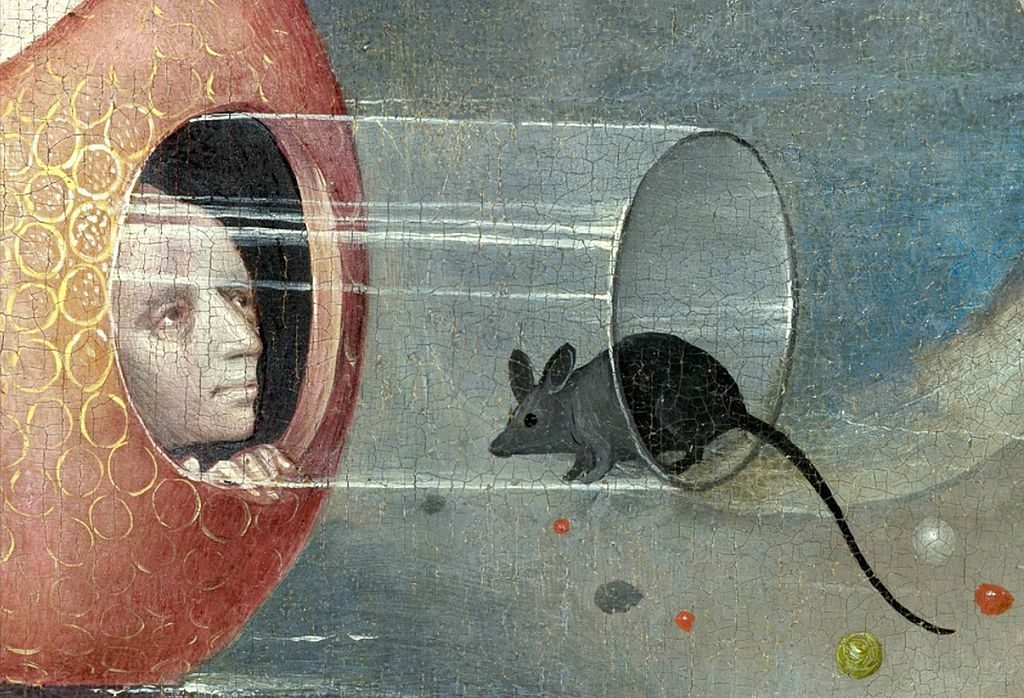

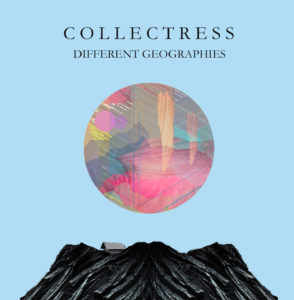
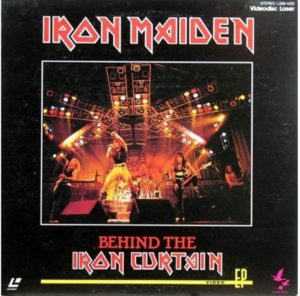
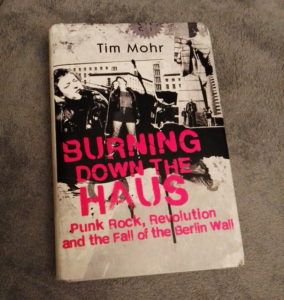
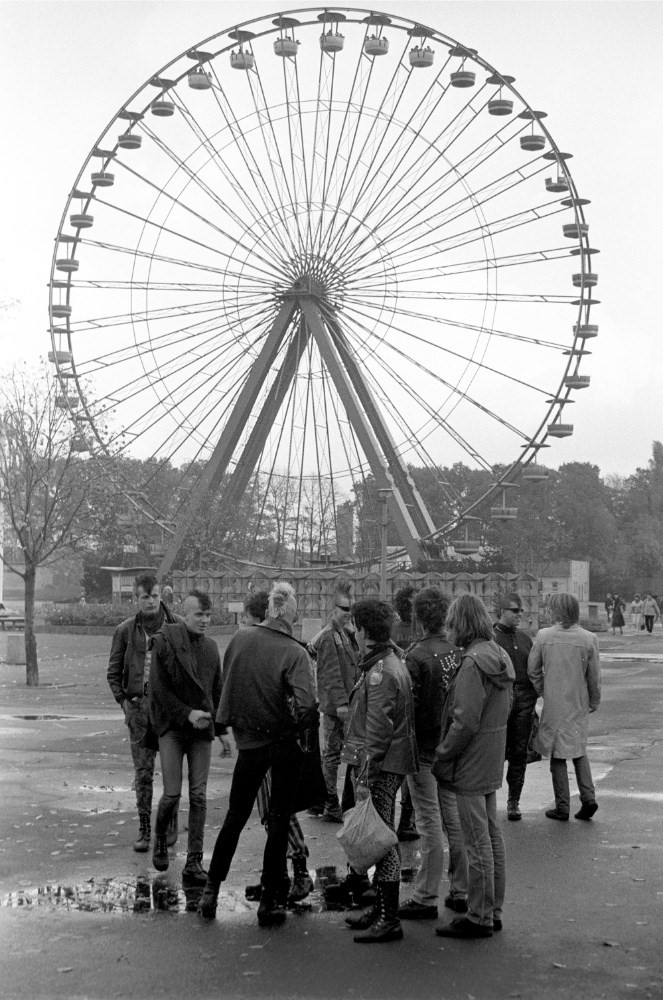


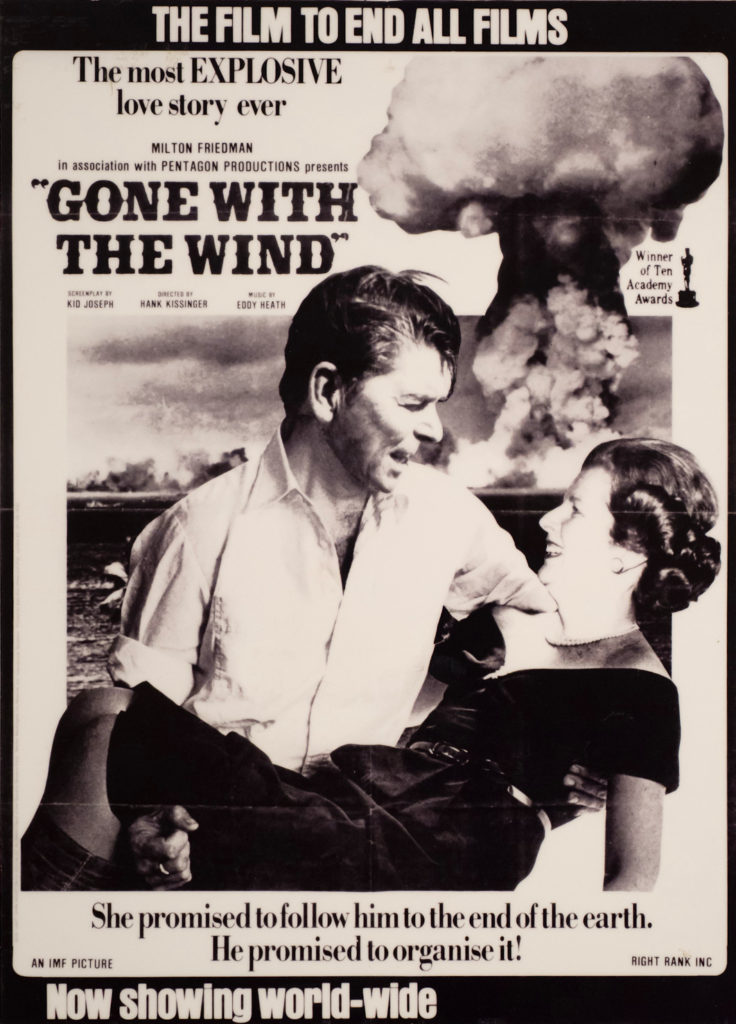

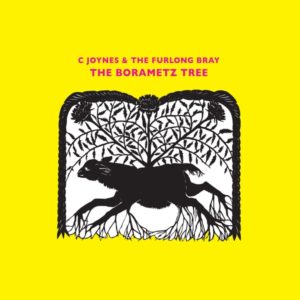
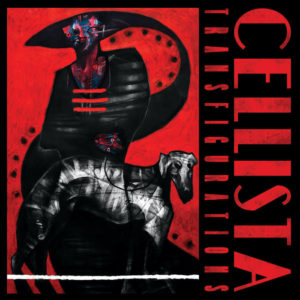
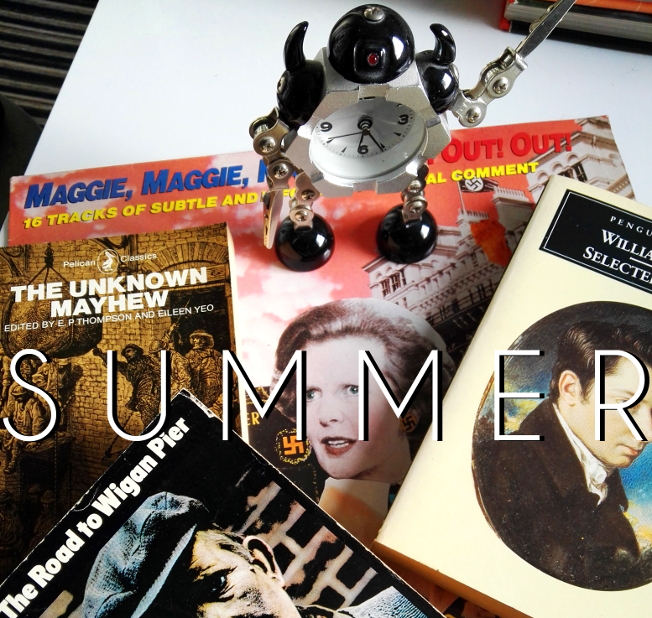
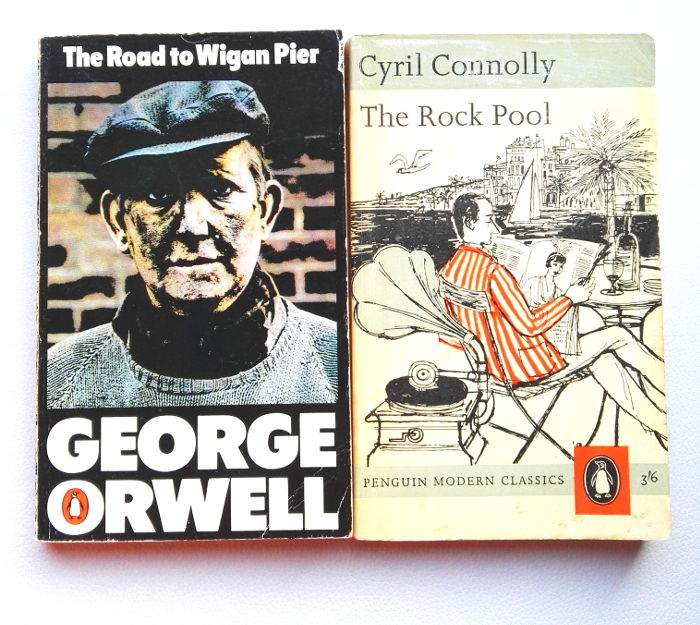
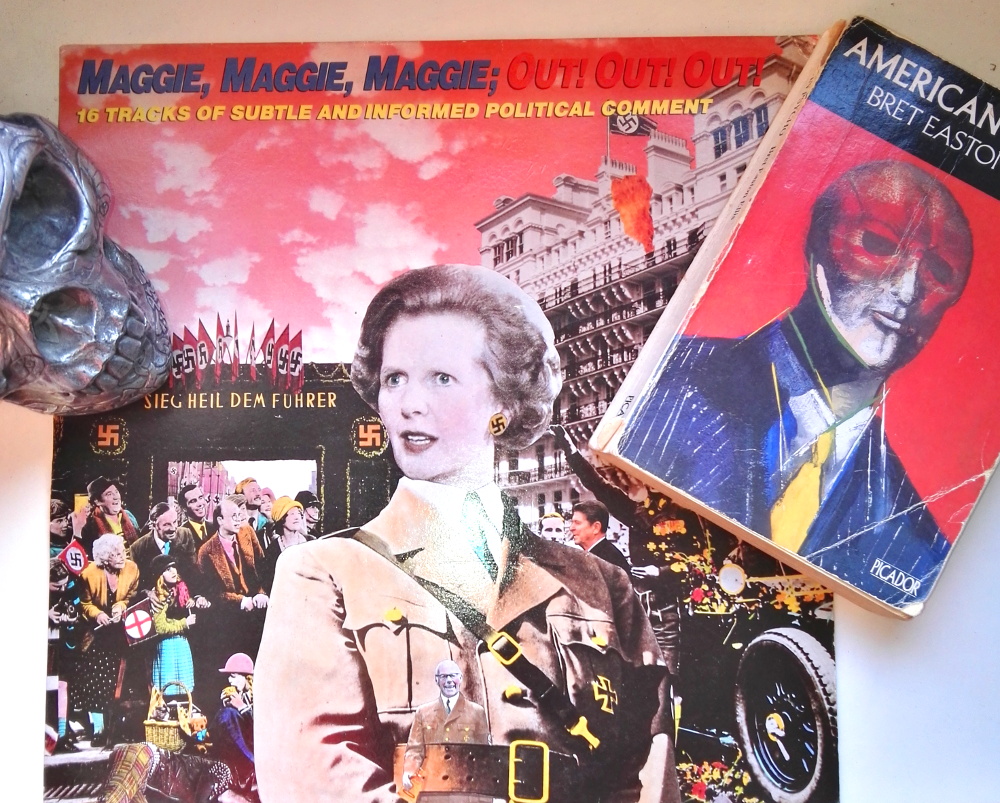
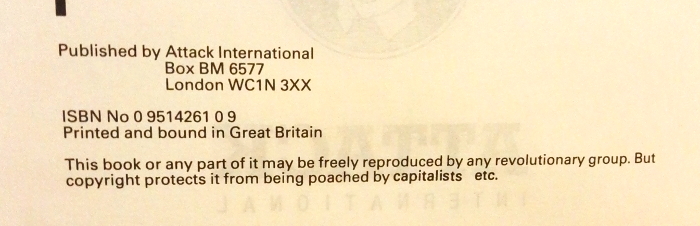
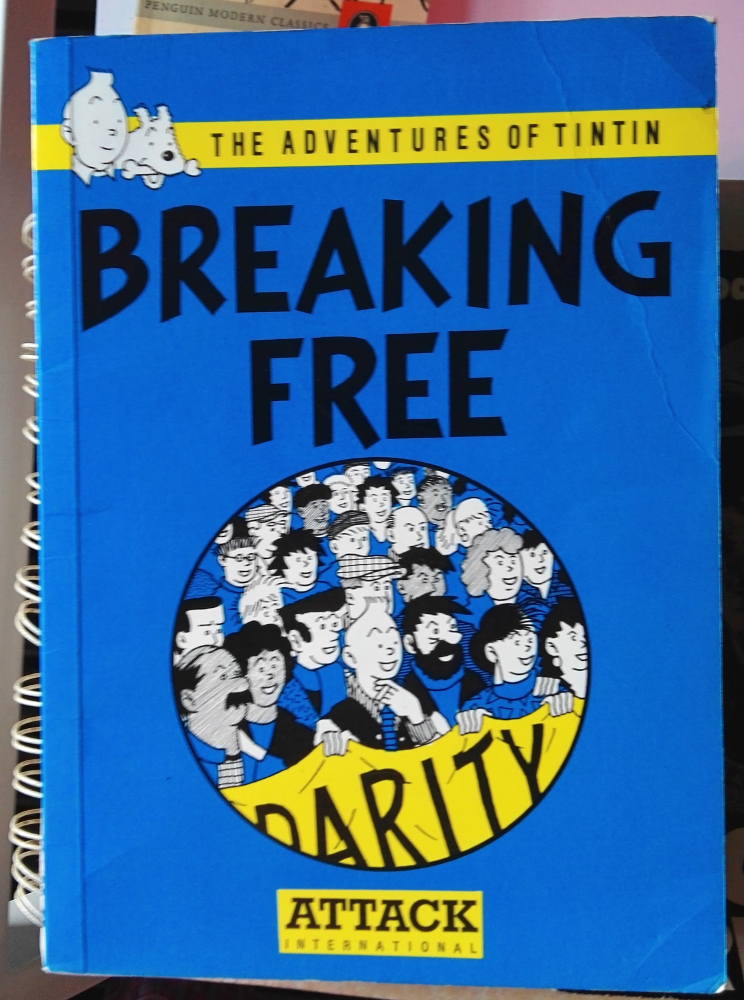
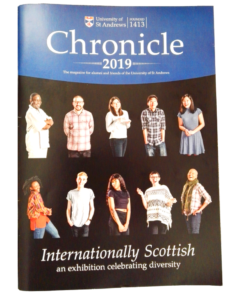
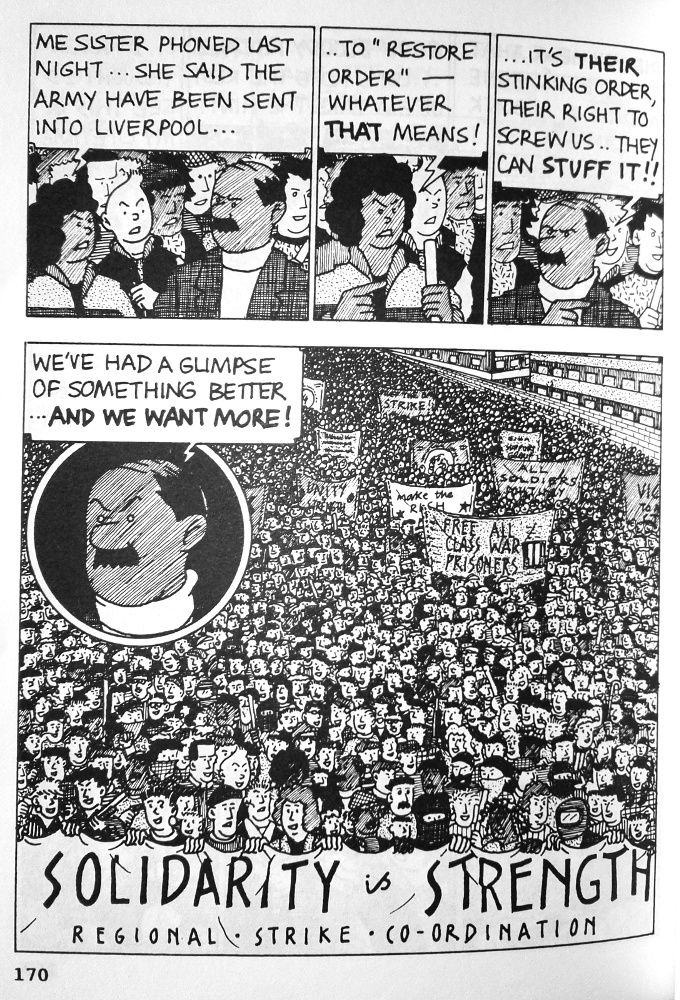

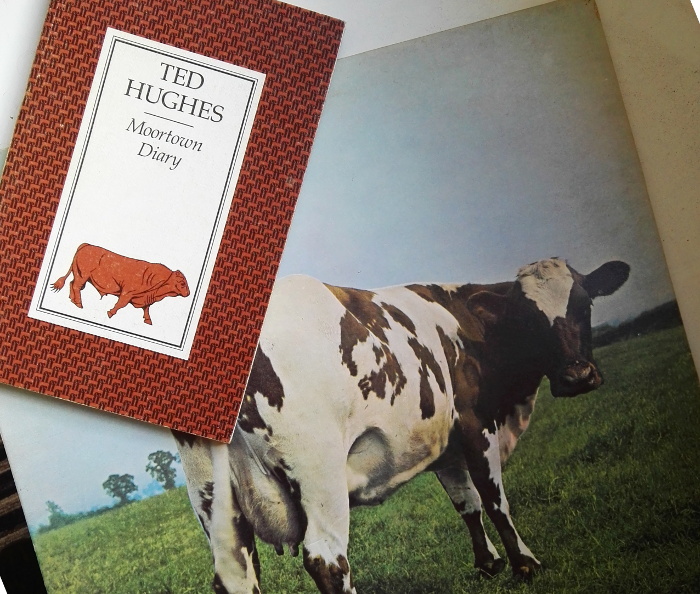

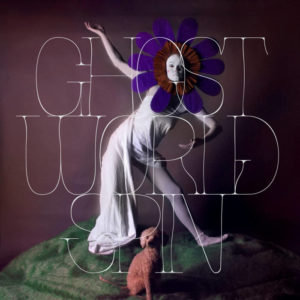


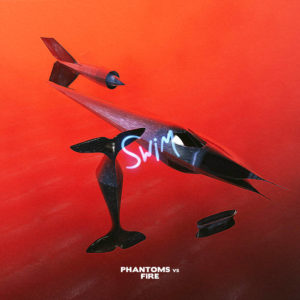


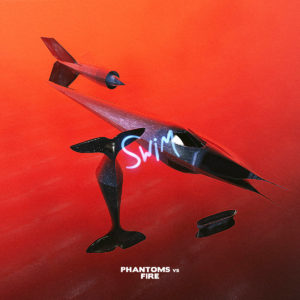
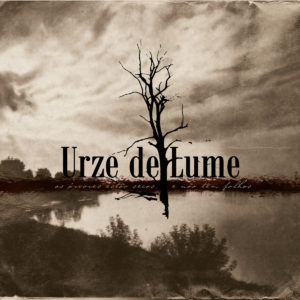
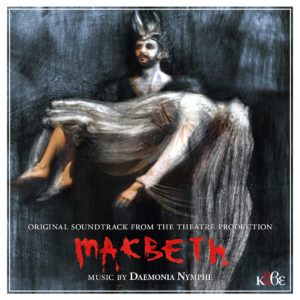
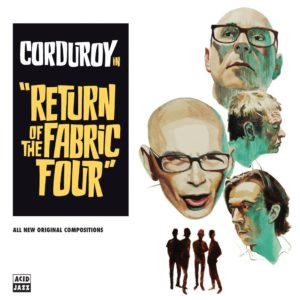
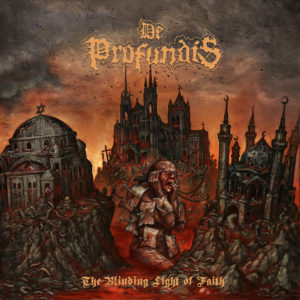 I am (as I think most people probably are!) quite fussy about death metal, but without being retro in any kind of self-conscious way, De Profundis make music that would sit happily in the late 80s/early 90s death metal scene. The Blinding Light of Faith is an album that can hold its own in the company of any of the big names of death metal; superb, intelligent musicianship and songwriting – it’s a seriously impressive album.
 80s veteran(s) Lizzy Borden (both a singer and a band) seem always to suffer from being mis-pigeonholed, whether as a glam band (he/they did have the image), Twisted Sister clones (ditto), or some kind of Alice Cooper-esque horror-metal act (partly the name, partly the image innit), but if you listen back to the best of the band’s 80s work, especially Love You To Pieces, they were really a classic metal band, more Iron Maiden-meets-W.A.S.P. than Motley Crue. On the new album Lizzy himself takes centre stage, singing better than he ever has – no mean feat – and playing all the guitars on what is a very song-based album. It’s not very heavy – more a kind of homage to bands like Cheap Trick and Queen than the early 80s Lizzy Borden sound. But it’s really good if you like that kind of thing, and it’s great to hear Lizzy really going for it after a couple of slightly patchy, compromised-sounding, ‘not bad’ records.
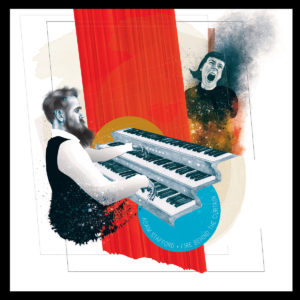 Away from metal, this is a really interesting, good album if you like – well, what? “Film soundtrack music” isn’t really a genre, is it, but that’s what Fire Behind The Curtain makes me think of. I’ve seen it described as neoclassical and minimalist too, but neither of those feels quite right to me. It’s a beautifully cohesive-yet-eclectic collection of mostly-instrumental pieces vary from haunting and bleakly forbidding atmospheres to warm and embracing melodies.
 I can’t really write an awful lot about this album from the always-dependable I Heart Noise label, as I’ve only just started listening to it really; but so far I love it. It makes me think of Lou Reed, or Alan Vega covering John Lennon’s Plastic Ono Band album; sparse, forlorn, world-weary and a little bit sleazy.
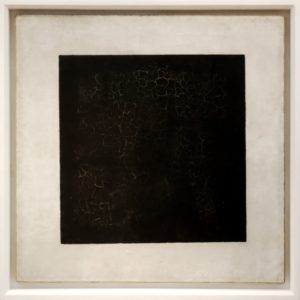
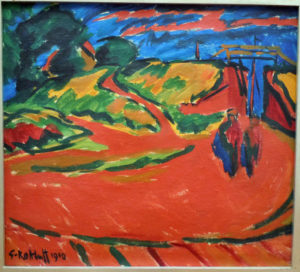
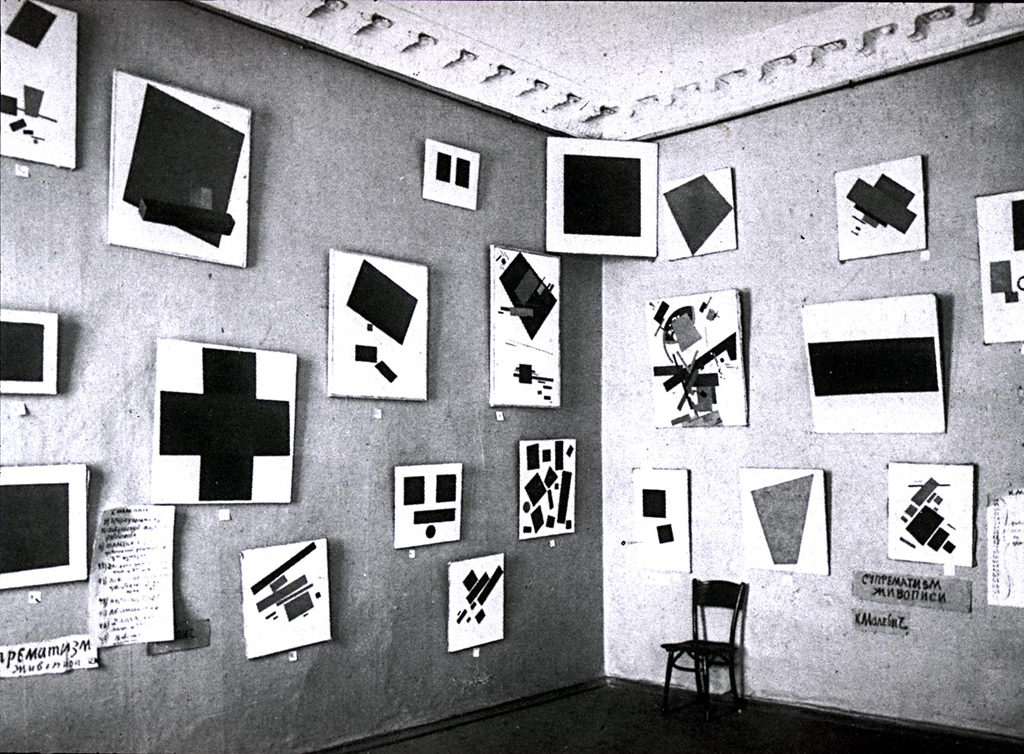
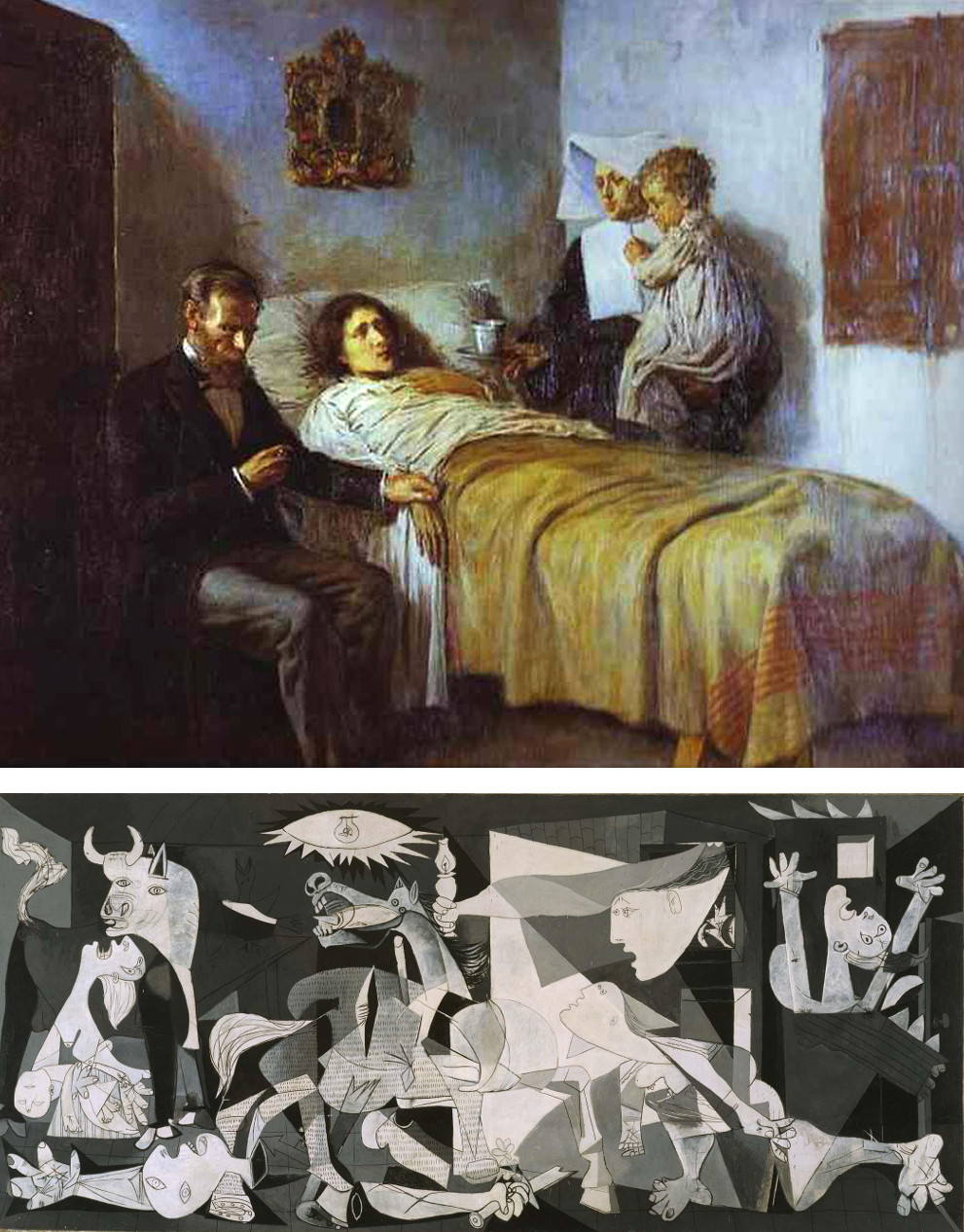
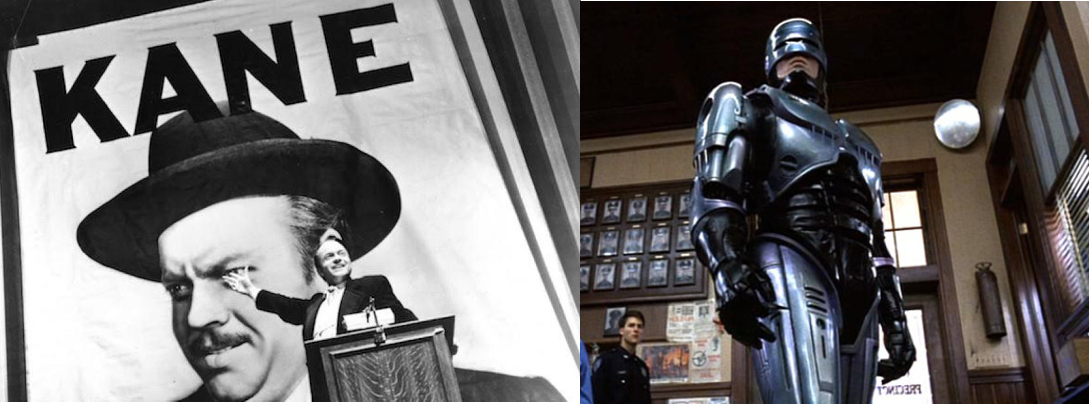

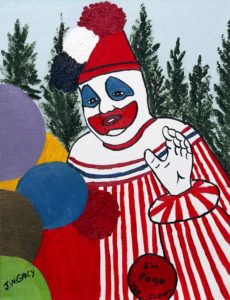
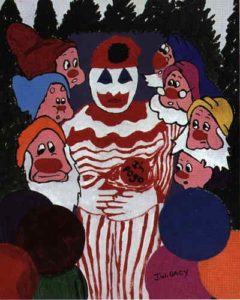 transmit something of himself; a clear-cut but deeply alienated/alienating vision of the world; actually, without a world. His pictures don’t as one might expect, depict a simplified Norman Rockwell America, with the sun in the sky and a clown in the garden, but essentially just the clown; mostly in fact Pogo the clown, Gacy’s own alter ego, sometimes with an extremely cursory, but telling hint of a setting. Not a circus, or the suburbia of the childrens’ parties he haunted, but a hint of a dark, fairytale forest (the seven dwarfs appear in a particularly odd picture). These are clowns in the wild. The term ‘outsider art’ could have been coined for Gacy’s paintings. The other often-used term, ‘naïve art’ seems fleetingly appropriate, until one considers pictures like his paintings of Charles Manson, or even more so, of Tim Curry’s Pennywise from the TV adaptation of Stephen King’s IT. Gacy may not have been a good painter, he may have been to all intents and purposes insane, but he was not naïve; he knew that he belonged to a pantheon of famous murderers, that he was the original killer clown, and he was flattered by the association.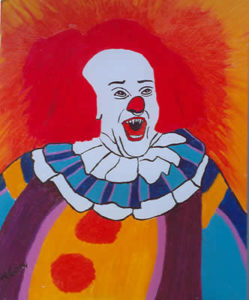
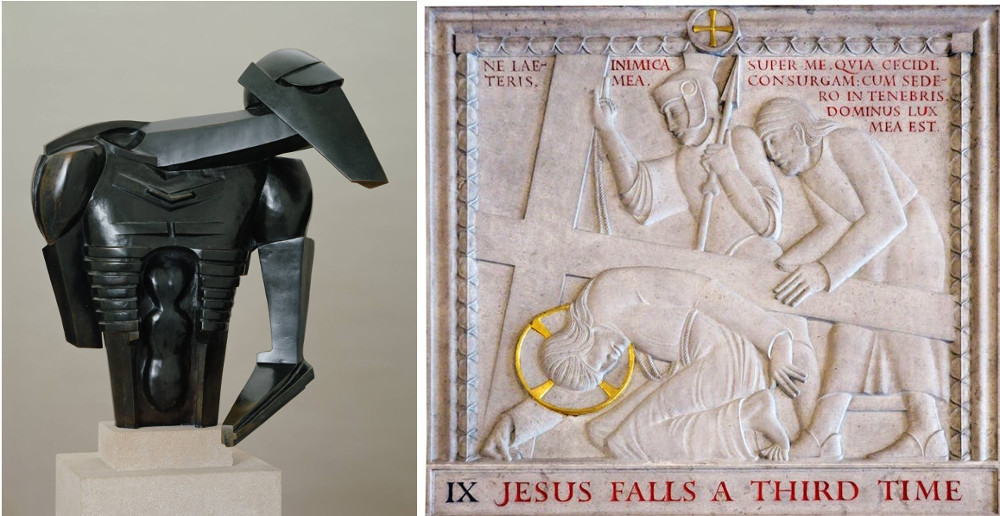

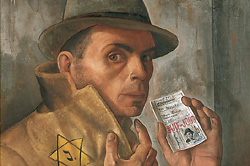
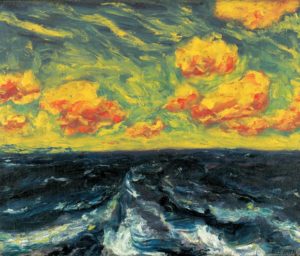
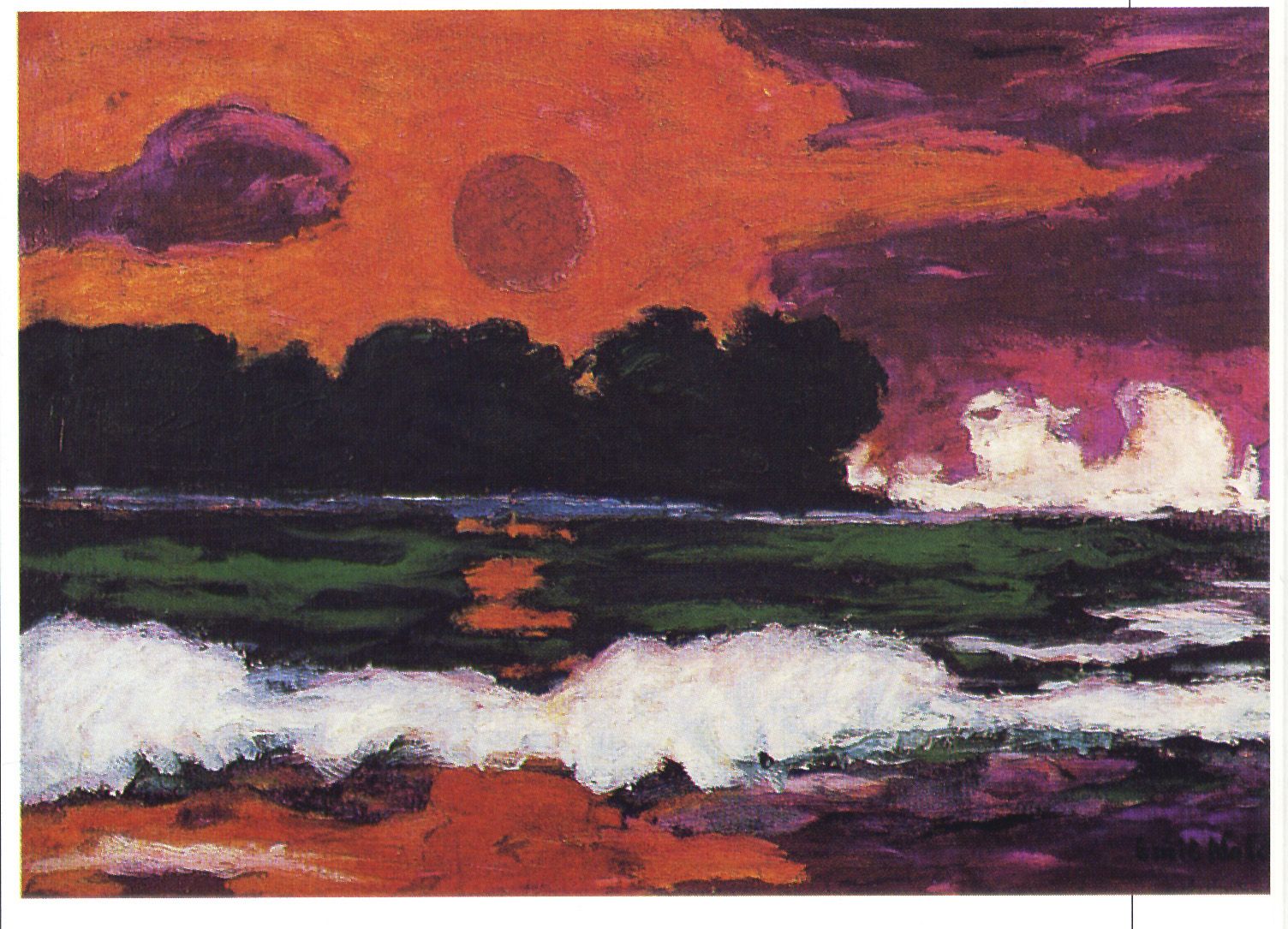
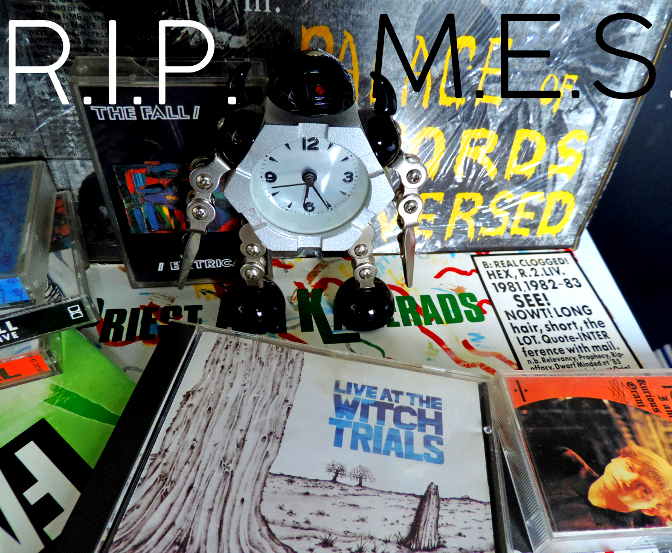
 sophisticated, articulate, menacing but not unfriendly. A few years later, when I began to read
  And that’s just the lyrics; another thing about The Fall that made an impression on me early on was that, although MES was incredibly fussy and perfectionist about the band’s music, he wasn’t snobbish in the usual way; no tune, if it was catchy, was too silly for Mark E. Smith. Think of the speedy but somehow miniature-sounding rock guitar on ‘Underground Medicine‘ or loping, bouncy beat to ‘Gramme Friday‘ or the oddly jaunty, countryish ‘Fit And Working Again‘. or the kazoo on ‘The North Will Rise Again‘– this was ‘angular’ (the definitive descriptive term for late 70s/early 80s UK indie rock) if you like, but it was not standard ‘post-punk’ music, nor was it (as it could easily have been) twee in that beloved ramshackle UK indie/C86 kind of way. Perhaps because Mark E. Smith was not (99% of the time) a melodic singer, the band could play anything behind him and it sounded right. When, at the beginning of one of my favourite songs, ‘Slates‘, MES shouts ‘this is the definitive rant‘ he’s nailing part of the charm of his work. As long as the rant was in place, no tune was too small, too jingly or too silly to make something worthwhile out of.
 lot of it, and it was mostly pretty affordable, especially the stuff from the band’s then slightly maligned, now justly celebrated mid-80s period of relative commercial success. In itself, that success was odd and underlined just how unique the band, and specifically Smith’s vision, was. I loved that Mark E. Smith saw nothing elitist or strange about working with a ballet company, or in writing for the theatre and working with ‘serious’ artists and yet the people I knew who derided Morrissey as being “poncy” never seemed to think that about MES. The fact that he refused to separate the ‘high’ arts from his work with The Fall was so powerful. Everyone knows, for example, that Brian May is an astrophysicist, but imagine if astrophysics had somehow been indivisible from his work with Queen; they would have been far a more peculiar and far less successful, but also (with no offence intended to the band or its members) probably more interesting band.
 Although most of my favourite Fall albums are the early ones (especially Dragnet, Grotesque (After The Gramme) and Hex Enduction Hour) those 80s albums with the Mark and Brix-led lineup(s), especially The Wonderful and Frightening World Of The Fall are pretty unassailable and perhaps the least overtly commercial ‘commercial’ period of any band I can think of. The band stayed good though, and although I am not a Fall completist (a vocation rather than a hobby) I’ve found that any Fall record one picks up will have something great on it; and there aren’t many bands with a 40 year career you can say that about.