a pressing necessity: International Women’s Day 2026

Firstly, the title comes from this short essay by one of my favourite historical figures, Rosa Luxemburg; it’s worth a read.
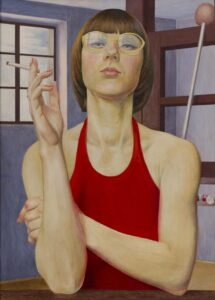
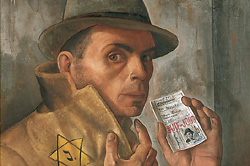
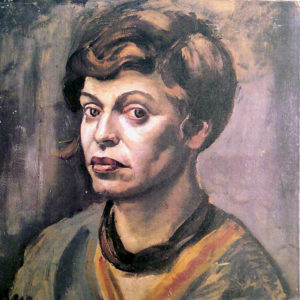
one of my favourite works of art by anyone ever; Monika Geilsdorf’s 1976 self-portrait

If anything demonstrates that half of the human race is in need of a special day to celebrate their achievements and raise awareness of the challenges they face, it’s the ongoing existence and high profile of International Women’s Day. I’m not here just to criticise it, so bear with me.

In a way it seems deeply patronising (not an accidental use of the word) that it even exists, since the celebration of IWD is in itself a sign that the patriarchy is in obnoxiously good health. Seems paradoxical, but look at the contrast between not just the profile of, but the nature of IWD, compared to International Men’s Day, which contrary to the belief of the frothing-at-the-mouth men on the misogynist fringe does exist (19 November), highlights the background that it exists against.

International Women’s Day commemorates the (ongoing) fight for Women’s rights, raises awareness of issues surrounding gender inequality and is a celebration of the achievements of women throughout the ages. International Men’s Day raises awareness of issues like suicide, self-harm, violence, homelessness etc; it’s a good thing, but it’s a much smaller and very different thing. Both international days are – necessarily – framed in the same way. The bad things that women have faced and continue to face – violent death, mutilation, violence, political, religious and social disenfranchisement – are the product of societies where women have been and in many ways continue to be second class citizens; the power structures they struggle with and against are overwhelmingly male and male-dominated. The problems that Men’s day raises, likewise come from men’s struggles to exist within that same socio-political/religious framework. The fact that I’ve spent half a paragraph about Women’s Day writing about Men’s Day is ironic but it’s also systemic.

Does that mean that IWD is a bad thing? Clearly not. There are women who, for a variety of reasons choose to denounce or simply opt out of the whole idea of it – as is their right – but the position of women has not improved so much over the past quarter century that the inequalities are merely historical, as seemed possible to envision around the end of the 1980s. And while the achievements of women in almost every field are acknowledged more now than ever, they are, depending on which sphere they take place in, often still seen as special cases; ‘women artists,’ ‘female plumbers’ etc, whereas terms from my childhood like ‘male nurse’ seem comically inappropriate (which isn’t to say that some people don’t still use them; but usually men, and for reactionary reasons).

There’s also a valid argument that celebrating womens/mens days simply reinforces a binary that is merely a symptom of the old-fashioned, patriarchal system. It’s kind of undeniable; the name alone, International Women’s Day supposes “women” as a monolith. One of my favourite artists is the Surrealist Claude Cahun (born Lucie Schwob), whose work is often (by me, too) promoted as part of IWD celebrations of female artists, despite the artist’s unambiguous statement from Disavowals (1928) that “Neuter is the only gender that always suits me.” To ignore someone’s own personal identity in order to celebrate something about themselves that they specifically denied feels like a strange kind of tribute.
Nonetheless, nobody, not even Claude Cahun, denied that women do exist and that they have been and are (okay some people do loudly deny this bit) oppressed and subject to systemic inequalities.
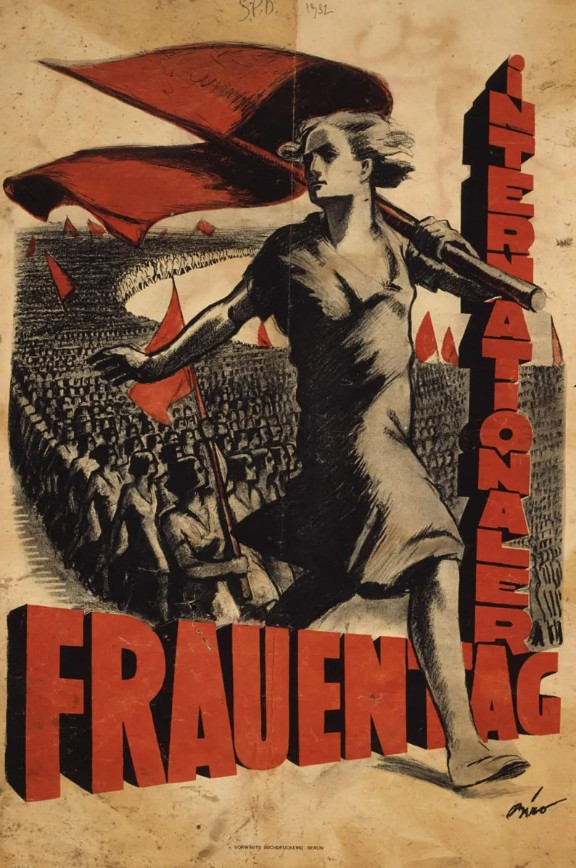
the great Hungarian artist Mihály Biró’s 1925 poster for International Women’s Day

What’s often overlooked now too is that International Women’s Day was historically – though not consistently – a socialist celebration. See here for an excellent exploration of its radical origins. Working Women’s Day – the date 8th March was chosen by Lenin, fact fans – was originally tied to issues of Workers’ Rights and the fight for equality more widely, but even in the Soviet Union the image softened over the years until eventually it –  ironically – came to celebrate women in traditional roles (mothers, wives) rather than revolutionary ones. Which is lame; but it’s easy to see why that link has eroded. The struggle for Women’s liberation was initially, and throughout its radical period in the 60s and 70s seen as analogous to the working class struggle – where women occupied a kind of working class, that is subordinate, position even within the working class. The gradual (but of course never total) amelioration of the rights of workers made aspects of the radicalism of the past feel dated and possibly unnecessary, though that is less true than it sometimes seems. Also, not all women were or are working class anyway, and class distinctions of that kind are not universal in every society in the world, but women’s marginalisation almost is.
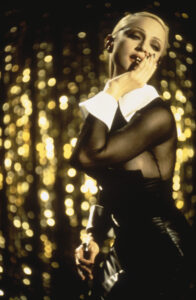
Madonna: “Erotica” (1992) dir Fabien Baron: not my mother’s feminism

Plus, people and perceptions change. My mother was a working class ‘Women’s Lib,’ Spare Rib-reading feminist of the 60s/70s, but although her views on Women’s liberation never really changed, from the 80s onwards she became puritanical in a way that now seems, to her children’s generation, a bit sexist, oddly. For example, she couldn’t see someone like Madonna (the popular entertainer, not the mother of Christ) and her ilk, however apparently empowered, as anything other than a manifestation of the retrograde desires of men, and she would probably have agreed with Morrissey that make-up is a lie, or even gone further to suggest that it’s a lie established by the patriarchy to keep women in their place. It’s a point of view, I suppose; but it’s also one that polices the image that women choose to project for themselves and so seems fundamentally anti-progressive, though I understand the logic of it.

Similarly, there are people who bemoan the loss of the ‘Class War’ aspect IWD, which I again understand, because I do think capitalism & patriarchy are bad and harmful to humanity in general and women in particular. But as a ‘working class’ male I also kind of reject it. Identifying with the system that labels you seems fundamentally unhelpful to me. I am ‘working class’ because that is the caste system established by a capitalist power structure, just as I would have been ‘peasant class’ centuries ago in a feudal society. Embracing that class identity seems far less attractive than altering society until its labels have no meaning anymore.

A fairer version of capitalism may not be the ultimate aim, but it would at least be a good thing. Marx’s ideal – I have a lot of time and affection for Marx, but I think he was often wrong, or at least that 21st century problems do not call for 19th century solutions – that inequality reaches crisis point so that revolution becomes a necessity feels to me very much like the apocalyptic thinking of those who want to immerse the world in war to bring about the second coming of Christ. The problem is – as we see, now, with war – that people, perhaps even generations of people, have to actually live their whole lives during that ‘crisis point’ which can continue, depending on the strength of the overarching system, almost indefinitely. Misery now, reward later is the self-serving bullshit the Christian church8 has been selling for 2000 years, I don’t think society is improved by adopting a well-meaning socialist version of it. Surely the life of even a single person is more important than the fulfilment of an ideology? Agree to disagree perhaps.

Which again has taken this away from International Women’s Day. When one is talking about half of the human race any kind of generalisation is bound to be wrong, but solidarity with people who are forced to struggle for equality as human beings within systems designed to keep them in a subordinate role never is.

It may be – especially in the social media age – that celebrations like International Women’s Day come under the banner of Bread and Circuses that the satirist Juvenal noted Imperial Rome offered to the people in lieu of the political power they held in the days of the old Republic. So should we get rid of them? No, would be my answer – quite the opposite, we should expand on them, turn them into actual holidays, raise awareness of every grievance that people have under a grossly unequal political system. If the ruling class of the Capitalist/Tech Oligarchy are offering circuses (where is the bread though?) to placate the people and keep them docile, then the very least their subjects can do to exert their will is to take over the circuses and to remake them in their own image, loud and unignorable.

Ah well, never mind, maybe soon there will be an International Humans Day where the (male) technocratic overlords agree to turn off AI for a day or something to show false solidarity with the rest of us. I won’t hold my breath though.

To end on something more positive, I’ve evangelised elsewhere about art history as a subject (here’s my one-line reason why everyone should study it; Art History is not just about the past, it encompasses everything that’s important about the present; politics, religion, gender, philosophy, personal, national and local identity – and studying the subject and freeing it from its historical assumptions and biases only makes it deeper and richer; plus you get to study fascinating, powerful and beautiful products of the human mind and body, too). Over the past decade or so the place of female artists within that history – and the profiles of individual women artists – has been explored more than ever before so that, although we are not yet at a point where women artists and male artists (and neither) just become ‘artists’ it’s no longer as unthinkable as that would have been when I studied art history 20 years ago.

On a less exulted note, when I first started posting things on Instagram around a decade ago, books like Jennifer Higgie’s The Mirror and the Palette, Katie Hessel’s The Story of Art Without Men (2022), Eiderdown Books’ superb Modern Women Artists series, Phaidon’s Great Women Artists (2019) and (my favourite) Lauren Elkin’s Art Monsters (2023) didn’t yet exist.

Some of my favourite artists – Jenny Saville, Hannah Höch, Gabriele Münter– were women and, like most female artists they made works that on one level transcend gender, as I think all great art does, but were also formed from an unmistakably female point of view (just as I would say Picasso’s art is unmistakably male). Female artists were, in short, making art that only female artists could make, (I’d actually go further and say that all great artists regardless of gender make art that only that individual can make, but that doesn’t change the basic point).

I found, and it’s still true, about art in general and not only – though especially – by women, that the more you look, the more you find and so when I started regularly posting art by female artists, most of whom were new to me, I began keeping a kind of database of artists and their birthdays. So here it is, in simplified form. There are many, many omissions (especially of sculptors – not so much my thing – and contemporary artists, whose birthdays are often not so easy to find) and it will always be a work in progress, but I think it’s worth sharing here anyway (and in birthday order, so you can see if you share your birthday with a fantastic artist; why not?) Happy International Women’s Day!.

JANUARY
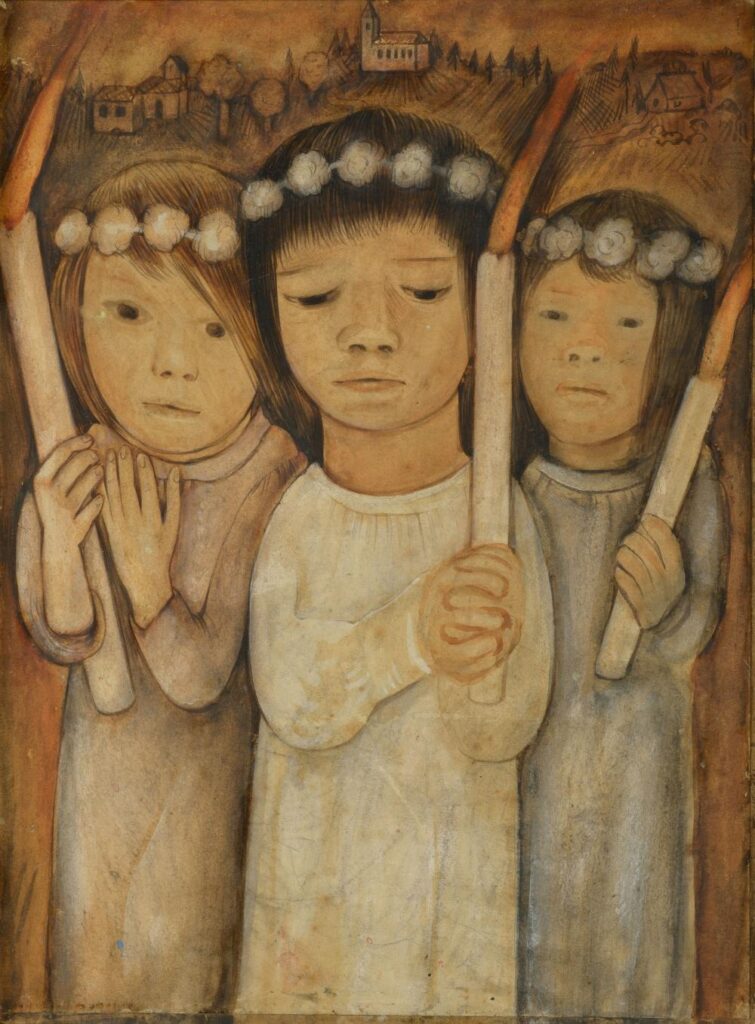
Children with Burning Torches (1920s) by Tina Bauer-Pezellen, an artist I love but can never find much information about

Selma Gubin born 01-Jan 1905
Rita Kernn-Larsen born 01-Jan 1904
Lynette Yiadom-Boakye born 01-Jan 1977
Selma Plawneek-des Coudres born 02-Jan 1883
Slava Raskaj born 02-Jan 1877
Sylvi Kunnas born 03-Jan 1903
Maruja Mallo born 05-Jan 1902
Margaret Modlin born 05-Jan 1927
Madame Yevonde born 05-Jan 1893
Ruth Gikow born 06-Jan 1915
Sanja Ivekovic born 06-Jan 1949
Franciska Clausen born 07-Jan 1899
Fahrelnissa Zeid born 07-Jan 1901
Wanda von Debschitz-Kunowski born 08-Jan 1870
Alida Jantina Pott born 08-Jan 1888
Julie Wolfthorn born 08-Jan 1864
Tina Bauer-Pezellen born 09-Jan 1897
Annemarie Heinrich born 09-Jan 1912
Maxa Nordau born 10-Jan 1897
Nora Heysen born 11-Jan 1911
Marcia Marcus born 11-Jan 1928
Rosalba Carriera born 12-Jan 1673
Hannah Hirsch-Pauli born 13-Jan 1864
Lilla Cabot Perry born 13-Jan 1848
Alice Pike Barney born 14-Jan 1857
Berthe Morisot born 14-Jan 1841
Eve Sonneman born 14-Jan 1946
Louise Blair Daura born 15-Jan 1905
Sabine Lepsius born 15-Jan 1864
Gerta Overbeck born 16-Jan 1898
Teddy Røwde born 16-Jan 1911
Alexandra Ekster born 18-Jan 1882
Cindy Sherman born 19-Jan 1954
Marianne Stokes born 19-Jan 1855
Sophie Tauber-Arp born 19-Jan 1889
Leyly Matine-Daftary born 19-Jan 1937
Maxine Albro born 20-Jan 1893
Hertha Spielberg born 21-Jan 1890
Annemarie Jacob born 22-Jan 1891
Kiki Kogelnik born 22-Jan 1935
Maria Luiko born 25-Jan 1904
Emilie von Hallavanya born 26-Jan 1874
Katarzyna Kobro born 26-Jan 1898
Yva (Else Ernestine Neulander-Simon) born 26-Jan 1900
Jeanne Selmersheim-Desgrange born 27-Jan 1877
Maria Tlusty born 27-Jan 1901
Bertha Muller born 28-Jan 1848
Alice Neel born 28-Jan 1900
Elisabeth Büchsel born 29-Jan 1867
Anna Susanna Fries born 30-Jan 1827
Teresa Feoderovna Ries born 30-Jan 1874
Amrita Sher-Gil born 30-Jan 1913
Masa Feszty born 31-Jan 1894
Elena Liessner-Blomberg born 31-Jan 1897
Cornelia Macintyre Foley born 31-Jan 1909

FEBRUARY
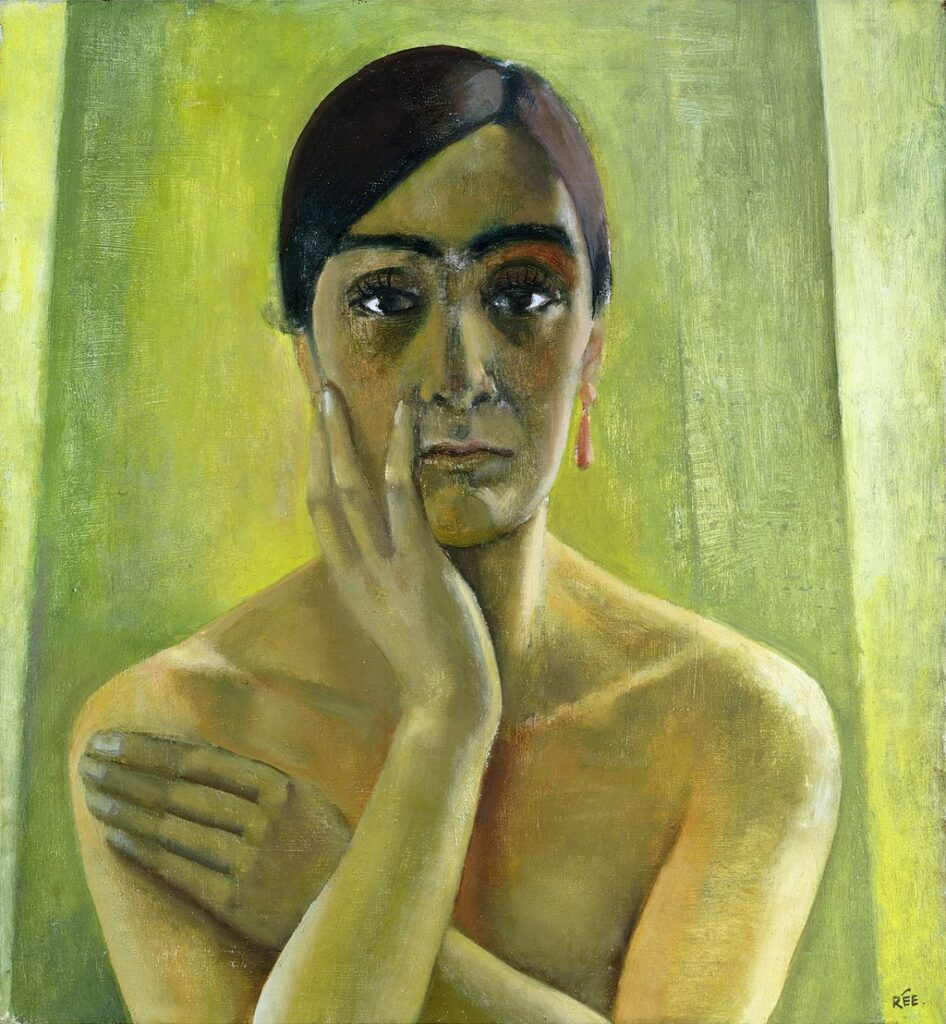
Anita Rée – self portrait (1930)

Doris Lee born 01-Feb 1905
Kris Torne born 01-Feb 1867
Sybil Atteck born 03-Feb 1911
Helen Forbes born 03-Feb 1891
Henriette Petit born 03-Feb 1894
Katherine Read born 03-Feb 1723
Georgina de Albuquerque born 04-Feb 1885
Marthe Hirt born 04-Feb 1890
Minna Köhler-Roeber born 04-Feb 1883
Ksenia Boguslavskaya born 05-Feb 1892
Jeanne Bieruma Oosting born 05-Feb 1898
Dorothea Maetzel-Johannsen born 06-Feb 1886
Arte Topalian born 06-Feb 1906
Kaete Lassen born 07-Feb 1880
Paula Modersohn-Becker born 08-Feb 1876
Anita Ree born 09-Feb 1885
Celia Calderon born 10-Feb 1921
Eva Frankfurther born 10-Feb 1930
Dorte Clara Wolff (Dodo) born 10-Feb 1907
Annelise Kretschmer born 11-Feb 1903
Léa Lafugie born 11-Feb 1890
Kate Diehn-Bitt born 12-Feb 1900
Marie Vassilieff born 12-Feb 1884
Marta Hegemann born 14-Feb 1894
Marie Vorobieff (Marevna) born 14-Feb 1892
Dora de la Torre born 14-Feb 1924
Mary Adshead born 15-Feb 1904
Grethe Jurgens born 15-Feb 1899
Gertrude Abercrombie born 17-Feb 1909
Greta Hällfors-Sipilä born 19-Feb 1899
Hazel Janicki born 19-Feb 1918
Gabriele Munter born 19-Feb 1877
Else Berg born 19-Feb 1877
Maria von Heider-Schweinitz born 20-Feb 1894
Lía Correa Morales born 20-Feb 1893
Grace Carpenter Hudson born 21-Feb 1865
Delhy Tejero born 22-Feb 1904
Gundula Schulze Eldowy born 23-Feb 1954
Martha Cunz born 24-Feb 1876
Alice Bailly born 25-Feb 1872
Broncia Koller-Pinnell born 25-Feb 1863
Hilde Hamann born 26-Feb 1898
Alexandra Povorina born 26-Feb 1885
Annie Swynnerton born 26-Feb 1844
Teresa Condeminas i Soler born 27-Feb 1905
Eva-Maria Bergmann born 28-Feb 1941
Julia Thecla born 28-Feb 1896

MARCH
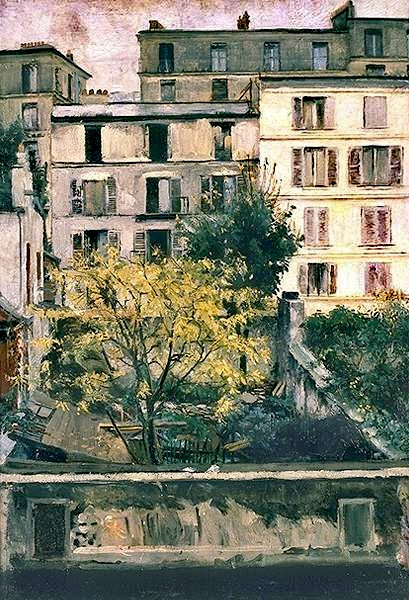
Maria Slavona – Houses in Montmarte (1898)

Marcelle Cahn born 01-Mar 1895
Erika Streit born 01-Mar 1910
Lola Cueto born 02-Mar 1897
Agda Holst born 02-Mar 1886
Judith Alpi born 03-Mar 1893
Gussy Hippold-Ahnert born 03-Mar 1910
Anne Ratkowski born 03-Mar 1903
Ellen Emmet Rand born 04-Mar 1875
Charmion Von Wiegand born 04-Mar 1896
Gertrude Fehr born 05-Mar 1895
Clara Ledesma Terrazas born 05-Mar 1924
Maria Blanchard born 06-Mar 1881
Pauline Boty born 06-Mar 1938
Maria Uhden born 06-Mar 1892
Marisa Roesset Velasco born 06-Mar 1904
Aenne Biermann born 08-Mar 1898
Constance Mayer born 09-Mar 1774
Annalize Pilasik born 10-Mar 1903
Rita Angus born 12-Mar 1908
Zofia Atteslander born 12-Mar 1874
Elaine De Kooning born 12-Mar 1918
Marie Eberhard born 12-Mar 1897
Idelle Weber born 12-Mar 1932
Lizzy Ansingh born 13-Mar 1875
Andree Bosquet born 13-Mar 1900
Diane Arbus born 14-Mar 1923
Annemarie von Jakimow-Kruse born 14-Mar 1889
Maria Slavona born 14-Mar 1865
Mary Pratt born 15-Mar 1935
Gerda Wegener born 15-Mar 1886
Maria Austria born 19-Mar 1915
Marie Ellenrieder born 20-Mar 1791
Renee Sintenis born 20-Mar 1888
Alix Ayme born 21-Mar 1894
Greta Kempton born 22-Mar 1901
Lea Grundig born 23-Mar 1906
Marie Howet born 24-Mar 1897
Charley Toorop born 24-Mar 1891
Petrona Viera born 24-Mar 1895
Therese Debains born 25-Mar 1897
Johanna Kampmann-Freund born 25-Mar 1888
Käthe Loewenthal born 27-Mar 1878
Elga Sesemann born 28-Mar 1922
Dora Carrington born 29-Mar 1893
Cecile Walton born 29-Mar 1891
Helene Riedel born 30-Mar 1901

APRIL
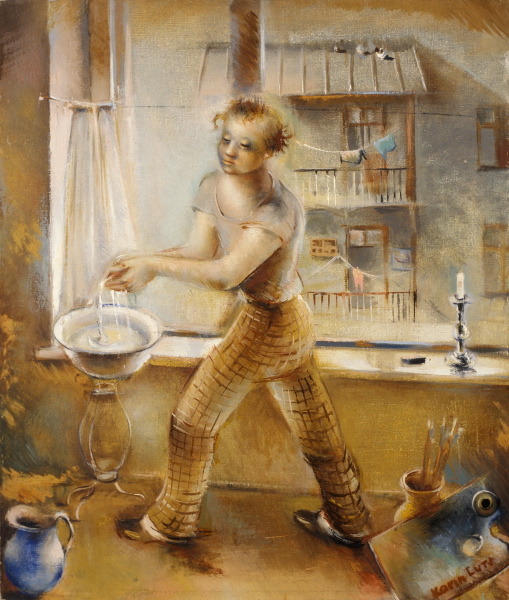
Karin Luts – The Artist (1937)

Gertrude Bohnert born 02-Apr 1908
Emilie Charmy born 02-Apr 1878
Stella Snead born 02-Apr 1910
Hermine Aichenegg born 03-Apr 1915
Francesca woodman born 03-Apr 1958
Constance Marie Charpentier born 04-Apr 1767
Ruth Smith born 05-Apr 1913
Leonora Carrington born 06-Apr 1917
Jeanne Hebuterne born 06-Apr 1898
Kata Kalivoda born 06-Apr 1877
Hilde Rubinstein born 07-Apr 1904
Lilly Steiner born 07-Apr 1884
Annemirl Bauer born 10-Apr 1939
Gunvor Gronvik born 10-Apr 1912
Frances Foy born 11-Apr 1890
Adélaïde Labille-Guiard born 11-Apr 1749
Maggie Laubser born 14-Apr 1886
Olga Boznanska born 15-Apr 1865
Elizabeth Catlett born 15-Apr 1915
Princess Elisabeth Vilma Lwoff-Parlaghy born 15-Apr 1863
Laura Alma-Tadema born 16-Apr 1852
Inji Efflatoun born 16-Apr 1924
Charlotte Salomon born 16-Apr 1917
Hermine David born 19-Apr 1886
Eva Gonzales born 19-Apr 1849
Dod Procter born 21-Apr 1890
Raquel Forner born 22-Apr 1902
Ottilie Roederstein born 22-Apr 1859
Lee Miller born 23-Apr 1907
Christine Bacheler Nisbet born 24-Apr 1902
Lyubov Popova born 24-Apr 1889
Bridget Riley born 24-Apr 1931
Mary Brandt (Perez) born 25-Apr 1917
Mela Muter born 26-Apr 1876
Doro Ording born 26-Apr 1901
Nathalie Kraemer born 28-Apr 1891
Else Fischer-Hansen born 29-Apr 1905
Mainie Jellett born 29-Apr 1897
Karin Luts born 29-Apr 1904
Ruth Meier born 29-Apr 1888
Juana Romani born 30-Apr 1867
Thea Schleusner born 30-Apr 1879
Joronn Sitje born 30-Apr 1897

MAY
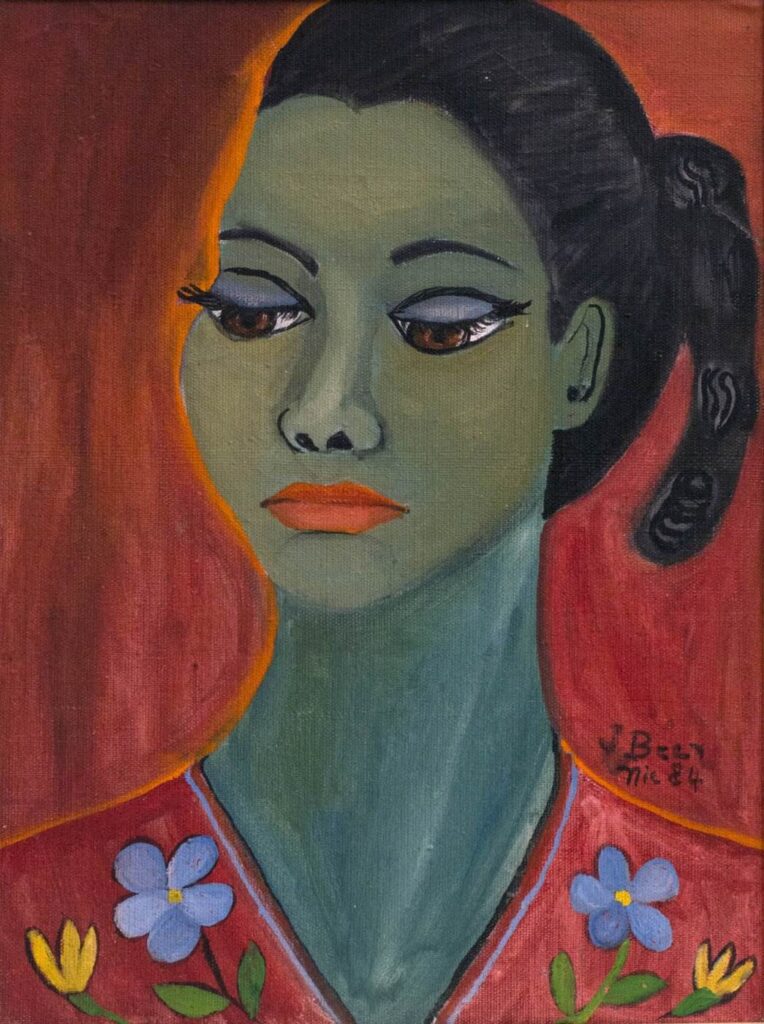
June Beer – Woman in Red (self portrait), 1984

Cecilia Beaux born 01-May 1855
Romaine Brooks born 01-May 1874
Elsa Thoresen born 01-May 1906
Eva Aeppli born 02-May 1925
Peggy Bacon born 02-May 1895
Chinwe Chukwuogo-Roy born 02-May 1952
Brigitte Fugmann born 03-May 1948
Stina Forssell born 03-May 1906
Geta Bratescu born 04-May 1926
Sylvia Pankhurst born 05-May 1882
Celeste Woss y Gil born 05-May 1891
Lucie Citti Ferreira born 06-May 1911
Suzy Freylinghuysen born 07-May 1911
Marion Gilmore born 07-May 1909
Dore Meyer-Vax born 08-May 1908
Felicita Pauluka born 08-May 1925
Paula Gans born 09-May 1883
Stanislawa de Karlowska born 09-May 1876
Hanna Klose-Greger born 09-May 1892
Grete Stern born 09-May 1904
Frida Konstantin born 10-May 1884
Helene von Taussig born 10-May 1879
Eva Schulze Knabe born 11-May 1907
Ilske Schwimmer born 11-May 1915
Monika Brachmann born 12-May 1944
Paula Lauenstein born 12-May 1898
Charlotte Wankel born 12-May 1888
Sara Afonso/Affonso born 13-May 1899
Louise Seidler born 15-May 1786
Stella Bowen born 16-May 1893
Tamara de Lempicka born 16-May 1898
Laura Wheeler Waring born 16-May 1887
Bele Bachem born 17-May 1916
June Beer born 17-May 1935
Martha Bernstein born 17-May 1874
Kati Horna born 19-May 1912
Clara von Rappard born 19-May 1857
Ellen Auerbach born 20-May 1906
Lily Furedi born 20-May 1896
Margret Hofheinz-Döring born 20-May 1910
Maria Hiller-Foell born 21-May 1880
Marisol Escobar born 22-May 1930
Erszebet Korb born 22-May 1889
Julia Diaz born 23-May 1917
Charlotte Berend-Corinth born 25-May 1880
Anita Magsaysay-Ho born 25-May 1914
Vally Wieselthier born 25-May 1895
Fanny Harlfinger-Zakucka born 26-May 1873
Amelie Lundahl born -May 1850
Heidi Vogel born 27-May 1951
Anna De Weert born 27-May 1867
Anna-Eva Bergman born 29-May 1909
Marlow Moss born 29-May 1889
Vanessa Bell born 30-May 1879
Audrey Flack born 30-May 1931
Magdalena Mira Mena born 30-May 1859
Carmen Herrera born 31-May 1915
Mireya Lafuente born 31-May 1905
Hilla von Rebay born 31-May 1890

JUNE
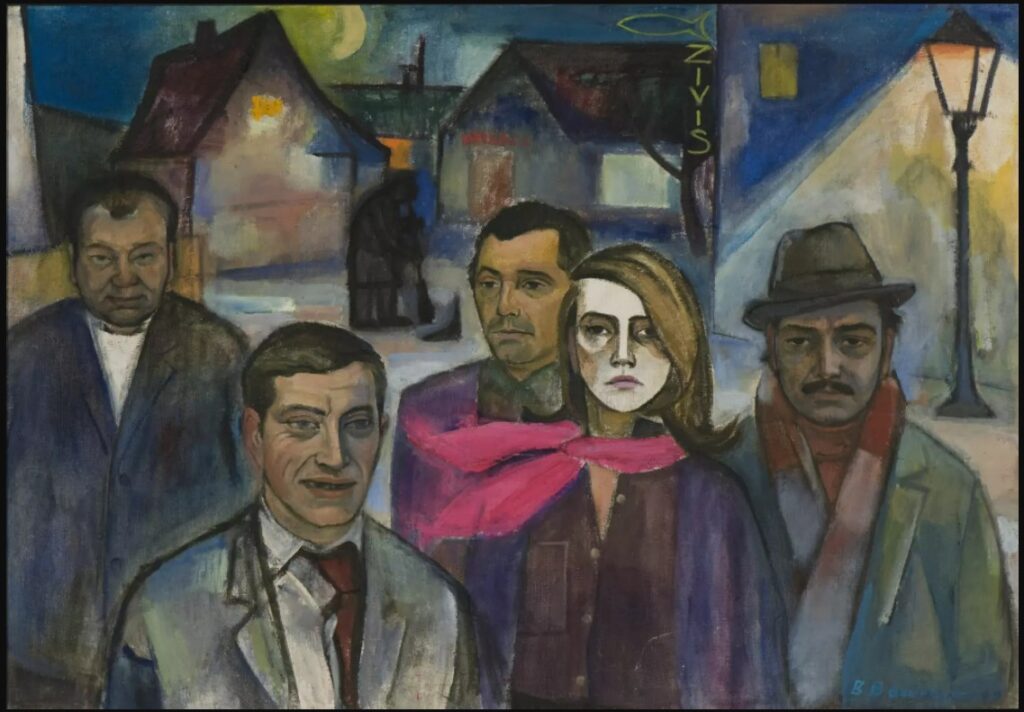
Biruta Baumane – Group Portrait (1969)

Vera Nilsson born 01-Jun 1888
Lotte B Prechner born 01-Jun 1877
Greta Gerell born 02-Jun 1898
Louise Amans born 05-Jun 1850
Winifred Knights born 05-Jun 1899
Biruta Baumane born 06-Jun 1922
Ricarda Jacobi born 07-Jun 1923
Laura Rodig born 07-Jun 1901
Alice Rahon born 08-Jun 1904
Montserrat Gudiol born 09-Jun 1933
Oda Krohg born 11-Jun 1860
Priscilla Warren Roberts born 13-Jun 1916
Pan Yuliang born 14-Jun 1895
Agnes Tait born 14-Jun 1894
Erna Lincke born 15-Jun 1899
Edith Meyer von Kamptz born 15-Jun 1884
Fritzi Brod born 16-Jun 1900
Henriette Browne born 16-Jun 1829
Irma Lang-Scheer born 17-Jun 1901
Margarete Kubicka born 20-Jun 1891
Emilia Bertole born 21-Jun 1896
Gwen John born 22-Jun 1876
Wangechi Mutu born 22-Jun 1972
Hilde Rakebrand born 22-Jun 1901
Olga Rozanowa born 22-Jun 1886
Madge Tennent born 22-Jun 1889
Lilo Raymond born 23-Jun 1922
Elena Shegal born 23-Jun 1924
Meraud Guinness born 24-Jun 1904
Helen Lundeberg born 24-Jun 1908
Alice Frey born 25-Jun 1895
Kay Sage born 25-Jun 1898
Vilma Eckl born 26-Jun 1892
Coba Ritsema born 26-Jun 1876
Helene Perdriat born 27-Jun 1889
Catherine Yarrow born 27-Jun 1904
Ali Goubitz born 28-Jun 1904
Florence Henri born 28-Jun 1893
Nan Youngman born 28-Jun 1906
Hannelore Neumann-Tachilzik born 29-Jun 1939

JULY
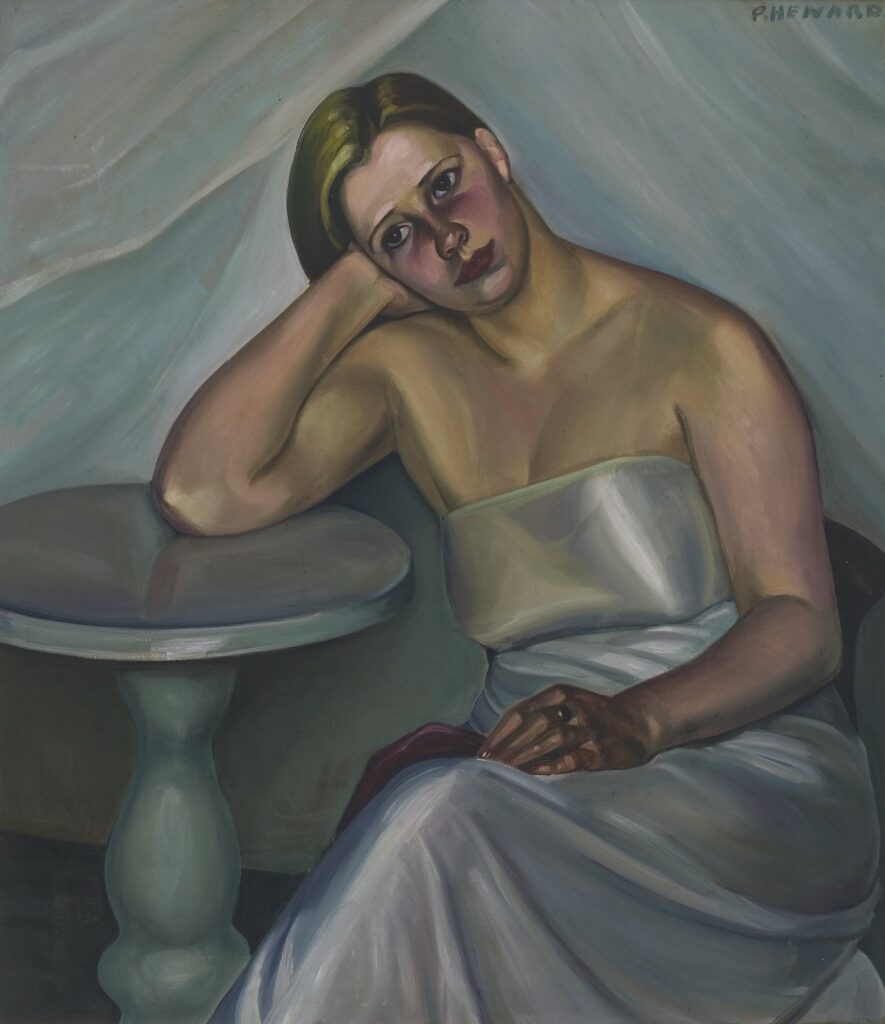
Prudence Heward – Portrait of an unknown Woman c.1920s

Herminia Arrate born 01-Jul 1896
Elizabeth Lochrie born 01-Jul 1890
Prudence Heward born 02-Jul 1896
Lydia Mei born 02-Jul 1896
Rahel Szalit-Marcus born 02-Jul 1894
Georgina Klitgaard born 03-Jul 1893
Petra Flemming born 06-Jul 1944
Frida Kahlo born 06-Jul 1907
Unica Zurn born 06-Jul 1916
Artemisia Gentileschi born 08-Jul 1593
Kathe Kollwitz born 08-Jul 1867
Carmen Mondragon (Nahui Olin) born 08-Jul 1894
Maria Tupper Hunneus born 09-Jul 1893
Helene Schjerfbeck born 10-Jul 1862
Luise Kornsand born 11-Jul 1876
Bertina Lopes born 11-Jul 1924
Ruth Starr Rose born 12-Jul 1887
Honore Desmond Sharrer born 12-Jul 1920
Helene Arnau born 13-Jul 1870
Alice Brasse-Forstmann born 13-Jul 1903
Elena Huerta Muzquiz born 15-Jul 1908
Giselle Kuster born 15-Jul 1911
Berenice Abbott born 17-Jul 1898
Marie Petiet born 20-Jul 1854
Marta Astfalck-Vietz born 21-Jul 1901
Greta Freist born 21-Jul 1904
Maral Rahmanzadeh born 23-Jul 1916
Anna Dorothea Therbusch born 23-Jul 1721
Wanda Wulz born 25-Jul 1903
Alba Calderon (de Gil) born 27-Jul 1908
Nelly van Doesburg born 27-Jul 1899
Sofia Bassi born 28-Jul 1913
Mathilda Rotkirch born 28-Jul 1813
Anna Stainer-Knittel born 28-Jul 1841
Grace Pailthorpe born 29-Jul 1883
Bettina Shaw-Lawrence born 29-Jul 1921
Friedl Dicker-Brandeis born 30-Jul 1898
Maria Szantho born 31-Jul 1897
Doris Zinkeisen born 31-Jul 1897

AUGUST
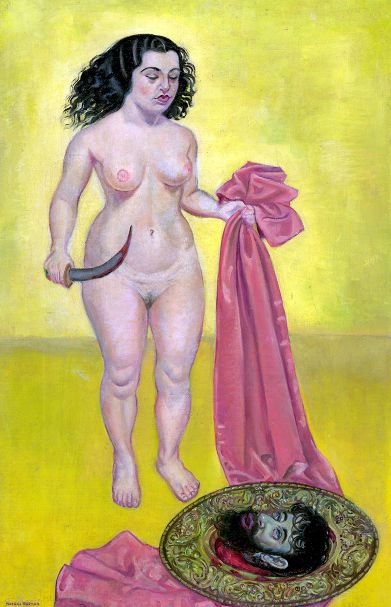
Macena Barton – Salome (1930s?)

Rachel Baes born 01-Aug 1912
Ida Gerhardi born 02-Aug 1862
Gretel Haas-Gerber born 02-Aug 1903
Maria Wiik born 03-Aug 1853
Laura Knight born 04-Aug 1877
Hedda Sterne born 04-Aug 1910
Edith Dettmann born 04-Aug 1898
Margit Graber born 05-Aug 1895
Irene Rice Pereira born 05-Aug 1902
Macena Barton born 07-Aug 1901
Maria Caspar-Filser born 07-Aug 1878
Lili Orszag born 08-Aug 1926
Tove Jansson born 09-Aug 1914
Eliane de Meuse born 09-Aug 1899
Cornelia Paczka-Wagner born 09-Aug 1864
Rogi Andre born 10-Aug 1900
Margret Bilger born 12-Aug 1904
Marianne Fieglhuber-Gutscher born 12-Aug 1889
Nola Hatterman born 12-Aug 1899
Ernestine von Kirchsberg born 12-Aug 1857
Helene Roth born 12-Aug 1887
Gluck (Hannah Gluckstein) born 13-Aug 1895
Xenia Cage born 15-Aug 1913
Marie Goth born 15-Aug 1887
Zsuzsi Robos born 15-Aug 1929
Tamara Natalie Madden born 16-Aug 1975
Käthe Ephraim Marcus born 16-Aug 1892
Gunnvor Advocaat born 17-Aug 1912
Gudrun Petersdorff born 17-Aug 1955
Anna Ancher born 18-Aug 1859
Kyra Markham born 18-Aug 1891
Florine Stettheimer born 19-Aug 1871
Lette Valeska born 20-Aug 1885
Hedwig Holtz-Sommer born 22-Aug 1901
Agnes Lawrence Pelton born 22-Aug 1881
Ebba Carstensen born 23-Aug 1885
Agnes Cleve born 23-Aug 1876
Hannah Frank born 23-Aug 1908
Mariette Lydis born 24-Aug 1887
Henriette Paula Häberlin born 25-Aug 1882
Dorothea Tanning born 25-Aug 1910
Fanny Rabel born 27-Aug 1922
Olga Costa born 28-Aug 1913
Else Lohmann born 29-Aug 1897
Sughra Rababi born 29-Aug 1922
Martha Schrag born 29-Aug 1870
Anna Zinkeisen born 29-Aug 1901
Siri Deckert born 30-Aug 1888
Leonor Fini born 30-Aug 1907
Amy Sherald born 30-Aug 1973
Ida Kerkovius born 31-Aug 1879

SEPTEMBER
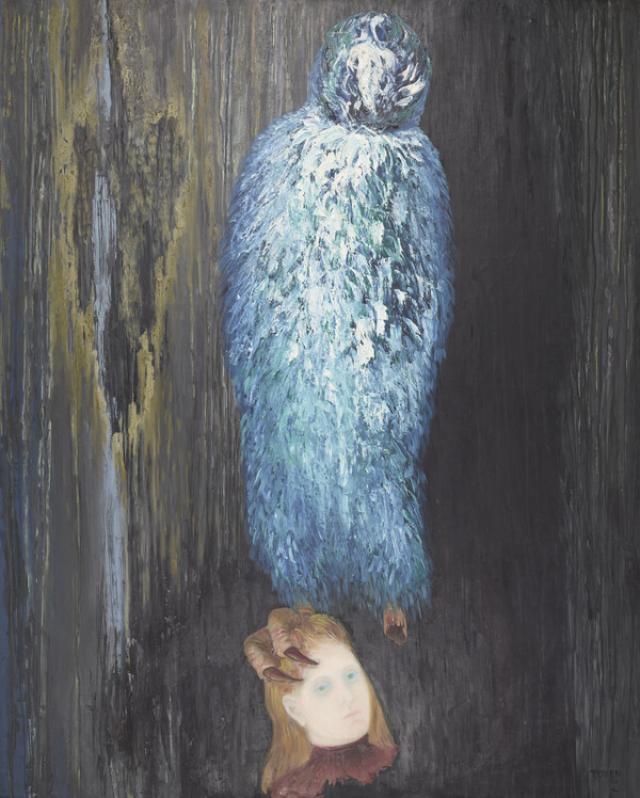
Toyen – The Message of the Forest (1936)

Adriana Bisi Fabbri born 01-Sep 1881
Mario Miguel Mollari 01-Sep 1930
Hilda Rix Nicholas born 01-Sep 1884
Augusta Roszmann born 01-Sep 1859
Mina Carlson-Bredberg born 02-Sep 1857
Else Meidner born 02-Sep 1901
Elin Danielson-Gambogi born 03-Sep 1861
Helene Funke born 03-Sep 1869
Lis Bertram-Ehmsen born 05-Sep 1897
Piti (Francis) Bartolozzi born 06-Sep 1908
Marie-Gabrielle Capet born 06-Sep 1761
Rosa Rolanda born 06-Sep 1896
Hanna Bekker vom Rath born 07-Sep 1893
Maria Lassnig born 08-Sep 1919
Mimi Parent born 08-Sep 1924
Anna Walinska born 08-Sep 1906
Aurora Reyes Flores born 09-Sep 1908
Consuelo Remedios González del Bianco born 10-Sep 1911
Marianne von Werefkin born 10-Sep 1860
Bona di Mandiargues born 12-Sep 1926
Nan Goldin born 12-Sep 1953
Lili Pancu born 13-Sep 1908
Eva Cederström born 15-Sep 1909
Hope Gangloff born 15-Sep 1974
Rosalie Gwathmey born 15-Sep 1908
Cordelia Urueta Sierra born 16-Sep 1908
Alla Horska born 18-Sep 1929
Maud Sulter born 19-Sep 1960
Hilda Belcher born 20-Sep 1881
Denise Bellon born 20-Sep 1902
Genevieve Springston Lynch born 20-Sep 1891
Else Hagen born 21-Sep 1914
Toyen born 21-Sep 1902
Anne Winterer born 21-Sep 1894
Hansl Bock born 22-Sep 1893
Irena Rüther-Rabinowicz born 22-Sep 1900
Esphyr Slobodkina born 22-Sep 1908
Suzanne Van Damme born 22-Sep 1901
Suzanne Valadon born 23-Sep 1865
Maina-Miriam Munsky born 24-Sep 1943
Tilsa Tsuchiya 24-Sep 1928
Marguerite Zorach born 25-Sep 1887
Suzi Gablik born 26-Sep 1934
Arcangela Paladini born 29-Sep 1596

OCTOBER
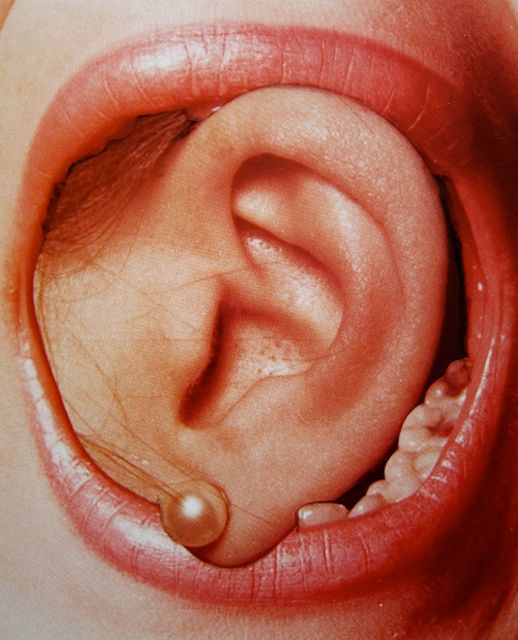
Penny Slinger – I Hear What You Say (1973)

Marianne Brandt born 01-Oct 1893
Alice Prin (Kiki de Montparnasse) born 02-Oct 1901
Elisabeth Sophie Cheron born 03-Oct 1648
Kathleen Walne born 03-Oct 1915
Ester Ellqvist born 04-Oct 1880
Ellen Thesleff born 05-Oct 1869
Graciela Aranis born 06-Oct 1908
Meret Oppenheim born 06-Oct 1913
Nina Arbore born 08-Oct 1889
Elise Ransonnet-Villez born 08-Oct 1843
Faith Ringgold born 08-Oct 1930
Louise Rösler born -Oct 1907
Ithell Colquhoun born 09-Oct 1906
Zelia Salgado born 10-Oct 1904
Linda Kogel born 11-Oct 1861
Grete Csaki-Copony born 12-Oct 1893
Paula Deppe born 12-Oct 1886
Nadezhda Petrovic born 12-Oct 1873
Ruth Bernhard born 14-Oct 1905
Vilma Vrbova born 14-Oct 1905
Minna Citron born 15-Oct 1896
Lilly Hildebrandt born 16-Oct 1887
Elisabeth Chaplin born 17-Oct 1890
Cata Dujšin-Ribar born 17-Oct 1897
Agnes van den Brandeler born 18-Oct 1918
Jeanne Mandello born 18-Oct 1907
Bettina von Arnim born 19-Oct 1940
Jacqueline Marval born 19-Oct 1866
Ottilie Reylaender born 19-Oct 1882
Else-Christie Kielland born 20-Oct 1903
Gustava Engels von Veith born 20-Oct 1879
Penny Slinger born 21-Oct 1947
Lygia Clark born 23-Oct 1920
Rina Lazo (Wasem) born 23-Oct 1923
Marie-Louise von Motesiczky born 24-Oct 1906
Claude Cahun born 25-Oct 1894
Katalin Ladik born 25-Oct 1942
Ruth Light Braun born 26-Oct 1906 2003 oa
Marthe Donas born 26-Oct 1885 1967 oa
Bep Rietveld born 26-Oct 1913 1999 oa
Blanche-Augustine Camus born 27-Oct 1884
Julie Hagen-Schwarz born 27-Oct 1824
Sigrid Hjerten born 27-Oct 1885
Mary Moser born 27-Oct 1744
Paraskeva Clark born 28-Oct 1898
Bertha Müller born 28-Oct 1848
Alice Lex-Nerlinger born 29-Oct 1893
Louise Abbema born 30-Oct 1853
Maria Izquierdo born 30-Oct 1902
Angelika Kauffmann born 30-Oct 1741
Erna Schmidt-Carroll born 30-Oct 1896
Marie-Laure de Noailles born 31-Oct 1902
Marie Laurencin born 31-Oct 1883
Jóhanna Kristín Yngvadóttir born 31-Oct 1953

NOVEMBER
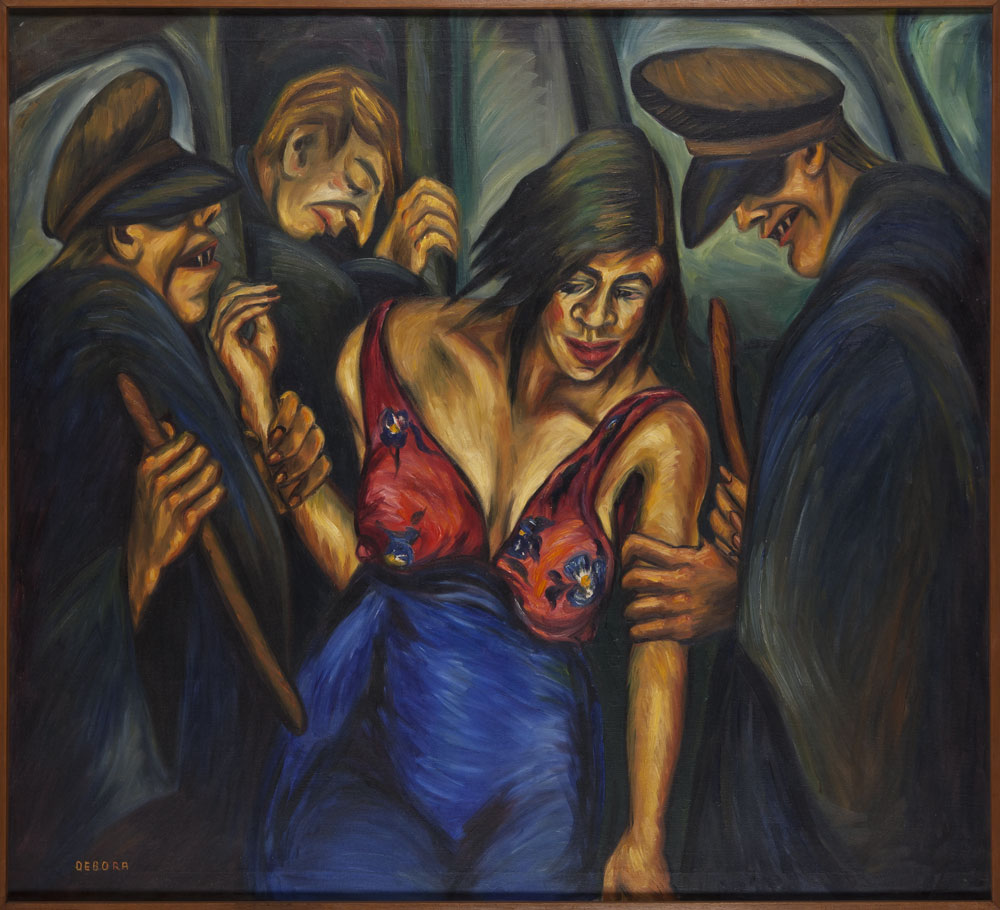
Débora Arango – Justice (c.1944)

Hannah Hoch born 01-Nov 1889
Hedwig Woermann born 01-Nov 1879
Venny Soldan-Brofeldt born 02-Nov 1863
Lois Mailou Jones born 03-Nov 1905
Lilias Torrance Newton born 03-Nov 1896
Charlotte Buresova born 04-Nov 1904
Elena Luksch-Makowsky born 04-Nov 1878
Milena Pavlovic-Barili born 05-Nov 1909
Ann Brockman born 06-Nov 1899
Elsa Haensgen-Dingkuhn born 07-Nov 1898
Sonja Kovačić – Tajčević born 07-Nov 1894
Angeles Santos Torroella born 07-Nov 1911
Elizabeth Sparhawk-Jones born 08-Nov 1885
Emmy Bridgwater born 10-Nov 1906 1999 oa
Lisette Model born 10-Nov 1901
Debora Arango born 11-Nov 1907
Carry Hess born 11-Nov 1889
Magda Langenstraß-Uhlig born 11-Nov 1888
Mary Kessell born 13-Nov 1914
Ekaterina Savova-Nenova born 13-Nov 1901
Sonia Delaunay born 14-Nov 1885
Julie Manet born 14-Nov 1878
Tina Blau born 15-Nov 1845
Miriam Schapiro born 15-Nov 1923
Elisa Counis born 16-Nov 1812
Katharina Sieverding born 16-Nov 1944
Louise Dahl-Wolfe born 19-Nov 1895
Lily Harmon born 19-Nov 1912
Marianne Breslauer born 20-Nov 1909
Angelika Hoerle born 20-Nov 1899
Germaine Krull born 20-Nov 1897
Elisabeth Jerichau-Baumann born 21-Nov 1819
Jeanne Mammen born 21-Nov 1890
Dora Maar born 22-Nov 1907
Bridget Bate Tichenor born 22-Nov 1917
Else Hertzer born 24-Nov 1884
Mary Foote born 25-Nov 1872
Sara Shamma born 26-Nov 1975
Audrey Buller born 27-Nov 1902
Gretchen Wohlwill born 27-Nov 1878
Mabel Alvarez born 28-Nov 1891
Hedwig Marquardt born 28-Nov 1884
Else Wex-Cleemann born 29-Nov 1890
Fridel Dethleffs-Edelmann born 30-Nov 1899

DECEMBER
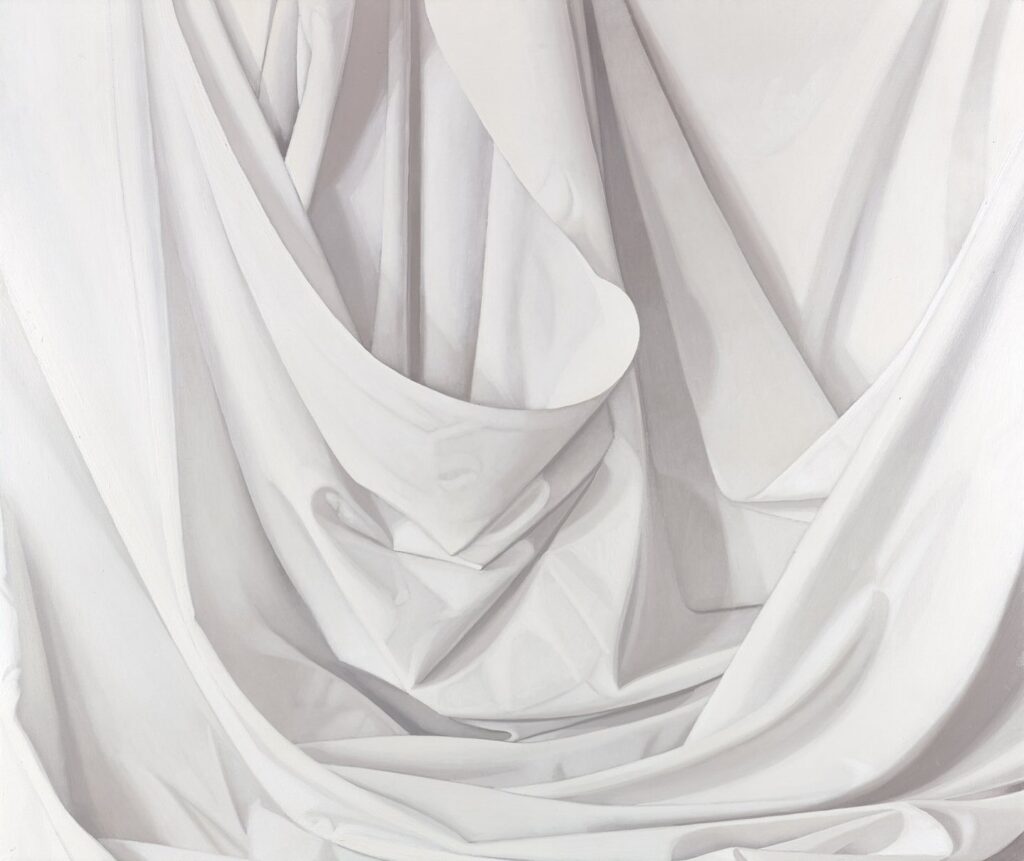
Alison Watt – Alabaster (1998)

Eileen Agar born 01-Dec 1899
Jenny Mucchi-Wiegemann born 01-Dec 1895
Emilie Mediz-Pelikan born 02-Dec 1861
Marion Adnams born 03-Dec 1898
Dorte Helm born 03-Dec 1898
Grace English born 04-Dec 1891
Elfriede Lohse-Wächtler born 04-Dec 1899
Louise Catherine Breslau born 06-Dec 1856
Margaret Brundage born 09-Dec 1900
Louise de Hem born 10-Dec 1866
Zinaida Serebriakova born 10-Dec 1884
Olga Terri born 10-Dec 1916
Irène Zurkinden born 11-Dec 1909
Alison Watt born 11-Dec 1965 alive
Ragnhild Keyser born 12-Dec 1889
Emily Carr born 13-Dec 1871
Alice Sommer born 13-Dec 1898
Aino Bach born 14-Dec 1901
Remedios Varo born 16-Dec 1908
Bertha Wegmann born 16-Dec 1846
Suze Robertson born 17-Dec 1855
Jane Graverol born 18-Dec 1905
Ewa Kierska born 18-Dec 1923
Lucie Cousturier born 19-Dec 1876
Therese Schwartze born 20-Dec 1851
Trude Fleischmann born 22-Dec 1895
Margit Anna born 23-Dec 1913
Luvena Buchanan Vysekal born 23-Dec 1873
Alma del Banco born 24-Dec 1862
Sigrid Maria Schauman born 24-Dec 1877
Dorothy Johnstone born 25-Dec 1892
Ragnhild Kaarbo born 26-Dec 1889
Stella Steyne born 26-Dec 1907
Augusta von Zitzewitz born 26-Dec 1880
Annott (Jacobi) born 27-Dec 1894
Aisha Galimbaeva born 29-Dec 1917
Adela ber Vukić born 30-Dec 1888
Lucile Blanch born 31-Dec 1895
Beatrice Mandelman born 31-Dec 1912
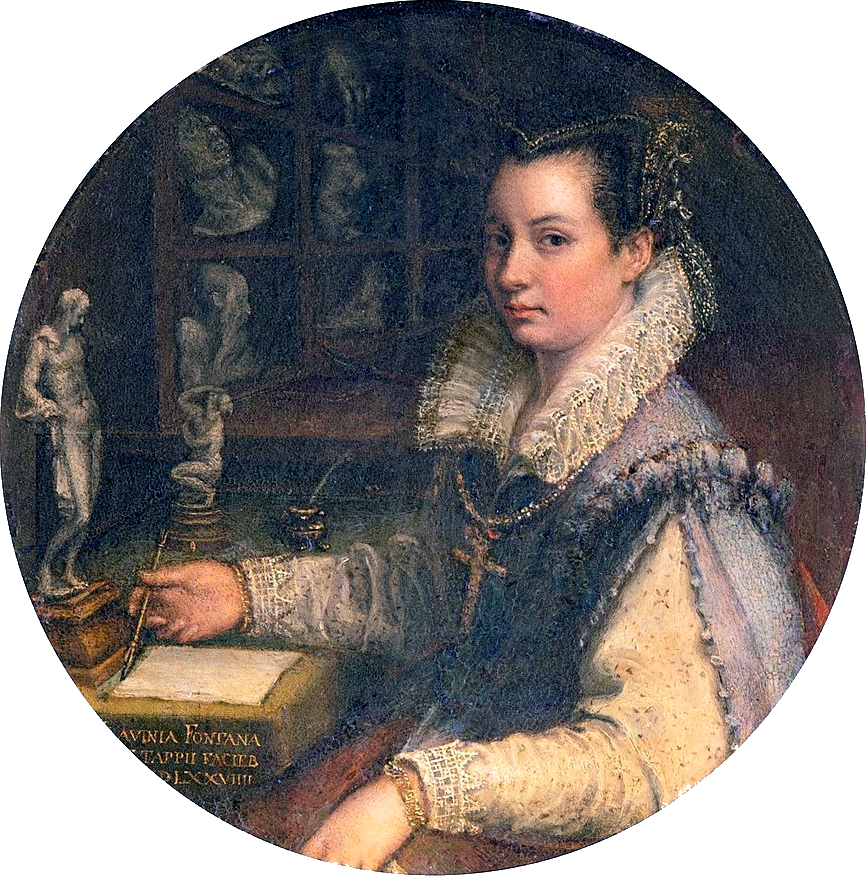
Self-Portrait in the Studio (1579), by Lavinia Fontana, generally considered to be the first professional female artist

inside the doll’s house

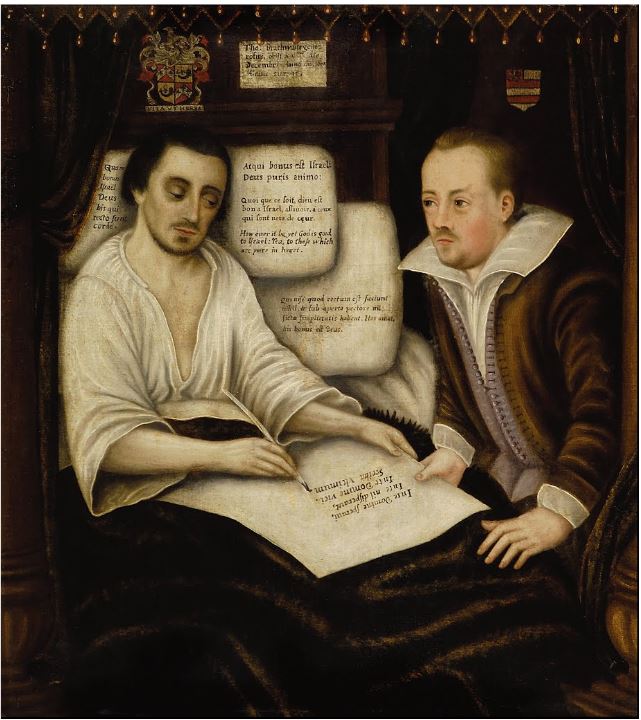
Thomas Braithwaite of Ambleside making his will (1607, artist unknown)

The dying man glows with sickness in his mildewy-looking bed, the light seeming to emanate from where he sits, crammed into the airless, box-like room. He signs his will while his friend looks on intently with concern and restrained grief.

The artist who painted Thomas Braithwaite of Ambleside making his will in 1607 may not have been considered important enough as an artist, (still a person of relatively low social status in northern Europe, though this was starting to change with painters like Rubens and his pupil Anthony Van Dyck) to warrant signing the picture or having their name recorded at all, except perhaps in the household accounts – but they were important as a witness, and the painting is itself a kind of legal document, although it’s more than that too. The great enemy of the Elizabethan and Jacobean ages wasn’t death, with which most adults would have been on very familiar terms,  but disorder and chaos*; and this, despite its tragic appearance, is a painting devoted to the age’s great virtue; order. Both the dying lord (an inscription records the date of his death (Thomas Braithwaite of gentry stock, died 22 December, 1607, aged 31) and his friend George Preston of Holker are identifiable to those who knew them by their likenesses and to those who didn’t, by their coats-of-arms. Biblical texts tell us that Thomas Braithwaite was a virtuous man, but so does the painting itself; this is a man who, even while he lay dying, took care of his business. His passing is tragic, but, he reassures us, it will cause only grief and not inconvenience.

*see EMW Tillyard, The Elizabethan World Picture, Pelican Books, 1972, p.24

We talk about religious faith now as a kind of choice as much as a belief system, but for all its paranoia about atheism –and all the subsequent romanticism about that era’s new spirit of humanism – the Tudor and Stewart ages had inherited a world view in which the existence, not only of God and Heaven and Hell, but the essential hierarchy of existence, was more or less taken for granted. We may differentiate arbitrarily now between religion and superstition, but for the people in these cramped and airless paintings there was no real contradiction between, say Christianity and astrology, because in accepting without exception the primacy of god the creator, it all works out in the end – everything that has ever existed and everything that will ever exist, already exists. Perhaps human beings aren’t supposed to divine the future, but God has written it and the signs – comets, unseasonal weather, the movement of the stars and the behaviour of animals – are there to be read and interpreted by anyone with the nerve to do so.


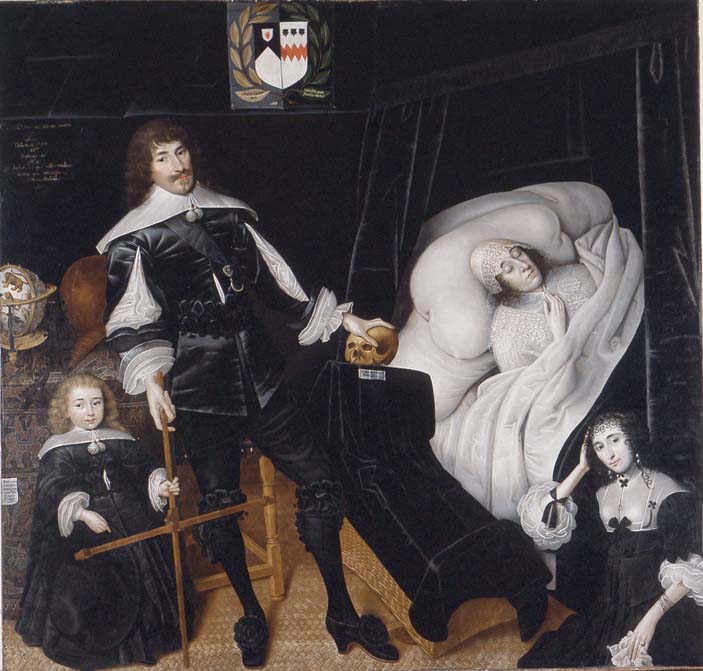
John Souch – Sir Thomas Aston at his Wife’s Deathbed (1635)

In an off-kilter, vertigo-inducing room that seems almost to unfurl outwards from the skull at its centre, an illogical space hung with black velvet, a man and his son, looking outwards, but not at us, stand by the deathbed of their wife and mother, while a glamorous young woman meets our gaze from where she sits, apparently on the floor at the foot of the bed.

There’s virtue in this painting too, but mostly this one really is about death. It’s there at the centre, where the lord’s hand sits on a skull, recalling the kind of drama which was then passing out of fashion, just as this kind of painting was. The skull, like the black-draped cradle (with its inscription that reads He who sows in flesh reaps bones), acts as a vanitas motif, focussing the viewer’s attention on the shortness of life, but also recalls the enthusiastically morbid writing of men like John Webster and Thomas Middleton. Sir Thomas and his wife had grown up in an England where plays like Middleton’s Revenger’s Tragedy often featured soliloquies over the remains of loved ones. Sir Thomas Aston is not being consumed by a desire for revenge, but his hand on the skull can’t help recalling Hamlet, or even more so, anti-heroes like Middleton’s Vindice, who opens The Revenger’s Tragedy contemplating the skull of his fiancée;

My study’s ornament, thou shell of death/once the bright face of my betrothed lady/When life and beauty naturally fill’d out/these ragged imperfections,/when two heaven-pointed diamonds were set/ in those unsightly rings – then t’was a face/so far beyond the artificial shine/of any woman’s bought complexion
The Revenger’s Tragedy, Act1 Sc 1, in Thomas Middleton, Five Plays ed. Bryan Loughrey & Neil Taylor, Penguin Books, 1988 p.73

Sir Thomas, unlike Vindice, displays the correct behaviour for a grieving man with an orphaned young son – not, the deadpan ‘stiff upper lip’ restraint of later generations of British gentlemen – though he is a dignified figure, but the kind of behaviour noted in books of etiquette like the anonymous Bachelor’s Banquet of 1603, which states that if

in the midst of this their mutual love and solace, it chanceth she dies, whereat he grieves so extremely, that he is almost beside himself with sorrow: he mourns, not only in his apparel for a show, but unfeignedly, in his very heart, and that so much, that he shuns all places of pleasure, and all company, lives solitary, and spends the time in daily complaints and moans, and bitterly bewailing the loss of so good a wife, wherein no man can justly blame him, for it is a loss worthy to be lamented.

The Bachelor’s Banquet in The Laurel Masterpieces of World Literature – Elizbethan Age, ed. Harry T. Moore, Dell Books, 1965,  p.324)

It is perhaps this behaviour we should read in Sir Thomas’s sideways glance, not the hauteur of the nobleman but the remoteness of the recently bereaved. His black sash is adorned with a death’s head brooch; he and his young son (also Thomas) are to be considered men of the world; to their left a globe sits on a tapestry decorated with elephants. But all their worldly knowledge and faith is no help here; the two Astons grasp a cross staff bearing the inscription, The seas can be defined, the earth can be measured, grief is immeasurable. Given this display of intense, but restrained grief, the smiling girl – the only person who makes eye contact with us – is a strange figure, despite her beautiful mourning clothes, and it may be that she is the lady in the bed, as she looked in happier times, there to show us, and remind father and son, of what they are missing.

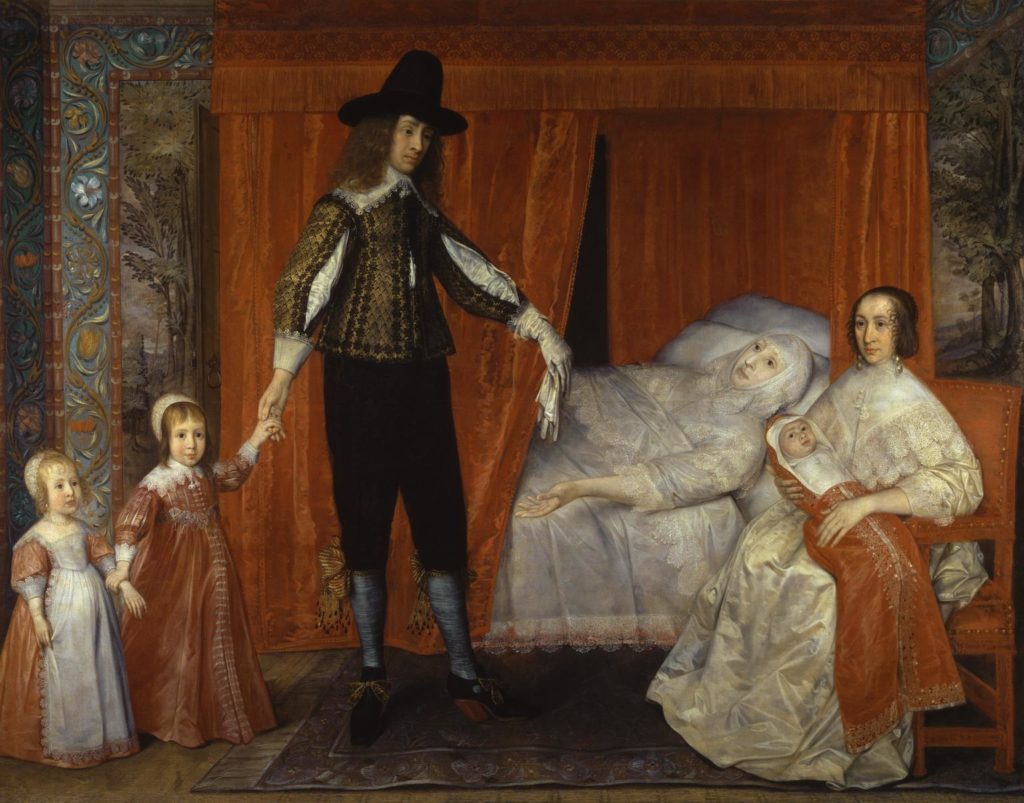
David Des Granges – The Saltonstall Family c.1636-7

On what looks like a shallow stage opening onto a bed in a cupboard, a strangely-scaled set of figures pose stiffly, only the older child meeting our eye with a knowing smirk, although the strangely capsule-like baby seems aware of us too.

As in the Souch painting, the father figure dominates, just as they dominated their households; the household being a microcosm of the state, the state itself a microcosm of the universe.* Mr Saltonstall, despite being at the apex of a pyramid of hierarchy that allowed absolute power, does not look devoid of compassion or warmth – indeed, he has had himself depicted holding the hand of his son, who himself mirrors (in, it has to be said, a less benign-looking way) this gesture of casual mastery, holding his little sister’s wrist, demonstrating just how the links in this chain of family work. And the family is inside the kind of house familiar nowadays to the heritage tourist as a mirror of the world that produced it; mansions like overgrown doll’s houses, big on the outside, but strangely cramped and illogical inside, with peculiar little wood-panelled rooms and an ancient smell of damp.

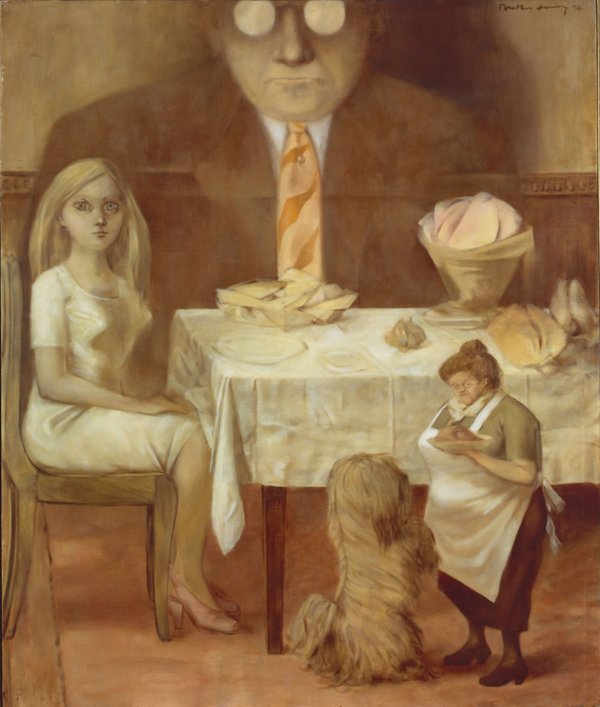
Dorothea Tanning – A Family Portrait (1954)

The nakedness of the power structure here isn’t subtle; and it isn’t supposed to be, because it wasn’t there to be questioned but accepted. Virtue lies in following god’s system of organisation, any suggestion to the contrary would make it an entirely different kind of painting. And indeed when painting – and painters – achieved a higher social standing in the century that followed, the messages become more subtle, only reappearing in something like this blatant form again in western art in the post-Freudian era, with a painting like Dorothea Tanning’s 1954 A Family Portrait. But Tanning’s painting is a knowing representation of a reality she was aware of but which had the force of tradition alone. Its appearance in the mid-17th century reflects the reality of the age; the truth, if not the only truth.


*EMW Tillyard, The Elizabethan World Picture, p.98-9

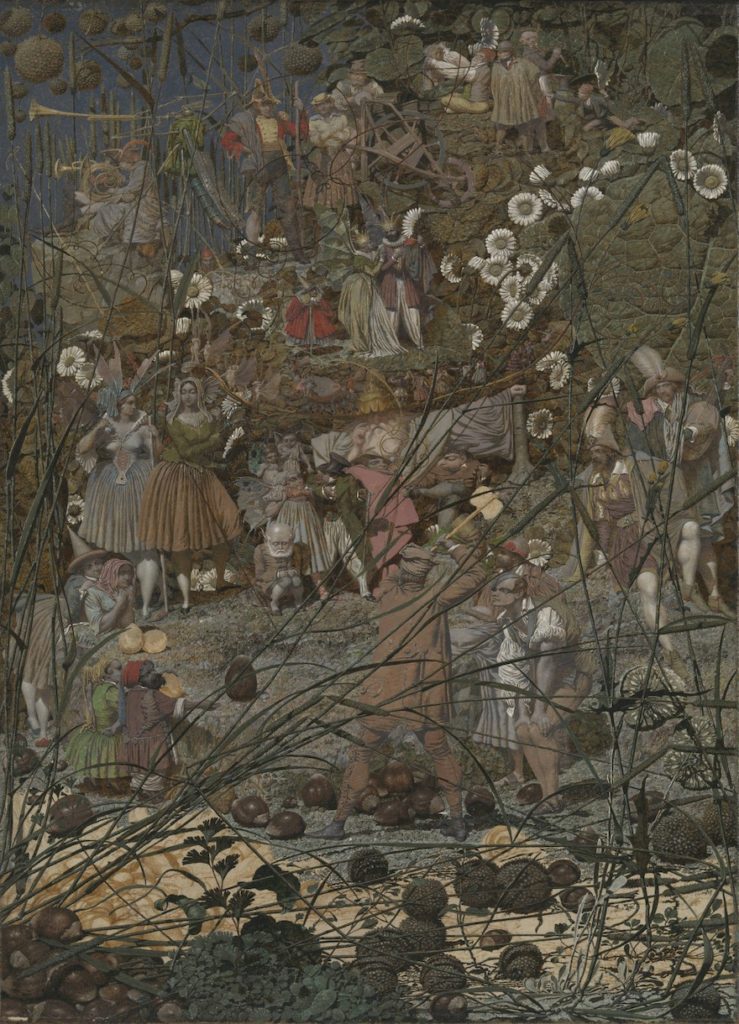
Richard Dadd – The Fairy Feller’s Master Stroke (1855-64)

The first impression, looking at these kinds of paintings, is something like looking at fairyland through the distorting lens of Richard Dadd’s insanity centuries later; comical and disturbing, familiar and illogical. These painters of the Elizabethan and Jacobean tradition (their art died out at around the same time as Charles I did in the middle of the seventeeth century) – Souch, Des Granges, William Larkin and their many nameless contemporaries – were at the tail end of a dying tradition that would be replaced by something more spacious, gracious, modern and ‘realistic’; but ‘realistic’ is a loaded word and it’s entirely likely that this older tradition captures their world more accurately. We don’t need a time machine (though it would be nice) – a visit to almost any castle, palace or stately home is enough to confirm that the velvet curtains and classical paraphernalia of a Rubens or Van Dyck portrait does not tell the whole story of their era, even among the tiny demographic who their art served. It is a world that we would probably find dark and claustrophobic; witness the smallness of furniture, the lowness of the doorways and the dark paintings of dead ancestors, and this – regardless of the fact that it is partly due to what would later be seen as incompetence* – is what is preserved in this tradition of painting, as well as in the homes these people left behind.

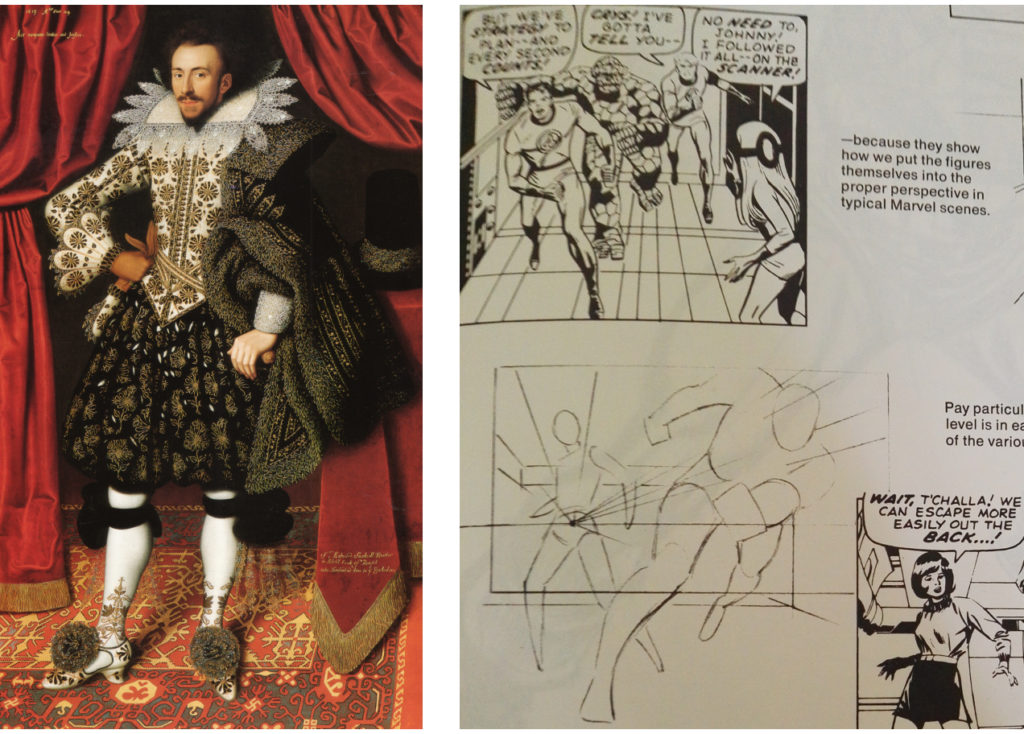
* it’s a matter of fact that the average artist drawing a superhero comic in the 20th/21st century has a better grasp of mathematical perspective – and the idea of perspective at all – than even the more accomplished Elizabethan or Jacobean portrait painter 

William Larkin: a great painter who could have learned something from John Buscema & Stan Lee’s ‘How to Draw Comics the Marvel Way’ (1978)

This is the kind of art that the Renaissance and its aftermath is supposed to have made obsolete – but though the word ‘art’ may owe its origin to its nature as something artificial, it also tells the truth, or a truth, regardless of its creators’ intentions. But if I’m implying that it’s realistic rather than idealistic, what does ‘realistic’ mean? Often when deriding ‘modern art’ (a meaningless term, since the art it usually refers to is often post-dated by art – like Jack Vettriano for instance – that is not considered to be ‘modern’) the assumption is that modern art is kind of aberration, a straying from a realistic norm*. But when looked at as a whole (or as much of a whole as is possible from a particular cultural viewpoint) it becomes quickly apparent that art that is ‘realistic’ in the narrowly photographic sense is a tiny island in the vast ocean of art history – and what is more, relies on ideas – such as the opposition of ‘abstract’ and ‘realistic’, that may have no currency whatsoever outside of the Western tradition.

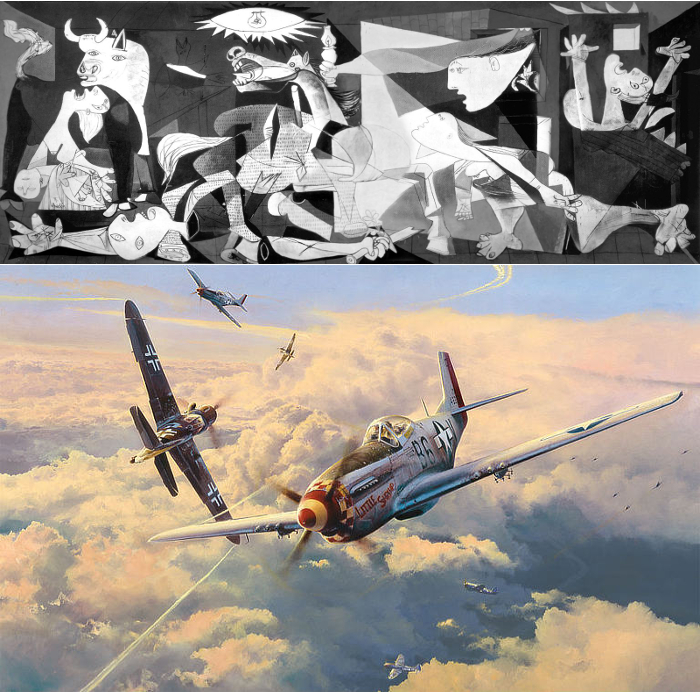
visions of war: Picasso’s Guernica (1937) and Robert Taylor’s Struggle For Supremacy (2001)

Even within Western cultures, the idea that photographic equates to experiential is debatable; despite the persistence (outside of academia) of the idea that Picasso was primarily an artist who painted noses on the wrong side of heads etc, a painting like his Guernica clearly has more in common with images of war as it was experienced in the 20th century – even vicariously through cinema and TV – than the kind of ‘war art’ that my granddad had on his walls, beautiful paintings in a tradition that lives on through artists like Robert Taylor, visions of war where the fear and panic becomes excitement and drama, an altogether easier thing to be entertained by.

*A classic example of this attitude came from Philip Larkin, who, when writing about modernism in jazz, digressed to cover all of the arts, noting

All that I am saying is that the term ‘modern’ when applied to art, has a more than chronological meaning: it denotes a quality of irresponsibility peculiar to this [ie the 20th] century… the artist has become over-concerned with his material (hence an age of technical experiment) and, in isolation, has busied himself with the two principal themes of modernism, mystification and outrage. Philip Larkin, All What Jazz, Faber & Faber, 1970, p.23

Picasso was trying to capture the feel of his century – but most of the great courtly artists of the sixteenth and seventeenth centuries – the Renaissance masters who became household names – were trying to capture something loftier, to escape the more earthy, earthly aspects of theirs, not least because they were the first generation to attain something like the status that Picasso would later attain; artists as creators and inventors, not craftsmen and recorders. And therefore that feeling of the life of the times shines through more vividly in the work of artists like John Souch and David Des Granges. The 17th century was a time when the world – even the world inhabited by the aristocracy – was far smaller than it is today in one sense, but the wider world seemed correspondingly bigger and more dangerous, but also perhaps richer or deeper, just as these people – often married by 12 or 14, learned – if they were allowed to learn – by 20, old by 40, were both smaller and bigger than we are.

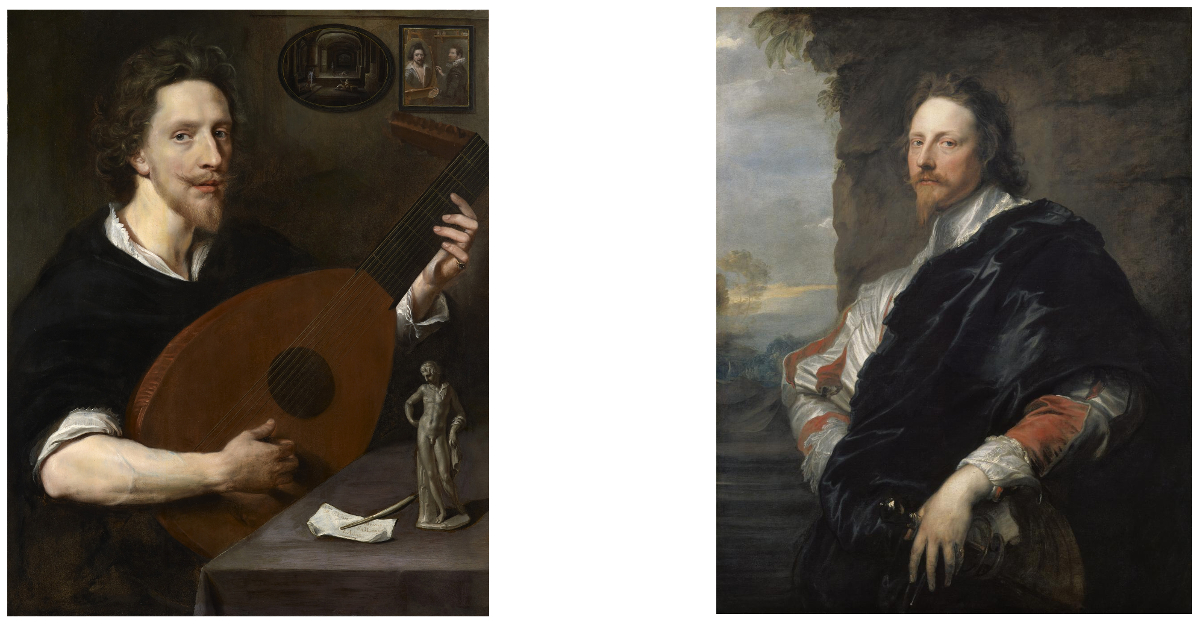
This kind of painting, part portrait, part narrative, was uniquely suited to the lives it recorded, and in one late example its strengths can be contrasted with those of the baroque style that swept it away. In 1613, Nicholas Lanier was a rising star in the English court, composer of a masque for the marriage of the Earl of Somerset. Around this time he was painted by an unknown artist, in the semi-emblematic tradition of artists like John Souch. There are references – the classical statue, the pen and paper with its mysterious inscription (RE/MI/SOL/LA) that highlight that this man is more than just a lutenist, but at the same time he is most definitely that, and the artist has taken care to render realistically Lanier’s muscles as he holds the instrument; an artist yes, but a workman of sorts too. By 1632, Lanier was the Master of the King’s Music and a trusted envoy of King Charles, who even sent him on picture-buying missions. And it is this gentleman that Van Dyck captures; aloof, authoritative, not someone we can picture sweating over a difficult piece of music.

Nicholas Lanier (1613) by an unknown artist (left) and Nicholas Lanier (1632) by Anthony van Dyck (right)

With the art of Van Dyck, the courts of Britain were to discover an ideal of aristocratic indifference which would partly define the project of British imperialism and which is, unfortunately, still with us today. But the truth of Van Dyck’s age, and those which preceded him was stranger, darker and more human. And it’s there still, in those damp-smelling big-small houses, and in the art that died with King Charles.


7.6 billion mirrors – the value of art

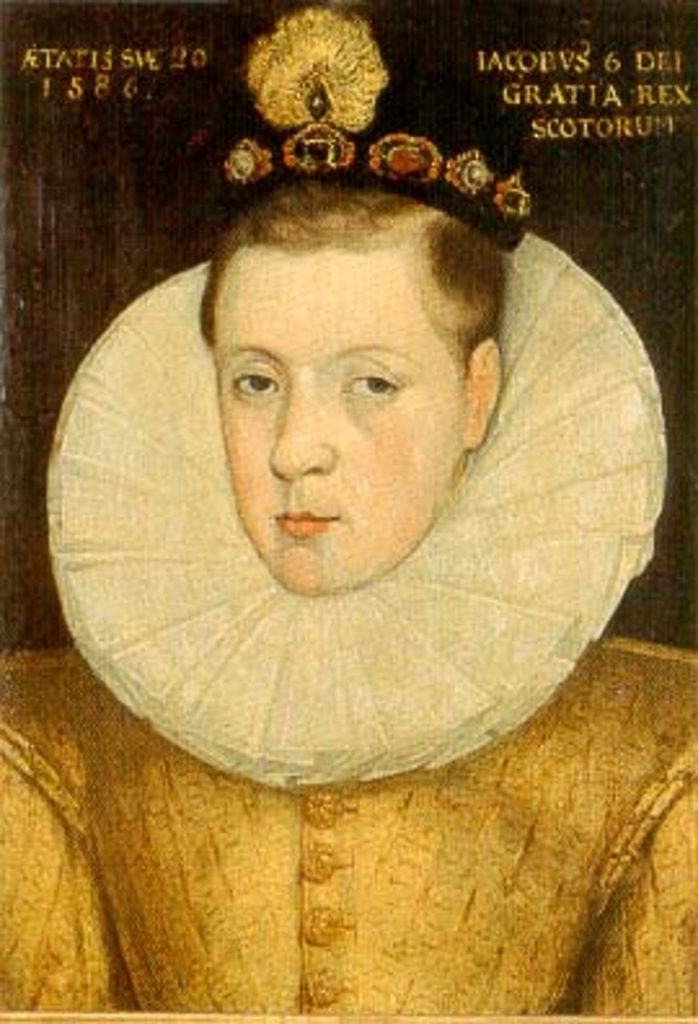
Aged 20/1586
James 6/By Grace of God King of Scotland

Was it a cold morning in Edinburgh in 1586 when James VI, only twenty years old, very aware of his status as a divinely-appointed monarch, but with already a lifetime’s experience of human nature and earthly politics, sat in front of Adrian Vanson to be painted? Was he nervous? His watchful eyes suggest not, but his position, though finally secure, probably didn’t feel very stable; just three years earlier he had been imprisoned by those ruling in his name, and this year, although he signed a treaty of mutual defence with England against the possibility of a Catholic invasion, his mother who he had succeeded, remained in England, alive and imprisoned. Was Vanson nervous? Or was it just another job? The King wasn’t always noted for his good temper, but the artist, who had come to Scotland from the Netherlands via London (where he had an uncle) already knew James, and had first painted some pictures for the young King in 1581, before his imprisonment and, in happier circumstances, the year before this portrait, had painted a more glamorous and light-hearted portrait of the King to be taken abroad and shown to prospective suitors. But this picture, sombre, stern even, is about power; James 6th by the grace of God King of Scotland. When we look at this painting, at this sulky looking young man, we are making some kind of connection, looking through the eyes, albeit via the hand, of a Dutch man who died around 420 years ago. The painting – even if by the standards by which art is usually judged, it’s ‘not great’ – has a personal value, one human being, recorded by another, as well as a cultural one. It tells us something about fashions, lifestyles, the way a king could be depicted in that country, in that period (for all his divinity he is not an iconic figure), class structures, religion – but what is it “worth”? What is any work of art worth?

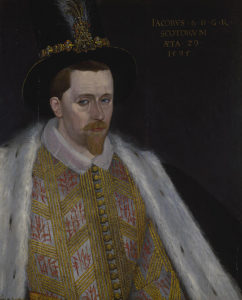
James again, when both he and the artist were a long 9 years older

Leaving aside metaphorical, metaphysical or aphoristic answers, or going into a much more long winded but possibly worthwhile conversation about what art is (I’m going to say it’s a deliberate act of creation, but even that is arguable), let’s assume we know what art is. Googling ‘art definition’ initially brings up five presumably definitive and certainly iconic pictures, the Mona Lisa, The Starry Night (both as famous as their creators, pretty much), Les Demoiselles d’Avignon (whose creator – Picasso – is more famous than the painting), The (or rather Leonardo’s) Last Supper and A Sunday Afternoon on the Island of La Grand Jatte, which I think is probably more famous as an image than a title, and the image is more famous than its creator Seurat.
What are these paintings worth? I’m sure facts and figures are available, but this is not – despite the age of some of the paintings, about intrinsic worth; I imagine there is a basic going rate for an early 16th century Italian renaissance portrait on panel (and so forth), but that has little to do at this point with the price of the Mona Lisa. The painting would be just as good (or just as whatever you think it is) if the artist was unknown, but the value has – and always has had – a lot to do with Leonardo da Vinci and the perception of him as more than just someone who painted good portraits
.

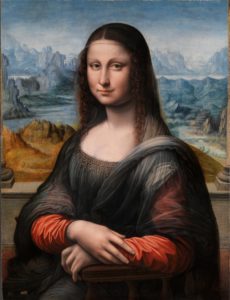
a (but not “the”) Mona Lisa, an early copy probably by one of Leonardo’s apprentices

Separating the art from the artist is always a difficult and controversial subject, but should really be easier in the visual arts that almost any other field. Yes, artists have their own ‘voice’ or visual language, but that is not the same as reading their actual words, or hearing their actual voice; and yet – because, I guess, of market forces, artists are routinely known and valued above and beyond their works and those works – even their doodles and fragments – are valued accordingly. A scrawled caricature in a margin by Leonardo (or Picasso) can be “worth” many times what a highly finished, technically brilliant oil painting by an unknown artist is. This disconnect happens because although art history is human history, “the art world” as it has existed since at least the 19th century is more like horse racing – take away the money and what you have is a far smaller number of people who are genuinely interested in how fast a horse can run.
Which is fine – but the question of what a painting (for instance) is “worth” has become the way art is engaged with popularly; somehow art, unlike sport, has never earned its own daily segment on the news and really it only appears there when the sums it raises are enormous (Leonardo’s Salvator Mundi), the sums lost are enormous (theft, fires, vandalism), or it’s part of a story that’s interesting in itself (Nazi art hoards, previously undiscovered ‘masterpieces’ etc). But the veneration of artists above art – now at the very peculiar stage at which a painting “after” (that is, not by, and possibly not even from the same era as) a famous ‘old master’ can be worth a far higher sum than a genuine painting by a lesser known ‘old master’ – masks the true value of art, which may be cultural, but is ultimately always personal
.
Even without any knowledge of the King James or his life, we are able, if we can see –  just by being human –  to make certain assumptions about the kind of person he was, and what he may have been thinking or feeling on that day in 1586. This kind of empathy is an act of the imagination; if we are mind-reading it is ultimately our own mind we are reading – but no more so than when we meet eyes with a stranger on the street or on a train. And if looking at Vanson’s King James is – because we can find out these facts – a connection with both an immigrant living in what must have in many ways been an unfamiliar country, and with a young man who had recently attained some kind of power, not only over his own life, but over a country, at the cost of his mother, then what of a painting like the Mona Lisa? It is, regardless of how compromised it has become by fame, monetary value and endless theorising, a link with the mind and ideas – and hand – of Leonardo and a kind of communication with the sitter herself. She was probably Lisa Gioconda, she may have already been dead, but although I stand by all of the above, what I seem to have suggested is that a painting is a kind of code to be broken or a museum to be explored and unpacked. These things enrich our understanding of or connection with a painting, but they don’t make it. What makes art so fascinating – but also why it doesn’t have five minutes on the news every night – is because it’s so individual. It’s (VERY) possible to not care in the slightest about the outcome of, say a rugby or football match, but the final score is the final score, regardless of how anyone feels about the quality of the game or the skill of the players. It would not be satisfactory somehow to have a football match where no points were awarded and the outcome of the game depended on how you feel about it. But in art it is completely respectable – and I don’t think wrong – to say, (To paraphrase the great surrealist painter Leonora Carrington); if you really want to know what the Mona Lisa’s smile means, think about how it makes you feel.

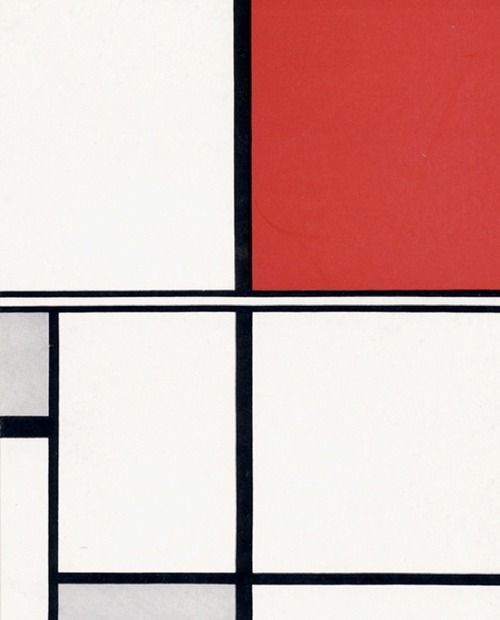
Composition in White, Black, Red and Grey (1932) by Marlow Moss

This might seem like reducing art to the level of ‘human interest’, but what else is there? The choice of figurative paintings with a possible narrative element is a matter of taste and makes the human element unavoidable. But if we feel intense emotion when looking at a Mark Rothko painting, a sense of peace and calm from a Mondrian, Marlow Moss or Hans Arp picture, or exhilaration in front of a Peter Lanyon work, the fact remains that ‘we feel’ (or ‘we don’t feel’) is the common denominator. Viewers through the ages who have detected echoes of divine order and harmony in the works of Piero Della Francesa or Fra Angelico have only definitely detected them with any certainty within their own perceptions, which is not to say that they aren’t feeling something the artist himself felt. There’s a philosophical, ‘tree falling in the woods’ point here; is Van Gogh’s ‘Sunflowers’ a work of emotional and artistic intensity after the gallery lights go out? Or is it more like a kind of magic spell or booby trap, triggered only when a spectator is there to observe it?

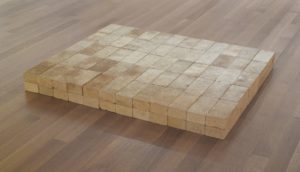
That said, figurative art, especially portraiture, is – however many layers of information are contained in it – relatively easy to ‘understand’ on a basic level; ie if we can see, we can see what it is. It is the understanding and appreciation that remains entirely individual and subjective. Conceptual art – shockingly still around in much the same forms as it has been since the 60s – is, despite its apparently interpretation-inviting name, less transparent. This means that, unlike something we instantly recognise, it’s – initially at least – only as powerful as its visual impact. And in fact, whereas familiarity invites interpretation in traditional art, it tends to – on a popular level at least – repel it in conceptual art. The controversy surrounding classic media frenzy conceptual pieces like Carl Andre’s pile of bricks, or Tracy Emin’s unmade bed is because everyone knows exactly what a pile of bricks, or a sleeping bag or a bed is, and they don’t feel the need or desire to think further about it and if they do they feel – no doubt wrongly – that they are putting more thought into it than the artist did.

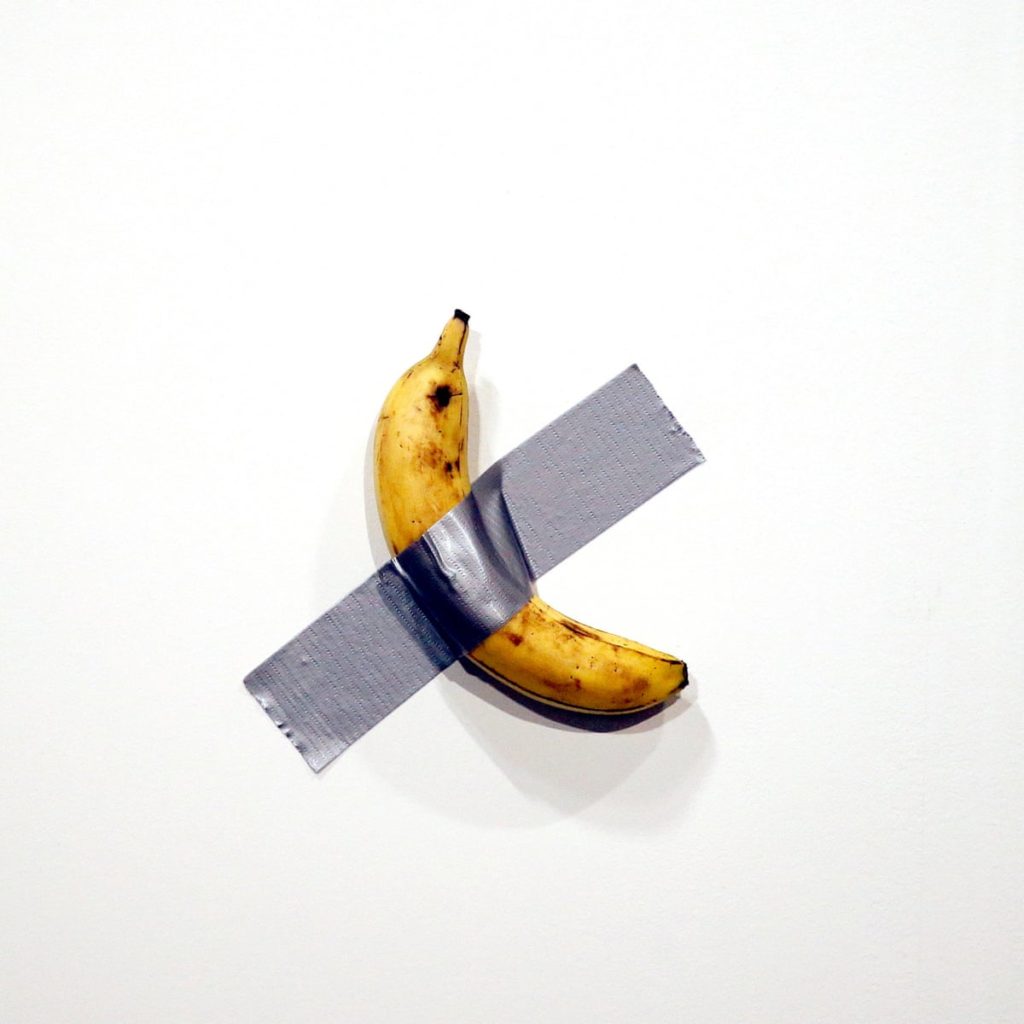
Comedian (2019) by Maurizio Cattelan
Carl Andre – Equivalent V (1966-69)

That is the ‘philistine’ response and it’s easy to have sympathy with; personally, I don’t mind wondering what a conceptual work means, but if I get no kind of emotional or cerebral response from looking at it in the first place then I’d rather the artist had just written their ideas down. This is me and my deficiency though – if Maurizio Cattelan put his heart and soul into taping that banana to the wall – or even if he just enjoyed doing it – who am I or anyone else to devalue that? And if whoever paid that much money for it is getting some similar experience, or just the satisfaction of being the owner of the most expensive banana in the world – then that’s hard to argue with too.

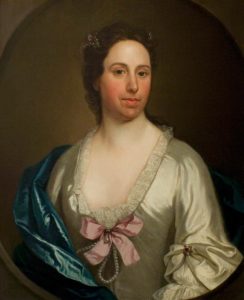
Portrait of an unknown woman by an unknown artist c.1725

I don’t think it devalues art – quite the opposite – to think of it as a form of communication between individuals, even if as mentioned above, it is really communication with the one person you will ever know with any certainty – yourself. What I seem to be saying (which I may not entirely agree with) is that art is a mirror. Take this beautiful painting from around 1725 by an unknown artist of an unknown lady. To me, this is a real connection with this unknowable person – but again, only as unknowable as any face that passes you in the street never to be seen again – she was a real person, sitting in a room, around 300 years ago, probably wearing something she liked or that told the world how she wanted to be seen, being painted by someone – and by 1725 it could have been a man or a woman – with whom they may have been engaging, impatient, chatty… We can only guess and extrapolate from the picture. That extrapolation will be different every time depending on the viewer and their own knowledge, not just of history, but of people and experience. If 7.6 billion people look at the picture it becomes in essence 7.6 billion pictures, 7.6 billion mirrors.

That is not to say that the picture is ‘better’ than Cattelan’s banana. If I came across the banana taped to a wall anywhere except an art fair would I see it as art? In a way yes, in the sense that it is literally artificial – not the fruit itself, but its location would clearly be a deliberate, human act and not – as a nail in a wall might be – something that could feasibly have a purely utilitarian meaning. It would be puzzling – far more so in fact that in an art fair where the (surely expected by the artist) first reaction of most non-art world people would surely be the eye-rolling ‘so this is ‘art’ is it?’ Whether it would be intriguing, or thought-provoking seems less likely, except insofar as provoking thoughts like ‘who put that banana there and why?’ Which I guess is perfectly valid – and in its own way a genuine connection of the viewer and artists’ minds, though not something that would probably take up much brain space after the initial wondering. But then, many – even most, people (whether or not they would approve of it as art vs the banana) might just as well look at the woman in her fine dress 300 years ago, or the young King James, and pass on without even wondering anything at all.

It’s not real if you don’t feel it – but what is ‘it’ and what is ‘real’ and who’s to say anyway?


A wise woman once sang “It’s not real if you don’t feel it”* and as far as the arts are concerned it’s as good a measure of quality as anything. But what is “it” that you are feeling? Is everyone feeling the same thing? Clearly not. Even the opinions of people who do like the same song, the same book, the same film, the same painting, are likely to diverge when it comes to the detail of what they like and how it feels.

*The Goonies “R” Good Enough, (Cyndi Lauper, Stephen Broughton Lunt, Arthur Stead, 1985

Part of the mission of modernism in the early 20th century was to free art from associations; from sentimentality, from tradition, culture, religion, politics – and to define it for itself. That was necessary, in order to break the endless repetitive staleness of academicism and/or lowest-common-denominator entertainment, and also because photography and recorded sound and near-universal literacy had all become significant factors in western society. Looking at the visual arts; if all that art does is to repeat what is already popular, to record and represent and recreate the visual and the actual, then how can it compare or compete with something like the camera which captures that external reality? And if that external reality, in the form of contemporary society, is something the artist rejects or objects to, then why use its tools and its language at all?

It’s hard to imagine, a century after the modernist explosion (say 1900-1939), the extent to which the arts were in thrall to academicism. Presumably that was because, having fought first for freedom from the world of manual labour and craftsmanship back in the late middle ages and renaissance period, later artists were keen to stress their respectability, their links to nobility, aristocracy and wealth. But access to that world came – not surprisingly – with rules, manners and forms of behaviour which settled, over the course of a couple of centuries, into rigid artistic traditions. Therefore, the artists of the modernist era were, like any revolutionaries, especially concerned with making their own manifestos and statements. ‘Art for art’s sake’ is a nineteenth century, essentially romantic/bohemian idea which feels remote from the milieu of modernism, but at the same time a theory of ‘pure art’ is found more clearly in something like Kazimir Malevich’s The Non-Objective World (1926) than in anything written by Théophile Gautier or Edgar Allen Poe;

“Art no longer cares to serve the state and religion, it no longer wishes to illustrate the history of manners, it wants to have nothing further to do with the object, as such, and believes that it can exist, in and for itself, without “things”.’

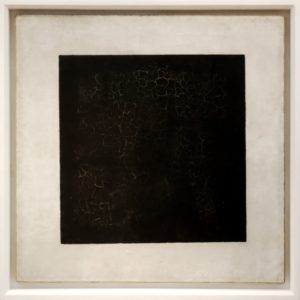
Kazimir Malevich – Black Square (1915)

Though formulated later, this is the kind of theorising that helps partially to explain works like Malevich’s Black Square (1st version 1915). Un-controversially considered a masterpiece – and one that I myself like a lot – it nevertheless seems to me a work that gains enormously from some kind of context, even if all that context is, is the knowledge that it is in fact a painting by an artist.  ‘Left to itself’, without any associations, if encountered ‘cold’, especially if it wasn’t in a gallery, it might just as easily not be ‘art’ at all. And while that isn’t a bad thing, a random black square encountered in one’s daily life doesn’t – depending of course on the individual who encounters it – have the intensity or pregnant quality that one can (repeat of previous caveat) feel standing in front of Malevich’s ‘Black Square’. But what Malevich does in his statement is to take the artist out of the art and anthropomorphise the art itself (“…it wants to have…”). This seems to me to negate – not unintentionally – what is meant by art at all. For myself, I prefer the German Expressionist Karl Schmidt-Rottluff’s statement which, while it doesn’t even slightly contradict the idea of purely abstract art, puts the artist at its centre, rather than treating art as a kind of self-creating phenomenon:

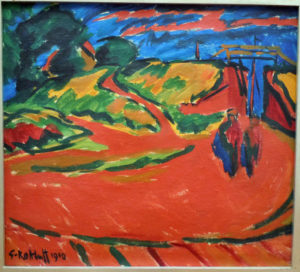
Karl Schmidt-Rottluff, Landscape (1910)

“I know of no new ‘programme’…. Only that art is forever manifesting itself in new forms, since there are forever new personalities – its essence can never alter, I believe. Perhaps I am wrong. But, speaking for myself, I know that I have no programme, only the unaccountable longing to grasp what I see and feel, and to find the purest means of expression for it.”

Karl Schmidt-Rottluff in Kunst und Kunstler (1914) quoted Wolf-Dieter Dube, The Expressionists, p.21 (T&H 1972, transl. Mary Whittall)

If a painting hangs in a forest…

The three key factors here (for me) are creator-work-recipient. If the artists (Schmidt-Rottluff’s ‘personalities’) are trying to communicate something specific to the recipient with their work, then they either succeed or they don’t. If the artist doesn’t succeed in communicating what they intended to communicate – or if they aren’t thinking of the ‘end user’ at all, and are expressing their own feelings/ideas purely for their own reasons – they may (and probably will) still transmit something of themselves; a personality, an emotion or group of emotions, a mood or idea. But although in either case the work may be imbued with that power, it only becomes power when someone else is there to experience and/or interact with it. In material terms, the great masterpieces of painting, be it the Mona Lisa (oil paint on wood), or the Black Square (oil paint on linen) have little more intrinsic ‘value’ than a few tubes of oil paint or a piece of wood or linen. After the lights go out and the visitors go home, those paintings basically cease to exist as art.  The alchemy that takes place when art finds an audience is what makes it art; at least, so it seems to me.

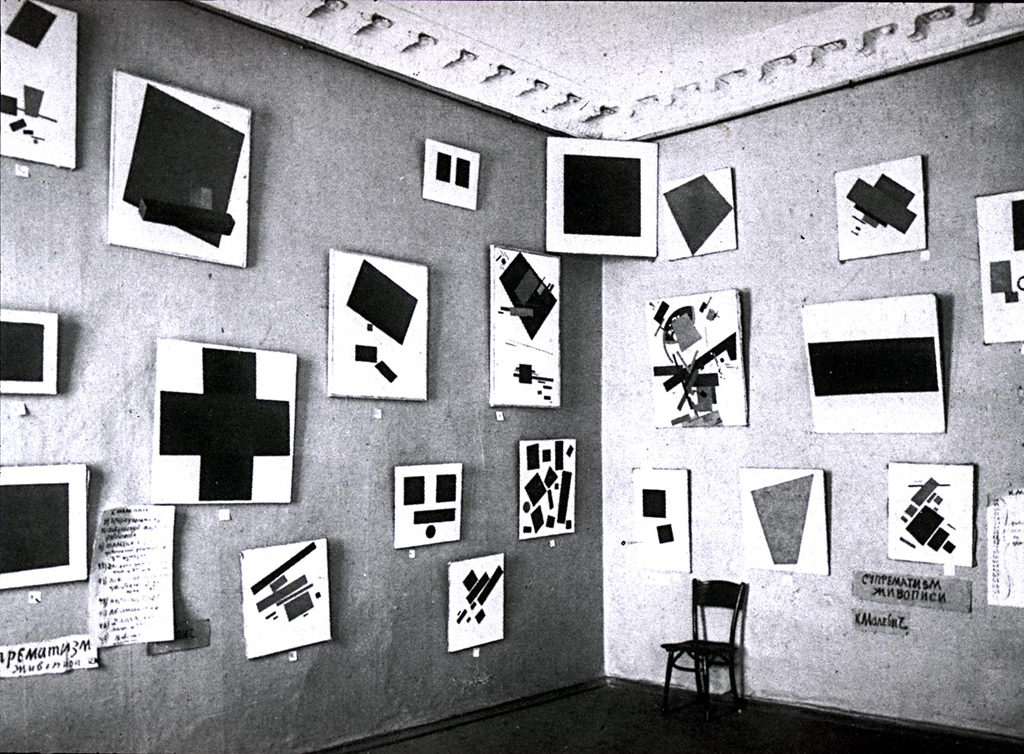
Malevich’s paintings at the 0,10 exhibition, Petrograd 1915. Black Square hangs where traditionally a religious icon would be displayed

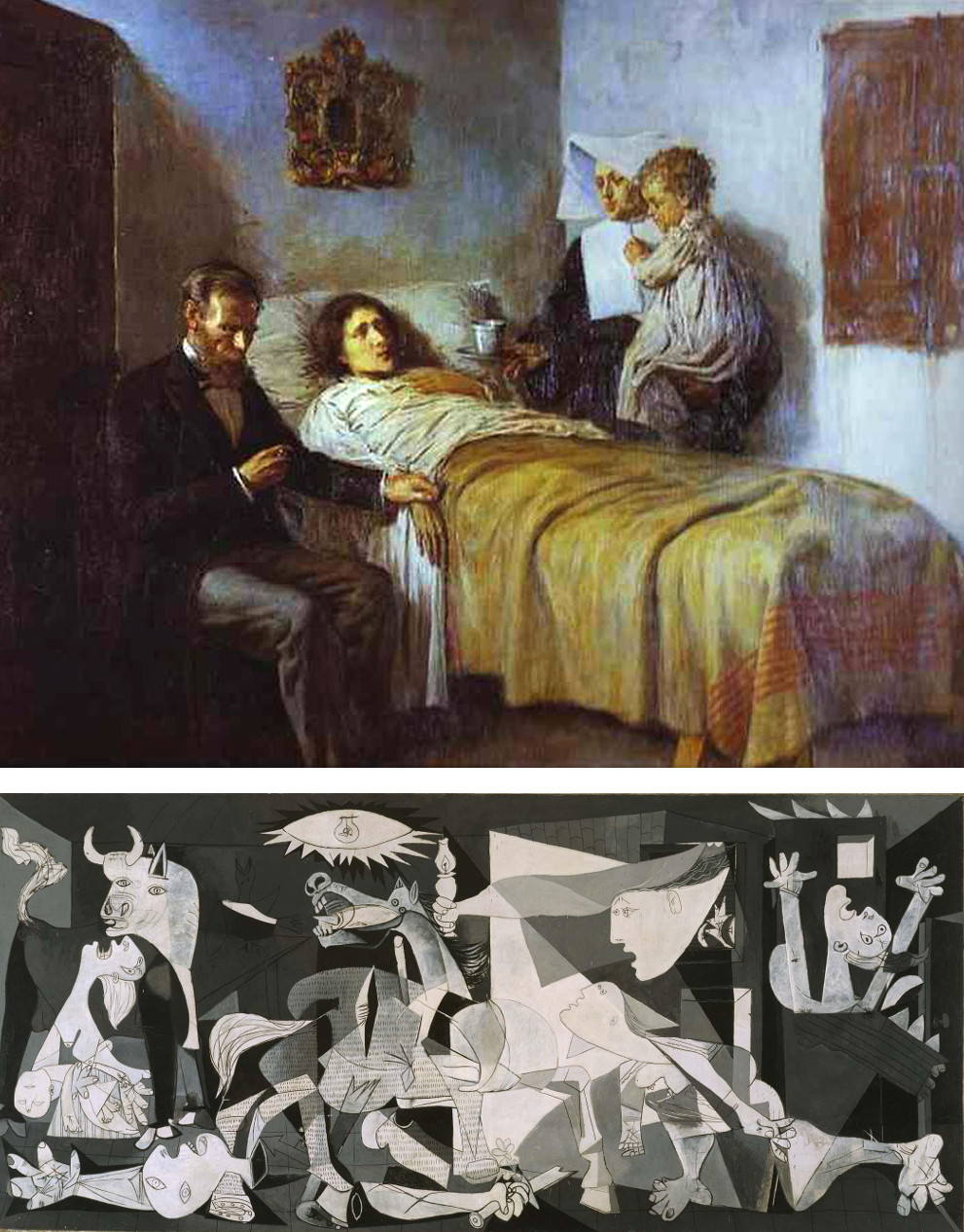
So can there be ‘good’ or ‘bad’ art? Short answer; intuition says yes, but experience says no. Alongside the disintegration of traditional academic rules, there has been the growth and persistence of the myth that, in order to break the rules of art, you must first understand and adhere to the rules. This idea has been strengthened by the fact that some of the iconic figures of modern art, like Picasso and Dali, have been immensely talented by the traditional, renaissance standards of art and could easily have made a career in academic painting; but so what? Would Guernica, looking exactly as it does, be a lesser work of art if it was the only painting Picasso had ever done, or if his immature works had been bland and unimpressive?

Top: Pablo Picasso – Science & Charity (1897)
Bottom – Pablo Picasso – Guernica (1937)

Separating personal, aesthetic judgements of good and bad from objective judgements is almost impossible, A strong argument could be made for either one of the above images being ‘better’ than the other, especially since the emotional impact is entirely subjective. And separating these kinds of aesthetic judgements from moral ones can become even more complicated – can a work of art that is an expression of something ‘bad’ be good? If for example we discovered that Picasso was celebrating rather than mourning/protesting the slaughter and destruction at Guernica, would the painting be as good? And what does ‘good’ even mean in that sentence anyway? The idea that (for instance) a painting, or a song is “bad” is essentially meaningless, despite the fact that millions of paintings and songs are clearly very bad. They can never be demonstrably bad because, as Hamlet says, (and even the relatively short history of pop music proves) “there is nothing either good or bad, but thinking makes it so.”  Even the most derivative, tuneless, unimaginative, moronic or amateurish song can and will be loved by someone, or many someones. And beyond people liking it, how can the quality of something like art truly be gauged? Yes, ‘liking’ can be a complex thing and is not the same as ‘admiring’ and yes, there are people with knowledge and expertise and highly developed critical faculties and so forth; but their opinion can no more prove a work of art is good than a restaurant critic can prove that a Michelin-starred chef’s finest creation tastes better than a Big Mac.

Despite the ‘golden ratio’ of the ancients, Hogarth’s ‘line of beauty’ and the Turner Prize, despite Grammys and Brits and Eurovision Song Contests, there is no logical ‘2 + 2 = 4’ type equation which can prove that “4” equals a good work of art. In architecture at least, a building either works as a building (ie it stands up and people can go inside) or it doesn’t, but even then, it would probably be easier to ‘prove’ that your local supermarket is logically ‘better’ as a building than Chartres Cathedral, rather than vice versa. But obviously (unless you are very lucky) it isn’t better than Chartres Cathedral. It feels too trite and easy to say ‘art is only as good or bad as an individual’s opinion of it’, but I can’t really do any better than that. You can’t make someone like something by telling them it’s good, however convincing your argument may be to you.

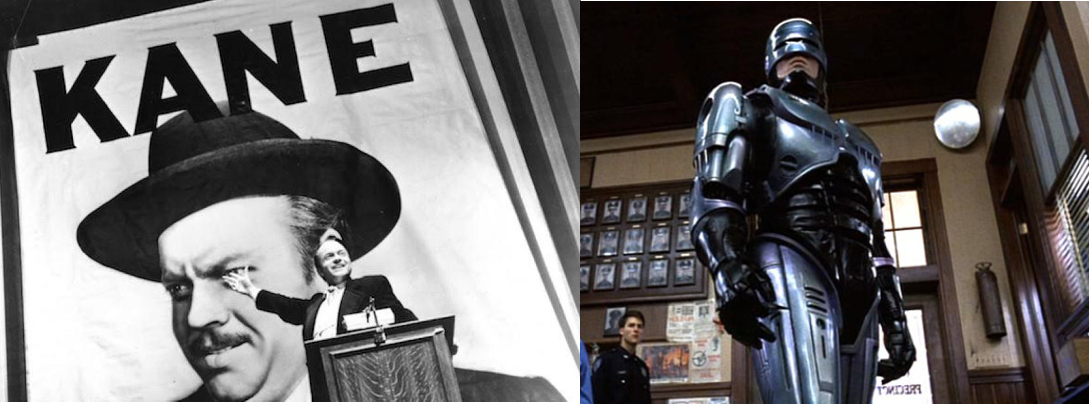
I also don’t think (though I am less convinced about this) there are good or bad reasons for liking a work of art, a song or a book, although there are certainly different levels of engagement. These are still subjective though; I like Citizen Kane but I love Robocop. Do I think Robocop is therefore the better film? Absolutely not. In the western world there is a kind of agreed pantheon of ‘great art’, codified by the way in which art history, English literature, cinema et al are taught in institutions and, at the lower end of the scale in books and websites of the corny ‘1000 albums/films you must hear/see before you die’ type, but in practice everybody constructs their own pantheon, with the ‘official’ ones being little more than a vague guide. I know that Robocop wouldn’t exist in the same form as it does without the innovations of Citizen Kane, but that doesn’t change the way I feel about either film. In reality, the only way to gauge (for example) the “greatest album ever recorded” is to have a public vote without offering a list of previously selected albums to choose from and then see who ‘wins’ – and I am sure I still wouldn’t agree with it.

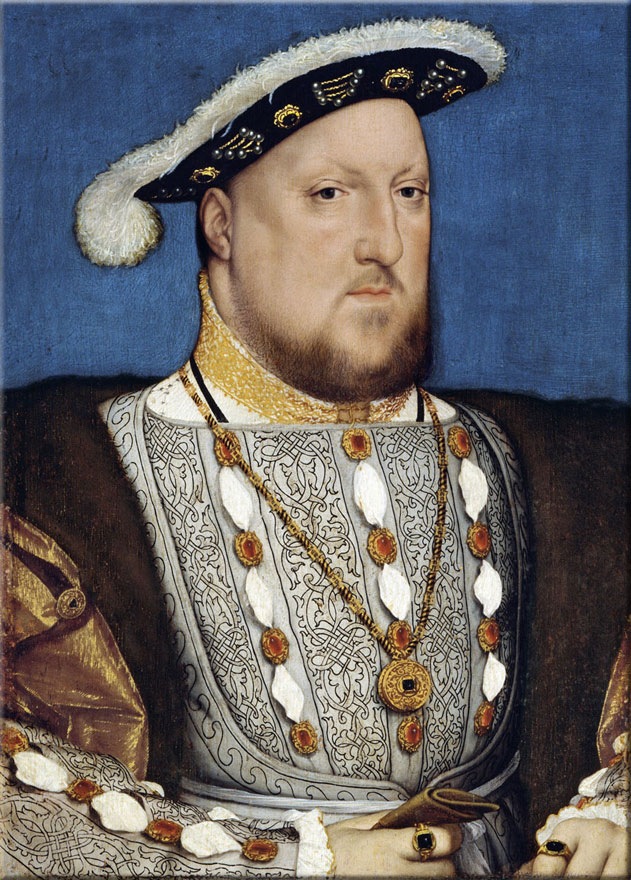
Hans Holbein the Younger; Henry VIII (c.1537)

Over the years, it has often been considered that the ‘correct’ critical attitude is to remove sentimentality from judgements on the arts. That is one way – judging pictures on their composition, harmony etc, ignoring subject altogether, evaluating music on its structure, technical skill etc – but it is sometimes almost impossible to do. And really, thinking again of both the emotional satisfaction people get from songs, films, pictures they love, and the example of Malevich’s Black Square, is it even desirable to do so? Thinking of Black Square – to judge a work which has so much context; theoretical, spiritual, cultural and emotional – by the sum of its basic physical attributes is reductive, as well as boring. Likewise, a great portrait in no way relies on the viewer knowing anything about the sitter, but even so – is Holbein’s great Henry VIII (1537) more interesting and engaging as flat masses of colour laid out in a particular, intricate design on a two-dimensional surface, or as the impression and interpretation of one human being through the eyes, mind and skill of another? The answer for me is the latter, which is really both, since the technical aspects of the first option are anyway incorporated in the second.

Pogo and the Black Square

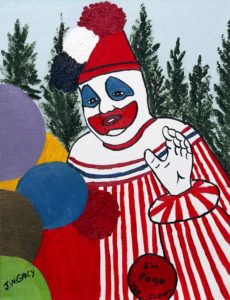
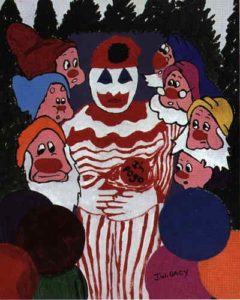
A debate that rears its head fairly often – and I guess will increasingly do so as information about everything becomes more readily available – is whether ‘bad’ people (or just bad people) can make good art. Unlike art, and despite the murkiness of morality (influenced as it is by essentially amoral and anyway changeable concepts like tradition, religion and culture) there are some people that we can probably agree are bad, or at the very least, ‘not good’. Here’s an uncontroversial opinion; John Wayne Gacy, the ‘killer clown’, rapist and murderer of around 33 young people, was – even if he was at the mercy of his own personality disorder – a bad person. He also made something that is as close to being ‘bad art’ as anything I can think of. The fact that his paintings are collected by people and have sold for serious sums of money has nothing to do with their quality as art and everything to do with their associations. You could of course say much the same about the Black Square. And if the imaginary passerby who unpreparedly encountered the Black Square also encountered one of Gacy’s paintings, how would the experience differ?

John Wayne Gacy – Pogo the Clown

Firstly, unlike the Black Square they would know immediately that Pogo the Clown was a painting made by a human being, and, if from a western background, they would probably recognise the subject matter. Because of this, Gacy is both at an advantage and disadvantage; an advantage because, no matter how the viewer feels about clowns, they have immediate ‘access’ to the painting – ‘I know what that is’. Disadvantage, because while the black square is a black square and therefore looks like a black square, Gacy’s clowns, portraits, skulls etc are – by the standards that most people judge art by – pretty amateurish. He wasn’t accomplished enough as an artist (I don’t mean just in a technical way) to communicate anything very deliberately. He wanted his paintings to bring joy into peoples’ lives; which seems unlikely, unless said people are serial killer fetishists or love clowns indiscriminately, so what the viewer is left with are essentially just his obsessions – or at least the ones he could express to his own satisfaction through his art.

Going back to my highly dubious creator-work-recipient idea of art, the creator, Gacy was (or said he was) trying to do something specific – to create bright and happy pictures to bring joy to the recipient. Whether he succeeded in this aim, regardless of who he was, depends on how one responds to childlike but sometimes enigmatic pictures of clowns. What he definitely did do was to transmit something of himself; a clear-cut but deeply alienated/alienating vision of the world; actually, without a world. His pictures don’t as one might expect, depict a simplified Norman Rockwell America, with the sun in the sky and a clown in the garden, but essentially just the clown; mostly in fact Pogo the clown, Gacy’s own alter ego, sometimes with an extremely cursory, but telling hint of a setting. Not a circus, or the suburbia of the childrens’ parties he haunted, but a hint of a dark, fairytale forest (the seven dwarfs appear in a particularly odd picture). These are clowns in the wild. The term ‘outsider art’ could have been coined for Gacy’s paintings. The other often-used term, ‘naïve art’ seems fleetingly appropriate, until one considers pictures like his paintings of Charles Manson, or even more so, of Tim Curry’s Pennywise from the TV adaptation of Stephen King’s IT. Gacy may not have been a good painter, he may have been to all intents and purposes insane, but he was not naïve; he knew that he belonged to a pantheon of famous murderers, that he was the original killer clown, and he was flattered by the association.
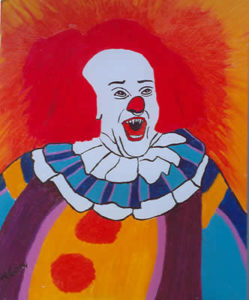
John Wayne Gacy – Pennywise the Clown (1993)

But Gacy was chosen as an deliberately extreme example; even more extreme would be Hitler. Hitler’s serviceable but bland and slightly lifeless paintings are also highly collectable, despite lacking even the visceral ‘disturbed’ quality of Gacy’s. Whereas the innocent buyer might just be attracted to Gacy’s clowns for their kitsch, weird, outsider quality, Hitler’s works are best suited for what they were meant to be – postcards, unambitious souvenirs, illustrations. The lack of frisson they have as images is an indicator that the reasons people have for buying them have little to do with the pictures themselves. For, hopefully, a variety of reasons, these people are not buying ‘art’ at all, they are buying history.

The art didn’t abuse…

 The world of actual ‘high’ art also has its fair share of murderers, rapists and so forth, and the question of whether their lives and actions invalidate their work is never really answerable. Apart from anything else, what about the legions of artists, musicians, writers whose private lives and opinions we know little or nothing about? Or artists like Andrea del Castagno, known for centuries as a murderer because of a mistake (whether malicious or not we cannot know) in Giorgio Vasari’s biography of him? At this distance of time it doesn’t really matter, even when talking about a definite murderer like Caravaggio. We don’t expect historical figures to have views, opinions and beliefs that we would find acceptable in the 21st century, although people of the 16th century certainly felt at least as strongly about murder as we do now.

When we get closer to our own time, things become more complicated. For me, it’s easy to disregard the achievements of, say Eric Gill*, because even without the knowledge of his child (and animal) abuse, his work isn’t really my cup of tea; graceful and stylish yes, but, given that he was a contemporary of people like Jacob Epstein and Constantin Brâncuși, also a bit un-dynamic, insipidly faux-modern and backwards-looking. And then, adding the context, knowing about Gill’s religious beliefs, a bit churchy, and then, knowing about his abuse of his daughters, hypocritically pious too; it leaves a bad taste. Which doesn’t stop people from loving it, and nor should it; the art didn’t abuse anyone.  (This short article by Waldemar Januszczak is very good on Gill I think).

Left:Jacob Epstein – Rock Drill (1913)
Right: Eric Gill – Stations of the Cross (1913-18)

But one of the points about Gill is that even his apologists probably wouldn’t, these days, hold an exhibition of Gill the artist without at least acknowledging the problems with Gill the man. More my cup of tea, and more relevant to now, the Scottish National Gallery of Modern Art will be hosting an exhibition of Emil Nolde’s work this summer. German Expressionism (or in Nolde’s case, German-Danish Expressionism) is one of the areas of art I love the most and, although Nolde is not one of my favourite artists I will be excited to see his work. But. Emil Nolde was a member of the Nazi Party. That of course doesn’t change his paintings, but it makes them – and the exhibition – problematic for several reasons. The main reason for me, is that, in its pre-exhibition publicity at least, the NGS makes no mention of his Nazism whatsoever. That might still be okay, I suppose, if they didn’t include this little snippet in their bio:

“This exhibition…covers Nolde’s complete career, from his early atmospheric paintings of his homeland right through to the intensely coloured, so-called ‘unpainted paintings’, works done on small pieces of paper during the Third Reich, when Nolde was branded a ‘degenerate’ artist and forbidden to work as an artist.”

Elfriede Lohse-Wächtler – self portrait (c.1930)

There is a certain amount of schadenfreude in this detail. But there is also the ghost of fellow Expressionist Elfriede Lohse-Wächtler, murdered at Sonnenstein castle in 1940 as part of a government programme to eliminate the mentally ill, and of German-Jewish painters like Charlotte Salomon and the surrealist Felix Nussbaum, murdered in Auschwitz in 1943 and 44 respectively. As a member of the Nazi Party (and an enthusiastic one), Nolde was to an extent complicit in their deaths. For Nolde, ‘entartete kunst’, a policy that he didn’t necessarily oppose in general,  meant he had to paint unobtrusively, in private and couldn’t exhibit his work until after the war.  For those artists it meant a death sentence, for many others it meant harassment or exile. A more wide-ranging exhibition in which Nolde’s paintings bridge the gap between the work of his fellow ‘degenerates’ including perhaps some of Nussman’s Auschwitz paintings, and the art of Nazi-approved painters like Adolf Ziegler or Conrad Hommel would be a strange and indigestible (and chronologically back to front) thing perhaps, but I think that failing that kind of an overview we, at the very least, shouldn’t be encouraged to feel sorry for Nolde that he had to work in secret because of the actions of the government he supported.

Felix Nussbaum – Self Portrait with Jewish Identity Card (1943)

Is Nolde’s art then ‘Nazi art’? No, or at least not in the same way that state-sponsored art under Hitler was. It isn’t didactic, realist or heroic. Nolde saw expressionism and therefore his own painting as definitively German, and was deeply moved by colour, which he equated with emotion. The works of his which I like best (which, maybe coincidentally long pre-date even the idea of the Third Reich and belong to the period when he had recently been in contact with the younger artists of Die Brücke) translate that emotion into intense and visionary land- and seascapes. These pictures feel utterly free of the ideology of Nazism – but that said, even under Nazi rule, the German ideal of the nude Freikörperkultur (Free Body Culture) and ‘oneness with nature’ was respectable in a way that was unthinkable in the UK, so the apparent freedom of the painting need not be reflected in the kind

Emil Nolde – Autumn Sea (1911)

of egalitarian ideals that artists like Ernst Ludwig Kirchner expressed in their art. If expressionism can be seen as the ultimate kind of subjective painting; where the aim is ultimately to make the viewer feel what the artist feels by filtering a subject through the distorting lens of their individual perception, then Nolde’s paintings show the world as it was felt by someone who could write, in 1938;

For as long as I’ve worked as an artist I have publicly battled against the foreign infiltration of German art, against the dirty dealings on the art market and the disproportionately predominant Jewish influence everywhere in the arts. Now if that is the case, and I have been attacked and persecuted now for years by the side I championed and fought for, then there must be misunderstandings in need of clarification.” Well, isn’t that just tragic.

Emil Nolde – Tropical Sun (1915)

As to the question of how easy it is to like Nolde’s ‘unpainted pictures’, I’ll have to wait for the exhibition.

How do you solve a problem like Morrissey (it solves itself)

The Nolde exhibition is only one reason that these issues have been on my mind recently; the other, more personal one is Morrissey. Now, Morrissey is clearly not John Wayne Gacy, or Adolf Hitler, or even Emil Nolde. Nor is he, unlike Varg Vikernes, whose music I also like some of, a murderer or actual Nazi. But I never felt let down by any of those people; with Varg I knew about him before I ever heard his music, I have no emotional investment in it, whereas Morrissey’s recent utterances seem completely at odds with the worldview of his earlier music; which is not his problem, or his fault. I simply interpreted what I wanted to from the art he created, just as it’s possible to look at Emil Nolde’s work and see beauty and freedom there, even if that freedom and beauty is diametrically opposed to the views he professed in his non-artistic life.

I first listened to The Smiths and Morrissey when I was 17, although I was aware of them/him years before. Of all the music I loved as a teenager I think Morrissey’s was the music I identified with the most. I loved The Cure and Joy Division and The Fall probably as much, but their music was – I suppose because it’s less lyrically straightforward – less personal to me. To this day, Morrissey’s lyrics (up to the mid 90s at least) are engraved on my memory and I certainly know more of his lyrics by heart than any other band or artist’s. It’s been very clear for a while now (and murkily apparent for much, much longer) what kind of person, politically, Morrissey is.  And that’s fair enough; he is entitled to his views, even if I think he’s wrong and don’t feel inclined to fund him any further (I still think he is more complex than his worst detractors would say, but so what?)

It’s not really any use to say as some people do, that there are artists out there making great work who don’t have extreme right wing views. Obviously that’s true; but unless their art speaks to you personally, why would you care? And most of the time, one has no idea what opinions or beliefs of an artist are anyway, unless they specifically say so. To me personally, art that is explicitly political/religious or politically/religiously-motivated rarely connects on a very deep level; and to paraphrase Cyndi again, it’s not real unless I feel it. But I always felt The Smiths’ music, deeply, and much of Morrissey’s solo stuff too, though it is less critically acclaimed. His recent/latest statements in the press just don’t seem like the words of someone who could write “It’s so easy to laugh/It’s so easy to hate/It takes strength to be gentle and kind”, but that’s people for you.

Initially, several controversies ago, I decided that although I wouldn’t actively avoid Morrissey and his works, I would no longer buy them in a way which would  financially benefit him; mean and possibly unfair I know, but that’s people for you too. I am not someone who is going to burn records, CDs and books, or even throw/give them away in disgust, if they have ever meant anything to me. But then came the latest and most crass Morrissey interview (so far) and I got to the point where I’d actually be kind of embarrassed to buy anything Morrissey-related at all. It’s not so much (as one example out of many) the factual inaccuracy of statements like “Hitler was left-wing” – people have been saying moronic things like that (Hitler was a Zionist etc etc etc) for many years. It’s the fact that, as with those who claim the death toll in the holocaust has been exaggerated, people like Morrissey seem to think that this amazing revelation is in any way relevant to the things his regime did and how one should feel about it. As with (irony!) people who taunt vegetarians with ‘Hitler was a vegetarian’, it spectacularly misses the point; Hitler is not famous because he’s a vegetarian, any more than he’s famous for his ‘left-wing’ views. And you know that, so don’t be so stupid.

But anyway, in the end my fears that the unhappy soundtrack to my youth/life would be tainted only came half true. When Morrissey songs popped up in a shuffle I found that, without any feeling of revulsion, drama or anguish, I just didn’t want to hear them anymore. The connection seems to be gone, without regret and possibly with the relief that I was never – despite the fact that I even, unrepentantly,  like his autobiography – one of those Morrissey obsessives. Maybe one day my love of his music will come back, maybe not. As Cyndi says, it’s not real if you don’t feel it and, right now I just don’t, so it isn’t. Ho hum.