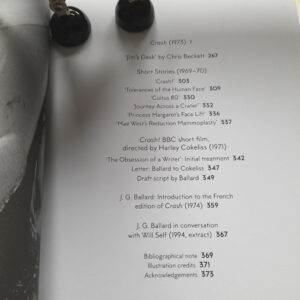

real horrorshow

Then there was the close-up gulliver of this beaten-up starry veck, and the krovvy flowed beautiful red. It’s funny how the colours of the like real world only seem really real when you viddy them on the screen.
Now all the time I was watching this I was beginning to get very aware of like not feeling all that well… But I tried to forget this, concentrating on the next film which came on at once, my brothers, without any break at all. This time the film jumped right away on a young devotchka who was being given the old in-out by first one malchick then another then another then another, she creeching away very gromky through the speakers and very like pathetic and tragic music going on at the same time. This was real, very real…
What it was now was the starry 1939-45 War again and it was a very blobby and liny and crackly film you could viddy had been made by the Germans. It opened with German eagles and the Nazi flag with that like crooked cross that all malchicks at school love to draw… Then you were allowed to viddy lewdies being shot against walls, officers giving the orders, and also horrible nagoy plots left lying in gutters, all like cages of bare ribs and white thin nogas. Then there were lewdies being dragged off creeching… Then I noticed, in all my pain and sickness, what music it was that like crackled and boomed on the sound-track, and it was Ludwig van, the last movement of the Fifth Symphony, and I creeched like bezoomny.”  Anthony Burgess – A Clockwork Orange (1962), Penguin Modern Classics, p.70-78

In the twenty or so minutes before I had breakfast this morning, I looked at my phone and saw an armour-wearing police officer in Brussels attempt to assault a peaceful protester who was walking away from him and then saw the officer be knocked out by a less peaceful protester and left lying in the street, I saw a photograph of dozens of dead protesters in Iran in body bags, read a warning (or rumour?) that prisons in Iran are overwhelmed and so the authorities are releasing prisoners after injecting them with some kind of potassium-based agent which causes them to die within 48 hours of their release, I saw a really amazing 1984 live performance by John Cale that I’d never come across before, I saw a moronic incel-type video where a grown man was ‘educating’ young people (you’d assume men, but I think its intended audience was actually young girls) about the “Madonna-Whore complex,” though the presenter either didn’t realise or preferred not to acknowledge that Freud coined the term to describe a psychological disfunction and not to describe the natural state of humankind, I saw a funny old clip of the Young Ones, I saw an artist showing off a powerful and moving new painting, while explaining that their work was being stolen by AI companies, I read horrific details of abuse from the Epstein files, and heard so far unfounded claims about outlandishly horrific things that are imagined to be in the Epstein files, I saw/heard two outstanding actors being subjected to inadvertent racist abuse at the BAFTA awards, I saw old photos of atrocities in the Belgian Congo, a funny clip of Alan Partridge performing Kate Bush’s “Wuthering Heights”, I saw a short video about how Emerald Fennell’s Wuthering Heights film is not like the book and that’s okay and another video about how Emerald Fennell’s Wuthering Heights whitewashes Heathcliff’s ethnicity and isn’t okay, I saw an alarming report about how AI will soon cause a global water shortage, I saw a great old interview clip with the artist Francis Bacon, an AI video purporting to be the sex-trafficker Ghislaine Maxwell enjoying her freedom, a real video of dead children in Gaza, I read details from the Epstein files of a successful plot to replace the British Prime Minister Theresa May, I saw old (but less old than you’d hope) postcards showing lynchings in the Southern United States with onlookers smiling at the camera while a corpse hangs in front of them, I saw a nice old clip of Slowdive performing “Catch the Breeze” in the early 90s, saw horrendous photos of a dead Iranian child killed by the regime there, read an explanation for the slow-of-thinking of why carpet bombing Iran wouldn’t actually help the Iranian people, saw a video of the latest Russian assault on Ukraine on the fourth anniversary of Russia’s invasion of that country, read an ‘explanation’ of why the whole Ukraine war is Fake News, saw a video about how the whole Royal Family is culpable for Prince Andrew’s predatory behaviour, another video about how Andrew’s arrest is an overreaction, footage from this year of a peaceful protester being shot by ICE agents in the USA, a German metal musician telling the crowd at Wacken that his band opposes racism, homophobia and right-wing extremism, heard a prominent extreme right wing politician in the UK stating that only his party can protect the UK from right-wing extremists, saw someone suggest that AI videos of fake sexual abuse might actually be helpful in reducing real sexual abuse, read an explanation of why AI altered videos of women and children is obviously harmful, saw some incredible art by artists who were complaining about censorship on social media sites, saw but didn’t take in lots of stuff about sports, watched a great old clip of Captain Beefheart and his Magic Band, scrolled past what seemed to be disinterested videos about how great AI is, but which were actually advertisements for AI. All of this was of  all of course punctuated by many, many commercials that I didn’t take in enough to remember. It was real horrorshow.
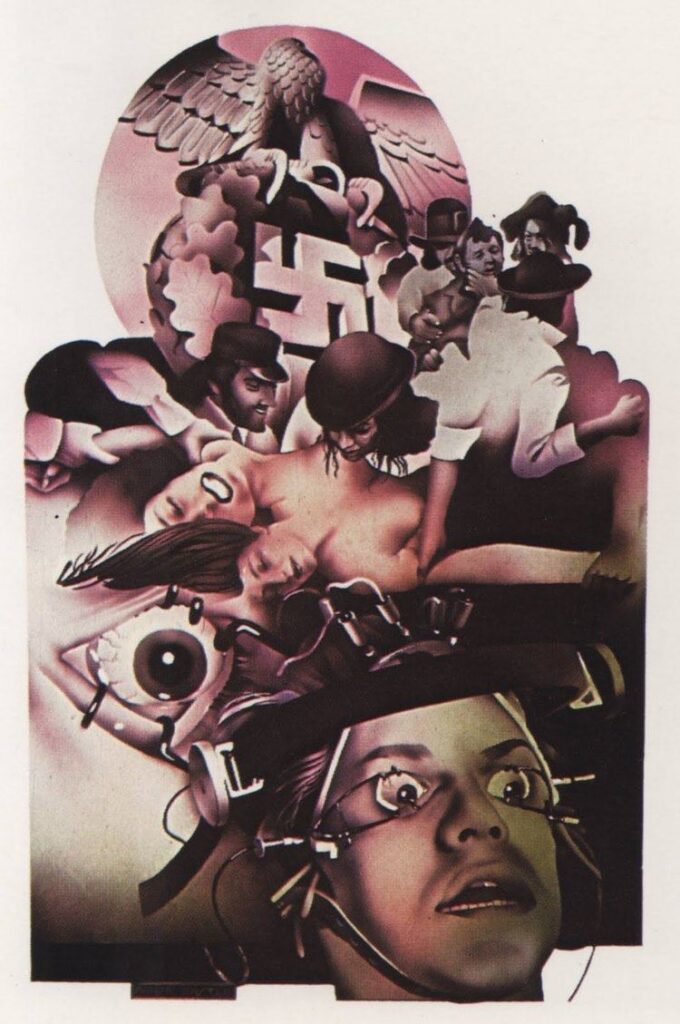
One of artist Philip Castle’s promotional paintings for Kubrick’s A Clockwork Orange (1970)

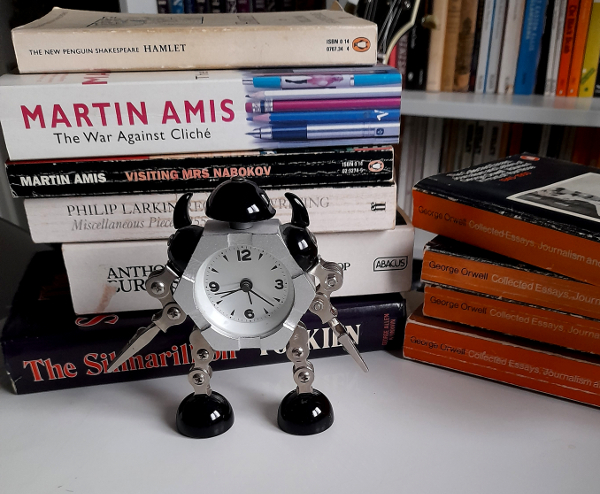
Unlike Anthony Burgess’s Alex, who is being subjected to the fictional Ludovico Technique, a kind of aversion therapy, I was voluntarily exposing myself to this barrage of beauty and horror, and also unlike him I was free to stop it whenever I wanted to, which doesn’t of course prevent one’s brain from processing it – you can’t unsee a picture any more than you can un-ring a bell. A Clockwork Orange was written at the beginning of the 1960s, at the tail end of the 1950s paranoia about the way the media – meaning in those days mostly cinema, magazines and pop music – were fuelling juvenile delinquency. That paranoia exacerbated the generation gap which had already been made more prominent by the dividing line of World War Two. A reading of something like Hamlet suggests that there’s always been a generation gap, but it was in the 50s and 60s that it became a permanent, deliberate and indeed lucrative feature of western consumer culture.

In 1970, the year that Stanley Kubrick’s film of A Clockwork Orange was released, one of Burgess’s peers, JG Ballard wrote The Atrocity Exhibition. Nothing about social media in 2026 would have surprised Ballard. If A Clockwork Orange was partly the product of society’s fears about rock ‘n’ roll, beatnik culture youth violence and communism, The Atrocity Exhibition was incubating during a period of widespread concern that a generation of young people was growing up seeing unfiltered images of the horrific events of the Vietnam War, intercut with commercials and entertainment features as they ate their breakfast every morning.

JG Ballard’s experimental novel The Atrocity Exhibition

That was unprecedented – nearly everything is generally unprecedented it seems – and the fear was that, on the one hand these children would grow up inured to violence and horror and unable to differentiate between reality and entertainment, and on the other that their daily intake of atrocities was unconsciously being absorbed in a way that would eventually manifest itself as generational trauma. That was a natural concern at a time when it had only recently become acknowledged that World War One had left scars not just on those who survived it, but the whole of culture, and when the unprocessed horrors and consequences of World War Two were leading to a rise in neo-Nazism alongside a trivialisation of actual 1930s Nazism. Trauma begets trauma and trauma never ends, it seems, and that Vietnam experience has become the normal way of things in the social media age. The fact that some of the most powerful men in the world belong to that war-and-breakfast generation may or may not be relevant to where we are now.

So is my pre-breakfast bombardment a bad thing? Who knows, but it doesn’t seem like it could be a good thing. As Martin Amis wrote, when the (really quite tame) schlock horror movie Child’s Play 3 was being implicated in two different murder cases, “It’s nothing to boast about, but there is too much going on in my head for Chucky to gain much sway in there. Probably the worst that Chucky could do to me is to create an appetite to see more Chucky, or more things like Chucky.” He goes on to say that in the case of people already predisposed for whatever variety of reasons, to commit murder, “Chucky is unlikely to affect anything but the style of your subsequent atrocities.”* That seems right; the problem with seeing atrocities day in, day out isn’t that it wants to make normal people commit them. It is very depressing though. And the thought that my wearying daily experience might be – probably is – mirrored in the life of a deprived or abused child with nothing to look forward to but more deprivation and abuse is deeply unsettling.

*Martin Amis – The War Against Cliché (2001), p.17.
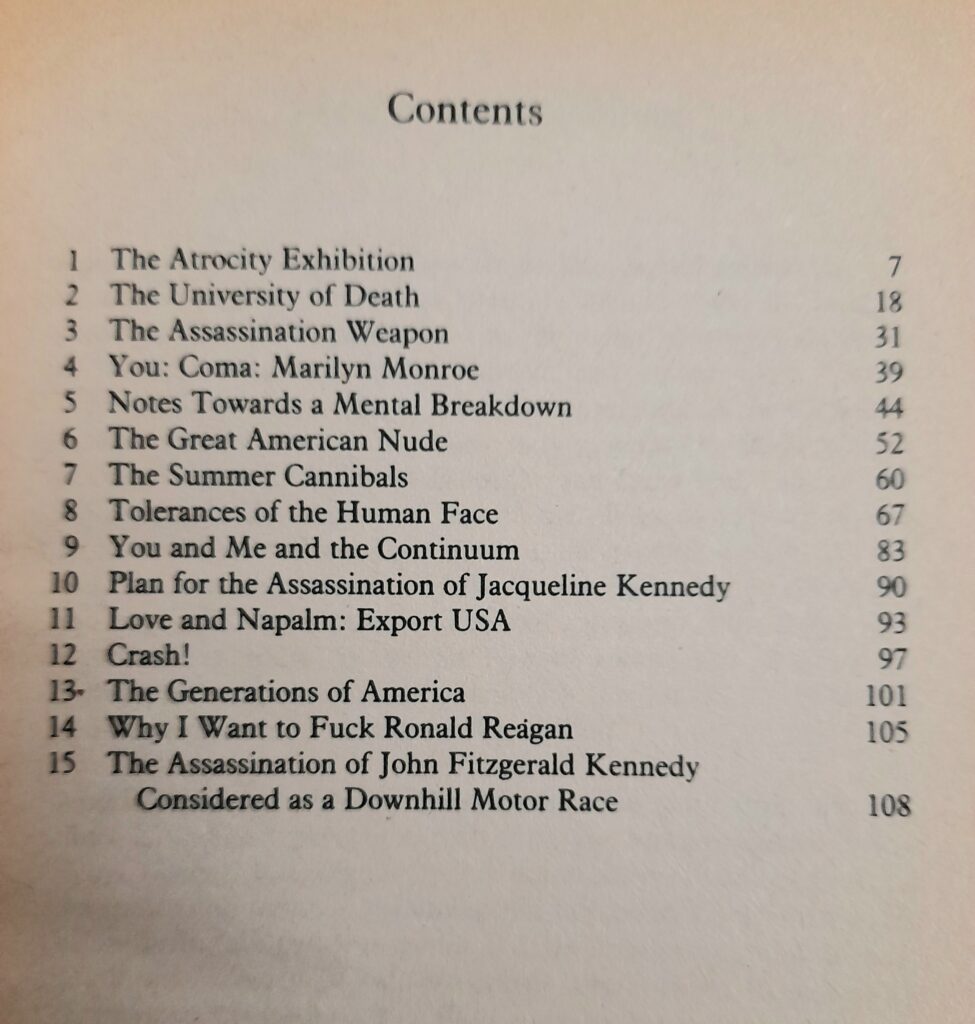
The Atrocity Exhibition contents page, the experience of scrolling through social media embodied in satirical poetry

So why do it? Partly conditioning I suppose; in my case my morning look at social media not doom-scrolling, though I’m as guilty as anyone of periods of that. In A Clockwork Orange, the presence of Beethoven’s music – the only thing that Alex uncomplicatedly loves – appearing in the films that make up his therapy is an unfortunate coincidence, but in my case the nice things – the songs, the interview and comedy clips are there because they are the kind of things I consciously search for and the algorithm that wants to keep me there therefore supplies more of them. And it fills the gaps with whatever people I follow are talking about – Iran, Gaza, copyright infringement – and whatever its owners want to push at any given moment. Which right now, seems to be right-wing politics, salacious conspiracy theories and AI.

It feels like there should be some conclusions to be drawn from all this, but I don’t know what they are; maybe it’s too soon. But it seems deeply ironic that something very close to what was envisioned sixty years ago as an extreme and inhumane form of aversion therapy should be willingly engaged in by millions of people as part of their daily routine. When Anthony Burgess gave his sociopathic but jovial teenage narrator the slang term real horrorshow to denote enthusiastic approval he knew what he was doing.
…and hello 2026

I intend to write something substantial for the site every month this year, but it’s nearly midnight on the 31st of January and nothing is finished for January, so here are some disparate notes and thoughts instead.

Despite the non-appearance of the big January post I’ve actually written quite a lot this January – 22, 546 words (not including these ones) in fact; that’s about half a novel, length-wise, but it was split between ten reviews, five articles of various types for my substack and, more unusually for me, a little bit of fiction.

In January I also enjoyed various things, so here are a few of them; I suppose you could think of them as recommendations, so the heading shall be…

Recommendations

my book of the month, why not?

I read several good books in January. One of them was Ramsey Campbell’s Scared Stiff, a collection of sex-themed short horror stories from the 80s. You may have come across some of my thoughts on Campbell before. The short version is; I want to like his work a little bit more than I generally do. He is I think the most critically acclaimed British horror author of his generation (unless you count Clive Barker, who was born just six years later but who seems to belong to a slightly younger generation. Maybe best to say that Campbell is the most acclaimed author of straightforward horror fiction of his generation, since at this point Barker’s reputation is based more on his imaginative/fantastical writing than his early horror work.) But anyway; Campbell is an acclaimed author and while I think that’s nice and I’m glad about it, more often than not I find there’s a surprisingly unremarked-on awkwardness to Campbell’s prose that mars it for me. Having said that, Scared Stiff included some of the best stories I’ve read by him and if it was a slightly mixed bag, it was a very enjoyable and genuinely chilling one, though I never really need to read the word ‘dwindled’ again.

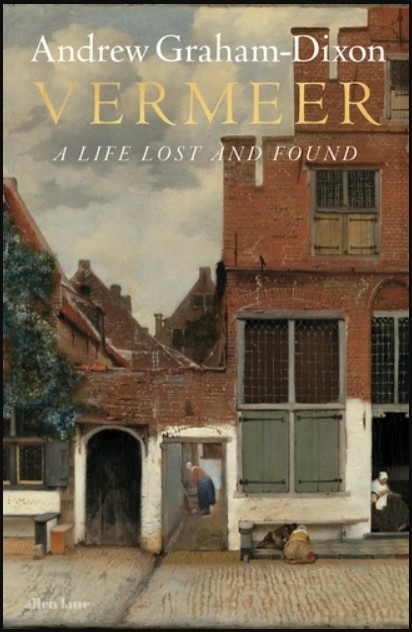
I also read and enjoyed (in translation, naturally) Monsieur Proust by Céleste Albaret, which was fascinating and enlightening and occasionally (not Madame Albaret’s fault) a little disappointing. I’m very glad to have read it even though a little part of me preferred the Marcel I had imagined from reading his work to the more mundane but also much more rounded and believable human being that came across in Monsieur Proust. Almost the exact opposite happened when I read Andrew Graham-Dixon’s revelatory biography Vermeer – a Life Lost and Found, in which the mysterious and opaque Vermeer of the imagination. As Jonathan Richman sang in No One Was Like Vermeer (2008):

Vermeer was eerie
Vermeer was strange
He had a more modern colour range
As if born in another age
Like maybe a hundred or so years ago

What’s this? A ghost in the gallery?
Great Scot! The Martians are here!
These strange little paintings next to the others
No-one was like Vermeer

Unexpectedly, to me at least, Andrew Graham-Dixon dispels much of the mystery, without undoing any of the magic; the Vermeer he describes is a man very specifically of his time and milieu, but ultimately to me that makes his particular kind of alchemy more rather than less extraordinary; maybe it’s just because I’m lacking in ‘negative capability,’ but for me knowing that the Girl With the Pearl Earring and the rest have a meaning and function that was highly specific to 17th century Delft, but which still communicate their human quality of warmth, empathy and connection down the ages is the miracle of art.

I also watched some good films this January, most recently, Jonathan Glazer’s The Zone of  Interest (2023), which I had seen before, but watched two nights in a row, utterly hypnotised by it, just like the first time. By now it’s already a cliché to use the phrase ‘the banality of evil’ – but it also feels slightly wrong. In a way it’s the banality of the characters itself, especially Hedwig and Rudolf Höss, brilliantly played by Sandra Hüller and Christian Friedel – but also their children and the assorted businessmen and soldiers – that is what’s evil about them. At first it seems that to Rudolf Auschwitz is just his job, and to Hedwig it’s just her husband’s job – which is bad enough. But the genius of the film is the way that Glazer undercuts their blasé attitude by showing that they do understand not just the reality but the implications of what’s going on in the camp and that it’s not some kind of inexplicable mass hysteria; Hedwig’s own mother, though presumably just as unthinkingly loyal to her homeland and its government as her daughter is almost immediately struck by the utter wrongness of Auschwitz; Rudolf and Hedwig get it too; they just don’t mind.

The feeling of being hypnotised by a film is a rare one for me, but coincidentally(?) I watched two of the very few others that have that effect on me this January too. I watched Gus Van Sant’s Elephant (2003) several times last year and then watched it twice in January too. The first time the feeling is all about the suspense of not knowing how events will unfold, but obviously that can’t be true when rewatching it. And yet for me it remains just as appallingly gripping and sad every time, The same is true in a very different way of Oliver Hirschbiegel’s 2004 film Der Untergang. I watched that in January too, only once, but for the third or fourth time in the past few years. Key to its hypnotic quality is the great Bruno Ganz, but also the brilliant pacing, editing and performances of the whole cast. It feels like a thriller, even though it’s mostly  people squabbling in a bunker.

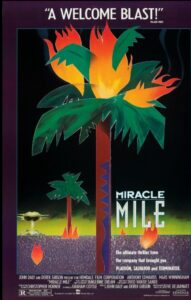
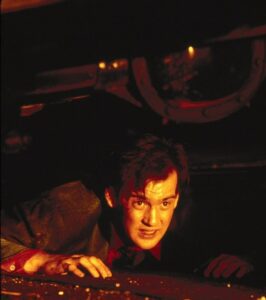
New to me though, was a film I’ve wanted to see since 1988 when I first read about it in (I’m fairly sure) FEAR magazine; a confusing memory because I clearly remember the picture of Anthony Edwards below (though in black and white), which is a still from the film. And I remember the  headline was ‘Miner Miracles‘ and part of the article related to Steve Miner. But as far as I can see, Steve Miner (director of the great Warlock (1989) has nothing whatever to do with Miracle Mile, which was written and directed by Steve De Jarnatt. So maybe it was a general film roundup that mentioned both Miracle Mile and Warlock, which was definitely promoted in/by FEAR.

Anthony Edwards in Miracle Mile

Anyway, I loved Miracle Mile and found it completely gripping and kind of sweet and heartbreaking and in a weird way nostalgic for the expected nuclear holocaust of my childhood. Partly it was nostalgic because it was like a cross between two different things from the 80s, both of which I love. Firstly, the kind of teen romance movie most associated with John Hughes (Pretty in Pink, Some Kind of Wonderful etc) and secondly Jimmy Murakami’s adaptation of Raymond Briggs’ cosily apocalyptic comicbook When the Wind Blows. I loved the glossy, 80s way it was filmed (especially the opening, idyllic shots of Miracle Mile itself) and its goofy humour and especially the two leads. I knew Anthony Edwards from a few things (though not his 80s work, oddly. I never liked and barely remember Revenge of the Nerds and I’ve never seen Top Gun) but I thought he was perfect in this; likeably dorky but also sincere – and I love Mare Winningham. She’ll always be Wendy from St Elmo’s Fire (1985 – one of my favourite 80s teen movies) to me, so it was strange at first, seeing her as cool-quirky rather than nerd-quirky. Anyway, loved it (and watched it three times). I’m glad/surprised the studio didn’t chicken out on the perfect ending. Oh. and it had the great Brian Thompson (Kabal from Doctor Mordrid) in a small but vital role; it couldn’t be more 80s and yet less typical of 80s Hollywood at the same time. Great Tangerine Dream soundtrack too.

Blot – but will it be as good as I remember?

Music-wise I heard a lot of things but especially liked a vast (101 track) compilation of bands associated with the legendary New York club CBGB, ranging from the obvious (Ramones, Blondie, Talking Heads, Patti Smith) to 70s oddballs like the Dictators and the Harlots of 42nd Street to classic 80s hardcore like Bad Brains and the early Beastie Boys. I’m cautiously excited about a reissue of Mactatus’s 1997 album Blot but haven’t gotten round to listening to it yet so don’t know if it’s retained it’s old potency. And I still haven’t listened to the new Ulver album, so there’s that.

Anyway; I’ll try to get at least one of those more substantial things finished and posted in February.

..

as the first quarter of the century draws to a close…

…it’s time for another annual roundup. Participating in end of year ‘best of’ lists is fun, but as my previous few ‘albums of the year’ features for this site (each probably more perfunctory than the last) and this essay on my substack illustrate, over time I’ve found the idea of the best [thing] of the year less and less relevant, not because the things aren’t good but because it doesn’t really matter that they came out this year. There’s a reasonable chance that I haven’t even heard my favourite album of last year, or of 2015 or of 1981 yet. My most listened-to artist of 2025 was probably Kevin Ayers, dead for over a decade now, and my most watched films and TV shows and most read books even more zeitgeist-resistant.

But here are a few things and thoughts anyway.  My favourite new albums of the year included several I reviewed for Spectrum Culture, including:

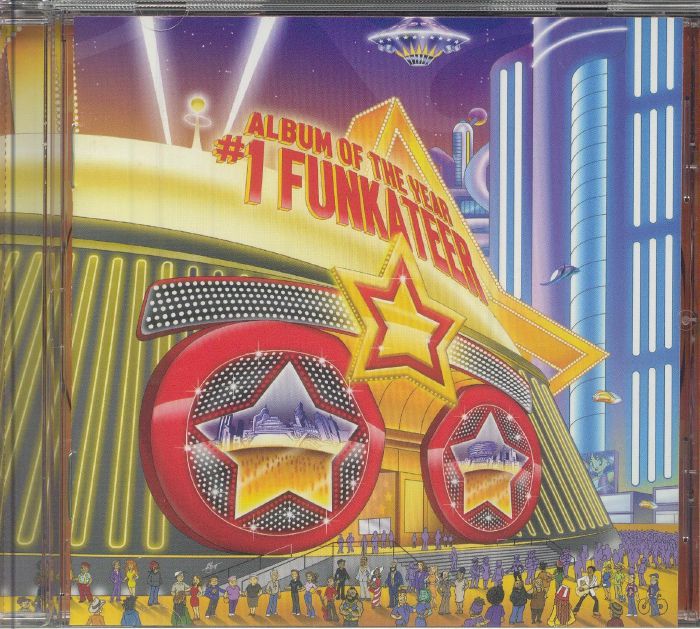
a cover as horrible as the album is pleasant

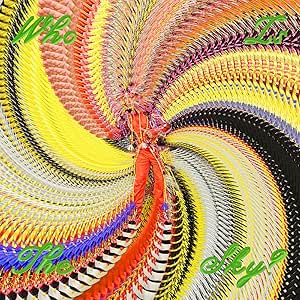
David Byrne’s Who is the Sky? More modest, more personal and more enjoyable to me than American Utopia, though I understand that it seems less ambitious and therefore less impressive in a way.


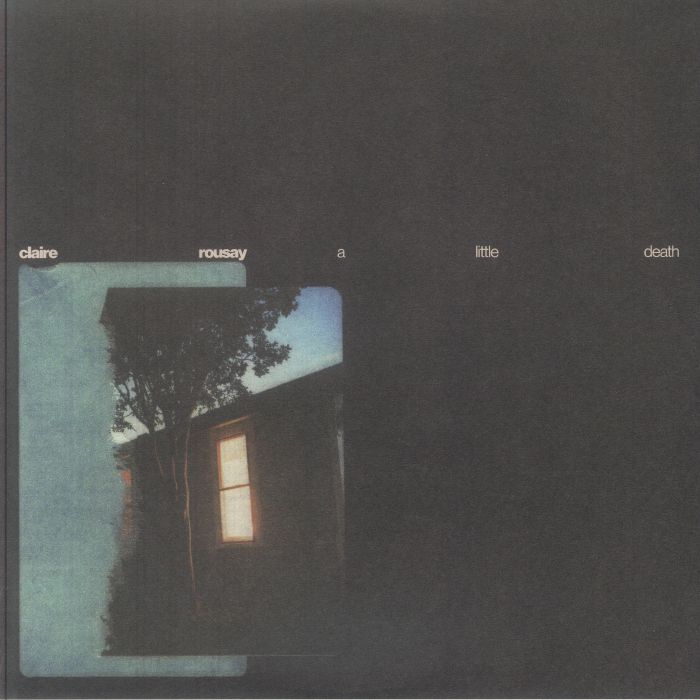
a suitably enigmatic cover

Claire Rousay – a little death – sometimes blurring the boundaries between music and just sound, I thought this was really arresting and intimate and moving but hard (as you see) to write about well.


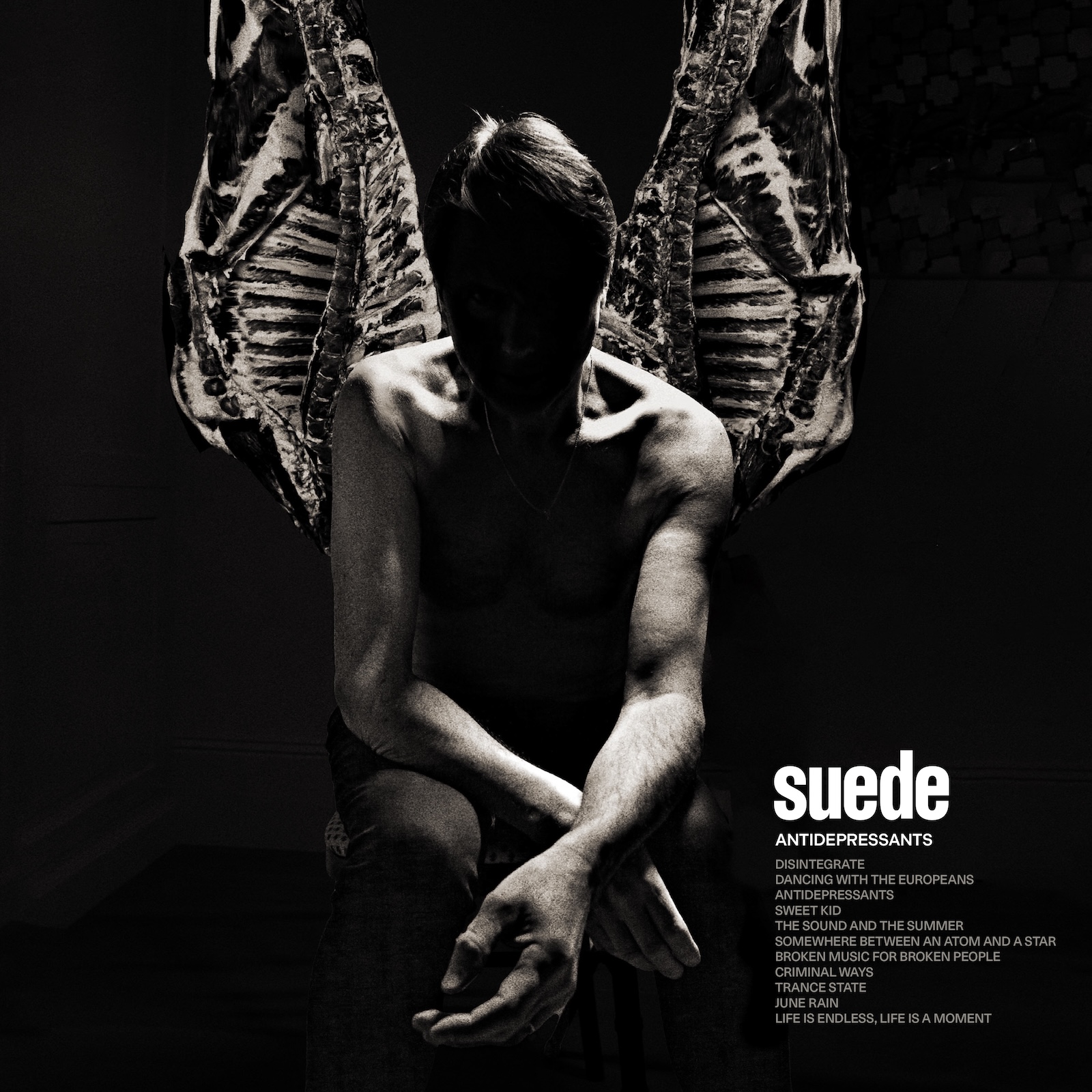
a perfectly Suede-like cover

Suede – Antidepressants – Suede in 2025 are not central to my musical life like they were in 1993 and therefore Antidepressants did not have the impact that Suede did (or at least that I expected it to; in fact I only loved about half of it), but it’s is probably a better, deeper and more rounded – and certainly a more consistent album than Suede was, even if the high points are less iconic


Bootsy; business as usual

Bootsy Collins – Album of the Year #1 Funkateer – this was sprawlingly creative, fun and of course funky. The P-funk style that made Booty’s name seems fundamentally 70s but here he slips it over the top of the idioms of the 2020s and it fits like a glove with no hint of ‘retro’


I didn’t write about these next ones for Spectrum Culture, but they are up there with my favourites of the year too:

Ghost WorldArmadillo Café – So far Ghost World haven’t (for me) surpassed the music of their first two albums, Ghost World and Spin, but repeatedly putting on Armadillo Café while consciously ignoring the fact that it’s a concept album about a café, it turns out to be another collection of idiosyncratic and loveable indie pop songs. The concept is fun but detracts from rather than strengthens the quality of the individual songs.

Anna Von Hausswolff – Iconoclasts. I wouldn’t say Anna Von Hausswolff goes from strength to strength; she’s always been great – but her work remains consistently interesting, challenging and gripping and Iconoclasts pretty much picks up where 2018’s Dead Magic left off, but absorbing rather than sidestepping the sombre majesty of her 2020 instrumental album All Thoughts Fly. Basically, she makes the kind of music you’d hope someone with the name Von Hausswolff would make.

Draugveil: gesamtkunstwerk

Draugveil – Cruel World of Dreams & Fears – I haven’t had to listen to a lot of black metal for work this year, which ended up rekindling my love for the genre and especially its typical, rather than outstanding or experimental adherents. The promotional material for the latest release by Ukrainian one-man project Draugveil release promised “A new era of romanticism, love and death…” and the album artwork shows him resplendent/despondent in corpsepaint and armour – the exact kind of objectively absurd thing that invites mockery from both inside and outside of the metal world; and I love it. Keats wrote that he was “half in love with easeful death…” but the romanticism of death that was such a notable part of the culture of the 16th, 17th and19th centuries lost its traditional allure post-World War One and at some point in the intervening years has become seen as kind of an adolescent trope, but why not? The songs on Cruel World of Dreams & Fears have titles like “Beneath the Armor I Rot”, “Wolves Feast on Forgotten Dreams” and “My Sword Points to the Past”* – and the tunes are likewise a mixture of yearningly romantic and crushingly doomladen and anguished. I have the feeling that, like the Smiths, but to the power of ten, this is the kind of thing that people either just respond to or really don’t. “Beneath the Armor I Rot” is the “Girlfriend in a Coma” of black metal; possibly immature, patently ridiculous, but irresistible, if it happens to be your cup of tea.

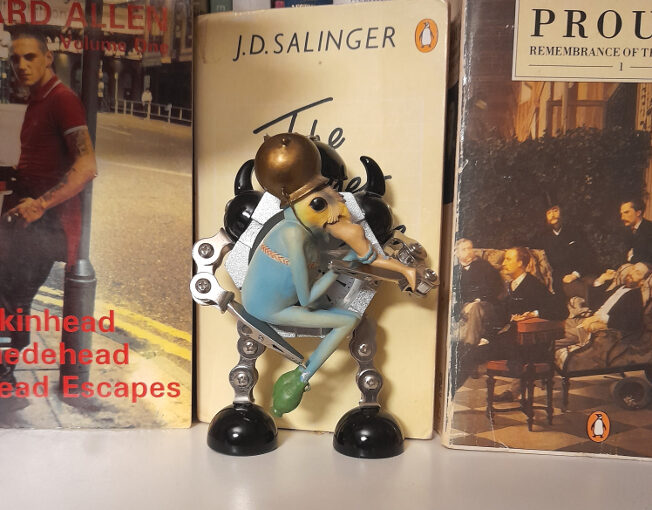
Interesting side note: some genius has perfectly gauged the kind of fanbase Draugveil is likely to appeal to and produced an action figure. Too pricey for me but entirely desirable.

* these titles make me think of an old Fry & Laurie sketch where a teenager writes a poem called “Inked Ravens of Despair Claw Holes in the Arse of the World’s Mind” – which kind of proves my point about the adolescent-ness of thanatophilia(?maybe the right word?) but I’ve remembered that title since I was at high school, which probably means something too.

its existence pleases me

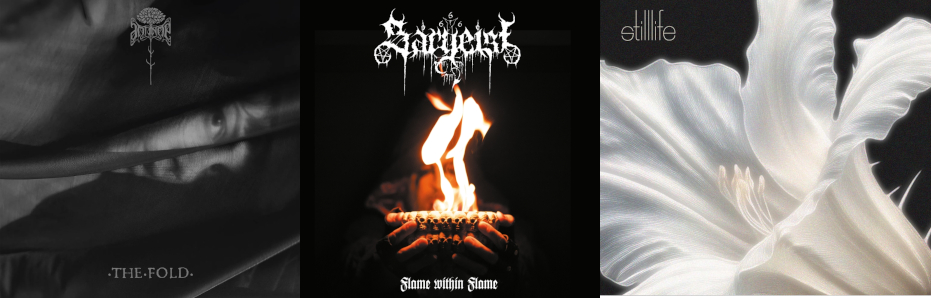
Honourable mentions that I like almost as much as the above but have run out of the will to write about include Kariti’s lovely album Still Life, the beautiful and deeply enigmatic album The Fold by Antinoë, which I’d recommend to anyone who likes the Anna von Hausswolff record and Sargeist’s Flame Within Flame, which is black metal with much of the absurdity drained out and replaced with venomous energy.

One of the discoveries of the year for me was podcasts – obviously I knew they existed, but I’d rarely been tempted to check them out. It turns out that mostly they aren’t for me, but there are a few I really like and one I love. That one is Origin Story, which I came to because I loved Ian Dunt’s brilliant 2021 book How to be a Liberal. The point of Origin Story, a podcast by Dunt & Dorian Lynskey (more below) is to “explore the hidden histories of the concepts you thought you knew.” It’s general focus is socio-political I suppose, but it takes in subjects as varied as zombies, comics, George Orwell, economics, history, etc etc (the latest season was a history of socialism) which you might think could be quite dry, but in fact is exciting, funny and entertaining; love it. Other favourites are Katie Hessel’s The Great Women Artists, Mark Kermode’s Kermode on Film and the Time Team podcast

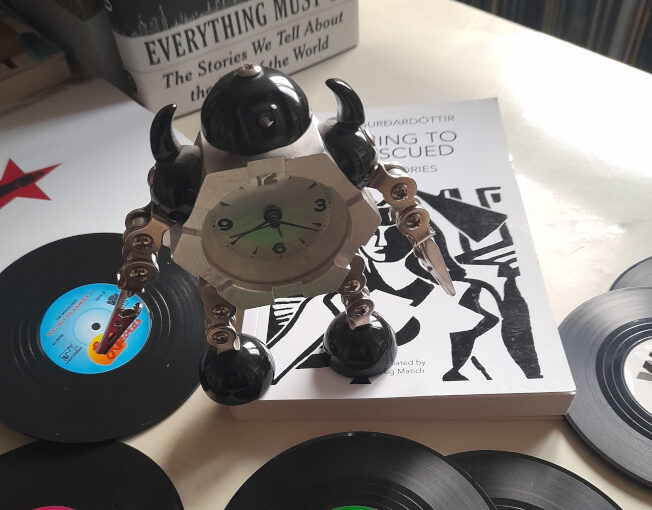
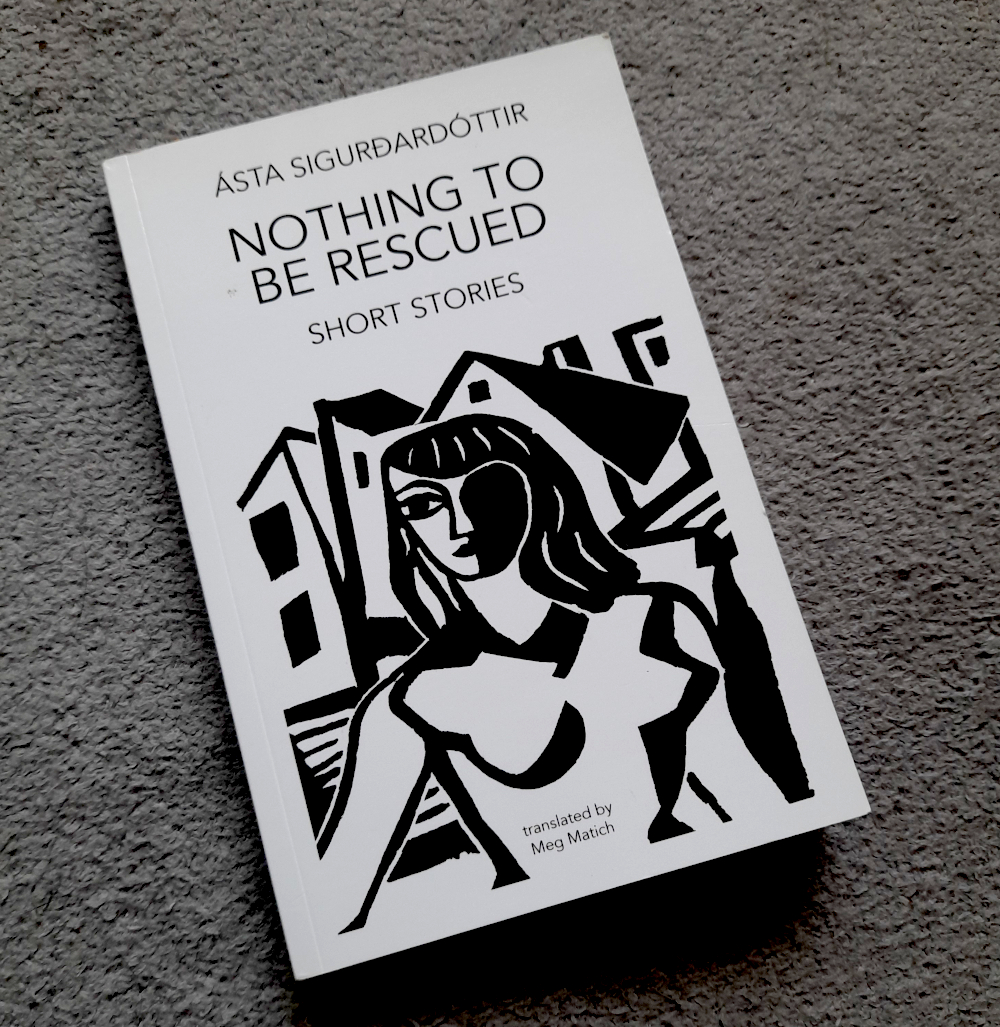
With books – unless, presumably, one is a publisher or a more than occasional book reviewer, the ‘of the year’ part is even less relevant. As it happens, I did read one book published this year that I thought was outstanding – Dorian Lynskey’s Everything Must Go – The Stories We Tell About the End of the World which I reviewed here and chose here, but I read many other books whose publication dates I’d have to look up. Most recently, I loved Nothing to be Rescued, a collection of sad and bitter short stories by Ásta Sigurðardóttir, a 2025 discovery for me, but Ásta died in 1971 and most of the stories pre-date her death by a decade. Even this collection, translated into suitably stark but beautifully readable English by Meg Matich, and which features Ásta’s own illustrations, is a couple of years old already. But just as the music that sounds best this year will sound the same next year, these stories, which have already outlived their author by more than half a century will continue to feel just as vivid and alive…

Onwards! because where else is there to go?


some kind of loss

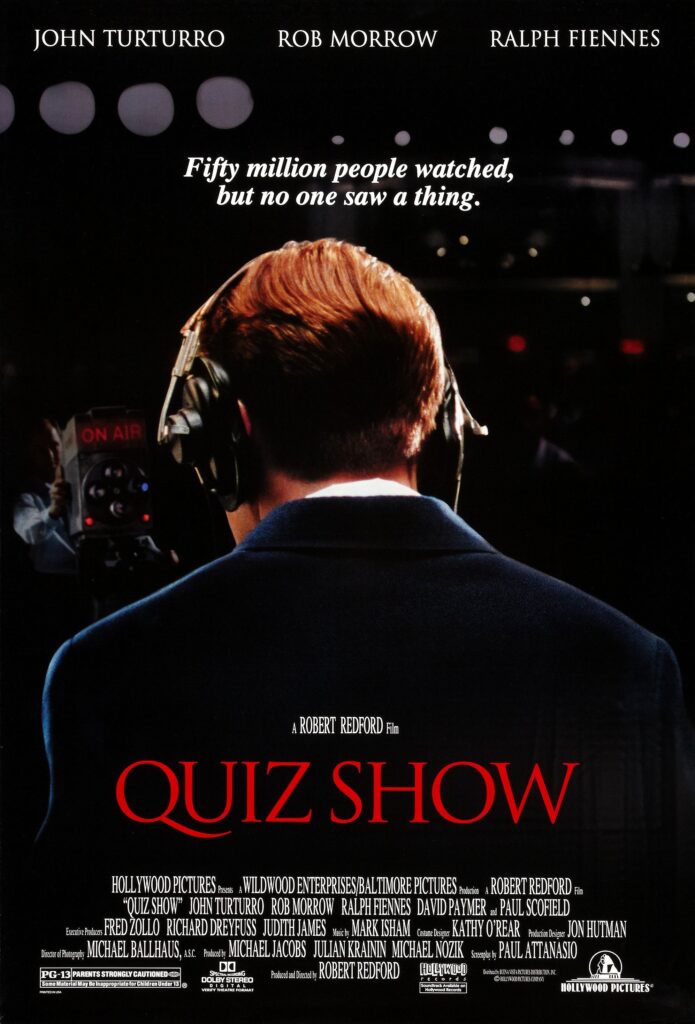
I remember when Robert Redford’s 1994 film Quiz Show was released, much of the publicity focussed on the idea that a relatively everyday scandal – the discovery in 1957-8 that a popular TV quiz show was rigged – marked the loss of the USA’s innocence. At the time, 20-year-old me could not have been more scornful. The idea that the innocence, whatever that meant, of 160+ million American citizens had somehow survived the relatively recent dropping of two atom bombs on civilians, the uncovering of the Holocaust, the filmed and widely publicised Nuremberg Trials, ongoing racial segregation and lynchings (Emmett Till, the last lynching victim recorded by the Tuskegee Institute – though not the last lynching, by a long way – was murdered aged 14 just three years earlier), the fighting of a war in Korea under the pretence of a ‘police action’ and the rise of and eventual disgust with McCarthyism; had survived all that, but that the scales then dropped from their eyes and the foundations of their way of life began to crumble when it turned out that the things they were offered as entertainment turned out to just be entertainment and not some kind of bastion of morality and fairness seemed laughable at best.

Quiz Show (1994)

I can still see my younger self’s point of view; it doesn’t take much consideration to realise that innocence, whether on a personal or a societal level, is a dangerous fetish. And innocence itself is less often a real state and more often an illusion or chimera – or just a point of view. It’s at best a slippery concept, whose opposite can be either guilt, corruption or just experience, none of which are precisely the same thing. The final verse of Philip Larkin’s 1964 poem MCMXIV about the outbreak of World War One half a century earlier, is justly famous and has a kind of intuitive truth to it:

Never such innocence,
Never before or since,
As changed itself to past
Without a word – the men
Leaving the gardens tidy,
The thousands of marriages,
Lasting a little while longer:
Never such innocence again.

Philip Larkin, ‘MCMXIV’, The Whitsun Weddings, Faber & Faber, 1964, p.28

enlistees in London at the outbreak of WW1 (Imperial War Museum)

Truth, because we know now (and Larkin knew then) what the young men lining up to enlist in the army in 1914 didn’t; that they were about to enter a modern world entirely different from the late Victorian one that they had grown up in. But illusion too, because the horrific brutality of WW1 was new only insofar as the people facing the onslaught of modern weaponry were white. There is the scale of it too; but though tanks, explosive shells and machine guns firing 500-600 rounds per minute created unprecedented levels of slaughter, the question of whether two sides using such weapons against each other is ‘worse’ than people armed with guns attacking people armed with spears or swords or bows and arrows is one that doesn’t seem worth answering. It’s probably not un-worse at least.

Even leaving aside the Imperialism of the WW1 combatants and the fact that they voluntarily signed up for it, the innocence of the Britain that the enlistees were queuing up to leave was dubious at best. The previous few years had been marked by the fight for women’s suffrage with the brutalities and indignities wilfully inflicted on suffragettes by the authorities, not to mention (the usual) grotesque levels of poverty and inequality; there is more than one reason that so many young men were keen to join the army.

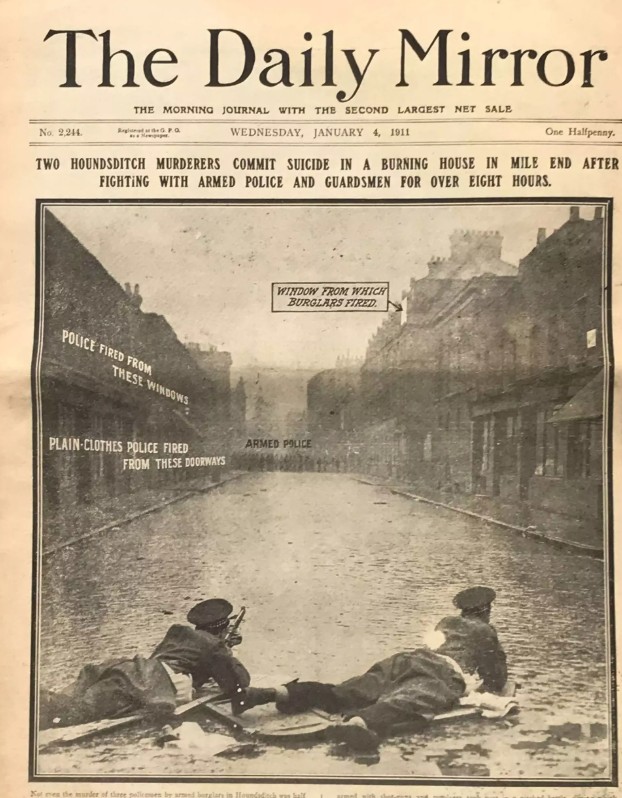
Even on a smaller and more localised scale, early 20th century Britain was full of strangely archaic, Tintin-like episodes that also seem to have a quaint kind of innocence now which they definitely didn’t have at the time and wouldn’t have had if experienced first hand; Latvian anarchists, terrorism, gang violence, the Siege of Sidney Street. And these kinds of things were happening all over Europe: the First World War didn’t come out of nowhere.

In a famous riposte to George Orwell on the subject of weekly magazines for boys, Frank Richards, the author of the Billy Bunter series wrote,

Probably I am older than Mr Orwell: and I can tell him the world went very well then [in 1910]. It was not been improved by the Great War, the General Strike, the outbreak of sex-chatter, by make-up or lipstick, by the present discontents [World War Two], or by Mr Orwell’s thoughts upon the present discontents!”

(Frank Richards responds – Collected Essays, Journalism and Letters of George Orwell Volume 1: An Age Like This (Penguin, 1970 p.532).

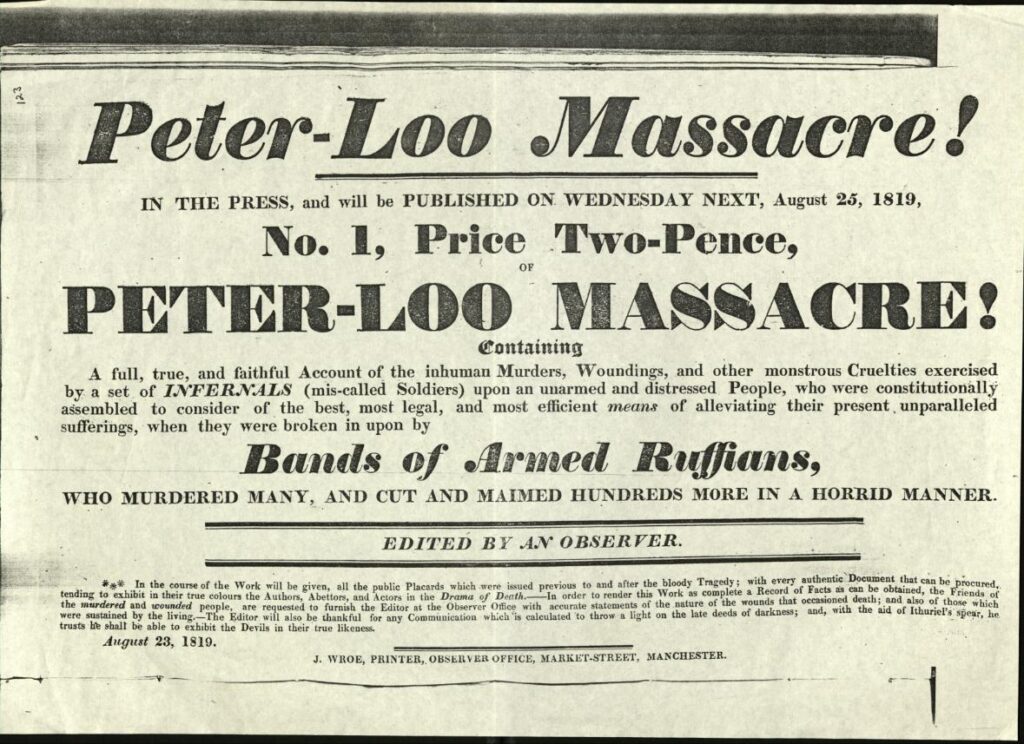
Fair enough, but when Frank Richards (real name Charles Hamilton) was 12 years old, the British Empire was at its height and Jack the Ripper was murdering prostitutes in London. Probably his parents were children during the period when Chartist protesters were being killed by the army, and their parents would have been alive during the period of Napoleonic Wars and the Peterloo Massacre. Which doesn’t make the First World War any less horrific, but you might as well say the sinking of the Titanic caused the loss of Britain’s innocence.

Advertisement for an account of the Peterloo Massacre

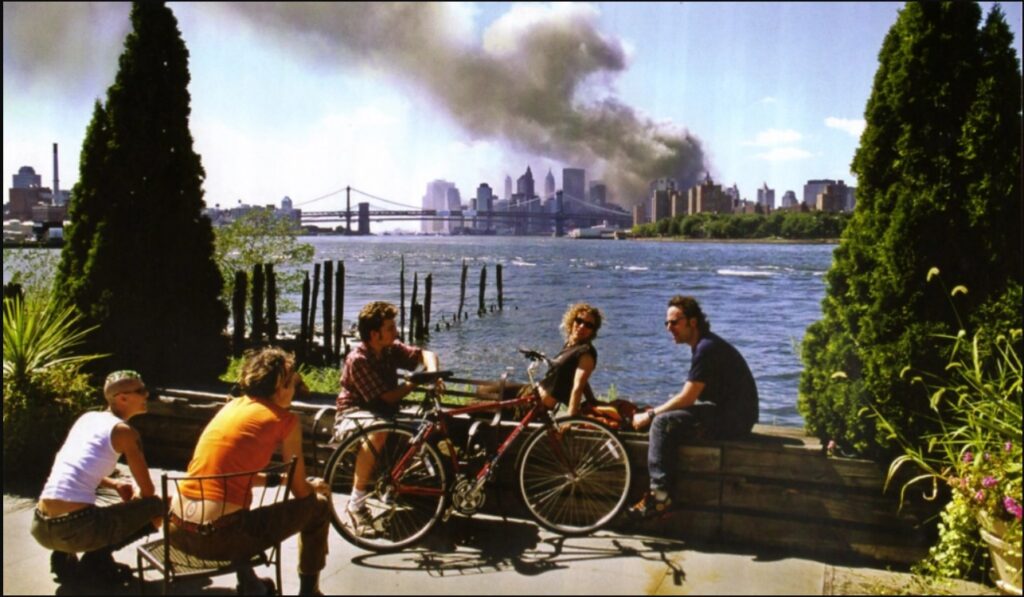
But I’m no better. Even though I wouldn’t use the phrase ‘loss of innocence,’ to me it seems like the world has never felt quite the same since 9/11. I’d be fooling myself if I said things were in any real sense better beforehand, and as with WW1, the events of that day didn’t come out of nowhere and it was as much a culmination as it was a beginning. But still, there’s a certain kind of low-level dread that emerged (in me at least) then and which, since then, always seems to be within easy reach.

That dread came to the fore again in 2004 when the photos of the torture and abuse of prisoners at Abu Ghraib were released and then again in the early 2010s with the violent rise of the Islamic State and the series of filmed beheadings of westerners that appeared online and on the news, and the murder of Lee Rigby in London. But it’s not a feeling that’s exclusive to Middle East-related matters, and it recurs like a migraine; every white supremacist rally, every attack on a mosque or synagogue, every time the media normalises far-right politics, every new announcement of US government policy brings with it a hint of that particular combination of heavy misery and pit-of-the-stomach dread.

Thomas Hoepker’s notorious 2001 photo of nonchalant 9/11 witnesses

Were things ‘better’ before 9/11? It depends on what you mean and who you are. For me, I was a teenager living in a peaceful and relatively prosperous country, so my specific worries, even the ones that felt existentially soul-crushing at the time, were probably pretty trivial. And it wasn’t entirely a new sensation; I remember feeling apprehensive and angry in the run up to the Gulf War in 1990, and before every general election, but that anxiety didn’t really linger in my day to day teenage life.

echhh

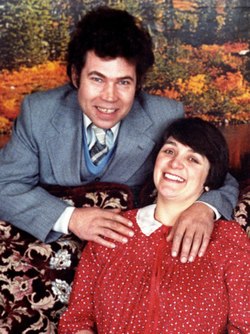
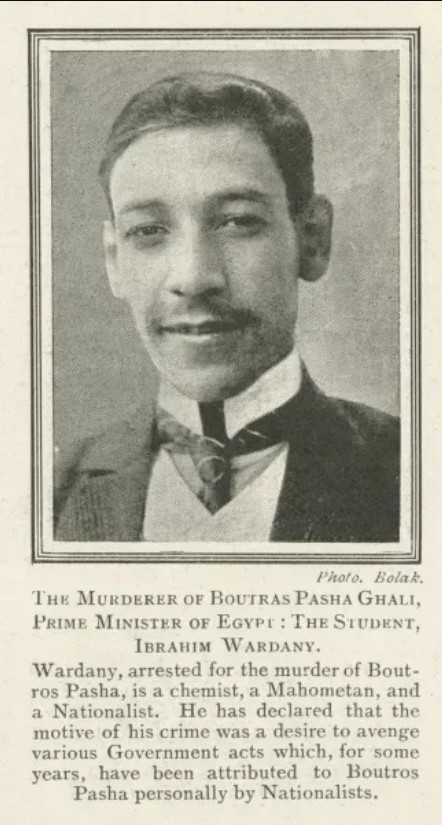
The same year that Quiz Show was released I remember watching the unfolding of the story of Fred and Rosemary West’s murders on breakfast TV for several days in a row with a sense of outraged horror, but it for me at least it didn’t have the lasting, polluting effect of 9/11. I remember watching with actual disbelief (I think the only time I’ve experienced that emotion, apart from seeing 9/11 itself on the news) when breakfast TV broke the story of Princess Diana’s death and then with irritated disbelief in the days (or weeks?) that followed, at Britain’s reaction to it. Again, that was a different thing. In 1910, when the world ‘went very well,’ Paris flooded, the French government massacred protesters in Côte d’Ivoire, Albania revolted against Ottoman rule and Boutros Ghali was assassinated in Cairo, while in Britain King Edward VII died and George V was crowned, Dr Crippen murdered his wife and was caught and executed, 300 Suffragettes fought with police outside of Parliament and Captain Scott set off on the British Antarctic Expedition; but Frank Richards was a successful author who had established two very weekly papers for children for which he wrote humorous stories; probably life seemed pretty good.

This isn’t nostalgia, exactly. In middle age, when their time is poisoned by yet unforeseen anxieties, will the teenagers of today look back wistfully at a period when there were still Palestinian people living (however precariously) in Palestine, or when the weather was mostly hot at one predictable time of year and cold in another and think of it as a better world they once knew, or just a different one? Who knows. At the moment, just catching up with the news every morning feels more and more like doomscrolling and the headlines feel increasingly like “The preparations for Hate Week were in full swing.

Around the time of the 9/11 attacks in 2001, the internet was just beginning to be a normal presence in almost everybody’s home, long before it was something they carried in their pockets and their hands. Since then, everyone has access to everything and, in the words of British heavy metal stalwarts Saxon, innocence is no excuse. Or at least it’s a willed, deliberate choice. But maybe it always was. Is innocence anything to aspire to outside of a court case anyway? I don’t know.

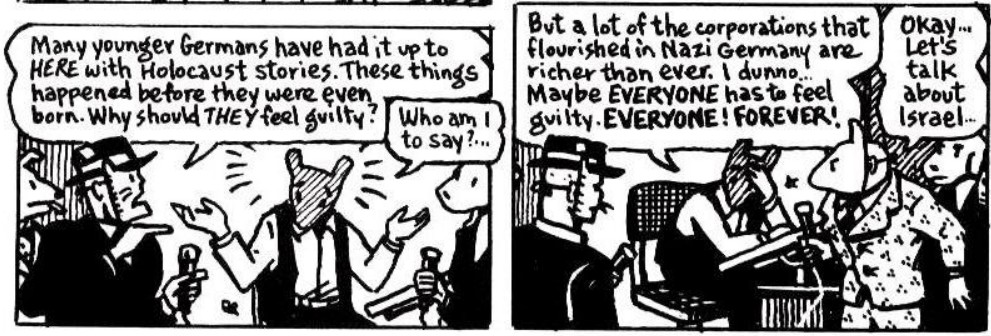
A conversation from Art Spiegelman’s Maus, a Pulitzer Prize-winning book, but one that was recently removed from some American schools, presumably to preserve some kind of innocence, springs to mind;

“Many younger Germans have had it up to HERE with Holocaust stories. These things happened before they were even born. Why should THEY feel guilty?”

“Who am I to say? But a lot of the corporations that flourished in Nazi Germany are richer than ever. I dunno… Maybe EVERYONE has to feel guilty. EVERYONE! FOREVER!

Art Spiegelman: Maus A Survivor’s Tale (The Complete Maus, Penguin Books, 2003 p.202)


a short essay about killing

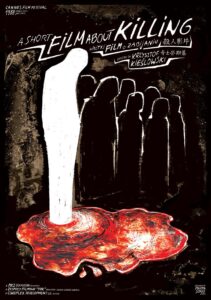
the poster for Krzysztof Kieslowski’s A Short Film About Killing (1988)

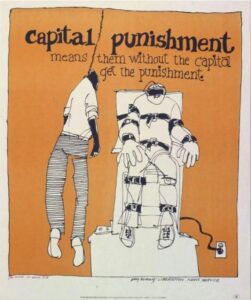
I don’t believe in the death penalty. In this, I’m in the majority, globally. I’m not sure when exactly I became against it; until at least the age of 12 I was pretty much a proto-fascist with an ‘eye-for-an-eye’ sense of justice, as boys tended to be in those days and for all I know still are. But I know that by the time I saw Krzysztof Kieslowski’s brilliantly grim A Short Film About Killing (Krótki film o zabijaniu) when I was 16 or so I was already anti-death penalty and have remained so ever since.


My reasons are, typically, kind of pedantic. There are many obvious arguments against the death penalty; there’s the ‘what if you accidentally kill the wrong person’ argument and that’s a pretty strong one – it has happened and does happen and is irreversible. There’s the fact that the death penalty seems to have a negligible effect on the crime rate. In fact, countries with the death penalty on the whole seem to have more rather than fewer murders (not that there’s necessarily a link between those two things). Even from the coldest and most reptilian, utilitarian point of view – getting rid of the problem of prison overcrowding – any possible benefit is negated by the fact that in most countries with the death penalty, prisoners spend years on death row being fed and housed, rather than being quickly and efficiently ‘processed.’

There’s also the Gandalfian(!) argument from The Lord of the Rings; “Many that live deserve death. And some that die deserve life. Can you give it to them? Then do not be too eager to deal out death in judgement. For even the very wise cannot see all ends.” That wasn’t just a handy deus ex machina that Tolkien used because he needed Gollum to survive in order to destroy the ring. Well, it was that, but Tolkien was also a devout and serious Christian and that was his moral outlook. Thank Cthulhu that unlike his friend CS Lewis, he deliberately left religion out of his books though! In the Biblical commandment Thou Shalt Not Kill, the Judeo-Christian god doesn’t list any exceptions or mitigating circumstances – in that one instance. Of course elsewhere in the Bible there are many circumstances where humans killing humans is considered appropriate and even righteous – the ultimate irony being that Jesus, kind of like an anti-Gollum, has to suffer death through violence to achieve his purpose. Religion is odd; but I’m not a Christian or Jew.

All of those points are relevant, but for me personally, it’s far simpler than that; if you can be legally killed, that means that in the eyes of the state there’s nothing wrong in essence, with killing people. I think there is, and I don’t think that it should just be a matter of having the right paperwork. Put bluntly, to kill a murderer is not telling them ‘what you did is wrong‘ so much as ‘you did it wrong‘ which I don’t think is just a minor difference. On top of that, there’s the whole question of who you are handing this responsibility over life and death to. I have a lot of respect for some lawyers, attorneys, judges, police officers etc, but there are others that I wouldn’t trust with my lunch, let alone my (or anyone else’s) life. States have a character, and often that character is institutionally biased regarding race, class, gender and sexuality. Giving that kind of absolute power within that kind of deeply fallible framework seems likely to create far more problems than it solves. But even in non-death-penalty countries like the UK we routinely give people the legal right to take other people’s lives; all they have to do is join the armed forces.

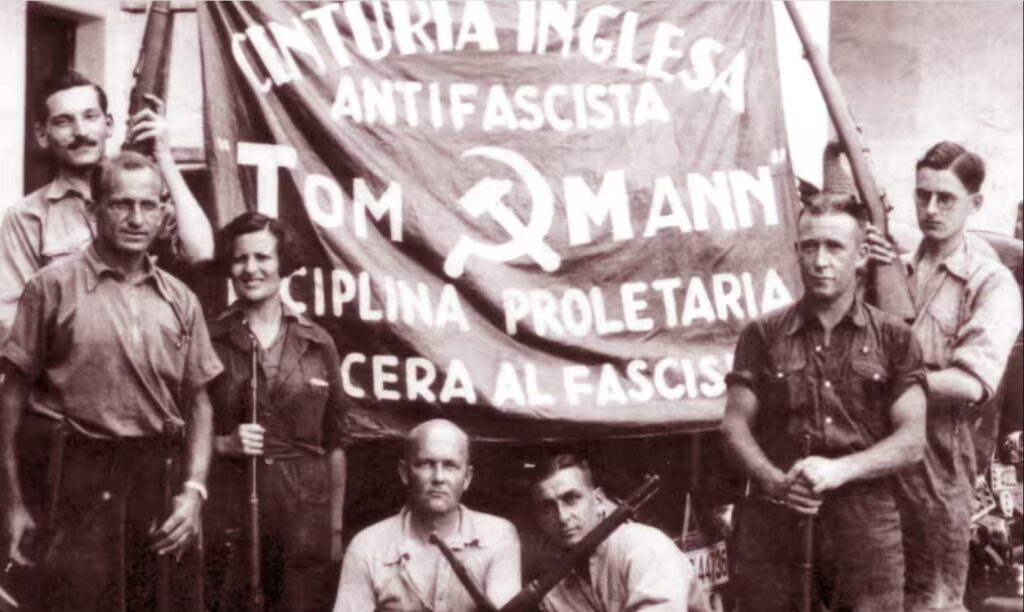
British volunteers in the International Brigade, 1937

I’m no more consistent than anybody else and my attitudes have their exceptions and contradictions. I (predictably) don’t philosophically differentiate between the military and mercenaries, because what ‘serving your country’ means in practical terms is carrying out whatever the policy of your current government is that week, with no certainty that it won’t be contradicted by a new policy (or a new government) the following week. If enemies suddenly turn out to be allies or vice versa, the dead remain dead. That said – here’s the contradiction – I’m not a pacifist absolutist either, and I think, or like to think, that if an invading army arrived in my country I’d take arms against it.

These things are particular though; everybody likes to think they’d fight for a good cause. The Spanish Civil War stands out for the number of anti-fascist fighters from all over the world who took up arms in defence of Spain, but that happened partly because so many people were ready to – and wanted to – fight. Many of those, George Orwell is a prominent and typical example, belonged to the generation who had been just too young to fight in World War One and whose feelings about war – including a considerable amount of survivor’s guilt – had been shaped by it. The fascist attack on the Spanish republic gave them a clear-cut situation to intervene in, in a way that the more gradual, more political rise of fascism in Italy and Germany didn’t.

But anyway, the death penalty. People of course do terrible things, but although lots of them are significantly more horrific than a lethal injection or the electric chair, the end result is the same. Being – odd, brief segue but bear with me, it’s relevant – a fan of black metal music, the subject of death and murder is one you come across in a different way from just being, say, a fan of horror movies. Because the poser-ish ‘darkness’ of black metal spills over (though less than it used to) into ‘real life,’ almost as if the kind of art you make bears some relation to the kind of person you are. I won’t go into the tedious-but-fascinating Lords of Chaos stuff about Mayhem & Burzum or Absurd because it’s not quite relevant here, but the story of Smutak (Pavel Selyun) who ran Morak Production record label in Belarus is.

In 2012, Selyun discovered that his wife, the artist and singer Frozendark (Victoria Selyunova) was having an affair with the artist, zine editor and musician Kronum (Alexey Vladimirovich Utokva). Sticking with the pseudonyms seems appropriate to the melodrama, so I’ll do that from here on. Smutak murdered both Frozendark and Kronum then dismembered them and was apprehended on the subway three days later with Kronum’s head (or skull; – some accounts say he boiled the head – same difference I suppose but I don’t need to know) in a bag. After his arrest, he was imprisoned in Minsk and after a confession gained under torture and the failure of various appeals  he was executed two years later, by being shot in the back of the head.

A horrible postscript that demonstrates how the death penalty punishes the innocent as well as the guilty; after Smutak’s execution the authorities failed to hand over his body to his mother or tell her where he’s buried, the case was handed to the UN Court of Human Rights.

Not many people (and certainly not me) would say that Selyun didn’t ‘deserve’ his treatment. But still. He possibly tortured and definitely killed people and then was tortured and killed. There is a kind of Elizabethan revenge tragedy balance there, but it’s one in which the act of torturing and killing itself is made neutral. Whoever tortured and killed Smutak doesn’t need any kind of defence and won’t face any kind of judgement, because they did it in the name of the law. But the idea that torturing and killing becomes morally neutral because you don’t have any emotional investment in the act is an odd one. Smutak had nothing to gain from his actions other than some kind of horrible satisfaction. The person or people who did the same to him had nothing to gain accept for their wages. Which is morally, what? Better? He reportedly felt the same kind of fear as his victims; well good, I guess, but that did nothing to benefit those victims. It may have pleased the victims’ relatives but I wouldn’t want to examine that kind of pleasure too closely.

The current case of Luigi Mangione is far stranger. It’s the only time I can recall that the supporters (in this case I think ‘fans’ would be just as correct a word) of someone accused of murder want the suspect to be guilty rather than innocent. Whether they would still feel that way if he looked different or had a history of violent crime or had a different kind of political agenda is endlessly debatable, but irrelevant. It looks as if the State will be seeking the death penalty for him and for all the reasons listed above I think that’s wrong. But assuming that he is guilty, which obviously one shouldn’t do (and if he isn’t, Jesus Christ, good luck getting a fair trial!) Mangione himself and some of his fans, should really be okay with it. If he’s guilty, he hasn’t done anything to help a single person to get access to healthcare or improve the healthcare system or even protested against it in a way that people with the political power to affect change can positively react to. UnitedHealthcare still has a CEO, it still has dubious political connections and it still treats people very badly. That doesn’t mean that it’s an unassailable monolith that can never be changed, but clearly removing one figurehead isn’t how it can be done.

But more to the point; why does the killer (assuming their motives are the ones that are being extrapolated from the crime) care anyway? If actually shooting someone dead in the street is okay, then surely being indirectly responsible for the misery and possible deaths of others is barely even a misdemeanour. It amounts to the kind of Travis Bickle movie logic I’m sure I’ve sneered about elsewhere; complaining about the decay of social values and then committing murder is not reducing the sum total of social decay, it’s adding to it. A society where evil CEOs are shot dead in the street is a society where human beings are shot dead in the street and that becoming acceptable is not likely to be the pathway to a more just, equal or happy society.

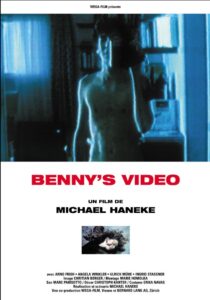
Michael Haneke’s disturbing Benny’s Video (1992)

What the death penalty does do, and probably a key part of why it’s still used in some countries, is offer a punishment that seems (in the case of murder at least) to fit the crime. Interestingly, public executions – which counterintuitively seem to have no better track record as a deterrent than any other kind of execution – are now vanishingly rare. Part of that is no doubt to do with public disgust and part with institutional secrecy and shame, but I imagine that part of it is also the fear that the public would enjoy it too much.

I’m not sure if I’d think that if it wasn’t for the spate of Islamic State beheadings that were so widely watched on the internet back in the early 2010s (was it?) I watched one, like most people seem to have, and still wish I hadn’t; but you can’t un-ring a bell. That was at the back of my mind when I wrote about saints and martyrdom for this site a while ago and I can bring images of it to mind horribly easily.

But even before that, it shouldn’t have surprised me – like many other teenage horror movie fans in the pre-internet era I watched exploitation videos like Face of Death that featured executions, accidents etc, and in doing so realised that I was specifically a horror fan and not a fan of whatever that is. I should have learned my lesson there, but it’s undeniable that these things have a murky kind of fascination; since then, thanks to one of my favourite writers, Georges Bataille, I’ve ended up reading about Lingchi (‘Death by a Thousand Cuts’) and looking at the chilling and depressing photos of it, been appalled by postcards of lynchings, seen revolting photographs of soldiers’ desecrated bodies and murder victims. I haven’t gotten used to those images and I hope I never will. Teenage me would no doubt sneer at that because he thought that things that are ‘dark’ are cool, but that seems like a laughable and childish attitude to me now, so I can take his sneering. It might seem that I’m edging towards the point that Michael Haneke is making in Funny Games (1997), which I find a bit tiresome and preachy (even more so the remake), but I’m not. I disagree with the premise of that film because I do think there’s a difference between fictional horror and real horror, and that enjoying one isn’t the same as enjoying the other. I think his 1992 film Benny’s Video makes a similar but much more subtle and complex point far better.

Imprisonment (whatever your views on the justice system) is a pretty unsatisfactory solution for most crimes, but it’s difficult to think of a better one which doesn’t essentially exonerate the kind of behaviour we want to characterise as abnormal or criminal. ‘An eye for an eye’ is the thinking behind the death penalty but its illogical nature can be seen when applied to any other crime. Stealing from a thief is obviously ‘justice’ in that sense, but as a punishment it would be laughable. Raping a rapist would be grotesque and would double the number of rapists in the room every time it happened. But even so, it’s never going to be comfortable that the tax payer is contributing to the relative comfort of someone like (I’ll only mention dead ones, this isn’t a complaint about the legal system being soft on psychopaths) Fred West.

A solution l think I might suggest is one which I’m extremely dubious about myself from lots of different humanitarian, psychological and philosophical points of view; why not offer (and that word alone would make people angry) ‘monsters’ – that is, the kind of killers in a category of their own, who admit to horrendous acts of murder and torture and whose guilt is not in doubt – the ones that will never be allowed freedom – the choice of a lethal injection rather than life imprisonment? That’s a horrible thing to contemplate – but then so is paying for the meals and upkeep of someone like Ian Brady, especially when he essentially had the last laugh, exercising his tiny bit of remaining power over the families of his victims and having his self-aggrandising bullshit book The Gates of Janus published.

That last part was kind of icky and uncomfortable, but so it should be – the whole subject is. So for what it’s worth, those are my thoughts on the death penalty. Time for a shower; until next time, don’t murder anyone please.

of comfort no man speak

Everybody has their comforts, but after trying to analyse some of my own to see why they should be comforting I’ve pretty much come up with nothing, or at least nothing really to add to what I wrote a few years ago; “comforting because it can be a relief to have one’s brain stimulated by something other than worrying about external events.” But that has nothing to do with what it is that makes the specific things comforting. Like many people, I have a small group of books and films and TV shows and so on that I can read or watch or listen to at almost any time, without having to be in the mood for them, and which I would classify as ‘comforting.’ They aren’t necessarily my favourite things, and they definitely weren’t all designed to give comfort, but obscurely they do. But what does that mean or signify? I’ve already said I don’t know, so it’s not exactly a cliffhanger of a question, but let’s see how I got here at least.

I’ve rewritten this part so many times: but in a way that’s apposite. I started writing it at the beginning of a new year, while wars continued to rage in Sudan and Ukraine and something even less noble than a war continued to unfold in Gaza, and as the world prepared for an only partly precedented new, oligarchical (I think at this point that’s the least I can call it) US government. Writing this now, just a few months later, events have unfolded somewhat worse than might have been expected. Those wars still continue and despite signs to the contrary, the situation in Gaza seems if anything bleaker than before. That US administration began the year by talking about taking territory from what had been allies, supporting neo-Nazi and similar political groups across the world, celebrating high profile sex offenders and violent criminals while pretending to care about the victims of sex offenders and violent criminals, and has gone downhill from there.

In the original draft of this article I predicted that this Presidential term would be an even more farcical horrorshow (not in the Clockwork Orange/Nadsat sense, although Alex and his Droogs might well enjoy this bit of the 2020s; I suppose what I mean is ‘horror show’) than the same president’s previous one, and since it already feels like the longest presidency of my lifetime I guess I was right. So, between the news and the way it never stops coming (hard to remember, but pre-internet ‘the news’ genuinely wasn’t so relentless or inescapable, although events presumably happened at the same rate) it’s important to find comfort somewhere. The obvious, big caveat is that one has to be in a somewhat privileged position to be able to find comfort in the first place. There are people all over the world – including here in the UK – who can only find it, if at all, in things like prayer or philosophy; but regardless, not being so dragged down by current events that you can’t function is kind of important however privileged you are, and even those who find the whole idea of ‘self-love’ inimical have to find comfort somewhere.

But where? And anyway, what does comfort even mean? Well, everyone knows what it means, but though as a word it seems fluffy and soft (Comfort fabric softener, the American word “comforter” referring to a quilt), it actually comes from the Latin “com-fortis” meaning something like “forceful strength” – but let’s not get bogged down in etymology again.

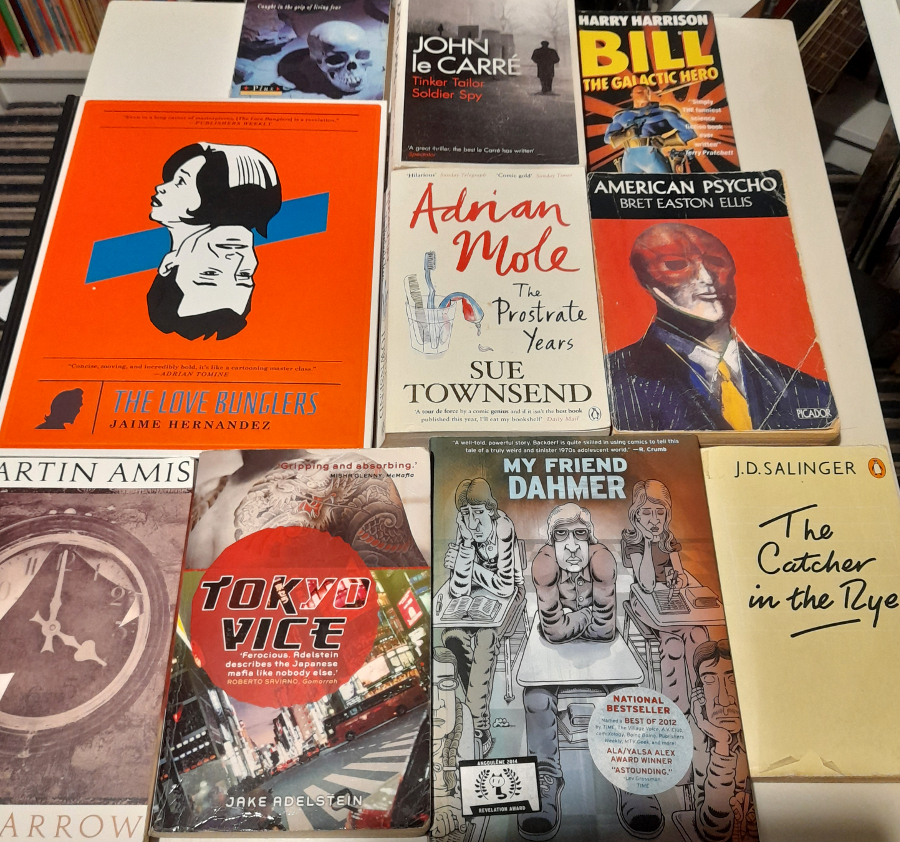
But wherever you find it, the effect of comfort has a mysterious relationship to the things that actually offer us support or soothe our grief and mental distress. Which is not obvious; normally if you desire a specific reaction (laughter, fear, excitement) you turn to a particular source. If you want to laugh, you turn to something funny, which is obviously subjective but never mind. Sticking to books, because I can – for me lots of things would work, if I want to be amused, Afternoon Men by Anthony Powell, Sue Townsend’s Adrian Mole books and, less obviously, The Psychopath Test by Jon Ronson always raise a smile or a laugh. Conversely, if you want to be scared or disgusted (in itself a strange and obscure desire, but a common one), you’d probably turn to horror, let’s say HP Lovecraft, Stephen King’s IT or, less generic but not so different, Bret Easton Ellis’s American Psycho. But as you might have guessed if you’ve read anything else on this website, I’d probably list all of those books among my ‘comfort reads.’

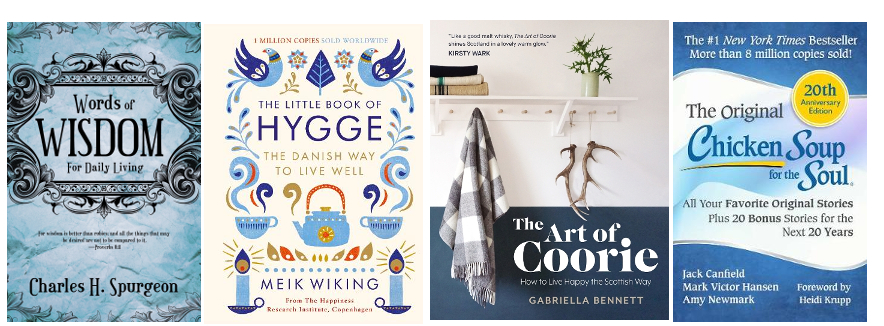
not my comfort reads

But whatever I am reading, I’m not alone; people want ‘comfort reads’ and indeed there is a kind of comfort industry these days. Over the years it’s developed from poetry anthologies and books of inspirational quotes to more twee versions of the same thing. I think of books of the Chicken Soup for the Soul kind (I don’t think I made that up; if I recall my mother owned a little book of that title, full of ‘words of wisdom’ and comforting quotes) as a 90s phenomenon, but that might be wrong. But at some point that evolved into the more widespread ‘mindfulness’ industry (colouring books, crochet, apps, etc). Marketing-wise there have been phenomena like hygge (as far as I’ve seen books of the Chicken Soup type, but with more crossover into other areas, as with mindfulness) and, in Scotland at least, hygge rebranded, aggravatingly, as ‘coorie.’ In this context ‘coorie’ is a similar concept to ‘hygge’ but that’s not really how I’ve been used to hearing the word used through my life, so something like ‘A Little Book of Coorie‘ just doesn’t sound right. But maybe a book of hygge doesn’t either, if you grew up with that word?

People take comfort in pretty much anything that distracts them, so often the best kind of comfort is being active; walking, running, working or eating, and I understand that; nothing keeps you in the moment or prevents brooding like focusing on what you’re doing. But, unless you’re in a warzone or something, it’s when you aren’t busy that the world seems the most oppressive, and while running may keep you occupied, which can be comforting, it isn’t ‘comfortable’ (for me) in the usual sense of the word. Personally, the things I do for comfort are most likely to be the same things I write about most often, because I like them; reading, listening to music, watching films or TV.
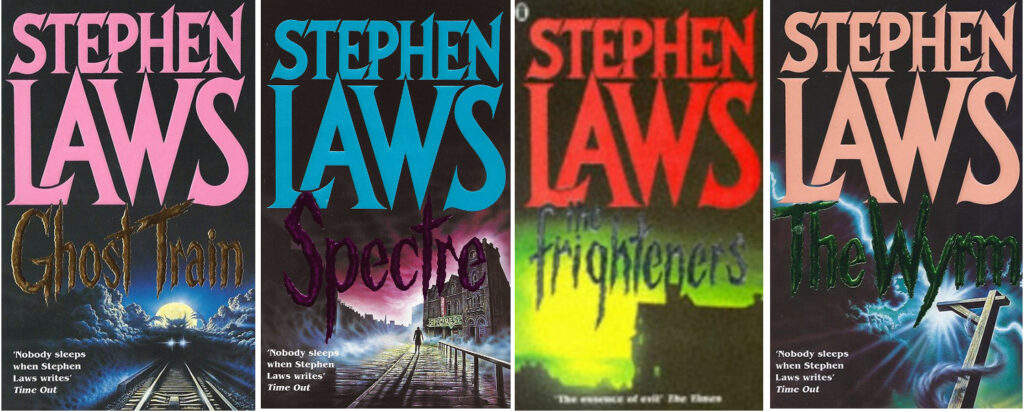
Comfort reading, comfort viewing, comfort listening are all familiar ideas, and at first I assumed that the core of what makes them comforting must be their familiarity. And familiarity presumably does have a role to play – I probably wouldn’t turn to a book I knew nothing about for comfort, though I might read something new by an author I already like. Familiarity, though it might be – thinking of my own comfort reads – the only essential ingredient for something to qualify as comforting, is in itself a neutral quality at best and definitely not automatically comforting. But even when things are comforting, does that mean they have anything in common with each other, other that the circular fact of their comforting quality? Okay, it’s getting very annoying writing (and reading) the word comforting now.

Many of the books that I’d call my all-time favourites don’t pass the comfort test; that is, I have to be in the mood for them. I love how diverse and stimulating books like Dawn Ades’ Writings on Art and Anti-Art and Harold Rosenberg’s The Anxious Object are, but although I can dip into them at almost any time, reading an article isn’t the same as reading a book. There are not many novels I like better than The Revenge for Love or The Apes of God by Wyndham Lewis. They are funny and clever and mean-spirited in a way that I love and I’ve read them several times and will probably read them again; but I never turn to Lewis for comfort. He would probably be glad not to be a ‘comfort read,’ that has nothing (as far as I can tell) to do with the content of his books. Some of my ‘comfort reads’ are obvious, and in analysing them I can come up with a list of plausible points that make them comforting, but others less so.

random selection of comfort reads

In that obvious category are books I read when I was young, but that I can still happily read as an adult. There is an element of nostalgia in that I’m sure, and nostalgia is a complicated kind of comfort. I first read The Lord of the Rings in my early teens but, as I’ve written elsewhere, I had previously had it read to me as a child, so I feel like I’ve always known it. Obviously that is comforting in itself, but there’s also the fact that it is an escapist fantasy; magical and ultimately uplifting, albeit in a bittersweet way. The same goes for my favourites of Michael Moorcock’s heroic fantasy series. I read the CorumHawkmoon and Elric series’ (and various other bits of the Eternal Champion cycle) in my teens and though Moorcock is almost entirely different from Tolkien, the same factors (escapist fantasy, heroic, magical etc) apply.

Even the Robert Westall books I read and loved as a kid, though they (The Watch House, The Scarecrows, The Devil on the Road, The Wind Eye, the Machine Gunners, Fathom Five) are often horrific, have the comforting quality that anything has if you loved it when you were 11. Not that the books stay the same; as an adult they are, surprisingly, just as creepy as I remembered, but I also notice things I didn’t notice then. Something too mild to be called misogyny, but a little uncomfortable nonetheless and, more impressively, characters that I loved and identified with now seem like horrible little brats, which I think is actually quite clever. But that sense of identification, even with a horrible little brat, has a kind of comfort in it, possibly.

The same thing happens with (mentioned in too many other things on this site) IT. A genuinely nasty horror novel about a shapeshifting alien that pretends to be a clown and kills and eats children doesn’t at first glance seem like it should be comforting. But if you read it when you were thirteen and identified with the kids rather than the monster, why wouldn’t it be? Having all kinds of horrible adventures with your friends is quite appealing as a child and having them vicariously via a book is the next best thing, or actually a better or at least less perilous one.
But those are books I read during or before adolescence and so the comforting quality comes to them naturally, or so it seems. The same might be true of my favourite Shakespeare plays, which I first read during probably the most intensely unhappy part of my adolescence – but in a weird, counterintuitive way, that adds to the sense of nostalgia.

Sue Townsend’s Adrian Mole books are kind of in a category of their own. When I read the first one, Adrian was 13 and I would have been 11. And then, I read the second a year or so later, but the others just randomly through the years. I’m not sure I was even aware of them when they were first published, but the ones where Adrian is an adult are just as funny but also significantly more painful. It’s a strange thing to read about the adult life of a character you “knew” when you were both unhappy children. Although she had a huge amount of acclaim and success during her life, I’m still not sure Townsend gets quite the credit she’s due for making Adrian Mole a real person. Laughing at a nerdy teenager’s difficult adolescence and his cancer treatment as a still-unhappy middle-aged adult is a real imaginative and empathic achievement. Still; the comfort there could be in the familiar, not just the character but the world he inhabits. Adrian is, reading him as an adult (and as he becomes an adult) surprisingly nuanced; even though he’s uptight and conservative and in a way a little Englander and terminally unreliable as a teenager and loses none of those traits as an adult, you somehow know that you can count on him not to be a Nazi or misogynist, no small thing in this day and age.

But if Frodo and Elric and Adrian Mole are characters who I knew from childhood or adolescence, what about A Clockwork Orange, which I first read and immediately loved in my early 20s and which, despite the (complicatedly) happy ending could hardly be called uplifting? Or The Catcher in the Rye, which again I didn’t read until my 20s and have been glad ever since that I didn’t “do” it at school as so many people did. Those books have a lot in common with Adrian Mole, in the sense that they are first-person narratives by troubled teenagers. Not that Alex is “troubled” in the Adrian/Holden Caulfield sense. But maybe it’s that sense of a ‘voice’ that’s comforting? If so, what does that say about the fact that Crash by JG Ballard or worse, American Psycho is also a comfort read for me?

I read both of those novels in my 20s too, and immediately liked them, though not in the same way as The Catcher in the Rye. To this day, when I read that book, part of me responds to it in the identifying sense; that part of me will probably always feel like Holden Caulfield, even though I didn’t do the things he did or worry about ‘phonies’ as a teenager. I loved Crash from the first time I read the opening paragraphs but although there must be some sense of identification (it immediately felt like one of ‘my’ books) and although I have a lot of affection for Ballard as he comes across in interviews, I don’t find myself reflected in the text, thankfully. Same (even more thankfully) with American Psycho – Patrick Bateman is an engaging, very annoying narrator (more Holden than Alex, interestingly) and I find that as with Alex in A Clockwork Orange his voice feels oddly effortless for me to read. Patrick isn’t as nice(!) or as funny or clever as Alex, but still, there’s something about his neurotic observations and hilariously tedious lists that’s – I don’t know, not soothing to read, exactly, but easy to read. Or something. Hmm.
But if Alex, Adrian, Holden and Patrick feel real, what about actual real people? I didn’t read Jake Adelstein’s Tokyo Vice until I was in my early 30s, but it quickly became a book that I can pick up and enjoy it at any time. And yet, though there is a kind of overall narrative arc and even a sort of happy ending, that isn’t really the main appeal; and in this case it isn’t familiarity either. It’s episodic and easy to dip into (Jon Ronson’s books have that too and so do George Orwell’s Essays and Journalism and Philip Larkin’s Selected Letters, which is another comfort read from my 20s) The culture of Japan that Adelstein documents as a young reporter has an alien kind of melancholy that is somehow hugely appealing even when it’s tragic. Another true (or at least fact-based) comfort read, Truman Capote’s In Cold Blood, which I only read in my 40s after meaning to read it ever since high school, has no business whatsoever being comforting. So why is it? I’m not getting any closer to an answer.

Predictability presumably has a role to play; as mentioned above, I wouldn’t read a book for the first time as ‘a comfort read’ and even though I said I might read a familiar author that way, it suddenly occurs to me that that is only half true. I would read Stephen King for comfort, but I can think of at least two of his books where the comfort has been undone because the story went off in a direction that I didn’t want it to. That should be a positive thing; predictability, even in genre fiction which is by definition generic to some extent, is the enemy of readability and the last thing you want is to lose interest in a thriller. I’ve never been able to enjoy whodunnit type thrillers for some reason; my mother loved them and they – Agatha Christie, Ngaio Marsh, Sue Grafton, even Dick Francis, were her comfort reads. Maybe they are too close to puzzles for my taste? Not sure.

So to summarise; well-loved stories? Sometimes comforting. Identifiable-with characters? Sometimes comforting. Authorial voices? This may be the only unifying factor in all the books I’ve listed and yet it still seems a nebulous kind of trait and Robert Westall has little in common with Sue Townsend or Bret Easton Ellis, or (etc, etc). So instead of an actual conclusion, I’ll end with a funny, sad and comforting quote from a very silly, funny but in some ways comforting book; Harry Harrison’s 1965 satirical farce Bill, the Galactic Hero. The book is in lots of ways horrific; Bill, an innocent farm boy, finds himself swept up into the space corps and a series of ridiculous and perilous adventures. The ending of the book is both funny and very bitter, but rewinding to an earlier scene where Bill has lost his left arm in combat but had a new one – a right arm, which belonged to his best friend, grafted on:

He wished he could talk to some of his old buddies, then remembered that they were all dead and his spirits dropped further. He tried to cheer himself up but could think of nothing to be cheery about until he discovered that he could shake hands with himself. This made him feel a little better. He lay back on the pillows and shook hands with himself until he fell asleep.

Harry Harrison, Bill the Galactic Hero, p.62 (Victor Gollancz, 1965)

nostalgia isn’t going to be what it was, or something like that

When I was a child there was music which was, whether you liked it or not, inescapable. I have never – and this is not a boast – deliberately or actively listened to a song by Michael Jackson, Madonna, Phil Collins, Duran Duran, Roxette, Take That, Bon Jovi, the Spice Girls… the list isn’t endless, but it is quite long. And yet I know some, or a lot, of songs by all of those artists. And those are just some of the household names. Likewise I have never deliberately listened to “A Horse With No Name” by America, “One Night in Bangkok” by Murray Head or “Would I Lie to You” by Charles & Eddie; and yet, there they are, readily accessible should I wish (I shouldn’t) to hum, whistle or sing them, or just have them play in my head, which I seemingly have little control over.

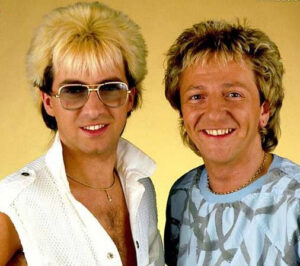
Black Lace: the unacceptable face(s) of 80s pop

And yet, since the dawn of the 21st century, major stars come and go, like Justin Bieber, or just stay, like Ed Sheeran, Lana Del Rey or Taylor Swift, without ever really entering my consciousness or troubling my ears. I have consulted with samples of “the youth” to see if it’s just me, but no: like me, there are major stars that they have mental images of, but unless they have actively been fans, they couldn’t necessarily tell you the titles of any of their songs and have little to no idea of what they actually sound like. Logical, because they were no more interested in them than I was in Dire Straits or Black Lace; but alas, I know the hits of Dire Straits and Black Lace. And the idea of ‘the Top 40 singles chart’ really has little place in their idea of popular music. Again, ignorance is nothing to be proud of and I literally don’t know what I’m missing. At least my parents could dismiss Madonna or Boy George on the basis that they didn’t like their music. It’s an especially odd situation to find myself in as my main occupation is actually writing about music; but of course, nothing except my own attitude is stopping me from finding out about these artists.

The fact is that no musician is inescapable now. Music is everywhere, and far more accessibly so than it was in the 80s or 90s – and not just new music. If I want to hear Joy Division playing live when they were still called Warsaw or track down the records the Wu-Tang Clan sampled or hear the different version of the Smiths’ first album produced by Troy Tate, it takes as long about as long to find them as it does to type those words into your phone. Back then, if you had a Walkman you could play tapes, but you had to have the tape (or CD – I know CDs are having a minor renaissance, but is there any more misbegotten, less lamented creature than the CD Walkman?) Or you could – from the 1950s onwards – carry a radio with you and listen to whatever happened to be playing at the time. I imagine fewer people listen to the radio now than they did even 30 years ago, but paradoxically, though there are probably many more – and many more specialised –  radio stations now than ever, their specialisation actually feeds the escapability of pop music. Because if I want to hear r’n’b or metal or rap or techno without hearing anything else, or to hear 60s or 70s or 80s or 90s pop without having to put up with their modern-day equivalents, then that’s what I and anyone else will do. I have never wanted to hear “Concrete and Clay” by Unit 4+2 or “Agadoo” or “Come On Eileen” or “Your Woman” by White Town or (god knows) “Crocodile Shoes” by Jimmy Nail; but there was a time when hearing things I wanted to hear but didn’t own, meant running the risk of being subjected to these, and many other unwanted songs. As I write these words, “Owner of a Lonely Heart” by Yes, a song that until recently I didn’t know I knew is playing in my head.

And so, the music library in my head is bigger and more diverse than I ever intended it to be. In a situation where there were only three or four TV channels and a handful of popular radio stations, music was a kind of lingua franca for people, especially for young people. Watching Top of the Pops on a Thursday evening, or later The Word on Friday was so standard among my age group that you could assume that most people you knew had seen what you saw; that’s a powerful, not necessarily bonding experience, but a bond of sorts, that I don’t see an equivalent for now, simply because even if everyone you know watches Netflix, there’s no reason for them to have watched the same thing at the same time as you did. It’s not worse, in some ways it’s obviously better; but it is different. Of course, personal taste back then was still personal taste, and anything not in the mainstream was obscure in a way that no music, however weird or niche, is now obscure, but that was another identity-building thing, whether one liked it or not.

Growing up in a time when this isn’t the case and the only music kids are subjected to is the taste of their parents (admittedly, a minefield) or fragments of songs on TV ads, if they watch normal TV or on TikTok, if they happen to use Tiktok, is a vastly different thing. Taylor Swift is as inescapable a presence now, much as Madonna was in the 80s, but her music is almost entirely avoidable and it seems probable that few teenagers who are entirely uninterested in her now will find her hits popping unbidden into their heads in middle age. But conversely, the kids of today are more likely to come across “Owner of a Lonely Heart” on YouTube than I would have been to hear one of the big pop hits of 1943 in the 80s.

Far Dunaway as Bonnie Parker; a little bit 1930s, a lot 1960s

What this means for the future I don’t know; but surely its implications for pop-culture nostalgia – which has grown from its humble origins in the 60s to an all-encompassing industry, are huge. In the 60s, there was a brief fashion for all things 1920s and 30s which prefigures the waves of nostalgia that have happened ever since. But for a variety of reasons, some technical, some generational and some commercial, pop culture nostalgia is far more elaborate than ever before. We live in a time when constructs like “The 80s” and “The 90s” are well-defined, marketable eras that mean something to people who weren’t born then, in quite a different way from the 1960s version of the 1920s. Even back then, the entertainment industry could conjure bygone times with an easy shorthand; the 1960s version of the 1920s and 30s meant flappers and cloche hats and Prohibition and the Charleston and was evoked on records like The Beatles’ Honey Pie and seen onstage in The Boy Friend or in the cinema in Bonnie & Clyde. But the actual music of the 20s and 30s was mostly not relatable to youngsters in the way that the actual entertainment of the 80s and 90s still is. Even if a teenager in the 60s did want to watch actual silent movies or listen to actual 20s jazz or dance bands they would have to find some way of accessing them. In the pre-home video era that meant relying on silent movie revivals in cinemas, or finding old records and having the right equipment to play them on, since old music was then only slowly being reissued in modern formats. The modern teen who loves “the 80s” or “the 90s” is spoiled by comparison, not least because its major movie franchises like Star Wars, Indiana Jones, Ghostbusters and Jurassic Park are still around and its major musical stars still tour or at least have videos and back catalogues that can be accessed online, often for free.

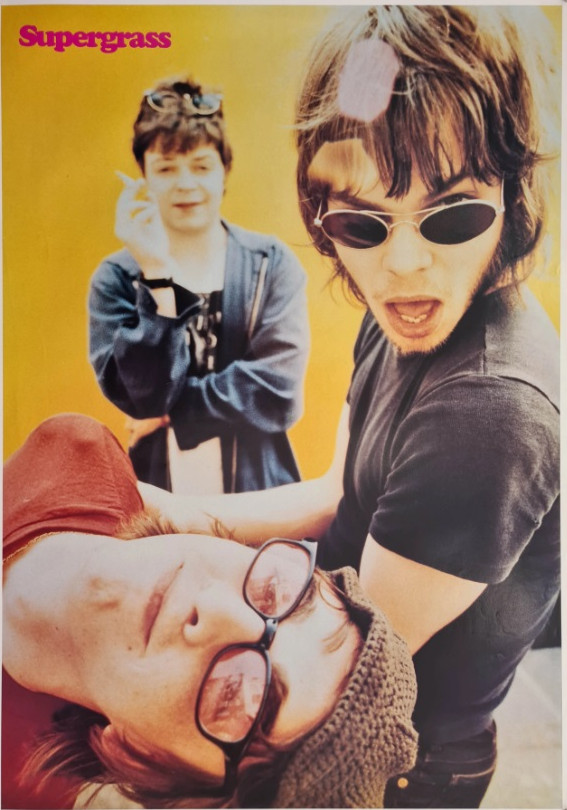
Supergrass in 1996: a little bit 60s, a lot 70s, entirely 90s

Fashion has always been cyclical, but this feels quite new (which doesn’t mean it is though). Currently, culture feels not like a wasteland but like Eliot’s actual Waste Land, a dissonant kind of poetic collage full of meaning and detritus and feeling and substance and ephemera but at first glance strangely shapeless. For example, in one of our current pop culture timestreams there seems to be a kind of 90s revival going on, with not only architects of Britpop like the Gallagher brothers and Blur still active, but even minor bands like Shed Seven not only touring the nostalgia circuit but actually getting in the charts. Britpop was notoriously derivative of the past, especially the 60s and 70s. And so, some teenagers and young adults (none of these things being as pervasive as they once were) are now growing up in a time when part of ‘the culture’ is a version of the culture of the 90s, which had reacted to the culture of the 80s by absorbing elements of the culture of the 60s and 70s. And while the artists of 20 or 30 years ago refuse to go away even modern artists from alternative rock to mainstream pop stars make music infused with the sound of 80s synths and 90s rock and so on and on. Nothing wrong with that of course, but what do you call post-post-modernism? And what will the 2020s revival look like when it rears its head in the 2050s, assuming there is a 2050s? Something half interesting, half familiar no doubt.

an alan smithee war

an annoying but perhaps necessary note; “Alan (or Allan, or Allen) Smithee” is a pseudonym used by Hollywood film directors when they wish to disown a project

Watch out, this starts off being insultingly elementary, but then gets complicated and probably contradictory, quite quickly.

Countries, States and religions are not monoliths and nor are they sentient. They don’t have feelings, aims, motivations or opinions. So whatever is happening in the Middle East isn’t ‘Judaism versus Islam’ or even ‘Israel versus Palestine’, any more than “the Troubles”* were/are ‘Protestantism versus Catholicism’ or ‘Britain versus Ireland’.

* a euphemism, which, like most names for these things is partly a method of avoiding blame – as we’ll see

Places and atrocities aren’t monoliths either; Srebrenica didn’t massacre anybody**, the Falkland islands didn’t have a conflict, ‘the Gulf’ didn’t have any wars and neither did Vietnam or Korea. But somebody did. As with Kiefer Sutherland and Woman Wanted in 1999 or Michael Gottlieb and The Shrimp on the Barbie in 1990 and whoever it was that directed Gypsy Angels in 1980, nobody wants to claim these wars afterwards. But while these directors have the handy pseudonym Allan Smithee to use, there is no warmongering equivalent, and so what we get is geography, or flatly descriptive terms like ‘World War One’, which divert the focus from the aggressor(s) and only the occasional exception (The American War of Independence) that even references the real point of the war. But, whether interfered with by the studio or not, Kevin Yagher did direct Hellraiser: Bloodline, just as certain individuals really are responsible for actions which are killing human beings as you read this. Language and the academic study of history will probably help to keep their names quiet as events turn from current affairs and into history. Often this evasion happens for purely utilitarian reasons, perhaps even unknowingly, but sometimes it is more sinister.

** see?

As the 60s drew to its messy end, the great Terry “Geezer” Butler wrote lines which, despite the unfortunate repeat/rhyme in the first lines, have a Blakean power and truth:

Generals gathered in their masses
Just like witches at black masses

Black Sabbath, War Pigs, 1970

There is something sinister and even uncanny in the workings of power, in the distance between avowed and the underlying motivations behind military action. Power politics feels like it is – possibly because intuitively it seems like it should be – cold and logical, rather than human and emotional. It doesn’t take much consideration though to realise that even beneath the chilly, calculated actions of power blocs there are weird and strangely random human desires and opinions, often tied in with personal prestige, which somehow seems to that person to be more important than not killing people or not having people killed.

Anyway, Geezer went on to say:

Politicians hide themselves away
They only started the war
Why should they go out to fight?
They leave that role to the poor

Still Black Sabbath, War Pigs (1970)

And that’s right too; but does that mean Butler’s ‘poor’ should take no responsibility at all for their actions? In the largest sense they are not to blame for war or at least for the outbreak of war; and conscripts and draftees are clearly a different class again from those who choose to “go out to fight.” But. As so often WW2 is perhaps the most extreme and therefore the easiest place to find examples; whatever his orders or reasons, the Nazi soldier (and there were lots of them) who shot a child and threw them in a pit, actually did shoot a child and throw them in a pit. His immediate superior may have done so too, but not to that particular child. And neither did Himmler or Adolf Hitler. Personal responsibility is an important thing, but responsibility, especially in war, isn’t just one act and one person. Between the originator and the architects of The Final Solution and the shooter of that one individual child there is a chain of people, any one of whom could have disrupted that chain and even if only to a tiny degree, affected the outcome. And that tiny degree may have meant that that child, that human being, lived or died. A small thing in a death toll of something over 6 million people; unless you happen to be that person, or related to that person.

As with the naming of wars and atrocities, terms like “genocide” and “the Holocaust” are useful, especially if we want – as we clearly do – to have some kind of coherent, understandable narrative that can be taught and remembered as history. But in their grim way, these are still euphemisms. The term ‘the Holocaust’ memorialises the countless – actually not countless, but still, nearly 80 years later, being counted – victims of the Nazis’ programme of extermination. But the term also makes the Holocaust sound like an event, rather than a process spread out over the best part of a decade, requiring the participation of probably thousands of people who exercised – not without some form of coercion perhaps, but still – their free will in that participation. The Jewish scholar Hillel the Elder’s famous saying,  whosoever saves a life, it is as though he had saved the entire world is hard to argue with, insofar as the world only exists for us within our perceptions. Even the knowledge that it is a spinning lump of inorganic and organic matter in space, and that other people populate it who might see it differently only exists in our perceptions. Or at least try to prove otherwise. And so the converse of Hillel’s saying – which is actually included in it but far less often quoted – is Whosoever destroys one soul, it is as though he had destroyed the entire world. Which sounds like an argument for pacifism, but while pacifism is entirely viable and valuable on an individual basis as an exercise of one’s free will* – and on occasion has a real positive effect – one-sided pacifism relies on its opponents not taking a cynically Darwinian approach, which is hopeful at best. Pacifism can only really work if everyone is a pacifist, and everyone isn’t a pacifist.

*the lone pacifist can at least say, ‘these terrible things happened, but I took no part in them’, which is something, especially if they used what peaceful means they could to prevent those terrible things and didn’t unwittingly contribute to the sum total of suffering; but those are murky waters to wade in.

But complicated though it all is, people are to blame for things that happen. Just who to blame is more complicated – more complicated at least than the workable study of history can afford to admit. While countries and religions are useful as misleading, straw man scapegoats, even the more manageable unit of a government is, on close examination, surprisingly hard to pin down. Whereas (the eternally handy example of) Hitler’s Nazi Party or Stalin’s Council of People’s Commissars routinely purged heretics, non-believers and dissidents, thus acting as a genuine, effective focus for their ideologies and therefore for blame and responsibility, most political parties allow for a certain amount of debate and flexibility and therefore blame-deniability. Regardless, when a party delivers a policy, every member of that party is responsible for it, or should publicly recuse themselves from it if they aren’t.

The great (indeed Sensational) Scottish singer Alex Harvey said a lot of perceptive things, not least and “[Something] I learned from studying history. Nobody ever won a war. A hundred thousand dead at Waterloo*. No glory in that. Nobody needs that.” Nobody ever won a war;  but plenty of people, on both sides of every conflict, have lost one – and, as the simple existence of a second world war attests, many, many people have lost a peace too.

*Modern estimates put it at ‘only’ 11,000 plus another 40,000 or so casualties; but his point stands

But the “causes” of war are at once easily traced and extremely slippery. Actions like the 1939 invasion of Poland by the armies of Germany and the USSR were, as military actions still are, the will of certain individuals, agreed to by other individuals and then acted upon accordingly. You may or may not agree with the actions of your government or the leaders of your faith. You may even have had some say in them, but in most cases you probably haven’t. Some of those dead on the fields of Waterloo were no doubt enthusiastic about their cause, some probably less so. But very few would have had much say in the decisions which took them to Belgium in the first place.

The buck should stop with every person responsible for wars, crimes, atrocities; but just because that’s obviously impossible to record – and even if it wasn’t, too complex to write in a simple narrative – that doesn’t mean the buck should simply not stop anywhere. Victory being written by the winners often means that guilt is assigned to the losers, but even when that seems fair enough (there really wouldn’t have been a World War Two without Hitler) it’s a simplification (there wouldn’t have been an effective Hitler without the assistance of German industrialists) and a one-sided one (it was a World War because most of the leading participants had already had unprovoked wars of conquest). That was a long sentence. But, does the disgusting history of Western colonialism, the arguably shameful treatment of Germany by the Allies after WW1 and the dubious nature of the allies and some of their actions make Hitler himself any less personally responsible for the war? And does Hitler’s own guilt make the soldier who shoots a child or unarmed adult civilians, or the airman who drops bombs on them any less responsible for their own actions?

Again; only human beings do these things, so the least we can do is not act like they are some kind of unfathomable act of nature when we discuss them or name them. Here’s Alex Harvey again; “Whether you like it or not, anybody who’s involved in rock and roll is involved in politics. Anything that involves a big crowd of people listening to what you say is politics.” If rock and roll is politics, then actual politics is politics squared; and for as long as we settle, however grudgingly or complacently, for pyramidal power structures for our societies then the person at the top of that pyramid, enjoying its vistas and rarefied air should be the one to bear its most sombre responsibilities. But all who enable the pyramid to remain standing should accept their share of it too.

So when you’re helplessly watching something that seems like an unbelievable waste of people’s lives and abilities, pay close attention to who’s doing and saying what, even if you don’t want to, because the credits at the end probably won’t tell you who’s really responsible.


passive-digressive

There are two kinds of people* – those who like forewords, introductions, prefaces, author’s notes, footnotes, appendices, bibliographies, notes on the text, maps, diagrams etc, and those who don’t. But we’ll get back to that shortly.

* there are more than two kinds of people. Possibly infinite kinds of people. Or maybe there’s only one kind; I’m never sure

A few times recently, I’ve come across the idea (which I think is mainly an American academic one, but I might be completely mistaken about that) that parentheses should only be used when you really have to use them (but when do you really have to?) because anything that is surplus to the requirements of the main thrust of one’s text is surplus to requirements full stop, and should be left out. But that’s wrong. That criticism can be and is extended to anything that interrupts the flow* of the writing. But that is also wrong.

*like this¹     

Unless you happen to be writing a manual or a set of directions or instructions, writing isn’t (or needn’t be) a purely utilitarian pursuit and the joy of reading (and of writing) isn’t in how quickly or ‘efficiently’ (whatever that means in this context) you can do it. Aside from technical writing, the obvious example where economy just may be valuable is poetry – which however is different and should probably have been included in a footnote, because footnotes are useful for interrupting¹ and expanding on text without separating the point you’re making from the point you’re commenting on or adding to.

                                                                                                                                                           ¹but bear in mind that if the interrupting is deliberate – people don’t write footnotes by accident – then it’s not a negative thing²                       

²and it can sometimes be funny

Poly-Olbion – that’s how you write a title page to pull in the readers

I would argue (though the evidence of poetry itself – especially the kind of expansive, long-winded poetry that I’m quite fond of, like Paradise Lost, Spenser’s Faerie Queen and Michael Drayton’s Poly-Olbion or even Craig Raine’s History – the Home Movie – perhaps argues against me) that a poem should be* the most economical or at least the most effective way of saying whatever you have to say. But even as I write that, it seems obvious that economical and effective are not necessarily the same thing. Some things can be expeessed in a few words, others can’t

* poets, ignore this; there is no should be in poetry

Clearly (yep), the above is a needlessly convoluted way of writing, and can be soul-achingly annoying to read; but – not that this is an effective defence – I do at least do it on purpose. As anyone who’s read much here before will know, George Orwell is one of my all-time favourite writers, and people love to quote his six rules for writing, but while I would certainly follow them if writing a news story or article where brevity is crucial, otherwise I think it’s more sensible to pick and choose. So, Orwell says;

Never use a metaphor, simile, or other figure of speech which you are used to seeing in print. Absolutely; although sometimes you use them because they are familiar, if making a specific point, or being amusing. Most people, myself included, just do it by accident; because where does the dividing line fall? In this paragraph I have used “by accident” and “dividing line” which seem close to being commonly used figures of speech (but then so does “figure of speech”). But would “accidentally” or something like “do it without thinking” be better than “by accident?” Maybe.

Never use a long word where a short one will do. The key point here is will do. In any instance where a writer uses (for example) the word “miniscule” then “small” or “tiny” would probably “do”. But depending on what it is they are writing about, miniscule or microscopic might “do” even better. Go with the best word, not the shortest, unless it’s also the best.

If it is possible to cut a word out, always cut it out. Note that Orwell wrote ‘always’ here where he could just have said If it is possible to cut a word out, cut it out. Not everything is a haiku, George.

Never use the passive where you can use the active. Surely it depends what you’re writing? If you are trying, for instance, to pass the blame for an assault from a criminal on to their victim, you might want a headline that says “X stabbed after drug and alcohol binge” rather than “Y attacks X.” You kind of see Orwell’s point though.

Never use a foreign phrase, a scientific word, or a jargon word if you can think of an everyday English equivalent. Both agree and disagree; as a mostly monolingual person I agree, but some words and phrases (ironically, usually ones in French, a language I have never learned and feel uncomfortable trying to pronounce; raison d’etre or enfant terrible for example) just say things more quickly and easily (I can be utilitarian too) than having to really consider and take the time to say what you mean. They are a shorthand that people in general understand. Plus, in the age of smartphones, it really doesn’t do native English speakers any harm to have to look up the meanings of foreign words occasionally (I do this a lot). The other side of the coin (a phrase I’m used to seeing in print) is that with foreign phrases is it can be very amusing to say them in bad translations like “the Tour of France” (which I guess must be correct) or “piece of resistance” (which I am pretty sure isn’t). So as long as you are understood (assuming that you want to be understood) use them any way you like.

Break any of these rules sooner than say anything outright barbarous. It’s hard to guess what George Orwell would have considered outright barbarous (and anyway, couldn’t he have cut “outright”?) but anyone reading books from even 30, 50 or a hundred years ago quickly sees that language evolves along with culture, so that rules – even useful ones – rarely have the permanence of commandments.

So much for Orwell’s rules; I was more heartened to find that something I’ve instinctively done – or not done – is supported by Orwell elsewhere. That is, that I prefer, mostly in the name of cringe-avoidance, not to use slang that post-dates my own youth. Even terms that have become part of normal mainstream usage (the most recent one is probably “woke”) tend to appear with inverted commas if I feel like I must use them, because if it’s not something I would be happy to say out loud (I say “woke” with inverted commas too) then I’d prefer not to write it. There is no very logical reason for this and words that I do comfortably use are no less subject to the whims of fashion, but still; the language you use is part of who you are, and I think Orwell makes a very good case here, (fuller version far below somewhere because even though I have reservations about parts of it it ends very well):

“Each generation imagines itself to be more intelligent than the one that went before it, and wiser than the one that comes after it. This is an illusion, and one should recognise it as such, but one ought also to stick to one’s world-view, even at the price of seeming old-fashioned: for that world-view springs out of experiences that the younger generation has not had, and to abandon it is to kill one’s intellectual roots.”

Review of A Coat of Many Colours: Occasional Essays by Herbert Read. (1945) The Collected Essays, Journalism and Letters of George Orwell Volume 4. Penguin 1968, p.72 

the fold-out map in The Silmarillion is a thing of beauty

Back to those two kinds* of people: I am the kind of person that likes and reads forewords, introductions, prefaces, author’s notes, footnotes, appendices, bibliographies, notes on the text, maps and all of those extras that make a book more interesting/informative/tedious.

*I know.

In one of my favourite films, Whit Stillman’s Metropolitan (1990), the protagonist Tom Townsend (Edward Clements), says “I don’t read novels. I prefer good literary criticism. That way you get both the novelists’ ideas as well as the critics’ thinking. With fiction I can never forget that none of it really happened, that it’s all just made up by the author.” Well, that is not me; but I do love a good bit of criticism and analysis as well as a good novel. One of my favourite pieces of writing of any kind, which I could (but choose not to) recite parts of by heart, is the late Anne Barton’s introduction to the 1980 New Penguin Shakespeare edition of Hamlet*.

*All of the New Penguin Shakespeare introductions that I’ve read have been good, but Barton’s is in a different league. John Dover Wilson’s What Happens in Hamlet (1935, though the edition I have mentions WW2 in the introduction, as I remember; I like the introduction) is sometimes easy to disagree with but it has a similar excitement-of-discovery tone to Anne Barton’s essay

I love Hamlet, and I’ve read it quite a few times, but I’ve read Barton’s introduction many more, to the point where phrases and passages have become part of my mind’s furniture. It’s a fascinating piece of writing, because Professor Barton had a fascinating range and depth of knowledge, as well as a passion for her subject; but also and most importantly because she was an excellent writer. If someone is a good enough writer* you don’t have to be interested in the subject to enjoy what they write.

* Good enough, schmood enough; what I really mean is if you like their writing enough. The world has always been full of good writers whose work leaves me cold

Beyond the introduction/footnote but related in a way are the review and essay. Another of my favourite books – mentioned elsewhere I’m sure, as it’s one of the reasons that I have been working as a music writer for the past decade and a half, is Charles Shaar Murray’s Shots from the Hip, a collection of articles and reviews. The relevant point here is that more than half of its articles – including some of my favourites – are about musicians whose work I’m quite keen never to hear under any circumstances, if humanly possible. Similarly, though I find it harder to read Martin Amis’s novels than I used to (just changing taste, not because I think they are less good), I love the collections of his articles, especially The War Against Cliché and Visiting Mrs Nabokov. I already go on about Orwell too much, but as I must have said somewhere, though I am a fan of his novels, it’s the journalism and criticism that he probably thought of as ephemeral that appeals to me the most.

a scholarly approach to comics

All this may have started – as I now realise that lots of things in my writing did – with Tolkien. From the first time I read his books myself, I loved that whatever part of Middle-Earth and its people you were interested in, there was always more to find out. Appendices, maps, whole books like The Silmarillion extended the enjoyment and deepened the immersion in Tolkien’s imaginary world. And they were central to that world – for Tolkien, mapping Middle-Earth was less making stuff up than it was a detailed exploration of something he had already at least half imagined. Maybe because I always wanted to be a writer myself – and here I am, writing – whenever I’ve really connected with a book, I’ve always wanted to know more. I’ve always been curious about the writer, the background, the process. I’ve mentioned Tintin lots of times in the past too and my favourite Tintin books were, inevitably, the expanded editions which included Herge’s sketches and ideas, the pictures and objects and texts that inspired him.

I first got one of those Tintin books when I was 9 or so, but as recently as the last few years I bought an in many ways similar expanded edition of one of my favourite books as an adult, JG Ballard’s Crash. It mirrors the Tintins pretty closely; explanatory essays, sketches, notes, ephemera, all kinds of related material. Now just imagine how amazing a graphic novel of Crash in the Belgian ligne claire style would be.*

*a bit like Frank Miller and Geof Darrow’s fantastic-looking, insanely detailed, but not all that memorable Hard Boiled (1990-92) I guess, only with fewer robots-with-guns shenanigans and more Elizabeth Taylor

a scholarly approach to cautionary 1970s semi-pornography/horror: the expanded Crash

A good introduction or foreword is (I think) important for a collection of poems or a historical text of whatever kind. Background and context and, to a lesser extent, analysis expand the understanding and enjoyment of those kinds of things. An introduction for a modern novel though is a slightly different thing and different also from explanatory notes, appendices and footnotes and it’s probably not by chance that they mainly appear in translations or reprints of books that already enjoyed some kind of zeitgeisty success.

When I first read Anne Barton’s introduction to Hamlet, I already knew what Hamlet was about, more or less. And while I don’t think “spoilers” are too much of an issue with fiction (except for whodunnits, which I have so far not managed to enjoy), do you really want to be told what to think of a book before you read it? But a really good introduction will never tell you that. If in doubt, read them afterwards!

Some authors, and many readers, see all of these extraneous things as excess baggage, surplus to requirements, which obviously they really are, and that’s fair enough. If the main text of a novel, a play or whatever, can’t stand on its own then no amount of post-production scaffolding will make it satisfactory.* And presumably, many readers pass their entire lives without finding out or caring why the author wrote what they wrote, or what a book’s place in the pantheon of literature is. Even as unassailably best-selling an author as Stephen King tends to be a little apologetic about the author’s notes that end so many of his books, despite the fact that nobody who doesn’t read them will ever know that he’s apologetic about them. Still; I for one would like to assure his publisher that should they ever decide to put together all of those notes, introductions and prefaces in book form, I’ll buy it. But would Stephen King be tempted to write an introduction for it?

* though of course it could still be interesting, like Kafka’s Amerika, Jane Austen’s Sanditon or Tolkien and Hergé (them again) with Unfinished Tales or Tintin and Alph-Art

That Orwell passage in full(er):

“Clearly the young and middle aged ought to try to appreciate one another. But one ought also to recognise that one’s aesthetic judgement is only fully valid between fairly well-defined dates. Not to admit this is to throw away the advantage that one derives from being born into one’s own particular time. Among people now alive there are two very sharp dividing lines. One is between those who can and can’t remember the period before 1914; the other is between those who were adults before 1933 and those who were not.* Other things being equal, who is likely to have a truer vision at the moment, a person of twenty or a person of fifty? One can’t say, though on some points posterity may decide. Each generation imagines itself to be more intelligent than the one that went before it, and wiser than the one that comes after it. This is an illusion, and one should recognise it as such, but one ought also to stick to one’s world-view, even at the price of seeming old-fashioned: for that world-view springs out of experiences that the younger generation has not had, and to abandon it is to kill one’s intellectual roots.”

*nowadays, the people who can or can’t remember life before the internet and those who were adults before 9/11? Or the Trump presidency? Something like that seems right