There have been a lot of obituaries for the great Mark E. Smith in the last week. This will not be one of the better ones, but it is my one. In my experience, the bands you love in your teens are, although they have a special place in your memory, mostly not the same bands you listen to for the rest of your life (to date). But unlike most of my favourite artists from those long years between 16 and 20 or thereabouts, I never went off The Fall, I just didn’t listen to them very often. But whenever I did, they seemed just as strange and clever and funny and unique as they had the first time I heard them.
The Fall are legendarily supposed to be a hard band to like, or to get into, but I never found it to be so. The hard-to-like quality obviously has something to do with their spiky, unpredictable sound (and Mark E. Smith’s indomitable/hectoring voice) but is perhaps also due to the fact that – for the most part – their music doesn’t appeal to the emotions, it is not (hopefully) about you; nobody (as far as I know) wallows in The Fall, the way as an adolescent I wallowed in The Cure or The Smiths or the Cranes or whoever it might be. The first Fall song I heard was a snippet of then-current single ‘Telephone Thing‘ (a funky, catchy wah-wah-led pop song with a phone-tapping theme, which namechecks EastEnders actress Gretchen Franklin – i.e. as typically atypical as any Fall single) on The Chart Show, which was enough to make me buy its parent album, Extricate. As a reader of the music weeklies (Melody Maker was my favourite, but I often bought NME and Sounds as well) I was of course aware of The Fall, and specifically Mark E. Smith, at that point – as he was to remain – a figure who polarised the magazines’ writers, while – unlike say Morrissey or Robert Smith – having the (admittedly sometimes grudging) respect, seemingly, of all of them.
Extricate is in itself a classic Fall album, but it was intriguing in all kinds of ways. I liked. firstly, the tunes, but also the the mix of the un-selfconscious artiness of the abstract cover painting/assemblage by contemporary artist Anthony Frost, with the barbed humour of the lyrics (the album contains the classic ‘British People In Hot Weather‘as well as the aforementioned ‘Telephone Thing‘ and (I have the cassette version) ‘Arms Control Poseur‘). But one of the great things about coming to this – or I think any – Fall album as an introduction to the band, is that it hints at so much more than it contains. This, the reviews said, was an unusually accessible/conventional Fall album and indeed, Mark E. Smith’s sleevenote reinforced that impression:
There is no central track, as I’ve/we’ve tried to give out The Fall as it should be and not as it is perceived. Therefore, the first half of the disc reflects on things witnessed and/or sensed, while the second half is NOW. This means there’s a thin dish-up of stories and characters etc, but that format’s well flogged and pushed of recent, so hopefully EXTRICATE’s simplicity will confound all bores, imitators and anxiety mongers./ EXTRICATE! All the best from M.E.S.
This was odd. Mark E. Smith reminded me of nothing so much as Alex from A Clockwork Orange; sophisticated, articulate, menacing but not unfriendly. A few years later, when I began to read Wyndham Lewis I was reminded irresistibly of Mark E. Smith. And indeed the whole of The Fall’s early work is extremely Vorticist/BLAST-like. I didn’t know though until quite recently that Mark E. Smith was a fellow Wyndham Lewis fan (though I think MES often agreed with Lewis where I don’t) – it seems so obvious now. And the reference to stories and characters was intriguing; if this was The Fall gone normal then what did they sound like before?? I think the next album I bought might have been the essential compilation of early material Palace Of Swords Reversed; here were ‘Marquis Cha-Cha‘, a story about a Lord Haw Haw character stranded in South America which opens
“He can never go home
Stranded in South America, nothing to go home for
Just another Brit in the bar
Hernandez Fiendish comes over to me
Offers a job as broadcaster…”
who else was writing songs like that? Or ‘Leave The Capitol‘ (“exit this Roman shell!“) or, even more peculiarly, ‘Wings‘:
“Day by day
The moon gains on me
Purchased pair of flabby wings
I took to doing some hovering”
And that’s just the lyrics; another thing about The Fall that made an impression on me early on was that, although MES was incredibly fussy and perfectionist about the band’s music, he wasn’t snobbish in the usual way; no tune, if it was catchy, was too silly for Mark E. Smith. Think of the speedy but somehow miniature-sounding rock guitar on ‘Underground Medicine‘ or loping, bouncy beat to ‘Gramme Friday‘ or the oddly jaunty, countryish ‘Fit And Working Again‘. or the kazoo on ‘The North Will RiseAgain‘– this was ‘angular’ (the definitive descriptive term for late 70s/early 80s UK indie rock) if you like, but it was not standard ‘post-punk’ music, nor was it (as it could easily have been) twee in that beloved ramshackle UK indie/C86 kind of way. Perhaps because Mark E. Smith was not (99% of the time) a melodic singer, the band could play anything behind him and it sounded right. When, at the beginning of one of my favourite songs, ‘Slates‘, MES shouts ‘this is the definitive rant‘ he’s nailing part of the charm of his work. As long as the rant was in place, no tune was too small, too jingly or too silly to make something worthwhile out of.
After Palace Of Swords Reversed I bought anything I could get my hands on. Luckily there was a lot of it, and it was mostly pretty affordable, especially the stuff from the band’s then slightly maligned, now justly celebrated mid-80s period of relative commercial success. In itself, that success was odd and underlined just how unique the band, and specifically Smith’s vision, was. I loved that Mark E. Smith saw nothing elitist or strange about working with a ballet company, or in writing for the theatre and working with ‘serious’ artists and yet the people I knew who derided Morrissey as being “poncy” never seemed to think that about MES. The fact that he refused to separate the ‘high’ arts from his work with The Fall was so powerful. Everyone knows, for example, that Brian May is an astrophysicist, but imagine if astrophysics had somehow been indivisible from his work with Queen; they would have been far a more peculiar and far less successful, but also (with no offence intended to the band or its members) probably more interesting band.
Although most of my favourite Fall albums are the early ones (especially Dragnet, Grotesque (After The Gramme) and Hex Enduction Hour) those 80s albums with the Mark and Brix-led lineup(s), especially The Wonderful and Frightening World Of The Fall are pretty unassailable and perhaps the least overtly commercial ‘commercial’ period of any band I can think of. The band stayed good though, and although I am not a Fall completist (a vocation rather than a hobby) I’ve found that any Fall record one picks up will have something great on it; and there aren’t many bands with a 40 year career you can say that about.
A few random but significant (to me) Mark E. Smith/Fall things:
my favourite Fall release of them all is Slates (1981); typically awkward, it is a brilliantly ungainly 6-track 10″ which Mark E. Smith was proud of as it was too long to qualify for the singles chart but too short for the album chart; not that it was likely to trouble either one. Plus, it opens with MES shouting “Pink press threat!
I must be impressionable; I think I got into Albert Camus because The Fall were named after one of his books.
I don’t remember which music paper it was in, but Mark E. Smith was a guest reviewer in one of the weeklies c.1992 and gave Morrissey’s Your Arsenal a surprisingly positive(ish) review. One phrase that stuck in my memory (perhaps incorrectly) and seems definitively MES-ish to me is “the guitar player has too much equipment”
When I first read (in the late 90s?) Christopher Isherwood’s autobiographical novel Lions And Shadows (1938) the idea of ‘The Other Town’, the sinister unseen parallel reality accessed through various apparently ordinary gates and doorways in Cambridge reminded me irresistibly of the band, especially the bizarre, creepy but also funny narrative songs like the (actually quite Lovecraftian) ‘Impression Of J. Temperance’ :
“A never seen dog breeder
This is the tale of his replica
Name was J. Temperance
Only two did not hate him
Because peasants fear local indifference
Pet shop and the vet, Cameron…”
when I finally listened to the classic German band Can it was because the Fall song ‘I Am Damo Suzuki‘ made me curious about them
one of the key things about The Fall’s music is its palate-cleansing quality; their music makes almost any other comparable popular music sound sentimental in comparison. And yet on the rare occasions (‘Bill Is Dead‘, ‘Edinburgh Man‘) when MES is sentimental the songs are among his best.
‘Edinburgh Man‘ was probably the first song I heard by a band I liked that was about a place I knew
I have been a Fall fan for half of my life, but I’ve only met maybe 4 or 5 other people who like them (though I realise they are quite popular)
I never particularly wanted to meet Mark E. Smith, but I’m very sad that he’s dead.
PS – the title for this piece is from an enigmatic line in the – obviously – highly peculiar song New Face In Hell:
The dead cannot contradict/Sometimes the living cannot
“Time, time, time, see what’s become of me…” When The Bangles covered Simon & Garfunkel’s A Hazy Shade of Winter in 1987, the song was 21 years and one month old, and now (January 2018) The Bangles’ version (from the underrated – according to me – movie of Bret Easton Ellis’ Less Than Zero) is 30 years and one month old; time flies, another year draws to an end etc etc etc. It took until the early 1990s for 60s nostalgia to really take hold and, true to form 30 years on from the 1980s, 80s nostalgia is everywhere; in music, in fashion and (especially) in film and television. Even the tired, terrifying old tropes of the cold war are back; excellent stuff.
It’s approximately 90 years since HP Lovecraft wrote, “The oldest and strongest emotion of mankind is fear, and the oldest and strongest kind of fear is the fear of the unknown.” (in the essay Supernatural Horror in Literature (1926-7)), and it’s got to be something like 25 years or so since I first read those words (in the HP Lovecraft Omnibus Vol 2, Dagon and other Macabre Tales, Grafton Books, 1985, p.423 ). So what about it?
Lovecraft might well be right about fear; but more pertinent to my intro is that possibly the oldest emotion preserved in literature – at least (major, major caveat, based on my ignorance) in the literature of Europe – is nostalgia, and the feeling that things were better in the past. (see also here for an excellent & thoughtful look at nostalgia) The literature of the ancient Greeks makes clear that the age of heroes already lay in the distant past. The pride and arrogance of Imperial Rome was tempered – formally, at least – by the belief that it was a pale imitation of the Republic which the Empire supplanted. The earliest literature in (old) English makes it clear that the inhabitants of what was one day to become England were a) not entirely sure of what had come before, but b) knew that it was in many ways ‘better’ and certainly more impressive than the present day of the 8th century:
“The work of the Giants, the stonesmiths,/ mouldereth… And the wielders and wrights?/Earthgrip holds them – gone, long gone”
The Ruin, (Translated by Michael Alexander, The Earliest English Poems, Penguin Classics (3rd edition, 1991, p. 2)
Even closer to home (for me), the earliest literature of Scotland, the Goddodin of the poet Aneirin, does something similar. The poem dates from somewhere from the 7th to 10th century and is written in the ancient British language now called Old Welsh (which it is of course, but it is also, geographically, old English and old Scots, since it seems to have been spoken in a far wider area than modern Wales). The Goddodin is a series of elegies mourning the loss of the warriors of the eponymous ancient kingdom (which spread roughly over what are now the modern Scottish regions of Lothian and Borders) in battle, and with them the heroic culture of their era.*
*a perennial theme that crops up in a very similar form in the Fortinbras subplot of Shakespeare’s Hamlet, preserved at one remove from the earliest known version of the story, Saxo Grammaticus’ elemental/mythological 13th century version from his Gesta Danorum. But even this is assumed to be derived from an earlier, lost source, probably Icelandic.
To say that nostalgia as opposed to fear may be mankind’s oldest emotion is problematic. Logically it’s difficult (chicken/egg innit), but also, for all of its obvious dominant ingredients – sadness/regret and happiness – a large component of nostalgia can be fear, and, specifically, Lovecraft’s ‘fear of the unknown’ (in this case the always unknowable future). That’s problematic for many reasons. In the examples of nostalgia noted above, the glamour (not intended to have its old, magical meaning, but actually that’s probably even more appropriate) attached to the past is partly because it can’t come again. If the people of “now” were as noble, heroic etc as the people of “then”, then somehow the past and the ancestors – a vital component of the values of most non-Christian and pre-Christian cultures – are devalued and not receiving their due reverence.
Although it seems almost incomprehensible to someone of my generation, there seems to be a similar, ‘don’t disrespect the ancestors’ unease nowadays in some circles that’s manifested in an unwillingness to condemn wholesale the expansion/existence of the British Empire. And really, it’s not very complicated – it is entirely possible to be impressed by and/or grateful for the innovations of the Victorian era – flushing toilets, railways and whatnot – while also seeing the culture and times for what they were; repressive, oppressive, misogynistic, racist, ignorant. It shouldn’t be difficult, because it’s happened before. Christianity made it easy for previous ages to condemn the pagan empires of Rome, Greece, Egypt and co (and indeed the ancient Arabic civilisations) without abandoning the inventions and innovations of those same ‘decadent’ civilisations. Indeed, even at the height of Christian belief in Europe, interest in the cultures of the pagan empires remained high, even if Christian scholars felt the need to inflict a version of their own value system onto their researches. There’s no reason that people now shouldn’t be able to do the same with the ages we have left behind, or are hopefully in the process of leaving behind. Yes, good things come from bad cultures or societies, but not because of the bad, but just because (most) human beings are extraordinary.
In 2017 there seemed to be – as I suppose there always must be – an ever-increasing number of warring nostalgias and counter-nostalgias, the latest being for the Russian Revolution in 1917 – a violent event, with vast and oppressive consequences and therefore definitely negative, but like most revolutions, born of aspirations and ideals which are hard to dismiss. In fact, Dickens’ famous opening to A Tale Of Two Cities seems uncannily prophetic, because Dickens – as he explicitly realised – could see that human nature and human actions remain fairly constant:
“It was the best of times, it was the worst of times, it was the age of wisdom, it was the age of foolishness, it was the epoch of belief, it was the epoch of incredulity, it was the season of Light, it was the season of Darkness, it was the spring of hope, it was the winter of despair, we had everything before us, we had nothing before us, we were all going direct to Heaven, we were all going direct the other way – in short, the period was so far like the present period, that some of its noisiest authorities insisted on its being received, for good or for evil, in the superlative degree of comparison only”
I think it’s probably true that it’s always the best of times, for somebody, in some respect. It’s certainly always the worst of times for other people; which sounds complacent or at least fatalistic, but only if one doesn’t try in some way to improve things. This kind of impersonal nostalgia – for ‘better’ times – is, necessarily selective. (in fact, all nostalgia is, because perception is selective – hmm, it seems like this just started copying the thing about realism I wrote recently, but bear with me) and relies to a large degree on ignorance and/or self-deception in order to be nostalgia at all.
History isn’t really a subject, history is everything; people, peoples, cultures, societies, but, necessarily “history” as it’s taught, or absorbed through popular culture, filters and simplifies. That’s important, because when people in Britain talk nostalgically about ‘Victorian values’ you can (usually) assume that they don’t intend any reference to the exploitation and subjugation of untold millions of people, child prostitution and child labour, the life expectancy of the average Victorian person etc. And, as always, history is more complex than its popular image. The Victorian era may be symbolised for British people by the building of railways or the expansion of the Empire, or by Jack the Ripper, or Queen Victoria being unamused, or by the establishment’s treatment of Oscar Wilde; but it was also the era that produced and shaped Jack the Ripper, Queen Victoria and of course, Wilde himself, as well as the whole decadent movement. Interestingly, Sigmund Freud was only two years younger than Wilde; an apparently value-free but perhaps significant observation.
This kind of complexity is what makes history more interesting than it’s sometimes given credit for. The Scottish Enlightenment was a wonderful, positive, outward-looking movement, but it coexisted in Scotland with a joyless, moralising and oppressive Calvinist culture. Time and nostalgia have a way of homogenising peoples and cultures. The popular idea of ancient Rome is probably one of conquest, grandeur and decadence, but what is the popular idea, if there is one, of ‘an ancient Roman’? Someone, probably a man, probably from Italy, in a toga or armour; quite likely an emperor, a soldier or a gladiator, rather than say, a merchant, clerk or farmer. But even within this fairly narrow image, a complex figure like the emperor Elagabalus (who was Syrian, teenage, possibly transgender) defeats the obvious school textbook perceptions of ‘Roman-ness’ (as, perhaps, it did for the Romans themselves). Even in our own time, the fact that older generations from the 60s/70s to the present could lament the passing of times when ‘men were men & women were women’ etc is – to say the least – extremely disingenuous. Presumably what they mean is a time when non-‘manly’ men could be openly discriminated against and/or abused and women could be expected to be quiet and submissive.
Similarly, throughout my life I have heard people – and not only right-wing people – talk about the economic success that Hitler brought to Germany. But you don’t have to be the chairperson of a financial think-tank to see that a programme of accelerated militarism that requires war in order to function isn’t really a viable economic model for anyone who doesn’t espouse the ideology of Nazism or at least some kind of Imperial expansionism. But people seemingly want to believe that if it wasn’t for all those pesky Nazi faults Hitler could have been a great leader. He couldn’t, though, because he was a real person, his beliefs were inseparable from everything he did and he really did exist and do the things he did and therefore wasn’t a great leader.
As I’ve said too many times already, history is complex, but nostalgia is too. It’s impossible to express in a single word other than itself, though interestingly, its original Greek meaning (‘homecoming pain’) is actually more specific than the word itself has come to be in English. Possibly because of this hard-to-express quality, most European languages tend to use variations of the word ‘nostalgia’ rather than having a word of their own with the same meaning. But despite that complexity, it tends to have a simplifying quality.
The reason for that simplifying is because, for many people, nostalgia equals safety. Political reactionaries always look to the past for examples of stability and they’ll always find them – but that stability is an illusion, caused by the fact that the past itself is stable, but only in the one sense of being unchangeable. And until the invention of the time machine it will remain unchangeable – but even so, through endless re-interpretations, re-evaluations and new points of view, the picture we have of it fluctuates almost daily. I think it’s fair to assume that (as Dickens implied) every ‘golden age’ masks a dark age but the temptation to look at the past fondly is hard to resist. It often seems otherwise, but people are, by and large fairly positive and want to look back with fondness, even if it’s a melancholy fondness. And the result of that is a softening and distancing of the darker aspects of history. A quote from the great Scottish singer/songwriter Alex Harvey strips away the soft-focus effect that the distorting lens of nostalgia puts on the past:
“Nobody ever won a war. A hundred thousand dead at Waterloo. No glory in that. Nobody needs that.” (quoted in Charles Shaar Murray’s Shots From The Hip, Penguin Books, 1991, p.71)
Numbers aside, that seems indisputably true; but evidently it isn’t, because people are entirely capable of being nostalgic about almost any negative event. ‘The Blitz Spirit’ is remembered fondly in Britain, because the few people still alive who remember it survived it, and because it happened decades ago and bombs are no longer raining down on the UK. Cinema and television is full of nostalgia for even the darkest times, largely because people are supposed to be entertained by these things and structures, stories and likeable characters are imposed on the past to make it controllable and enjoyable. And that’s just as true for the harrowing ‘war is hell’ type of film as it was for The Dirty Dozen and just as true of the revisionist ‘elegiac’ Western as for the old John Wayne kind. The revisionist Westerns tend to focus on the dying days of the ‘old West’ in grimly realistic detail, but while barely acknowledging the genocide and horror that is the real historical backdrop of the period. In a way, that’s fair enough – those stories are not about that subject – but when there are not only no (or very few) films about that subject, and it is barely even acknowledged by ‘official’ narratives of taught history, it’s a stark and telling omission.
It’s my personal feeling that nothing truly good is produced by adversity, or at least that if it is, that doesn’t offset what may have been lost. Which isn’t to deny that people are amazing, resourceful, resilient and inspiring; they are. If every golden age masks a dark age, it’s probably true too that every dark age is shot through with some elements of positivity, although I won’t scrutinise that statement too closely. Countries which were colonised by the British Empire (or indeed any empire) manage to grow and assert their independence and define their own cultures, which is good; but we can never know what or who was lost when their histories were derailed.
I love blues music (and indeed the whole phenomenon of western popular music which mostly grew from it), but again; we can never know what would have been, or what would exist now, had those creative energies not been re-directed by a couple of hundred years of slavery and exploitation. Individuals are capable of achieving almost superhuman feats of bravery and resourcefulness when facing adversity; escaping from abusers and kidnappers, rescuing people from disasters etc. But no-one in their right mind would – I hope – recommend that young people undergo these kinds of ordeals in order to fully achieve their potential.
I don’t think it’s particularly useful for individuals (although governments and institutions are a very different thing) to feel guilty about the deeds of the people of the past (or to be proud of the achievements of the past, really), but I also see no need to pretend that – for example – because India has a big railway network, the British Empire did something positive by oppressing the country’s people and culture and stealing its resources. Countries that weren’t colonised by the UK or Belgium or France or Russia have railways too. Nothing good came of the British in India. India survived anyway, just as people survive catastrophes everywhere and achieve amazing things in doing so. But you don’t celebrate an earthquake because people survive it and thrive afterwards.
Lou Reed and Rachel in 1977 (Mick Rock)
So much for impersonal nostalgia – the personal kind is in many ways very similar, if less destructive. I’ve always been a nostalgic person; both for things I don’t remember, or that were long before ‘my time’ (you name it; silent movies, the 1960s, the Weimar Republic, Hong Kong cinema of the 70s, the Northern Renaissance, the Scottish Enlightenment, 80s teen movies) and, more naturally perhaps, for things within own experience. One of the things that initially made me write this was a reference in Anthony DeCurtis’ biography Lou Reed – A Life (John Murray, 2017)* about Reed’s 70s partner/muse Rachel, a fascinating figure who seems to have vanished into history. In Googling her I discovered various sites about vanishing/vanished aspects of New York and, because old photographs are endlessly fascinating, somehow segued from that to the vanished Jewish East End of London and the vanished and vanishing everything of everywhere. But if the Jewish East London of the 1960s and the underbelly of 70s New York are irretrievable, then so is one’s own childhood, not that one wants to retrieve it, exactly.
* It’s an excellent book, but one which illustrates some of my points; Lou Reed spent most of his adult life complaining about his conservative 1950s childhood, but DeCurtis himself has a more rose-tinted view of the period, saying “In stark contrast to the identity politics of today, assimilation was the order of the day…and none of Reed’s friends, Jewish or not, recall incidents of anti-Semitism or bias” (p.14) – fair enough you would think, except that just 22 pages later he also says, ‘Richard Mishkin was a fraternity brother of Allan Hyman’s in Sigma Alpha Mu, a so-called Jewish fraternity because at the time Jews were not permitted in many other fraternities.” (p.36)
Most of the polaroids etc that make up the ever-browsable (later note; but sadly diminished) Internet K-hole appear to be American, but any child of the 80s will recognise the texture and aura of the era we grew up in. When George Orwell wrote (I think in The Lion and the Unicorn, but I might be wrong; I’ll check) – “What have you in common with the child of five whose photograph your mother keeps on the mantelpiece? Nothing, except that you happen to be the same person” he was putting his finger on one of the strange paradoxes of culture, heritage and nostalgia. The memories I have of the 1980s are made up of a distorted, child’s-eye view of events and culture which is truly mine, plus things I know now that I didn’t know then, plus other peoples’ memories, TV and films. The most potent sources of nostalgia seem to be – as the makers of shows like Stranger Things and Dark, and films like Super 8 and (too many to list) are very aware – the things you didn’t notice that you had noticed, the most ephemeral details; jingles from adverts, fonts, packaging, slang.
It’s an interesting point. The fleetingness with which you experience things has nothing to do with their power as memories. I have no idea what the first horror film I saw was, but I do know that a scene on some TV show where skinheads (or possibly a single skinhead) glued a man’s hands to the wall of a lift/elevator scared me as a child and stayed with me for a long time. Maybe that was because I used to see skinheads around on the streets (you had to watch the colour of the laces in their Doc Martens to see if they were ‘bad’ skinheads or not – though they were probably kids too, I now realise). I also know now (but didn’t then) that these were the second wave of skinheads, which is why I also saw Oi! written on various walls around the town; at the time I don’t think I ever made the connection. Again, when one thinks of the impact of very small occurrences it shows how impossible a really objective view of history is. I no longer bear any high school grudges, but without really thinking about it, there are many small and/or random sneers and insults from my youth that have stayed with me in vivid detail, along with the people and places involved. Similarly (but nicer) I will eternally feel grateful to two beautiful black girls in Camden in (I think) 1990 or 91 who made remarks to me which, even at the time were ‘not politically correct’ but which pleased me immensely; it is among the very few teenage memories that boosted rather than eroded my confidence. A tiny thing, barely even an ‘incident’, but a big deal to a painfully shy adolescent. What to make of such a minor, slightly embarrassing episode? I can still vividly remember – although it was not a rarity – my whole face burning when I blushed. People often remarked on the redness of my blushes and I remember – not even slightly nostalgically – being compared to a tomato, being told I looked like I would ‘burst’ etc at high school. And thinking about it, there’s no real conclusions to draw from that memory except that real nostalgia, unlike the nostalgia industry (“it was the 70s: Buckaroo!“, to quote Alan Partridge) is particular, not general. The Camden episode includes references to youth, gender, race etc, but it has nothing important to do with any those factors and I doubt if the two girls remembered it even days later. These are not the kinds of incidents which are worthy of a biographer’s attention; but they define my youth every bit as much as the music I listened to, the sweets I remember that no longer exist, or the clothes I wore.
My particular 80s nostalgia has less to do with “the 80s” in the sense it that it appears in TV shows and films as it does a litany of gloomy-sounding things: the urban decay of 60s and 70s council estates, indoor markets, army stores, arcades, brutalist churches that harmonised with those reinforced concrete towers that the fire brigade used for practise. This is a kind of eeriness as nostalgia; reflected in my liking for empty streets and art that represents empty streets: Algernon Newton, Maurice Utrillo, Takanori Oguiss , the photography of Masataka Nakano and taken to its extreme, Giorgio de Chirico, where the emptiness isn’t truly vacant so much as it is pregnant , reminding me always of – nostalgia again – the ruined city of Charn in CS Lewis’ The Magician’s Nephew (by far my favourite Narnia book) – which made a huge impression on me as a child. Charn may even be where my liking for such things as ‘urbex’ photography, like that of Andre Govia, and of course, The Ruin, quoted way back in the first paragraph, comes from.
The Red Tower by Giorgio de ChiricoStreet scene by Takanori Oguiss
“The passing of time and all of its crimes, is making me sad again” – sadly, one of those crimes is that when I first heard that line (from Rubber Ring by The Smiths) in 1989 or thereabouts, Morrissey seemed to be on the side of the downtrodden and marginalised, whereas now he seems to be one of that increasing number of people who pretends that the mainstream of British culture is itself somehow being marginalised; which is not only patently ridiculous but impossible – and nostalgic, of course.
There’s a whole culture industry with its own cultural shorthand that has been constructed to bolster the standardised view of any given period. Nowadays, there’s whole genre of TV shows where any decade can be summed up by some B-list cultural commentator or celebrity (often not old enough to remember what they are “remembering”) saying “He/she/it were mad, weren’t they?” about some figurehead of the era. Not so great of course, when that figurehead turns out to be Jimmy Savile or Rolf Harris, at which point even nostalgia, like history, has to be revised.
The beauty of all nostalgia is that it’s selective. The 70s that Morrissey seems to feel nostalgic about (in the true, mixed feelings sense; witness the whole of Viva Hate, which I love) wasn’t ‘better’ than nowadays, but the writer of its songs was young then; he isn’t now. There are younger people who are also nostalgic about the 70s, or the 80s, because they see the partial versions of those era(s) preserved by those who were there then, or who pretend to have been. The people who mourn the loss of the blitz spirit are really no different from me wishing I’d seen the Beatles. The people who are nostalgic for the Empire will (hopefully) never have to deal with being in charge of a mass of powerless, subject people whose resources they are stealing (or be the subject of the same), but they can enjoy the things that Empire brought to all of our lives. The ‘glory’ of Empire, like the mythical ages of Greece and Rome, and the giants that the Anglo-Saxon poet pondered over, only exists now as the faded, distorted memory of a faded, distorted memory. Like the 70s, like the 80s, like the 2010s, like yesterday, they are wonderful and terrible because they can never come again.
Happy New Year!
A note on the text above:throughout this article (and many others) I refer to ‘people’ and ‘humankind’ in what is intended to be an inclusive kind of way, referring to people of all races, genders or indeed lack of gender. I probably also refer to gender in a binary sense, partly due to context, partly no doubt through laziness. However, I do have a tendency to not use the term ‘cis’, unless absolutely necessary – for me personally, the word ‘women’ includes trans women and the word men includes trans men. I don’t intend any offence by this, but I also don’t really mind if anyone is offended. I think it’s a shame that something as basic (if not simple) as a person’s gender should be a matter of opinion, but so it seems to be. My own view is that the contents of someone’s underwear is none of my business unless they explicitly make it so.
2017, like most years but somehow more so, was filled with unpleasant things, events and people. For me though, one of the more pleasant features of the year was that I made the effort to visit art galleries more often than previously, in particular to see the superb exhibitions held by the National Galleries of Scotland; after missing Modern Scottish Women in 2016, I was determined to see Beyond Caravaggio at the National Gallery and especially True to Life – British Realist Painting in the 1920s and 1930s at the National Gallery of Modern Art. Both of these exhibitions were excellent, but I am writing mainly about the latter. As curator Patrick Elliott was clearly aware (see also the essay What Sort Of Truth? British Painting Between The Wars by Sacha Llewellyn in the excellent exhibition catalogue), ‘realism’ is not a simple thing to define, and indeed it seems strange that (for example) the peculiar and highly artificial painting of Maxwell Armfield and the shockingly immediate work of David Jagger should be considered the same kind of art.
‘Pacific Portrait’ (1929) by Maxwell Armfield (left) and ‘The Conscientious Objector’ (1917) by David Jagger (right)
If ‘Realist’ at first seems a pretty simple and unambiguous description, the fact that many of the artists (Dod Procter, Meredith Frampton, Gluck, Glyn Philpott) and paintings discussed in the exhibition catalogue also appear, equally convincingly, in Edward Lucie-Smith’s book Art Deco Painting (Phaidon, 1990) demonstrates just what a subjective term it really is. What the word seems to denote in the context of this exhibition is something like ‘representational rather than abstract’, which admittedly is an extremely unwieldy and far too wide term.
In the period in which the art of the exhibition was produced (the title says the 1920s and 1930s, but a few earlier and later works were included, so roughly from the years of World War One up to the first half of World War Two), the word realism tended to have mainly negative connotations; for which see Billy Bunter author Frank Richards’ famous 1940 reply to George Orwell’s article Boys’ Weeklies; “They go grubbing in the sewers for their realism, and refuse to believe in the grass and flowers above ground – which nevertheless, are equally real!” This was and still is an aspect of a wider conception of realism that Orwell himself attacked occasionally in its more extreme political forms. Today, ‘realpolitik’ is used as a term of criticism, but in fact almost all political or social ‘realism’, even when respectable, is basically an excuse for people or governments not to act compassionately when it becomes unprofitable to do so. People who term themselves realists rather than optimists or pessimists tend (in my experience) to lean more towards the latter, but with an added smug quality as befits someone who is never surprised when bad things happen. While the artists of True To Life presumably held beliefs and opinions on a wide range of issues, these are by and large absent from their work as collected here. This is not the 1920s of the General Strike or the 30s of the Depression and The Road To Wigan Pier, let alone the 20s and 30s of Lenin, Mussolini and HItler, or perhaps more to the point, of Picasso, Matisse, or Dadaists and Surrealists.
Edward McKnight Kauffer – poster for the London Underground (1930)
Nevertheless, from the delicate figure studies of Dod Procter to James Cowie’s pastoral portraits, it is a window onto certain aspects of British art and life between the wars. Also, the painters’ rejection of the vocabulary of avant garde modernism should be seen in the context of the time; while abstract or semi-abstract art had been at the cutting edge of modernism in the years just prior to and during World War One, not only had the innovators of that era moved on (why not look at my article about Wyndham Lewis in the 20s here?), but the angular, dynamic language of modernism had infiltrated mainstream culture to the point that institutions as staid as the Royal Mail were using designers like John Armstrong and Pat Keely to give the Post Office a modern identity, while Edward McKnight Kauffer and others did similar work for the London Underground and, outside of the UK, fascist Italy, Hitler’s Germany and the Soviet Union all utilised versions of modernist design to establish new national identities. In that sense, the idiosyncratic, apparently old-fashioned and above all individualistic styles adopted by British artists outside of the more radical movements can be seen as, if not revolutionary, then at least stubbornly dedicated to their own visions.
Although it may seem paradoxical or incompatible, the ‘realism’ of these artists is founded to some extent on escapism and idealism; but maybe that is truer of realism in a wider sense than at first seems to be the case. The definitive artistic form of realism (if we think of everyday life as ‘real’ – but I don’t really want to get into philosophical questions here as I’d like to finish this article at some point) nowadays is probably something like instagram, or on a slightly grander level, the documentary film, but the very nature of documenting reality – whether in film, photographs, painting or in writing – is necessarily selective, and in being so, tends towards some kind of commentary (and/or judgement) on its subject. One of the nice things about the True To Life exhibition was that both the grime-and-hardship/warts-and-all and the grass-and-flowers aspects of realism were represented – albeit mostly in a perhaps fairly superficial way. There was very little evidence of the documentary as protest – perhaps because, by the end of WW1, photography had become the obvious tool for this kind of work. That said, social commentary of a sort was present in Thomas Nash & Stanley Spencer’s idiosyncratic recasting of some of the Renaissance’s favourite religious scenes such as the Crucifixion & the Last Judgement in ‘modern dress’ and modern settings (and slightly generic ‘modernist’ styles). This use of realism was not uninventive, but was in essence just another way of looking back at the ‘old masters’; revisiting the groundbreaking realism pioneered in the 14th century. More interesting, (to me) was John Luke’s strange 1929 modern-dress version of one of the baroque era’s favourite Old Testament scenes, Judith and Holofernes, in which the story of the beheading of an Assyrian general is made even more unsettling by having a strangely surreal Agatha Christie/Enid Blyton aura.
John Luke – Judith & Holofernes (1929)
Much as in Edward Lucie-Smith’s Art Deco Painting, the unifying factor in the exhibition’s disparate works was less a matter of style/school or subject than it was atmosphere; the paintings, as different as they are, belong definitively to the period between the wars, in much the same way as the very different works of Evelyn Waugh and Christopher Isherwood did (according to me, here).
If the term ‘realist’ in painting suggests the artist as eye (kind of an analog to (again) Christopher Isherwood’s fictionalised realism; “I am a camera”), the eye of the artist/writer is necessarily as individual as the brain it is connected to. For example, one might assume that realism and idealism were opposites, but there is a strong classicising element among some of the artists in the exhibition – but even then, individual artists seem to have reached a kind of classical serenity and monumentality via different routes.
Meredith Frampton – Sir Charles Grant Robertson (1941)
One of the stars of the exhibition for me was the portrait painter (George Vernon) Meredith Frampton (1894-1984). Frampton’s art was in some ways the most ‘realistic’ art in the exhibition, in the sense of being (by far) the most illusionistic and quasi-photographic. In a way, portraits like the stunning Sir Charles Grant Robertson (1941) are less ‘realist’ than than they are ‘corporealist’ – their accumulation of painstakingly rendered detail being in some ways closer to taxidermy than to the realism of a snapshot. In their almost eerie stillness, his portrayals of professional men surrounded by the accoutrements of their work, (another excellent example is Sir Frederick GowlandHopkins (1938, below) seem – despite the maximalist inclusiveness of the painting – closer to the carefully composed minimalism of a photographer like Lilo Raymond than to a more or less contemporary realist (or ‘objectivist’) painting like Otto Dix’s theoretically similar portrait of urologist Dr Hans Koch (1921). And yet, for all of their modern realism, both artists looked to the past; for Dix – who had experimented with Expressionist styles earlier in his career, the aim of the modern realist painter was to tackle the breadth and the often-unrecorded detail of modern life with the – to him – unimprovable techniques of the old masters. For Frampton, the source of his style is less the realistic tradition of the Northern Renaissance than it is the monumental, but still ‘realistic’ neoclassicism of Ingres.
Meredith Frampton – Sr Frederick Gowland Hopkins (1938) and Otto Dix – Dr Hans Koch (1921)Lilo Raymond – Wild Flowers (1992)
The more usual classical influence on British art of the period was the modernist route via Picasso and cubism; in the case of painters like the ex-Vorticists William Roberts and Edward Wadsworth (also Edward Burra, whose expressionistic 1930 painting The Snack Bar was included in the exhibition), the angularity of Vorticism became a kind of stylistic shorthand that marked out their otherwise fairly conventional/traditional art as ‘modern’. Several other artists in the exhibition, such as Gladys Hynes and James Walker Tucker seem to have used modernist stylistic traits in the same way; to heighten the clarity and monumental qualities of their work; a kind of ‘realism’ as simplified solidity and a classicism that couldn’t be easily written off as old fashioned.
Gladys Hynes – Noah’s Ark (1919)Gerald Leslie Brockhurst – By the Hills (1939)
For society portrait painters like Gerald Leslie Brockhurst and Sir Herbert James Gunn, realism – if explicitly not ‘gritty’ realism – was a necessary part of their trade. The glamour and drama of portraits like Brockhurst’s By the Hills (1939) is what made the artist in demand for fashionable sitters, but their effect – despite relying on a similar sense of heightened photo-realism for their success – is almost the opposite of Frampton’s still life approach. This kind of art was, despite its use of traditional techniques (and even, in the case of By The Hills, a Renaissance-influenced landscape in the background) resolutely of its ‘modern’ age, referencing Hollywood and the world of contemporary fashion, but not really any of the ideas that had affected the visual arts since the mid 1800s.
The same is true of the slightly creepy empty street scenes of Algernon Newton; despite their passing resemblance to the post-impressionist work of Maurice Utrillo, these brilliantly realised townscapes are depictions of the modern world, but not interpretations of it. While the artist captures the melancholy charm of the slightly shabby suburbs he painted, their spirit is more like restrained romanticism, rather than being invested with the revolutionary sense of psychogeography that the proto-surrealist works of Giorgio de Chirico had pioneered two decades earlier. That said, because of the role of artist – not just as a ‘camera’, but also as processor and interpreter of experience – his paintings are something more than a documentary photograph of an empty street.
Algernon Newton – The Outskirts of Cheltenham (1932)
Pietro Novelli – ‘Cain Killing Abel’ (1625)
In fact, what True To Life highlights, is the extent to which the vast majority of art, until fairly recently, had as its aim something that could be called realism; the National Gallery’s Beyond Caravaggio exhibition likewise showed Caravaggio and the artists of the late 16th/early 17th century trying to make their art – both in religious/mythical and modern genre paintings – more immediate & vivid through a kind of dramatic heightened realism. Impressionism broke away from the staid, schematised world of academic painting to capture something closer to the experience of both the artist and viewer, Expressionists tried to infuse their works with the feeling of events as experienced, Futurists tried to capture the violence of the 20th century where traditional techniques tended to distance it… And in that sense, much of the work labelled ‘realist’ in this exhibition works for us now in a way that it possibly didn’t at the time; to a modern audience the work in True to Life is almost all imbued with a between-the-wars ‘period’ quality that seems to capture the zeitgeist of that troubled era, even while sidestepping most of the troubles themselves.
It is with that last point that the artists – without doubting the depth of feeling they put into their work – mainly succeeded in recording (limited aspects of the) reality of their era in a relatively superficial way. As an example, Clifford Rowe’s The Fried Fish Shop (1936) depicts what the interior and clientele of a fried fish shop of the 30s presumably looked like; as such it has sociological and historical value, as well as being a fine, faintly modernist painting. On the other hand, a slightly earlier and in some ways comparable painting like the Vorticist-inspired Rain On Princes Street (1913) by Stanley Cursiter (it’s quite surprising that none of Cursiter’s fashionable work of the 20s & 30s was included in the exhibition), despite its fractured, faceted and in that sense ‘unrealistic’ modernist appearance, not only captures in its stylised way a glimpse of late Edwardian metropolitan life, but also the feeling – still the same over a hundred years later – of being on Edinburgh’s Princes Street on a busy, rainy day. So in the end I suppose which painting deserves to be called ‘realist’ is as subjective as reality itself.
This is not all about black metal, or all about music even, but it essentially began with the De Mysteriis Dom Sathanas Alive album that Mayhem, the pioneers of Norwegian black metal, released towards the end of last year.
PART 1: MUSIC
Despite somewhat lukewarm expectations, De Mysteriis Dom Sathanas Alive is a very good album and therefore highly recommended to Mayhem fans, especially those who value the band’s early/90s output above their subsequent work. Like the Velvet Underground’s Live MCMCXIII album (released, coincidentally, while the Norwegian black metal scene was at its most intense and chaotic), it seemed beforehand like there was too much water under the bridge, not just within the band itself, but in music, in the world even, for any of the very particular magic the band had created at its peak to have survived. Arguably this was even more so in the case of Mayhem, because the 1994 De Mysteriis Dom Sathanas album, iconic though it is, is to many people (though I am not one of them) itself only a shadowy version of what it should have been, had the band’s classic lineup survived. In that sense (and only really in that sense), De Mysteriis… is strangely like The Beach Boys’ Smiley Smile (1967), a very peculiar and almost entirely inappropriate comparison that I’ll make again later.
So; a good album, and very likely a great show if you were lucky enough to be there; the band is powerful and the music is atmospheric, as it should be. Attila Csihar (vocals) gives a typically eccentric but (for that reason) typically great performance; Necrobutcher (bass) and Hellhammer (drums) bring the irreplaceable aura of authenticity to the proceedings, while also generally playing very well. But for all that Teloch and Ghul are, by any method that exists for quantifying such things, far “better” guitarists than original Mayhem guitarist/founder/composer Øystein ‘Euronymous’ Aarseth was (and in fact both of them are fantastic throughout), the guitar solo on ‘Freezing Moon’ (the yardstick by which I measure all performances of the song) isn’t right. So there’s that. The band is not alone in this; many, many great artists have recorded good or even excellent versions of the song, and none of them (that I’ve heard at least) have got it right; not least Mayhem themselves. Rune ‘Blasphemer’ Eriksen was and is also an infinitely superior guitar player to Euronymous in most respects, but the versions of ‘Freezing Moon’ on the Blasphemer-era live albums Mediolanum Capta Est (1999), Live in Marseilles (2001), European Legions (2001) etc, etc are far less good than the live versions of songs from the band’s then-recent albums.
All that said, Euronymous himself didn’t always play the solo right either (actually, the version on De Mysteriis Dom Sathanas itself is ‘good enough’ – in that sense, the new live album does do it justice); but in the definitive versions of the song (the best probably being the one on the ‘official bootleg’ Live In Leipzig (1990) – there’s some slightly obsessive stuff about the 1990s live recordings here) it’s a thing of spectral, affecting majesty; quite at odds with the prevailing tone of frozen emotionless-ness that black metal is popularly supposed to embody. Indeed, it’s one of the central paradoxes of the genre that, for all its focus on the cold and dead, it’s a kind of music that is all about extreme emotion and feeling. More than most music in fact, black metal stands or falls on feeling; that hardest of musical elements to define or indeed to create deliberately. Dressing in black leather and spikes and painting your face is one thing, but you don’t scream and cut yourself like Mayhem’s Dead (Per Yngve Ohlin) or Maniac (Sven Erik Kristiansen) because you don’t care about anything. You hopefully don’t do it because it’s cool either; and when Dead was doing it c.1988-90, it really wasn’t cool. So anyway; on the new live album, the all-important solo isn’t right, not because the right notes aren’t played in the right order, but because – although it certainly sounds like the band are playing with passion and intensity – it doesn’t feel right. Still, De Mysteriis Dom Sathanas Alive is a very good album. But is it as good as Live In Leipzig? Unless you value listenability and high quality sound above all else – which is in itself fair enough and certainly easier on the ears – the answer has to be no. Still, it’s an album very worth having if, like me, your favourite Mayhem songs (mine is ‘Life Eternal’) were never in the band’s live set while Dead was alive (ah, the fun of writing about someone called Dead).
So anyway, that solo; it’s good, so why isn’t it right? On the face of it, this could be one of those cases where sterile perfection* loses out to inspiration and/or passion but I don’t think it is. In any case, the technical perfection vs passion/originality argument is one I don’t really believe in. It gets used a lot when talking about people covering Jimi Hendrix songs, or when people are being insulting about Yngwie Malmsteen, so let’s call it the Malmsteen/Hendrix correlation.
*for all his precision when on form, Euronymous himself was mostly not notable for sterile perfection; for example it sounds awfully like he plays the all-important solo in the wrong key on the notorious but mostly brilliant Dawn of the Black Hearts bootleg
Straight away, any comparison of this type shows that the criteria involved are completely useless for analysing music (or indeed any art form short of architecture, where a lack of technical skill would have disastrous results). Here’s a syllogism of sorts: Yngwie Malmsteen can play Hendrix’s solos but Jimi Hendrix probably couldn’t have played Yngwie Malmateen’s – so therefore Yngwie is a better guitarist, right? Well, obviously (at least I think it’s obvious), no.
On the face of it that might seem to mean that technical skill is not the most important factor in being a great guitar player, which is true – but is not the whole truth. Yngwie may not be better than Hendrix, whatever that would mean, but nevertheless he is a great guitar player, and he would not be a better one if he played more like Jimi Hendrix, or for that matter, if he played more like an arch passion-over-precision player like Steve Jones from the Sex Pistols, James Williamson of The Stooges or Johnny Thunders. Moreover, Yngwie’s music at its best is entirely passionate and feeling-ful, while also being extremely technical. Like the classic virtuosi through the ages, Yngwie happens to express himself best through the medium of extreme technical ability. As did Jimi Hendrix of course, in a less neat and streamlined/traditional kind of way. But at the same time, to say that Malmsteen or Hendrix would have been better in the New York Dolls than Johnny Thunders, or have been better in the Ramones than Johnny Ramone is also very obviously untrue. This is a very long way around just to say artists are at their best while being themselves, but that is probably one of the logical conclusions, if there are any; Euronymous was great at being Euronymous, while Teloch & Ghul are probably best at being Teloch & Ghul. If they were great at being Euronymous then they would be better off being in a Mayhem tribute band than being in Mayhem.
the three ages of Smile
To bring back the Beach Boys again, since I said I would, one of the closest parallels for the kind of nonsense I have been writing about De Mysteriis Dom Sathanas Alive that I can think of, is with the odd trio of records, Smiley Smile (1967), Brian Wilson Presents Smile (2004) and The Smile Sessions (2011, recorded 1965-71). Brian Wilson probably isn’t the only person who rates Brian Wilson’s Smile the most highly of the three, but he is definitely in a small minority. Smiley Smile may have essentially been a work of expediency, a slightly silly mish-mash – albeit one full of incredible music – completed for partly commercial reasons, but it’s nevertheless imbued with the atmosphere of the psychedelic zeitgeist of 1967; one of the elements which is most obviously missing from Brian Wilson’s Smile (the Beach Boys being the other, even more obvious one.) It is, however, a neat, sunny, well-recorded, impeccably performed collection of songs. More, in a way, like an orchestra recording a symphony than a band playing an album. Meanwhile, The Smile Sessions has it all; inventiveness, insanity, atmosphere – it is practically all zeitgeist – fantastic songs and, at its heart, a brilliant if somewhat confused band, often audibly grappling with material which is making their brains hurt. Still, the Malmsteen/Hendrix correlation doesn’t work here. Brian Wilson’s band is flawless in their technical interpretation of the music – but no more so than the Beach Boys were, and for all their undoubted skill, they are certainly not better musicians than the Beach Boys either. What’s missing is the messiness, the inspiration; which makes one wonder about modern interpretations of the great classical works versus the performances in the composers’ lifetime. If Purcell for example, could hear a modern performance of Dido and Aeneas would it sound as plastic to him as the least exciting moments of Brian Wilson’s Smile do? We can never know, which is probably just as well.
The problem of living up to one’s past work is one that any successful artist with a long career comes up against. In music (that I like) there are some very obvious examples; when Paul McCartney performs Beatles songs or Morrissey performs Smiths songs, there is obviously an authenticity there that is lacking in a cover by another artist; and often they sound good and the fans love them, but no-one would pretend that it’s the same as hearing The Beatles or The Smiths. That of course may be as much due to the listener as the performer, but not always. Black Sabbath has had several vocalists who are infinitely ‘better’ at singing than Ozzy Osbourne, but not one of them could sing ‘Iron Man’ without sounding a bit laughable. Bruce Dickinson is the only Iron Maiden vocalist who can sing ‘The Number Of the Beast’ et al correctly, but he doesn’t sing Paul Di’Anno’s songs as well as Paul Di’Anno did. And that’s just the singers. You would think any guitar player with the ability and the right equipment could sound like Tony Iommi, but even on the strangest, least Black Sabbath-like Black Sabbath albums, the guitars sound right, where even in the best covers, they usually don’t, quite. I was lucky enough to meet Thomas Gabriel Fischer of Celtic Frost/Tryptikon a few years ago and asked him how – given the multitude of different guitars, amps and production budgets he has had over the years – his guitar tone (not his style or playing, just the actual sound it makes) has remained so recognisable from the first Hellhammer demo to the latest Triptikon album. He told me ‘it’s the way I play it.’ And even though it’s hard to see how that can be right, it must be.
All of the above reinforces that simple and obvious point; art is subjective, so be yourself. No-one can be you like you can. But again, that is not the whole story. As the evolution of Smile suggests, the further one travels from the initial inspirational impulse, the less powerful the vision can be; which makes sense and seems to be confirmed by the work of many visual artists and writers.
PART TWO: THE VISUAL ARTS
Partly, the perception that art can overwork and dilute the original vision comes from modernist taste; the revolt against academic art that began with the Romantic movement and was confirmed by following generations of artists and theoreticians all the way through to the 1960s, looking to (what they sometimes patronisingly perceived) as ‘untutored’ art produced by cultures other than their own, ‘naive’ artists, the mentally ill, children; people who they felt were closer to the unadulterated forces of creativity than the trained professional artist, writer or musician. The willingness and ability to enjoy the incomplete, sketchy and unfinished (a classic example; John Constable’s rough oil sketches vs. his highly finished works) is perhaps a mostly modern phenomenon, but I don’t think it’s just pretentiousness. In Hans Holbein’s great portraits of the 1500s, such as those of Lady Audley and Lady Guildford, something – some kind of vitality – has been lost – or perhaps traded – the fleeting for the permanent – between the original pencil sketch and the final painting.
Hans Holbein the Younger – Lady Guildford
Similarly, Ingres, one of the great technicians of the neoclassical period, could produce a painting of skill and beauty like the 1807 portrait of Madame Devauçey, but somewhere seems to have lost something of the life that was so perfectly captured in his original study. And the moral of this is? Is there one? Capturing something and creating something are not the same thing, and anyway, painting a portrait is both. Not only essentially ‘realistic’ artists like Holbein and Ingres, but also, arguably, artists like Brian Wilson, Jimi Hendrix, Yngwie Malmsteen and Euronymous are doing both; it’s just that away from ‘realism’ of one kind or another, the dividing line between capturing and creation is eroded, sometimes to the point of non-existence. Inspiration isn’t one, unchanging thing; Live in Leipzig doesn’t capture the first, time Euronymous played/created the solo – it is simply the best version he happened to play while being recorded – and for all I know he preferred the final version on De Mysteriis Dom Sathanas anyway, just as Ingres almost certainly preferred the finished painting of Madame Devauçey, not least because he had managed to replace the fleeting, lifelike effect of the sketch with something classic, monumental and perfect.
Ingres – Lady Devauçay (1807)
PART THREE – WRITING
Writing, too has parallels with all of these things which, if anything, take this piece even further from any kind of definitive conclusion. While Wordsworth preferred his complete and, to most modern readers, slightly lifeless version of his great autobiographical poem The Prelude to the more vivid early version, it was in the nature of the work itself – the Growth of a Poet’s Mind – that the early version couldn’t be definitive in the sense that the final one is. It wasn’t supposed to be a work of youthful energy and if we prefer the young version we are almost certainly wrong to do so, from Wordsworth’s point of view. And yet it feels like The Two-Part Prelude (1798-9) and The Prelude (1805) are right, where The Prelude (1850) is only good. It’s easy to forget from Wordsworth’s later works that the aim of the Romantics was (initially at least) for the absolute opposite of an artist like Ingres; simplicity (though neoclassicism values simplicity in a different kind of way), vividness & the fleetingness of life, rather than monumentality, rigidity and academic perfection. But as The Prelude demonstrates, not all ideas are simple and not all ideas – even simple ones – are best expressed simply. But I think that our instincts tend to tell us otherwise. (I’ve said similar things while making a different point a long time ago)
Having struggled through it and even enjoyed roughly half of it on the way, I would be among the majority who agree that James Joyce’s Ulysses is absolutely his masterpiece, but by almost any criteria aside from originality (of execution, rather than theme etc) most readers would find his A Portrait of the Artist as a Young Man to be ‘better’. The ‘difficult’ nature of Ulysses itself inspires a kind of confidence; while being far more ‘lifelike’ than A Portrait… it feels blatantly, intimidatingly clever, where Portrait… feels life sized and familiar. Somehow it feels like masterpieces should be clever, perhaps more than they should be enjoyable. As with music, the pigeonholing of literature into ‘popular’, ‘genre’, ‘literary’ etc creates a sense of hierarchy that is essentially meaningless. If nearly everyone likes and understands and relates to A but hardly anyone likes, understands or relates to B in what way can B be better than A? What are the criteria, if not human responses to the work?technical ones? Who outside of academia cares about those? And who outside of academia cares what academics think, most of the time? But all that said, isA Portrait of the Artist as a Young Man better than Ulysses? I don’t think so.
On a more homely and yet more epic scale (see: genre vs. literature), the four volumes of J.R.R. (and Christopher) Tolkien’s The War of the Ring (or indeed the full 12 volumes of The History of Middle Earth) are fascinating, engrossing and full of drama and excitement. But I don’t think anyone would pretend that it’s as good as The Lord of the Rings. This, despite the fact that the excitement of creation (the sketch vs the finished painting) is more vivid everywhere in the pages of The War of the Ring than it is in The Lord of the Rings. And yet for some reason Bingo Bolger-Baggins and Trotter have not replaced Frodo and Strider in the hearts of Tolkien fans.
So; what I am left with is platitudes and contradictions – art is not a science; sometimes inspiration is better than polish; sometimes polish is better than inspiration; sometimes simplicity is better than complexity and vice versa. Great art comes easily; great art doesn’t come easily. It’s better to be a genius than a craftsperson. Being a genius is no use unless you are also a craftsperson. Nothing is true, everything is true. So I’ll end with this; I don’t think there’s any method, scientific or otherwise, that could prove that standing in a gallery looking at the Mona Lisa is a ‘better’ experience than standing in a gallery looking at an exact reproduction of the Mona Lisa; but somehow, it is. I would like to think that, even without the knowledge and emotional baggage we bring to these things, that that is still true. But it might not be. Anyway, De Mysteriis Dom Sathanas Alive is really good, but that solo on ‘Freezing Moon’ isn’t quite right.
For a variety of reasons, it is being a slightly stressful, sleepless time, so I’ve been looking at things that are, in a variety of perhaps complicated ways, comforting or soothing (to me). I suppose comforting because it can be a relief to have one’s brain stimulated by something other than worry about external events. So, possibly comforting but at the very least distracting, hopefully. Here are a few of those things:
I am not at all averse to folk music of various types, but I have to admit that on the whole I avoid the folk music of my own country. Partly it’s because most of the Scottish folk music I have come in contact with is dance music. I’m with Mark E. Smith on that one; I don’t want to dance (he may of course have contradicted that somewhere in the hundreds of albums he’s made since 1979). There are lots of kinds of dance music I do like, but the memory of Scottish country dancing at high school; of accordions, fiddles, ceilidhs etc; it’s just not for me. However, on their debut album, Inver, HAV make music that seamlessly combines the instrumentation and feel (and some of the tunes) of Scottish folk music with delicately atmospheric ambient electronica and field recordings and it is quite simply beautiful. Alternately bracing and embracing, it really seems to capture the feeling of the landscapes I grew up in, while also making the past (traditional songs like Loch Tay Boat Song, Peggy Gordon etc) feel present and the present timeless; which is surely what folk music is all about.
Regurgitate Life – Obliteration of the Self (Truthseeker Music, out now)
This could hardly be more of a contrast to the HAV album; Regurgitate Life was once the technical death metal solo project of Sammy Urwin, but is now a duo (Sammy plus drummer Daryl Best) and not having to play everything really seems to have made Urwin experiment more with his guitar playing and composition. Whereas his (highly recommended) 2012 debut album The Human Complex was a brutally exuberant creation with more riffs per song than some bands manage per album, the new songs, without sacrificing their heaviness, refrain from throwing everything into every song. Instead, the riffs and melodies are put together as effectively as possible and the songs, for all their extremity, have far more depth than before. Also, I think this is the first Regurgitate Life recording where Urwin’s compositional and technical skills are used with the same kind of imagination he showed with Oblivionized. The Human Complex was intense, punishing and fun; Obliteration of the Self is more complex but also more complete and satisfying; a deeper, wider ranging and more considered but no less brutal death metal album; progressive without being boring. Oh, and Daryl Best’s drumming is superb throughout.
Dominic Lash Quartet – Extremophile (Iluso Records, out now)
Despite the title, after the squeaks and pings intro of Puddle Ripple (the first of several strangely tense Lash compositions), Extremophile as a whole isn’t especially extreme (unless you hate jazz in general I guess). It is certainly an imaginative and wide-ranging album, featuring both a peculiar and beautifully atmospheric jazz exploration of the already very peculiar 14th century French composition Fumeux Fume and an epic, incredibly effective version of Cecil Taylor’s Mixed Mixed. The quartet consists of Lash on bass, Ricardo Tejero (saxophone and clarinet), Alex Ward (surprisingly loud stabby guitar and clarinet) and Javier Carmona (drums and percussion) and across the seven tracks on the album they range from joyous exuberance to fragile melancholy to tranquil menace to chaotic tension. It’s a really good album.
Read these:
One of the reasons I love art history so much is that it encompasses so many things; art and history (duh), but also psychology, politics, religion, sociology, gender studies, sexuality… the list goes on. And when a really good writer combines all of these things in the study of art which is in itself fascinating, emotionally involving and intensely unsettling you have, essentially, a very good read; with pictures! One such book is Sue Taylor’s brilliant study of the German surrealist Hans Bellmer:
Hans Bellmer,The Anatomy of Anxiety (MIT Press, 2000)
Whereas many of Bellmer’s admirers have sought to clear him of
Hans Bellmer ‘La Poupee’ (the Doll) 1934
charges of misogyny and paedophilia in his art, Taylor, who subjects the artist and his work to Freudian analysis, neither shies away from, nor seeks to simplify these elements in his art. Regardless of whether one regards Freud’s discoveries as a) not actually universal, but specific to a particular period/class, b) not right, or c) genuinely revealing the workings of the human mind, the approach works extremely well with Bellmer’s obsessive, symbol-rich work, relating the images closely to his biography and preoccupations, and uncovering layers of plausible meaning in the process. His art is disturbing, and was supposed to disturb; to deny its problematic aspects is to misunderstand it and ultimately underestimate and trivialise its power. Anyway; this is a really good book.
Also art history related, but somewhat different is:
A graphic biography of the great Norwegian Expressionist Edvard Munch, Kverneland’s book uses Munch’s own words and those of his contemporaries to create a vivid picture (literally) of the artist’s life, times and the genesis of his most famous works. The inclusion of Kverneland and his colleague Lars Fiske working out the artist’s complicated life through often amusing conversation makes it not just a biography, but also a book about writing (and drawing) a biography and as such it is a multilayered and hugely enjoyable read.
And why not watch this:
The Last Kingdom (series 2, BBC2)
Okay, it’s not finished yet and could still turn bad, but after being dubious about the BBC’s adaptation of Evelyn Waugh’s Decline and Fall their adaptation of Bernard Cornwell’s Saxon Stories still makes me not grudge paying the license fee. It’s extremely well made, directed and acted, but for me what makes it is the central performance of Alexander Dreymon as Uhtred of Bebbanburg; heroic but slightly comical, even a stint as a slave couldn’t kill his basic smugness for long.
So, I’m taking far too long faffing with the more (relatively) substantial things I’ve been working on, so in the meantime I will try to reinstate the weekly updates. Just to stop the whole thing becoming too repetitive, this one is in a very slightly different format from the usual playlist etc (though not massively different to be honest). So anyway; here are some things…
If You Want To Feel… slightly heartbroken, in a teenage kind of way…
I love this beautiful little release. It’s a lovely collection of wistful, charming songs that reminded me in various ways of Daniel Johnston, Bright Eyes, Jad Fair, BMX Bandits and other groups whose work is similarly uncluttered and direct. People label this kind of thing twee, but if it is then I guess my feelings are twee, too. Oh – and this is available for FREE!
If You Want To Feel… like you belong to the Multiverse…
Ethel Moorhead
Find out what was going on in your local area, in a period that interests you. It’s easy and fun, unless of course you find it difficult & boring. Previously I have read about The Beatles in Kirkcaldy (a surreal thought) but I was recently reading about about the local activities of the suffragette movement and discovered several things that I felt I should have known for years. Not onlywas a local railway station which I have been to many times rebuilt in 1913 after being burned down in (allegedly) a suffragette attack, but, more definitely, the prominent suffragette, Ethel Moorhead, has very local (to me) connections. She left her childhood home in Dundee to study as a painter in the studios of Whistler & Alphonse Mucha – which is interesting enough – but a few years later, after joining the WSPU, she was arrested many times, being subjected to the usual sadistic treatment under the ‘Cat & Mouse Act’. After one of her lesser offences, she was locked up in a jail (nowadays just offices) that I walk past almost every day. She then proceeded to wreck the bathroom and flood the building. This happened in the town where I went to High School, but the (mostly very good) history teachers I had either didn’t know about it, or didn’t think it worth telling the pupils about. And yet, knowing this kind of thing makes history far more vivid and alive (and paradoxically ghostly) than the kind of standard issue textbook things that are (or were; not been to school for years) usually taught. Incidentally, I think the school really should have explained the horrors of the Cat & Mouse act. Saying women on hunger strike were ‘force-fed’ is not untrue, but doesn’t really capture just what the authorities were doing; especially here in Scotland.
If You Want To Feel… like the 80s cyberpunk future is still the future
I have written a review of this great album for Echoes and Dust so won’t say much here. But if you were living in an early William Gibson novel, or the kind of 80s cartoon that is at least 50% chase or fight sequences, this would be the soundtrack
If You Want To Feel…like simple concern for your fellow human beings is less important than political ideology
Look at every major political party in the UK right now. If however, you don’t want to feel that way, look at the many people and institutions fighting for the rights of people of all kinds and trying to improve the lives of people and make your own opinion known. There are probably more people fighting and campaigning for human rights and equality than at any time in the history of the western world; this is a good thing. One of the saddest things about UK politics in 2017 is that there are many such people even within the main parties; but on the whole, their voices are being made subordinate to the political aims of those parties.
If You Want To Feel… like the internet is like all the encyclopaedias in the world, only better
Sign up for some of the many great newsletters put out for free on the web. Your interests may not be the same as mine, but I have never yet had a single newsletter from any of these without finding something of interest:
Messy Nessy – this site covers so many areas; culture, pop culture, history, art, architecture, society – and its regular newsletter is great
The New Yorker – you already know what The New Yorker is – brilliant journalism, politics, art, culture, cinema, fiction, you name it; they recently had an unpublished F. Scott Fitzgerald story for christ’s sake! For free!
FEMigré – Vonny Moyes’ blog is fairly new, but has already built up an extremely thoughtful & considered series of articles, looking at society & the world from a feminist viewpoint, which challenges not only the cultural status quo, but dogma of all kinds.
Gail Carriger’s Monthly Chirrup – mainly for fans of Miss Carriger’s books perhaps, but in addition to news relating to her steampunk fiction, the Chirrup often takes in Victoriana of all kinds, fashion and humour and is highly entertaining in its own right.
Zero Tolerance Magazine – okay, I write for ZT, but the newsletter includes lots of extreme metal-related news/offers etc as well as keeping readers up to date with the ZT blog
Museums & Galleries – most really good museums & galleries have worthwhile newsletters, the Tate & V&A etc are good but one of my favourites is The National Museum of Women in the Arts which has links to their excellent blog as well as the usual updates etc
If You Want To Feel… like you’ve run a marathon while being hit over the head with a hammer – but in a good way
Never are a punk band from Brighton and play intense, cathartic & exhilarating hardcore/noise-ish music with lots of heart. It makes you feel better by making you feel worse
If You Want To Feel… like the music scene in 2017 is as vibrant and essential as it always is, here’s a current playlist – why break with tradition entirely?
archetypically teenage neo-grunge, Finland’s Ghost World have made a fine debut album which, incidentally, includes my favourite ‘ooh’s of the year so far (on the track ‘Drain’, if you’re interested)
Hungarian pagan folk music which is probably as influenced by fantasy as by actual folk traditions; but it’s a lovely, slightly spooky and thankfully not very cheesy album nonetheless.
Ummagma’s almost unclassifiable* mix of dreampop, shoegaze, ambient electronica, synthpop etc etc (*see?) is at its best on the Frequency EP, a collection of extremely fresh and delicate but never throwaway tunes made with the collaboration of luminaries such as Robin Guthrie of the Cocteau Twins & OMD’s Malcolm Holmes. Winter Tale is jointly credited to Ummagma and equally-unclassifiable (or maybe not) dreampop pioneers A.R. Kane; and it sounds like both groups, which should please anyone who likes to float on a dreamy cushion of beautiful, harmonious noise.
I’m not actually sure how much I like this yet; rough, harsh, Thorns-like black metal/doom with strangely melodic choruses. Hmm. A few listens in and the riffs and rough bits are great – the choruses take some getting used to, in this context though. But interesting and I’m sticking with it, so definitely not a thumbs-down.
Current Reading: I’ve been on an Orwell bender of late; currently reading his diaries, which are alternately great and dull, as one might expect of something that is in part a record of how many eggs his hens are laying etc.
Also –
The Vorticists (ed. Mark Antliffe & VIvien Greene)
Gail Carriger – The Finishing School (series)
Samuel Beckett (shorter prose works)
Steffen Kverneland – Munch
The New European (newspaper)
Current Viewing:
The Last Kingdom (series 2, BBC)
Logan (pretty good, if ridiculously violent & bleak)
Shadow of a Doubt (1943) Hitchcock masterpiece with Joseph Cotten at his charmingly sinister best
I’ve been listening to/reading Kristin Hersh’s new album/book Wyatt At The Coyote Palace (out on the 28th of October from Omnibus Books) for a couple of weeks now, and it just keeps getting better. I can’t remember hearing a more wearily grown-up line than ‘Back when everything was gonna be alright’, and Wyatt… , a double album of mainly acoustic (though not necessarily gentle) songs, is full of complicated adult feelings and the kind of powerfully resonant phrases (musical and lyrical) that have always filled Hersh’s work.
The beautifully-produced hardback book + CD format too, is familiar from some of Hersh’s earlier work, and it’s hard to think of another artist who works so well with the realities of the music industry as it is in 2016. Her work with the non-profit CASH (Coalition of Artists and Stakeholders) and determination to work independently from the mainstream music industry, in collaboration with her fans, as well as her acknowledgement that there is (or should be) something special about the album as a physical object means that albums like this, or Throwing Muses’ Purgatory/Paradise are pleasing works of art as well as collections of songs.
Wyatt At The Coyote Palace is a true solo album; where the artist not only writes and sings all the songs, but even plays all of the instruments (including guitar, cello, horns, upright bass and piano and even some instruments she built herself) as well as using found sounds recorded during her many travels. Like her solo work from ‘94’s Hips and Makers onwards, the album feels not only personal, but intimate; an encounter with another human being’s interior monologue; warm, ironic, tender, obsessive, at times desolate. The subjects of the songs – even when partly elucidated by the sometimes-related anecdotes that make up the book – remain enigmatic, but all the more emotionally charged for being allusive rather than explicit. Which is not to say that the language Hersh uses is at all obscure or flowery; quite the opposite in fact, its compact and sometimes bluntly straightforward quality (‘I’m still fucking fried post-ablutions and plane drain’) makes the words, and the feelings behind them resonate and linger in ways that the blatantly cathartic platitudes of angry or angst-ridden rock rarely do. Readers of Kristin Hersh’s brilliant 2010 memoir, Rat Girl will find that the awkward punk rock teenager who belonged nowhere and everywhere is touchingly still there, much as she was, only buried inside the wiser, more philosophical (“if we watched all moments as carefully as we watch car crashes, we’d never fuck anything up.”) and well-travelled mother of four.
Where sonically, the tone of the album is warm, richly textured and organic, it is emotionally extremely variable (troubled, tired, happy, resigned), but the book by contrast has a humorous, wise and self-aware tone. A dialogue between Hersh and an unnamed interlocutor, it consists of a series of ironically light-hearted anecdotes about the singer’s many brushes with near-death and disaster, interspersed with the song lyrics. The stories are in many cases intimately related to the songs – often seeming to be the incidents that inspired them – but rather than the stories ‘explaining’ the lyrics, often it feels like the songs reveal the emotional depths that the stories, in their wry delivery, often imply, rather than describe. There are also (if one listens to the album first) some revelatory moments in the text which give life to apparent non-sequiturs in the lyrics (‘street puke’s not your fault!’ being one particularly striking example.) The title, as I should probably have mentioned earlier, relates to Hersh’s son Wyatt’s relationship with the surroundings of the recording studio during the time the album was being recorded, adding another layer of intimacy to the enclosed world of the album.
It won’t surprise fans of Hersh’s solo career to find that Wyatt at the Coyote Palace only occasionally sounds like Throwing Muses; mainly in its more dynamic, straightforward moments, as when ‘In Stitches’ switches gear from its opening tense-but-tranquil verse to the forcefully strummed and catchy (but still quite tense) verse/chorus, or the rock-flavoured prowl of single ‘Soma Gone Slapstick’. Mostly, the listener is alone with Kristin Hersh, which is as always a wonderful and fascinating place to be. Wyatt At the Coyote Palace, with its themes of communication and miscommunication, growing up and not growing up, catastrophe, near catastrophe and the essential mundanity of both, is autobiographical, but it’s autobiography as collage, as poetry even; the oft-made comparison with Sylvia Plath has never felt more apt. As Philip Larkin noted about Plath, whose writing he admired almost unwillingly, ‘it’s hard to see how she was ever labelled confessional’ – and like Plath’s poetry, Hersh’s songs convey an emotional charge (not least because of the strength of her expressive voice), but from oblique and fragmented narratives. As music, though, it isn’t fragmented; although many of the tunes are growers rather than immediate in their appeal, the beautifully warm and rich sound makes it an addictive listen which repays close listening. In fact, Wyatt… is an immersive experience; the use of photographs and illustrations in the book and – especially through headphones – the closeness of the music and the use of found sounds and half-heard conversation – feels like life. And when a great artist invites you into their life it would be rude not to meet her half way.
Rachel Mason has done so much work in so many fields (performance art/non-performance art/filmmaking/music/etc/etc – check out her website for a cross-section) that it’s easy to immerse oneself in her work. In music alone she has amassed a vast and varied discography within just a few years.
Where her earlier albums like the couldn’t-be-more-my-cup-of-tea work of towering genius Gayley Manor Songs(2015) were simple, home-made, stark, and direct and the conceptual The Lives of Hamilton Fish (also a film) was sprawling and dramatic, Das Ram is a full-blown modern pop-rock album, full of catchy songs with a flamboyant, very New York flavour, reminiscent at times of the Yeah Yeah Yeahs, Talking Heads or even (at its most pop) Lady Gaga.
photo by Chris Carlone
Opening track ‘Roses’ launches the album with a dramatic, lilting and atmospheric intro before kicking into gear with new wave-ish guitars and a rock/dance beat. It’s catchy and full of pop hooks, but Mason’s excellent vocal perfectly delivers the troubled, even mournful lyric (‘I sometimes think that life is evil/it’s just something that fills me with dread’) that uses the rose as a symbol not only of beauty and romance, but also of the pain and transience of life. As a lyric, it’s perfectly judged; as densely layered as poetry, while as simple and direct as the best pop music. ‘Heart Explodes’ by contrast feels less spontaneous, carrying on with the metaphysical preoccupations in a more theatrical, almost Kate Bush-like way, Mason’s expressive voice(s) bringing the song to a chorus that is a peculiar crescendo made from conventional romantic language, genuine wonder, exultation and distress.
Mason’s voice is again at its most powerful on the less-straightforwardly-satisfying ‘Sandstorm’ on which she winds together enigmatic images of miscommunication (‘I believe in lies about the world’) with escalating intensity over a prowling skeletal electronic funk that wouldn’t be out of place on a Grace Jones record, building tension but never quite releasing it. For a sense of release, the strutting electro-pop/funk cabaret fantasy of single ‘Tigers In The Dark’ follows; a kind of Talking Heads/Franz Ferdinand/Lady Gaga hybrid that, unlike her earlier folk/acoustic work feels 100% the work of a performance artist; the song is great, but the delivery, the theatricality is everything. As with Bowie (among others), the artificiality expresses the soul of the performer/character far more than something more apparently earnest would.
By comparison, the pulsating electro-pop of ‘Marry Me’ feels more like a vehicle for its complicated, beautifully detailed lyric and less an embodiment of it, although the contrast between the long, passing-of-time-obsessed verses and the simple, plaintive chorus (‘marry me/carry me over the hearth where a lost soul can hide’) grows more poignant as the song wends towards its end. A highlight of the album, it makes up in naked vulnerability what it loses to ‘Tigers…’ in glitzy disco-ness. ‘Queen Bee’ is one of the more penetrable lyrics on the album, using the image of the queen bee as a straightforward metaphor for loneliness, alienation and dependency (‘those friends were never real friends’) and the music captures the lyric in its stolid, regimented plod, with some very effective buzzing textures to reinforce the central image and some folk-inflected singing from Mason.
For a few dissonant seconds, ‘Cancer’ seems set to be the album’s darkest track, but then it unexpectedly breaks into a kind of rockabilly trot, albeit one spattered with peculiar squelches, squeaks and sound effects. Although not as grim as expected, it’s not the easiest-on-the-ear song on the album, sounding at times like two or three songs being played at once, and its chant-like vocal and slightly atonal chorus make it one of the more nerve-jangling songs in her catalogue.
Das Ram ends on a relatively more harmonious, if abrupt note with the angular funk verse/sweeping chorus of ‘Heaven’, which has a kind of early 80s, Ippu-do feel, before ending suddenly after the somewhat expected hedonistic refrain of ‘you and I are getting high.’
photo by Kerwin Williamson
Taken as a whole, Das Ram, is a bold, exciting and accessible album, utterly different from the acoustic/folk rock textures of Mason’s earlier works like Hamilton Fish…, Turtles or indeed the raw, homemade quality of Gayley Manor Songs. In fact it’s not like any Rachel Mason album I’ve heard (though I haven’t heard them all). Only a handful of artists have convincingly made a gesamstkunstwerk in the idiom of popular music without falling into the trap of overblown pretension – and most of those have spread from the music world outwards. With the confident, powerful Das Ram, Rachel Mason has become one of an even more select group – an artist who has learned to express herself with equal authority in whatever medium she chooses – and who seems to have fun doing it.
For a variety of reasons, it’s been far longer than intended since I last posted anything here. So this is now the first of my weekly updates, which will mostly, I hope, be posted every Friday.
It’s been a funny summer; a house move, a lot of nice weather interspersed with a lot of rain, and (ongoing) the most unsettling national/international situation I can remember living through, which has involved are-evaluation of what I believe in politically and so forth – but I have a bigger summer review type thing in the pipeline at some point, so this is just a quick note until I have something more substantial to post. Onwards!
Current listening
I’ve heard a lot of good music recently, both old & new; in regular rotation have been: Egor Grushin’s beautiful Once and Domenicano, Frank Zappa & the Mothers of Invention’s Burnt Weenie Sandwich and Uncle Meat, The Beau Brummels (who are never quite as good as I want them to be – ie not as good as The Lovin’ Spoonful) but have some really good songs, Kenny Drew & Niels-Henning Ørsted Pedersen’s Duo, Bessie Smith, a really interesting album called Stations by i am rhino and ruin which I’ll write about in more detail at some point, the wonderful Annette Hanshaw, John Baizley, Nate Hall & Mike Scheidt’s Songs of Townes Van Zandt, Louis Prima & Keely Smith, Maki Asakawa, Myriam Gendron’s Not So Deep As A Well, Japanese Breakfast, Alcest’s Kodama, Nick Jonah Davis’ House of Dragons, The Pastels, everything I could find by the brilliant Stupid Daikini, the new Wardruna album, Yurei’s Night Vision, Nick Cave & The Bad Seeds’ Skeleton Tree, Madder Mortem’s Red In Tooth And Claw (which reminds me in some ways of the amazing Jingo de Lunch album Perpetuum Mobile) and Rachel Mason’s forthcoming and very addictive Das Ram, among other things, which brings me to…
Albums of the Year
I haven’t started making an actual list yet, but it’s that time of year when some albums have firmly earned their place in the AOTY list and others are looking likely. It would be nice if Prophets of Rage released an album, but oh well. I’ve no idea how long the list will be, but I can say at this point that it will certainly include Bowie’s Blackstar, Iggy Pop/Tarwater/Alva Noto’s Leaves of Grass (not really an album but I’ll make an exception), Darkher’s Realms, Emma Ruth Rundle’s Marked For Death and Kristin Hersh’s amazing new book/double album Wyatt at the Coyote Palace.
*coincidence of the week!*
there are currently two lovely & sad (though otherwise not alike) songs called ‘Guadalupe’ regularly visiting my ears; one by the aforementioned Kristin Hersh and the other by Esmé Patterson.
Current Reading
I read Gail Carriger’s The Custard Protocol books way too fast and then spent the summer reading other things, notably Truman Capote’s In Cold Blood which was just as gripping and vivid and horrible as I remembered and Michael Moorcock’s two Corum trilogies (now on the last volume) which have been surprisingly comforting, not just because they are old favourites, but because of the rational but not backwards-looking philosophy that underlies Moorcock’s writing, even when the books are at their most typically ‘heroic fantasy’/swords and sorcery in their stories and action:
“Do you know that you dream of these gods – that you are stronger than they – that when you are fearful, why then you bring fearsome gods upon yourselves? Is this not evident to you?”
“Everything may exist for a short while – even justice. But the true state of the universe is anarchy. It is the mortal’s tragedy that he can never accept this.”
Other forms of entertainment
Grim times call for light entertainment (sometimes anyway); and I have watched and enjoyed an inordinate amount of Columbo and M*A*S*H in recent weeks/months; which suggests that war and murder are more soothing than one might expect. Less ephemerally, I have been looking at lots of art, mainly online inevitably, and am especially liking Awol Erizku at present for his re-framing & questioning of art history. So here’s his lovely Girl With A Bamboo Earring:
Tea-table* books is an occasional series devoted to the best books for casually enjoying while relaxing with a hot beverage. Usually large format and illustrated (yes, just like ‘coffee table books’), the best tea-table books are of course just as good when read from cover-to-cover, but their real charm is their ‘dip-into-able’ quality. But enough preamble: onto this particular example – *don’t like coffee
Dust & Grooves: Adventures in Record Collecting by Eilon Paz (Ten Speed Press, 2015)
As fans of the excellent website Dust & Grooves will know, photographer Eilon Paz is fascinated with record collectors and their collections. The site grows ever bigger, and is a home to some great journalism as well as hundreds of beautiful photographs, but there’s still something special about this book. Necessarily more focussed than the site, if not exactly more portable (enjoyably big and heavy) it’s pretty simple: Paz photographs collectors in their record rooms, surrounded by their vinyl and (along with various writers) talks to them about the music they love and how they collect it. In the second part of the book there are great in-depth interviews with some serious collectors, including Sheila Burgel, Rich Medina, Gilles Peterson, Questlove and Jonny Trunk, among others.
The photographs are beautiful in themselves and are both revealing and extremely tantalising to pore over; what are all those other records on the shelves? What does a launeddas sound like? (the internet can help with that; pretty cool as it turns out.) The people and their stories are hugely interesting and it’s nice that, whatever one’s own musical interests are, the people collecting country or hi-life records (or indeed Sesame Street ones) are just as fascinating as those whose albums and 45s one covets. Record collectors are interesting because people are interesting and music is interesting; and there are always more records to hear and more people to meet, so it is (hopefully) a very repeatable formula. Taste is a strange, illogical thing (I have a vast, unfinished article for this very blog that has so far failed to illustrate that point adequately, but may appear here eventually) and as the stories in this book reveal, for most collectors music has been a journey from one particular passion or field of interest to many, often barely related ones.
Though not a serious collector myself (more an unfocussed accumulator) this is a book that makes me want to collect records. And listen to them of course; it’s heartening that of the collectors in this book,all are first and foremost fans of the music they collect and not collectors and cataloguers of mere (if they are mere) objects. So yes, it’s a good book.

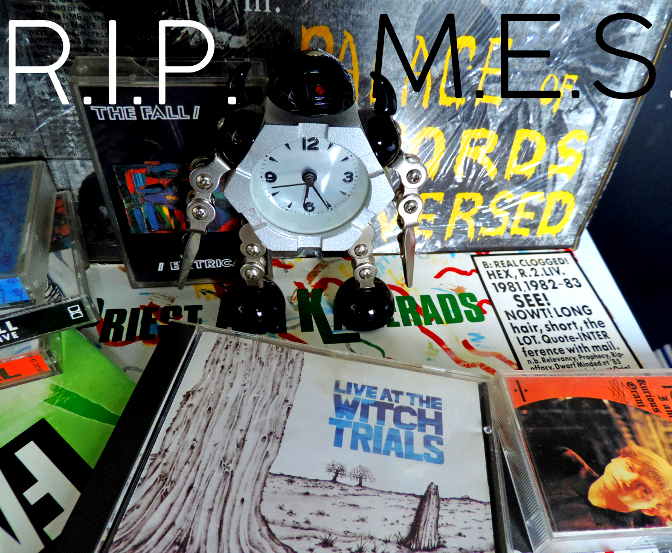
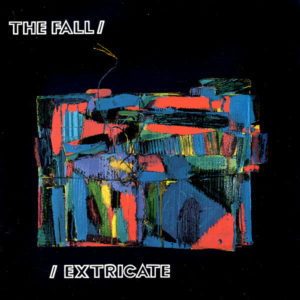
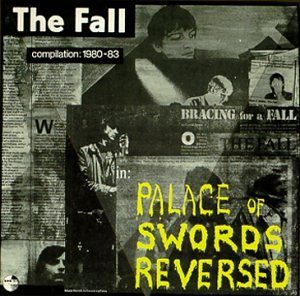 sophisticated, articulate, menacing but not unfriendly. A few years later, when I began to read Wyndham Lewis I was reminded irresistibly of Mark E. Smith. And indeed the whole of The Fall’s early work is extremely Vorticist/BLAST-like. I didn’t know though until quite recently that Mark E. Smith was a fellow Wyndham Lewis fan (though I think MES often agreed with Lewis where I don’t) – it seems so obvious now. And the reference to stories and characters was intriguing; if this was The Fall gone normal then what did they sound like before?? I think the next album I bought might have been the essential compilation of early material Palace Of Swords Reversed; here were ‘Marquis Cha-Cha‘, a story about a Lord Haw Haw character stranded in South America which opens
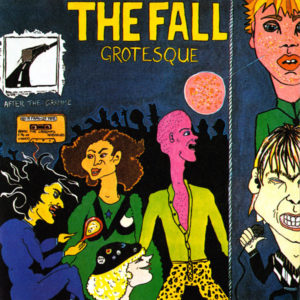 And that’s just the lyrics; another thing about The Fall that made an impression on me early on was that, although MES was incredibly fussy and perfectionist about the band’s music, he wasn’t snobbish in the usual way; no tune, if it was catchy, was too silly for Mark E. Smith. Think of the speedy but somehow miniature-sounding rock guitar on ‘Underground Medicine‘ or loping, bouncy beat to ‘Gramme Friday‘ or the oddly jaunty, countryish ‘Fit And Working Again‘. or the kazoo on ‘The North Will Rise Again‘– this was ‘angular’ (the definitive descriptive term for late 70s/early 80s UK indie rock) if you like, but it was not standard ‘post-punk’ music, nor was it (as it could easily have been) twee in that beloved ramshackle UK indie/C86 kind of way. Perhaps because Mark E. Smith was not (99% of the time) a melodic singer, the band could play anything behind him and it sounded right. When, at the beginning of one of my favourite songs, ‘Slates‘, MES shouts ‘this is the definitive rant‘ he’s nailing part of the charm of his work. As long as the rant was in place, no tune was too small, too jingly or too silly to make something worthwhile out of.
 lot of it, and it was mostly pretty affordable, especially the stuff from the band’s then slightly maligned, now justly celebrated mid-80s period of relative commercial success. In itself, that success was odd and underlined just how unique the band, and specifically Smith’s vision, was. I loved that Mark E. Smith saw nothing elitist or strange about working with a ballet company, or in writing for the theatre and working with ‘serious’ artists and yet the people I knew who derided Morrissey as being “poncy” never seemed to think that about MES. The fact that he refused to separate the ‘high’ arts from his work with The Fall was so powerful. Everyone knows, for example, that Brian May is an astrophysicist, but imagine if astrophysics had somehow been indivisible from his work with Queen; they would have been far a more peculiar and far less successful, but also (with no offence intended to the band or its members) probably more interesting band.
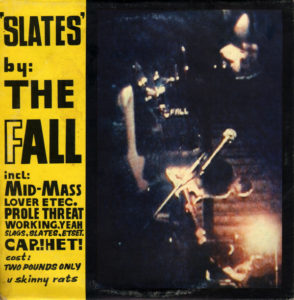 Although most of my favourite Fall albums are the early ones (especially Dragnet, Grotesque (After The Gramme) and Hex Enduction Hour) those 80s albums with the Mark and Brix-led lineup(s), especially The Wonderful and Frightening World Of The Fall are pretty unassailable and perhaps the least overtly commercial ‘commercial’ period of any band I can think of. The band stayed good though, and although I am not a Fall completist (a vocation rather than a hobby) I’ve found that any Fall record one picks up will have something great on it; and there aren’t many bands with a 40 year career you can say that about.
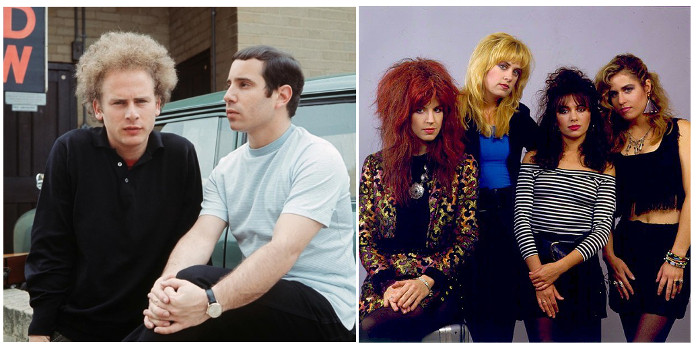
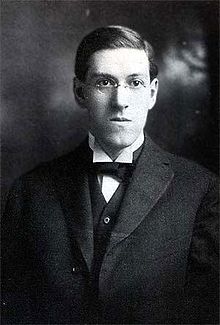 It’s approximately 90 years since HP Lovecraft wrote, “The oldest and strongest emotion of mankind is fear, and the oldest and strongest kind of fear is the fear of the unknown.” (in the essay Supernatural Horror in Literature (1926-7)), and it’s got to be something like 25 years or so since I first read those words (in the HP Lovecraft Omnibus Vol 2, Dagon and other Macabre Tales, Grafton Books, 1985, p.423 ). So what about it?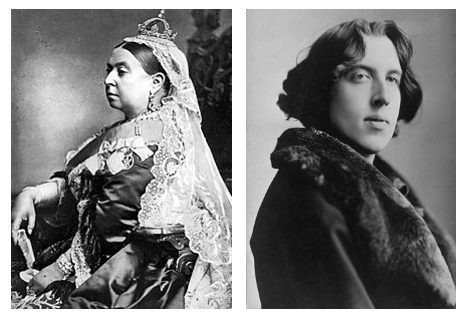
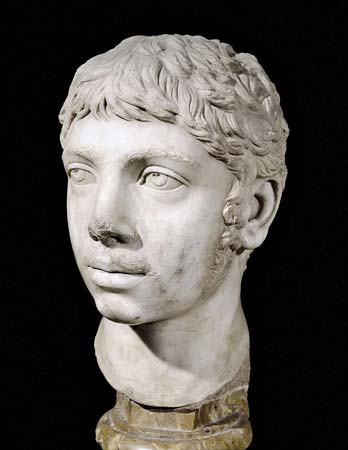 This kind of complexity is what makes history more interesting than it’s sometimes given credit for. The Scottish Enlightenment was a wonderful, positive, outward-looking movement, but it coexisted in Scotland with a joyless, moralising and oppressive Calvinist culture. Time and nostalgia have a way of homogenising peoples and cultures. The popular idea of ancient Rome is probably one of conquest, grandeur and decadence, but what is the popular idea, if there is one, of ‘an ancient Roman’? Someone, probably a man, probably from Italy, in a toga or armour; quite likely an emperor, a soldier or a gladiator, rather than say, a merchant, clerk or farmer. But even within this fairly narrow image, a complex figure like the emperor Elagabalus (who was Syrian, teenage, possibly transgender) defeats the obvious school textbook perceptions of ‘Roman-ness’ (as, perhaps, it did for the Romans themselves). Even in our own time, the fact that older generations from the 60s/70s to the present could lament the passing of times when ‘men were men & women were women’ etc is – to say the least – extremely disingenuous. Presumably what they mean is a time when non-‘manly’ men could be openly discriminated against and/or abused and women could be expected to be quiet and submissive.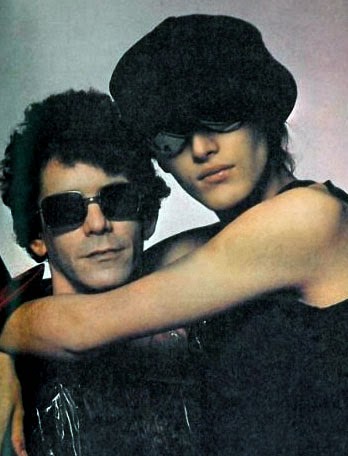
 It’s an interesting point. The fleetingness with which you experience things has nothing to do with their power as memories. I have no idea what the first horror film I saw was, but I do know that a scene on some TV show where skinheads (or possibly a single skinhead) glued a man’s hands to the wall of a lift/elevator scared me as a child and stayed with me for a long time. Maybe that was because I used to see skinheads around on the streets (you had to watch the colour of the laces in their Doc Martens to see if they were ‘bad’ skinheads or not – though they were probably kids too, I now realise). I also know now (but didn’t then) that these were the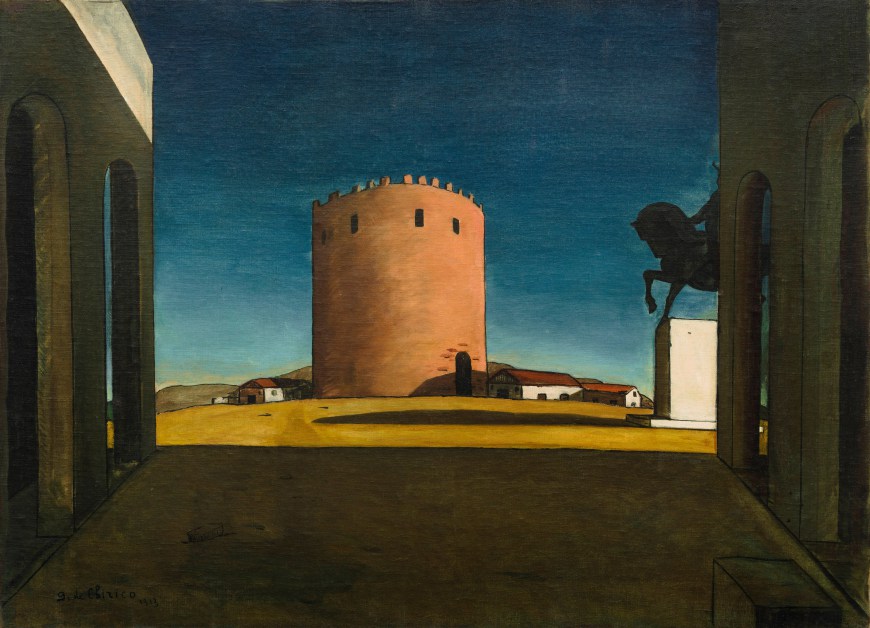
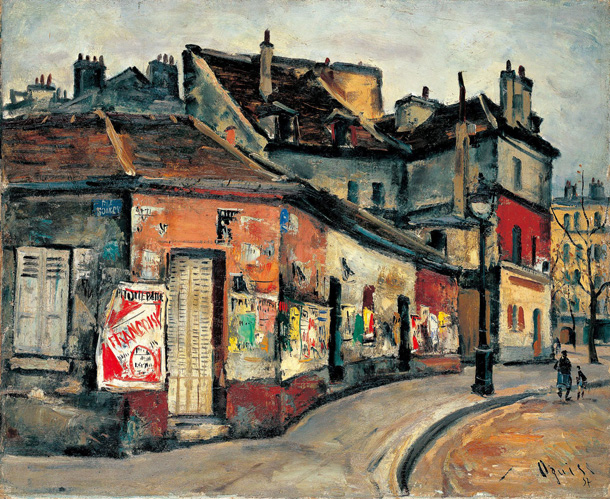
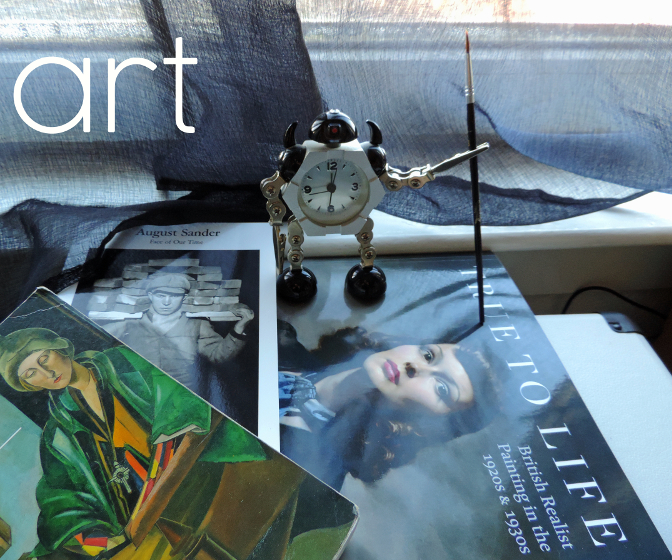
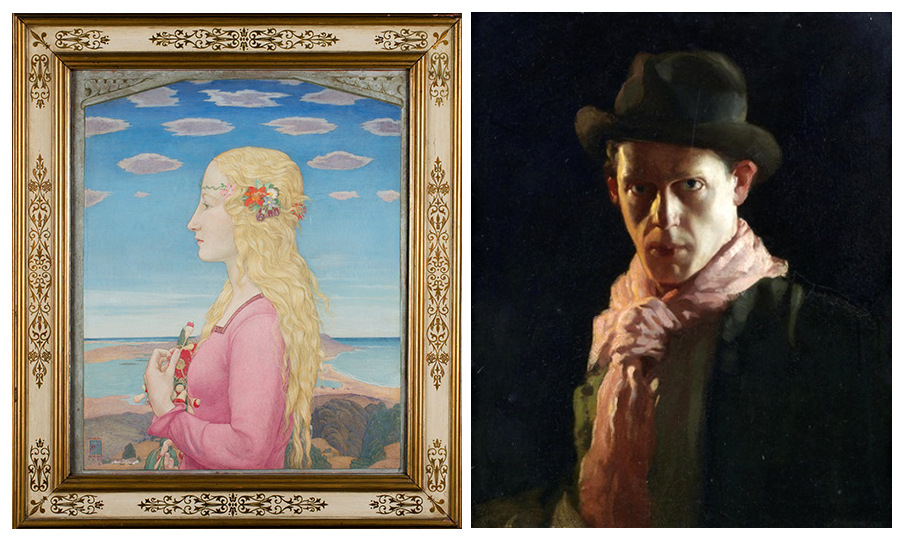
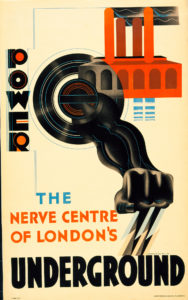
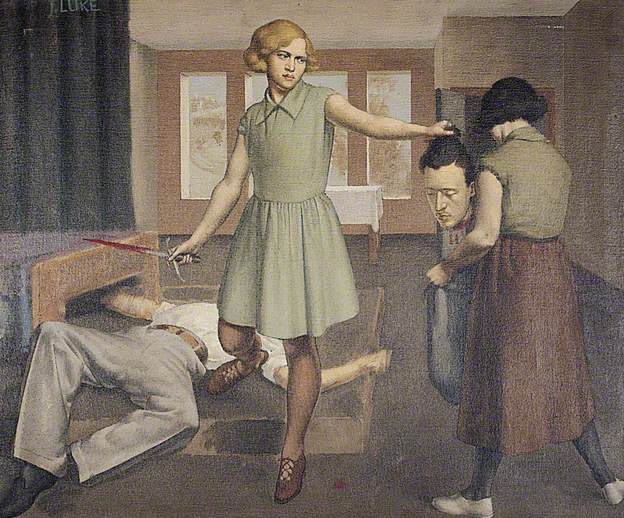



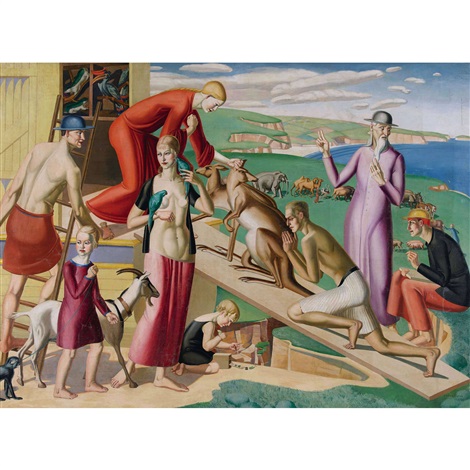
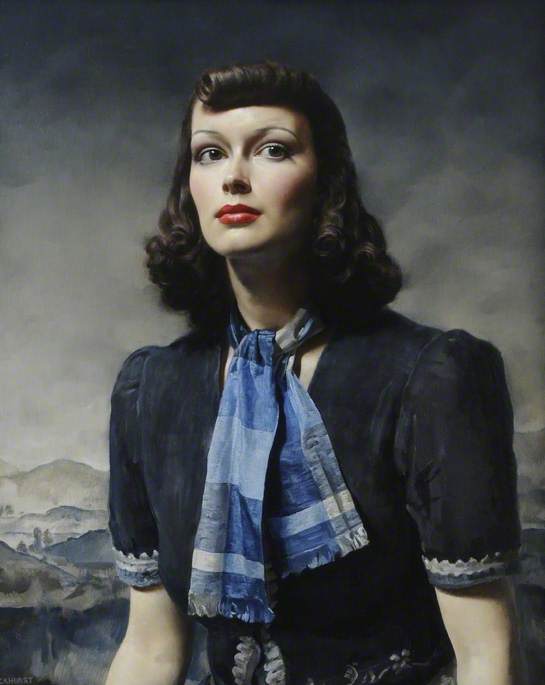
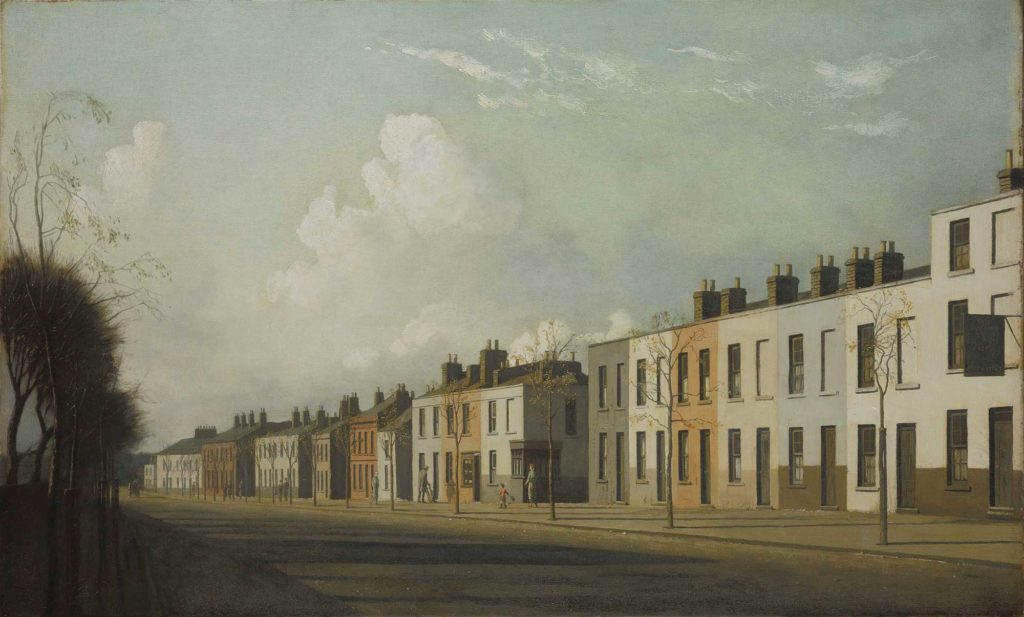
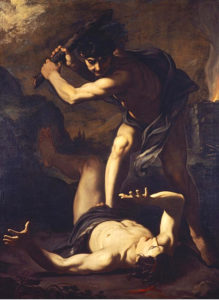
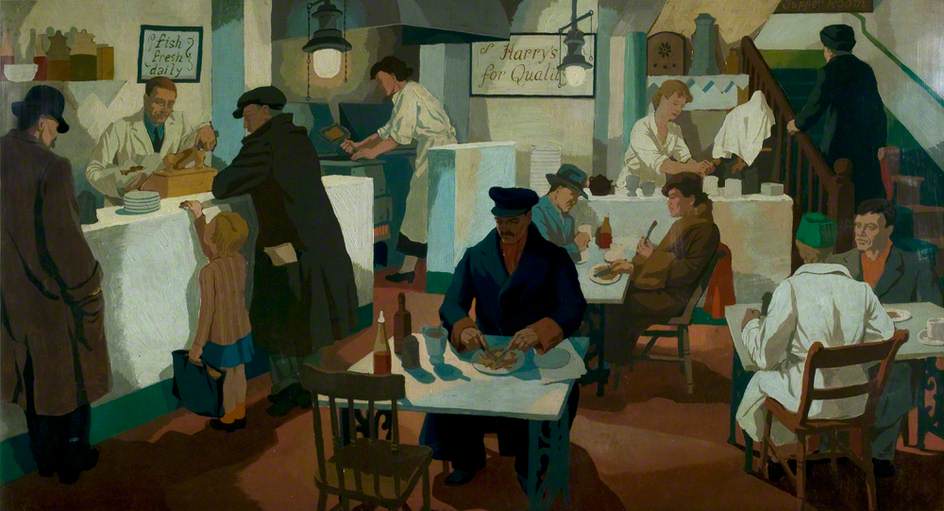
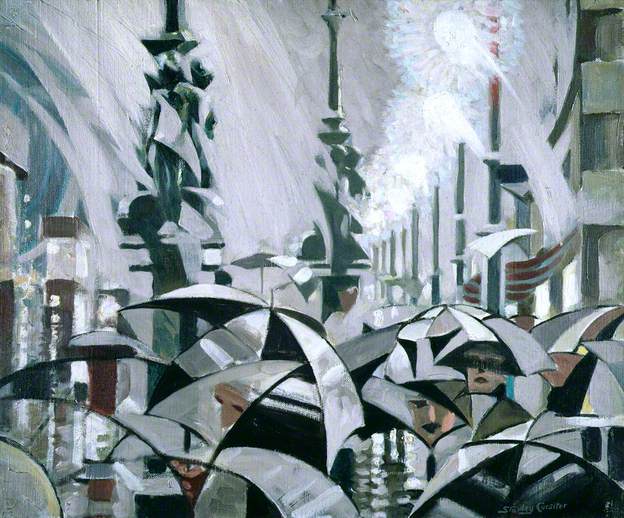
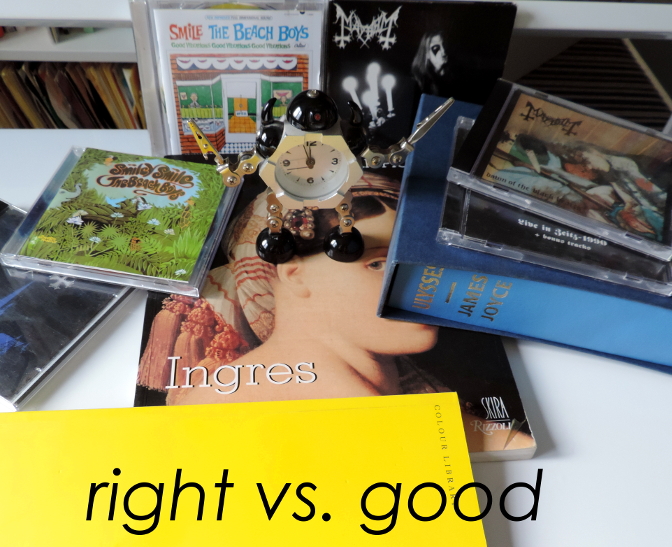
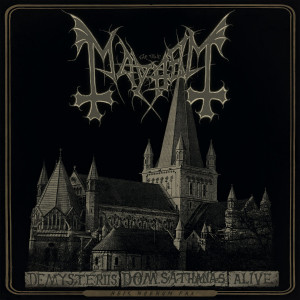
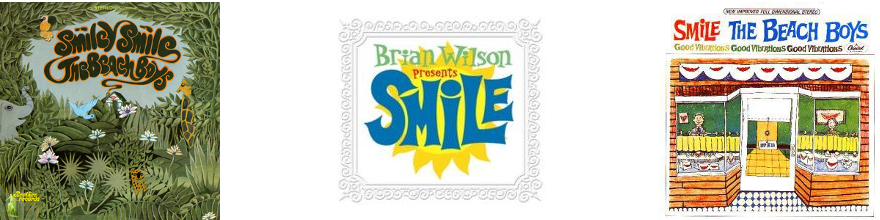
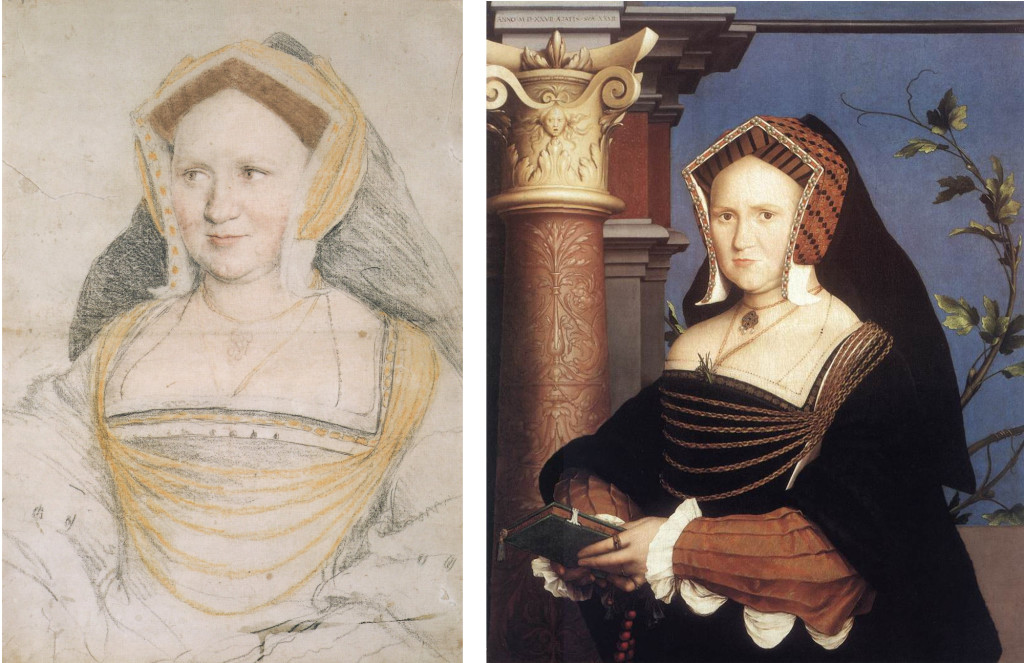
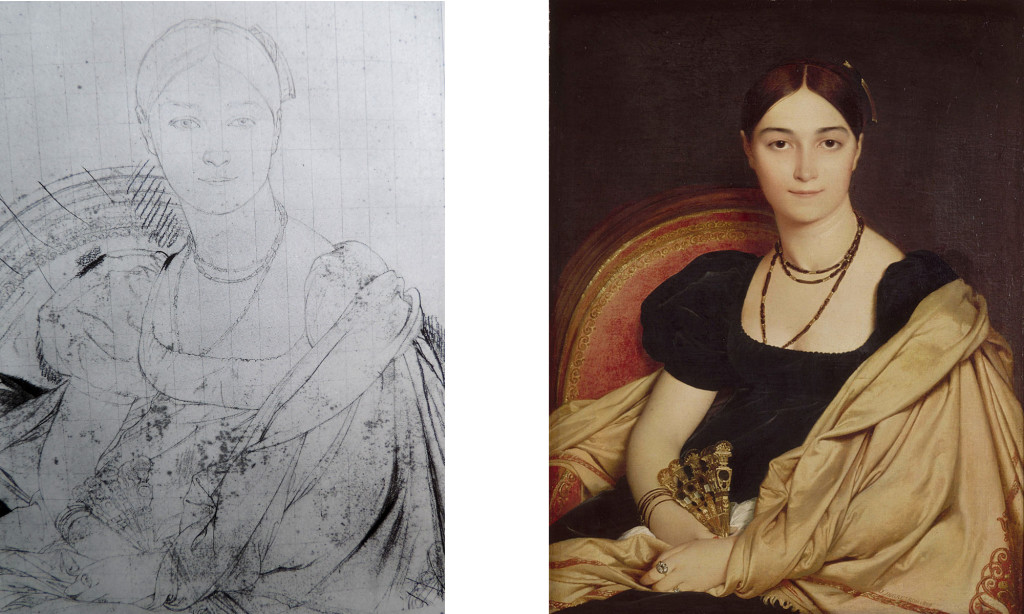
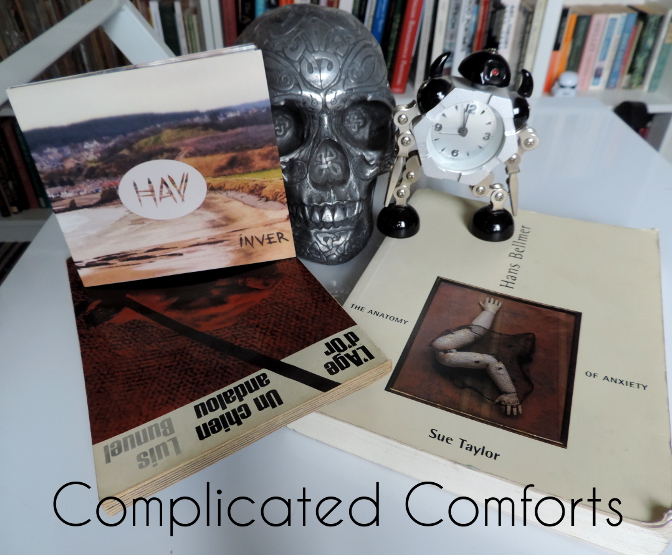
 I am not at all averse to folk music of various types, but I have to admit that on the whole I avoid the folk music of my own country. Partly it’s because most of the Scottish folk music I have come in contact with is dance music. I’m with Mark E. Smith on that one; I don’t want to dance (he may of course have contradicted that somewhere in the hundreds of albums he’s made since 1979). There are lots of kinds of dance music I do like, but the memory of Scottish country dancing at high school; of accordions, fiddles, ceilidhs etc; it’s just not for me. However, on their debut album, Inver, HAV make music that seamlessly combines the instrumentation and feel (and some of the tunes) of Scottish folk music with delicately atmospheric ambient electronica and field recordings and it is quite simply beautiful. Alternately bracing and embracing, it really seems to capture the feeling of the landscapes I grew up in, while also making the past (traditional songs like Loch Tay Boat Song, Peggy Gordon etc) feel present and the present timeless; which is surely what folk music is all about.
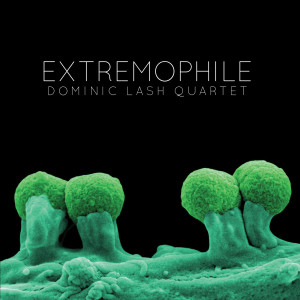 Despite the title, after the squeaks and pings intro of Puddle Ripple (the first of several strangely tense Lash compositions), Extremophile as a whole isn’t especially extreme (unless you hate jazz in general I guess). It is certainly an imaginative and wide-ranging album, featuring both a peculiar and beautifully atmospheric jazz exploration of the
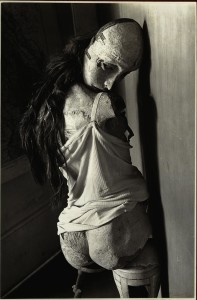
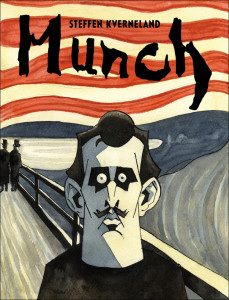
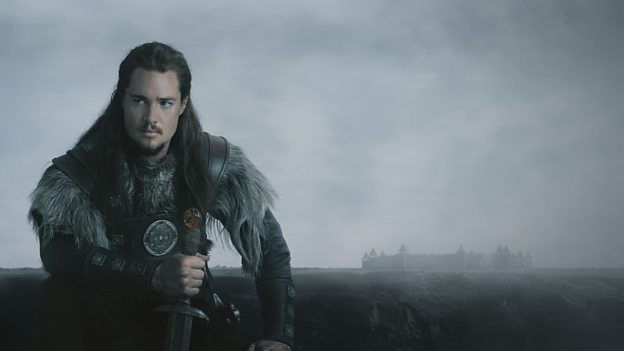





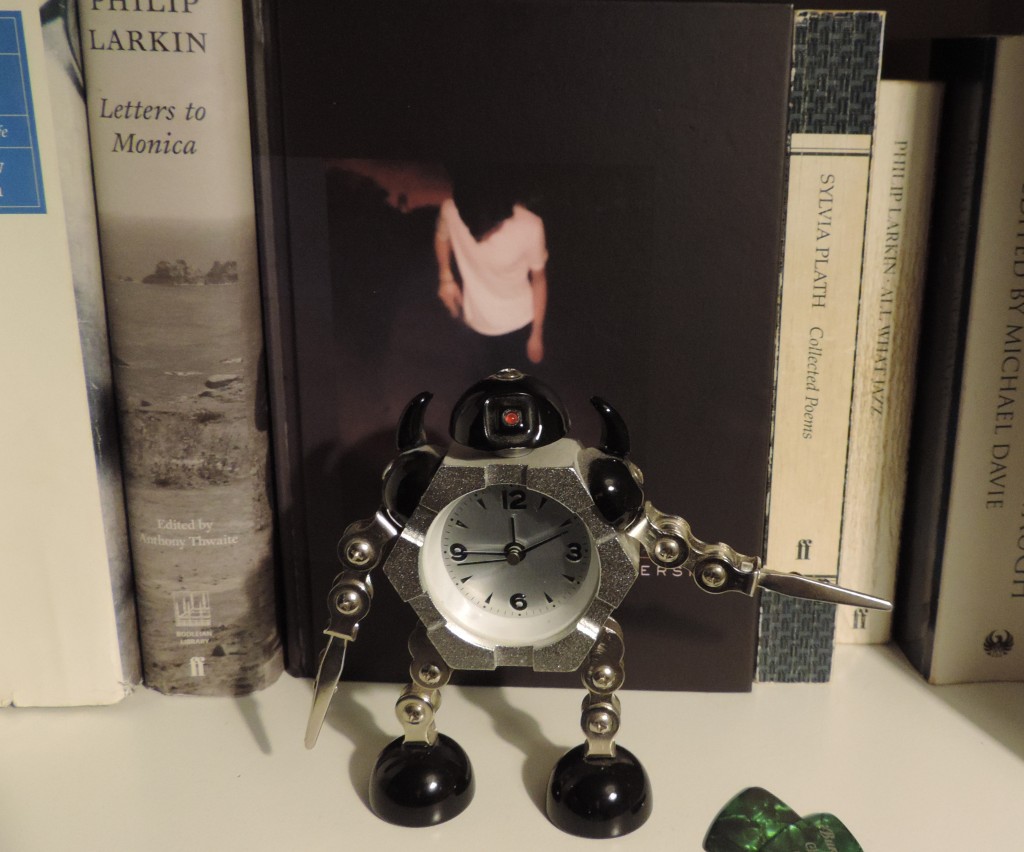


 rushin’s beautiful Once and Domenicano, Frank Zappa & the Mothers of Invention’s Burnt Weenie Sandwich and Uncle Meat, The Beau Brummels (who are never quite as good as I want them to be – ie not as good as The Lovin’ Spoonful) but have some really good songs, Kenny Drew & Niels-Henning Ørsted Pedersen’s Duo, Bessie Smith, a really interesting album called Stations by
  I haven’t started making an actual list yet, but it’s that time of year when some albums have firmly earned their place in the AOTY list and others are looking likely. It would be nice if Prophets of Rage released an album, but oh well. I’ve no idea how long the list will be, but I can say at this point that it will certainly include Bowie’s Blackstar, Iggy Pop/Tarwater/Alva Noto’s Leaves of Grass (not really an album but I’ll make an exception), Darkher’s Realms, Emma Ruth Rundle’s Marked For Death and Kristin Hersh’s amazing new book/double album Wyatt at the Coyote Palace.
 typically ‘heroic fantasy’/swords and sorcery in their stories and action: