
goodbye 2025 – the year in review

I didn’t make any concrete resolutions last year, but I did intend to be more productive in my writing, and I did at least achieve that, if nothing else. I wrote around a hundred reviews and features of various kinds, mostly for Spectrum Culture, but I also wrote far more for my own site than last year and even a few bits of fiction, very rare for me these days. After 2024, when the posts on my website were sparse, weird, very personal and mostly pretty miserable, I deliberately wrote more regularly, even when I had nothing special to say, with – as you’d expect – mixed results. I probably covered a wider (and more random) variety of things than usual, and I think more of what I wrote was inspired by current events than usual – a very mixed bag, but I still like some of them. So, here are the first 6 months of the year, interspersed with random thoughts that were written down but never ended up being incorporated into anything:

I started the year thinking about identity, art and photography via Egon Schiele & David Hockney, which was kind of light-hearted and fun.

Unrelatedly, I used the Cornell Labs’ Merlin Bird ID app a lot this year, and I recommend it; it’s really nice. Although I grew up in the countryside I somehow never picked up any but the most obvious birdsongs (likewise there are only a very few trees I can recognise from their leaves) and it’s fascinating and very endearing to discover what the birds around you are. It also had the unexpected side effect of making me realise just how much man-made noise we put up with in the modern world, almost all the time. Even on quiet country lanes in rural Scotland with minimal traffic it’s amazing what can impede hearing the birds. Distant trains, planes, farm machinery, bikes and especially cars all interfere with the sounds of nature. I’m not really complaining, but it’s amazing how a passing car – which normally I’d barely notice the sound of – suddenly seems violently noisy when you and your phone are straining to hear the cheeping of tiny unidentified brown bird. Ah well.

At some point early in the year I was thinking about childhood and the relationship between involuntary dreams and apparently conscious daydreams, among other things. Regarding childhood, something that – quite rightly – didn’t make it beyond a quick note is that apparently I was thinking about how, in the Transformers franchise the bad guys’ name is (or was when I was a kid, I’ve not seen any of the movies etc) Decepticons; and the badness is clearly built into the name, not just deception, but con as in opposition. But oddly, their enemies, our heroes, are far more ambiguous: they aren’t therefore called “Honestpros” (which would be kind of hilarious) or even “Herobots” or something similar, but just Autobots. But what’s ‘Auto’ about them? Automobiles, presumably, but so are some of the Decepticons. And some of the Autobots could just as relevantly be called Plane-o-bots. And really, the good robots are technically deceptive in the exact same way as the bad ones. Maybe teaching children that villains are easier to recognise than heroes was deliberate on the part of a toy manufacturer – but to what end?

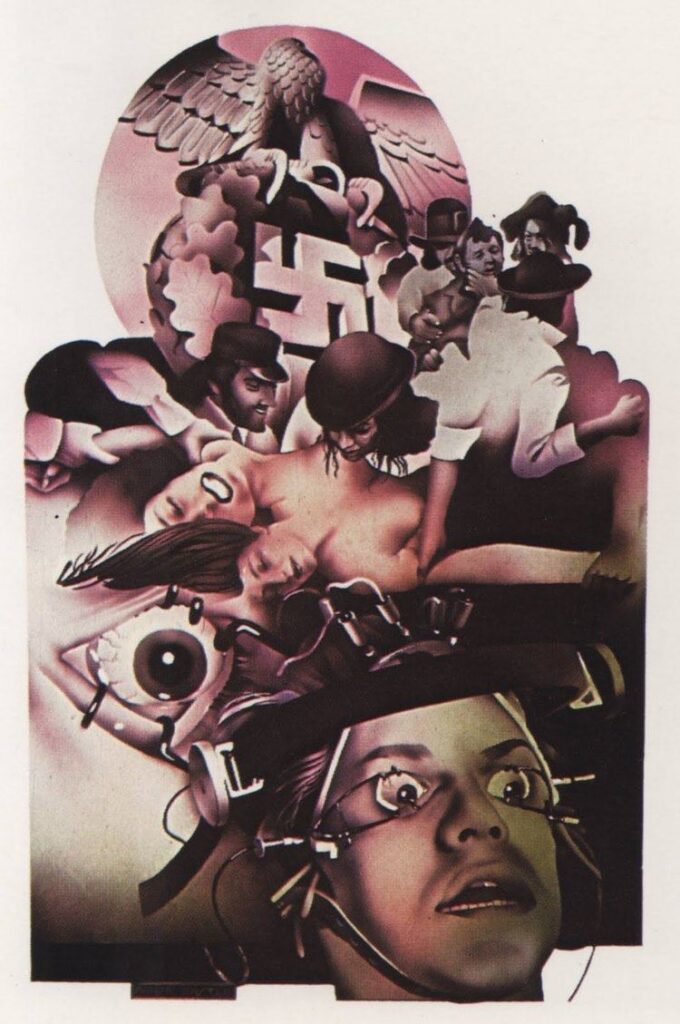
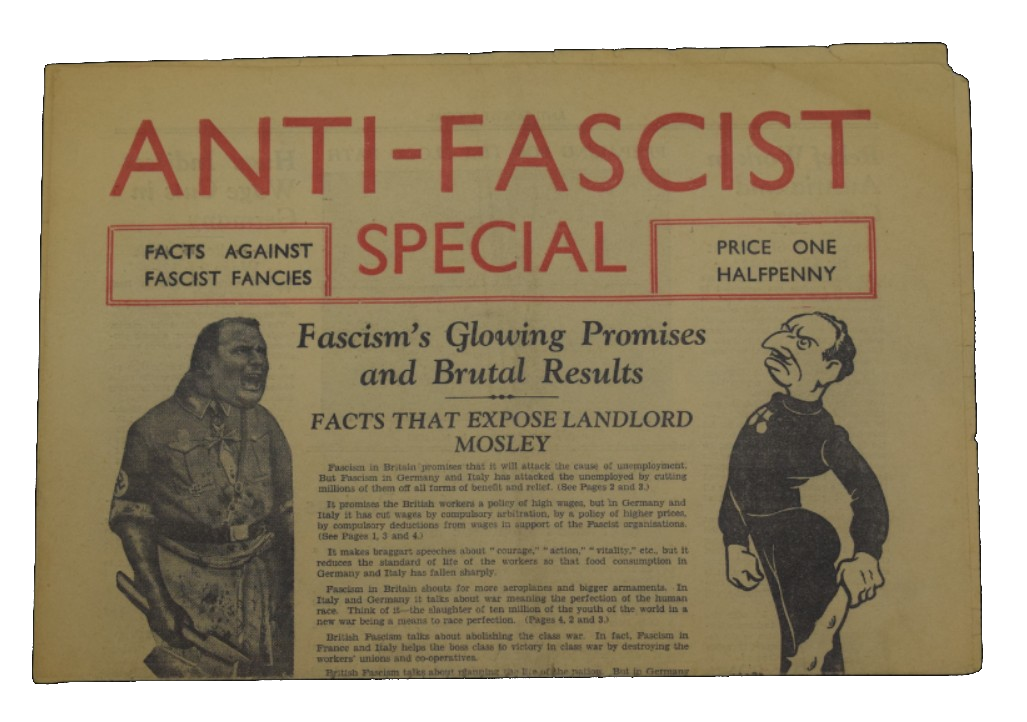
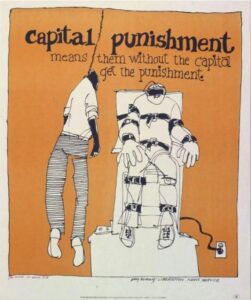
Speaking of villains, in February, the subject of fascism became inescapable and I wrote about it; fascism and culpability and fun stuff like that. I don’t think it was all that grim really, but for a bit of light relief, presumably, I ended up writing about the death penalty, with reference then-recent events, but also the core idea of the death penalty, my feelings about it and the logic behind it. It turned out to be one of the most read things I wrote this year and I think one of the most complained about too, but you can’t please everyone.

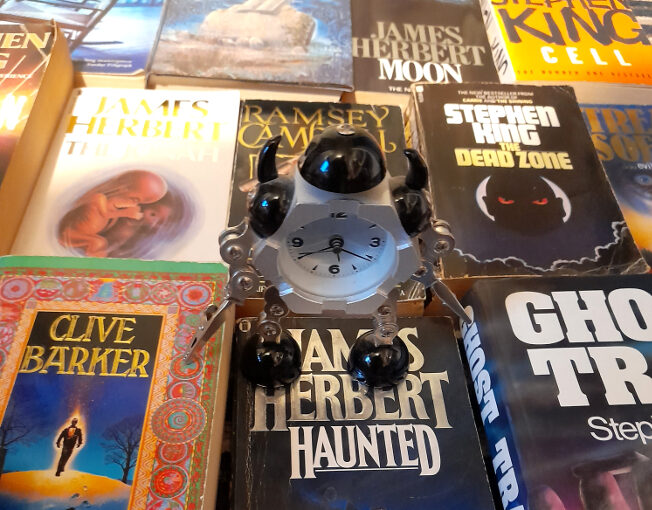
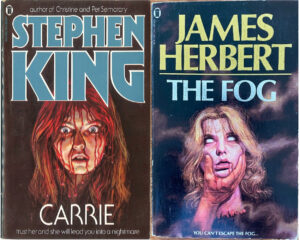
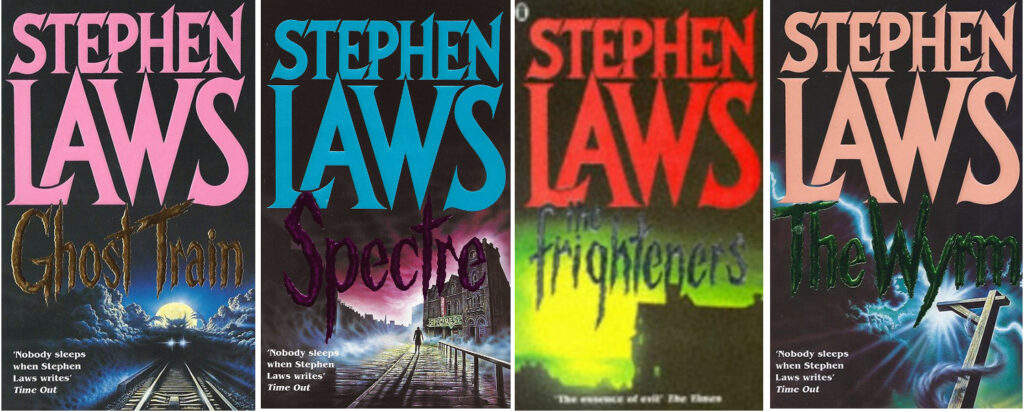
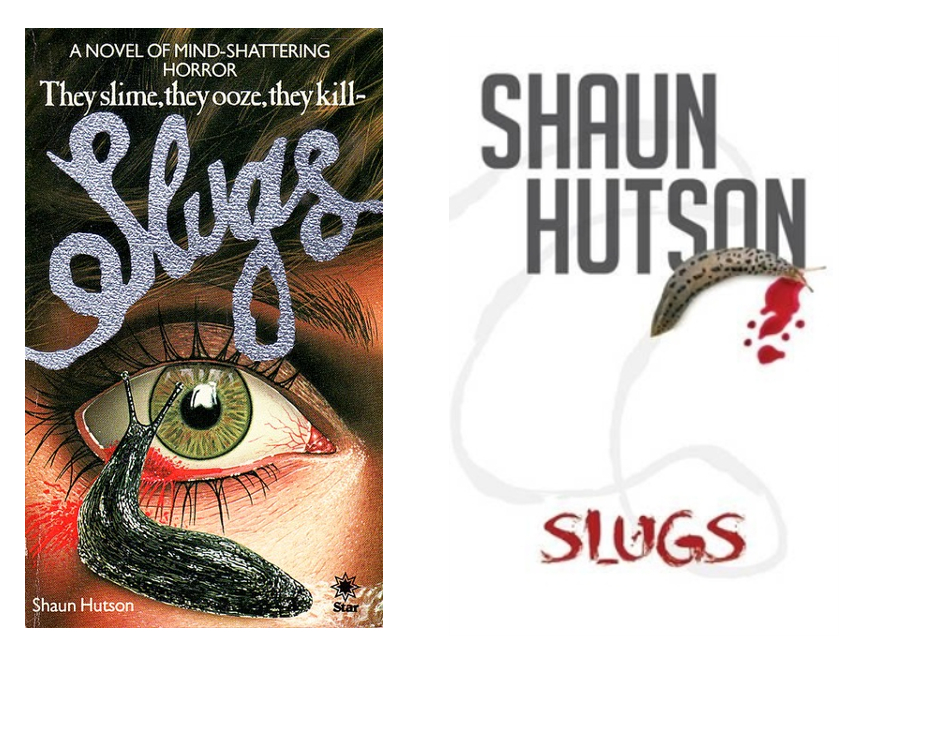
As an indication of the way the year was going, when I really did write something for light relief, it was about horror fiction. Specifically, it was about the way that, as with everything else in the 80s, success was the motivating factor for how the genre shaped itself, with the biggest successes, notably writers like Stephen King and James Herbert being the models, not just for other writers, but for the way publishers promoted horror in general.

But wallowing in even complicated nostalgia proved difficult as – just as in 2016 – events across the Atlantic began to poison the political discourse of the whole world, including the UK. I wrote specifically about the advance of reactionary assholism (a technical term) in British politics here – and I suppose inevitably, it was another of those articles that some people disliked enough to tell me so. Shortly afterwards I was writing about another topic that’s often represented as divisive, so I tried to make it as simple and clear as possible, boiling it down to the most simple ‘are war crimes bad?’ terms, but of course it proved to be arguable after all. But I suppose everything is, if one likes to argue.

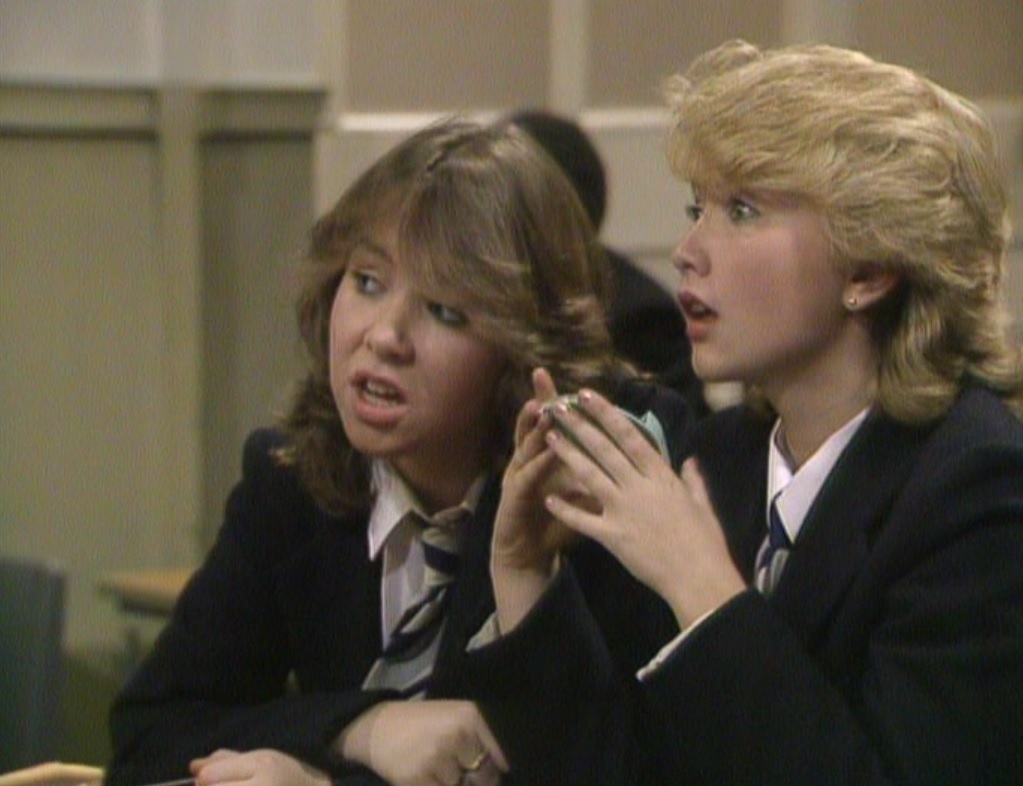
In May my mental exhaustion must have reached a peak because I just put out some scattered notes, some of which I found quite funny – but I was more myself again shortly afterwards, tracing the rarely recognised links between George Orwell, the 80s kids’ TV show Grange Hill and topless modelling. Similarly connections-focused, I ended the summer thinking about the relationship that professional historians have with the historical periods they specialise in and how that can be fun and kind of goofy in a nice way, but how it also mirrors the study of history with all of its complications and problems.
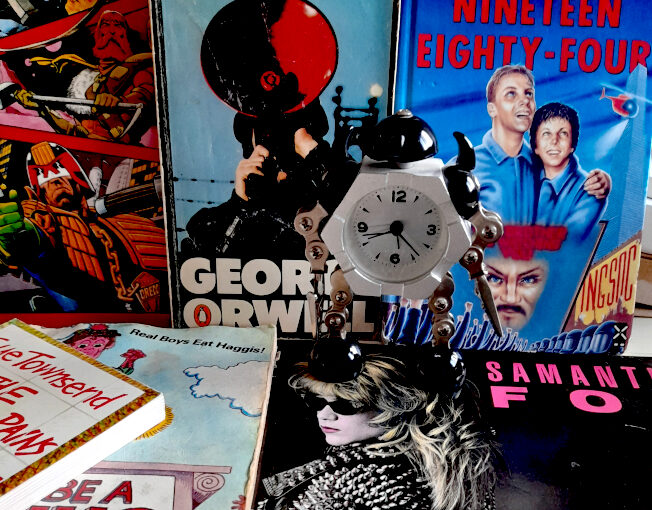
Some time in the summer I came across a different translation of Kafka than the one I was familiar with and wrote one of my favourite things (of mine) of the year. But I wrote it in such a hurried fit of enthusiasm that every time I’ve gone back to look at it I’ve found stuff to fix and clarify and (always) sentences to make shorter. It’s a strange mix of Kafka, ancient poetry, religion and Rolf Harris but I think it reads okay at present…

There were many celebrity deaths (must be a better way of putting that) this year, but one of those that affected me the most was Ozzy and for reasons you’d think best known to myself I didn’t so much write a eulogy as a strange thing about Ian Curtis and Joy Division, Ozzy, Black Sabbath and the tenuous ties that bind them, or bind them to me.

In August, world events were getting me down (a strong theme this year) and so were the lukewarm responses of the British political establishment when asked to comment on those events. Doing nothing and saying nothing of substance is a political choice, but judging by what I wrote I’d prefer open malignancy to polite inaction. I’m not sure that’s really true but sometimes anything seems better than being non-committal.

As the summer soured into autumn (generally my favourite season) I’d been thinking about and writing about what home means and the feelings of belonging that do or don’t go with it, but events in the UK soured that too and the thing I eventually wrote had far more about flags in it than I’d intended, and Philip Larkin, and Morrissey, if that makes it more tempting?

In the autumn I also started this substack with the intention of writing different kinds of things (mostly art history) but as soon as I wrote the first substantial piece for it – about why I write, it ended up just being more of the same, though often written more quickly and less considered and/or developed. Which doesn’t seem right but at some point I’ll try to establish some kind of order, probably.

One of the articles that made it on to both platforms (in slightly different forms) was again the result of a celebrity death (Robert Redford) but this time I didn’t even pretend to pay tribute to him (though there were lots of good reasons to do so) but instead wrote some kind of meditation (to put it pompously) on innocence, whatever that means. Reading it again, it feels more sad than I realised at the time

Come October, the burning of the Reichstag was, ominously, a common topic of discussion, so I wrote, not about that exactly, but about its scapegoat and presumed perpetrator, Marinus van der Lubbe, who turned out to be a far more important figure than he or anyone who met him would ever have suspected. It’s another melancholy kind of article but the title obscurely pleases me.

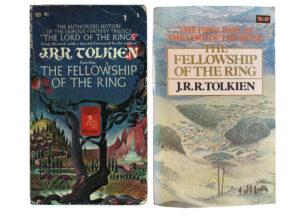
Within days of writing semi-elegiacally about Marinus van der Lubbe I was bemoaning the fact that powerful and sinister nerds are (to paraphrase Alan Partridge) getting Tolkien wrong. Well not really that, it’s about lots of dread-inducing developments, but Tolkien is in there too
Belatedly remembering my intention to use substack for my art historical pursuits I made a revised, two-part article out of something I wrote a few years ago, which wrestled with separating art from artists, whether there are right or wrong reasons for liking a work of art and related topics: come for the Malevich, stay for John Wayne Gacy and Hitler – it was fun to write, especially because the Nazis and psychopaths it mentions have been dead for years and aren’t involved in current events.

As we approached Halloween I wrote/revised an article about the way that those who seek to censor the (specifically) female body online and in traditional media in order to ‘protect’ people from nudity want to not have their cake but eat it anyway; or something like that.

Still in October, which seems to have been crazily long this year, nationalism and belonging was still on my mind, because still in the news. Looking at the ways that a belief in nationalism and an interest in history intertwine and are sometimes mutually exclusive was more interesting for me than for anyone else it seems; but it still is interesting to me

I rounded off October with something both more light-hearted and more substantial – examining various fictional dystopias and holding them against the big tech-led present up to see which fits the best, with literally comic results. But I said goodbye to the autumn by writing something about Guy Fawkes, which was very enjoyable, so that was nice.

Shortly afterwards, I prepared for the new season of Stranger Things by pre-emptively whining about the formulaic & predictable nature of that kind of popular entertainment (not entirely true, there’s some fun stuff in there about Mad Max, Highlander & Alien, etc). I haven’t finished the new season of Stranger Things yet and so far I’ve not been surprised, but there’s still a chance!

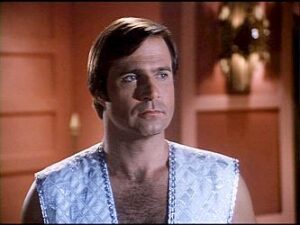
goodbye Gil Gerard

More recently, I wrote a couple of short, sad pieces about two of the celebrity deaths that affected me most this year, Mani from the Stone Roses and Buck Rogers (well, Gil Gerard but he’ll always be Buck to me).

Which brings us up to date, barring a few typical (but I hope fun) end of year roundups. And so there we are. See you next year. Hopefully for more fun, creativity and success and less fascism, slaughter and prejudice. But I’ll leave it at that, don’t want to jinx it.

as the first quarter of the century draws to a close…

…it’s time for another annual roundup. Participating in end of year ‘best of’ lists is fun, but as my previous few ‘albums of the year’ features for this site (each probably more perfunctory than the last) and this essay on my substack illustrate, over time I’ve found the idea of the best [thing] of the year less and less relevant, not because the things aren’t good but because it doesn’t really matter that they came out this year. There’s a reasonable chance that I haven’t even heard my favourite album of last year, or of 2015 or of 1981 yet. My most listened-to artist of 2025 was probably Kevin Ayers, dead for over a decade now, and my most watched films and TV shows and most read books even more zeitgeist-resistant.

But here are a few things and thoughts anyway.  My favourite new albums of the year included several I reviewed for Spectrum Culture, including:

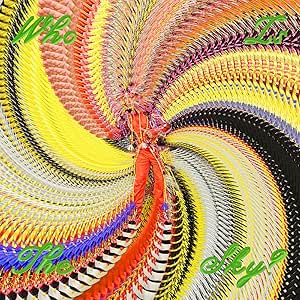
a cover as horrible as the album is pleasant

David Byrne’s Who is the Sky? More modest, more personal and more enjoyable to me than American Utopia, though I understand that it seems less ambitious and therefore less impressive in a way.


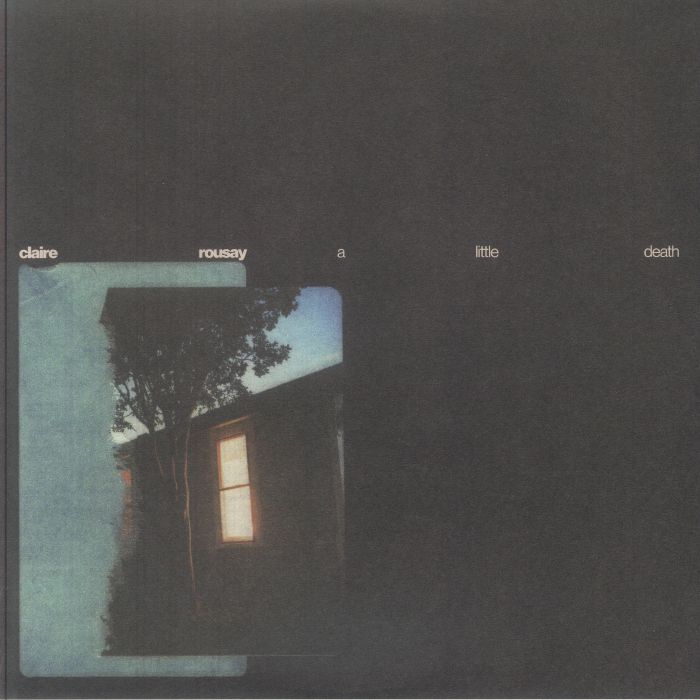
a suitably enigmatic cover

Claire Rousay – a little death – sometimes blurring the boundaries between music and just sound, I thought this was really arresting and intimate and moving but hard (as you see) to write about well.


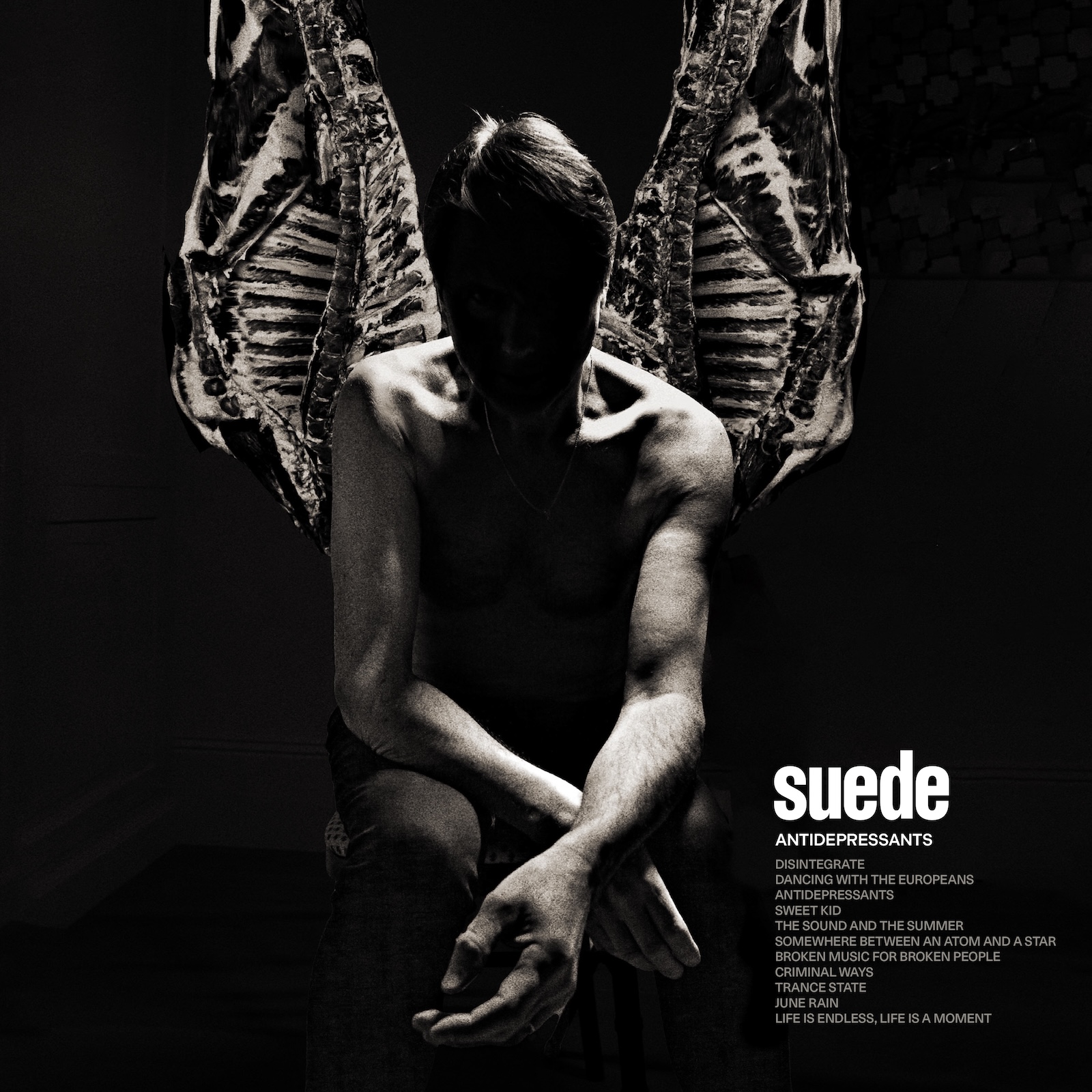
a perfectly Suede-like cover

Suede – Antidepressants – Suede in 2025 are not central to my musical life like they were in 1993 and therefore Antidepressants did not have the impact that Suede did (or at least that I expected it to; in fact I only loved about half of it), but it’s is probably a better, deeper and more rounded – and certainly a more consistent album than Suede was, even if the high points are less iconic


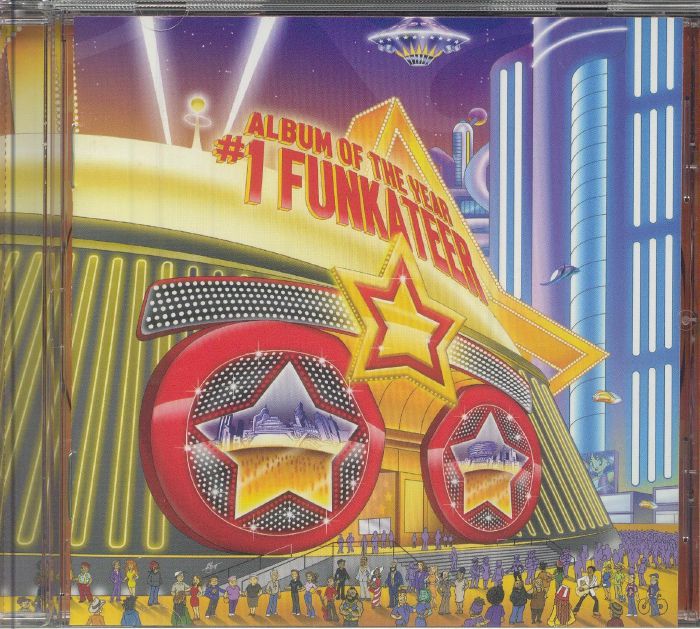
Bootsy; business as usual

Bootsy Collins – Album of the Year #1 Funkateer – this was sprawlingly creative, fun and of course funky. The P-funk style that made Booty’s name seems fundamentally 70s but here he slips it over the top of the idioms of the 2020s and it fits like a glove with no hint of ‘retro’


I didn’t write about these next ones for Spectrum Culture, but they are up there with my favourites of the year too:

Ghost WorldArmadillo Café – So far Ghost World haven’t (for me) surpassed the music of their first two albums, Ghost World and Spin, but repeatedly putting on Armadillo Café while consciously ignoring the fact that it’s a concept album about a café, it turns out to be another collection of idiosyncratic and loveable indie pop songs. The concept is fun but detracts from rather than strengthens the quality of the individual songs.

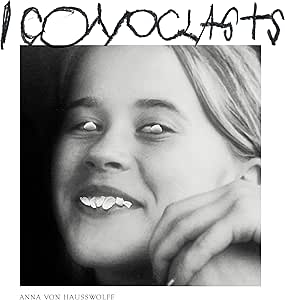
Anna Von Hausswolff – Iconoclasts. I wouldn’t say Anna Von Hausswolff goes from strength to strength; she’s always been great – but her work remains consistently interesting, challenging and gripping and Iconoclasts pretty much picks up where 2018’s Dead Magic left off, but absorbing rather than sidestepping the sombre majesty of her 2020 instrumental album All Thoughts Fly. Basically, she makes the kind of music you’d hope someone with the name Von Hausswolff would make.

Draugveil: gesamtkunstwerk

Draugveil – Cruel World of Dreams & Fears – I haven’t had to listen to a lot of black metal for work this year, which ended up rekindling my love for the genre and especially its typical, rather than outstanding or experimental adherents. The promotional material for the latest release by Ukrainian one-man project Draugveil release promised “A new era of romanticism, love and death…” and the album artwork shows him resplendent/despondent in corpsepaint and armour – the exact kind of objectively absurd thing that invites mockery from both inside and outside of the metal world; and I love it. Keats wrote that he was “half in love with easeful death…” but the romanticism of death that was such a notable part of the culture of the 16th, 17th and19th centuries lost its traditional allure post-World War One and at some point in the intervening years has become seen as kind of an adolescent trope, but why not? The songs on Cruel World of Dreams & Fears have titles like “Beneath the Armor I Rot”, “Wolves Feast on Forgotten Dreams” and “My Sword Points to the Past”* – and the tunes are likewise a mixture of yearningly romantic and crushingly doomladen and anguished. I have the feeling that, like the Smiths, but to the power of ten, this is the kind of thing that people either just respond to or really don’t. “Beneath the Armor I Rot” is the “Girlfriend in a Coma” of black metal; possibly immature, patently ridiculous, but irresistible, if it happens to be your cup of tea.

Interesting side note: some genius has perfectly gauged the kind of fanbase Draugveil is likely to appeal to and produced an action figure. Too pricey for me but entirely desirable.

* these titles make me think of an old Fry & Laurie sketch where a teenager writes a poem called “Inked Ravens of Despair Claw Holes in the Arse of the World’s Mind” – which kind of proves my point about the adolescent-ness of thanatophilia(?maybe the right word?) but I’ve remembered that title since I was at high school, which probably means something too.

its existence pleases me

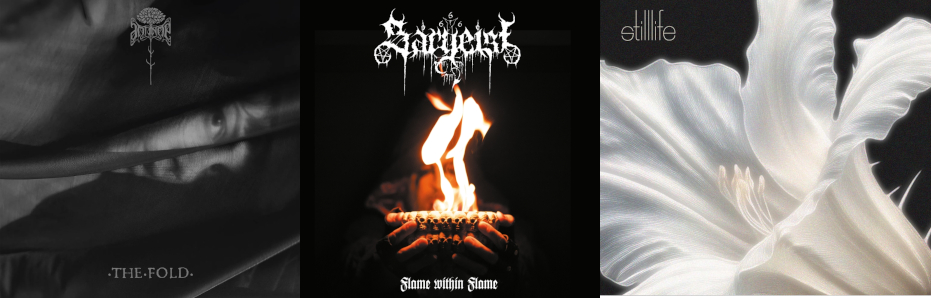
Honourable mentions that I like almost as much as the above but have run out of the will to write about include Kariti’s lovely album Still Life, the beautiful and deeply enigmatic album The Fold by Antinoë, which I’d recommend to anyone who likes the Anna von Hausswolff record and Sargeist’s Flame Within Flame, which is black metal with much of the absurdity drained out and replaced with venomous energy.

One of the discoveries of the year for me was podcasts – obviously I knew they existed, but I’d rarely been tempted to check them out. It turns out that mostly they aren’t for me, but there are a few I really like and one I love. That one is Origin Story, which I came to because I loved Ian Dunt’s brilliant 2021 book How to be a Liberal. The point of Origin Story, a podcast by Dunt & Dorian Lynskey (more below) is to “explore the hidden histories of the concepts you thought you knew.” It’s general focus is socio-political I suppose, but it takes in subjects as varied as zombies, comics, George Orwell, economics, history, etc etc (the latest season was a history of socialism) which you might think could be quite dry, but in fact is exciting, funny and entertaining; love it. Other favourites are Katie Hessel’s The Great Women Artists, Mark Kermode’s Kermode on Film and the Time Team podcast

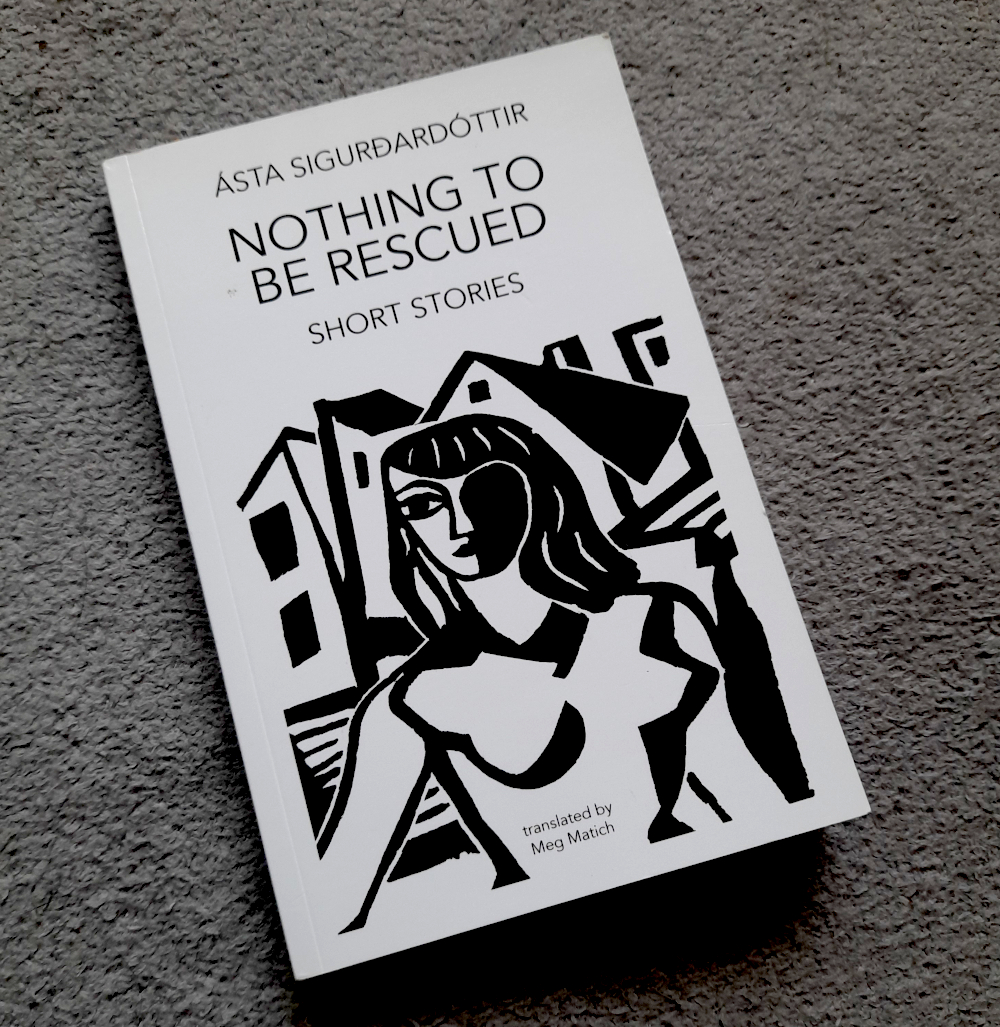
With books – unless, presumably, one is a publisher or a more than occasional book reviewer, the ‘of the year’ part is even less relevant. As it happens, I did read one book published this year that I thought was outstanding – Dorian Lynskey’s Everything Must Go – The Stories We Tell About the End of the World which I reviewed here and chose here, but I read many other books whose publication dates I’d have to look up. Most recently, I loved Nothing to be Rescued, a collection of sad and bitter short stories by Ásta Sigurðardóttir, a 2025 discovery for me, but Ásta died in 1971 and most of the stories pre-date her death by a decade. Even this collection, translated into suitably stark but beautifully readable English by Meg Matich, and which features Ásta’s own illustrations, is a couple of years old already. But just as the music that sounds best this year will sound the same next year, these stories, which have already outlived their author by more than half a century will continue to feel just as vivid and alive…

Onwards! because where else is there to go?


turning rebellion into money

Brave New World, Nineteen Eighty-Four, the Handmaid’s Tale and V for Vendetta are among the most uncomfortably prescient works of dystopian fiction, but I think the one that most precisely captures the tenor and atmosphere of the present time is more modest: a humorous two-part comic strip story from 1980, written by V creator, novelist and (ex-)comics legend Alan Moore (Watchmen, V for Vendetta, From Hell etc) and drawn by the great Steve Dillon. While Karl Marx may not have been wrong in his often-quoted observation* that history repeats itself, first as tragedy, then as farce, Alan Moore recognised, like Camus before him, that whatever history is, and whatever the future may be, the present tends to exist in a pretty much perpetual state of tragi-farce.

*The Eighteenth Brumaire of Louis Bonaparte, 1852

The Moore/Dillon story came with the ominous title Final Solution and appeared in one of 2000AD comic’s regular features, a more or less standalone, twist-ending, Twilight Zone/Tales of the Unexpected-like series called Future Shocks. In Final Solution, Moore and Dillon depict a crime-riddled future (not unlike that in 2000AD’s most famous strip, Judge Dredd) in which the ‘world’s smartest man,’ Abelard Snazz, President of the “Think Inc” corporation envisions, with the aid of a ‘think drink,’ a technological remedy for society’s ills. Obviously, the idea of a genius tech billionaire with a silly name who takes drugs in order to fuel his genius is far-fetched, but the story unfolds in a way that seemed far sillier when I read it as a child than it does now.

Snazz decides (pre-empting the Robocop franchise’s comedy-villain ED-209) that the answer to the crime problem is super-efficient police robots. And so it proves. The only problem is that the robots are too efficient and although the immediate crime problem is solved, there’s no way to turn the robots off and so they become ever more draconian in their crime-stopping. Ultimately they themselves begin to have a negative impact on society and in a particularly memorable and silly panel, a news anchor is arrested live on air for breaking the ‘laws of good taste’ with his clothing choice.
Steve Dillon (art) Alan Moore (script) from 2000AD, 1980

Snazz is again approached to come up with ideas and this time his solution is robot criminals to keep the robot police busy. Predictably it again works too well and so many humans are injured in the resulting crossfire that he comes up with ‘innocent bystander’ robots to take their place. In the end, the earth is overrun with robots fighting each other and humanity has to leave for another planet. On the journey out, Snazz has a vision of a new robot planet and in the last panel he and his sycophantic robot butler Edwin are thrown out of the spacecraft and Snazz has one final vision; “I see… empty air cylinders! I see… oxygen starvation! I see… a slow and painful death! What do you think, Edwin?” and the punchline; “You’re a genius, master!” It’s funny.

Cautionary tales – any tales really – being products of the time they are imagined in, Alan Moore wrote about robots, which in 1980 were one of the most obvious projections of an expected future. Unusually, but both ironically and logically, Hollywood was more on the money* in its choice of future villains: “The Company” (the Weyland Corporation, or for proper nerds, the Weyland-Yutani Corporation), the Tyrell Corporation, Cyberdyne Systems, Omni Consumer Products, Rekall. These are very different institutions from Huxley’s envisioned ‘World State’ or Orwell’s ‘The Party’ or Atwood’s ‘Gilead’ or Yevgeny Zamyatin’s ‘The One State.’ In the first half of the 20th century the most repressive and authoritarian regimes, fascist and communist alike, seemed like the plausible future; and both made corporations subordinate to the state and in fact absorbed them into the state. What the writers of early 20th century dystopias couldn’t have foreseen is that as consumer culture accelerated it became far more attractive for states (even to a surprising extent quasi-communist ones like China) to make themselves attractive to corporations in a kind of mutual enrichment scheme.

*phrase used accidentally but pertinently

And, wishing to make themselves equally attractive to the state, corporations therefore begin (or began; this is where we are now) to adopt the state’s ideas and ideologies. Qualitatively and atmosphere-wise it’s a very different existence from life under totalitarianism, but for the masses – i.e. for everyone who isn’t a member of government or in the upper echelons of a huge corporation – some of the effects of being the subject of a repressive authoritarian state and a technocratic, consumerist-oriented one are surprisingly similar.

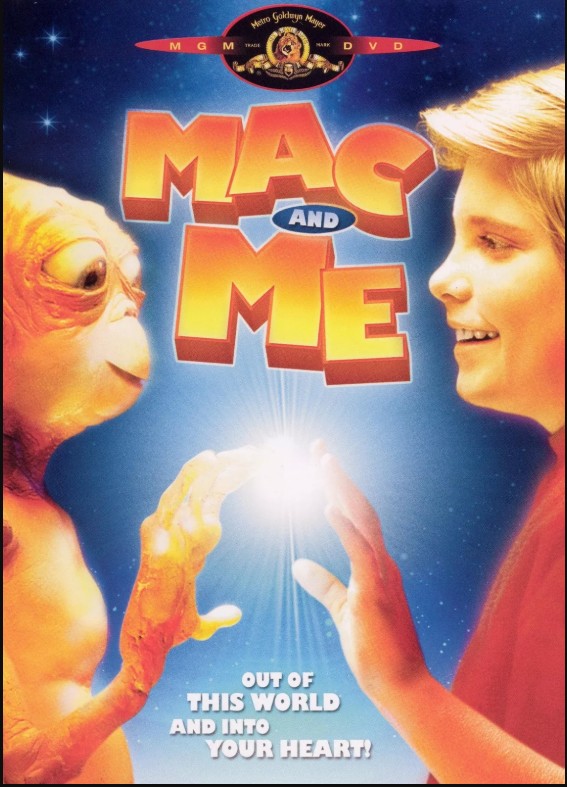
Mac & Me (1988) the most shamelessly cynical of all consumerist E.T. cash-ins; loveable alien named after a burger escapes evil government & befriends crippled boy

Classic authoritarians diminish the individuality of their subject citizens, often manufacturing laws limiting personal freedom in order to do so. The prohibition of identities, clothes, religions, media, internet access, issuing ever more precise definitions of what are to be considered societal norms of behaviour and gender roles are all steps towards an ideal state, from the point of view of its ruler. Totalitarian regimes prefer states to be peopled by those as paranoid as they are; obedient dogmatists, spies and informers; people whose lives are devoted to serving and upholding the state and the status quo and whose secret ambitions, if they have any, are most likely to revolve around joining those at the top and sharing in their almost unlimited power.

Clearly, that’s not how corporations work. But at the same time, in apparently tailoring their products more and more towards the individual – so that the customer feels catered to and begins to identify with this social media app, that phone, those brands – what they really end up doing is tailoring the public towards their products, in order to sell them more of those products and related products. And because the world of consumerism is competitive, the winning product is the one with the biggest fanbase. Looked at from the opposite direction, what this means is that the more your life as a consumer mirrors the lives of other consumers, the easier and more lucrative it is for the corporation to sell you their products. To begin with, people just used YouTube or Tiktok for entertainment; now there are people who identify with the product and ‘YouTuber’ and ‘Tiktoker’ are terms in that grey area where a profession becomes an identity.

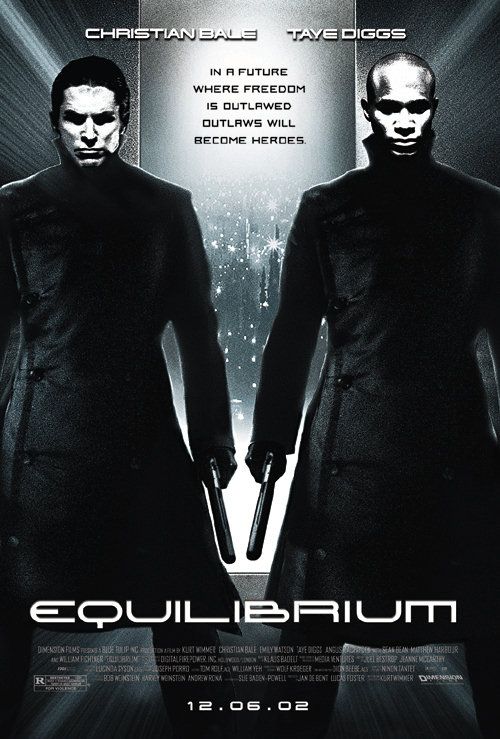
Equilibrium – the illegitimate child of Brave New World and the Matrix – note the perfect standard-issue summary of the bleak future that awaits & its suggested remedy

In the novels and films alluded to above, the heroic reaction to a totalitarian state or an all-powerful corporation is much the same – to rebel, to be an individual, an outsider, a non-conformist; someone who refuses to fit in their box and passively accept what they are given. But there’s a double irony here; firstly, because those rebelling-against-totalitarianism stories were popular, they were taken up by Hollywood and the entertainment industry, so that one of the defining parts of popular culture in the Western ‘free world’ has been celebrations of the victory of the individual over the faceless tyranny of the state, i.e. something that was never at that time a real worry for its audience. The second irony is that in celebrating the individuality of the heroic protagonist, what we end up with are endless, similar identikit heroes and heroines and endless variations on the same recycled stories, so that from Brave New World we end up with Logan’s Run (1976) and Equilibrium (2002) and The Island (2005) and so on, and on.

And that’s just mentioning single films: what’s notable about the Hollywood versions of these cautionary tales is that, if they are successful they become franchises; what Ripley, Sarah Connor, Murphy/Robocop, even Deckard in Blade Runner – whether or not he’s a Replicant – ultimately do is to sell the public more stories about themselves, or people like themselves.* At that point, rebelling against the all-powerful corporation becomes a trope – worse, a formula –  and it stops being about non-conformity in any meaningful way and is just another way to feed the same money machine, until that story wears out and has to be put on hold for a while. In that sense only, Hollywood is at the forefront of the recycling industry; no lucrative idea is ever fully forgotten and no franchise abandoned without one eye on a possible future reboot. As I write this, another Tron sequel -in its original 1982 form the story of the struggle of the warm, human individual against the cold and faceless computer world – is struggling to find an audience.

* The visual style of Blade Runner, even more than its story has informed whole swathes of dystopian cinema, but fiction too; reading Philip K. Dick’s Do Androids Dream of Electric Sheep its depiction of the near future is far less like Blade Runner than the works of later writers like William Gibson or almost any science fiction author since the 80s whose works belong to the near future or parallel versions of the present

Turning rebellion into money is a phrase pre-loaded with irony (yes, I get sick of mentioning irony, but it seems to be the air we breathe). I borrowed the phrase (which I’ve seen fairly recently on t-shirts and so forth) from the lyrics to the Clash’s classic 1978 single (White Man) In Hammersmith Palais, in which Joe Strummer was sneering at the Jam’s perceived commercial stance. The phrase was brought up a lot in 1991 when the Clash’s 1982 single Should I Stay or Should I Go was successfully rereleased after being licensed for a Levi’s jeans commercial. That corporate cash is hard to turn down, it seems.

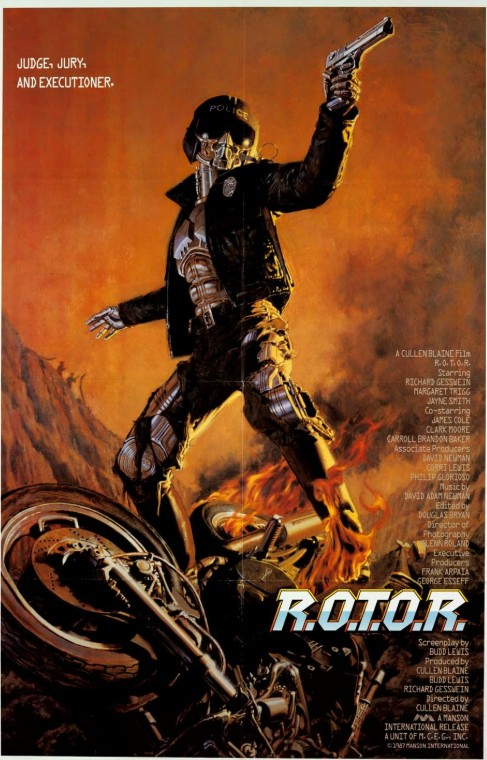
Like RoboCop and Mad Max? Then why not check out R.O.T.O.R.? (there are good reasons)

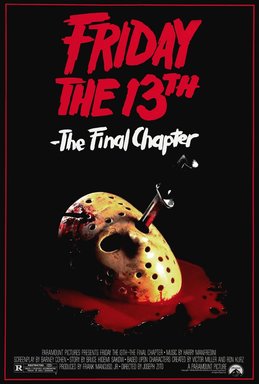
The current real world version of the corporate menace is not Replicants or state-applied repressed emotions but Artificial Intelligence (not the Spielberg/Kubrick movie). This morning I read something about how AI is not a therapist or a friend, it’s a mirror. There is definitely some truth in that, insofar as it trains itself based on its interactions with people – but more than a mirror, it’s quite important to remember that ultimately it’s a product. Interacting with it tells it’s makers what you like, just as in the past renting Friday the 13th: The Final Chapter* told Paramount Pictures or Vestron Video or whoever what you liked or – at least would accept in the name of entertainment. Finding out what you like, working out how you think, in order to sell you more of itself.

* Friday the 13th: The Final Chapter (1984) was the fourth film in the series, but hardly the final chapter – five more followed in the original series before the franchise was (briefly) laid to rest, then resurrected, in a team-up, then rebooted

Part 4 – better than Part 3 but possibly not as good as Part 6 – but it has Crispin Glover in it so it’s not all bad

It’s funny; everybody knows who the key figureheads in ‘big tech’ are – its Abelard Snazzes. Everybody knows that they are the richest men in the world and that they have political influence and that they have begun to shape their companies in response to political pressure. Things being as they are and the Western world being in an ever-accelerating self-devouring capitalist culture, it’s rarely political pressure in the form of rules or directives, but more often financial persuasion and near-money laundering; tax breaks flow in one direction and ‘donations’ (bribes) in the other.

Everybody knows that these Snazz-figures made and maintain their fortunes from the tech business. So really, everyone knows – whether they choose to think about it or not – that when these men present their most ubiquitous products – be it AI bots or online tools or social media apps – free of charge, that they can’t really be free. I’m not dramatic enough (or spiritual enough) to suggest we are selling our souls, but some kind of payment is being made. And even if those tech-lords never seem convincingly genius-like, you have to hand it to them – the 1980s may have been the consumer decade, but lonely 80s teenagers never confided their problems and insecurities in a Sony Walkman, or shared their most cherished dreams with a Rubik’s cube, and they never asked a Big Mac for dating advice.


some kind of loss

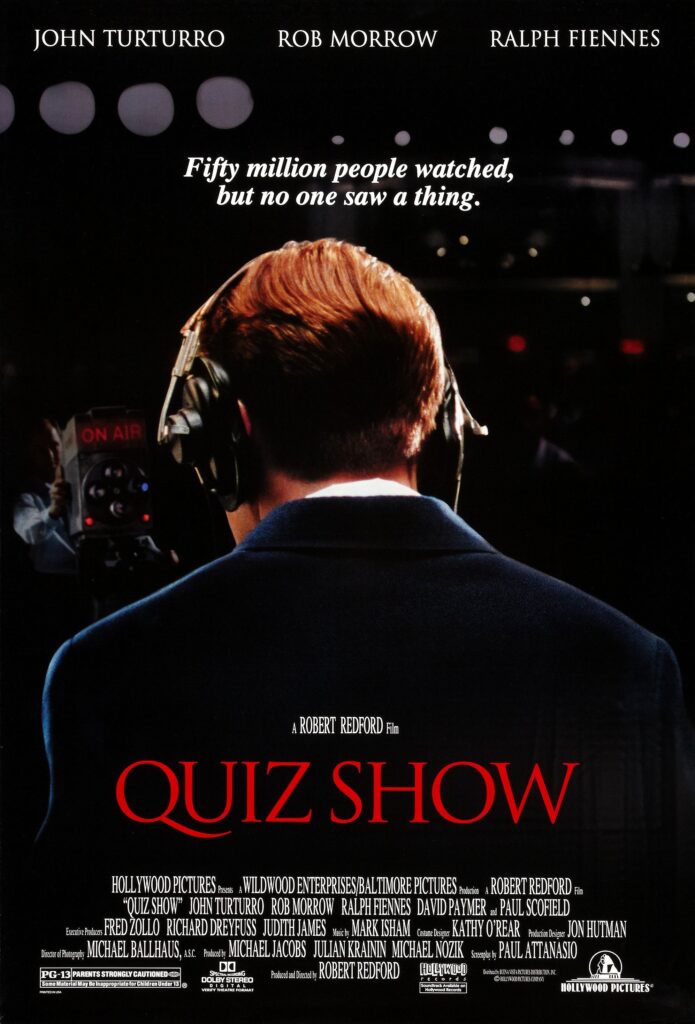
I remember when Robert Redford’s 1994 film Quiz Show was released, much of the publicity focussed on the idea that a relatively everyday scandal – the discovery in 1957-8 that a popular TV quiz show was rigged – marked the loss of the USA’s innocence. At the time, 20-year-old me could not have been more scornful. The idea that the innocence, whatever that meant, of 160+ million American citizens had somehow survived the relatively recent dropping of two atom bombs on civilians, the uncovering of the Holocaust, the filmed and widely publicised Nuremberg Trials, ongoing racial segregation and lynchings (Emmett Till, the last lynching victim recorded by the Tuskegee Institute – though not the last lynching, by a long way – was murdered aged 14 just three years earlier), the fighting of a war in Korea under the pretence of a ‘police action’ and the rise of and eventual disgust with McCarthyism; had survived all that, but that the scales then dropped from their eyes and the foundations of their way of life began to crumble when it turned out that the things they were offered as entertainment turned out to just be entertainment and not some kind of bastion of morality and fairness seemed laughable at best.

Quiz Show (1994)

I can still see my younger self’s point of view; it doesn’t take much consideration to realise that innocence, whether on a personal or a societal level, is a dangerous fetish. And innocence itself is less often a real state and more often an illusion or chimera – or just a point of view. It’s at best a slippery concept, whose opposite can be either guilt, corruption or just experience, none of which are precisely the same thing. The final verse of Philip Larkin’s 1964 poem MCMXIV about the outbreak of World War One half a century earlier, is justly famous and has a kind of intuitive truth to it:

Never such innocence,
Never before or since,
As changed itself to past
Without a word – the men
Leaving the gardens tidy,
The thousands of marriages,
Lasting a little while longer:
Never such innocence again.

Philip Larkin, ‘MCMXIV’, The Whitsun Weddings, Faber & Faber, 1964, p.28

enlistees in London at the outbreak of WW1 (Imperial War Museum)

Truth, because we know now (and Larkin knew then) what the young men lining up to enlist in the army in 1914 didn’t; that they were about to enter a modern world entirely different from the late Victorian one that they had grown up in. But illusion too, because the horrific brutality of WW1 was new only insofar as the people facing the onslaught of modern weaponry were white. There is the scale of it too; but though tanks, explosive shells and machine guns firing 500-600 rounds per minute created unprecedented levels of slaughter, the question of whether two sides using such weapons against each other is ‘worse’ than people armed with guns attacking people armed with spears or swords or bows and arrows is one that doesn’t seem worth answering. It’s probably not un-worse at least.

Even leaving aside the Imperialism of the WW1 combatants and the fact that they voluntarily signed up for it, the innocence of the Britain that the enlistees were queuing up to leave was dubious at best. The previous few years had been marked by the fight for women’s suffrage with the brutalities and indignities wilfully inflicted on suffragettes by the authorities, not to mention (the usual) grotesque levels of poverty and inequality; there is more than one reason that so many young men were keen to join the army.

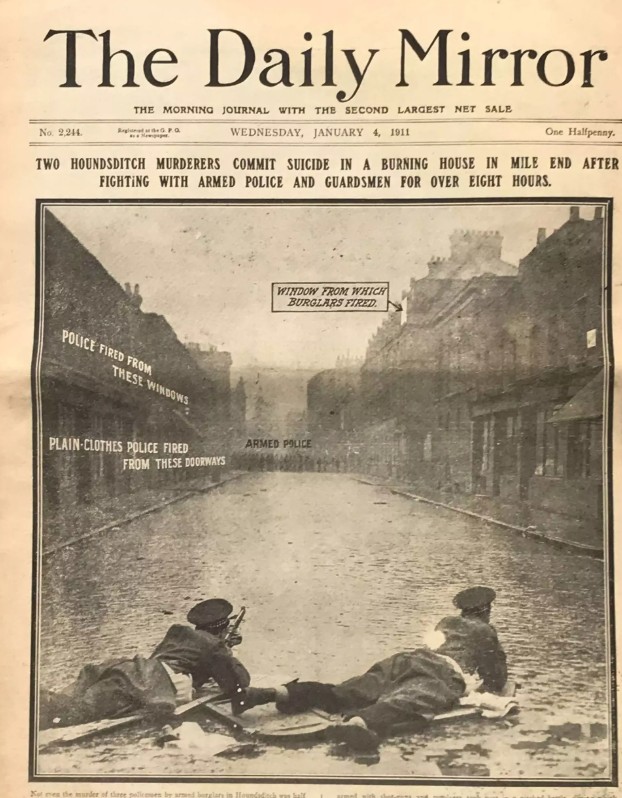
Even on a smaller and more localised scale, early 20th century Britain was full of strangely archaic, Tintin-like episodes that also seem to have a quaint kind of innocence now which they definitely didn’t have at the time and wouldn’t have had if experienced first hand; Latvian anarchists, terrorism, gang violence, the Siege of Sidney Street. And these kinds of things were happening all over Europe: the First World War didn’t come out of nowhere.

In a famous riposte to George Orwell on the subject of weekly magazines for boys, Frank Richards, the author of the Billy Bunter series wrote,

Probably I am older than Mr Orwell: and I can tell him the world went very well then [in 1910]. It was not been improved by the Great War, the General Strike, the outbreak of sex-chatter, by make-up or lipstick, by the present discontents [World War Two], or by Mr Orwell’s thoughts upon the present discontents!”

(Frank Richards responds – Collected Essays, Journalism and Letters of George Orwell Volume 1: An Age Like This (Penguin, 1970 p.532).

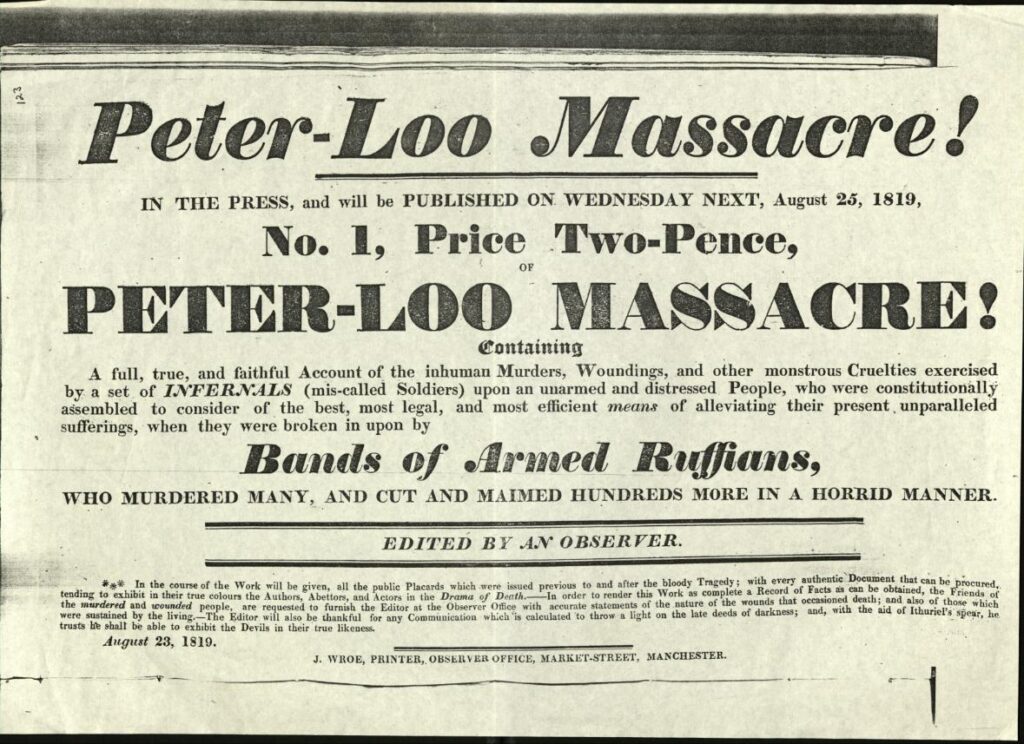
Fair enough, but when Frank Richards (real name Charles Hamilton) was 12 years old, the British Empire was at its height and Jack the Ripper was murdering prostitutes in London. Probably his parents were children during the period when Chartist protesters were being killed by the army, and their parents would have been alive during the period of Napoleonic Wars and the Peterloo Massacre. Which doesn’t make the First World War any less horrific, but you might as well say the sinking of the Titanic caused the loss of Britain’s innocence.

Advertisement for an account of the Peterloo Massacre

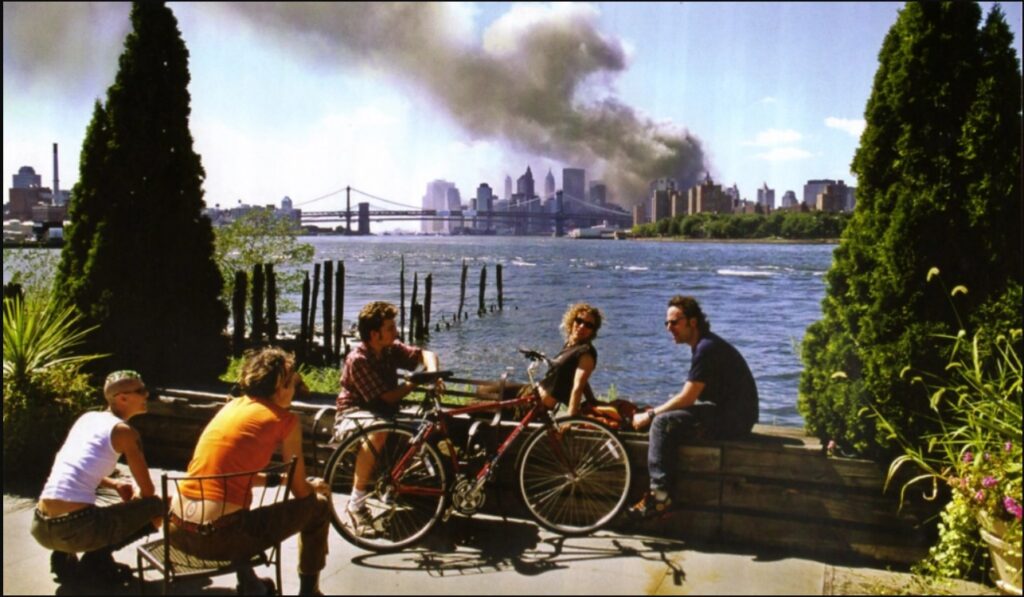
But I’m no better. Even though I wouldn’t use the phrase ‘loss of innocence,’ to me it seems like the world has never felt quite the same since 9/11. I’d be fooling myself if I said things were in any real sense better beforehand, and as with WW1, the events of that day didn’t come out of nowhere and it was as much a culmination as it was a beginning. But still, there’s a certain kind of low-level dread that emerged (in me at least) then and which, since then, always seems to be within easy reach.

That dread came to the fore again in 2004 when the photos of the torture and abuse of prisoners at Abu Ghraib were released and then again in the early 2010s with the violent rise of the Islamic State and the series of filmed beheadings of westerners that appeared online and on the news, and the murder of Lee Rigby in London. But it’s not a feeling that’s exclusive to Middle East-related matters, and it recurs like a migraine; every white supremacist rally, every attack on a mosque or synagogue, every time the media normalises far-right politics, every new announcement of US government policy brings with it a hint of that particular combination of heavy misery and pit-of-the-stomach dread.

Thomas Hoepker’s notorious 2001 photo of nonchalant 9/11 witnesses

Were things ‘better’ before 9/11? It depends on what you mean and who you are. For me, I was a teenager living in a peaceful and relatively prosperous country, so my specific worries, even the ones that felt existentially soul-crushing at the time, were probably pretty trivial. And it wasn’t entirely a new sensation; I remember feeling apprehensive and angry in the run up to the Gulf War in 1990, and before every general election, but that anxiety didn’t really linger in my day to day teenage life.

echhh

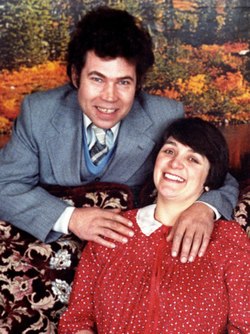
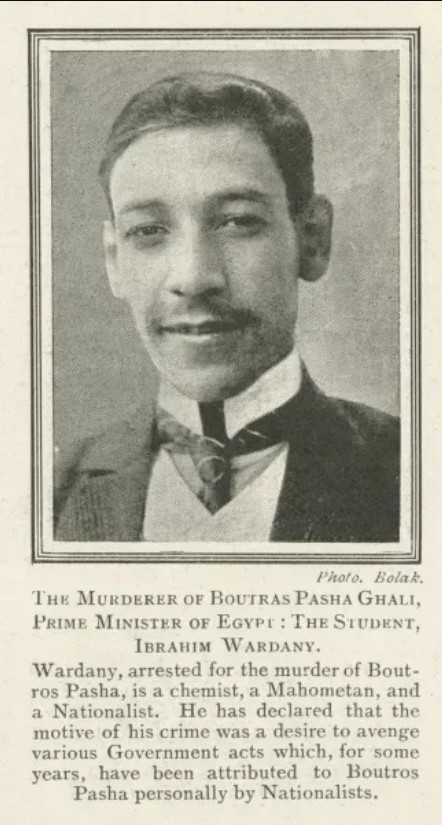
The same year that Quiz Show was released I remember watching the unfolding of the story of Fred and Rosemary West’s murders on breakfast TV for several days in a row with a sense of outraged horror, but it for me at least it didn’t have the lasting, polluting effect of 9/11. I remember watching with actual disbelief (I think the only time I’ve experienced that emotion, apart from seeing 9/11 itself on the news) when breakfast TV broke the story of Princess Diana’s death and then with irritated disbelief in the days (or weeks?) that followed, at Britain’s reaction to it. Again, that was a different thing. In 1910, when the world ‘went very well,’ Paris flooded, the French government massacred protesters in Côte d’Ivoire, Albania revolted against Ottoman rule and Boutros Ghali was assassinated in Cairo, while in Britain King Edward VII died and George V was crowned, Dr Crippen murdered his wife and was caught and executed, 300 Suffragettes fought with police outside of Parliament and Captain Scott set off on the British Antarctic Expedition; but Frank Richards was a successful author who had established two very weekly papers for children for which he wrote humorous stories; probably life seemed pretty good.

This isn’t nostalgia, exactly. In middle age, when their time is poisoned by yet unforeseen anxieties, will the teenagers of today look back wistfully at a period when there were still Palestinian people living (however precariously) in Palestine, or when the weather was mostly hot at one predictable time of year and cold in another and think of it as a better world they once knew, or just a different one? Who knows. At the moment, just catching up with the news every morning feels more and more like doomscrolling and the headlines feel increasingly like “The preparations for Hate Week were in full swing.

Around the time of the 9/11 attacks in 2001, the internet was just beginning to be a normal presence in almost everybody’s home, long before it was something they carried in their pockets and their hands. Since then, everyone has access to everything and, in the words of British heavy metal stalwarts Saxon, innocence is no excuse. Or at least it’s a willed, deliberate choice. But maybe it always was. Is innocence anything to aspire to outside of a court case anyway? I don’t know.

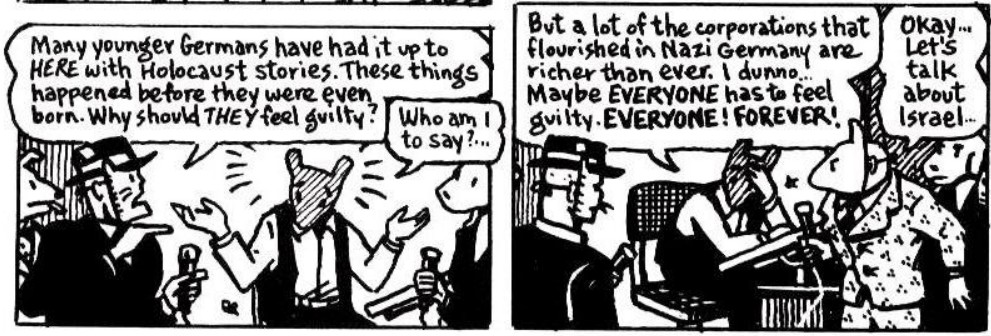
A conversation from Art Spiegelman’s Maus, a Pulitzer Prize-winning book, but one that was recently removed from some American schools, presumably to preserve some kind of innocence, springs to mind;

“Many younger Germans have had it up to HERE with Holocaust stories. These things happened before they were even born. Why should THEY feel guilty?”

“Who am I to say? But a lot of the corporations that flourished in Nazi Germany are richer than ever. I dunno… Maybe EVERYONE has to feel guilty. EVERYONE! FOREVER!

Art Spiegelman: Maus A Survivor’s Tale (The Complete Maus, Penguin Books, 2003 p.202)


a victory over ourselves – versions of 1984 in 2025

Remembering 1984 as someone who was a child then, I find that although the clocks didn’t strike thirteen as in the novel, the year – as encapsulated by two specific and very different but not unconnected childhood memories, as we’ll see – is almost as alien nowadays as Orwell’s Airstrip One. Of course, I know far more now about both 1984 and Nineteen Eighty-Four than I did at the time, but I was aware – thanks mostly I think to John Craven’s Newsround – of the big, defining events of the year.

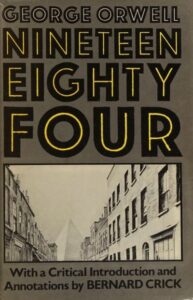
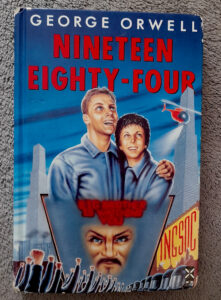
Surely the greatest ever cover for Nineteen Eighty-Four, by Stuart Hughes, for the 1990 Heinemann New Windmills edition

I knew, for instance about the Miners’ Strike and the Greenham Common Women’s Peace Camp, but they didn’t have anything like the same impact on me personally as Indiana Jones and the Temple of Doom. I remember Zola Budd tripping or whatever it was at the Olympics and Prince Harry being born, but they weren’t as important to me as Strontium Dog or Judge Dredd. Even Two Tribes by Frankie Goes to Hollywood made a bigger impression on me than most of the big news events of the year, despite the fact that I didn’t like it. My favourite TV show that year was probably Grange Hill – and here we go.

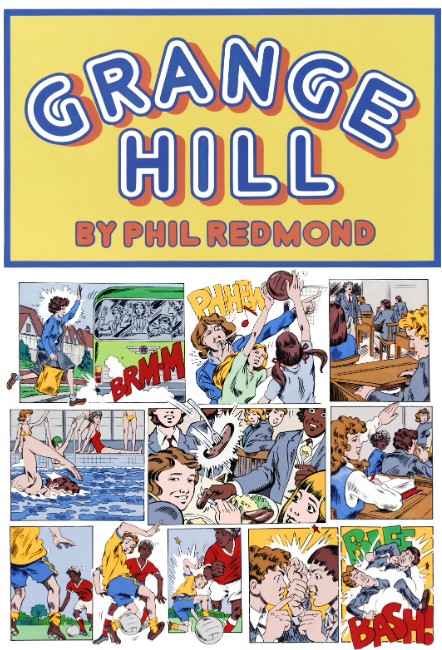
Grange Hill – essentially a kids’ soap opera set in a big comprehensive high school in London – ran for 30 years and I recently discovered that the era of it that I remember most fondly – the series’ that ran from 1983-6 – is available on YouTube. When I eventually went to high school later in the 80s, my first impression of the school was that it was just like Grange Hill, and now I find that despite the silliness and melodrama, Grange Hill still reflects the reality, the look and the texture of my high school experience in the 80s with surprising accuracy.

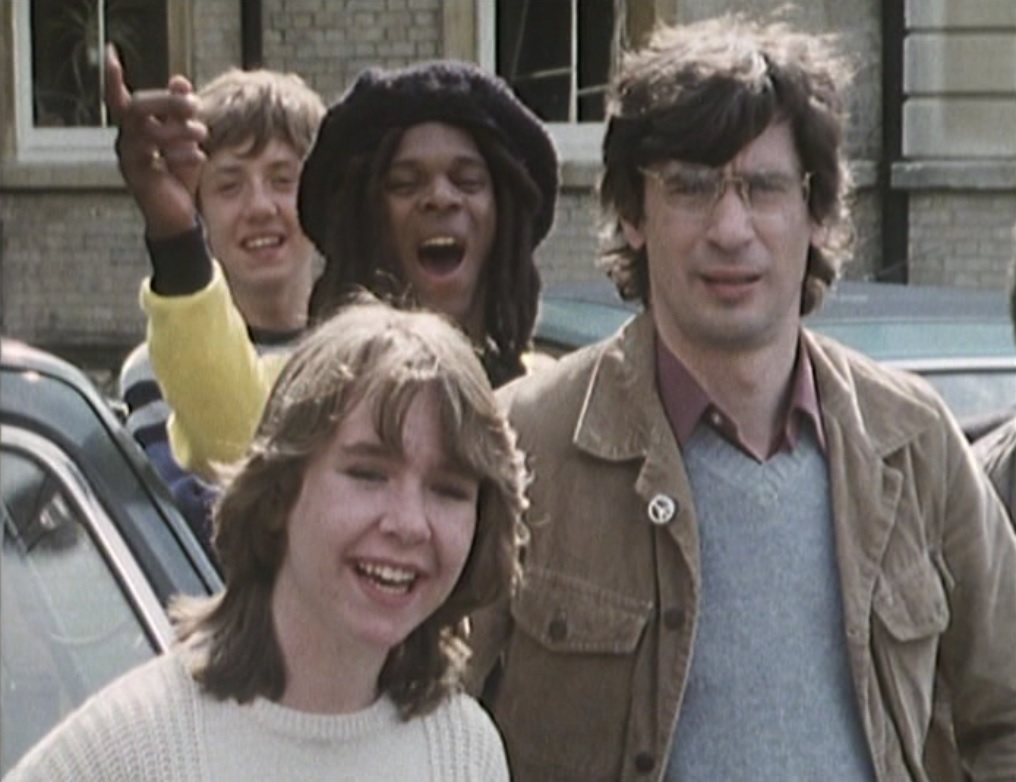
Grange Hill”s 5th formers in 1984 (back: Stewpot & Glenroy, front: Suzanne & Mr McGuffy)

But anyway, watching old Grange Hill episodes out of nostalgia, I was struck by how good it seems in the context of the 2020s, despite the obvious shortcomings of being made for children. Check out this scene from series seven, episode five, written by Margaret Simpson and which aired in January of 1984. Among typical story arcs about headlice and bullying, the Fifth form class (17 year olds getting towards the end of their time at school) get the opportunity to attend a mock UN conference with representatives from other schools. In a discussion about that, the following exchange occurs between Mr McGuffy (Fraser Cains) and his pupils Suzanne Ross (Susan Tully), Christopher “Stewpot” Stewart (Mark Burdis), Claire Scott (Paula-Ann Bland) and Glenroy (seemingly of no last name) (Steven Woodcock). It’s worth noting that this was the year before Live Aid.

Suzanne: [re. the UN]:"It's about as effective as the school council."

Mr McGuffy: "Oh well I wouldn't quite say that. The UN does some excellent work - UNESCO, the Food and Agriculture Organisation, the UN Peacekeeping force..."   [...]

Claire: "What's the conference gonna be about?"


Mr McGuffy: "The world food problem. There was a real UN conference on this topic ten years ago..Glenroy: "Didn't solve much then, did they? Millions of people still starvin'"

Stewpot: ”Yeah that's cos they ain't got no political clout to do anything about it though, ain't it"

Glenroy: ”Naw man, it's because the rich countries keep them that waySuzanne: “The only chance a poor country's got is if it's got something we wantGlenroy:That's right - they got something the West wants and they'd better watch out because the West starts to mess with their government."

Mr McGuffy: "Well it's clear from what you've all said so far that you're interested in the sort of issues that will be discussed that weekend..."

Suzanne & Claire, 1984

It’s not an exaggeration to say that that is a more mature political discussion than is often heard on Question Time in 2025. Interestingly, it’s not an argument between left and right as such, but between standard, humanitarian and more radical left-wing viewpoints. Needless to say, if it was presented on a TV show that’s popular with ten year-olds nowadays, a certain demographic would be foaming at the mouth about the BBC indoctrinating the young with “wokeness.” But as a kid this sort of discussion didn’t at all mar my enjoyment of the show, Naturally there’s also a lot of comedic stuff in the series about stink bombs and money-making schemes, but one of the reasons that Grange Hill remained popular (and watchable for 8 year-olds and 15 year-olds alike) for so many years was that it refused to talk down to its audience.

The way the writers tackled the obvious big themes – racism, sexism, parents getting divorced, bullying, gangs, sex education etc – are impressive despite being quite broad, especially when the younger pupils are the focus of the storyline, but what makes a bigger impression on me now is the background to it all. It’s a little sad – though true to Thatcher’s Britain – to see through all this period the older pupils’ low-level fretting about unemployment and whether it’s worth being in school at all.

And maybe they were right. In 1984, when Suzanne and Stewpot were 17, a fellow Londoner who could, in a parallel universe, have been in the year above them at Grange Hill was the 18-year-old model Samantha Fox. That year, she was The Sun newspaper’s “Page 3 Girl of the Year.” She had debuted as a topless model for the paper aged 16, which is far more mind-boggling to a nostalgic middle-aged viewer of Grange Hill than it would have been to me at the time. Presumably, some parts of the anti-woke lobby would not mind Sam’s modelling as much as they would mind the Grange Hill kids’ political awareness, but who knows?

Sam Fox in (approximately) Grange Hill mode c.1986, not sure who took it

Naturally, the intended audience for Page 3 wasn’t Primary School children – but everybody knew who Sam Fox was and in the pre-internet, 4-channel TV world of 80s Britain, she had a level of fame far beyond that of any porn star 40 years later (arguments about whether or not Page 3 was porn are brain-numbingly stupid, so I won’t go there; and anyway, I don’t use porn as a derogatory term).

Whatever; Sam (she’ll always be “Sam” to people who grew up in the 80s) and her Page 3 peers made occasional accidental appearances in the classroom, to general hilarity, when the class was spreading old newspapers on our desks to prepare for art classes. It was also pretty standard then to see the “Page Three Stunnas” (as I think The Sun put it) blowing around the playground or covering a fish supper. It was nothing like growing up with the internet, but in its own way the 80s was an era of gratuitous nudity.

a nice Yugoslav edition of 1984 from 1984

Meanwhile, on Page Three of Nineteen Eighty-Four, Winston Smith – who is, shockingly, a few years younger than I am now – is trying to look back on his own childhood to discern whether things were always as they are now:

But it was no use, he could not remember: nothing remained of his childhood except a series of bright-lit tableaux, occurring against no background and mostly unintelligible.” George Orwell, Nineteen Eighty-Four (1949) P.3 – New Windmill edition, 1990

By contrast, some of the roots of 2025 are plain to see in 1984, despite the revolution of the internet that happened halfway between then and now. As the opposing poles of the Grange Hill kids and The Sun demonstrate, there were already tensions in British society which would never so far be resolved, but they would come to some kind of semi-conclusion at the end of the Thatcher era when when ‘Political Correctness,’ the chimerical predecessor of the equally chimerical ‘Woke’ began to work in its unpredictable (but I think mostly positive) ways.

Most obviously, Page 3 became ever more controversial and was toned down (no nipples) and then vanished from the tabloids altogether for a while (though in the 90s the appearance of “lads’ mags” which mainstreamed soft porn made the death of Page 3 kind of a pyrrhic victory.) More complicatedly, the kind of confrontational storylines about topics like racism that happened in kids shows in the 80s became a little more squeamish, to the point where (for entirely understandable reasons) racist bullies on kids’ shows would rarely use actual racist language and then barely appear at all, replaced by positivity in the shape of more inclusive casting and writing. Nice and I think genuinely positive in a way, but it began to look pretty quaint quite quickly as soon as the internet with its love of edgy polarisation and tolerance of any kind of extremism really took off.

a very 1984-looking edition of Nineteen Eighty-Four from 1984

So, that was part of the 1984 that I remember; what Orwell would have made of any of it I don’t know. It wasn’t his nineteen eighty-four, which might have pleased him. For me, it all looks kind of extreme and problematic, but also refreshingly straightforward, though I’m sure I only think so because I was a child then and lived through it unscathed. It’s all very Gen-X isn’t it?

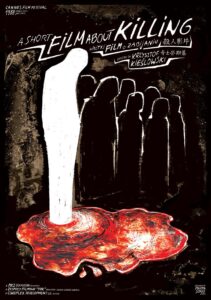
a short essay about killing

the poster for Krzysztof Kieslowski’s A Short Film About Killing (1988)

I don’t believe in the death penalty. In this, I’m in the majority, globally. I’m not sure when exactly I became against it; until at least the age of 12 I was pretty much a proto-fascist with an ‘eye-for-an-eye’ sense of justice, as boys tended to be in those days and for all I know still are. But I know that by the time I saw Krzysztof Kieslowski’s brilliantly grim A Short Film About Killing (Krótki film o zabijaniu) when I was 16 or so I was already anti-death penalty and have remained so ever since.


My reasons are, typically, kind of pedantic. There are many obvious arguments against the death penalty; there’s the ‘what if you accidentally kill the wrong person’ argument and that’s a pretty strong one – it has happened and does happen and is irreversible. There’s the fact that the death penalty seems to have a negligible effect on the crime rate. In fact, countries with the death penalty on the whole seem to have more rather than fewer murders (not that there’s necessarily a link between those two things). Even from the coldest and most reptilian, utilitarian point of view – getting rid of the problem of prison overcrowding – any possible benefit is negated by the fact that in most countries with the death penalty, prisoners spend years on death row being fed and housed, rather than being quickly and efficiently ‘processed.’

There’s also the Gandalfian(!) argument from The Lord of the Rings; “Many that live deserve death. And some that die deserve life. Can you give it to them? Then do not be too eager to deal out death in judgement. For even the very wise cannot see all ends.” That wasn’t just a handy deus ex machina that Tolkien used because he needed Gollum to survive in order to destroy the ring. Well, it was that, but Tolkien was also a devout and serious Christian and that was his moral outlook. Thank Cthulhu that unlike his friend CS Lewis, he deliberately left religion out of his books though! In the Biblical commandment Thou Shalt Not Kill, the Judeo-Christian god doesn’t list any exceptions or mitigating circumstances – in that one instance. Of course elsewhere in the Bible there are many circumstances where humans killing humans is considered appropriate and even righteous – the ultimate irony being that Jesus, kind of like an anti-Gollum, has to suffer death through violence to achieve his purpose. Religion is odd; but I’m not a Christian or Jew.

All of those points are relevant, but for me personally, it’s far simpler than that; if you can be legally killed, that means that in the eyes of the state there’s nothing wrong in essence, with killing people. I think there is, and I don’t think that it should just be a matter of having the right paperwork. Put bluntly, to kill a murderer is not telling them ‘what you did is wrong‘ so much as ‘you did it wrong‘ which I don’t think is just a minor difference. On top of that, there’s the whole question of who you are handing this responsibility over life and death to. I have a lot of respect for some lawyers, attorneys, judges, police officers etc, but there are others that I wouldn’t trust with my lunch, let alone my (or anyone else’s) life. States have a character, and often that character is institutionally biased regarding race, class, gender and sexuality. Giving that kind of absolute power within that kind of deeply fallible framework seems likely to create far more problems than it solves. But even in non-death-penalty countries like the UK we routinely give people the legal right to take other people’s lives; all they have to do is join the armed forces.

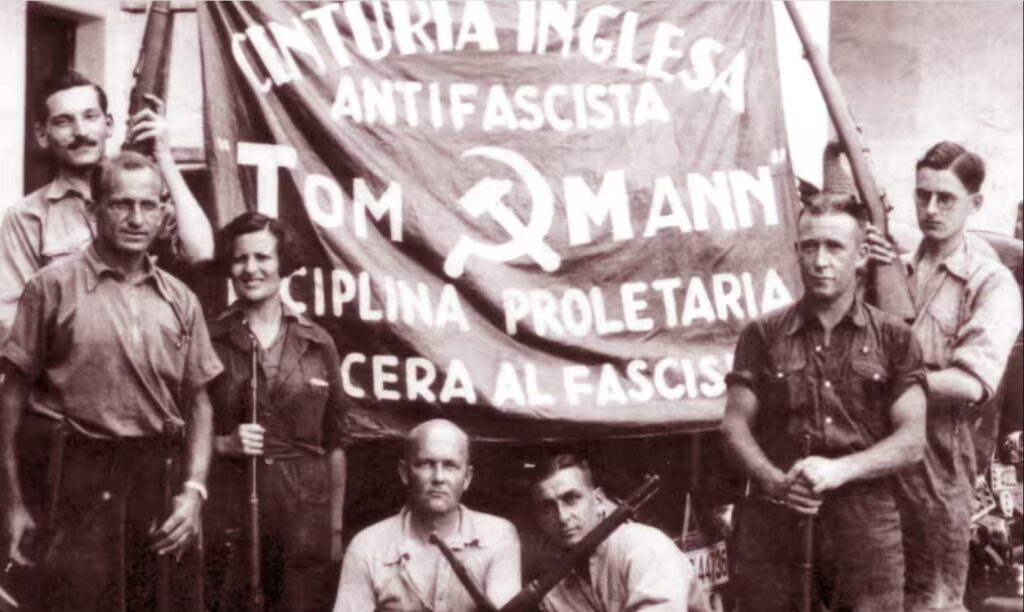
British volunteers in the International Brigade, 1937

I’m no more consistent than anybody else and my attitudes have their exceptions and contradictions. I (predictably) don’t philosophically differentiate between the military and mercenaries, because what ‘serving your country’ means in practical terms is carrying out whatever the policy of your current government is that week, with no certainty that it won’t be contradicted by a new policy (or a new government) the following week. If enemies suddenly turn out to be allies or vice versa, the dead remain dead. That said – here’s the contradiction – I’m not a pacifist absolutist either, and I think, or like to think, that if an invading army arrived in my country I’d take arms against it.

These things are particular though; everybody likes to think they’d fight for a good cause. The Spanish Civil War stands out for the number of anti-fascist fighters from all over the world who took up arms in defence of Spain, but that happened partly because so many people were ready to – and wanted to – fight. Many of those, George Orwell is a prominent and typical example, belonged to the generation who had been just too young to fight in World War One and whose feelings about war – including a considerable amount of survivor’s guilt – had been shaped by it. The fascist attack on the Spanish republic gave them a clear-cut situation to intervene in, in a way that the more gradual, more political rise of fascism in Italy and Germany didn’t.

But anyway, the death penalty. People of course do terrible things, but although lots of them are significantly more horrific than a lethal injection or the electric chair, the end result is the same. Being – odd, brief segue but bear with me, it’s relevant – a fan of black metal music, the subject of death and murder is one you come across in a different way from just being, say, a fan of horror movies. Because the poser-ish ‘darkness’ of black metal spills over (though less than it used to) into ‘real life,’ almost as if the kind of art you make bears some relation to the kind of person you are. I won’t go into the tedious-but-fascinating Lords of Chaos stuff about Mayhem & Burzum or Absurd because it’s not quite relevant here, but the story of Smutak (Pavel Selyun) who ran Morak Production record label in Belarus is.

In 2012, Selyun discovered that his wife, the artist and singer Frozendark (Victoria Selyunova) was having an affair with the artist, zine editor and musician Kronum (Alexey Vladimirovich Utokva). Sticking with the pseudonyms seems appropriate to the melodrama, so I’ll do that from here on. Smutak murdered both Frozendark and Kronum then dismembered them and was apprehended on the subway three days later with Kronum’s head (or skull; – some accounts say he boiled the head – same difference I suppose but I don’t need to know) in a bag. After his arrest, he was imprisoned in Minsk and after a confession gained under torture and the failure of various appeals  he was executed two years later, by being shot in the back of the head.

A horrible postscript that demonstrates how the death penalty punishes the innocent as well as the guilty; after Smutak’s execution the authorities failed to hand over his body to his mother or tell her where he’s buried, the case was handed to the UN Court of Human Rights.

Not many people (and certainly not me) would say that Selyun didn’t ‘deserve’ his treatment. But still. He possibly tortured and definitely killed people and then was tortured and killed. There is a kind of Elizabethan revenge tragedy balance there, but it’s one in which the act of torturing and killing itself is made neutral. Whoever tortured and killed Smutak doesn’t need any kind of defence and won’t face any kind of judgement, because they did it in the name of the law. But the idea that torturing and killing becomes morally neutral because you don’t have any emotional investment in the act is an odd one. Smutak had nothing to gain from his actions other than some kind of horrible satisfaction. The person or people who did the same to him had nothing to gain accept for their wages. Which is morally, what? Better? He reportedly felt the same kind of fear as his victims; well good, I guess, but that did nothing to benefit those victims. It may have pleased the victims’ relatives but I wouldn’t want to examine that kind of pleasure too closely.

The current case of Luigi Mangione is far stranger. It’s the only time I can recall that the supporters (in this case I think ‘fans’ would be just as correct a word) of someone accused of murder want the suspect to be guilty rather than innocent. Whether they would still feel that way if he looked different or had a history of violent crime or had a different kind of political agenda is endlessly debatable, but irrelevant. It looks as if the State will be seeking the death penalty for him and for all the reasons listed above I think that’s wrong. But assuming that he is guilty, which obviously one shouldn’t do (and if he isn’t, Jesus Christ, good luck getting a fair trial!) Mangione himself and some of his fans, should really be okay with it. If he’s guilty, he hasn’t done anything to help a single person to get access to healthcare or improve the healthcare system or even protested against it in a way that people with the political power to affect change can positively react to. UnitedHealthcare still has a CEO, it still has dubious political connections and it still treats people very badly. That doesn’t mean that it’s an unassailable monolith that can never be changed, but clearly removing one figurehead isn’t how it can be done.

But more to the point; why does the killer (assuming their motives are the ones that are being extrapolated from the crime) care anyway? If actually shooting someone dead in the street is okay, then surely being indirectly responsible for the misery and possible deaths of others is barely even a misdemeanour. It amounts to the kind of Travis Bickle movie logic I’m sure I’ve sneered about elsewhere; complaining about the decay of social values and then committing murder is not reducing the sum total of social decay, it’s adding to it. A society where evil CEOs are shot dead in the street is a society where human beings are shot dead in the street and that becoming acceptable is not likely to be the pathway to a more just, equal or happy society.

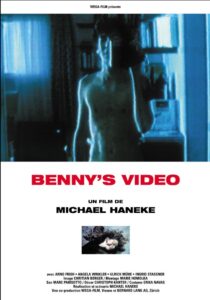
Michael Haneke’s disturbing Benny’s Video (1992)

What the death penalty does do, and probably a key part of why it’s still used in some countries, is offer a punishment that seems (in the case of murder at least) to fit the crime. Interestingly, public executions – which counterintuitively seem to have no better track record as a deterrent than any other kind of execution – are now vanishingly rare. Part of that is no doubt to do with public disgust and part with institutional secrecy and shame, but I imagine that part of it is also the fear that the public would enjoy it too much.

I’m not sure if I’d think that if it wasn’t for the spate of Islamic State beheadings that were so widely watched on the internet back in the early 2010s (was it?) I watched one, like most people seem to have, and still wish I hadn’t; but you can’t un-ring a bell. That was at the back of my mind when I wrote about saints and martyrdom for this site a while ago and I can bring images of it to mind horribly easily.

But even before that, it shouldn’t have surprised me – like many other teenage horror movie fans in the pre-internet era I watched exploitation videos like Face of Death that featured executions, accidents etc, and in doing so realised that I was specifically a horror fan and not a fan of whatever that is. I should have learned my lesson there, but it’s undeniable that these things have a murky kind of fascination; since then, thanks to one of my favourite writers, Georges Bataille, I’ve ended up reading about Lingchi (‘Death by a Thousand Cuts’) and looking at the chilling and depressing photos of it, been appalled by postcards of lynchings, seen revolting photographs of soldiers’ desecrated bodies and murder victims. I haven’t gotten used to those images and I hope I never will. Teenage me would no doubt sneer at that because he thought that things that are ‘dark’ are cool, but that seems like a laughable and childish attitude to me now, so I can take his sneering. It might seem that I’m edging towards the point that Michael Haneke is making in Funny Games (1997), which I find a bit tiresome and preachy (even more so the remake), but I’m not. I disagree with the premise of that film because I do think there’s a difference between fictional horror and real horror, and that enjoying one isn’t the same as enjoying the other. I think his 1992 film Benny’s Video makes a similar but much more subtle and complex point far better.

Imprisonment (whatever your views on the justice system) is a pretty unsatisfactory solution for most crimes, but it’s difficult to think of a better one which doesn’t essentially exonerate the kind of behaviour we want to characterise as abnormal or criminal. ‘An eye for an eye’ is the thinking behind the death penalty but its illogical nature can be seen when applied to any other crime. Stealing from a thief is obviously ‘justice’ in that sense, but as a punishment it would be laughable. Raping a rapist would be grotesque and would double the number of rapists in the room every time it happened. But even so, it’s never going to be comfortable that the tax payer is contributing to the relative comfort of someone like (I’ll only mention dead ones, this isn’t a complaint about the legal system being soft on psychopaths) Fred West.

A solution l think I might suggest is one which I’m extremely dubious about myself from lots of different humanitarian, psychological and philosophical points of view; why not offer (and that word alone would make people angry) ‘monsters’ – that is, the kind of killers in a category of their own, who admit to horrendous acts of murder and torture and whose guilt is not in doubt – the ones that will never be allowed freedom – the choice of a lethal injection rather than life imprisonment? That’s a horrible thing to contemplate – but then so is paying for the meals and upkeep of someone like Ian Brady, especially when he essentially had the last laugh, exercising his tiny bit of remaining power over the families of his victims and having his self-aggrandising bullshit book The Gates of Janus published.

That last part was kind of icky and uncomfortable, but so it should be – the whole subject is. So for what it’s worth, those are my thoughts on the death penalty. Time for a shower; until next time, don’t murder anyone please.

nostalgia isn’t going to be what it was, or something like that

When I was a child there was music which was, whether you liked it or not, inescapable. I have never – and this is not a boast – deliberately or actively listened to a song by Michael Jackson, Madonna, Phil Collins, Duran Duran, Roxette, Take That, Bon Jovi, the Spice Girls… the list isn’t endless, but it is quite long. And yet I know some, or a lot, of songs by all of those artists. And those are just some of the household names. Likewise I have never deliberately listened to “A Horse With No Name” by America, “One Night in Bangkok” by Murray Head or “Would I Lie to You” by Charles & Eddie; and yet, there they are, readily accessible should I wish (I shouldn’t) to hum, whistle or sing them, or just have them play in my head, which I seemingly have little control over.

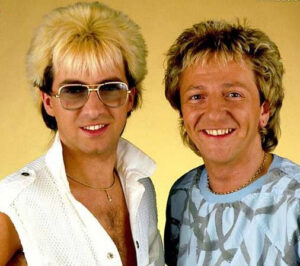
Black Lace: the unacceptable face(s) of 80s pop

And yet, since the dawn of the 21st century, major stars come and go, like Justin Bieber, or just stay, like Ed Sheeran, Lana Del Rey or Taylor Swift, without ever really entering my consciousness or troubling my ears. I have consulted with samples of “the youth” to see if it’s just me, but no: like me, there are major stars that they have mental images of, but unless they have actively been fans, they couldn’t necessarily tell you the titles of any of their songs and have little to no idea of what they actually sound like. Logical, because they were no more interested in them than I was in Dire Straits or Black Lace; but alas, I know the hits of Dire Straits and Black Lace. And the idea of ‘the Top 40 singles chart’ really has little place in their idea of popular music. Again, ignorance is nothing to be proud of and I literally don’t know what I’m missing. At least my parents could dismiss Madonna or Boy George on the basis that they didn’t like their music. It’s an especially odd situation to find myself in as my main occupation is actually writing about music; but of course, nothing except my own attitude is stopping me from finding out about these artists.

The fact is that no musician is inescapable now. Music is everywhere, and far more accessibly so than it was in the 80s or 90s – and not just new music. If I want to hear Joy Division playing live when they were still called Warsaw or track down the records the Wu-Tang Clan sampled or hear the different version of the Smiths’ first album produced by Troy Tate, it takes as long about as long to find them as it does to type those words into your phone. Back then, if you had a Walkman you could play tapes, but you had to have the tape (or CD – I know CDs are having a minor renaissance, but is there any more misbegotten, less lamented creature than the CD Walkman?) Or you could – from the 1950s onwards – carry a radio with you and listen to whatever happened to be playing at the time. I imagine fewer people listen to the radio now than they did even 30 years ago, but paradoxically, though there are probably many more – and many more specialised –  radio stations now than ever, their specialisation actually feeds the escapability of pop music. Because if I want to hear r’n’b or metal or rap or techno without hearing anything else, or to hear 60s or 70s or 80s or 90s pop without having to put up with their modern-day equivalents, then that’s what I and anyone else will do. I have never wanted to hear “Concrete and Clay” by Unit 4+2 or “Agadoo” or “Come On Eileen” or “Your Woman” by White Town or (god knows) “Crocodile Shoes” by Jimmy Nail; but there was a time when hearing things I wanted to hear but didn’t own, meant running the risk of being subjected to these, and many other unwanted songs. As I write these words, “Owner of a Lonely Heart” by Yes, a song that until recently I didn’t know I knew is playing in my head.

And so, the music library in my head is bigger and more diverse than I ever intended it to be. In a situation where there were only three or four TV channels and a handful of popular radio stations, music was a kind of lingua franca for people, especially for young people. Watching Top of the Pops on a Thursday evening, or later The Word on Friday was so standard among my age group that you could assume that most people you knew had seen what you saw; that’s a powerful, not necessarily bonding experience, but a bond of sorts, that I don’t see an equivalent for now, simply because even if everyone you know watches Netflix, there’s no reason for them to have watched the same thing at the same time as you did. It’s not worse, in some ways it’s obviously better; but it is different. Of course, personal taste back then was still personal taste, and anything not in the mainstream was obscure in a way that no music, however weird or niche, is now obscure, but that was another identity-building thing, whether one liked it or not.

Growing up in a time when this isn’t the case and the only music kids are subjected to is the taste of their parents (admittedly, a minefield) or fragments of songs on TV ads, if they watch normal TV or on TikTok, if they happen to use Tiktok, is a vastly different thing. Taylor Swift is as inescapable a presence now, much as Madonna was in the 80s, but her music is almost entirely avoidable and it seems probable that few teenagers who are entirely uninterested in her now will find her hits popping unbidden into their heads in middle age. But conversely, the kids of today are more likely to come across “Owner of a Lonely Heart” on YouTube than I would have been to hear one of the big pop hits of 1943 in the 80s.

Far Dunaway as Bonnie Parker; a little bit 1930s, a lot 1960s

What this means for the future I don’t know; but surely its implications for pop-culture nostalgia – which has grown from its humble origins in the 60s to an all-encompassing industry, are huge. In the 60s, there was a brief fashion for all things 1920s and 30s which prefigures the waves of nostalgia that have happened ever since. But for a variety of reasons, some technical, some generational and some commercial, pop culture nostalgia is far more elaborate than ever before. We live in a time when constructs like “The 80s” and “The 90s” are well-defined, marketable eras that mean something to people who weren’t born then, in quite a different way from the 1960s version of the 1920s. Even back then, the entertainment industry could conjure bygone times with an easy shorthand; the 1960s version of the 1920s and 30s meant flappers and cloche hats and Prohibition and the Charleston and was evoked on records like The Beatles’ Honey Pie and seen onstage in The Boy Friend or in the cinema in Bonnie & Clyde. But the actual music of the 20s and 30s was mostly not relatable to youngsters in the way that the actual entertainment of the 80s and 90s still is. Even if a teenager in the 60s did want to watch actual silent movies or listen to actual 20s jazz or dance bands they would have to find some way of accessing them. In the pre-home video era that meant relying on silent movie revivals in cinemas, or finding old records and having the right equipment to play them on, since old music was then only slowly being reissued in modern formats. The modern teen who loves “the 80s” or “the 90s” is spoiled by comparison, not least because its major movie franchises like Star Wars, Indiana Jones, Ghostbusters and Jurassic Park are still around and its major musical stars still tour or at least have videos and back catalogues that can be accessed online, often for free.

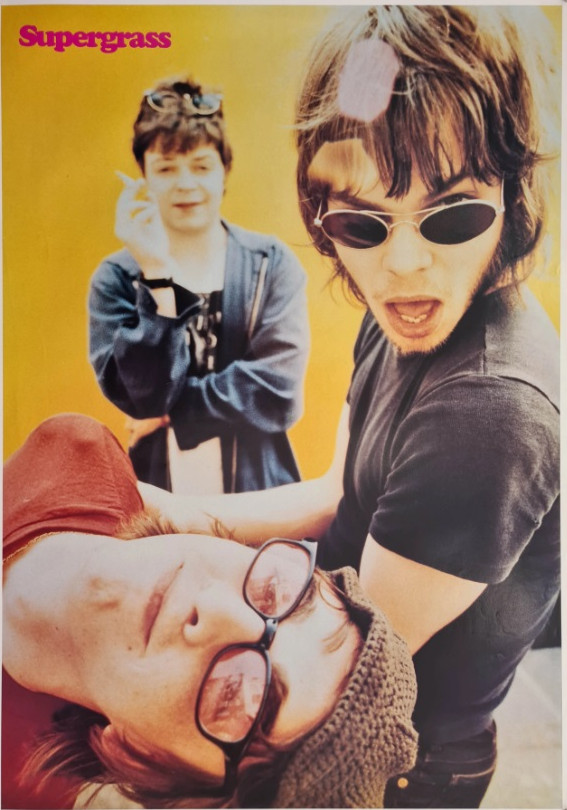
Supergrass in 1996: a little bit 60s, a lot 70s, entirely 90s

Fashion has always been cyclical, but this feels quite new (which doesn’t mean it is though). Currently, culture feels not like a wasteland but like Eliot’s actual Waste Land, a dissonant kind of poetic collage full of meaning and detritus and feeling and substance and ephemera but at first glance strangely shapeless. For example, in one of our current pop culture timestreams there seems to be a kind of 90s revival going on, with not only architects of Britpop like the Gallagher brothers and Blur still active, but even minor bands like Shed Seven not only touring the nostalgia circuit but actually getting in the charts. Britpop was notoriously derivative of the past, especially the 60s and 70s. And so, some teenagers and young adults (none of these things being as pervasive as they once were) are now growing up in a time when part of ‘the culture’ is a version of the culture of the 90s, which had reacted to the culture of the 80s by absorbing elements of the culture of the 60s and 70s. And while the artists of 20 or 30 years ago refuse to go away even modern artists from alternative rock to mainstream pop stars make music infused with the sound of 80s synths and 90s rock and so on and on. Nothing wrong with that of course, but what do you call post-post-modernism? And what will the 2020s revival look like when it rears its head in the 2050s, assuming there is a 2050s? Something half interesting, half familiar no doubt.

an alan smithee war

an annoying but perhaps necessary note; “Alan (or Allan, or Allen) Smithee” is a pseudonym used by Hollywood film directors when they wish to disown a project

Watch out, this starts off being insultingly elementary, but then gets complicated and probably contradictory, quite quickly.

Countries, States and religions are not monoliths and nor are they sentient. They don’t have feelings, aims, motivations or opinions. So whatever is happening in the Middle East isn’t ‘Judaism versus Islam’ or even ‘Israel versus Palestine’, any more than “the Troubles”* were/are ‘Protestantism versus Catholicism’ or ‘Britain versus Ireland’.

* a euphemism, which, like most names for these things is partly a method of avoiding blame – as we’ll see

Places and atrocities aren’t monoliths either; Srebrenica didn’t massacre anybody**, the Falkland islands didn’t have a conflict, ‘the Gulf’ didn’t have any wars and neither did Vietnam or Korea. But somebody did. As with Kiefer Sutherland and Woman Wanted in 1999 or Michael Gottlieb and The Shrimp on the Barbie in 1990 and whoever it was that directed Gypsy Angels in 1980, nobody wants to claim these wars afterwards. But while these directors have the handy pseudonym Allan Smithee to use, there is no warmongering equivalent, and so what we get is geography, or flatly descriptive terms like ‘World War One’, which divert the focus from the aggressor(s) and only the occasional exception (The American War of Independence) that even references the real point of the war. But, whether interfered with by the studio or not, Kevin Yagher did direct Hellraiser: Bloodline, just as certain individuals really are responsible for actions which are killing human beings as you read this. Language and the academic study of history will probably help to keep their names quiet as events turn from current affairs and into history. Often this evasion happens for purely utilitarian reasons, perhaps even unknowingly, but sometimes it is more sinister.

** see?

As the 60s drew to its messy end, the great Terry “Geezer” Butler wrote lines which, despite the unfortunate repeat/rhyme in the first lines, have a Blakean power and truth:

Generals gathered in their masses
Just like witches at black masses

Black Sabbath, War Pigs, 1970

There is something sinister and even uncanny in the workings of power, in the distance between avowed and the underlying motivations behind military action. Power politics feels like it is – possibly because intuitively it seems like it should be – cold and logical, rather than human and emotional. It doesn’t take much consideration though to realise that even beneath the chilly, calculated actions of power blocs there are weird and strangely random human desires and opinions, often tied in with personal prestige, which somehow seems to that person to be more important than not killing people or not having people killed.

Anyway, Geezer went on to say:

Politicians hide themselves away
They only started the war
Why should they go out to fight?
They leave that role to the poor

Still Black Sabbath, War Pigs (1970)

And that’s right too; but does that mean Butler’s ‘poor’ should take no responsibility at all for their actions? In the largest sense they are not to blame for war or at least for the outbreak of war; and conscripts and draftees are clearly a different class again from those who choose to “go out to fight.” But. As so often WW2 is perhaps the most extreme and therefore the easiest place to find examples; whatever his orders or reasons, the Nazi soldier (and there were lots of them) who shot a child and threw them in a pit, actually did shoot a child and throw them in a pit. His immediate superior may have done so too, but not to that particular child. And neither did Himmler or Adolf Hitler. Personal responsibility is an important thing, but responsibility, especially in war, isn’t just one act and one person. Between the originator and the architects of The Final Solution and the shooter of that one individual child there is a chain of people, any one of whom could have disrupted that chain and even if only to a tiny degree, affected the outcome. And that tiny degree may have meant that that child, that human being, lived or died. A small thing in a death toll of something over 6 million people; unless you happen to be that person, or related to that person.

As with the naming of wars and atrocities, terms like “genocide” and “the Holocaust” are useful, especially if we want – as we clearly do – to have some kind of coherent, understandable narrative that can be taught and remembered as history. But in their grim way, these are still euphemisms. The term ‘the Holocaust’ memorialises the countless – actually not countless, but still, nearly 80 years later, being counted – victims of the Nazis’ programme of extermination. But the term also makes the Holocaust sound like an event, rather than a process spread out over the best part of a decade, requiring the participation of probably thousands of people who exercised – not without some form of coercion perhaps, but still – their free will in that participation. The Jewish scholar Hillel the Elder’s famous saying,  whosoever saves a life, it is as though he had saved the entire world is hard to argue with, insofar as the world only exists for us within our perceptions. Even the knowledge that it is a spinning lump of inorganic and organic matter in space, and that other people populate it who might see it differently only exists in our perceptions. Or at least try to prove otherwise. And so the converse of Hillel’s saying – which is actually included in it but far less often quoted – is Whosoever destroys one soul, it is as though he had destroyed the entire world. Which sounds like an argument for pacifism, but while pacifism is entirely viable and valuable on an individual basis as an exercise of one’s free will* – and on occasion has a real positive effect – one-sided pacifism relies on its opponents not taking a cynically Darwinian approach, which is hopeful at best. Pacifism can only really work if everyone is a pacifist, and everyone isn’t a pacifist.

*the lone pacifist can at least say, ‘these terrible things happened, but I took no part in them’, which is something, especially if they used what peaceful means they could to prevent those terrible things and didn’t unwittingly contribute to the sum total of suffering; but those are murky waters to wade in.

But complicated though it all is, people are to blame for things that happen. Just who to blame is more complicated – more complicated at least than the workable study of history can afford to admit. While countries and religions are useful as misleading, straw man scapegoats, even the more manageable unit of a government is, on close examination, surprisingly hard to pin down. Whereas (the eternally handy example of) Hitler’s Nazi Party or Stalin’s Council of People’s Commissars routinely purged heretics, non-believers and dissidents, thus acting as a genuine, effective focus for their ideologies and therefore for blame and responsibility, most political parties allow for a certain amount of debate and flexibility and therefore blame-deniability. Regardless, when a party delivers a policy, every member of that party is responsible for it, or should publicly recuse themselves from it if they aren’t.

The great (indeed Sensational) Scottish singer Alex Harvey said a lot of perceptive things, not least and “[Something] I learned from studying history. Nobody ever won a war. A hundred thousand dead at Waterloo*. No glory in that. Nobody needs that.” Nobody ever won a war;  but plenty of people, on both sides of every conflict, have lost one – and, as the simple existence of a second world war attests, many, many people have lost a peace too.

*Modern estimates put it at ‘only’ 11,000 plus another 40,000 or so casualties; but his point stands

But the “causes” of war are at once easily traced and extremely slippery. Actions like the 1939 invasion of Poland by the armies of Germany and the USSR were, as military actions still are, the will of certain individuals, agreed to by other individuals and then acted upon accordingly. You may or may not agree with the actions of your government or the leaders of your faith. You may even have had some say in them, but in most cases you probably haven’t. Some of those dead on the fields of Waterloo were no doubt enthusiastic about their cause, some probably less so. But very few would have had much say in the decisions which took them to Belgium in the first place.

The buck should stop with every person responsible for wars, crimes, atrocities; but just because that’s obviously impossible to record – and even if it wasn’t, too complex to write in a simple narrative – that doesn’t mean the buck should simply not stop anywhere. Victory being written by the winners often means that guilt is assigned to the losers, but even when that seems fair enough (there really wouldn’t have been a World War Two without Hitler) it’s a simplification (there wouldn’t have been an effective Hitler without the assistance of German industrialists) and a one-sided one (it was a World War because most of the leading participants had already had unprovoked wars of conquest). That was a long sentence. But, does the disgusting history of Western colonialism, the arguably shameful treatment of Germany by the Allies after WW1 and the dubious nature of the allies and some of their actions make Hitler himself any less personally responsible for the war? And does Hitler’s own guilt make the soldier who shoots a child or unarmed adult civilians, or the airman who drops bombs on them any less responsible for their own actions?

Again; only human beings do these things, so the least we can do is not act like they are some kind of unfathomable act of nature when we discuss them or name them. Here’s Alex Harvey again; “Whether you like it or not, anybody who’s involved in rock and roll is involved in politics. Anything that involves a big crowd of people listening to what you say is politics.” If rock and roll is politics, then actual politics is politics squared; and for as long as we settle, however grudgingly or complacently, for pyramidal power structures for our societies then the person at the top of that pyramid, enjoying its vistas and rarefied air should be the one to bear its most sombre responsibilities. But all who enable the pyramid to remain standing should accept their share of it too.

So when you’re helplessly watching something that seems like an unbelievable waste of people’s lives and abilities, pay close attention to who’s doing and saying what, even if you don’t want to, because the credits at the end probably won’t tell you who’s really responsible.


passive-digressive

There are two kinds of people* – those who like forewords, introductions, prefaces, author’s notes, footnotes, appendices, bibliographies, notes on the text, maps etc, and those who don’t. But we’ll get back to that shortly.

* there are more than two kinds of people. Possibly infinite kinds of people. Or maybe there’s only one kind; I’m never sure

A few times recently, I’ve come across the idea (which I think is mainly an American academic one, but I might be completely mistaken about that) that parentheses should only be used when you really have to (but when do you really have to?) because anything that is surplus to the requirements of the main thrust of one’s text is surplus to requirements full stop, and should be left out. But that’s wrong. The criticism can be and is extended to anything that interrupts the flow* of the writing. But that is also wrong. Unless you happen to be writing a manual or a set of directions or instructions, writing isn’t (or needn’t be) a purely utilitarian pursuit and the joy of reading (or of writing) isn’t in how quickly or efficiently (whatever that means in this context) you can do it. Aside from technical writing, the obvious example where economy just may be valuable is poetry – which however is different and should probably have been included in a footnote, because footnotes are useful for interrupting text without separating the point you’re making (in a minute) from the point you’re commenting on or adding to (a few sentences ago), without other, different stuff getting in the way.

*like this¹                                                                                                                                                                ¹but bear in mind that people don’t write footnotes by accident – the interruption is deliberate²                        ²and sometimes funny

Poly-Olbion – that’s how you write a title page to pull in the readers

I would argue (though the evidence of a lot of poetry itself perhaps argues against me – especially the Spenser’s Faerie Queen, Michael Drayton’s Poly-Olbion kind of poetry that I’m quite fond of) that a poem should be** the most economical or at least the most effective way of saying what you have to say – but who’s to say that economical and effective are the same thing anyway?)

** poets, ignore this; there is no should be


Clearly (yep), the above is a needlessly convoluted way of writing, and can be soul-achingly annoying to read; but – not that this is an effective defence – I do it on purpose. As anyone who’s read much here before will know, George Orwell is one of my all-time favourite writers, and people love to quote his six rules for writing, but while I would certainly follow them if writing a news story or article where brevity is crucial, otherwise I think it’s more sensible to pick and choose. So;

Never use a metaphor, simile, or other figure of speech which you are used to seeing in print. Absolutely; although sometimes you would use them because they are familiar, if making a specific point, or being amusing. Most people, myself included, just do it by accident; because where does the dividing line fall? In this paragraph I have used “by accident” and “dividing line” which seem close to being commonly used figures of speech (but then so does “figure of speech”). But would “accidentally” or something like “do it without thinking” be better than “by accident?” Maybe.

Never use a long word where a short one will do. The key point here is will do. In any instance where a writer uses (for example) the word “miniscule” then “small” or “tiny” would probably “do”. But depending on what it is they are writing about, miniscule or microscopic might “do” even better. Go with the best word, not necessarily the shortest.

If it is possible to cut a word out, always cut it out. Note that Orwell wrote ‘always’ here where he could just have said If it is possible to cut a word out, cut it out. Not everything is a haiku, George.

Never use the passive where you can use the active. Surely it depends what you’re writing? If you are trying, for instance, to pass the blame for an assault from a criminal on to their victim, you might want a headline that says “X stabbed after drug and alcohol binge” rather than “Celebrity kills X.” You kind of see Orwell’s point though.

Never use a foreign phrase, a scientific word, or a jargon word if you can think of an everyday English equivalent. Both agree and disagree; as a mostly monolingual person I agree, but some words and phrases (ironically, usually ones in French, a language I have never learned and feel uncomfortable trying to pronounce; raison d’etre or enfant terrible for example) just say things more quickly and easily (I can be utilitarian too) than having to really consider and take the time to say what you mean. They are a shorthand that people in general understand. Plus, in the age of smartphones, it really doesn’t do native English speakers any harm to have to look up the meanings of foreign words occasionally (I do this a lot). The other side of the coin (a phrase I’m used to seeing in print) is that with foreign phrases is it’s funny to say them in bad translations like “the Tour of France” (which I guess must be correct) or “piece of resistance” (which I am pretty sure isn’t) so as long as you are understood (assuming that you want to be understood) use them any way you like.

Break any of these rules sooner than say anything outright barbarous. It’s hard to guess what George Orwell would have considered outright barbarous (and anyway, couldn’t he have cut “outright”?) but anyone reading books from even 30, 50 or a hundred years ago quickly sees that language evolves along with culture, so that rules – even useful ones – rarely have the permanence of commandments.

So much for Orwell’s rules; I was more heartened to find that something I’ve instinctively done – or not done – is supported by Orwell elsewhere. That is, that I prefer, mostly in the name of cringe-avoidance, not to use slang that post-dates my own youth. Even terms that have become part of normal mainstream usage (the most recent one is probably “woke”) tend to appear with inverted commas if I feel like I must use them, because if it’s not something I would be happy to say out loud (I say “woke” with inverted commas too) then I’d prefer not to write it. There is no very logical reason for this and words that I do comfortably use are no less subject to the whims of fashion, but still; the language you use is part of who you are, and I think Orwell makes a very good case here, (fuller version far below somewhere because even though I have reservations about parts of it it ends very well):

“Each generation imagines itself to be more intelligent than the one that went before it, and wiser than the one that comes after it. This is an illusion, and one should recognise it as such, but one ought also to stick to one’s world-view, even at the price of seeming old-fashioned: for that world-view springs out of experiences that the younger generation has not had, and to abandon it is to kill one’s intellectual roots.”

Review of A Coat of Many Colours: Occasional Essays by Herbert Read. (1945) The Collected Essays, Journalism and Letters of George Orwell Volume 4. Penguin 1968, p.72 

the fold-out map in The Silmarillion is a thing of beauty

Back to those two kinds* of people: I am the kind of person that likes and reads forewords, introductions, prefaces, author’s notes, footnotes, appendices, bibliographies, notes on the text, maps and all of those extras that make a book more interesting/informative/tedious.


*I know.


In one of my favourite films, Whit Stillman’s Metropolitan (1990), the protagonist Tom Townsend (Edward Clements), says “I don’t read novels. I prefer good literary criticism. That way you get both the novelists’ ideas as well as the critics’ thinking. With fiction I can never forget that none of it really happened, that it’s all just made up by the author.” Well, that is not me; but I do love a good bit of criticism and analysis as well as a good novel. One of my favourite ever pieces of writing of any kind, which I could, but choose not to recite parts of by heart, is the late Anne Barton’s introduction to the 1980 New Penguin Shakespeare edition of Hamlet*. I love Hamlet, but I’ve read Barton’s introduction many more times than I’ve read the play itself, to the point where phrases and passages have become part of my mind’s furniture. It’s a fascinating piece of writing, because Professor Barton had a fascinating range and depth of knowledge, as well as a passion for her subject; but also and most importantly because she was an excellent writer. If someone is a good enough writer**, you don’t even have to be especially interested in the subject to enjoy what they write. Beyond the introduction/footnote but related in a way are the review and essay. Another of my favourite books – mentioned elsewhere I’m sure, as it’s one of the reasons that I have been working as a music writer for the past decade and a half, is Charles Shaar Murray’s Shots from the Hip, a collection of articles and reviews. The relevant point here is that more than half of its articles – including some of my favourites – are about musicians whose work I’m quite keen never to hear under any circumstances, if humanly possible. Similarly, though I find it harder to read Martin Amis’s novels than I used to (just changing taste, not because I think they are less good), I love the collections of his articles, especially The War Against Cliché and Visiting Mrs Nabokov. I already go on about Orwell too much, but as I must have said somewhere, though I am a fan of his novels, it’s the journalism and criticism that he probably thought of as ephemeral that appeals to me the most.

*All of the New Penguin Shakespeare introductions that I’ve read have been good, but that is in a different league. John Dover Wilson’s What Happens in Hamlet (1935, though the edition I have mentions WW2 in the introduction, as I remember; I like the introduction) is sometimes easy to disagree with but it has a similar excitement-of-discovery tone as Anne Barton’s essay

** Good enough, schmood enough; what I really mean is if you like their writing enough. The world has always been full of good writers whose work leaves me cold

a scholarly approach to comics

All this may have started, as I now realise that lots of things seem to in my writing did, with Tolkien. From the first time I read his books myself, I loved that whatever part of Middle-Earth and its people you were interested in, there was always more to find out. Appendices, maps, whole books like The Silmarillion which extended the enjoyment and deepened the immersion in Tolkien’s imaginary world. And they were central to that world – for Tolkien, mapping Middle-Earth was less making stuff up than it was a detailed exploration of something he had already at least half imagined. Maybe because I always wanted to be a writer myself – and here I am, writing – whenever I’ve really connected with a book, I’ve always wanted to know more. I’ve always been curious about the writer, the background, the process. I’ve mentioned Tintin lots of times in the past too and my favourite Tintin books were, inevitably, the expanded editions which included Herge’s sketches and ideas, the pictures and objects and texts that inspired him. I first got one of those Tintin books when I was 9 or so, but as recently as the last few years I bought an in many ways similar expanded edition of one of my favourite books as an adult, JG Ballard’s Crash. It mirrors the Tintins pretty closely; explanatory essays, sketches, notes, ephemera, all kinds of related material. Now just imagine how amazing a graphic novel of Crash in the Belgian ligne claire style would be.*

*a bit like Frank Miller and Geof Darrow’s fantastic-looking but not all that memorable Hard Boiled (1990-92) I guess, only with fewer robots-with-guns shenanigans and more Elizabeth Taylor

a scholarly approach to cautionary 1970s semi-pornography/horror: the expanded Crash

A good introduction or foreword is (I think) important for a collection of poems or a historical text of whatever kind. Background and context and, to a lesser extent, analysis expand the understanding and enjoyment of those kinds of things. An introduction for a modern novel though is a slightly different thing and different also from explanatory notes, appendices and footnotes and it’s probably not by chance that they mainly appear in translations or reprints of books that already enjoyed some kind of zeitgeisty success. When I first read Anne Barton’s introduction to Hamlet, I already knew what Hamlet was about, more or less. And while I don’t think “spoilers” are too much of an issue with fiction (except for whodunnits, which I have so far not managed to enjoy), do you really want to be told what to think of a book before you read it? But a really good introduction will never tell you that. If in doubt, read them afterwards!

Some authors, and many readers, see all of these extraneous things as excess baggage, surplus to requirements, which obviously they really are, and that’s fair enough. If the main text of a novel, a play or whatever, can’t stand on its own then no amount of post-production scaffolding will make it satisfactory.* And presumably, many readers pass their entire lives without finding out or caring why the author wrote what they wrote, or what a book’s place in the pantheon of literature (or just “books”) is. Even as unassailably best-selling an author as Stephen King tends to be a little apologetic about the author’s notes that end so many of his books, despite the fact that nobody who doesn’t read them will ever know that he’s apologetic. Still; I for one would like to assure his publisher that should they ever decide to put together all of those notes, introductions and prefaces in book form, I’ll buy it. But would Stephen King be tempted to write an introduction for it?


* though of course it could still be interesting, like Kafka’s Amerika, Jane Austen’s Sanditon or Tolkien and Hergé (them again) with Unfinished Tales or Tintin and Alph-Art


That Orwell passage in full(er):

“Clearly the young and middle aged ought to try to appreciate one another. But one ought also to recognise that one’s aesthetic judgement is only fully valid between fairly well-defined dates. Not to admit this is to throw away the advantage that one derives from being born into one’s own particular time. Among people now alive there are two very sharp dividing lines. One is between those who can and can’t remember the period before 1914; the other is between those who were adults before 1933 and those who were not.* Other things being equal, who is likely to have a truer vision at the moment, a person of twenty or a person of fifty? One can’t say, though on some points posterity may decide. Each generation imagines itself to be more intelligent than the one that went before it, and wiser than the one that comes after it. This is an illusion, and one should recognise it as such, but one ought also to stick to one’s world-view, even at the price of seeming old-fashioned: for that world-view springs out of experiences that the younger generation has not had, and to abandon it is to kill one’s intellectual roots.”

*nowadays, the people who can or can’t remember life before the internet and those who were adults before 9/11? Or the Trump presidency? Something like that seems right