a pressing necessity: International Women’s Day 2026

Firstly, the title comes from this short essay by one of my favourite historical figures, Rosa Luxemburg; it’s worth a read.

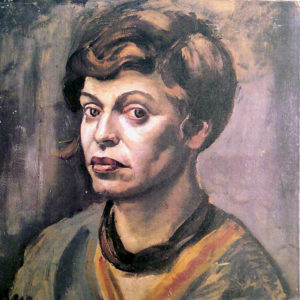
one of my favourite works of art by anyone ever; Monika Geilsdorf’s 1976 self-portrait

If anything demonstrates that half of the human race is in need of a special day to celebrate their achievements and raise awareness of the challenges they face, it’s the ongoing existence and high profile of International Women’s Day. I’m not here just to criticise it, so bear with me.

In a way it seems deeply patronising (not an accidental use of the word) that it even exists, since the celebration of IWD is in itself a sign that the patriarchy is in obnoxiously good health. Seems paradoxical, but look at the contrast between not just the profile of, but the nature of IWD, compared to International Men’s Day, which contrary to the belief of the frothing-at-the-mouth men on the misogynist fringe does exist (19 November), highlights the background that it exists against.

International Women’s Day commemorates the (ongoing) fight for Women’s rights, raises awareness of issues surrounding gender inequality and is a celebration of the achievements of women throughout the ages. International Men’s Day raises awareness of issues like suicide, self-harm, violence, homelessness etc; it’s a good thing, but it’s a much smaller and very different thing. Both international days are – necessarily – framed in the same way. The bad things that women have faced and continue to face – violent death, mutilation, violence, political, religious and social disenfranchisement – are the product of societies where women have been and in many ways continue to be second class citizens; the power structures they struggle with and against are overwhelmingly male and male-dominated. The problems that Men’s day raises, likewise come from men’s struggles to exist within that same socio-political/religious framework. The fact that I’ve spent half a paragraph about Women’s Day writing about Men’s Day is ironic but it’s also systemic.

Does that mean that IWD is a bad thing? Clearly not. There are women who, for a variety of reasons choose to denounce or simply opt out of the whole idea of it – as is their right – but the position of women has not improved so much over the past quarter century that the inequalities are merely historical, as seemed possible to envision around the end of the 1980s. And while the achievements of women in almost every field are acknowledged more now than ever, they are, depending on which sphere they take place in, often still seen as special cases; ‘women artists,’ ‘female plumbers’ etc, whereas terms from my childhood like ‘male nurse’ seem comically inappropriate (which isn’t to say that some people don’t still use them; but usually men, and for reactionary reasons).

There’s also a valid argument that celebrating womens/mens days simply reinforces a binary that is merely a symptom of the old-fashioned, patriarchal system. It’s kind of undeniable; the name alone, International Women’s Day supposes “women” as a monolith. One of my favourite artists is the Surrealist Claude Cahun (born Lucie Schwob), whose work is often (by me, too) promoted as part of IWD celebrations of female artists, despite the artist’s unambiguous statement from Disavowals (1928) that “Neuter is the only gender that always suits me.” To ignore someone’s own personal identity in order to celebrate something about themselves that they specifically denied feels like a strange kind of tribute.
Nonetheless, nobody, not even Claude Cahun, denied that women do exist and that they have been and are (okay some people do loudly deny this bit) oppressed and subject to systemic inequalities.
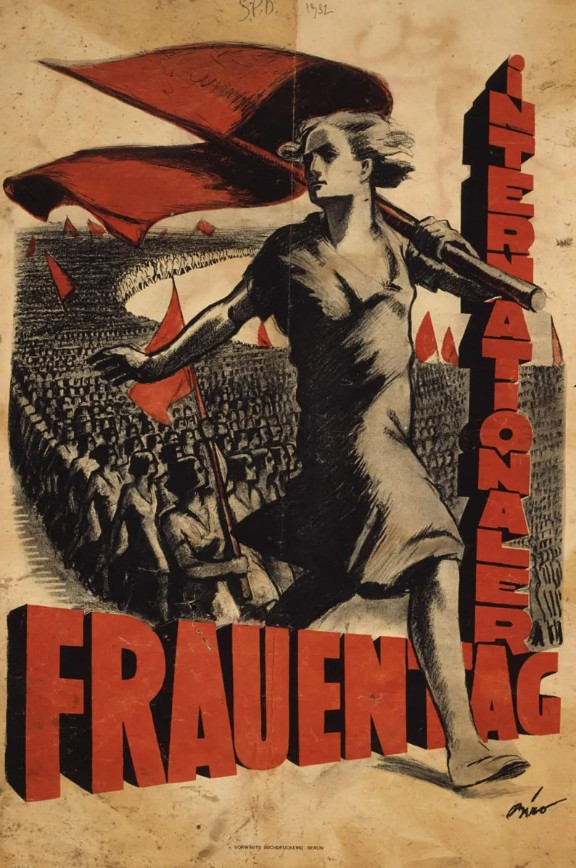
the great Hungarian artist Mihály Biró’s 1925 poster for International Women’s Day

What’s often overlooked now too is that International Women’s Day was historically – though not consistently – a socialist celebration. See here for an excellent exploration of its radical origins. Working Women’s Day – the date 8th March was chosen by Lenin, fact fans – was originally tied to issues of Workers’ Rights and the fight for equality more widely, but even in the Soviet Union the image softened over the years until eventually it –  ironically – came to celebrate women in traditional roles (mothers, wives) rather than revolutionary ones. Which is lame; but it’s easy to see why that link has eroded. The struggle for Women’s liberation was initially, and throughout its radical period in the 60s and 70s seen as analogous to the working class struggle – where women occupied a kind of working class, that is subordinate, position even within the working class. The gradual (but of course never total) amelioration of the rights of workers made aspects of the radicalism of the past feel dated and possibly unnecessary, though that is less true than it sometimes seems. Also, not all women were or are working class anyway, and class distinctions of that kind are not universal in every society in the world, but women’s marginalisation almost is.
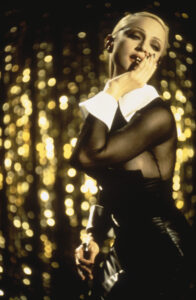
Madonna: “Erotica” (1992) dir Fabien Baron: not my mother’s feminism

Plus, people and perceptions change. My mother was a working class ‘Women’s Lib,’ Spare Rib-reading feminist of the 60s/70s, but although her views on Women’s liberation never really changed, from the 80s onwards she became puritanical in a way that now seems, to her children’s generation, a bit sexist, oddly. For example, she couldn’t see someone like Madonna (the popular entertainer, not the mother of Christ) and her ilk, however apparently empowered, as anything other than a manifestation of the retrograde desires of men, and she would probably have agreed with Morrissey that make-up is a lie, or even gone further to suggest that it’s a lie established by the patriarchy to keep women in their place. It’s a point of view, I suppose; but it’s also one that polices the image that women choose to project for themselves and so seems fundamentally anti-progressive, though I understand the logic of it.

Similarly, there are people who bemoan the loss of the ‘Class War’ aspect IWD, which I again understand, because I do think capitalism & patriarchy are bad and harmful to humanity in general and women in particular. But as a ‘working class’ male I also kind of reject it. Identifying with the system that labels you seems fundamentally unhelpful to me. I am ‘working class’ because that is the caste system established by a capitalist power structure, just as I would have been ‘peasant class’ centuries ago in a feudal society. Embracing that class identity seems far less attractive than altering society until its labels have no meaning anymore.

A fairer version of capitalism may not be the ultimate aim, but it would at least be a good thing. Marx’s ideal – I have a lot of time and affection for Marx, but I think he was often wrong, or at least that 21st century problems do not call for 19th century solutions – that inequality reaches crisis point so that revolution becomes a necessity feels to me very much like the apocalyptic thinking of those who want to immerse the world in war to bring about the second coming of Christ. The problem is – as we see, now, with war – that people, perhaps even generations of people, have to actually live their whole lives during that ‘crisis point’ which can continue, depending on the strength of the overarching system, almost indefinitely. Misery now, reward later is the self-serving bullshit the Christian church8 has been selling for 2000 years, I don’t think society is improved by adopting a well-meaning socialist version of it. Surely the life of even a single person is more important than the fulfilment of an ideology? Agree to disagree perhaps.

Which again has taken this away from International Women’s Day. When one is talking about half of the human race any kind of generalisation is bound to be wrong, but solidarity with people who are forced to struggle for equality as human beings within systems designed to keep them in a subordinate role never is.

It may be – especially in the social media age – that celebrations like International Women’s Day come under the banner of Bread and Circuses that the satirist Juvenal noted Imperial Rome offered to the people in lieu of the political power they held in the days of the old Republic. So should we get rid of them? No, would be my answer – quite the opposite, we should expand on them, turn them into actual holidays, raise awareness of every grievance that people have under a grossly unequal political system. If the ruling class of the Capitalist/Tech Oligarchy are offering circuses (where is the bread though?) to placate the people and keep them docile, then the very least their subjects can do to exert their will is to take over the circuses and to remake them in their own image, loud and unignorable.

Ah well, never mind, maybe soon there will be an International Humans Day where the (male) technocratic overlords agree to turn off AI for a day or something to show false solidarity with the rest of us. I won’t hold my breath though.

To end on something more positive, I’ve evangelised elsewhere about art history as a subject (here’s my one-line reason why everyone should study it; Art History is not just about the past, it encompasses everything that’s important about the present; politics, religion, gender, philosophy, personal, national and local identity – and studying the subject and freeing it from its historical assumptions and biases only makes it deeper and richer; plus you get to study fascinating, powerful and beautiful products of the human mind and body, too). Over the past decade or so the place of female artists within that history – and the profiles of individual women artists – has been explored more than ever before so that, although we are not yet at a point where women artists and male artists (and neither) just become ‘artists’ it’s no longer as unthinkable as that would have been when I studied art history 20 years ago.

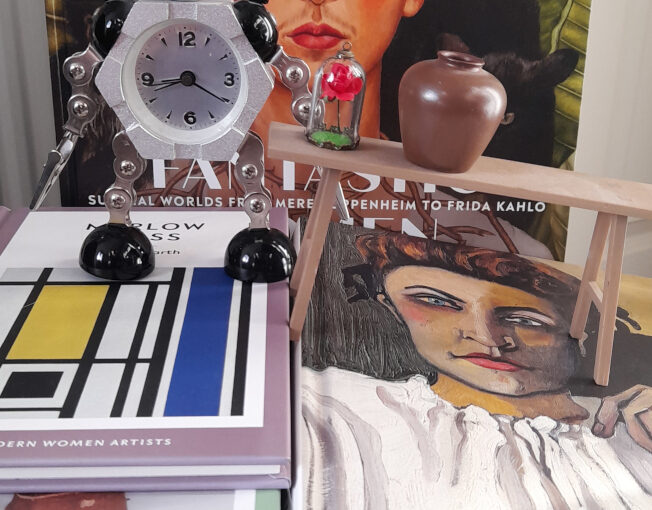
On a less exulted note, when I first started posting things on Instagram around a decade ago, books like Jennifer Higgie’s The Mirror and the Palette, Katie Hessel’s The Story of Art Without Men (2022), Eiderdown Books’ superb Modern Women Artists series, Phaidon’s Great Women Artists (2019) and (my favourite) Lauren Elkin’s Art Monsters (2023) didn’t yet exist.

Some of my favourite artists – Jenny Saville, Hannah Höch, Gabriele Münter– were women and, like most female artists they made works that on one level transcend gender, as I think all great art does, but were also formed from an unmistakably female point of view (just as I would say Picasso’s art is unmistakably male). Female artists were, in short, making art that only female artists could make, (I’d actually go further and say that all great artists regardless of gender make art that only that individual can make, but that doesn’t change the basic point).

I found, and it’s still true, about art in general and not only – though especially – by women, that the more you look, the more you find and so when I started regularly posting art by female artists, most of whom were new to me, I began keeping a kind of database of artists and their birthdays. So here it is, in simplified form. There are many, many omissions (especially of sculptors – not so much my thing – and contemporary artists, whose birthdays are often not so easy to find) and it will always be a work in progress, but I think it’s worth sharing here anyway (and in birthday order, so you can see if you share your birthday with a fantastic artist; why not?) Happy International Women’s Day!.

JANUARY
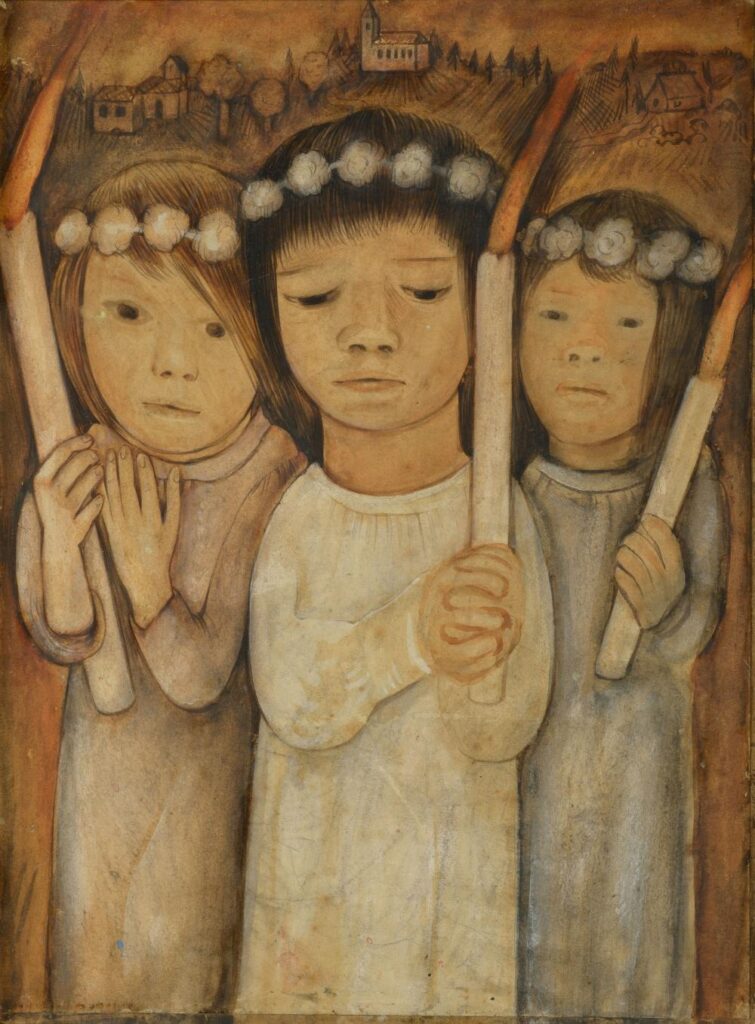
Children with Burning Torches (1920s) by Tina Bauer-Pezellen, an artist I love but can never find much information about

Selma Gubin born 01-Jan 1905
Rita Kernn-Larsen born 01-Jan 1904
Lynette Yiadom-Boakye born 01-Jan 1977
Selma Plawneek-des Coudres born 02-Jan 1883
Slava Raskaj born 02-Jan 1877
Sylvi Kunnas born 03-Jan 1903
Maruja Mallo born 05-Jan 1902
Margaret Modlin born 05-Jan 1927
Madame Yevonde born 05-Jan 1893
Ruth Gikow born 06-Jan 1915
Sanja Ivekovic born 06-Jan 1949
Franciska Clausen born 07-Jan 1899
Fahrelnissa Zeid born 07-Jan 1901
Wanda von Debschitz-Kunowski born 08-Jan 1870
Alida Jantina Pott born 08-Jan 1888
Julie Wolfthorn born 08-Jan 1864
Tina Bauer-Pezellen born 09-Jan 1897
Annemarie Heinrich born 09-Jan 1912
Maxa Nordau born 10-Jan 1897
Nora Heysen born 11-Jan 1911
Marcia Marcus born 11-Jan 1928
Rosalba Carriera born 12-Jan 1673
Hannah Hirsch-Pauli born 13-Jan 1864
Lilla Cabot Perry born 13-Jan 1848
Alice Pike Barney born 14-Jan 1857
Berthe Morisot born 14-Jan 1841
Eve Sonneman born 14-Jan 1946
Louise Blair Daura born 15-Jan 1905
Sabine Lepsius born 15-Jan 1864
Gerta Overbeck born 16-Jan 1898
Teddy Røwde born 16-Jan 1911
Alexandra Ekster born 18-Jan 1882
Cindy Sherman born 19-Jan 1954
Marianne Stokes born 19-Jan 1855
Sophie Tauber-Arp born 19-Jan 1889
Leyly Matine-Daftary born 19-Jan 1937
Maxine Albro born 20-Jan 1893
Hertha Spielberg born 21-Jan 1890
Annemarie Jacob born 22-Jan 1891
Kiki Kogelnik born 22-Jan 1935
Maria Luiko born 25-Jan 1904
Emilie von Hallavanya born 26-Jan 1874
Katarzyna Kobro born 26-Jan 1898
Yva (Else Ernestine Neulander-Simon) born 26-Jan 1900
Jeanne Selmersheim-Desgrange born 27-Jan 1877
Maria Tlusty born 27-Jan 1901
Bertha Muller born 28-Jan 1848
Alice Neel born 28-Jan 1900
Elisabeth Büchsel born 29-Jan 1867
Anna Susanna Fries born 30-Jan 1827
Teresa Feoderovna Ries born 30-Jan 1874
Amrita Sher-Gil born 30-Jan 1913
Masa Feszty born 31-Jan 1894
Elena Liessner-Blomberg born 31-Jan 1897
Cornelia Macintyre Foley born 31-Jan 1909

FEBRUARY
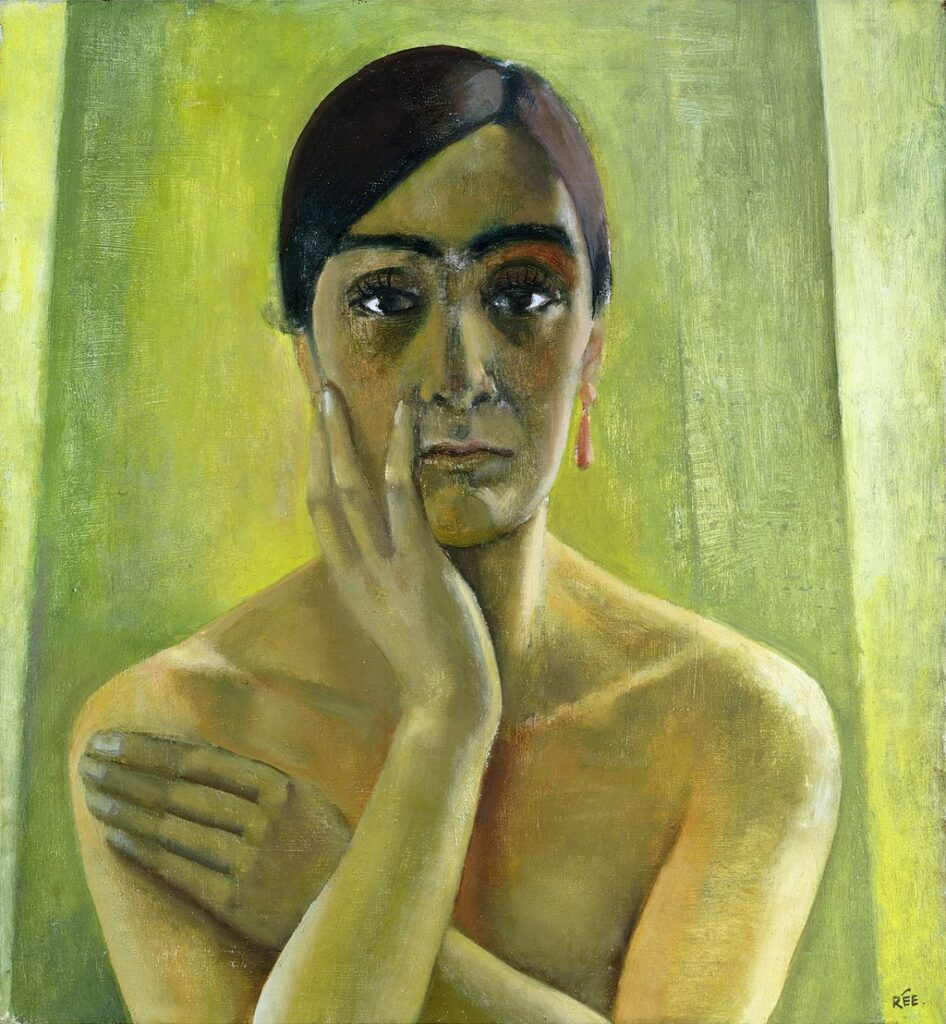
Anita Rée – self portrait (1930)

Doris Lee born 01-Feb 1905
Kris Torne born 01-Feb 1867
Sybil Atteck born 03-Feb 1911
Helen Forbes born 03-Feb 1891
Henriette Petit born 03-Feb 1894
Katherine Read born 03-Feb 1723
Georgina de Albuquerque born 04-Feb 1885
Marthe Hirt born 04-Feb 1890
Minna Köhler-Roeber born 04-Feb 1883
Ksenia Boguslavskaya born 05-Feb 1892
Jeanne Bieruma Oosting born 05-Feb 1898
Dorothea Maetzel-Johannsen born 06-Feb 1886
Arte Topalian born 06-Feb 1906
Kaete Lassen born 07-Feb 1880
Paula Modersohn-Becker born 08-Feb 1876
Anita Ree born 09-Feb 1885
Celia Calderon born 10-Feb 1921
Eva Frankfurther born 10-Feb 1930
Dorte Clara Wolff (Dodo) born 10-Feb 1907
Annelise Kretschmer born 11-Feb 1903
Léa Lafugie born 11-Feb 1890
Kate Diehn-Bitt born 12-Feb 1900
Marie Vassilieff born 12-Feb 1884
Marta Hegemann born 14-Feb 1894
Marie Vorobieff (Marevna) born 14-Feb 1892
Dora de la Torre born 14-Feb 1924
Mary Adshead born 15-Feb 1904
Grethe Jurgens born 15-Feb 1899
Gertrude Abercrombie born 17-Feb 1909
Greta Hällfors-Sipilä born 19-Feb 1899
Hazel Janicki born 19-Feb 1918
Gabriele Munter born 19-Feb 1877
Else Berg born 19-Feb 1877
Maria von Heider-Schweinitz born 20-Feb 1894
Lía Correa Morales born 20-Feb 1893
Grace Carpenter Hudson born 21-Feb 1865
Delhy Tejero born 22-Feb 1904
Gundula Schulze Eldowy born 23-Feb 1954
Martha Cunz born 24-Feb 1876
Alice Bailly born 25-Feb 1872
Broncia Koller-Pinnell born 25-Feb 1863
Hilde Hamann born 26-Feb 1898
Alexandra Povorina born 26-Feb 1885
Annie Swynnerton born 26-Feb 1844
Teresa Condeminas i Soler born 27-Feb 1905
Eva-Maria Bergmann born 28-Feb 1941
Julia Thecla born 28-Feb 1896

MARCH
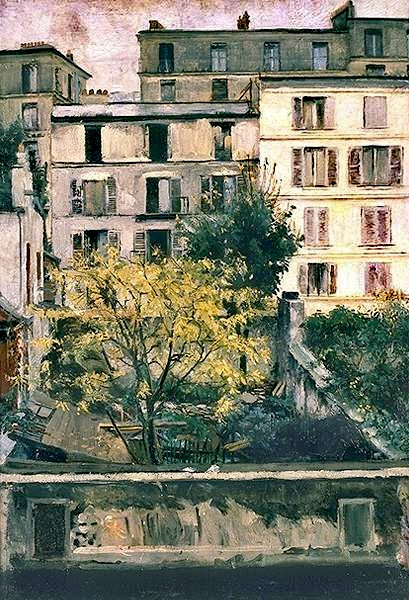
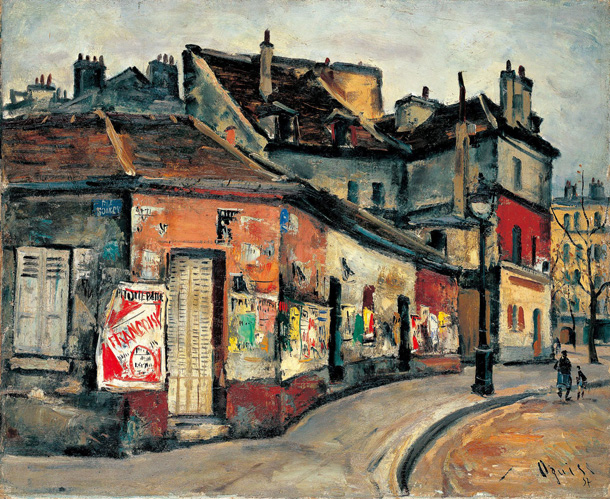
Maria Slavona – Houses in Montmarte (1898)

Marcelle Cahn born 01-Mar 1895
Erika Streit born 01-Mar 1910
Lola Cueto born 02-Mar 1897
Agda Holst born 02-Mar 1886
Judith Alpi born 03-Mar 1893
Gussy Hippold-Ahnert born 03-Mar 1910
Anne Ratkowski born 03-Mar 1903
Ellen Emmet Rand born 04-Mar 1875
Charmion Von Wiegand born 04-Mar 1896
Gertrude Fehr born 05-Mar 1895
Clara Ledesma Terrazas born 05-Mar 1924
Maria Blanchard born 06-Mar 1881
Pauline Boty born 06-Mar 1938
Maria Uhden born 06-Mar 1892
Marisa Roesset Velasco born 06-Mar 1904
Aenne Biermann born 08-Mar 1898
Constance Mayer born 09-Mar 1774
Annalize Pilasik born 10-Mar 1903
Rita Angus born 12-Mar 1908
Zofia Atteslander born 12-Mar 1874
Elaine De Kooning born 12-Mar 1918
Marie Eberhard born 12-Mar 1897
Idelle Weber born 12-Mar 1932
Lizzy Ansingh born 13-Mar 1875
Andree Bosquet born 13-Mar 1900
Diane Arbus born 14-Mar 1923
Annemarie von Jakimow-Kruse born 14-Mar 1889
Maria Slavona born 14-Mar 1865
Mary Pratt born 15-Mar 1935
Gerda Wegener born 15-Mar 1886
Maria Austria born 19-Mar 1915
Marie Ellenrieder born 20-Mar 1791
Renee Sintenis born 20-Mar 1888
Alix Ayme born 21-Mar 1894
Greta Kempton born 22-Mar 1901
Lea Grundig born 23-Mar 1906
Marie Howet born 24-Mar 1897
Charley Toorop born 24-Mar 1891
Petrona Viera born 24-Mar 1895
Therese Debains born 25-Mar 1897
Johanna Kampmann-Freund born 25-Mar 1888
Käthe Loewenthal born 27-Mar 1878
Elga Sesemann born 28-Mar 1922
Dora Carrington born 29-Mar 1893
Cecile Walton born 29-Mar 1891
Helene Riedel born 30-Mar 1901

APRIL
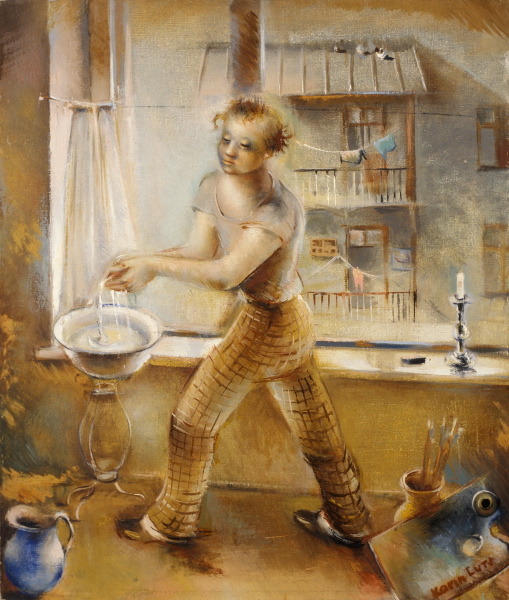
Karin Luts – The Artist (1937)

Gertrude Bohnert born 02-Apr 1908
Emilie Charmy born 02-Apr 1878
Stella Snead born 02-Apr 1910
Hermine Aichenegg born 03-Apr 1915
Francesca woodman born 03-Apr 1958
Constance Marie Charpentier born 04-Apr 1767
Ruth Smith born 05-Apr 1913
Leonora Carrington born 06-Apr 1917
Jeanne Hebuterne born 06-Apr 1898
Kata Kalivoda born 06-Apr 1877
Hilde Rubinstein born 07-Apr 1904
Lilly Steiner born 07-Apr 1884
Annemirl Bauer born 10-Apr 1939
Gunvor Gronvik born 10-Apr 1912
Frances Foy born 11-Apr 1890
Adélaïde Labille-Guiard born 11-Apr 1749
Maggie Laubser born 14-Apr 1886
Olga Boznanska born 15-Apr 1865
Elizabeth Catlett born 15-Apr 1915
Princess Elisabeth Vilma Lwoff-Parlaghy born 15-Apr 1863
Laura Alma-Tadema born 16-Apr 1852
Inji Efflatoun born 16-Apr 1924
Charlotte Salomon born 16-Apr 1917
Hermine David born 19-Apr 1886
Eva Gonzales born 19-Apr 1849
Dod Procter born 21-Apr 1890
Raquel Forner born 22-Apr 1902
Ottilie Roederstein born 22-Apr 1859
Lee Miller born 23-Apr 1907
Christine Bacheler Nisbet born 24-Apr 1902
Lyubov Popova born 24-Apr 1889
Bridget Riley born 24-Apr 1931
Mary Brandt (Perez) born 25-Apr 1917
Mela Muter born 26-Apr 1876
Doro Ording born 26-Apr 1901
Nathalie Kraemer born 28-Apr 1891
Else Fischer-Hansen born 29-Apr 1905
Mainie Jellett born 29-Apr 1897
Karin Luts born 29-Apr 1904
Ruth Meier born 29-Apr 1888
Juana Romani born 30-Apr 1867
Thea Schleusner born 30-Apr 1879
Joronn Sitje born 30-Apr 1897

MAY
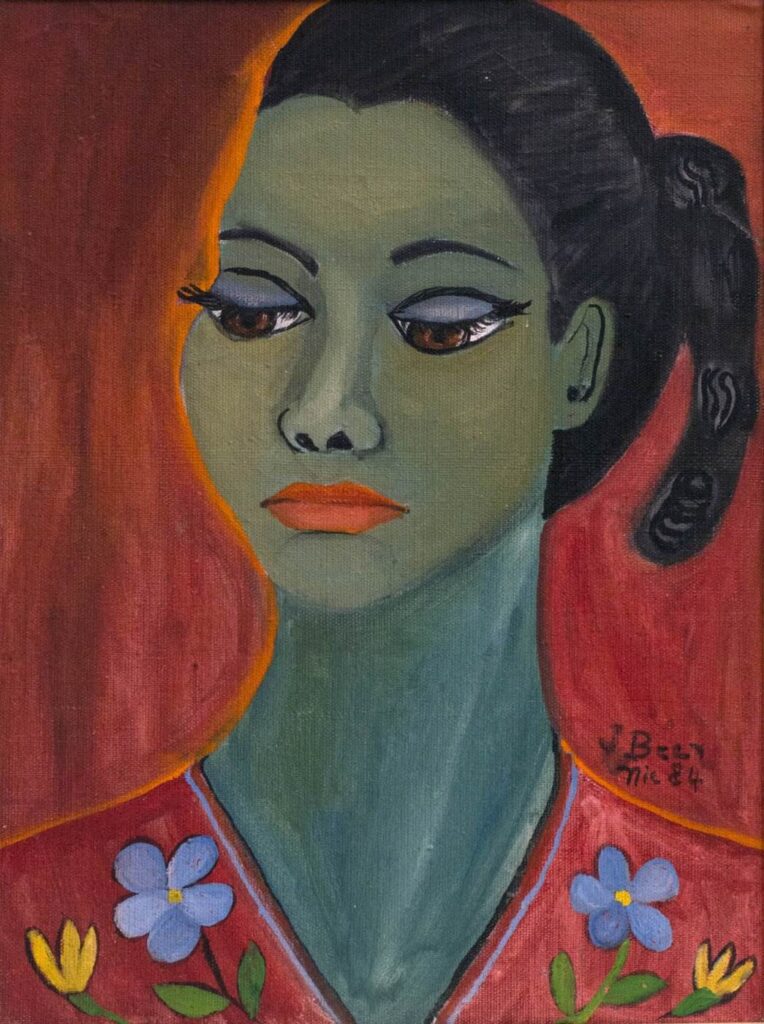
June Beer – Woman in Red (self portrait), 1984

Cecilia Beaux born 01-May 1855
Romaine Brooks born 01-May 1874
Elsa Thoresen born 01-May 1906
Eva Aeppli born 02-May 1925
Peggy Bacon born 02-May 1895
Chinwe Chukwuogo-Roy born 02-May 1952
Brigitte Fugmann born 03-May 1948
Stina Forssell born 03-May 1906
Geta Bratescu born 04-May 1926
Sylvia Pankhurst born 05-May 1882
Celeste Woss y Gil born 05-May 1891
Lucie Citti Ferreira born 06-May 1911
Suzy Freylinghuysen born 07-May 1911
Marion Gilmore born 07-May 1909
Dore Meyer-Vax born 08-May 1908
Felicita Pauluka born 08-May 1925
Paula Gans born 09-May 1883
Stanislawa de Karlowska born 09-May 1876
Hanna Klose-Greger born 09-May 1892
Grete Stern born 09-May 1904
Frida Konstantin born 10-May 1884
Helene von Taussig born 10-May 1879
Eva Schulze Knabe born 11-May 1907
Ilske Schwimmer born 11-May 1915
Monika Brachmann born 12-May 1944
Paula Lauenstein born 12-May 1898
Charlotte Wankel born 12-May 1888
Sara Afonso/Affonso born 13-May 1899
Louise Seidler born 15-May 1786
Stella Bowen born 16-May 1893
Tamara de Lempicka born 16-May 1898
Laura Wheeler Waring born 16-May 1887
Bele Bachem born 17-May 1916
June Beer born 17-May 1935
Martha Bernstein born 17-May 1874
Kati Horna born 19-May 1912
Clara von Rappard born 19-May 1857
Ellen Auerbach born 20-May 1906
Lily Furedi born 20-May 1896
Margret Hofheinz-Döring born 20-May 1910
Maria Hiller-Foell born 21-May 1880
Marisol Escobar born 22-May 1930
Erszebet Korb born 22-May 1889
Julia Diaz born 23-May 1917
Charlotte Berend-Corinth born 25-May 1880
Anita Magsaysay-Ho born 25-May 1914
Vally Wieselthier born 25-May 1895
Fanny Harlfinger-Zakucka born 26-May 1873
Amelie Lundahl born -May 1850
Heidi Vogel born 27-May 1951
Anna De Weert born 27-May 1867
Anna-Eva Bergman born 29-May 1909
Marlow Moss born 29-May 1889
Vanessa Bell born 30-May 1879
Audrey Flack born 30-May 1931
Magdalena Mira Mena born 30-May 1859
Carmen Herrera born 31-May 1915
Mireya Lafuente born 31-May 1905
Hilla von Rebay born 31-May 1890

JUNE
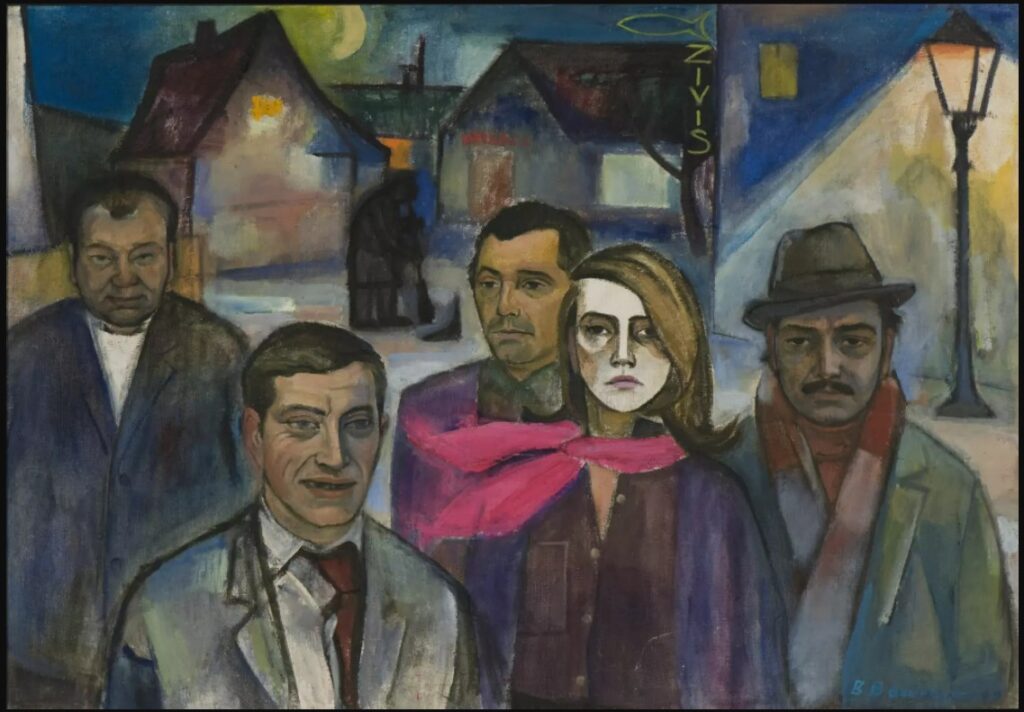
Biruta Baumane – Group Portrait (1969)

Vera Nilsson born 01-Jun 1888
Lotte B Prechner born 01-Jun 1877
Greta Gerell born 02-Jun 1898
Louise Amans born 05-Jun 1850
Winifred Knights born 05-Jun 1899
Biruta Baumane born 06-Jun 1922
Ricarda Jacobi born 07-Jun 1923
Laura Rodig born 07-Jun 1901
Alice Rahon born 08-Jun 1904
Montserrat Gudiol born 09-Jun 1933
Oda Krohg born 11-Jun 1860
Priscilla Warren Roberts born 13-Jun 1916
Pan Yuliang born 14-Jun 1895
Agnes Tait born 14-Jun 1894
Erna Lincke born 15-Jun 1899
Edith Meyer von Kamptz born 15-Jun 1884
Fritzi Brod born 16-Jun 1900
Henriette Browne born 16-Jun 1829
Irma Lang-Scheer born 17-Jun 1901
Margarete Kubicka born 20-Jun 1891
Emilia Bertole born 21-Jun 1896
Gwen John born 22-Jun 1876
Wangechi Mutu born 22-Jun 1972
Hilde Rakebrand born 22-Jun 1901
Olga Rozanowa born 22-Jun 1886
Madge Tennent born 22-Jun 1889
Lilo Raymond born 23-Jun 1922
Elena Shegal born 23-Jun 1924
Meraud Guinness born 24-Jun 1904
Helen Lundeberg born 24-Jun 1908
Alice Frey born 25-Jun 1895
Kay Sage born 25-Jun 1898
Vilma Eckl born 26-Jun 1892
Coba Ritsema born 26-Jun 1876
Helene Perdriat born 27-Jun 1889
Catherine Yarrow born 27-Jun 1904
Ali Goubitz born 28-Jun 1904
Florence Henri born 28-Jun 1893
Nan Youngman born 28-Jun 1906
Hannelore Neumann-Tachilzik born 29-Jun 1939

JULY
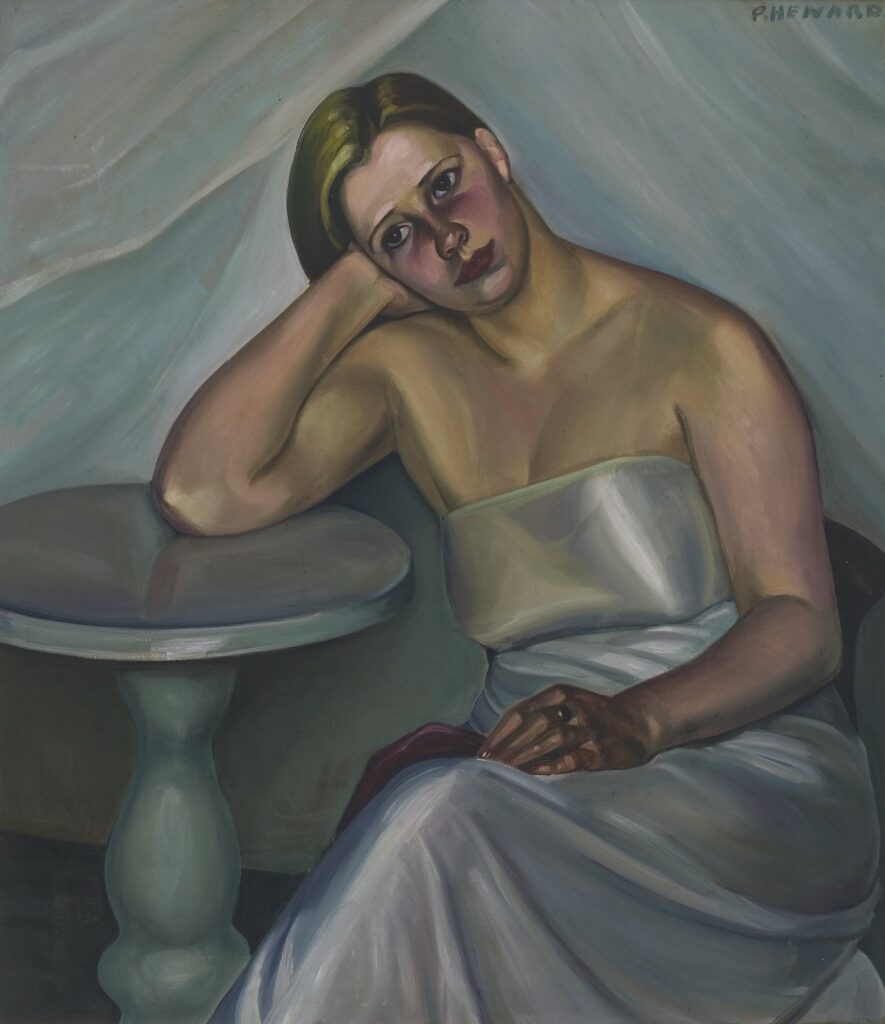
Prudence Heward – Portrait of an unknown Woman c.1920s

Herminia Arrate born 01-Jul 1896
Elizabeth Lochrie born 01-Jul 1890
Prudence Heward born 02-Jul 1896
Lydia Mei born 02-Jul 1896
Rahel Szalit-Marcus born 02-Jul 1894
Georgina Klitgaard born 03-Jul 1893
Petra Flemming born 06-Jul 1944
Frida Kahlo born 06-Jul 1907
Unica Zurn born 06-Jul 1916
Artemisia Gentileschi born 08-Jul 1593
Kathe Kollwitz born 08-Jul 1867
Carmen Mondragon (Nahui Olin) born 08-Jul 1894
Maria Tupper Hunneus born 09-Jul 1893
Helene Schjerfbeck born 10-Jul 1862
Luise Kornsand born 11-Jul 1876
Bertina Lopes born 11-Jul 1924
Ruth Starr Rose born 12-Jul 1887
Honore Desmond Sharrer born 12-Jul 1920
Helene Arnau born 13-Jul 1870
Alice Brasse-Forstmann born 13-Jul 1903
Elena Huerta Muzquiz born 15-Jul 1908
Giselle Kuster born 15-Jul 1911
Berenice Abbott born 17-Jul 1898
Marie Petiet born 20-Jul 1854
Marta Astfalck-Vietz born 21-Jul 1901
Greta Freist born 21-Jul 1904
Maral Rahmanzadeh born 23-Jul 1916
Anna Dorothea Therbusch born 23-Jul 1721
Wanda Wulz born 25-Jul 1903
Alba Calderon (de Gil) born 27-Jul 1908
Nelly van Doesburg born 27-Jul 1899
Sofia Bassi born 28-Jul 1913
Mathilda Rotkirch born 28-Jul 1813
Anna Stainer-Knittel born 28-Jul 1841
Grace Pailthorpe born 29-Jul 1883
Bettina Shaw-Lawrence born 29-Jul 1921
Friedl Dicker-Brandeis born 30-Jul 1898
Maria Szantho born 31-Jul 1897
Doris Zinkeisen born 31-Jul 1897

AUGUST
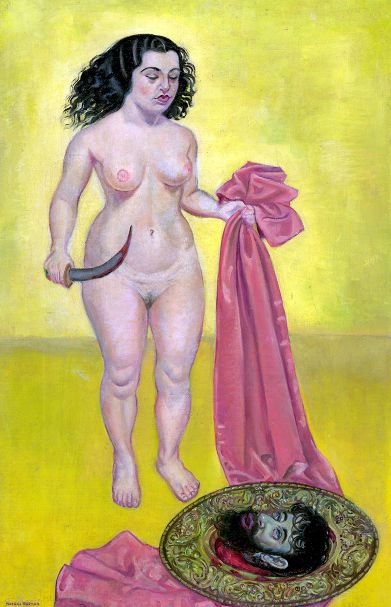
Macena Barton – Salome (1930s?)

Rachel Baes born 01-Aug 1912
Ida Gerhardi born 02-Aug 1862
Gretel Haas-Gerber born 02-Aug 1903
Maria Wiik born 03-Aug 1853
Laura Knight born 04-Aug 1877
Hedda Sterne born 04-Aug 1910
Edith Dettmann born 04-Aug 1898
Margit Graber born 05-Aug 1895
Irene Rice Pereira born 05-Aug 1902
Macena Barton born 07-Aug 1901
Maria Caspar-Filser born 07-Aug 1878
Lili Orszag born 08-Aug 1926
Tove Jansson born 09-Aug 1914
Eliane de Meuse born 09-Aug 1899
Cornelia Paczka-Wagner born 09-Aug 1864
Rogi Andre born 10-Aug 1900
Margret Bilger born 12-Aug 1904
Marianne Fieglhuber-Gutscher born 12-Aug 1889
Nola Hatterman born 12-Aug 1899
Ernestine von Kirchsberg born 12-Aug 1857
Helene Roth born 12-Aug 1887
Gluck (Hannah Gluckstein) born 13-Aug 1895
Xenia Cage born 15-Aug 1913
Marie Goth born 15-Aug 1887
Zsuzsi Robos born 15-Aug 1929
Tamara Natalie Madden born 16-Aug 1975
Käthe Ephraim Marcus born 16-Aug 1892
Gunnvor Advocaat born 17-Aug 1912
Gudrun Petersdorff born 17-Aug 1955
Anna Ancher born 18-Aug 1859
Kyra Markham born 18-Aug 1891
Florine Stettheimer born 19-Aug 1871
Lette Valeska born 20-Aug 1885
Hedwig Holtz-Sommer born 22-Aug 1901
Agnes Lawrence Pelton born 22-Aug 1881
Ebba Carstensen born 23-Aug 1885
Agnes Cleve born 23-Aug 1876
Hannah Frank born 23-Aug 1908
Mariette Lydis born 24-Aug 1887
Henriette Paula Häberlin born 25-Aug 1882
Dorothea Tanning born 25-Aug 1910
Fanny Rabel born 27-Aug 1922
Olga Costa born 28-Aug 1913
Else Lohmann born 29-Aug 1897
Sughra Rababi born 29-Aug 1922
Martha Schrag born 29-Aug 1870
Anna Zinkeisen born 29-Aug 1901
Siri Deckert born 30-Aug 1888
Leonor Fini born 30-Aug 1907
Amy Sherald born 30-Aug 1973
Ida Kerkovius born 31-Aug 1879

SEPTEMBER
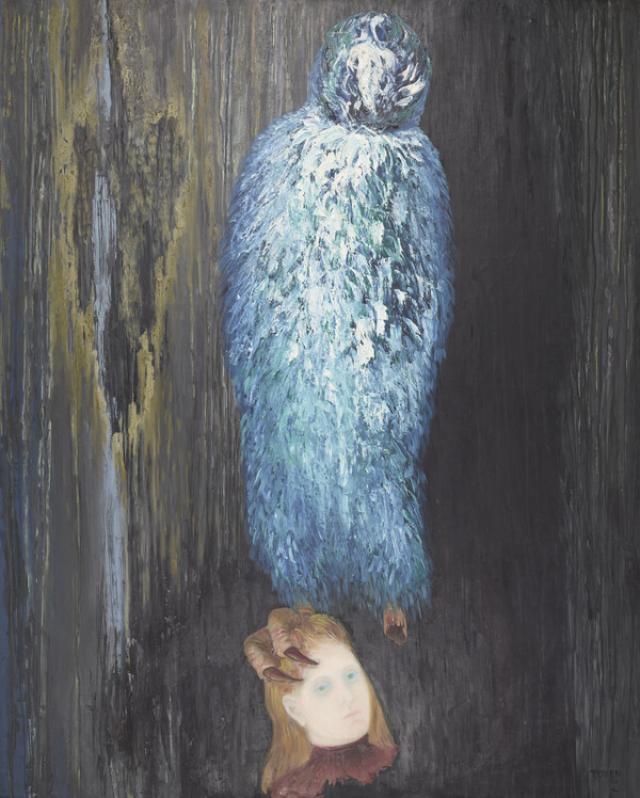
Toyen – The Message of the Forest (1936)

Adriana Bisi Fabbri born 01-Sep 1881
Mario Miguel Mollari 01-Sep 1930
Hilda Rix Nicholas born 01-Sep 1884
Augusta Roszmann born 01-Sep 1859
Mina Carlson-Bredberg born 02-Sep 1857
Else Meidner born 02-Sep 1901
Elin Danielson-Gambogi born 03-Sep 1861
Helene Funke born 03-Sep 1869
Lis Bertram-Ehmsen born 05-Sep 1897
Piti (Francis) Bartolozzi born 06-Sep 1908
Marie-Gabrielle Capet born 06-Sep 1761
Rosa Rolanda born 06-Sep 1896
Hanna Bekker vom Rath born 07-Sep 1893
Maria Lassnig born 08-Sep 1919
Mimi Parent born 08-Sep 1924
Anna Walinska born 08-Sep 1906
Aurora Reyes Flores born 09-Sep 1908
Consuelo Remedios González del Bianco born 10-Sep 1911
Marianne von Werefkin born 10-Sep 1860
Bona di Mandiargues born 12-Sep 1926
Nan Goldin born 12-Sep 1953
Lili Pancu born 13-Sep 1908
Eva Cederström born 15-Sep 1909
Hope Gangloff born 15-Sep 1974
Rosalie Gwathmey born 15-Sep 1908
Cordelia Urueta Sierra born 16-Sep 1908
Alla Horska born 18-Sep 1929
Maud Sulter born 19-Sep 1960
Hilda Belcher born 20-Sep 1881
Denise Bellon born 20-Sep 1902
Genevieve Springston Lynch born 20-Sep 1891
Else Hagen born 21-Sep 1914
Toyen born 21-Sep 1902
Anne Winterer born 21-Sep 1894
Hansl Bock born 22-Sep 1893
Irena Rüther-Rabinowicz born 22-Sep 1900
Esphyr Slobodkina born 22-Sep 1908
Suzanne Van Damme born 22-Sep 1901
Suzanne Valadon born 23-Sep 1865
Maina-Miriam Munsky born 24-Sep 1943
Tilsa Tsuchiya 24-Sep 1928
Marguerite Zorach born 25-Sep 1887
Suzi Gablik born 26-Sep 1934
Arcangela Paladini born 29-Sep 1596

OCTOBER
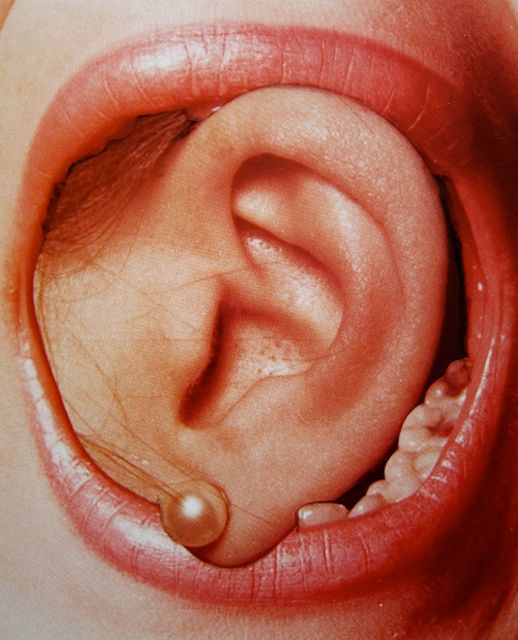
Penny Slinger – I Hear What You Say (1973)

Marianne Brandt born 01-Oct 1893
Alice Prin (Kiki de Montparnasse) born 02-Oct 1901
Elisabeth Sophie Cheron born 03-Oct 1648
Kathleen Walne born 03-Oct 1915
Ester Ellqvist born 04-Oct 1880
Ellen Thesleff born 05-Oct 1869
Graciela Aranis born 06-Oct 1908
Meret Oppenheim born 06-Oct 1913
Nina Arbore born 08-Oct 1889
Elise Ransonnet-Villez born 08-Oct 1843
Faith Ringgold born 08-Oct 1930
Louise Rösler born -Oct 1907
Ithell Colquhoun born 09-Oct 1906
Zelia Salgado born 10-Oct 1904
Linda Kogel born 11-Oct 1861
Grete Csaki-Copony born 12-Oct 1893
Paula Deppe born 12-Oct 1886
Nadezhda Petrovic born 12-Oct 1873
Ruth Bernhard born 14-Oct 1905
Vilma Vrbova born 14-Oct 1905
Minna Citron born 15-Oct 1896
Lilly Hildebrandt born 16-Oct 1887
Elisabeth Chaplin born 17-Oct 1890
Cata Dujšin-Ribar born 17-Oct 1897
Agnes van den Brandeler born 18-Oct 1918
Jeanne Mandello born 18-Oct 1907
Bettina von Arnim born 19-Oct 1940
Jacqueline Marval born 19-Oct 1866
Ottilie Reylaender born 19-Oct 1882
Else-Christie Kielland born 20-Oct 1903
Gustava Engels von Veith born 20-Oct 1879
Penny Slinger born 21-Oct 1947
Lygia Clark born 23-Oct 1920
Rina Lazo (Wasem) born 23-Oct 1923
Marie-Louise von Motesiczky born 24-Oct 1906
Claude Cahun born 25-Oct 1894
Katalin Ladik born 25-Oct 1942
Ruth Light Braun born 26-Oct 1906 2003 oa
Marthe Donas born 26-Oct 1885 1967 oa
Bep Rietveld born 26-Oct 1913 1999 oa
Blanche-Augustine Camus born 27-Oct 1884
Julie Hagen-Schwarz born 27-Oct 1824
Sigrid Hjerten born 27-Oct 1885
Mary Moser born 27-Oct 1744
Paraskeva Clark born 28-Oct 1898
Bertha Müller born 28-Oct 1848
Alice Lex-Nerlinger born 29-Oct 1893
Louise Abbema born 30-Oct 1853
Maria Izquierdo born 30-Oct 1902
Angelika Kauffmann born 30-Oct 1741
Erna Schmidt-Carroll born 30-Oct 1896
Marie-Laure de Noailles born 31-Oct 1902
Marie Laurencin born 31-Oct 1883
Jóhanna Kristín Yngvadóttir born 31-Oct 1953

NOVEMBER
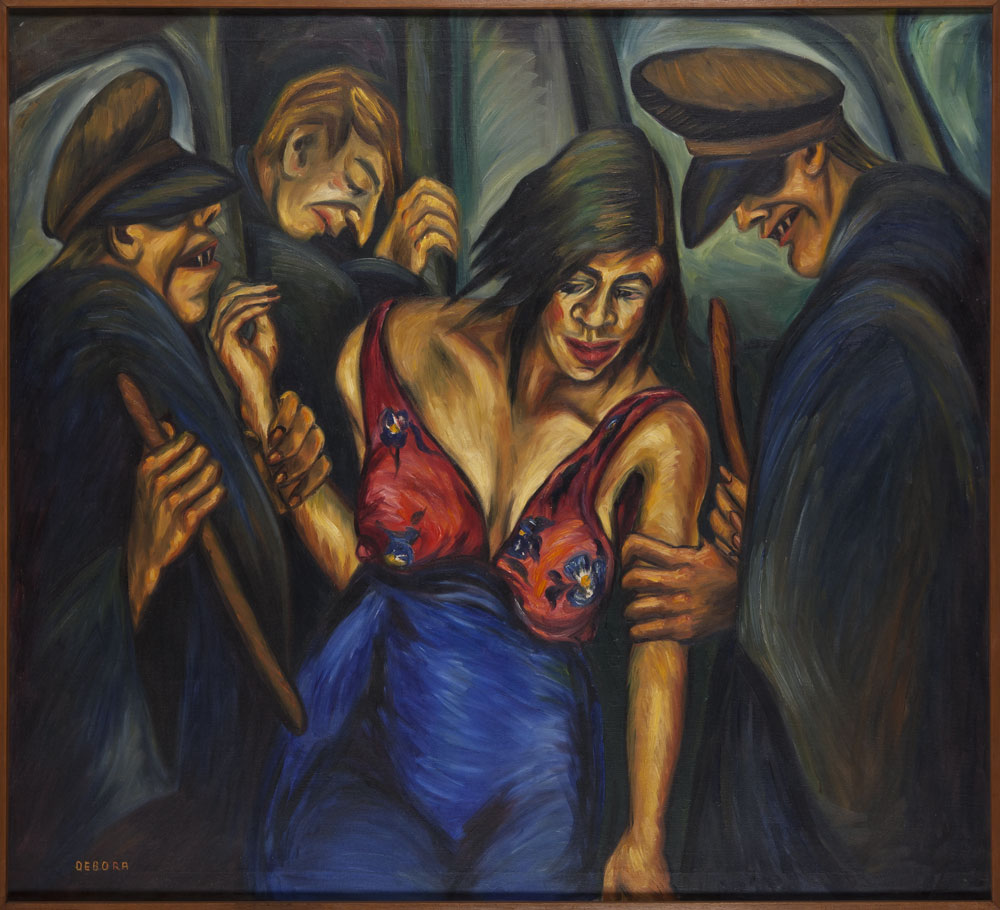
Débora Arango – Justice (c.1944)

Hannah Hoch born 01-Nov 1889
Hedwig Woermann born 01-Nov 1879
Venny Soldan-Brofeldt born 02-Nov 1863
Lois Mailou Jones born 03-Nov 1905
Lilias Torrance Newton born 03-Nov 1896
Charlotte Buresova born 04-Nov 1904
Elena Luksch-Makowsky born 04-Nov 1878
Milena Pavlovic-Barili born 05-Nov 1909
Ann Brockman born 06-Nov 1899
Elsa Haensgen-Dingkuhn born 07-Nov 1898
Sonja Kovačić – Tajčević born 07-Nov 1894
Angeles Santos Torroella born 07-Nov 1911
Elizabeth Sparhawk-Jones born 08-Nov 1885
Emmy Bridgwater born 10-Nov 1906 1999 oa
Lisette Model born 10-Nov 1901
Debora Arango born 11-Nov 1907
Carry Hess born 11-Nov 1889
Magda Langenstraß-Uhlig born 11-Nov 1888
Mary Kessell born 13-Nov 1914
Ekaterina Savova-Nenova born 13-Nov 1901
Sonia Delaunay born 14-Nov 1885
Julie Manet born 14-Nov 1878
Tina Blau born 15-Nov 1845
Miriam Schapiro born 15-Nov 1923
Elisa Counis born 16-Nov 1812
Katharina Sieverding born 16-Nov 1944
Louise Dahl-Wolfe born 19-Nov 1895
Lily Harmon born 19-Nov 1912
Marianne Breslauer born 20-Nov 1909
Angelika Hoerle born 20-Nov 1899
Germaine Krull born 20-Nov 1897
Elisabeth Jerichau-Baumann born 21-Nov 1819
Jeanne Mammen born 21-Nov 1890
Dora Maar born 22-Nov 1907
Bridget Bate Tichenor born 22-Nov 1917
Else Hertzer born 24-Nov 1884
Mary Foote born 25-Nov 1872
Sara Shamma born 26-Nov 1975
Audrey Buller born 27-Nov 1902
Gretchen Wohlwill born 27-Nov 1878
Mabel Alvarez born 28-Nov 1891
Hedwig Marquardt born 28-Nov 1884
Else Wex-Cleemann born 29-Nov 1890
Fridel Dethleffs-Edelmann born 30-Nov 1899

DECEMBER
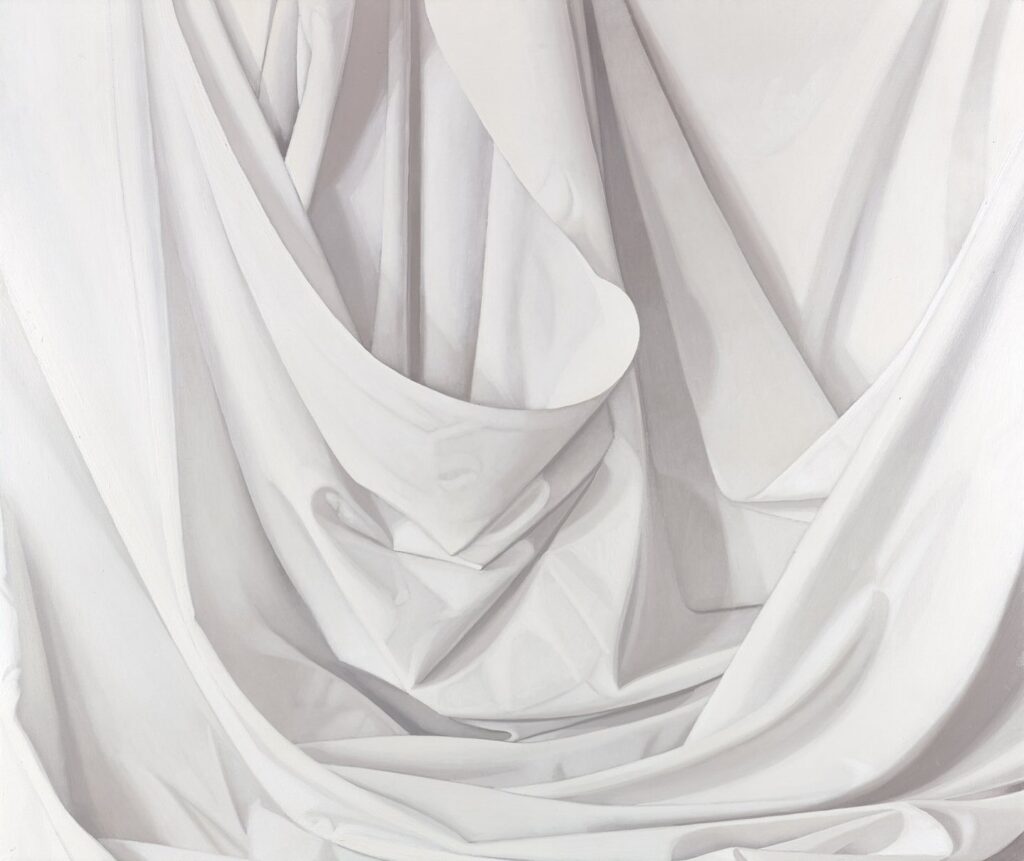
Alison Watt – Alabaster (1998)

Eileen Agar born 01-Dec 1899
Jenny Mucchi-Wiegemann born 01-Dec 1895
Emilie Mediz-Pelikan born 02-Dec 1861
Marion Adnams born 03-Dec 1898
Dorte Helm born 03-Dec 1898
Grace English born 04-Dec 1891
Elfriede Lohse-Wächtler born 04-Dec 1899
Louise Catherine Breslau born 06-Dec 1856
Margaret Brundage born 09-Dec 1900
Louise de Hem born 10-Dec 1866
Zinaida Serebriakova born 10-Dec 1884
Olga Terri born 10-Dec 1916
Irène Zurkinden born 11-Dec 1909
Alison Watt born 11-Dec 1965 alive
Ragnhild Keyser born 12-Dec 1889
Emily Carr born 13-Dec 1871
Alice Sommer born 13-Dec 1898
Aino Bach born 14-Dec 1901
Remedios Varo born 16-Dec 1908
Bertha Wegmann born 16-Dec 1846
Suze Robertson born 17-Dec 1855
Jane Graverol born 18-Dec 1905
Ewa Kierska born 18-Dec 1923
Lucie Cousturier born 19-Dec 1876
Therese Schwartze born 20-Dec 1851
Trude Fleischmann born 22-Dec 1895
Margit Anna born 23-Dec 1913
Luvena Buchanan Vysekal born 23-Dec 1873
Alma del Banco born 24-Dec 1862
Sigrid Maria Schauman born 24-Dec 1877
Dorothy Johnstone born 25-Dec 1892
Ragnhild Kaarbo born 26-Dec 1889
Stella Steyne born 26-Dec 1907
Augusta von Zitzewitz born 26-Dec 1880
Annott (Jacobi) born 27-Dec 1894
Aisha Galimbaeva born 29-Dec 1917
Adela ber Vukić born 30-Dec 1888
Lucile Blanch born 31-Dec 1895
Beatrice Mandelman born 31-Dec 1912

Self-Portrait in the Studio (1579), by Lavinia Fontana, generally considered to be the first professional female artist

I went back to rockville

Between me thinking about writing something about what home and belonging means and actually starting to do it, it’s become a far more topical subject than I expected, which seems to be how these things go these days.

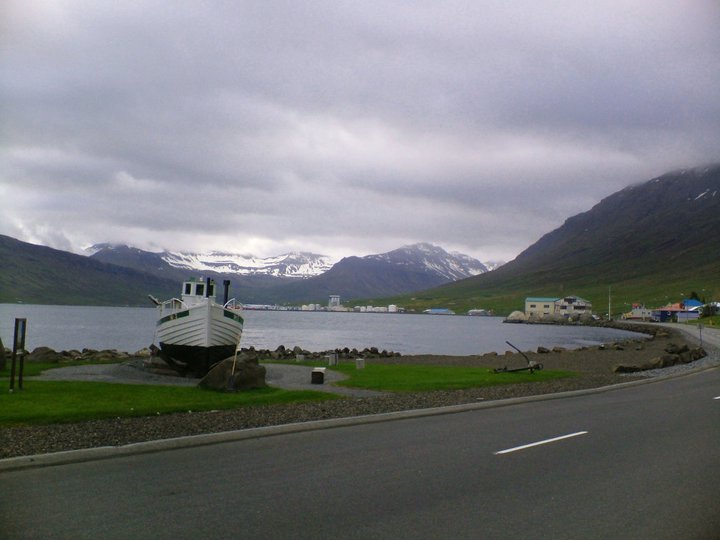
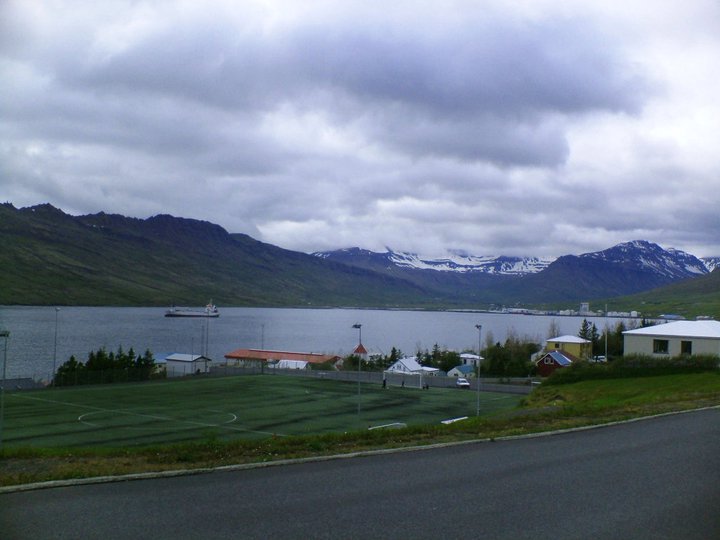
the outskirts of Neskaupstaður, Iceland

The initial impulse to write it came from several unconnected things; some photos I took in Iceland over a decade ago; the lyrics to the R.E.M. song “(Don’t Go Back to) Rockville;” a beautifully evocative description of a rundown railway station in a dusty, remote part of Austria-Hungary in the 1900s. That description felt especially poignant because Austria-Hungary is a country (and the Habsburg Empire an Empire) that no longer exists, but which must have felt permanent in its day and which people in the 1900s felt just as patriotic and loyal towards or just as ambivalent about as people now do towards the constituent parts of the United Kingdom or/and the UK itself. But all of that has retreated into the distance a little because as I write this, up and down the country – even in this little corner of rural Scotland – people are engaged in a protest of sorts. Unusually for a protest, it takes the form of doing something which has always been entirely acceptable to do and which no one has ever tried to discourage the protesters from doing; hanging up flags.

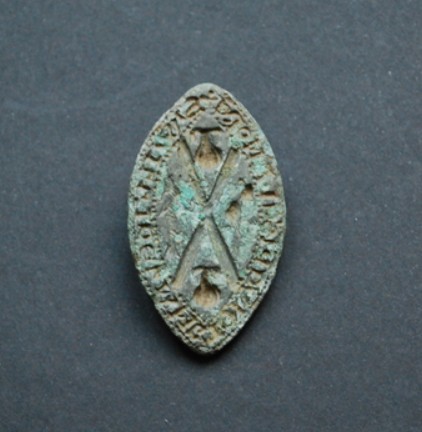
The seal matrix of Bishop William de Lamberton from the 1290s, the oldest extant physical use of the Saltire in Scotland

The flags that have made it onto the news – especially from the recent, ironically-named “Unite the Kingdom” right-wing rally in London, are mostly St George’s cross (the flag of England), interspersed with Union flags. In this village the flag fliers tend, naturally to instead display the Saltire/St Andrew’s cross (the flag of Scotland, reputedly the oldest national flag in Europe – which if its semi-mythical origins are correct actually predates the Kingdom of Scotland itself by a couple of centuries) and the Union flag.

Flags are, by design, simple and very easy to identify, but they are also kind of a blunt instrument when it comes to signalling. Other people in this area have been displaying the Saltire and the medieval Scottish flag (the Royal Banner; a rampant red lion on a yellow ground) with no Union flag. I presume this is some kind of anti-unionist/nationalist counter-protest but I may be wrong; to be sure I’d have to ask the flag fliers, and who wants to do that? Whatever else they are, national flags tend not to be especially inviting, particularly when displayed in their country of origin. Nearby I’ve also seen – in a more obvious counter-protest – people displaying Palestinian and Pride flags.

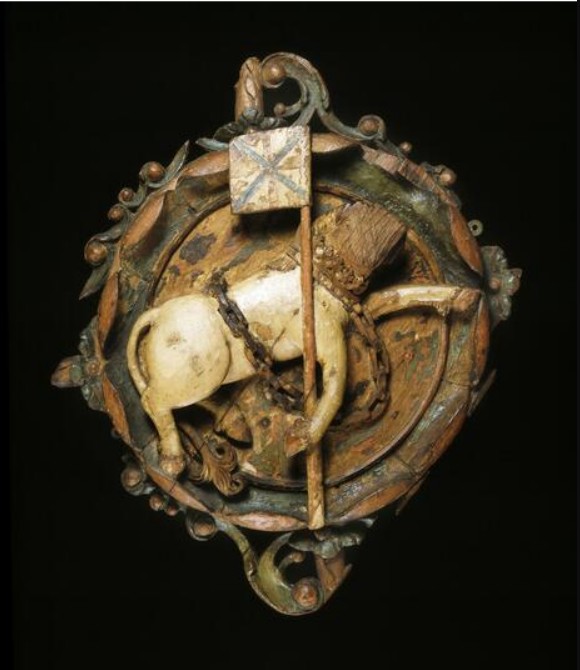
carved wooden ceiling boss of a unicorn carrying the Saltire from Linlithgow Palace, c.1617

It’s a regularly remarked-on (and ultimately meaningless) irony that the historical St George was a Turkish man of Palestinian descent, but less remarked on (though similarly meaningless in this context) that St Andrew, who the saltire represents, was born in what is modern day (Israel-occupied) Syria. Lions (though not red ones) are native to sub-Saharan Africa and India. And yet, for the people waving, wearing, hanging, painting or generally displaying the flags, these symbols of Syrian and Turkish-Palestinian saints and these African/Indian mammals (1 for Scotland, 3 for England, though confusingly the English ones were historically referred to as leopards, which scans less well for a football song lyric) are symbols, I presume, of home. And therefore the people displaying them for patriotic, political or intimidating purposes mostly don’t care what their origins are, which is fair enough. It’s my home too, but although I have no special feelings about the flags of Scotland or the UK, seeing them all over the place, rather than just on official buildings or big hotels is oddly alienating, just like seeing the stars and stripes on every other street on a trip to the USA was.

The flags of your nation, displayed in that nation, tell you two things; firstly, where you are – which you already know – and secondly, that somebody wants you to be very aware of where you are, which you still already know. Theoretically, people display flags for themselves and not for anybody else, but a flag by its nature is a signal and for most of the time, the person who flies it outside their home or paints it on the street or on some historical landmark, or puts a sticker on a bus shelter can’t see it, but anyone passing by can.

Because so many of the people involved in the current protests are xenophobic (not really derogatory; many of them are explicitly saying they are protesting against “migrants”. “I belong here,” is not a protest; and anyway nobody is disputing it. “You don’t belong here” is mostly what the protest is about) there’s been a lot of discussion about what kind of symbols our flags are and what, beside dead saints, they represent. Obviously, flags themselves aren’t racist, or at least are only as racist as the people displaying them. There are possibly a few exceptions; most obviously, I feel like any Jewish or Romany person has the right to feel victimised if someone is displaying a black swastika in white circle on red ground; I wouldn’t think it was outlandishly sensitive if an African-American person felt offended by someone waving a Confederate flag at them. Still, it’s strange the extent to which seeing the flag of your country everywhere makes that country feel like a different place from the one you grew up in.

But home is a strange thing anyway and ‘feeling at home’ in the comfortable sense of being where you are supposed to be, in the place that it feels natural to be, isn’t universal; clearly the protesters don’t feel it or they wouldn’t be protesting.

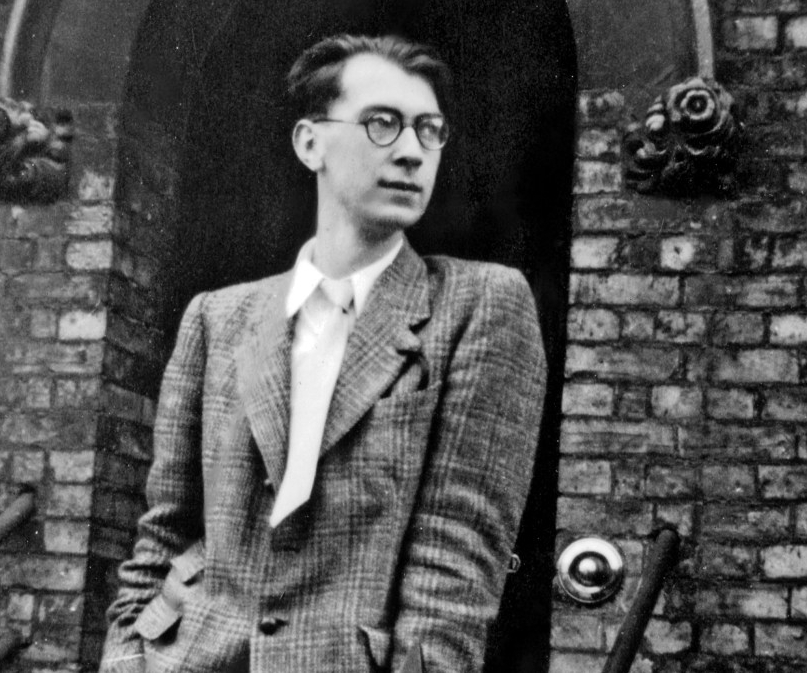
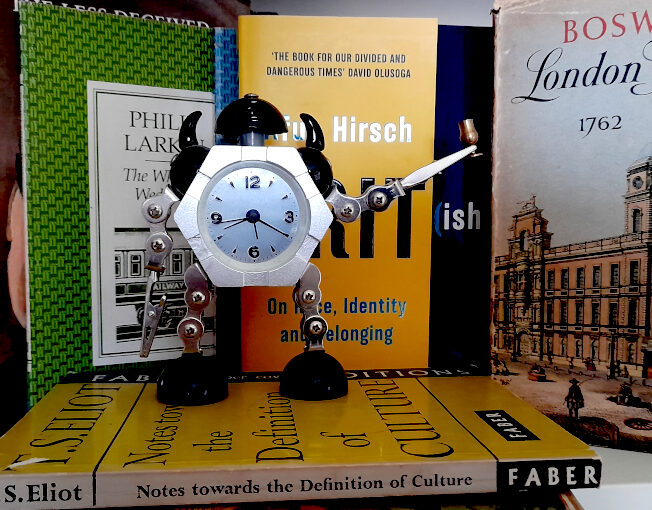
Philip Larkin in 1943 by Bruce Montgomery, looking like he should be on a Smiths album cover

The poet Philip Larkin – often seen as a definitively (I refuse to use the word ‘quintessentially’) English figure and sometimes derided as a ‘Little Englander,’ made some interesting observations about home that demonstrate how one-dimensional that (otherwise not unfair) assessment of him is. In The Importance of Elsewhere (1955), he argues (well, it’s a poem, not an argument; anyway, he says) that feeling lonely and out of place is a normal, appropriate and even a comforting response to being in alien surroundings (specifically Belfast) – “Strangeness made sense. The salt rebuff of speech,/Insisting so on difference, made me welcome.” The strangeness of the place itself “went/ To prove me separate, not unworkable.” On the other hand, feeling lonely and out of place in the place you come from and where you theoretically do belong does the opposite; and it possibly says unpleasant things about the place itself, too.

Larkin was right; for himself at least and therefore it’s not surprising to find that a slightly earlier poem (Places, Loved Ones, 1954) begins “No, I have never found / The place where I could say / This is my proper ground / Here I shall stay…..” A few years later, he obliquely questioned whether the idea of home is even desirable at all, since ‘belonging’ to anything can only ever be transitory – “Home is so sad. It stays as it was left, / Shaped to the comfort of the last to go” (Home is so Sad, 1958). Eventually and unexpectedly, he did find that place where he could say this is, etc, etc – which turned out to be Hull. He celebrated the city in a 1961 poem called Here – the title is surely a self-referential one, looking back to that fourth line of Places, Loved Ones, quoted above, Here is one of Larkin’s very few poems of belonging, but inevitably he celebrates the town for what would normally be considered its negative traits; inaccessibility, neglect and, if not actual unfriendliness, then at least a distant kind of reserve; “Here is unfenced existence: / Facing the sun, untalkative, out of reach.” He really was the Morrissey of 20th century English poetry.

Coventry was where Larkin came from, but though he wrote about it several times, it was never in the sense of feeling at home there. But if “feeling at home” means some kind of existential peace and contentment, there’s no real reason why that you should have any particular connection with the place you’re originally from, unless you happened to have an idyllic childhood. Equally, there’s no special reason why where you currently live should be where you feel at home, unless you are contented there like, presumably, the angry people with their flags and paint. But if they really love their country they certainly hide it well, not just because of their anger, but also how they treat the place and the mess they leave behind; they really do protest too much.

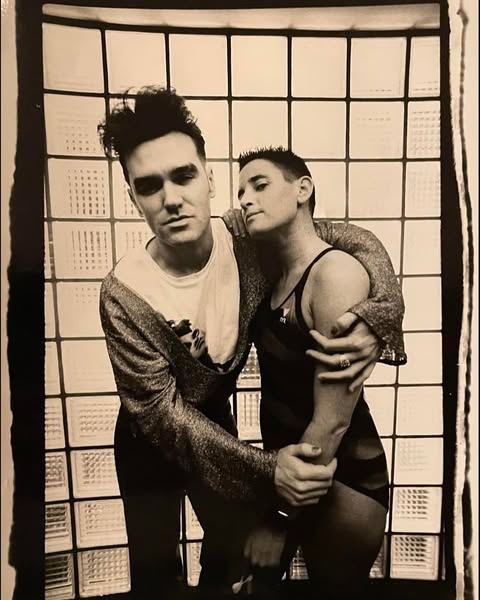
Morrissey with the American singer Phranc in 1992 by the great Kevin Cummins. Moz really is an unlikely right-winger

I’m loath to mention Morrissey again but a short side note seems relevant. For all his apparently xenophobic Englishness, Morrissey doesn’t (in common with many xenophobic, wealthy ‘patriots’) love England enough to actually live there. But to be fair, he rarely claims to love it at all; Morrissey is, thankfully, far more Larkin than Farage. The question of his (unusually complex but now undeniable) right-leaning politics goes back a long way, but when in 1992 he released the album Your Arsenal and alarm bells rang in the NME offices at the title of the song “The National Front Disco“, those NME scribes did him a disservice. He’s not foolish or racist enough to write a song actually glorifying the NF, though the song is definitely and maybe deliberately an uncomfortable one. In the lyrics he puts his finger (sympathetically or otherwise; it’s impossible to say) on the mentality of the kind of people currently waving placards telling foreigners to get out of “are country” (wish I was making that up). “There’s a country, you don’t live there / But one day you would like to / And if you show them what you’re made of / Then you might do.” That is really the essence of the march that happened last week in London and the smaller versions of it across the UK, including, dismayingly, one in Falkirk (one likes to think Scotland is above that kind of thing but realistically nowhere is, people being what they are).

‘Home’ is only on the most mundane level the place where you live, and the less mundane ideas of home are far more mysterious and often very personal. Without wishing to delve much into etymology, ‘home’ is a concept which even in its basic form as a noun (The place where a person or animal dwells, as the OED slightly creepily puts it) includes meanings that I don’t think I was aware of; “figurative. With reference to the grave or one’s state after death. Frequently with preceding adjective;long home‘.” Apparently ‘long home’ was a common usage in Old English – and if you don’t belong in your grave then where do you belong? The long home is where the heart is; which makes me think of the last line of Wuthering Heights – surely one of the most beautiful endings to any deeply unpleasant novel:

I lingered round them, under that benign sky: watched the moths fluttering among the heath and harebells, listened to the soft wind breathing through the grass, and wondered how anyone could ever imagine unquiet slumbers for the sleepers in that quiet earth. Emily Bronte, Wuthering Heights, 1847

And then there’s home as in ‘too close to home,’ ‘coming home to roost,’ ‘the Home Office’, a point being ‘driven home,’ ‘home truths,’ ‘Home Rule,’ ‘make yourself at home’ (I have vague memories of a comedian or comedy character introducing their act by saying something like ‘Make yourself at home. Unless you’re in a hotel in which case make yourself in a hotel.‘ Vic Reeves? Alan Partridge? No idea).

Relatedly, belonging is a strange, unpredictable and entirely personal sensation. Larkin seems not to have felt he belonged anywhere until he found somewhere suitably impersonal and forbidding. Morrissey seems to thrive as an eternal outsider in Los Angeles, though it’s hard to think of anyone who seems more like an embodiment of Manchester. Belonging (I don’t say this self-pityingly, I’m comfortable with it) isn’t a feeling I’ve felt especially often and when I have it’s been at random times and sometimes in unexpected and unlikely places. Just recently, out walking in the area where I live and where I mostly grew up, I had one aspect of belonging; the exact kind of weather I obscurely feel most at home in; mild, grey, windless, with a low, quilted-looking heavy sky that didn’t quite threaten rain and let no ray of sunshine through. I like muggy weather and have never yet met anyone else who does. It’s kind of the other side of Larkin’s The Importance of Elsewhere – if not feeling at home ‘at home’ makes you unworkable (as he puts it), maybe the conditions that you feel the most at home in equally say something, possibly something unflattering, about you? Enjoying blue skies and sunshine (which I do too, although less so) just seems more positive somehow.

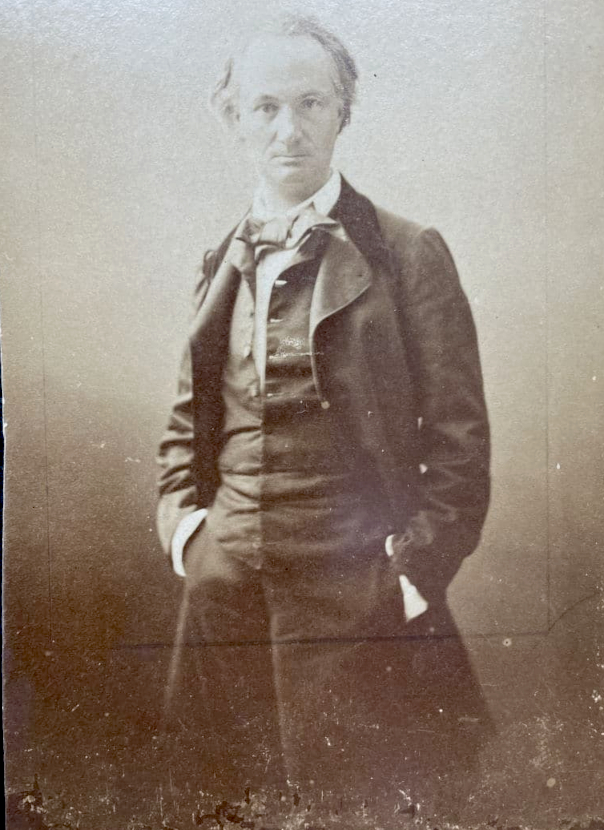
Baudelaire looking effortlessly cool & French in 1862 by Félix Nadar

Clearly for the protesters, ‘belonging’ is as much about people – a homogenous group of people – as it is about place. That’s the opposite of the vague kind of belonging that I sometimes identify with, the kind of thing expressed (very romantically) by Charles Baudelaire when he writes about ‘the flâneur’ in The Painter of Modern Life (1863). “To be absent from home and yet feel oneself everywhere at home; to view the world, to be at the heart of the world, and yet hidden from the world […] The spectator is a prince who rejoices everywhere in his incognito. … The lover of universal life enters into the crowd as into an immense reservoir of electrical energy. One might compare him, also, to a mirror, immense as that crowd; to a kaleidoscope endowed with consciousness which, with its every movement, conveys the multiplicity of life, and the grace in motion of every element of that life.” Well, I rarely feel as enthusiastic as that, and I generally don’t like being in a crowd with a specific purpose, even a benign one like the audience at a concert. But on the other hand, though I rarely feel at home anywhere, I never feel like my home has been stolen or invaded, and I don’t feel threatened because I see or hear people who are different from me. So that’s nice.

Xenophobia is kind of stranger than misanthropy, which is at least understandable, because human beings can be destructive and unpleasant like no other species. But although humanity has apparently infinite variety on the personal level, that variety, though it seems to terrify some people, is on every other level, extremely limited. However many names we choose to give this geographical (rather than political) area; the British Isles, the United Kingdom, Scotland, Wales, England, Ireland, Northern Europe – the population is, -whichever newcomers may arrive, and wherever they arrive from – pretty homogenous, because the human race is pretty homogenous. I was interested to hear my vague gut feeling given scientific validity by the archaeologist Dr Helen Geake (on the Time Team podcast of 9th September this year.) In response to a question about the diversity of the population of Anglo-Saxon England (following the discovery of a skeleton with African ancestry in an Anglo-Saxon cemetery) she said, “I’m not wanting to say ethnically diverse, partly because […] there’s so little genetic variability between humans that I don’t think we have anything like ethnicities or races or whatever. I just don’t think that makes any sense when you look at the science. I think it’s more of a diversity of appearance and origin.” When you consider the inter-species variation between, say a lion (since I mentioned them before) and a housecat, or a chihuahua and a Saint Bernard, it’s clear that the gradations between human beings are far more subtle. And when it comes to people you feel an affinity with, you’re as likely to feel at home (that expression seems stranger the more you consider it) with someone you met by chance recently (or even met virtually online), as with someone you’ve known since you were a child. Interestingly (there’s a euphemism!) I read just this morning that a “Race Science Institute – ie debunked Nazi bullshit – funded by one of the world’s richest men is currently trying to be influential in UK politics.

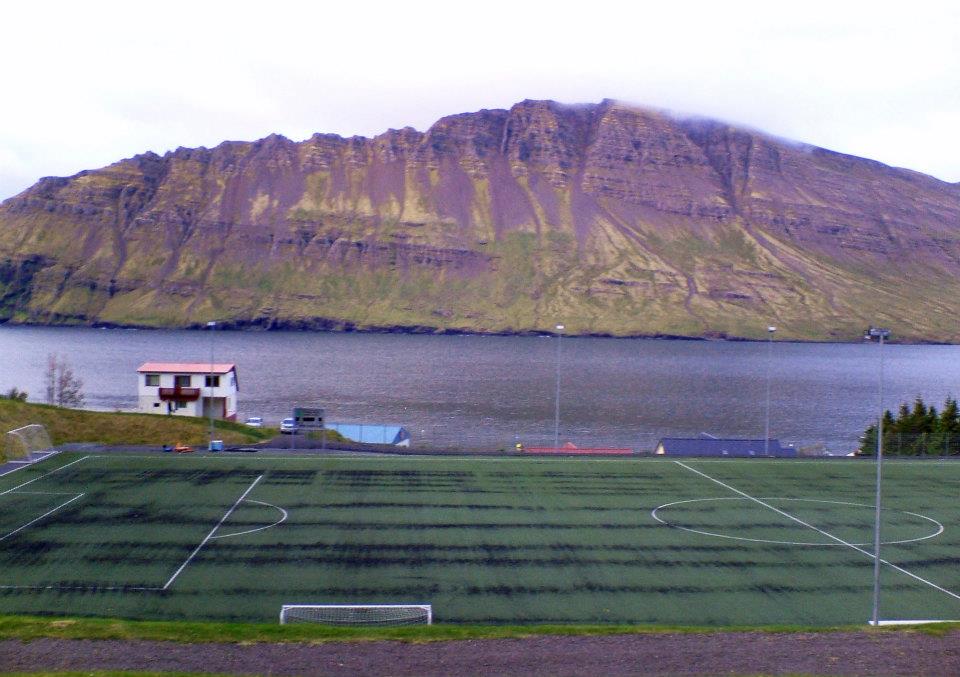
mouldy football pitch by the fjord, Neskaupstaður, eastern Iceland, around 4.30 am

Randomly – although it’s the thing that made me think about writing all this in the first place – I don’t think I’ve ever had that ‘at home’ feeling more strongly than I did when walking in the outskirts of a small town in Iceland at 4.30 am one July, during a night where the ‘midnight sun’ felt more like perpetual dusk. Why should that be? I have no idea. The conditions were right I suppose – not unlike the flat grey day mentioned earlier. Iceland is very beautiful but although this stretch of road ran alongside a fjord at some points, it mostly wasn’t something so picturesque that you’d put it on a postcard. It featured details as apparently uninspiring (but weirdly loveable to me) as a mouldering football pitch and a school or some kind of municipal building. At one point there was a boat on a platform, which did give more of that sense of ‘elsewhere’. What did ‘at home’ feel like? You know it when you feel it I suppose – a kind of vaguely melancholy contentment that may partly have come from having had a few drinks plus 24 hours or so without sleep; it was comfortable and it didn’t feel like exhaustion.

that mildewed football pitch in more detail

If I tried to express that feeling to some of the protesters, quite possibly they’d say something like “If you like it so much why don’t you go and live there” (British people have a long history of telling people if they don’t like the country they can just leave, and yet they rarely feel like they themselves should leave if they don’t like the country). It occurs to me now that when racists, xenophobes or (popular current euphemism) “concerned citizens” scream at people to go back where they came from, when they wrap themselves in the flags of their own country and wield their national identity at people, what they are doing may partly be asserting how they feel about their home, but what they really want is for everyone they oppose to not feel at home. And when, at the best of times, ‘feeling at home’ is a fleeting and precarious emotion, that’s kind of a shitty thing to do.

It’s not real if you don’t feel it – but what is ‘it’ and what is ‘real’ and who’s to say anyway?


A wise woman once sang “It’s not real if you don’t feel it”* and as far as the arts are concerned it’s as good a measure of quality as anything. But what is “it” that you are feeling? Is everyone feeling the same thing? Clearly not. Even the opinions of people who do like the same song, the same book, the same film, the same painting, are likely to diverge when it comes to the detail of what they like and how it feels.

*The Goonies “R” Good Enough, (Cyndi Lauper, Stephen Broughton Lunt, Arthur Stead, 1985

Part of the mission of modernism in the early 20th century was to free art from associations; from sentimentality, from tradition, culture, religion, politics – and to define it for itself. That was necessary, in order to break the endless repetitive staleness of academicism and/or lowest-common-denominator entertainment, and also because photography and recorded sound and near-universal literacy had all become significant factors in western society. Looking at the visual arts; if all that art does is to repeat what is already popular, to record and represent and recreate the visual and the actual, then how can it compare or compete with something like the camera which captures that external reality? And if that external reality, in the form of contemporary society, is something the artist rejects or objects to, then why use its tools and its language at all?

It’s hard to imagine, a century after the modernist explosion (say 1900-1939), the extent to which the arts were in thrall to academicism. Presumably that was because, having fought first for freedom from the world of manual labour and craftsmanship back in the late middle ages and renaissance period, later artists were keen to stress their respectability, their links to nobility, aristocracy and wealth. But access to that world came – not surprisingly – with rules, manners and forms of behaviour which settled, over the course of a couple of centuries, into rigid artistic traditions. Therefore, the artists of the modernist era were, like any revolutionaries, especially concerned with making their own manifestos and statements. ‘Art for art’s sake’ is a nineteenth century, essentially romantic/bohemian idea which feels remote from the milieu of modernism, but at the same time a theory of ‘pure art’ is found more clearly in something like Kazimir Malevich’s The Non-Objective World (1926) than in anything written by Théophile Gautier or Edgar Allen Poe;

“Art no longer cares to serve the state and religion, it no longer wishes to illustrate the history of manners, it wants to have nothing further to do with the object, as such, and believes that it can exist, in and for itself, without “things”.’

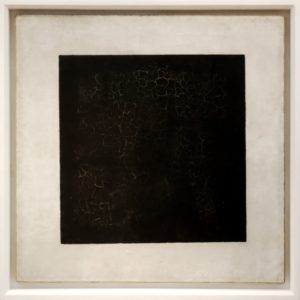
Kazimir Malevich – Black Square (1915)

Though formulated later, this is the kind of theorising that helps partially to explain works like Malevich’s Black Square (1st version 1915). Un-controversially considered a masterpiece – and one that I myself like a lot – it nevertheless seems to me a work that gains enormously from some kind of context, even if all that context is, is the knowledge that it is in fact a painting by an artist.  ‘Left to itself’, without any associations, if encountered ‘cold’, especially if it wasn’t in a gallery, it might just as easily not be ‘art’ at all. And while that isn’t a bad thing, a random black square encountered in one’s daily life doesn’t – depending of course on the individual who encounters it – have the intensity or pregnant quality that one can (repeat of previous caveat) feel standing in front of Malevich’s ‘Black Square’. But what Malevich does in his statement is to take the artist out of the art and anthropomorphise the art itself (“…it wants to have…”). This seems to me to negate – not unintentionally – what is meant by art at all. For myself, I prefer the German Expressionist Karl Schmidt-Rottluff’s statement which, while it doesn’t even slightly contradict the idea of purely abstract art, puts the artist at its centre, rather than treating art as a kind of self-creating phenomenon:

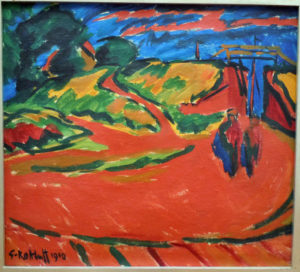
Karl Schmidt-Rottluff, Landscape (1910)

“I know of no new ‘programme’…. Only that art is forever manifesting itself in new forms, since there are forever new personalities – its essence can never alter, I believe. Perhaps I am wrong. But, speaking for myself, I know that I have no programme, only the unaccountable longing to grasp what I see and feel, and to find the purest means of expression for it.”

Karl Schmidt-Rottluff in Kunst und Kunstler (1914) quoted Wolf-Dieter Dube, The Expressionists, p.21 (T&H 1972, transl. Mary Whittall)

If a painting hangs in a forest…

The three key factors here (for me) are creator-work-recipient. If the artists (Schmidt-Rottluff’s ‘personalities’) are trying to communicate something specific to the recipient with their work, then they either succeed or they don’t. If the artist doesn’t succeed in communicating what they intended to communicate – or if they aren’t thinking of the ‘end user’ at all, and are expressing their own feelings/ideas purely for their own reasons – they may (and probably will) still transmit something of themselves; a personality, an emotion or group of emotions, a mood or idea. But although in either case the work may be imbued with that power, it only becomes power when someone else is there to experience and/or interact with it. In material terms, the great masterpieces of painting, be it the Mona Lisa (oil paint on wood), or the Black Square (oil paint on linen) have little more intrinsic ‘value’ than a few tubes of oil paint or a piece of wood or linen. After the lights go out and the visitors go home, those paintings basically cease to exist as art.  The alchemy that takes place when art finds an audience is what makes it art; at least, so it seems to me.

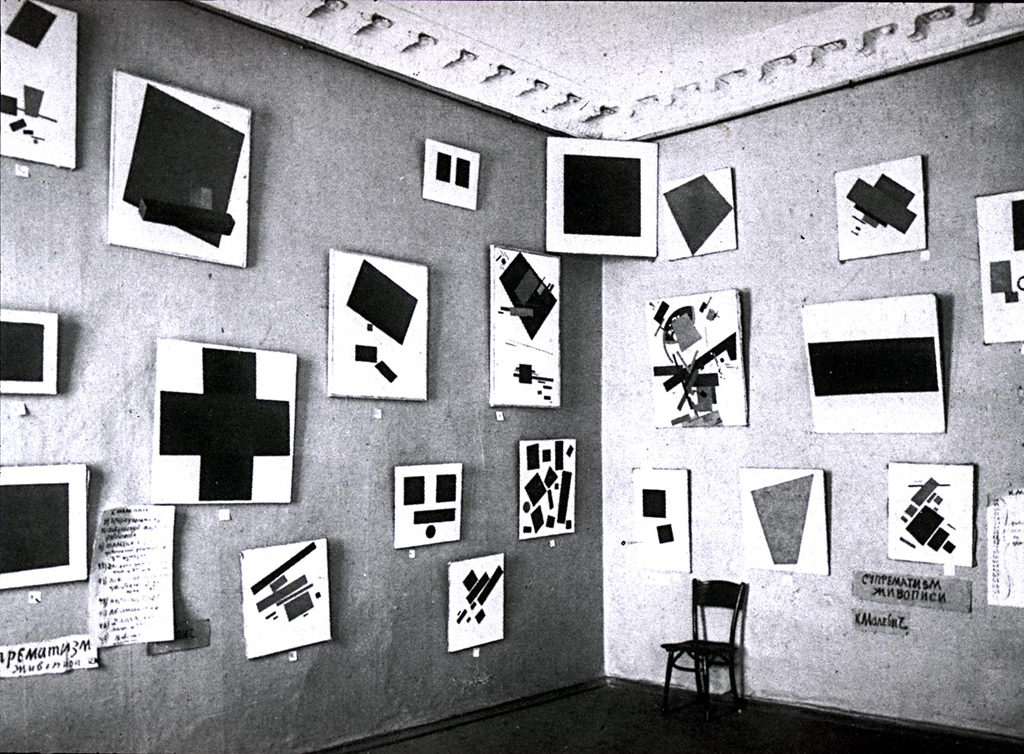
Malevich’s paintings at the 0,10 exhibition, Petrograd 1915. Black Square hangs where traditionally a religious icon would be displayed

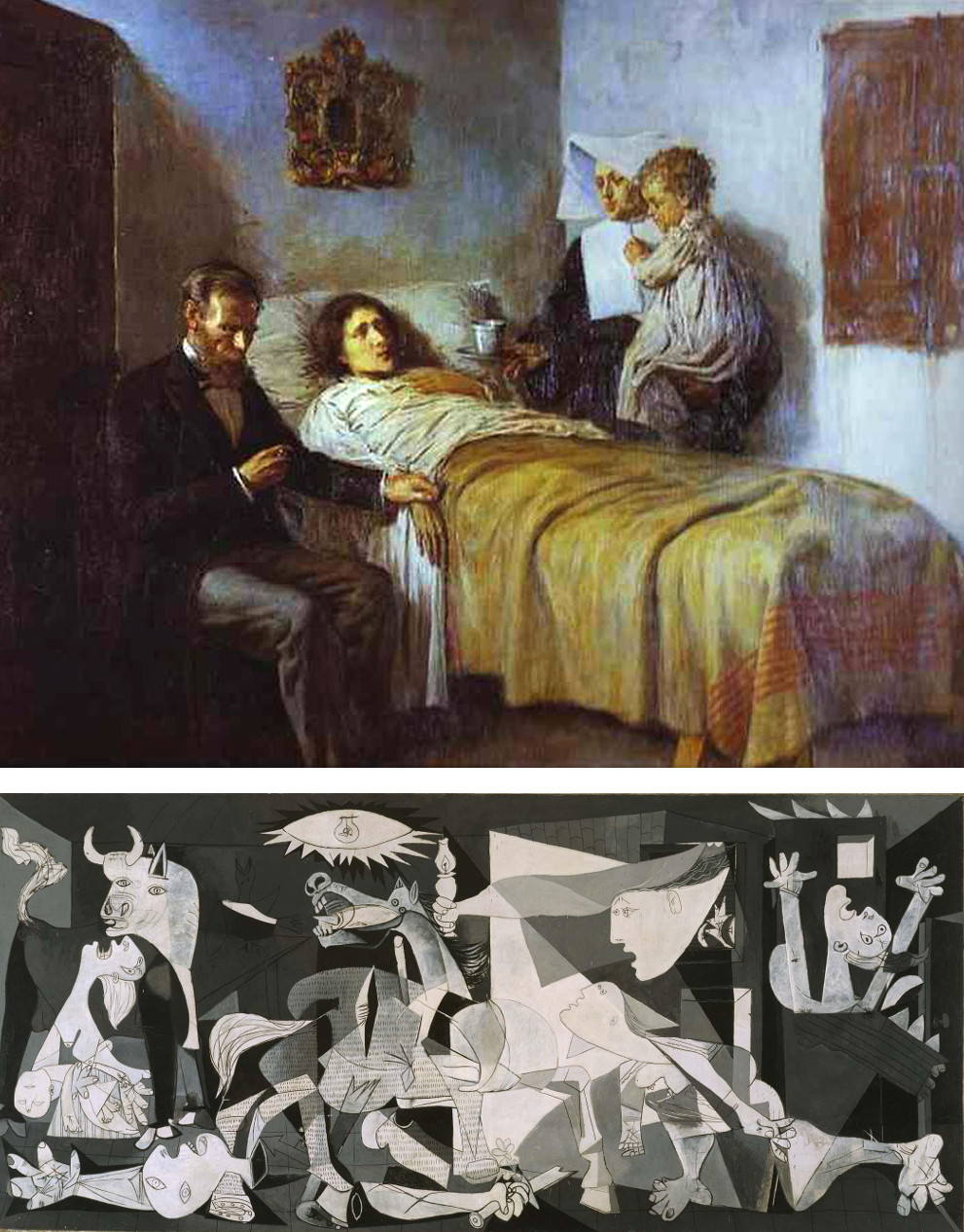
So can there be ‘good’ or ‘bad’ art? Short answer; intuition says yes, but experience says no. Alongside the disintegration of traditional academic rules, there has been the growth and persistence of the myth that, in order to break the rules of art, you must first understand and adhere to the rules. This idea has been strengthened by the fact that some of the iconic figures of modern art, like Picasso and Dali, have been immensely talented by the traditional, renaissance standards of art and could easily have made a career in academic painting; but so what? Would Guernica, looking exactly as it does, be a lesser work of art if it was the only painting Picasso had ever done, or if his immature works had been bland and unimpressive?

Top: Pablo Picasso – Science & Charity (1897)
Bottom – Pablo Picasso – Guernica (1937)

Separating personal, aesthetic judgements of good and bad from objective judgements is almost impossible, A strong argument could be made for either one of the above images being ‘better’ than the other, especially since the emotional impact is entirely subjective. And separating these kinds of aesthetic judgements from moral ones can become even more complicated – can a work of art that is an expression of something ‘bad’ be good? If for example we discovered that Picasso was celebrating rather than mourning/protesting the slaughter and destruction at Guernica, would the painting be as good? And what does ‘good’ even mean in that sentence anyway? The idea that (for instance) a painting, or a song is “bad” is essentially meaningless, despite the fact that millions of paintings and songs are clearly very bad. They can never be demonstrably bad because, as Hamlet says, (and even the relatively short history of pop music proves) “there is nothing either good or bad, but thinking makes it so.”  Even the most derivative, tuneless, unimaginative, moronic or amateurish song can and will be loved by someone, or many someones. And beyond people liking it, how can the quality of something like art truly be gauged? Yes, ‘liking’ can be a complex thing and is not the same as ‘admiring’ and yes, there are people with knowledge and expertise and highly developed critical faculties and so forth; but their opinion can no more prove a work of art is good than a restaurant critic can prove that a Michelin-starred chef’s finest creation tastes better than a Big Mac.

Despite the ‘golden ratio’ of the ancients, Hogarth’s ‘line of beauty’ and the Turner Prize, despite Grammys and Brits and Eurovision Song Contests, there is no logical ‘2 + 2 = 4’ type equation which can prove that “4” equals a good work of art. In architecture at least, a building either works as a building (ie it stands up and people can go inside) or it doesn’t, but even then, it would probably be easier to ‘prove’ that your local supermarket is logically ‘better’ as a building than Chartres Cathedral, rather than vice versa. But obviously (unless you are very lucky) it isn’t better than Chartres Cathedral. It feels too trite and easy to say ‘art is only as good or bad as an individual’s opinion of it’, but I can’t really do any better than that. You can’t make someone like something by telling them it’s good, however convincing your argument may be to you.

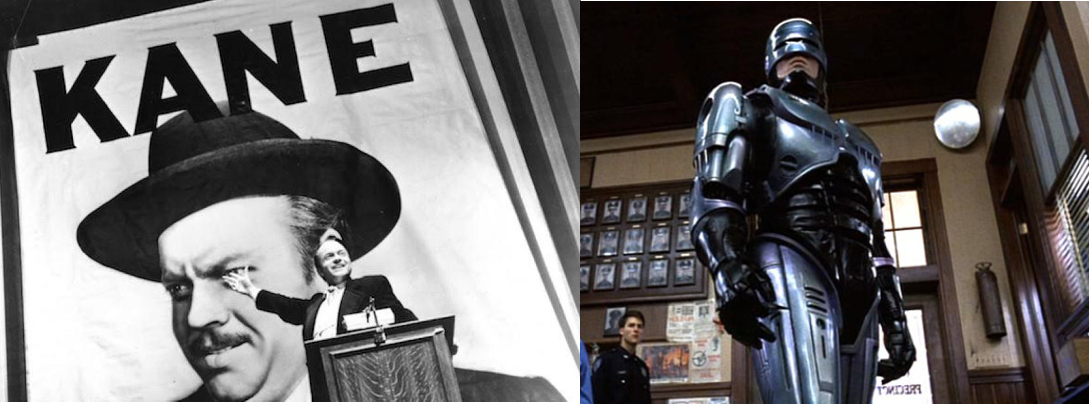
I also don’t think (though I am less convinced about this) there are good or bad reasons for liking a work of art, a song or a book, although there are certainly different levels of engagement. These are still subjective though; I like Citizen Kane but I love Robocop. Do I think Robocop is therefore the better film? Absolutely not. In the western world there is a kind of agreed pantheon of ‘great art’, codified by the way in which art history, English literature, cinema et al are taught in institutions and, at the lower end of the scale in books and websites of the corny ‘1000 albums/films you must hear/see before you die’ type, but in practice everybody constructs their own pantheon, with the ‘official’ ones being little more than a vague guide. I know that Robocop wouldn’t exist in the same form as it does without the innovations of Citizen Kane, but that doesn’t change the way I feel about either film. In reality, the only way to gauge (for example) the “greatest album ever recorded” is to have a public vote without offering a list of previously selected albums to choose from and then see who ‘wins’ – and I am sure I still wouldn’t agree with it.

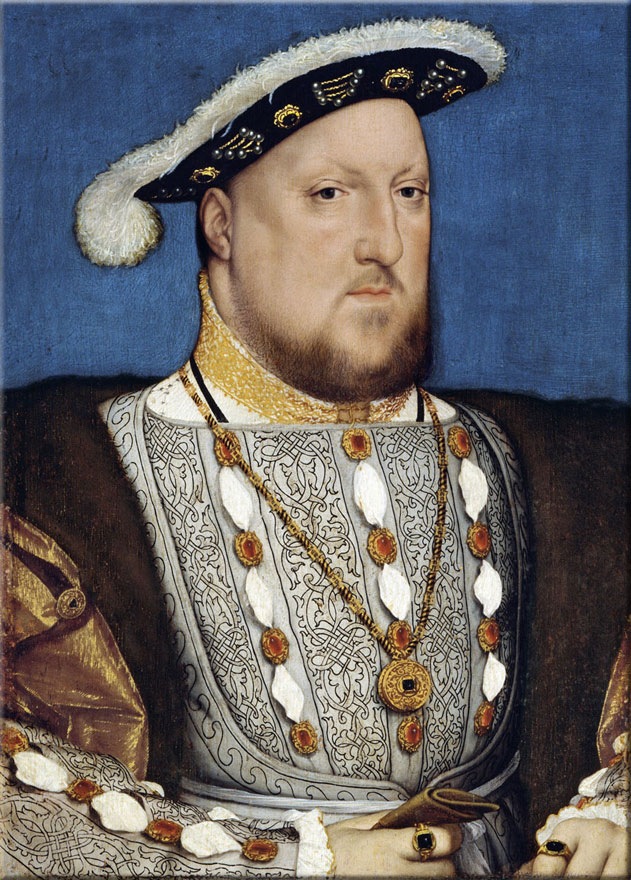
Hans Holbein the Younger; Henry VIII (c.1537)

Over the years, it has often been considered that the ‘correct’ critical attitude is to remove sentimentality from judgements on the arts. That is one way – judging pictures on their composition, harmony etc, ignoring subject altogether, evaluating music on its structure, technical skill etc – but it is sometimes almost impossible to do. And really, thinking again of both the emotional satisfaction people get from songs, films, pictures they love, and the example of Malevich’s Black Square, is it even desirable to do so? Thinking of Black Square – to judge a work which has so much context; theoretical, spiritual, cultural and emotional – by the sum of its basic physical attributes is reductive, as well as boring. Likewise, a great portrait in no way relies on the viewer knowing anything about the sitter, but even so – is Holbein’s great Henry VIII (1537) more interesting and engaging as flat masses of colour laid out in a particular, intricate design on a two-dimensional surface, or as the impression and interpretation of one human being through the eyes, mind and skill of another? The answer for me is the latter, which is really both, since the technical aspects of the first option are anyway incorporated in the second.

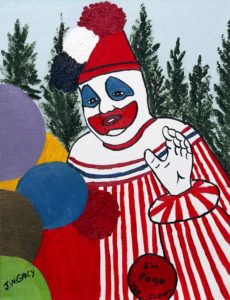
Pogo and the Black Square

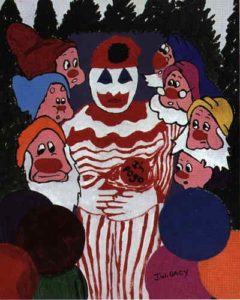
A debate that rears its head fairly often – and I guess will increasingly do so as information about everything becomes more readily available – is whether ‘bad’ people (or just bad people) can make good art. Unlike art, and despite the murkiness of morality (influenced as it is by essentially amoral and anyway changeable concepts like tradition, religion and culture) there are some people that we can probably agree are bad, or at the very least, ‘not good’. Here’s an uncontroversial opinion; John Wayne Gacy, the ‘killer clown’, rapist and murderer of around 33 young people, was – even if he was at the mercy of his own personality disorder – a bad person. He also made something that is as close to being ‘bad art’ as anything I can think of. The fact that his paintings are collected by people and have sold for serious sums of money has nothing to do with their quality as art and everything to do with their associations. You could of course say much the same about the Black Square. And if the imaginary passerby who unpreparedly encountered the Black Square also encountered one of Gacy’s paintings, how would the experience differ?

John Wayne Gacy – Pogo the Clown

Firstly, unlike the Black Square they would know immediately that Pogo the Clown was a painting made by a human being, and, if from a western background, they would probably recognise the subject matter. Because of this, Gacy is both at an advantage and disadvantage; an advantage because, no matter how the viewer feels about clowns, they have immediate ‘access’ to the painting – ‘I know what that is’. Disadvantage, because while the black square is a black square and therefore looks like a black square, Gacy’s clowns, portraits, skulls etc are – by the standards that most people judge art by – pretty amateurish. He wasn’t accomplished enough as an artist (I don’t mean just in a technical way) to communicate anything very deliberately. He wanted his paintings to bring joy into peoples’ lives; which seems unlikely, unless said people are serial killer fetishists or love clowns indiscriminately, so what the viewer is left with are essentially just his obsessions – or at least the ones he could express to his own satisfaction through his art.

Going back to my highly dubious creator-work-recipient idea of art, the creator, Gacy was (or said he was) trying to do something specific – to create bright and happy pictures to bring joy to the recipient. Whether he succeeded in this aim, regardless of who he was, depends on how one responds to childlike but sometimes enigmatic pictures of clowns. What he definitely did do was to transmit something of himself; a clear-cut but deeply alienated/alienating vision of the world; actually, without a world. His pictures don’t as one might expect, depict a simplified Norman Rockwell America, with the sun in the sky and a clown in the garden, but essentially just the clown; mostly in fact Pogo the clown, Gacy’s own alter ego, sometimes with an extremely cursory, but telling hint of a setting. Not a circus, or the suburbia of the childrens’ parties he haunted, but a hint of a dark, fairytale forest (the seven dwarfs appear in a particularly odd picture). These are clowns in the wild. The term ‘outsider art’ could have been coined for Gacy’s paintings. The other often-used term, ‘naïve art’ seems fleetingly appropriate, until one considers pictures like his paintings of Charles Manson, or even more so, of Tim Curry’s Pennywise from the TV adaptation of Stephen King’s IT. Gacy may not have been a good painter, he may have been to all intents and purposes insane, but he was not naïve; he knew that he belonged to a pantheon of famous murderers, that he was the original killer clown, and he was flattered by the association.
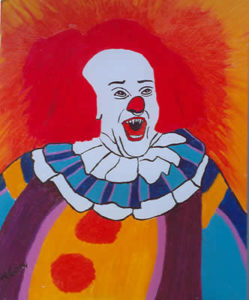
John Wayne Gacy – Pennywise the Clown (1993)

But Gacy was chosen as an deliberately extreme example; even more extreme would be Hitler. Hitler’s serviceable but bland and slightly lifeless paintings are also highly collectable, despite lacking even the visceral ‘disturbed’ quality of Gacy’s. Whereas the innocent buyer might just be attracted to Gacy’s clowns for their kitsch, weird, outsider quality, Hitler’s works are best suited for what they were meant to be – postcards, unambitious souvenirs, illustrations. The lack of frisson they have as images is an indicator that the reasons people have for buying them have little to do with the pictures themselves. For, hopefully, a variety of reasons, these people are not buying ‘art’ at all, they are buying history.

The art didn’t abuse…

 The world of actual ‘high’ art also has its fair share of murderers, rapists and so forth, and the question of whether their lives and actions invalidate their work is never really answerable. Apart from anything else, what about the legions of artists, musicians, writers whose private lives and opinions we know little or nothing about? Or artists like Andrea del Castagno, known for centuries as a murderer because of a mistake (whether malicious or not we cannot know) in Giorgio Vasari’s biography of him? At this distance of time it doesn’t really matter, even when talking about a definite murderer like Caravaggio. We don’t expect historical figures to have views, opinions and beliefs that we would find acceptable in the 21st century, although people of the 16th century certainly felt at least as strongly about murder as we do now.

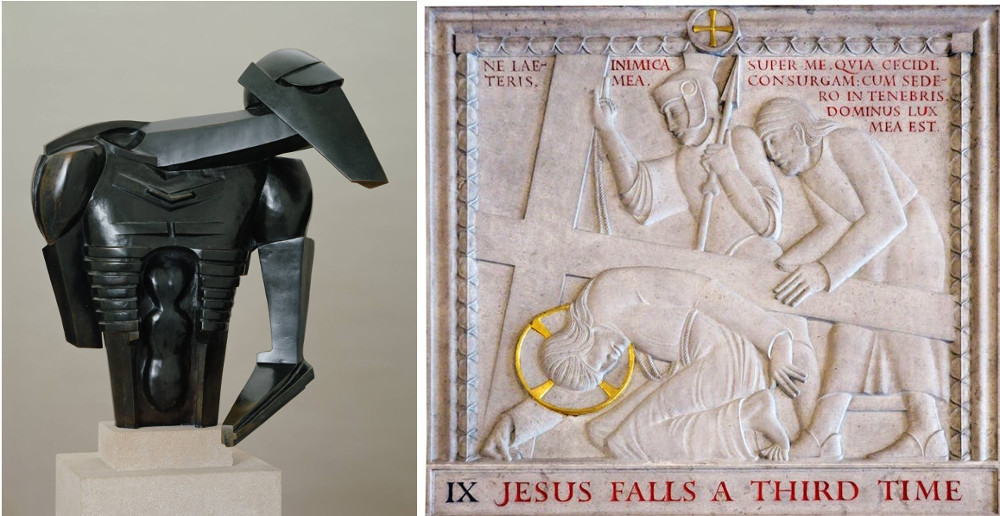
When we get closer to our own time, things become more complicated. For me, it’s easy to disregard the achievements of, say Eric Gill*, because even without the knowledge of his child (and animal) abuse, his work isn’t really my cup of tea; graceful and stylish yes, but, given that he was a contemporary of people like Jacob Epstein and Constantin Brâncuși, also a bit un-dynamic, insipidly faux-modern and backwards-looking. And then, adding the context, knowing about Gill’s religious beliefs, a bit churchy, and then, knowing about his abuse of his daughters, hypocritically pious too; it leaves a bad taste. Which doesn’t stop people from loving it, and nor should it; the art didn’t abuse anyone.  (This short article by Waldemar Januszczak is very good on Gill I think).

Left:Jacob Epstein – Rock Drill (1913)
Right: Eric Gill – Stations of the Cross (1913-18)

But one of the points about Gill is that even his apologists probably wouldn’t, these days, hold an exhibition of Gill the artist without at least acknowledging the problems with Gill the man. More my cup of tea, and more relevant to now, the Scottish National Gallery of Modern Art will be hosting an exhibition of Emil Nolde’s work this summer. German Expressionism (or in Nolde’s case, German-Danish Expressionism) is one of the areas of art I love the most and, although Nolde is not one of my favourite artists I will be excited to see his work. But. Emil Nolde was a member of the Nazi Party. That of course doesn’t change his paintings, but it makes them – and the exhibition – problematic for several reasons. The main reason for me, is that, in its pre-exhibition publicity at least, the NGS makes no mention of his Nazism whatsoever. That might still be okay, I suppose, if they didn’t include this little snippet in their bio:

“This exhibition…covers Nolde’s complete career, from his early atmospheric paintings of his homeland right through to the intensely coloured, so-called ‘unpainted paintings’, works done on small pieces of paper during the Third Reich, when Nolde was branded a ‘degenerate’ artist and forbidden to work as an artist.”

Elfriede Lohse-Wächtler – self portrait (c.1930)

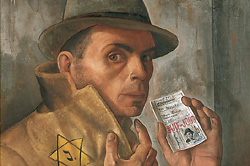
There is a certain amount of schadenfreude in this detail. But there is also the ghost of fellow Expressionist Elfriede Lohse-Wächtler, murdered at Sonnenstein castle in 1940 as part of a government programme to eliminate the mentally ill, and of German-Jewish painters like Charlotte Salomon and the surrealist Felix Nussbaum, murdered in Auschwitz in 1943 and 44 respectively. As a member of the Nazi Party (and an enthusiastic one), Nolde was to an extent complicit in their deaths. For Nolde, ‘entartete kunst’, a policy that he didn’t necessarily oppose in general,  meant he had to paint unobtrusively, in private and couldn’t exhibit his work until after the war.  For those artists it meant a death sentence, for many others it meant harassment or exile. A more wide-ranging exhibition in which Nolde’s paintings bridge the gap between the work of his fellow ‘degenerates’ including perhaps some of Nussman’s Auschwitz paintings, and the art of Nazi-approved painters like Adolf Ziegler or Conrad Hommel would be a strange and indigestible (and chronologically back to front) thing perhaps, but I think that failing that kind of an overview we, at the very least, shouldn’t be encouraged to feel sorry for Nolde that he had to work in secret because of the actions of the government he supported.

Felix Nussbaum – Self Portrait with Jewish Identity Card (1943)

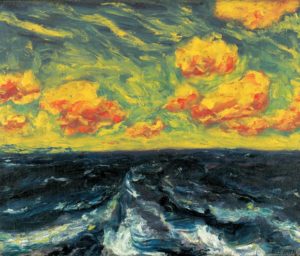
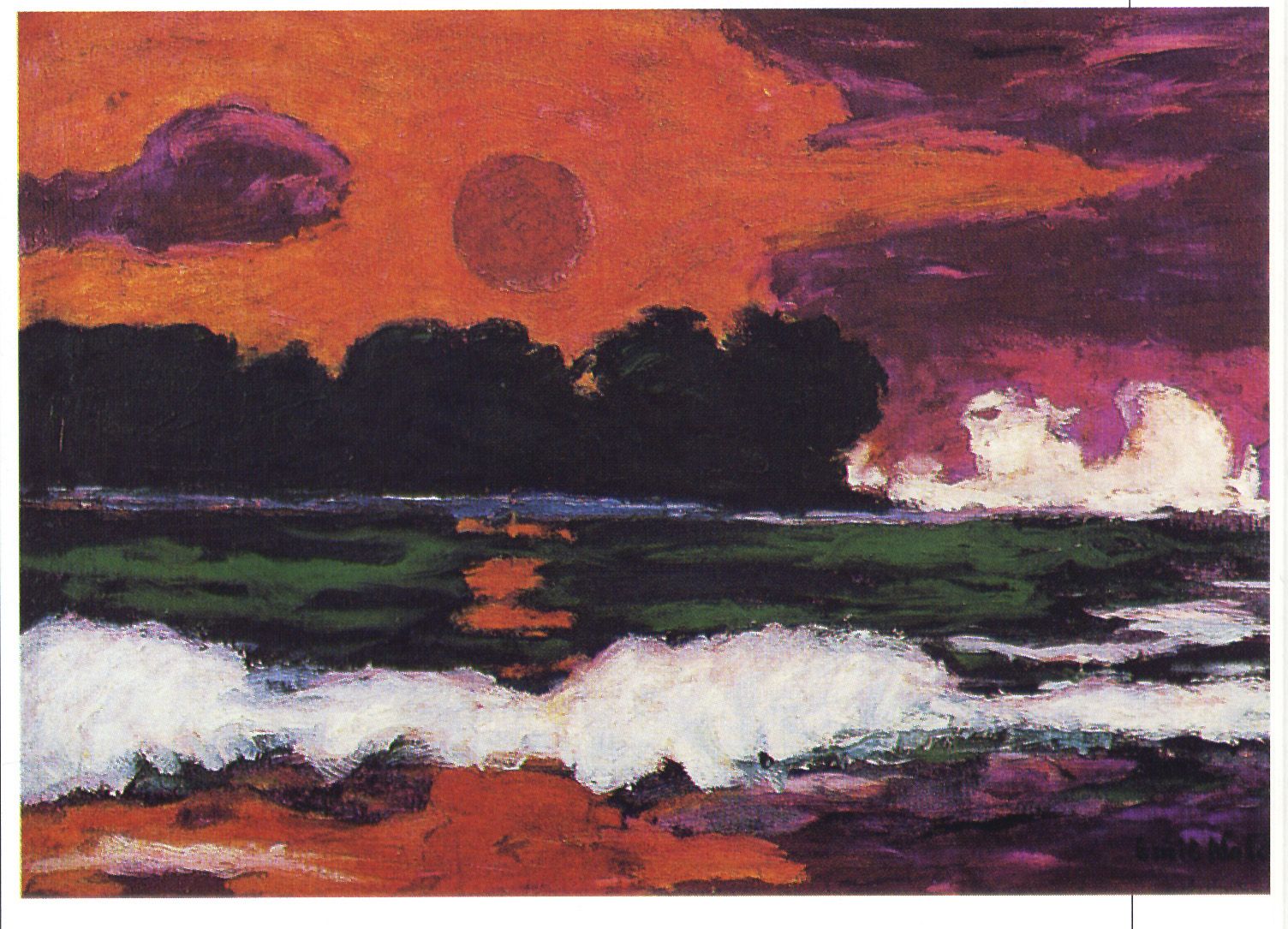
Is Nolde’s art then ‘Nazi art’? No, or at least not in the same way that state-sponsored art under Hitler was. It isn’t didactic, realist or heroic. Nolde saw expressionism and therefore his own painting as definitively German, and was deeply moved by colour, which he equated with emotion. The works of his which I like best (which, maybe coincidentally long pre-date even the idea of the Third Reich and belong to the period when he had recently been in contact with the younger artists of Die Brücke) translate that emotion into intense and visionary land- and seascapes. These pictures feel utterly free of the ideology of Nazism – but that said, even under Nazi rule, the German ideal of the nude Freikörperkultur (Free Body Culture) and ‘oneness with nature’ was respectable in a way that was unthinkable in the UK, so the apparent freedom of the painting need not be reflected in the kind

Emil Nolde – Autumn Sea (1911)

of egalitarian ideals that artists like Ernst Ludwig Kirchner expressed in their art. If expressionism can be seen as the ultimate kind of subjective painting; where the aim is ultimately to make the viewer feel what the artist feels by filtering a subject through the distorting lens of their individual perception, then Nolde’s paintings show the world as it was felt by someone who could write, in 1938;

For as long as I’ve worked as an artist I have publicly battled against the foreign infiltration of German art, against the dirty dealings on the art market and the disproportionately predominant Jewish influence everywhere in the arts. Now if that is the case, and I have been attacked and persecuted now for years by the side I championed and fought for, then there must be misunderstandings in need of clarification.” Well, isn’t that just tragic.

Emil Nolde – Tropical Sun (1915)

As to the question of how easy it is to like Nolde’s ‘unpainted pictures’, I’ll have to wait for the exhibition.

How do you solve a problem like Morrissey (it solves itself)

The Nolde exhibition is only one reason that these issues have been on my mind recently; the other, more personal one is Morrissey. Now, Morrissey is clearly not John Wayne Gacy, or Adolf Hitler, or even Emil Nolde. Nor is he, unlike Varg Vikernes, whose music I also like some of, a murderer or actual Nazi. But I never felt let down by any of those people; with Varg I knew about him before I ever heard his music, I have no emotional investment in it, whereas Morrissey’s recent utterances seem completely at odds with the worldview of his earlier music; which is not his problem, or his fault. I simply interpreted what I wanted to from the art he created, just as it’s possible to look at Emil Nolde’s work and see beauty and freedom there, even if that freedom and beauty is diametrically opposed to the views he professed in his non-artistic life.

I first listened to The Smiths and Morrissey when I was 17, although I was aware of them/him years before. Of all the music I loved as a teenager I think Morrissey’s was the music I identified with the most. I loved The Cure and Joy Division and The Fall probably as much, but their music was – I suppose because it’s less lyrically straightforward – less personal to me. To this day, Morrissey’s lyrics (up to the mid 90s at least) are engraved on my memory and I certainly know more of his lyrics by heart than any other band or artist’s. It’s been very clear for a while now (and murkily apparent for much, much longer) what kind of person, politically, Morrissey is.  And that’s fair enough; he is entitled to his views, even if I think he’s wrong and don’t feel inclined to fund him any further (I still think he is more complex than his worst detractors would say, but so what?)

It’s not really any use to say as some people do, that there are artists out there making great work who don’t have extreme right wing views. Obviously that’s true; but unless their art speaks to you personally, why would you care? And most of the time, one has no idea what opinions or beliefs of an artist are anyway, unless they specifically say so. To me personally, art that is explicitly political/religious or politically/religiously-motivated rarely connects on a very deep level; and to paraphrase Cyndi again, it’s not real unless I feel it. But I always felt The Smiths’ music, deeply, and much of Morrissey’s solo stuff too, though it is less critically acclaimed. His recent/latest statements in the press just don’t seem like the words of someone who could write “It’s so easy to laugh/It’s so easy to hate/It takes strength to be gentle and kind”, but that’s people for you.

Initially, several controversies ago, I decided that although I wouldn’t actively avoid Morrissey and his works, I would no longer buy them in a way which would  financially benefit him; mean and possibly unfair I know, but that’s people for you too. I am not someone who is going to burn records, CDs and books, or even throw/give them away in disgust, if they have ever meant anything to me. But then came the latest and most crass Morrissey interview (so far) and I got to the point where I’d actually be kind of embarrassed to buy anything Morrissey-related at all. It’s not so much (as one example out of many) the factual inaccuracy of statements like “Hitler was left-wing” – people have been saying moronic things like that (Hitler was a Zionist etc etc etc) for many years. It’s the fact that, as with those who claim the death toll in the holocaust has been exaggerated, people like Morrissey seem to think that this amazing revelation is in any way relevant to the things his regime did and how one should feel about it. As with (irony!) people who taunt vegetarians with ‘Hitler was a vegetarian’, it spectacularly misses the point; Hitler is not famous because he’s a vegetarian, any more than he’s famous for his ‘left-wing’ views. And you know that, so don’t be so stupid.

But anyway, in the end my fears that the unhappy soundtrack to my youth/life would be tainted only came half true. When Morrissey songs popped up in a shuffle I found that, without any feeling of revulsion, drama or anguish, I just didn’t want to hear them anymore. The connection seems to be gone, without regret and possibly with the relief that I was never – despite the fact that I even, unrepentantly,  like his autobiography – one of those Morrissey obsessives. Maybe one day my love of his music will come back, maybe not. As Cyndi says, it’s not real if you don’t feel it and, right now I just don’t, so it isn’t. Ho hum.


The Dead Cannot Contradict: R.I.P. M.E.S. 1957 – 2018

Mark E. Smith 1991 by Matthew R Lewis

There have been a lot of obituaries for the great Mark E. Smith in the last week. This will not be one of the better ones, but it is my one. In my experience, the bands you love in your teens are, although they have a special place in your memory, mostly not the same bands you listen to for the rest of your life (to date). But unlike most of my favourite artists from those long years between 16 and 20 or thereabouts, I never went off The Fall, I just didn’t listen to them very often. But whenever I did, they seemed just as strange and clever and funny and unique as they had the first time I heard them.

The Fall are legendarily supposed to be a hard band to like, or to get into, but I never found it to be so. The hard-to-like quality obviously has something to do with their spiky, unpredictable sound (and Mark E. Smith’s indomitable/hectoring voice) but is perhaps also due to the fact that – for the most part – their music doesn’t appeal to the emotions, it is not (hopefully) about you; nobody (as far as I know) wallows in The Fall, the way as an adolescent I wallowed in The Cure or The Smiths or the Cranes or whoever it might be. The first Fall song I heard was a snippet of then-current single ‘Telephone Thing‘ (a funky, catchy wah-wah-led pop song with a phone-tapping theme, which namechecks EastEnders actress Gretchen Franklin – i.e. as typically atypical as any Fall single) on The Chart Show, which was enough to make me buy its parent album, Extricate. As a reader of the music weeklies (Melody Maker was my favourite, but I often bought NME and Sounds as well) I was of course aware of The Fall, and specifically Mark E. Smith, at that point – as he was to remain – a figure who polarised the magazines’ writers, while – unlike say Morrissey or Robert Smith – having the (admittedly sometimes grudging) respect, seemingly, of all of them.

Extricate is in itself a classic Fall album, but it was intriguing in all kinds of ways. I liked. firstly, the tunes, but also the the mix of the un-selfconscious artiness of the abstract cover painting/assemblage by contemporary artist Anthony Frost, with the barbed humour of the lyrics (the album contains the classic ‘British People In Hot Weather‘as well as the aforementioned ‘Telephone Thing‘ and (I have the cassette version) ‘Arms Control Poseur‘). But one of the great things about coming to this – or I think any – Fall album as an introduction to the band, is that it hints at so much more than it contains. This, the reviews said, was an unusually accessible/conventional Fall album and indeed, Mark E. Smith’s sleevenote reinforced that impression:

There is no central track, as I’ve/we’ve tried to give out The Fall as it should be and not as it is perceived. Therefore, the first half of the disc reflects on things witnessed and/or sensed, while the second half is NOW. This means there’s a thin dish-up of stories and characters etc, but that format’s well flogged and pushed of recent, so hopefully EXTRICATE’s simplicity will confound all bores, imitators and anxiety mongers./ EXTRICATE! All the best from M.E.S.

This was odd. Mark E. Smith reminded me of nothing so much as Alex from A Clockwork Orange; sophisticated, articulate, menacing but not unfriendly. A few years later, when I began to read Wyndham Lewis I was reminded irresistibly of Mark E. Smith. And indeed the whole of The Fall’s early work is extremely Vorticist/BLAST-like. I didn’t know though until quite recently that Mark E. Smith was a fellow Wyndham Lewis fan (though I think MES often agreed with Lewis where I don’t) – it seems so obvious now.  And the reference to stories and characters was intriguing; if this was The Fall gone normal then what did they sound like before?? I think the next album I bought might have been the essential compilation of early material Palace Of Swords Reversed; here were ‘Marquis Cha-Cha‘, a story about a Lord Haw Haw character stranded in South America which opens
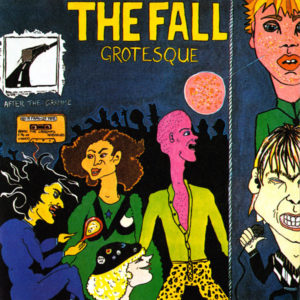
“He can never go home
Stranded in South America, nothing to go home for
Just another Brit in the bar
Hernandez Fiendish comes over to me
Offers a job as broadcaster…”

who else was writing songs like that? Or ‘Leave The Capitol‘ (“exit this Roman shell!“) or, even more peculiarly, ‘Wings‘:

“Day by day
The moon gains on me
Purchased pair of flabby wings
I took to doing some hovering”

And that’s just the lyrics; another thing about The Fall that made an impression on me early on was that, although MES was incredibly fussy and perfectionist about the band’s music, he wasn’t snobbish in the usual way; no tune, if it was catchy, was too silly for Mark E. Smith. Think of the speedy but somehow miniature-sounding rock guitar on ‘Underground Medicine‘ or loping, bouncy beat to ‘Gramme Friday‘ or the oddly jaunty, countryish ‘Fit And Working Again‘. or the kazoo on ‘The North Will Rise Again this was ‘angular’ (the definitive descriptive term for late 70s/early 80s UK indie rock) if you like, but it was not standard ‘post-punk’ music, nor was it (as it could easily have been) twee in that beloved ramshackle UK indie/C86 kind of way. Perhaps because Mark E. Smith was not (99% of the time) a melodic singer, the band could play anything behind him and it sounded right. When, at the beginning of one of my favourite songs, ‘Slates‘, MES shouts ‘this is the definitive rant‘ he’s nailing part of the charm of his work. As long as the rant was in place, no tune was too small, too jingly or too silly to make something worthwhile out of.
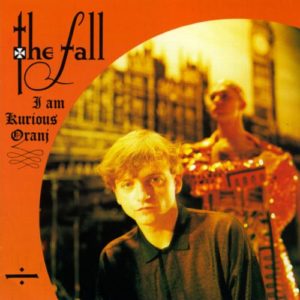
After Palace Of Swords Reversed I bought anything I could get my hands on. Luckily there was a lot of it, and it was mostly pretty affordable, especially the stuff from the band’s then slightly maligned, now justly celebrated mid-80s period of relative commercial success. In itself, that success was odd and underlined just how unique the band, and specifically Smith’s vision, was. I loved that Mark E. Smith saw nothing elitist or strange about working with a ballet company, or in writing for the theatre and working with ‘serious’ artists and yet the people I knew who derided Morrissey as being “poncy” never seemed to think that about MES. The fact that he refused to separate the ‘high’ arts from his work with The Fall was so powerful. Everyone knows, for example, that Brian May is an astrophysicist, but imagine if astrophysics had somehow been indivisible from his work with Queen; they would have been far a more peculiar and far less successful, but also (with no offence intended to the band or its members) probably more interesting band.
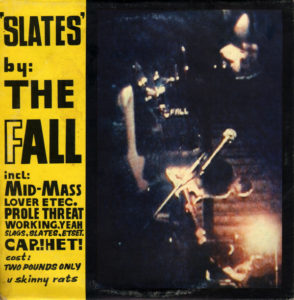
Although most of my favourite Fall albums are the early ones (especially Dragnet, Grotesque (After The Gramme) and Hex Enduction Hour) those 80s albums with the Mark and Brix-led lineup(s), especially The Wonderful and Frightening World Of The Fall are pretty unassailable and perhaps the least overtly commercial ‘commercial’ period of any band I can think of. The band stayed good though, and although I am not a Fall completist (a vocation rather than a hobby) I’ve found that any Fall record one picks up will have something great on it; and there aren’t many bands with a 40 year career you can say that about.
A few random but significant (to me) Mark E. Smith/Fall things:

  • my favourite Fall release of them all is Slates (1981); typically awkward, it is a brilliantly ungainly 6-track 10″ which Mark E. Smith was proud of as it was too long to qualify for the singles chart but too short for the album chart; not that it was likely to trouble either one. Plus, it opens with MES shouting “Pink press threat!
  • I must be impressionable; I think I got into Albert Camus because The Fall were named after one of his books.
  • I don’t remember which music paper it was in, but Mark E. Smith was a guest reviewer in one of the weeklies c.1992 and gave Morrissey’s Your Arsenal a surprisingly positive(ish) review. One phrase that stuck in my memory (perhaps incorrectly) and seems definitively MES-ish to me is “the guitar player has too much equipment”
  • When I first read (in the late 90s?) Christopher Isherwood’s autobiographical novel Lions And Shadows (1938) the idea of ‘The Other Town’, the sinister unseen parallel reality accessed through various apparently ordinary gates and doorways in Cambridge reminded me irresistibly of the band, especially the bizarre, creepy but also funny narrative songs like the (actually quite Lovecraftian) ‘Impression Of J. Temperance’ :

“A never seen dog breeder
This is the tale of his replica
Name was J. Temperance
Only two did not hate him
Because peasants fear local indifference
Pet shop and the vet, Cameron…”


  • when I finally listened to the classic German band Can it was because the Fall song ‘I Am Damo Suzuki‘ made me curious about them
  • one of the key things about The Fall’s music is its palate-cleansing quality; their music makes almost any other comparable popular music sound sentimental in comparison. And yet on the rare occasions (‘Bill Is Dead‘, ‘Edinburgh Man‘) when MES is sentimental the songs are among his best.
  • Edinburgh Man‘ was probably the first song I heard by a band I liked that was about a place I knew
  • I have been a Fall fan for half of my life, but I’ve only met maybe 4 or 5 other people who like them (though I realise they are quite popular)
  • I never particularly wanted to meet Mark E. Smith, but I’m very sad that he’s dead.


PS – the title for this piece is from an enigmatic line in the – obviously – highly peculiar song New Face In Hell: 
The dead cannot contradict/Sometimes the living cannot

the vanishing everything of everywhere – elegies and illusions

Time, time, time, see what’s become of me…” When The Bangles covered Simon & Garfunkel’s A Hazy Shade of Winter in 1987, the song was 21 years and one month old, and now (January 2018) The Bangles’ version (from the underrated – according to me – movie of Bret Easton Ellis’ Less Than Zero)  is 30 years and one month old; time flies, another year draws to an end etc etc etc. It took until the early 1990s for 60s nostalgia to really take hold and, true to form 30 years on from the 1980s, 80s nostalgia is everywhere; in music, in fashion and (especially) in film and television. Even the tired, terrifying old tropes of the cold war are back; excellent stuff.

It’s approximately 90 years since HP Lovecraft wrote, “The oldest and strongest emotion of mankind is fear, and the oldest and strongest kind of fear is the fear of the unknown.” (in the essay Supernatural Horror in Literature (1926-7)), and it’s got to be something like 25 years or so since I first read those words (in the HP Lovecraft Omnibus Vol 2, Dagon and other Macabre Tales, Grafton Books, 1985, p.423 ). So what about it?
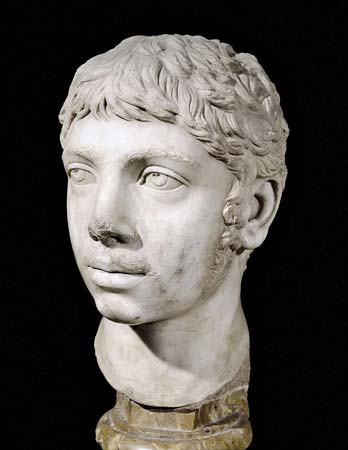
Lovecraft might well be right about fear; but more pertinent to my intro is that possibly the oldest emotion preserved in literature – at least (major, major caveat, based on my ignorance) in the literature of Europe – is nostalgia, and the feeling that things were better in the past. (see also here for an excellent & thoughtful look at nostalgia) The literature of the ancient Greeks makes clear that the age of heroes already lay in the distant past. The pride and arrogance of Imperial Rome was tempered – formally, at least – by the belief that it was a pale imitation of the Republic which the Empire supplanted. The earliest literature in (old) English makes it clear that the inhabitants of what was one day to become England were a) not entirely sure of what had come before, but b) knew that it was in many ways ‘better’ and certainly more impressive than the present day of the 8th century:

“The work of the Giants, the stonesmiths,/ mouldereth…
And the wielders and wrights?/Earthgrip holds them – gone, long gone”

The Ruin, (Translated by Michael Alexander, The Earliest English Poems, Penguin Classics (3rd edition, 1991, p. 2)

Even closer to home (for me), the earliest literature of Scotland, the Goddodin of the poet Aneirin, does something similar. The poem dates from somewhere from the 7th to 10th century and is written in the ancient British language now called Old Welsh (which it is of course, but it is also, geographically, old English and old Scots, since it seems to have been spoken in a far wider area than modern Wales). The Goddodin is a series of elegies mourning the loss of the warriors of the eponymous ancient kingdom (which spread roughly over what are now the modern Scottish regions of Lothian and Borders) in battle, and with them the heroic culture of their era.*

*a perennial theme that crops up in a very similar form in the Fortinbras subplot of Shakespeare’s Hamlet, preserved at one remove from the earliest known version of the story, Saxo Grammaticus’ elemental/mythological 13th century version from his Gesta Danorum. But even this is assumed to be derived from an earlier, lost source, probably Icelandic.

To say that nostalgia as opposed to fear may be mankind’s oldest emotion is problematic. Logically it’s difficult (chicken/egg innit), but also, for all of its obvious dominant ingredients – sadness/regret and happiness – a large component of nostalgia can be fear, and, specifically, Lovecraft’s ‘fear of the unknown’ (in this case the always unknowable future). That’s problematic for many reasons. In the examples of nostalgia noted above, the glamour (not intended to have its old, magical meaning, but actually that’s probably even more appropriate) attached to the past is partly because it can’t come again. If the people of “now” were as noble, heroic etc as the people of “then”, then somehow the past and the ancestors – a vital component of the values of most non-Christian and pre-Christian cultures – are devalued and not receiving their due reverence.

Although it seems almost incomprehensible to someone of my generation, there seems to be a similar, ‘don’t disrespect the ancestors’  unease nowadays in some circles that’s manifested in an unwillingness to condemn wholesale the expansion/existence of the British Empire. And really, it’s not very complicated  – it is entirely possible to be impressed by and/or grateful for the innovations of the Victorian era – flushing toilets, railways and whatnot – while also seeing the culture and times for what they were; repressive, oppressive, misogynistic, racist, ignorant. It shouldn’t be difficult, because it’s happened before. Christianity made it easy for previous ages to condemn the pagan empires of Rome, Greece, Egypt and co (and indeed the ancient Arabic civilisations) without abandoning the inventions and innovations of those same ‘decadent’ civilisations. Indeed, even at the height of Christian belief in Europe, interest in the cultures of the pagan empires remained high, even if Christian scholars felt the need to inflict a version of their own value system onto their researches. There’s no reason that people now shouldn’t be able to do the same with the ages we have left behind, or are hopefully in the process of leaving behind. Yes, good things come from bad cultures or societies, but not because of the bad, but just because (most) human beings are extraordinary.

In 2017 there seemed to be – as I suppose there always must be – an ever-increasing number of warring nostalgias and counter-nostalgias, the latest being for the Russian Revolution in 1917 – a violent event, with vast and oppressive consequences and therefore definitely negative, but like most revolutions, born of aspirations and ideals which are hard to dismiss. In fact, Dickens’ famous opening to A Tale Of Two Cities seems uncannily prophetic, because Dickens – as he explicitly realised – could see that human nature and human actions remain fairly constant:

“It was the best of times, it was the worst of times, it was the age of wisdom, it was the age of foolishness, it was the epoch of belief, it was the epoch of incredulity, it was the season of Light, it was the season of Darkness, it was the spring of hope, it was the winter of despair, we had everything before us, we had nothing before us, we were all going direct to Heaven, we were all going direct the other way – in short, the period was so far like the present period, that some of its noisiest authorities insisted on its being received, for good or for evil, in the superlative degree of comparison only”

I think it’s probably true that it’s always the best of times, for somebody, in some respect. It’s certainly always the worst of times for other people; which sounds complacent or at least fatalistic, but only if one doesn’t try in some way to improve things. This kind of impersonal nostalgia – for ‘better’ times – is, necessarily selective. (in fact, all nostalgia is, because perception is selective – hmm, it seems like this just started copying the thing about realism I wrote recently, but bear with me) and relies to a large degree on ignorance and/or self-deception in order to be nostalgia at all.

History isn’t really a subject, history is everything; people, peoples, cultures, societies, but, necessarily “history” as it’s taught, or absorbed through popular culture, filters and simplifies. That’s important, because when people in Britain talk nostalgically about ‘Victorian values’ you can (usually) assume that they don’t intend any reference to the exploitation and subjugation of untold millions of people, child prostitution and child labour, the life expectancy of the average Victorian person etc. And, as always, history is more complex than its popular image. The Victorian era may be symbolised for British people by the building of railways or the expansion of the Empire, or by Jack the Ripper, or Queen Victoria being unamused, or by the establishment’s treatment of Oscar Wilde; but it was also the era that produced and shaped Jack the Ripper, Queen Victoria and of course, Wilde himself, as well as the whole decadent movement. Interestingly, Sigmund Freud was only two years younger than Wilde; an apparently value-free but perhaps significant observation.

This kind of complexity is what makes history more interesting than it’s sometimes given credit for. The Scottish Enlightenment was a wonderful, positive, outward-looking movement, but it coexisted in Scotland with a joyless, moralising and oppressive Calvinist culture. Time and nostalgia have a way of homogenising peoples and cultures. The popular idea of ancient Rome is probably one of conquest, grandeur and decadence, but what is the popular idea, if there is one, of ‘an ancient Roman’? Someone, probably a man, probably from Italy, in a toga or armour; quite likely an emperor, a soldier or a gladiator, rather than say, a merchant, clerk or farmer. But even within this fairly narrow image, a complex figure like the emperor Elagabalus (who was Syrian, teenage, possibly transgender) defeats the obvious school textbook perceptions of ‘Roman-ness’ (as, perhaps, it did for the Romans themselves). Even in our own time, the fact that older generations from the 60s/70s to the present could lament the passing of times when ‘men were men & women were women’ etc is – to say the least – extremely disingenuous. Presumably what they mean is a time when non-‘manly’ men could be openly discriminated against and/or abused and women could be expected to be quiet and submissive.
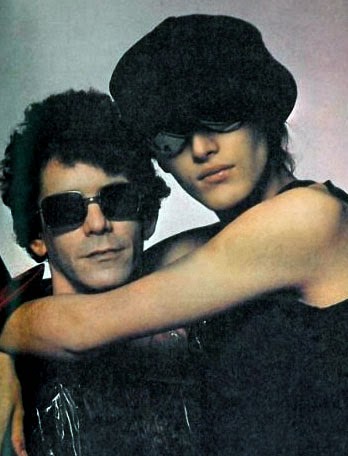

Similarly, throughout my life I have heard people – and not only right-wing people – talk about the economic success that Hitler brought to Germany. But you don’t have to be the chairperson of a financial think-tank to see that a programme of accelerated militarism that requires war in order to function isn’t really a viable economic model for anyone who doesn’t espouse the ideology of Nazism or at least some kind of Imperial expansionism. But people seemingly want to believe that if it wasn’t for all those pesky Nazi faults Hitler could have been a great leader. He couldn’t, though, because he was a real person, his beliefs were inseparable from everything he did and he really did exist and do the things he did and therefore wasn’t a great leader.

As I’ve said too many times already, history is complex, but nostalgia is too. It’s impossible to express in a single word other than itself, though interestingly, its original Greek meaning (‘homecoming pain’) is actually more specific than the word itself has come to be in English. Possibly because of this hard-to-express quality, most European languages tend to use variations of the word ‘nostalgia’ rather than having a word of their own with the same meaning. But despite that complexity, it tends to have a simplifying quality.

The reason for that simplifying is because, for many people, nostalgia equals safety. Political reactionaries always look to the past for examples of stability and they’ll always find them – but that stability is an illusion, caused by the fact that the past itself is stable, but only in the one sense of being unchangeable. And until the invention of the time machine it will remain unchangeable – but even so, through endless re-interpretations, re-evaluations and new points of view, the picture we have of it fluctuates almost daily. I think it’s fair to assume that (as Dickens implied) every ‘golden age’ masks a dark age but the temptation to look at the past fondly is hard to resist. It often seems otherwise, but people are, by and large fairly positive and want to look back with fondness, even if it’s a melancholy fondness. And the result of that is a softening and distancing of the darker aspects of history. A quote from the great Scottish singer/songwriter Alex Harvey strips away the soft-focus effect that the distorting lens of nostalgia puts on the past:

“Nobody ever won a war. A hundred thousand dead at Waterloo. No glory in that. Nobody needs that.” (quoted in Charles Shaar Murray’s Shots From The Hip, Penguin Books, 1991, p.71)

Numbers aside, that seems indisputably true; but evidently it isn’t, because people are entirely capable of being nostalgic about almost any negative event. ‘The Blitz Spirit’ is remembered fondly in Britain, because the few people still alive who remember it survived it, and because it happened decades ago and bombs are no longer raining down on the UK. Cinema and television is full of nostalgia for even the darkest times, largely because people are supposed to be entertained by these things and structures, stories and likeable characters are imposed on the past to make it controllable and enjoyable. And that’s just as true for the harrowing ‘war is hell’ type of film as it was for The Dirty Dozen and just as true of the revisionist ‘elegiac’ Western as for the old John Wayne kind. The revisionist Westerns tend to focus on the dying days of the ‘old West’ in grimly realistic detail, but while barely acknowledging the genocide and horror that is the real historical backdrop of the period. In a way, that’s fair enough – those stories are not about that subject – but when there are not only no (or very few) films about that subject, and it is barely even acknowledged by ‘official’ narratives of taught history, it’s a stark and telling omission.

It’s my personal feeling that nothing truly good is produced by adversity, or at least that if it is, that doesn’t offset what may have been lost. Which isn’t to deny that people are amazing, resourceful, resilient and inspiring; they are. If every golden age masks a dark age, it’s probably true too that every dark age is shot through with some elements of positivity, although I won’t scrutinise that statement too closely. Countries which were colonised by the British Empire (or indeed any empire) manage to grow and assert their independence and define their own cultures, which is good; but we can never know what or who was lost when their histories were derailed.

I love blues music (and indeed the whole phenomenon of western popular music which mostly grew from it), but again; we can never know what would have been, or what would exist now, had those creative energies not been re-directed by a couple of hundred years of slavery and exploitation. Individuals are capable of achieving almost superhuman feats of bravery and resourcefulness when facing adversity; escaping from abusers and kidnappers, rescuing people from disasters etc. But no-one in their right mind would – I hope – recommend that young people undergo these kinds of ordeals in order to fully achieve their potential.

I don’t think it’s particularly useful for individuals (although governments and institutions are a very different thing) to feel guilty about the deeds of the people of the past (or to be proud of the achievements of the past, really), but I also see no need to pretend that – for example – because India has a big railway network, the British Empire did something positive by oppressing the country’s people and culture and stealing its resources. Countries that weren’t colonised by the UK or Belgium or France or Russia have railways too. Nothing good came of the British in India. India survived anyway, just as people survive catastrophes everywhere and achieve amazing things in doing so. But you don’t celebrate an earthquake because people survive it and thrive afterwards.

Lou Reed and Rachel in 1977 (Mick Rock)

So much for impersonal nostalgia – the personal kind is in many ways very similar, if less destructive. I’ve always been a nostalgic person; both for things I don’t remember, or that were long before ‘my time’ (you name it; silent movies, the 1960s, the Weimar Republic, Hong Kong cinema of the 70s, the Northern Renaissance, the Scottish Enlightenment, 80s teen movies) and, more naturally perhaps, for things within own experience. One of the things that initially made me write this was a reference in Anthony DeCurtis’ biography Lou Reed – A Life (John Murray, 2017)* about Reed’s 70s partner/muse Rachel, a fascinating figure who seems to have vanished into history. In Googling her I discovered various sites about vanishing/vanished aspects of New York and, because old photographs are endlessly fascinating, somehow segued from that to the vanished Jewish East End of London and the vanished and vanishing everything of everywhere. But if the Jewish East London of the 1960s and the underbelly of 70s New York are irretrievable, then so is one’s own childhood, not that one wants to retrieve it, exactly.

* It’s an excellent book, but one which illustrates some of my points; Lou Reed spent most of his adult life complaining about his conservative 1950s childhood, but DeCurtis himself has a more rose-tinted view of the period, saying “In stark contrast to the identity politics of today, assimilation was the order of the day…and none of Reed’s friends, Jewish or not, recall incidents of anti-Semitism or bias” (p.14) – fair enough you would think, except that just 22 pages later he also says, ‘Richard Mishkin was a fraternity brother of Allan Hyman’s in Sigma Alpha Mu, a so-called Jewish fraternity because at the time Jews were not permitted in many other fraternities.” (p.36)

Most of the polaroids etc that make up the ever-browsable (later note; but sadly diminished) Internet K-hole appear to be American, but any child of the 80s will recognise the texture and aura of the era we grew up in. When George Orwell wrote (I think in The Lion and the Unicorn, but I might be wrong; I’ll check) – “What have you in common with the child of five whose photograph your mother keeps on the mantelpiece? Nothing, except that you happen to be the same person” he was putting his finger on one of the strange paradoxes of culture, heritage and nostalgia. The memories I have of the 1980s are made up of a distorted, child’s-eye view of events and culture which is truly mine, plus things I know now that I didn’t know then, plus other peoples’ memories, TV and films. The most potent sources of nostalgia seem to be – as the makers of shows like Stranger Things and Dark, and films like Super 8 and (too many to list) are very aware –  the things you didn’t notice that you had noticed, the most ephemeral details; jingles from adverts, fonts, packaging, slang.

It’s an interesting point. The fleetingness with which you experience things has nothing to do with their power as memories. I have no idea what the first horror film I saw was, but I do know that a scene on some TV show where skinheads (or possibly a single skinhead) glued a man’s hands to the wall of a lift/elevator scared me as a child and stayed with me for a long time. Maybe that was because I used to see skinheads around on the streets (you had to watch the colour of the laces in their Doc Martens to see if they were ‘bad’ skinheads or not – though they were probably kids too, I now realise). I also know now (but didn’t then) that these were the second wave of skinheads, which is why I also saw Oi! written on various walls around the town; at the time I don’t think I ever made the connection. Again, when one thinks of the impact of very small occurrences it shows how impossible a really objective view of history is. I no longer bear any high school grudges, but without really thinking about it, there are many small and/or random sneers and insults from my youth that have stayed with me in vivid detail, along with the people and places involved. Similarly (but nicer) I will eternally feel grateful to two beautiful black girls in Camden in (I think) 1990 or 91 who made remarks to me which, even at the time were ‘not politically correct’ but which pleased me immensely; it is among the very few teenage memories that boosted rather than eroded my confidence. A tiny thing, barely even an ‘incident’, but a big deal to a painfully shy adolescent. What to make of such a minor, slightly embarrassing episode? I can still vividly remember – although it was not a rarity – my whole face burning when I blushed. People often remarked on the redness of my blushes and I remember – not even slightly nostalgically – being compared to a tomato, being told I looked like I would ‘burst’ etc at high school. And thinking about it, there’s no real conclusions to draw from that memory except that real nostalgia, unlike the nostalgia industry (“it was the 70s: Buckaroo!“, to quote Alan Partridge) is particular, not general. The Camden episode includes references to youth, gender, race etc, but it has nothing important to do with any those factors and I doubt if the two girls remembered it even days later. These are not the kinds of incidents which are worthy of a biographer’s attention;  but they define my youth every bit as much as the music I listened to, the sweets I remember that no longer exist, or the clothes I wore.
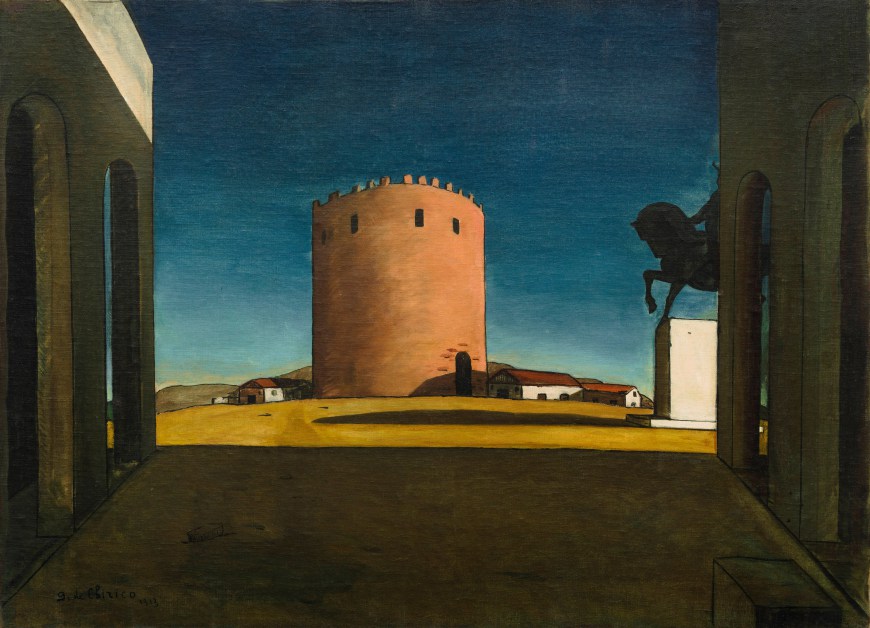
My particular 80s nostalgia has less to do with “the 80s” in the sense it that it appears in TV shows and films as it does a litany of gloomy-sounding things: the urban decay of 60s and 70s council estates, indoor markets, army stores, arcades, brutalist churches that harmonised with those reinforced concrete towers that the fire brigade used for practise. This is a kind of eeriness as nostalgia; reflected in my liking for empty streets and art that represents empty streets: Algernon Newton, Maurice Utrillo, Takanori Oguiss , the photography of Masataka Nakano and taken to its extreme, Giorgio de Chirico, where the emptiness isn’t truly vacant so much as  it is pregnant , reminding me always of  – nostalgia again – the ruined city of Charn in CS Lewis’ The Magician’s Nephew (by far my favourite Narnia book) – which made a huge impression on me as a child. Charn may even be where my liking for such things as ‘urbex’ photography, like that of Andre Govia, and of course, The Ruin, quoted way back in the first paragraph, comes from.

The Red Tower by Giorgio de Chirico
Street scene by Takanori Oguiss

“The passing of time and all of its crimes, is making me sad again” – sadly, one of those crimes is that when I first heard that line (from Rubber Ring by The Smiths) in 1989 or thereabouts, Morrissey seemed to be on the side of the downtrodden and marginalised, whereas now he seems to be one of that increasing number of people who pretends that the mainstream of British culture is itself somehow being marginalised; which is not only patently ridiculous but impossible – and nostalgic, of course.

There’s a whole culture industry with its own cultural shorthand that has been constructed to bolster the standardised view of any given period. Nowadays, there’s whole genre of TV shows where any decade can be summed up by some B-list cultural commentator or celebrity (often not old enough to remember what they are “remembering”) saying “He/she/it were mad, weren’t they?” about some figurehead of the era. Not so great of course, when that figurehead turns out to be Jimmy Savile or Rolf Harris, at which point even nostalgia, like history, has to be revised.

The beauty of all nostalgia is that it’s selective. The 70s that Morrissey seems to  feel nostalgic about (in the true, mixed feelings sense; witness the whole of Viva Hate, which I love) wasn’t ‘better’ than nowadays, but the writer of its songs was young then; he isn’t now. There are younger people who are also nostalgic about the 70s, or the 80s, because they see the partial versions of those era(s) preserved by those who were there then, or who pretend to have been. The people who mourn the loss of the blitz spirit are really no different from me wishing I’d seen the Beatles. The people who are nostalgic for the Empire will (hopefully) never have to deal with being in charge of a mass of powerless, subject people whose resources they are stealing (or be the subject of the same), but they can enjoy the things that Empire brought to all of our lives. The ‘glory’ of Empire, like the mythical ages of Greece and Rome, and the giants that the Anglo-Saxon poet pondered over, only exists now as the faded, distorted memory of a faded, distorted memory. Like the 70s, like the 80s, like the 2010s, like yesterday, they are wonderful and terrible because they can never come again.

Happy New Year!


A note on the text above: throughout this article  (and many others) I refer to ‘people’ and ‘humankind’ in what is intended to be an inclusive kind of way, referring to people of all races, genders or indeed lack of gender. I probably also refer to gender in a binary sense, partly due to context, partly no doubt through laziness. However, I do have a tendency to not use the term ‘cis’, unless absolutely necessary – for me personally, the word ‘women’ includes trans women and the word men includes trans men. I don’t intend any offence by this, but I also don’t really mind if anyone is offended. I think it’s a shame that something as basic (if not simple) as a person’s gender should be a matter of opinion, but so it seems to be. My own view is that the contents of someone’s underwear is none of my business unless they explicitly make it so.

Right vs. Good – a rambling digression about the arts


This is not all about black metal, or all about music even, but it essentially began with the De Mysteriis Dom Sathanas Alive album that Mayhem, the pioneers of Norwegian black metal, released towards the end of last year.

PART 1: MUSIC

mayem

Despite somewhat lukewarm expectations, De Mysteriis Dom Sathanas Alive is a very good album and therefore highly recommended to Mayhem fans, especially those who value the band’s early/90s output above their subsequent work.  Like the Velvet Underground’s Live MCMCXIII album (released, coincidentally, while the Norwegian black metal scene was at its most intense and chaotic), it seemed beforehand like there was too much water under the bridge, not just within the band itself, but in music, in the world even, for any of the very particular magic the band had created at its peak to have survived. Arguably this was even more so in the case of Mayhem, because the 1994 De Mysteriis Dom Sathanas album, iconic though it is, is to many people (though I am not one of them) itself only a shadowy version of what it should have been, had the band’s classic lineup survived. In that sense (and only really in that sense), De Mysteriis… is strangely like The Beach Boys’ Smiley Smile (1967), a very peculiar and almost entirely inappropriate comparison that I’ll make again later.

So; a good album, and very likely a great show if you were lucky enough to be there; the band is powerful and the music is atmospheric, as it should be. Attila Csihar (vocals) gives a typically eccentric but (for that reason) typically great performance; Necrobutcher (bass) and Hellhammer (drums) bring the irreplaceable aura of authenticity to the proceedings, while also generally playing very well. But for all that Teloch and Ghul are, by any method that exists for quantifying such things, far “better” guitarists than original Mayhem guitarist/founder/composer Øystein ‘Euronymous’ Aarseth was (and in fact both of them are fantastic throughout), the guitar solo on ‘Freezing Moon’ (the yardstick by which I measure all performances of the song) isn’t right. So there’s that. The band is not alone in this; many, many great artists have recorded good or even excellent versions of the song, and none of them (that I’ve heard at least) have got it right; not least Mayhem themselves. Rune ‘Blasphemer’ Eriksen was and is also an infinitely superior guitar player to Euronymous in most respects, but the versions of ‘Freezing Moon’ on the Blasphemer-era live albums Mediolanum Capta Est (1999), Live in Marseilles (2001), European Legions (2001) etc, etc are far less good than the live versions of songs from the band’s then-recent albums.

All that said, Euronymous himself didn’t always play the solo right either (actually, the version on De Mysteriis Dom Sathanas itself is ‘good enough’ – in that sense, the new live album does do it justice); but in the definitive versions of the song (the best probably being the one on the ‘official bootleg’ Live In Leipzig (1990) – there’s some slightly obsessive stuff about the 1990s live recordings here) it’s a thing of spectral, affecting majesty; quite at odds with the prevailing tone of frozen emotionless-ness that black metal is popularly supposed to embody. Indeed, it’s one of the central paradoxes of the genre that, for all its focus on the cold and dead, it’s a kind of music that is all about extreme emotion and feeling. More than most music in fact, black metal stands or falls on feeling; that hardest of musical elements to define or indeed to create deliberately. Dressing in black leather and spikes and painting your face is one thing, but you don’t scream and cut yourself like Mayhem’s Dead (Per Yngve Ohlin) or Maniac (Sven Erik Kristiansen) because you don’t care about anything. You hopefully don’t do it because it’s cool either; and when Dead was doing it c.1988-90, it really wasn’t cool. So anyway; on the new live album, the all-important solo isn’t right, not because the right notes aren’t played in the right order, but because – although it certainly sounds like the band are playing with passion and intensity – it doesn’t feel right. Still, De Mysteriis Dom Sathanas Alive is a very good album. But is it as good as Live In Leipzig? Unless you value listenability and high quality sound above all else – which is in itself fair enough and certainly easier on the ears – the answer has to be no. Still, it’s an album very worth having if, like me, your favourite Mayhem songs (mine is ‘Life Eternal’) were never in the band’s live set while Dead was alive (ah, the fun of writing about someone called Dead).

So anyway, that solo; it’s good, so why isn’t it right? On the face of it, this could be one of those cases where sterile perfection* loses out to inspiration and/or passion but I don’t think it is. In any case, the technical perfection vs passion/originality argument is one I don’t really believe in. It gets used a lot when talking about people covering Jimi Hendrix songs, or when people are being insulting about Yngwie Malmsteen, so let’s call it the Malmsteen/Hendrix correlation.

*for all his precision when on form, Euronymous himself was mostly not notable for sterile perfection; for example it sounds awfully like he plays the all-important solo in the wrong key on the notorious but mostly brilliant Dawn of the Black Hearts bootleg

Straight away, any comparison of this type shows that the criteria involved are completely useless for analysing music (or indeed any art form short of architecture, where a lack of technical skill would have disastrous results). Here’s a syllogism of sorts: Yngwie Malmsteen can play Hendrix’s solos but Jimi Hendrix probably couldn’t have played Yngwie Malmateen’s – so therefore Yngwie is a better guitarist, right? Well, obviously (at least I think it’s obvious), no.
On the face of it that might seem to mean that technical skill is not the most important factor in being a great guitar player, which is true – but is not the whole truth. Yngwie may not be better than Hendrix, whatever that would mean, but nevertheless he is a great guitar player, and he would not be a better one if he played more like Jimi Hendrix, or for that matter, if he played more like an arch passion-over-precision player like Steve Jones from the Sex Pistols, James Williamson of The Stooges or Johnny Thunders. Moreover, Yngwie’s music at its best is entirely passionate and feeling-ful, while also being extremely technical. Like the classic virtuosi through the ages, Yngwie happens to express himself best through the medium of extreme technical ability. As did Jimi Hendrix of course, in a less neat and streamlined/traditional kind of way. But at the same time, to say that Malmsteen or Hendrix would have been better in the New York Dolls than Johnny Thunders, or have been better in the Ramones than Johnny Ramone is also very obviously untrue. This is a very long way around just to say artists are at their best while being themselves, but that is probably one of the logical conclusions, if there are any; Euronymous was great at being Euronymous, while Teloch & Ghul are probably best at being Teloch & Ghul. If they were great at being Euronymous then they would be better off being in a Mayhem tribute band than being in Mayhem.

the three ages of Smile

To bring back the Beach Boys again, since I said I would, one of the closest parallels for the kind of nonsense I have been writing about De Mysteriis Dom Sathanas Alive that  I can think of, is with the odd trio of records, Smiley Smile (1967), Brian Wilson Presents Smile (2004) and The Smile Sessions (2011, recorded 1965-71). Brian Wilson probably isn’t the only person who rates Brian Wilson’s Smile the most highly of the three, but he is definitely in a small minority. Smiley Smile may have essentially been a work of expediency, a slightly silly mish-mash – albeit one full of incredible music – completed for partly commercial reasons, but it’s nevertheless imbued with the atmosphere of the psychedelic zeitgeist of 1967; one of the elements which is most obviously missing from Brian Wilson’s Smile (the Beach Boys being the other, even more obvious one.) It is, however, a neat, sunny, well-recorded, impeccably performed collection of songs. More, in a way, like an orchestra recording a symphony than a band playing an album. Meanwhile, The Smile Sessions has it all; inventiveness, insanity, atmosphere – it is practically all zeitgeist – fantastic songs and, at its heart, a brilliant if somewhat confused band, often audibly grappling with material which is making their brains hurt. Still, the Malmsteen/Hendrix correlation doesn’t work here. Brian Wilson’s band is flawless in their technical interpretation of the music – but no more so than the Beach Boys were, and for all their undoubted skill, they are certainly not better musicians than the Beach Boys either. What’s missing is the messiness, the inspiration; which makes one wonder about modern interpretations of the great classical works versus the performances in the composers’ lifetime. If Purcell for example, could hear a modern performance of Dido and Aeneas would it sound  as plastic to him as the least exciting moments of Brian Wilson’s Smile do? We can never know, which is probably just as well.

The problem of living up to one’s past work is one that any successful artist with a long career comes up against. In music (that I like) there are some very obvious examples; when Paul McCartney performs Beatles songs or Morrissey performs Smiths songs, there is obviously an authenticity there that is lacking in a cover by another artist; and often they sound good and the fans love them, but no-one would pretend that it’s the same as hearing The Beatles or The Smiths. That of course may be as much due to the listener as the performer, but not always. Black Sabbath has had several vocalists who are infinitely ‘better’ at singing than Ozzy Osbourne, but not one of them could sing ‘Iron Man’ without sounding a bit laughable. Bruce Dickinson is the only Iron Maiden vocalist who can sing ‘The Number Of the Beast’ et al correctly, but he doesn’t sing Paul Di’Anno’s songs as well as Paul Di’Anno did. And that’s just the singers. You would think any guitar player with the ability and the right equipment could sound like Tony Iommi, but even on the strangest, least Black Sabbath-like Black Sabbath albums, the guitars sound right, where even in the best covers, they usually don’t, quite. I was lucky enough to meet Thomas Gabriel Fischer of Celtic Frost/Tryptikon a few years ago and asked him how – given the multitude of different guitars, amps and production budgets he has had over the years – his guitar tone (not his style or playing, just the actual sound it makes) has remained so recognisable from the first Hellhammer demo to the latest Triptikon album. He told me ‘it’s the way I play it.’ And even though it’s hard to see how that can be right, it must be.

All of the above reinforces that simple and obvious point; art is subjective, so be yourself. No-one can be you like you can. But again, that is not the whole story. As the evolution of Smile suggests, the further one travels from the initial inspirational impulse, the less powerful the vision can be; which makes sense and seems to be confirmed by the work of many visual artists and writers.

PART TWO: THE VISUAL ARTS

Partly, the perception that art can overwork and dilute the original vision comes from modernist taste; the revolt against academic art that began with the Romantic movement and was confirmed by following generations of artists and theoreticians all the way through to the 1960s, looking to (what they sometimes patronisingly perceived) as ‘untutored’ art produced by cultures other than their own, ‘naive’ artists, the mentally ill,  children; people who they felt were closer to the unadulterated forces of creativity than the trained professional artist, writer or musician. The willingness and ability to enjoy the incomplete, sketchy and unfinished (a classic example; John Constable’s rough oil sketches vs. his highly finished works) is perhaps a mostly modern phenomenon, but I don’t think it’s just pretentiousness. In Hans Holbein’s great portraits of the 1500s, such as those of Lady Audley and Lady Guildford, something – some kind of vitality – has been lost – or perhaps traded – the fleeting for the permanent – between the original pencil sketch and the final painting.

Hans Holbein the Younger - Lady Guildford
Hans Holbein the Younger – Lady Guildford

Similarly, Ingres, one of the great technicians of the neoclassical period, could produce a painting of skill and beauty like the 1807 portrait of Madame Devauçey, but somewhere seems to have lost something of the life that was so perfectly captured in his original study. And the moral of this is? Is there one? Capturing something and creating something are not the same thing, and anyway, painting a portrait is both. Not only essentially ‘realistic’ artists like Holbein and Ingres, but also, arguably, artists like Brian Wilson, Jimi Hendrix, Yngwie Malmsteen and Euronymous are doing both; it’s just that away from ‘realism’ of one kind or another, the dividing line between capturing and creation is eroded, sometimes to the point of non-existence. Inspiration isn’t one, unchanging thing; Live in Leipzig doesn’t capture the first, time Euronymous played/created the solo – it is simply the best version he happened to play while being recorded  – and for all I know he preferred the final version on De Mysteriis Dom Sathanas anyway, just as Ingres almost certainly preferred the finished painting of Madame Devauçey, not least because he had managed to replace the fleeting, lifelike effect of the sketch with something classic, monumental and perfect.

Ingres - Lady Devauçay (1807)
Ingres – Lady Devauçay (1807)

PART THREE – WRITING

Writing, too has parallels with all of these things which, if anything, take this piece even further from any kind of definitive conclusion. While Wordsworth preferred his complete and, to most modern readers, slightly lifeless version of his great autobiographical poem The Prelude to the more vivid early version, it was in the nature of the work itself – the Growth of a Poet’s Mind – that the early version couldn’t be definitive in the sense that the final one is. It wasn’t supposed to be a work of youthful energy and if we prefer the young version we are almost certainly wrong to do so, from Wordsworth’s point of view. And yet it feels like The Two-Part Prelude (1798-9) and The Prelude (1805) are right, where The Prelude (1850) is only good. It’s easy to forget from Wordsworth’s later works that the aim of the Romantics was (initially at least) for the absolute opposite of an artist like Ingres; simplicity (though neoclassicism values simplicity in a different kind of way), vividness & the fleetingness of life, rather than monumentality, rigidity and academic perfection. But as The Prelude demonstrates, not all ideas are simple and not all ideas – even simple ones – are best expressed simply. But I think that our instincts tend to tell us otherwise. (I’ve said similar things while making a different point a long time ago)

Having struggled through it and even enjoyed roughly half of it on the way, I would be among the majority who agree that James Joyce’s Ulysses is absolutely his masterpiece, but by almost any criteria aside from originality (of execution, rather than theme etc) most readers would find his Portrait of the Artist as a Young Man to be ‘better’. The ‘difficult’ nature of Ulysses itself inspires a kind of confidence; while being far more ‘lifelike’ than A Portrait… it feels blatantly, intimidatingly clever, where Portrait… feels life sized and familiar. Somehow it feels like masterpieces should be clever, perhaps more than they should be enjoyable. As with music, the pigeonholing of literature into ‘popular’, ‘genre’, ‘literary’ etc creates a sense of hierarchy that is essentially meaningless. If nearly everyone likes and understands and relates to A but hardly anyone likes, understands or relates to B in what way can be better than A? What are the criteria, if not human responses to the work?technical ones? Who outside of academia cares about those? And who outside of academia cares what academics think, most of the time? But all that said, is Portrait of the Artist as a Young Man better than Ulysses? I don’t think so.

On a more homely and yet more epic scale (see: genre vs. literature), the four volumes of J.R.R. (and Christopher) Tolkien’s The War of the Ring (or indeed the full 12 volumes of The History of Middle Earth) are fascinating, engrossing and full of drama and excitement. But I don’t think anyone would pretend that it’s as good as The Lord of the Rings. This, despite the fact that the excitement of creation (the sketch vs the finished painting) is more vivid everywhere in the pages of The War of the Ring than it is in The Lord of the Rings. And yet for some reason Bingo Bolger-Baggins and Trotter have not replaced Frodo and Strider in the hearts of Tolkien fans.

So; what I am left with is platitudes and contradictions – art is not a science; sometimes inspiration is better than polish; sometimes polish is better than inspiration; sometimes simplicity is better than complexity and vice versa. Great art comes easily; great art doesn’t come easily. It’s better to be a genius than a craftsperson. Being a genius is no use unless you are also a craftsperson. Nothing is true, everything is true. So I’ll end with this; I don’t think there’s any method, scientific or otherwise, that could prove that standing in a gallery looking at the Mona Lisa is a ‘better’ experience than standing in a gallery looking at an exact reproduction of the Mona Lisa; but somehow, it is. I would like to think that, even without the knowledge and emotional baggage we bring to these things, that that is still true. But it might not be. Anyway, De Mysteriis Dom Sathanas Alive is really good, but that solo on ‘Freezing Moon’ isn’t quite right.


Play For Today – Current Playlist 25th November 2016


After many delays, another week, another playlist…

1. Kristin Hersh – Wyatt At The Coyote Palace (Omnibus Books, 2016) Review herekristin-again

2. Stench Price – Stench Price EP (Transcending Obscurity Records, 2016)

3. Baby Tears – Succubus Slides (Choice Records, 2016)

4. Bethlehem – Bethlehem (Prophecy Productions, 2016)

5. The History of Colour TV – Wreck (Cranes Records / Weird Books, 2016)

6. Lush – Gala (4AD, 1990)

7. A Tree Grows – Wau Wau Water (Rufftone Records, 2016)

8. Kristin Hersh – Sunny Border Blue (4AD, 2001)

9. LL CoolJ – Radio (Def Jam, 1985)

10. Rachel Mason – Das Ram (Cleopatra Records/Practical Records, 2016) Review here!

11. Ela Orleans – Circles of Upper and Lower Hell (Night School Records, 2016)

12. Eric Dolphy – Out To Lunch! (Blue Note, 1964)

eck

13. Wu-Tang Clan – Wu-Tang Forever (BMG, 1997)

14. Paul K – Omertà (2016)

15. Christine Ott, Tabu (Gizeh Records, 2016)

16. The Raspberries – The Raspberries (Capitol Records, 1972)

17. Isasa – Los Días (La Castanya, 2016)

18. Daniel Land – In Love With A Ghost (2016)

19. Miles Davis – Jack Johnson (Columbia, 1971)

20. Matriarch – Revered Unto The Ages (self-release, 2007)

matriarch


All the stuff and more; why bands should split up and never, ever reform


Firstly, let’s acknowledge that there are a few reasons that bands who have long since split up should reform, but they are mostly reasons relevant to the band itself and not their fans;

  • unfinished business (various kinds)
  • reaping the rewards (personal, financial) that they didn’t get the first time around
  • because they (think they) are better songwriters/musicians than they were before – that kind of thing. 
  • It’s fun being a band again

BUT – much as I loved Lush, Ride, Slowdive, The Stone Roses, Pixies and definitely wish them all well, do I want new albums by them?  Even if (as seems unlikely – and in the case of The Pixies definitely wasn’t the case) the new albums are “better” (whatever that means) than their old ones, part of the appeal of those bands (leaving aside nostalgia and the age I was when I first liked them) is the completeness of their discographies; a whole story, from start to finish.

beatles

As with most pop/rock music,The Beatles are archetypical. If their discography had stretched from 1962 to 1970, but with one strange album from 1979 where they sounded a bit like The Beatles, only in 1979, with maybe ‘Just Like Starting Over’, ‘Getting Closer‘, ‘Blow Away‘ and ‘Wrack My Brain‘ on it, would Beatles fans be any better off? If nothing else, it would spoil the strangely mythical story arc as recorded in the Anthology documentaries etc, not to mention their embodiment of the cultural phenomenon that is remembered as ‘the sixties’. 

Obviously there are many bands with long, good careers, bands who manage to produce something surprisingly great, even in their ‘twilight years’, but nevertheless the classic band (or just human?) trajectory is:

  • early promise (or astounding precociousness)
  • maturity (‘best’ period)
  • post-maturity (weird/interesting period)
  • end (can be many kinds of end)

There are many permutations on this formula, but a relatively short, intense career (5-10 years?) can be the most satisfying one to look back on, especially from the point of view of the record collector who wants to own everything, in every format and version. Ideally (again, from the collecting point of view) a career should make a nice box set (or two; albums/singles, although it’s inevitable that if a band is commercially successful, record labels will make much more than one or two nice box sets out of their work; “reissue, repackage, repackage” etc).

This article was prompted by the seemingly untimely demise of the brilliant avant-grind/death metal/peculiar UK underground band Oblivionized, followed by the realisation that a couple of demos, an EP, and a few split releases, culminating in a pretty much perfect album is in fact a model career. Their work began in a certain style, they perfected that, moved on, experimented, made something new, perfected that and then quit while they were ahead. And it’s all out there, relatively easy to get hold of and there you have it; the complete Oblivionized collection. Might be a bit of a wait for the box set though.

oblivz

The Smiths are another favourite band with a model career; and at this point it seems like Morrissey has made it pretty certain that a reunion can never happen. Even though I would no doubt want to see them live if they did reform, I’m glad it seems unlikely. As it stands, The Smiths’ career has that Beatles-y sense of symmetry; The Smiths, where they set out their style in its roughest form (actually my favourite album though); Meat Is Murder and The Queen Is Dead refining it and perfecting it; a sense of strain and everything going a bit odd with Strangeways, Here We Come (my second favourite). Plus a fantastic run of singles, some demos and Peel Sessions and a live album; and then end it before it gets to the first not-good album; perfect. For the individual Smiths, as for The Beatles, their post-band careers would be far more erratic, but successful enough (in Morrissey’s case more than successful enough) that they have no pressing reasons to relive their youth as grown-ups, with all of the high-school-reunion awkwardness one assumes comes from that situation.

smiths

It’s nice that The Smiths are, thus far, holding firm; one imagines that the financial rewards would be almost irresistable; and normally I think it’s fair to say that financial factors play a part in the majority of reunions of ‘heritage’ bands (classic cases; The Sex Pistols, Velvet Underground). Normally it is circumstance rather than integrity that prevents bands from working together again; too much water under the bridge in the case of Abba, or more tragically The Doors, Joy Division, Nirvana among many others; these bands have untarnishable careers for the saddest of reasons.

sexpistols

It’s entirely reasonable and understandable that artists want to relive their glory years; but they are called glory years for a reason – they can’t come again. Most bands with any kind of longevity are built around the vision of one or two members anyway (except The Ramones I guess) and how many bands that are any good have had more than a decade of productivity without any lineup changes or inferior albums? And how many reunions have resulted in the best album of a band’s career?

Best not to do it people, once the thrill of seeing you in concert has passed you will have taken the shine off your greatest musical achievements; and no-one except your bank manager will thank you for it.


Copy? Compliment? Coincidence? Incestuous album covers!

Firstly; if you’re looking at this because of the word ‘incestuous’, shame on you! Anyway, for a variety of reasons, lots of album covers seem to pay tribute to/copy/look like lots of other ones, which is what this is all about.

In the early days of shellac and then vinyl records the sleeve was mainly used to advertise either the record label or sometimes the retailer of the disc within.

sleeves

But this isn’t a history of picture sleeves, interesting though that would be. Once there were music stars who people recognised the faces of, the sleeve became a promotional tool in a far more specific way than before. The main reason initially for ‘lookalike’ sleeves was presumably that artists and/or record labels hoped (and still do) that something that worked for someone else will work for them, artistically and financially and possibly creates a link between the artists in the buyer’s mind. Then there are those who sincerely wish to pay tribute to one of their influences, those who are just unconsciously doing so, and those artists who share a background in a genre/culture etc, and…. well; lots of reasons. Some examples…

1. Blondie – Blondie (Private Stock, 1976) & Kim Wilde – Kim Wilde (RAK, 1981)

comp1
By 1981, Blondie were no longer a cult, punky act, but international superstars. What better inspiration for a kind of pop pastiche of the new wave sound?  In comparison with Blondie, Wilde’s first album is pretty pretty weak, though it does have some great songs on it; if you think Kids In America is great.

2. Kiss – Destroyer (Casablanca, 1976) & Manowar – Fighting the World (Atco, 1987)

comp2
Kiss were tongue-in-cheek cartoonish macho hard rock. Manowar were cartoonish macho metal that was either so completely tongue-in-cheek that they refused to acknowledge the humour of their whole image or else were deadly serious, which is kinda scary; but either way pretty ace. Consciously or not, surely a manly tribute to ‘the old gods’

3. Elvis Presley – Loving You (RCA Victor, 1957) & many, many others including Fabian – The Fabulous Fabian (Chancellor, 1959) and Bryan Ferry – These Foolish Things (Virgin, 1973)

comp29
Right from the start, Elvis’ album covers were to create the iconography of pop/rock music, imitated for commercial reasons by his imitators & later paid homage to by artists who grew up with Elvis as the face of rock ‘n’ roll (see also Elvis’ debut album & The Clash’s London Calling)

4. Joni Mitchell – Blue (Reprise, 1971) & Marianne Faithful – Broken English (Island, 1979)

comp3

Probably coincidental, but both albums are the definitive releases of iconic female singers & were to an extent departures from their previous work, both are good and both pictures are blue innit. Also, although they are both self-consciously posing for a picture, neither artist was concerned with trading on their looks in the way that record labels have traditionally done with both female and male artists (see Elvis etc) from the 1950s onwards.

5. Carpathian Forest – Through Chasm, Caves & Titan Woods (Avantgarde Music, 1995) & Wongraven – Fjelltronen (Moonfog, 1995)

comp26

Not exactly a coincidence; both bands used the same picture by Norwegian folkloric artist Theodor Kittelsen (1857-1914), iconic in the black metal scene ever since his drawing Fattigmannen was adopted by Varg Vikernes for Burzum’s Hvis Lyset Tar Oss in 1994

6. Jan & Dean and Friends- The Heart & Soul of Jan & Dean & Friends (Design Records, 1964) & Mel Torme – I’ve Got The World On A String (Allegro, 1964?)

comp4

A strange one, presumably these were both budget releases & the labels sourced the attractive but irrelevant artwork from an image library.

7. The Beatles – Sgt Pepper’s Lonely Hearts Club Band (Parlophone, 1967) & The Rolling Stones – Their Satanic Majesties Request (Decca, 1967)

comp5

A notorious pairing, the Stones, famously at a bit of a dead end, tried to emulate the feel & popularity of Sgt Pepper with the extremely lavish holographic (etc) artwork of Satanic Majesties, but it didn’t really work. A much better album than it’s reputed to be however.

8. David Bowie – Aladdin Sane (RCA, 1973) & Jobriath – Creatures of the Street (Elektra, 1974)

comp6

It’s fair to say that Jobriath was influenced by Bowie in pretty much every aspect of his early recording career, but although Creatures… (mentioned elsewhere in this blog) is an interesting but not great LP, the front cover is, alas, just a little bit ridiculous by comparison with Bowie at his iconic peak.

9. The Byrds – Mr Tambourine Man (Columbia, 1965) & The Jimi Hendrix Experience – Are You Experienced (Track Records, 1967)

comp27This comparison really traces the advance of psychedelia from a mild distortion of perception to a neon-coloured hallucination over the two years 1965-67
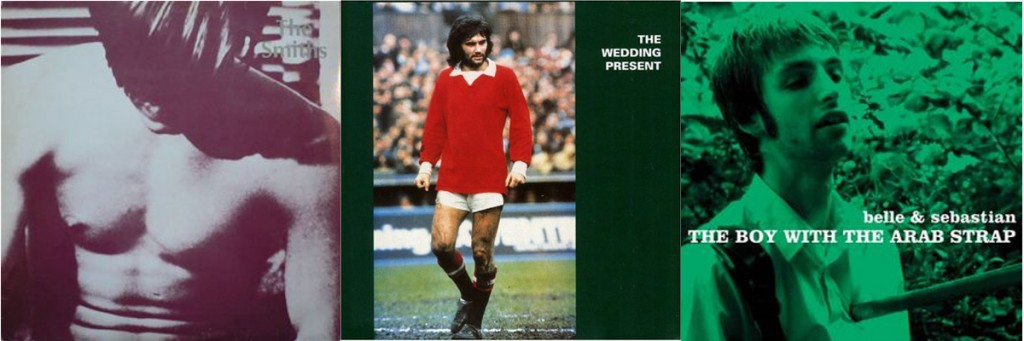
10. The Smiths – The Smiths (Rough Trade, 1984) & UK indie music in general (here; The Wedding Present – George Best (Reception Records, 1987) & Belle & Sebastian – The Boy With The Arab Strap (Jeepster, 1998)

indie

The Smiths (mainly, one presumes, Morrissey) cared about the appearance of their records in a way that few artists have, and the relatively brief period of their recording career (83-87) means that their oeuvre has a unified completeness which is both rare and pleasing; presumably if they had gone on forever they would have tried something new at some point. The look (as well as the sound) of The Smiths had an immediate and lasting impact on the UK indie scene; although The Wedding Present (often characterised as the Smiths fans’ second favourite band)’s classic George Best doesn’t look especially like a Smiths album, the whole aesthetic seems to come from a similar (if slightly less glamorous) source. Stuart Murdoch of Belle & Sebastian seems to have, like Morrissey, a complete vision for the way his band should be and to date the B&S discography has a distinctive (and slightly Smiths-like) appearance. A good proportion of UK indie sleeves still have a very post-Smiths appearance (as does the output of the great My Little Airport from Hong Kong)

11.. Iron Maiden – Number of the Beast (EMI, 1982) & Megadeth – Peace Sells… But Who’s Buying (Capitol, 1986)

comp7

Iron Maiden’s Eddie has influenced the covers of thousands of heavy metal LPs throughout the 80s (and to the present day) but Megadeth’s Vic Rattlehead is probably the most blatant homage & Peace Sells… is probably their best album cover of the era.

12. Bob Dylan – Bob Dylan (Columbia, 1962) & Donovan – What’s Bin Did and What’s Bin Hid (Pye, 1965)

comp8

Despite their essentially very different styles, Pye Records was determined to use the surface similarities between the two young folksters to promote Donovan as the British Bob Dylan and to that end, What’s Bin Did… features an informal Dylanesque photo as its cover image.

13. Poison – Look What The Cat Dragged In (Capitol, 1986) & Dogs D’Amour – In The Dynamite Jet Saloon (China Records, 1988)

comp9

Although the rougher, more rock ‘n’ roll-glam oriented Dogs D’Amour were less influenced by Poison than bands like Tigertailz were, the layout of their least all-over-the-place album is, by accident or design, a scuzzy-glam echo of Poison’s more Hollywood-looking debut.

14. Randy Newman – Randy Newman (Reprise, 1968) & Elton John – Elton John (DJM, 1970)

comp10

It may be no coincidence that Elton John, with one not-massively-successful album behind him and a few years away from his outrageous glam-era costumes etc should seemingly model the cover of this, his breakthrough album, on Randy Newman; dour, unflamboyant , thus far critically and commercially neglected, but already an artist’s artist. It worked better for Elton.

15. Carnivore – Retaliation (Roadrunner, 1987) & Sodom – Persecution Mania (Steamhammer, 1987)

comp11

Presumably a coincidence, both of these albums are speed metal classics, although Carnivore are less well remembered than Sodom (who, to be fair are still going). The passing resemblance of these covers probably says as much about the atmosphere of the Cold War era as it does about metal.

16. The Beatles – With The Beatles (Parlophone, 1963) & The Nazz – Nazz (SGC, 1968)

comp12

As with the aforementioned Elvis sleeves, every picture of The Beatles in their early years was influential, and none more so than the cool, simple sleeve for With The Beatles. Even so, it’s somewhat surprising to see its influence lingering as late as the psychedelic era, when Todd Rundgren’s Nazz released their debut (which arguably is modelled on the early covers of The Rolling Stones as much as The Beatles. But then the early Stones albums wouldn’t have looked as they do without The Beatles either.

17. The Rolling Stones – Sticky Fingers (Rolling Stones, 1971) and Mötley Crüe – Too Fast For Love (Leathür Records, 1981)

comp13

Although only a passing similarity, Motley Crue inherited much of their spirit and attitude from the Stones and the cover of their debut is appropriately a more in-your-face updating of the classic Stones artwork.

18. David Bowie – “Heroes” (RCA, 1977) & Iggy Pop – The Idiot (RCA, 1977)

comp14

Not a coincidence, Bowie & Iggy Pop worked closely in their Berlin period & both were influenced by German Expressionism, here in particular by Erich Heckel’s painting Roquairol. Iggy’s album is a bit better than Bowie’s though; if only he had worked with Eno!

19. Kate Bush – Never For Ever (EMI, 1980) & Toyah – Anthem (Safari, 1981)

comp15

Anthem was probably Toyah’s best album; a nice mix of post-punk and new wave/synth pop influences, but despite her strong image she was never as individual or idiosyncratic as Kate Bush, although the fairytale-ish album cover suggests some similarity.

20. Charles Lloyd – Geeta (A&M, 1973) & Weather Report – Black Market (Columbia, 1976)

comp16

Charles Lloyd started out as a pretty standard post-Coltrane bop-saxophone player, specialising in ‘chamber jazz’, but by the early 70s he, like jazz in general, had become interested in fusion and elements of world music, reflected in the artwork for Geeta. That was pretty much where Weather Report came in, and although mostly Miles Davis influenced, Black Market has, coincidentally or not, a certain Charles Lloyd-ish quality.

21. Witchfynde – Give ‘Em Hell (Rondelet, 1980) & Venom – Black Metal (Neat, 1981)

comp17

More a case of shared influences than anything else, both Witchfynde and Venom came from the New Wave Of British Heavy Metal and had an interest in the occult and biker rock. Cheap, effective visuals were pretty much an essential part of the NWOBHM, with even early Iron Maiden artwork having a somewhat rough & ready charm.

22. Tigertailz – Young & Crazy (Music For Nations, 1987) & Britny Fox – Britny Fox (Columbia, 1988)

comp28

>It’s slightly unlikely that foppish Rococo glamsters Britny Fox would be influenced by Wales’ super-glam Tigertailz, but both bands, despite their idiosyncracies, were drawing from a pool of shared glamorous male influences, going back in pop music to the 70s, but historically back to 16th (and in the case of Britny fox, specifically the 17th/18th) century.

23. The Rolling Stones – Rolling Stones No. 2 (Decca, 1965) & The Dead Boys – We Have Come For Your Children (Sire, 1978)

comp18

Arguably the Stones cover here has its roots in With The Beatles, but the Stones brought their own surly charisma to the style and it was this that The Dead Boys channelled for their version of (in this case punk) rock, and the cover for their second album seems to pay homage to the Rolling Stones’ second.

24. Mayhem – Live In Leipzig (Obscure Plasma, 1993) & Darkthrone – Transilvanian Hunger (Peaceville, 1994)

comp19

Strictly this should be a comparison of Live in Leipzig with Darkthrone’s A Blaze in the Northern Sky (1992), but although A Blaze... pre-dated the release of the Mayhem album (recorded in 1990), the cover picture of Per Yngve “Dead” Ohlin used for the release of Live in Leipzig was well known in the Norwegian black metal underground and indeed, photographs of early Mayhem were, despite King Diamond, Sarcofago etc, pretty much the basis for the 90s Norwegian black metal aesthetic.

25. Jobriath – Jobriath (Elektra, 1973) & David Bowie – Diamond Dogs (RCA, 1974)

comp20

Although it seems unlikely (to say the least) that Bowie would be influenced by Jobriath, there is a slight passing resemblance between the excellent, slightly creepy gatefold artwork of Jobriath’s much hyped but unsuccessful debut and Bowie’s superlative dark glam masterpiece; possibly more to do with a shared influence of traditions of depicting the male nude than anything else.

26. David Bowie – Ziggy Stardust era appearance (1972-4) & Leslie R McKeown – All Washed Up (Ego Trip, 1978)

comp21

Although not based on any single image of Bowie, ex-Bay City Rollers frontman Les McKeown’s first solo album & singles showcased an image clearly based on the glam-era Bowie of a few years earlier.

27. Venom – Welcome To Hell (Neat, 1981) & Dødheimsgard – Monumental Possession (Malicious, 1995)

comp30

Hardly a coincidence; a large part of black metal’s satanic iconography was brought to the genre by its inventors, and the cover of Venom’s debut has been paid homage to by metal in general more times than almost any other image apart from Iron Maiden’s Eddie

28. David Bowie (again) – Space Oddity (RCA, 1972 reissue) & Marc Bolan & T-Rex – Zinc Alloy and the Hidden Riders of Tomorrow (EMI, 1974)

comp22

It’s no surprise to see as visual an artist as Bowie featuring repeatedly in this list, but here he seems to have influenced his glam predeccesor and friendly rival Marc Bolan; Whereas earlier T-Rex albums had pioneered Bolan’s fey/fairytale glam image, by ’74 his music had become tired and limited (and ego-centric; T-Rex was now appended to the artist’s name rather than being an entity in its own right) in comparison with that of his old friend Bowie, and Zinc Alloy ( yep :/ ) was all-too-transparently influenced by Ziggy Stardust. The cover, however, seems more influenced by Bowie’s covers for Aladdin Sane and the glam-era reissue of his 1969 album, retitled Space Oddity. Given the slight deterioration of Bolan’s pixie-like charm, Zinc Alloy is unfortunately a less than bewitching or otherworldly sleeve.

29. Steeler – Strike Back (SPV, 1986), Helter Skelter – Welcome to the World of Helter Skelter (Metronome, 1988) & Pretty Boy Floyd – Leather Boyz With Electric Toyz (MCA 1989)

comp23

Presumably coincidence based on the common language of 80’s metal (but ultimately traceable back to Kiss in the mid-70s), both Helter Skelter and Pretty Boy Floyd’s late 80s glam-pop masterpieces have ludicrous paintings of the artists on them, very similar in style to German metallists Steeler’s 1986 opus Strike Back. Strangely, the Helter Skelter painting is by Games Workshop legend John Blanche, better known for the kind of dark fantasy images used in Warhammer etc (but also showcased on the cover of Sabbat’s classic UK thrash album History of a Time to Come.) The sleeve for Strike Back seems to be the first updating of this kind of thing since the classic Ken Kelly Kiss covers(!) from the 70s (see above).

30. Eric Carmen – Eric Carmen (Arista, 1975) & John Travolta – Can’t let You Go (Midland, 1977)

comp24

Ex-Raspberries frontman Eric Carmen’s debut solo album is best remembered for ‘All By Myself‘, but it was a strong album that revealed an excellent songwriter and performer with an eclectic range, from the Brian Wilson-esque ‘Sunrise‘ to the near-classical arrangement of that famous hit. John Travolta’s Can’t let You Go was released just as the young actor became a star with Saturday Night Fever and is, not surprisingly wet, bland, funky disco-lite with some soppy ballads thrown in. The covers of both albums showcase the sensitive (and in Travolta’s case, nakedly vulnerable) side of the young stars.

31. Cheap Trick – In Color…and in Black & White (Epic, 1977) & M

ötley CrüeGirls, Girls, Girls (Elektra, 1987)

comp25

Ten years on from Cheap Trick’s In Color… one of the great hard/pop-rock albums of all time, came one of Mötley Crüe’s best, at the time notable for a (slight) toning down of the band’s glam image. The Crüe cover lacks the humour of Cheap Trick’s (admittedly not really evident in the front image only; the back cover has the band’s two quirkier-looking members on non-motor cycles), but is iconic in its own decadent, 80s way….

32. Pink Floyd – Animals (EMI/Harvest, 1977) & The Orb – The Orb’s Adventures Beyond the Ultraworld (Big Life, 1991)

pinkorb

An explicit homage, Dr Alex Patterson’s original vision for The Orb was inseparable from the psychedelic explorations of Pink Floyd. Admittedly, by 1977, the spirit of the prog legends’ optimistic experimentation had mostly evaporated, but the Animals sleeve, with its giant inflatable pig drifting over Battersea Power Station remains an iconic, dreamlike and good-natured image which, by 1991 seemed ripe for an update.

33. Genesis – A Trick of the Tail (Charisma, 1976) & FFWD – FFWD (Inter-Modo, 1994)

proggz

As with The Orb’s music above, FFWD (Robert Fripp, Thomas Fehlmann, Kris Weston, and Dr. Alex Paterson)’s 1994 ambient/prog/experimental album bears a resemblance (only slight in this case) to an album which was fundamentally different from the prog that inspired it. Indeed, the FFWD album seems to be influenced more by the ambient works of Eno than by a progressive band like Genesis (or Fripp’s King Crimson for that matter), but there is at times an atmosphere of pastoral whimsy that recollects the Peter Gabriel-era Genesis of Nursery Cryme or Foxtrot, far removed from the glossy, accessible rock of the Phil Collins-led Trick of the Tail. But that album’s cover has an archetypical prog feel, even if the album doesn’t, and so does the sleeve of FFWD.

<

FIN