I didn’t make any concrete resolutions last year, but I did intend to be more productive in my writing, and I did at least achieve that, if nothing else. I wrote around a hundred reviews and features of various kinds, mostly for Spectrum Culture, but I also wrote far more for my own site than last year and even a few bits of fiction, very rare for me these days. After 2024, when the posts on my website were sparse, weird, very personal and mostly pretty miserable, I deliberately wrote more regularly, even when I had nothing special to say, with – as you’d expect – mixed results. I probably covered a wider (and more random) variety of things than usual, and I think more of what I wrote was inspired by current events than usual – a very mixed bag, but I still like some of them. So, here are the first 6 months of the year, interspersed with random thoughts that were written down but never ended up being incorporated into anything:
I started the year thinking about identity, art and photography via Egon Schiele & David Hockney, which was kind of light-hearted and fun.
Unrelatedly, I used the Cornell Labs’ Merlin Bird ID app a lot this year, and I recommend it; it’s really nice. Although I grew up in the countryside I somehow never picked up any but the most obvious birdsongs (likewise there are only a very few trees I can recognise from their leaves) and it’s fascinating and very endearing to discover what the birds around you are. It also had the unexpected side effect of making me realise just how much man-made noise we put up with in the modern world, almost all the time. Even on quiet country lanes in rural Scotland with minimal traffic it’s amazing what can impede hearing the birds. Distant trains, planes, farm machinery, bikes and especially cars all interfere with the sounds of nature. I’m not really complaining, but it’s amazing how a passing car – which normally I’d barely notice the sound of – suddenly seems violently noisy when you and your phone are straining to hear the cheeping of tiny unidentified brown bird. Ah well.
At some point early in the year I was thinking about childhood and the relationship between involuntary dreams and apparently conscious daydreams, among other things. Regarding childhood, something that – quite rightly – didn’t make it beyond a quick note is that apparently I was thinking about how, in the Transformers franchise the bad guys’ name is (or was when I was a kid, I’ve not seen any of the movies etc) Decepticons; and the badness is clearly built into the name, not just deception, but con as in opposition. But oddly, their enemies, our heroes, are far more ambiguous: they aren’t therefore called “Honestpros” (which would be kind of hilarious) or even “Herobots” or something similar, but just Autobots. But what’s ‘Auto’ about them? Automobiles, presumably, but so are some of the Decepticons. And some of the Autobots could just as relevantly be called Plane-o-bots. And really, the good robots are technically deceptive in the exact same way as the bad ones. Maybe teaching children that villains are easier to recognise than heroes was deliberate on the part of a toy manufacturer – but to what end?
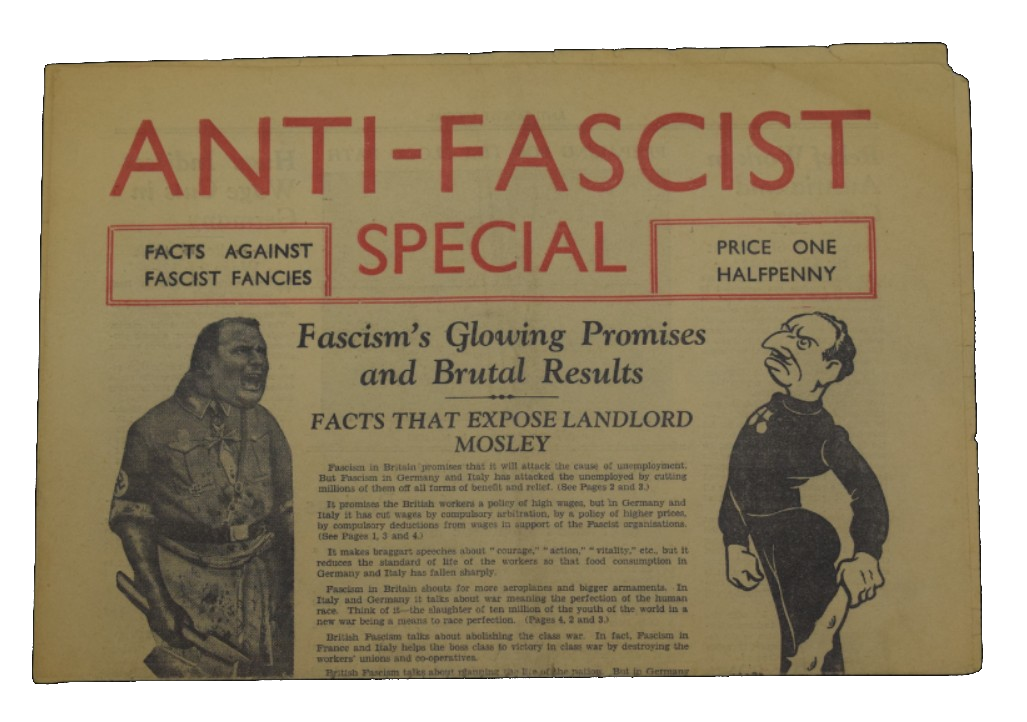
Speaking of villains, in February, the subject of fascism became inescapable and I wrote about it; fascism and culpability and fun stuff like that. I don’t think it was all that grim really, but for a bit of light relief, presumably, I ended up writing about the death penalty, with reference then-recent events, but also the core idea of the death penalty, my feelings about it and the logic behind it. It turned out to be one of the most read things I wrote this year and I think one of the most complained about too, but you can’t please everyone.
As an indication of the way the year was going, when I really did write something for light relief, it was about horror fiction. Specifically, it was about the way that, as with everything else in the 80s, success was the motivating factor for how the genre shaped itself, with the biggest successes, notably writers like Stephen King and James Herbert being the models, not just for other writers, but for the way publishers promoted horror in general.
But wallowing in even complicated nostalgia proved difficult as – just as in 2016 – events across the Atlantic began to poison the political discourse of the whole world, including the UK. I wrote specifically about the advance of reactionary assholism (a technical term) in British politics here – and I suppose inevitably, it was another of those articles that some people disliked enough to tell me so. Shortly afterwards I was writing about another topic that’s often represented as divisive, so I tried to make it as simple and clear as possible, boiling it down to the most simple ‘are war crimes bad?’ terms, but of course it proved to be arguable after all. But I suppose everything is, if one likes to argue.
In May my mental exhaustion must have reached a peak because I just put out some scattered notes, some of which I found quite funny – but I was more myself again shortly afterwards, tracing the rarely recognised links between George Orwell, the 80s kids’ TV show Grange Hill and topless modelling. Similarly connections-focused, I ended the summer thinking about the relationship that professional historians have with the historical periods they specialise in and how that can be fun and kind of goofy in a nice way, but how it also mirrors the study of history with all of its complications and problems.
Some time in the summer I came across a different translation of Kafka than the one I was familiar with and wrote one of my favourite things (of mine) of the year. But I wrote it in such a hurried fit of enthusiasm that every time I’ve gone back to look at it I’ve found stuff to fix and clarify and (always) sentences to make shorter. It’s a strange mix of Kafka, ancient poetry, religion and Rolf Harris but I think it reads okay at present…
There were many celebrity deaths (must be a better way of putting that) this year, but one of those that affected me the most was Ozzy and for reasons you’d think best known to myself I didn’t so much write a eulogy as a strange thing about Ian Curtis and Joy Division, Ozzy, Black Sabbath and the tenuous ties that bind them, or bind them to me.
In August, world events were getting me down (a strong theme this year) and so were the lukewarm responses of the British political establishment when asked to comment on those events. Doing nothing and saying nothing of substance is a political choice, but judging by what I wrote I’d prefer open malignancy to polite inaction. I’m not sure that’s really true but sometimes anything seems better than being non-committal.
As the summer soured into autumn (generally my favourite season) I’d been thinking about and writing about what home means and the feelings of belonging that do or don’t go with it, but events in the UK soured that too and the thing I eventually wrote had far more about flags in it than I’d intended, and Philip Larkin, and Morrissey, if that makes it more tempting?
In the autumn I also started this substack with the intention of writing different kinds of things (mostly art history) but as soon as I wrote the first substantial piece for it – about why I write, it ended up just being more of the same, though often written more quickly and less considered and/or developed. Which doesn’t seem right but at some point I’ll try to establish some kind of order, probably.
One of the articles that made it on to both platforms (in slightly different forms) was again the result of a celebrity death (Robert Redford) but this time I didn’t even pretend to pay tribute to him (though there were lots of good reasons to do so) but instead wrote some kind of meditation (to put it pompously) on innocence, whatever that means. Reading it again, it feels more sad than I realised at the time
Come October, the burning of the Reichstag was, ominously, a common topic of discussion, so I wrote, not about that exactly, but about its scapegoat and presumed perpetrator, Marinus van der Lubbe, who turned out to be a far more important figure than he or anyone who met him would ever have suspected. It’s another melancholy kind of article but the title obscurely pleases me.
Within days of writing semi-elegiacally about Marinus van der Lubbe I was bemoaning the fact that powerful and sinister nerds are (to paraphrase Alan Partridge) getting Tolkien wrong. Well not really that, it’s about lots of dread-inducing developments, but Tolkien is in there too
Belatedly remembering my intention to use substack for my art historical pursuits I made a revised, two-part article out of something I wrote a few years ago, which wrestled with separating art from artists, whether there are right or wrong reasons for liking a work of art and related topics: come for the Malevich, stay for John Wayne Gacy and Hitler – it was fun to write, especially because the Nazis and psychopaths it mentions have been dead for years and aren’t involved in current events.
As we approached Halloween I wrote/revised an article about the way that those who seek to censor the (specifically) female body online and in traditional media in order to ‘protect’ people from nudity want to not have their cake but eat it anyway; or something like that.
Still in October, which seems to have been crazily long this year, nationalism and belonging was still on my mind, because still in the news. Looking at the ways that a belief in nationalism and an interest in history intertwine and are sometimes mutually exclusive was more interesting for me than for anyone else it seems; but it still is interesting to me
I rounded off October with something both more light-hearted and more substantial – examining various fictional dystopias and holding them against the big tech-led present up to see which fits the best, with literally comic results. But I said goodbye to the autumn by writing something about Guy Fawkes, which was very enjoyable, so that was nice.
Shortly afterwards, I prepared for the new season of Stranger Things by pre-emptively whining about the formulaic & predictable nature of that kind of popular entertainment (not entirely true, there’s some fun stuff in there about Mad Max, Highlander & Alien, etc). I haven’t finished the new season of Stranger Things yet and so far I’ve not been surprised, but there’s still a chance!
More recently, I wrote a couple of short, sad pieces about two of the celebrity deaths that affected me most this year, Mani from the Stone Roses and Buck Rogers (well, Gil Gerard but he’ll always be Buck to me).
Which brings us up to date, barring a few typical (but I hope fun) end of year roundups. And so there we are. See you next year. Hopefully for more fun, creativity and success and less fascism, slaughter and prejudice. But I’ll leave it at that, don’t want to jinx it.