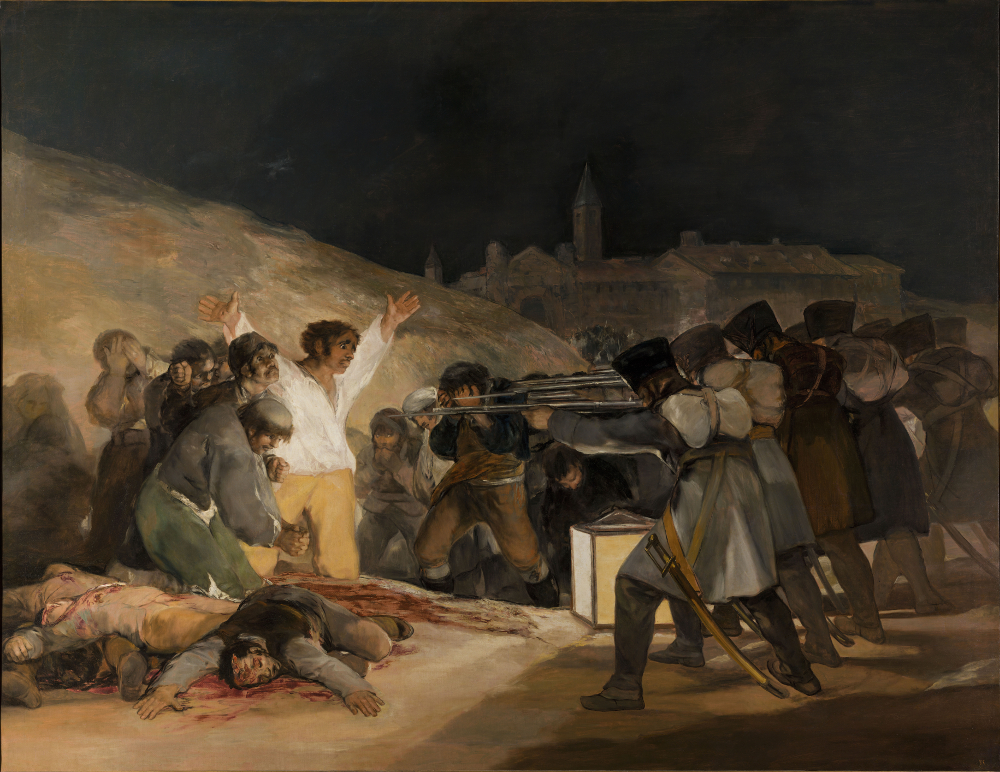
It’s forever being explained that this or that war or ‘conflict’ (a fun word to watch out for, generally meaning that the authorities and media recognise there’s something shameful or unequal in the situation) is complex and difficult. But even though the historical background, causes and contexts of wars are almost always complex, there’s one simple question that can clarify the course of events as they unfold: Is it ever acceptable to kill unarmed civilians who aren’t attacking you?
If the answer is yes, or anything that essentially means yes, then the arguments about right and wrong end and an eternal cycle of violence, death, reprisals and resentments is tacitly accepted. But if the answer is no – and to me it definitely is – then there’s a moral imperative not to let it happen.
Jean Colombe – Richard I of England orders the Massacre of the Saracen Prisoners, 1191 (painted 1474-5)
The part of the question specifying who aren’t attacking you is crucial because realistically, escalating violence frequently ends in killing, whether or not that’s the original intention. Unless one is a Gandhi-style pacifist who thinks that being attacked is a signal to lie down and take it and that (to cite examples Gandhi used) the UK should have let Nazi Germany invade unopposed or that the Jews should have willingly delivered themselves up for extinction, the idea of being attacked and not reacting feels entirely unnatural, a practical impossibility, whatever your personal philosophy is. Not that that is any defence against most of the kind of attacks that happen in modern warfare.
Francisco de Goya – The Third of May 1808 (painted 1814)
Even as someone who believes it’s always wrong to kill unarmed civilians, it’s hard to resist applying that belief hypothetically to historical situations. It’s a pointless exercise because while it’s entertaining to imagine ‘sliding doors’ moments in history and extrapolate possible consequences from them, there’s no way of actually knowing how things would have panned out whatever the probabilities seem to have been. Plus, none of it can be changed now anyway. We don’t live in history, yet.
‘What if?’ is an irrelevant and frivolous question when applied to history, unless you happen to be writing a novel, making a film or inventing a time machine – but it’s a fundamental question about what is going to happen today.
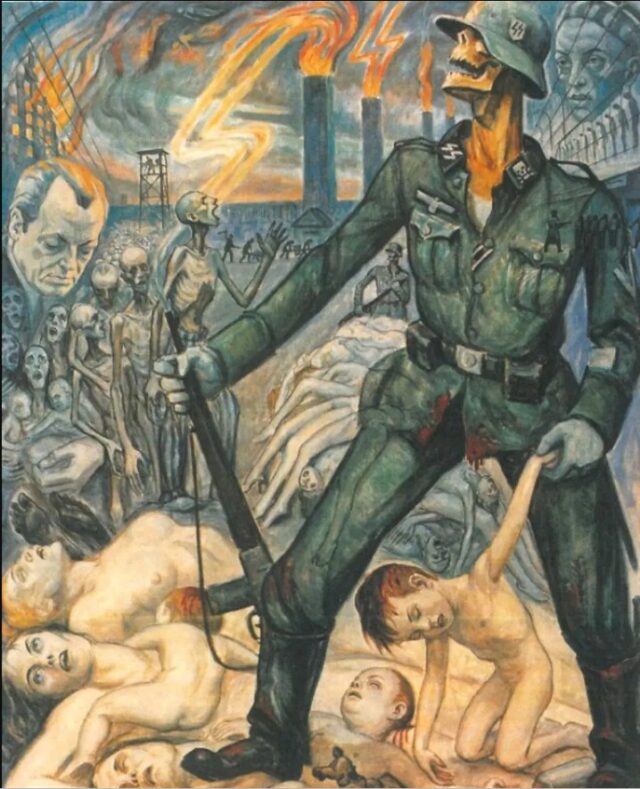
David Olère – The Massacre of the Innocents (1950s?)
It might seem obvious which war or conflict I have in mind while writing this, but although the most obvious guess may be the right one, I’m not avoiding naming names out of some kind of misguided sense of neutrality. I’m not trying to downplay sickening atrocities or genocides or to pretend that war crimes only matter when some people commit them but not others. The simplicity and universal applicability of the question is the whole point. Is it ever acceptable to kill unarmed civilians who aren’t currently attacking you? I don’t think so.
Everything is irrevocable once it has happened, but nothing is until then, so let’s not act as though some people are just destined to be collateral damage in wars as if it’s a fact of nature rather than the result of human choices and actions.
The prejudice against transgender people in the UK has, after years of furious lobbying, reached the level of a moral panic, and thanks to the pressure of the lobbyists (and perhaps even more, the money behind them) transphobia is now essentially written into British law. It feels like bad form to quote oneself, but four years ago I wrote “The unstated aim [of a moral panic] is the reiteration of a prevailing – often obsolete – orthodoxy … And coincidentally or not, whatever the panic happens to be about, it’s usually the same orthodoxy that is being reinforced and promoted.” That’s true here. The stated aim of the pressure groups – and now, the legislation – is to protect women, ostensibly from male violence, but not only does the law not do that, it actually reinforces the status quo, where crimes against women are often overlooked and always inadequately policed.
It’s a policy that doesn’t try to benefit anybody, not even those who have rabidly pursued it – but, indirectly it benefits the very group it purports to punish; male abusers of women.
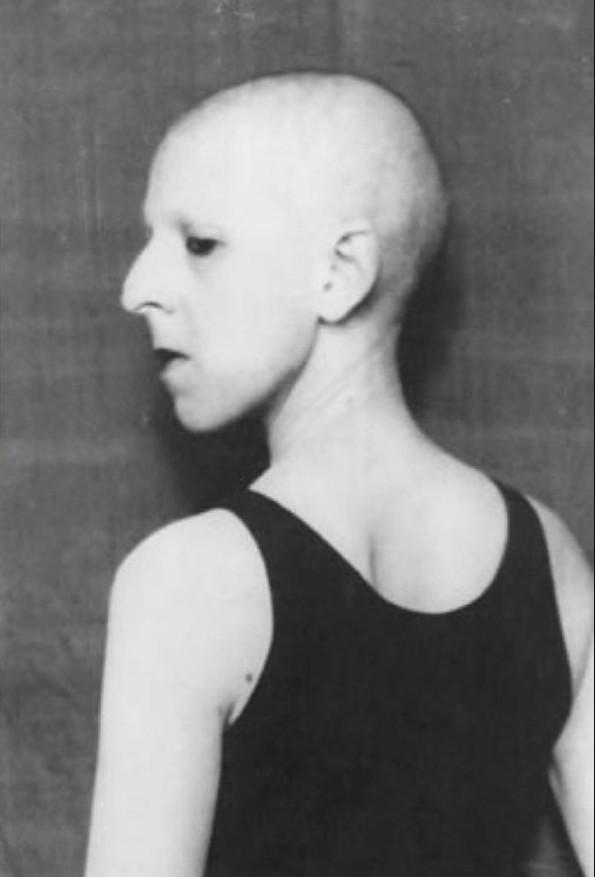
Claude Cahun in 1928 – “Neuter is the only gender that always suits me”
At its core there’s a fundamental irony embedded into the moral panic about trans people. The heart of the issue is that there are people who simply don’t want trans people – primarily but not only, trans women – to exist at all. But in trying to wish trans people out of existence, what the transphobes are really doing is insisting on their presence, heightening it (and simultaneously using trans people as a way of defining their own “normal” identities too) and of course punishing them for their continued existence.
The idea of trans people just existing and being accepted as the people they are, obviously isn’t any kind of threat to society. But then, choosing an invisible ‘enemy within’ has always been the (essentially deflecting) agenda of paranoid reactionaries and is such a familiar trope that there’s really no need to list the atrocities these kinds of policies have led to throughout history. Under normal circumstances, the trans women and trans men vilified by activists and politicians are just women and men; the woman who works in your office, the man at the supermarket checkout, a teacher, a librarian, a lifeguard; you perhaps. But when looked at through the eyes of the paranoid bigot, that very unobtrusiveness becomes sinister; someone ‘posing as’ a lifeguard or ‘infiltrating’ a school to pursue their malevolent agenda.
The worst thing about a law that denies the identity of a group of people is, naturally, the impact it has on those people – but it also does nothing to address the problems it’s disingenuously put forward to solve. Male violence against women, wherever it happens, is a serious problem in British society. And yet at every stage – from early displays of ‘light-hearted’ misogyny and harassment among children and teenagers to actual physical assault – society and the law tend not to take it seriously, with the result that crimes are under-reported and under-prosecuted and punishments are often laughably mild. At the same time though, harassment and assault et cetera already are criminal offenses, and they don’t become any more criminal, or any better policed, by persecuting a minority group. In fact, the opposite is true, since the focus on trans women as potential aggressors takes the focus away from the people who are overwhelmingly, the perpetrators of violence against women – cisgender men. It’s essentially misogynistic and threatens the very safety of the women it pretends to protect.
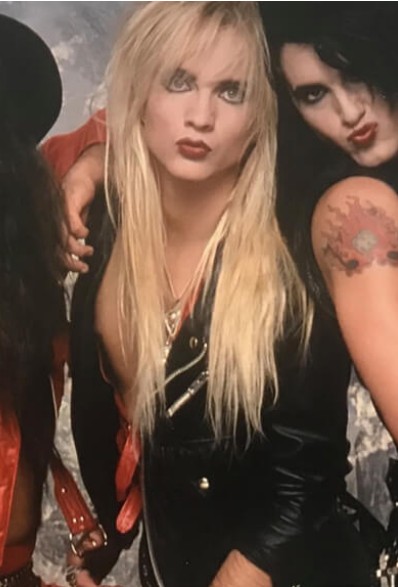
the late cis-gender, heterosexual musician Vinnie Chas in 1989 – which toilet should Vinnie have used?
It’s perhaps important to point out that the Supreme Court’s ruling states that the legal definition of a woman is based on biological sex at birth, so that only those born female are recognized as women under the Equality Act. It’s simplistic (human biology isn’t) and it doesn’t mention bathrooms at all. But the toilet is central to the ideology of ‘gender critical’ activists. Policing who uses which bathroom is a bizarre preoccupation of the anti-trans lobby, but it’s indicative of the generally perverse and in one sense unserious nature of their obsession with trans people. That being so, public toilets have ended up being a key battleground in the debate around trans rights in Britain.
The question of how ‘correct’ toilet usage is enforced throws up the immediate problem of who polices it and what the criteria are for using a gender-specific toilet. It’s not enough to say, as the Supreme Court ruling implies, that women’s bathrooms are for those who are biologically female from birth, because in many cases there’s no obvious way, short of an invasive genital inspection, of working that out – and there shouldn’t be. In any kind of free and democratic society, the way someone presents themselves, the way they dress, or the hairstyle and aesthetic they adopt – in short, their identity – is nobody else’s business unless they explicitly make it so, and setting up some kind of ‘toilet police’ can only increase the harassment of women, both trans and cis.
The kind of concern I expressed above often leads to accusations of hysteria, but just this week, the prominent anti-trans campaigner Maya Forstater explicitly said this: “Not being allowed into the mens by rule does not mean you have the right to go into the ladies. That may seem unfair, but these are life choices people make. If you make extreme efforts to look like a man, don’t be surprised if you are denied entrance to the ladies.” It’s hard to know where to start with this venomous nonsense. But for a start, what does “extreme efforts to look like a man” entail? What is ‘looking like a man’ anyway? Which man? These fools come across like Mary Whitehouse wringing her hands over Boy George’s appearance on Top of the Pops 40 years ago.
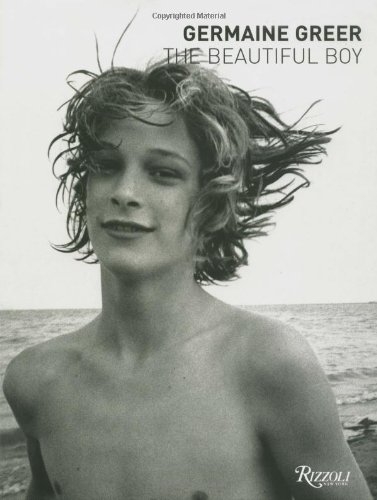
The Beautiful Boy (2003) by genuine TERF Germaine Greer; but is this boy manly enough to use the Gents?
For some women, regardless of their gender at birth or their sexual orientation, just having a short haircut or choosing to wear trousers is enough for some people to accuse them of looking like men, regardless of what their intentions were when choosing a haircut or getting dressed that morning. The idea of not being ‘allowed’ into one or other toilet surely also entails some kind of enforcement. There are so few public toilets in the UK with human attendants that presumably, existing bathroom staff can’t expected to take on the duty of somehow determining who is an acceptable ‘customer’, but someone will have to, if it’s not just empty rhetoric – which it may well be. It also creates a genuine possibility of toilet vigilantism, which sounds hilarious, until you really think about it. And what qualifies someone to be a toilet police officer or bathroom blade runner anyway? Is there a recognition test they need to pass? Will there be gender-determining questionnaires or apps, or inspections?
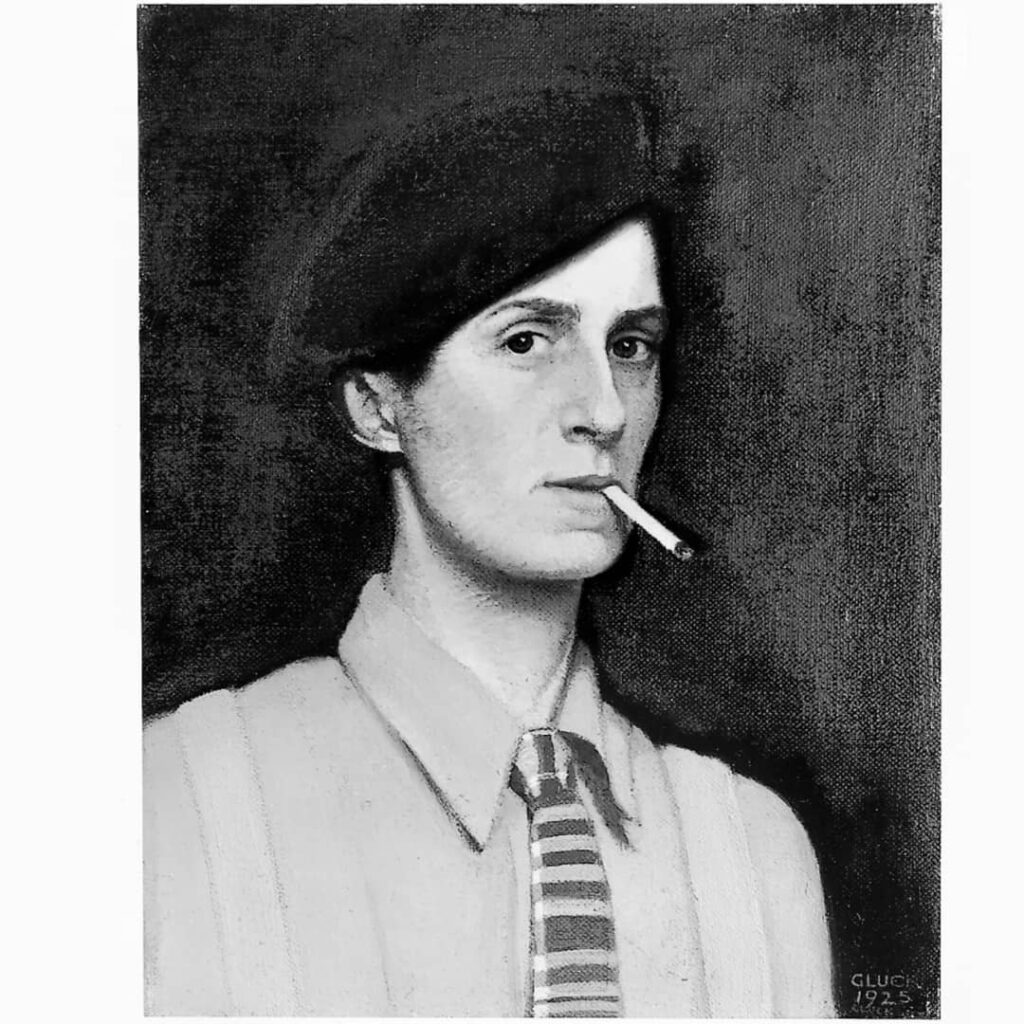
The British cis-gender, 100% female artist ‘Gluck’ (Hannah Gluckstein) a century ago in 1925 – which toilet should she have used?
Presumably until now there have been no laws dictating who can use which bathroom and yet, men (including trans men) tend to use the men’s and women (including trans women) tend to use the women’s, without any resulting fuss. Somebody who lurks in any bathroom with the intention of assaulting someone is already breaking, or planning to break the law and nothing about this legislation seems likely to deter those few people determined enough to do such a thing. What seems far more likely is that people innocently needing to use public toilets – and it’s not something most people do except in the direst need – will face some kind of additional unpleasantness, especially if their physique and appearance isn’t one that fits within a standard, traditional gender norm.
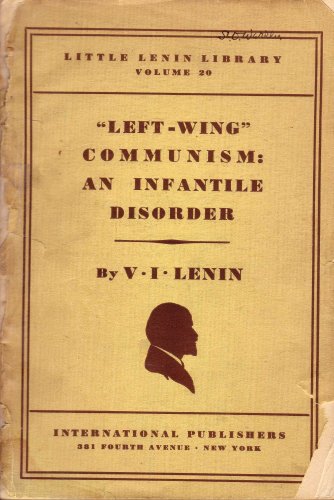
TERF (trans-exclusionary radical feminist) is a useful shorthand term for people like Forstater and JK Rowling, but it also gives them a validity that they don’t deserve, because difficult to see any kind of feminism, either radical or orthodox, in a policy that requires women to conform to a specific kind of approved appearance to be accepted in female-only spaces. I would like to be able to substitute the term ‘right-wingers’ for TERFs, but in fact this whole issue reinforces my growing feeling that the ‘left’ and ‘right’ binary is no longer useful when looking at political and cultural issues. I am definitely left-wing, but then so, one would hope, is the Communist Party of Britain, which publicly supports the Supreme Court’s ruling. But I shouldn’t be surprised, because the mistake I – and many people, it seems – make is assuming that communism is left-wing. If I really examine what I mean by ‘left-wing’ I find that the correct word would be the much abused and misunderstood one, ‘liberal.’ And, as no less than V.I. Lenin went to great pains to explain in 1920’s charmingly-titled pamphlet “Left-Wing” Communism: An Infantile Disorder, there’s nothing inherently liberal or democratic about communism. It’s easy to forget that, because left vs. right feels so logical, but history proves the point – if left-wing meant what people think it means, and communism was left-wing, then the Hitler-Stalin Pact would have been completely unthinkable. Whereas, looking at both Nazi Germany and Stalin’s USSR it seems not only logical but inevitable.
Uncle Vlad’s toxic 1920 pamphlet
Hitler and Stalin’s ideologies diverged in many, quite fundamental ways, but at heart, both were about power – who has it, and who is subject to it and can be coerced by it. And as citizens of the kind of society that wants to police who uses its toilets, we might want to consider that.
But even though an attack on the trans community is an attack on the freedom and individuality all of of us, and even with all of the serious issues and implications involved, from the corruptibility of British politicians to the possible dystopian outcomes for our society, the most important point by far is to remember that this is happening now, and that the explicit target is a small community that includes some of the UK’s most vulnerable people. It’s evil and it’s indefensible, but it’s not irreversible – so those who object should make their voices heard.
This article (like several others) came out of a conversation with my friend Paul, and he writes better than I do about 80s horror (and many other things) at Into the Gyre
The 1980s was, famously, the decade when pop culture became corporate, encapsulated in the omnipresent corporate or corporate-style logo. Obviously, both corporations and logos long pre-dated the 80s, but it was in that era that it became an all-encompassing ideal. In the 1960s, the first really modern teenagers* had written the names of their favourite bands on their school books or bags; twenty years later their children were doing much the same thing, only they were painstakingly copying logos from album sleeves or tape inlay cards.
* 1950s teenagers were the first, but they were pioneers; the 60s generation was the first to grow up with the expectation of being teenagers, with all that entailed in terms of pop music and rebellious teenage behaviour
Corporate gloss was everywhere. As a young horror fan in the mid-to-late 1980s, one of the things that made the notorious video nasties of the previous generation (Last House on the Left is possibly the most representative example) seem so alluringly grimy and disreputable was their lack of slickness. 1980s horror franchises – in themselves a symptom of the decade of accelerated capitalism – even ones with their roots in the 70s independent cinema boom like Halloween – had logos. They had mascots like Freddy and Jason and Pinhead, they had rock songs on the soundtrack – they were corporate and – to young teenagers at least – they were cool. There was no way to make a grotty, un-theatrical, special effects-free film like I Spit on Your Grave seem cool. There was an attempt to make a franchise out of the Texas Chain Saw Massacre, but Leatherface wasn’t iconic in quite the way that Jason was, let alone an almost cartoon character like Freddy Krueger. Murderous, inbred yokels in rural Texas might well be scary but they weren’t easily assimilated into glossy hair metal videos.
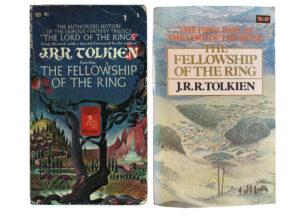
the flamboyant 60s/70s Fellowship of the Ring vs its more businesslike 80s update
The publishing world was no different. In the fantasy realm, the hippyish typefaces and sometimes grotesque psychedelic imagery of the great 60s and 70s paperbacks were replaced with foil letters in block type and tastefully elevated landscapes. ‘Tasteful’ is of course a relative term and within a decade, that utterly 80s look – a publishing counterpart to magnolia painted walls and a beige Laura Ashley aesthetic – which married an almost clinical sense of restraint, as if embarrassed by the childishness of elves, wizards and dragons, with bold, business card-style, metallic sans-serif lettering – would seem just as trashy in its way as the more florid 70s fashions had at the time.
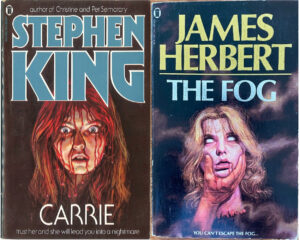
70s horror classics redesigned for the 80s
But, unlike fantasy fiction, where the biggest name in the 80s remained the late J.R.R. Tolkien, the horror genre had star writers who transcended the genre and became part of the pop cultural zeitgeist, Most of the ‘big names’ in 80s fantasy, like Terry Brooks and Stephen R Donaldson, were writers whose key works belonged firmly to the post-Tolkien 1970s and never escaped a (very big) fantasy audience. Horror was different. Like the fantasy genre, its biggest names – Stephen King (everywhere) and James Herbert (especially in the UK, though his books sold millions worldwide) – had had their first successes in the first half of the 1970s, but as the 70s evolved into the 80s, both their work itself and the way it was packaged began to align with the spirit of the age.
The fanbase for horror broadened until the big horror novels became the big airport novels and big supermarket novels and the basis for successful Hollywood movies. The books themselves became bigger and more cinematic (but I talked about that here so won’t again) and their design more stylish, until they resembled the movie posters of the time; but with one major difference. There were of course iconic directors in the 80s, but even the biggest of them – Steven Spielberg, say, or Martin Scorcese – naturally didn’t dominate the posters for their films the way that Stephen King or James Herbert did on their books. In that respect, the authors were more like a combination of director and star actor, but whereas the blockbuster actors – Stallone or Arnold Schwarzenegger or even Tom Cruise were only one element, albeit a dominant one, in their star vehicles, with the books you knew that whatever you got would the real, unadulterated author, unless you happened to be a fan of Virginia (“VC”) Andrews, but she was a special case back then.
The first, strangely romantic adventure-looking Shining (with Warren Beatty-esque hero) and the classic 80s Stephen King logo edition
The extent to which it was the superstar authors, rather than the books themselves, that were the selling point, can be seen in their evolving covers. After a decade of disparate designs and variable artwork, often not especially horror-centric, publishers like New English Library, Futura and Star began treating books by horror authors as franchises, each with their own logo and aesthetic. Stephen King and James Herbert, to stick with the big two, demonstrate contrasting, but very 80s horror alternatives.
James Herbert – who, with a background in advertising and art direction, took a direct interest in how his novels were packaged – went with the 80s version of ‘classy’ as epitomised by mid-priced boxes of chocolates; a restrained palette dominated by either black or white, with lettering in gold or silver foil. They were eye-catching, moody and, to a teenager, adult looking.
New English Library offering James Herbert as a box of Black Magic chocolates and Stephen King as a hair metal album
Stephen King’s UK publishers (including Herbert’s publisher N.E.L. – but frustratingly, including several others; keeping one truly consistent image annoyingly out of reach) clearly realised that the selling point – the brand, in the parlance of the times – was King himself. To that end, the actual cover illustrations and even the prominence of the novels’ titles, took up less and less space, while the author’s name was treated to something like the logo of a metal band, and was big enough to be spotted across a crowded newsagent or bookshop. Sometimes the author’s name was in foil, sometimes it was embossed, but for at least a few years the covers of his main series of novels – as with James Herbert’s – had the uniformity of a corporate identity.
Stephen King’s Greatest Hits
Where the genre’s biggest stars and their publishers led, others followed. All of the big names of 80s horror tended to follow either the King or the Herbert approach. After wildly variable and sometimes lamentable 70s editions, Ramsey Campbell’s books took on the sleek, Herbertian image. American blockbuster authors like Dean R Koontz and Peter Straub’s books tended to follow the King blueprint.
80s gore (Richard Laymon & Shaun Hutson) vs 80s slickness (Shaun Hutson & Ramsey Campbell)
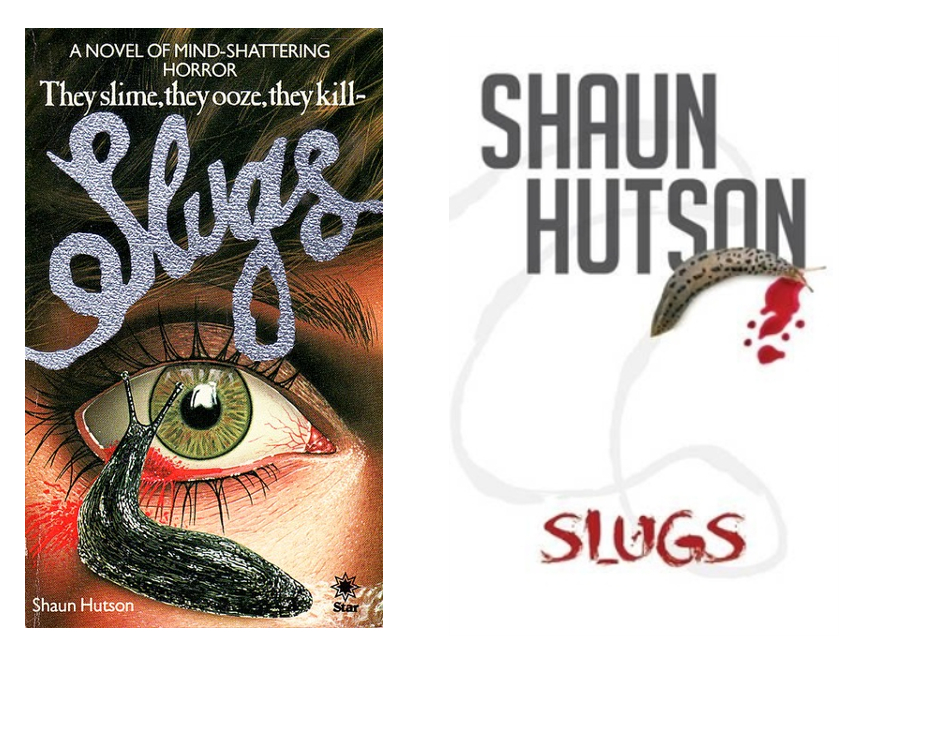
Gore authors had a kind of niche of their own. The early books of the UK’s most notorious horror author of the era, Shaun Hutson, played down the author’s name in favour of a gaudy movie poster look with the titles in a distinctive ‘slug trail’ font – and his US counterpart Richard Laymon’s works were very similarly packaged (the covers above both look like they could be the work of Danny Flynn, mentioned here, though I haven’t checked). As the sales of both authors increased during the boom years of the 80s, their packaging became – like their work – relatively more sophisticated. In the UK, Sphere mimicked the classy Herbert look for Hutson’s later 80s novels like Assassin and Victims, with the author’s name (embossed, in foil) becoming more of a focal point, while Laymon’s name became almost as logo-like as Stephen King’s.
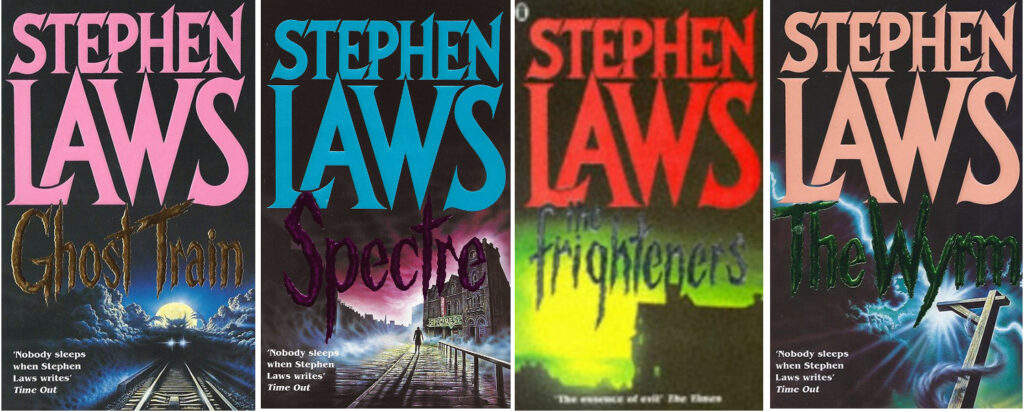
Laymon was far from alone in this. The brand-like identity of Stephen King, and the sheer volume of his sales, meant that the classic ‘logo’ look of his books was highly influential, to put it mildly. The range of King-influenced cover art ranges from the definitely ‘post-King’ 80s covers of authors like John Farris and Rex Miller, to the frankly imitative NEL covers for Stephen Laws, whose 80s books bring to mind the legal convention of the theoretical “Moron in a hurry” cited in cases of trademark infringement. Said moron would not necessarily have a bad time if they accidentally bought a Stephen Laws novel, any more than someone accidentally buying something that looked like Coca-Cola would find themselves with an undrinkable alternative – but they would quickly know they weren’t reading Stephen King.
the other Stephen of 80s horror
In almost all respects, Clive Barker was the outsider in the world of 80s horror – most definitely of it, but not defined by it. His debut novel The Damnation Game was initially packaged as typical, mid-80s horror stodge but it graduated, as his reputation grew, to Stephen King style packaging, even as Sphere Books simultaneously took the bold step of publishing his Books of Blood short story collections with Barker’s own fantastical (and in come cases gory) paintings on the covers, immediately putting the author in a dangerous-looking category of his own.
Clive Barker’s books appropriately looked both more graphic and more outlandish than the usual blockbuster horror authors’ works. From then until the end of the horror boom (which died around 1990-’91) his work coexisted in the two camps of mainstream and (for want of a better world) alternative horror. The packaging of the 1989 first edition of his short novel Cabal (filmed as Nightbreed) is pure, commercial 80s design; it looks more like a movie poster than the actual Nightbreed movie poster and is complete with logo-like title and gold foil for the author’s name. But around the same time, his dark fantasy masterpiece Weaveworld featured a more imaginative, sophisticated style, taking its lead from the Books of Blood. Weaveworld had a more formal design sense that was flexible enough to be applied to the rest of Barker’s oeuvre, so that when the horror bubble burst and everything 80s suddenly looked as cringingly tacky and dated as mullets and shoulder pads, Barker’s brand alone among his horror peers easily made the transition into the new decade.
Clive Barker as standard 80s horror author, blockbuster 80s horror author (x 2) weirdo 80s horror author and weird-but-classy fantasy author
From 1990 until at least until the turn of the millennium, Stephen King’s publishers experimented with everything from tasteful minimalism to gaudy dayglo colours, the only constant being the prominence of the author’s name on the covers. The sense of immediate brand recognition dissolved around the time of The Dark Half and has never been quite as strong since, and an 80s Stephen King collection still has a satisfyingly coherent look that isn’t matched by later editions. James Herbert mostly stuck with the ‘classy’ look of his late 80s books but with a sense of diminishing returns as the titles and cover images became less confrontational and the whole look less fashionable.
In the 90s, much of what had been packaged as full-blooded horror tended to be given more of a fashionable ‘urban thriller’ look, just as in cinema, the Freddy and Jason franchises limped to an ignoble (if temporary) end, while Hannibal Lecter emerged as a supposedly less cheesy horror villain. Horror movies were boring and passé, and when they were revived half a decade later they would be drenched in irony, allowing movies like Scream and its imitators to peddle the same tired, threadbare ideas that had killed the genre one more time, under the guise of a clever joke. Nobody wanted hair metal on their soundtracks anymore. It was a new age.
Slugs (1982) vs Slugs (2016) – eventually even the ultimate 80s trash schlock horror novel would be given the ‘tasteful’ treatment (which to be fair does look kind of cool)
Kind of shocked to discover that I haven’t done any of my once-regular Play for Today roundups since 2019! Last time around, rather than doing a proper playlist, I just mentioned some interesting things that had come my way (that I didn’t review for any magazines or websites), so I’ll do that again, possibly interspersed with things I’ve been playing a lot (in fact not; maybe later). These are all from the past few months and I haven’t necessarily given them the time they deserve, but I think they’re all worth a listen…
I loved Nechochwen’s Heart of Akamon and was quite shocked to find it’s now a decade old. They’ve released good music since then, notably a split album with Panopticon, but spelewithiipi (catchy name!) really reminded me of just how much I loved Heart of Akamon. For those who haven’t come across them, Nechochwen are an acoustic dark folk band (sometimes including metal elements, I kind of prefer when they don’t but it’s all good) that explores (as they put it) ‘the indigenous roots and history of the Upper Ohio River Valley.’ Their music is autumnal and haunting, and I love the imagery too. spelewithiipi is a beautiful album, and it’ll sound even better later in the year.
Ghost World have made some of my favourite albums; I was immediately smitten with their 2017 debut album, which was my album of the year that year and at first the 2018 follow-up, Spin was disappointing to me, but ultimately went on to be one of my all-time (so far) favourite albums, so there’s some kind of lesson there. Anyway, Armadillo Café is an odd, whimsical but lovely concept album that so far is taking longer for me to absorb, but it’s full of good tunes and I’m confident that I’ll end up loving it without even noticing again.
Hmm. I gave this a go because, despite the fact that industrial metal is one of my least favourite genres of music in the world, Swiss black metal has a special place in my heart and LADLO is a very dependable label. And..? Well, not exactly my cup of tea, but it’s good, there’s a nice chaotic, noisy atmosphere and it reminded me at times of Abigor (who I do like) and Blacklodge (who I occasionally like). The atmospheres and the choral bits are really cool and the noisy stuff with sirens etc is impressively alarming, though not nice if you have a headache.
Kati Rán – LYS (10 Year Anniversary) (Svart Records)
More ‘dark folk’ (“Nordic/Pagan” this time, though Kati herself is Dutch I think) – LYS is an album that I very much enjoyed when it came out and then pretty much forgot about, so it’s nice to hear it again and find that it really is lovely. She’s an amazing multi-instrumentalist and even though I have no idea if the music would sound at all familiar to the Nordic peoples of centuries ago, I feel like it evokes those ancient times and cultures perfectly for a modern audience (i.e. me). The follow-up, ‘SÁLA’ came out last year and I still didn’t get around to hearing it, but now that I’ve had this reminder I will
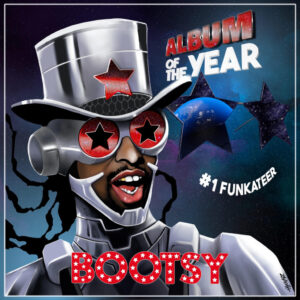
BOOTSY COLLINS – Album of the Year #1 Funkateer (Bootzilla/Roc Nation)
I reviewed this for Spectrum Culture so won’t say much about it here, but in these tense and miserable times, Bootsy’s indefatigable enthusiasm and uplifting silliness are more welcome than ever. Plus it’s just a really good album. The man’s a genius.
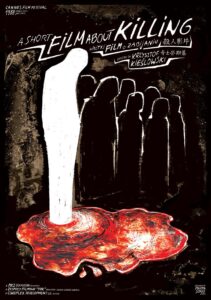
the poster for Krzysztof Kieslowski’s A Short Film About Killing (1988)
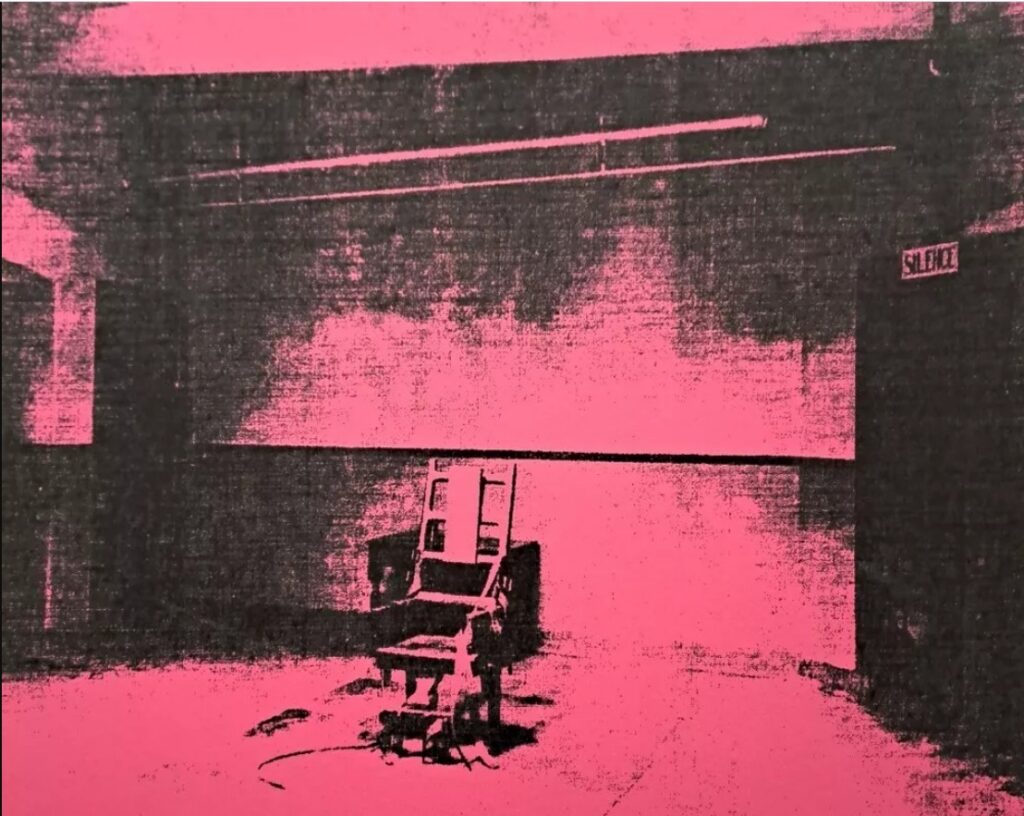
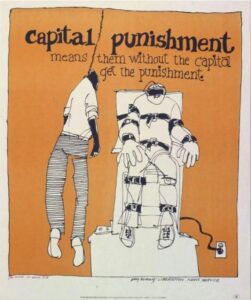
I don’t believe in the death penalty. In this, I’m in the majority, globally. I’m not sure when exactly I became against it; until at least the age of 12 I was pretty much a proto-fascist with an ‘eye-for-an-eye’ sense of justice, as boys tended to be in those days and for all I know still are. But I know that by the time I saw Krzysztof Kieslowski’s brilliantly grim A Short Film About Killing (Krótki film o zabijaniu) when I was 16 or so I was already anti-death penalty and have remained so ever since.
My reasons are, typically, kind of pedantic. There are many obvious arguments against the death penalty; there’s the ‘what if you accidentally kill the wrong person’ argument and that’s a pretty strong one – it has happened and does happen and is irreversible. There’s the fact that the death penalty seems to have a negligible effect on the crime rate. In fact, countries with the death penalty on the whole seem to have more rather than fewer murders (not that there’s necessarily a link between those two things). Even from the coldest and most reptilian, utilitarian point of view – getting rid of the problem of prison overcrowding – any possible benefit is negated by the fact that in most countries with the death penalty, prisoners spend years on death row being fed and housed, rather than being quickly and efficiently ‘processed.’
There’s also the Gandalfian(!) argument from The Lord of the Rings; “Many that live deserve death. And some that die deserve life. Can you give it to them? Then do not be too eager to deal out death in judgement. For even the very wise cannot see all ends.” That wasn’t just a handy deus ex machina that Tolkien used because he needed Gollum to survive in order to destroy the ring. Well, it was that, but Tolkien was also a devout and serious Christian and that was his moral outlook. Thank Cthulhu that unlike his friend CS Lewis, he deliberately left religion out of his books though! In the Biblical commandment Thou Shalt Not Kill, the Judeo-Christian god doesn’t list any exceptions or mitigating circumstances – in that one instance. Of course elsewhere in the Bible there are many circumstances where humans killing humans is considered appropriate and even righteous – the ultimate irony being that Jesus, kind of like an anti-Gollum, has to suffer death through violence to achieve his purpose. Religion is odd; but I’m not a Christian or Jew.
All of those points are relevant, but for me personally, it’s far simpler than that; if you can be legally killed, that means that in the eyes of the state there’s nothing wrong in essence, with killing people. I think there is, and I don’t think that it should just be a matter of having the right paperwork. Put bluntly, to kill a murderer is not telling them ‘what you did is wrong‘ so much as ‘you did it wrong‘ which I don’t think is just a minor difference. On top of that, there’s the whole question of who you are handing this responsibility over life and death to. I have a lot of respect for some lawyers, attorneys, judges, police officers etc, but there are others that I wouldn’t trust with my lunch, let alone my (or anyone else’s) life. States have a character, and often that character is institutionally biased regarding race, class, gender and sexuality. Giving that kind of absolute power within that kind of deeply fallible framework seems likely to create far more problems than it solves. But even in non-death-penalty countries like the UK we routinely give people the legal right to take other people’s lives; all they have to do is join the armed forces.
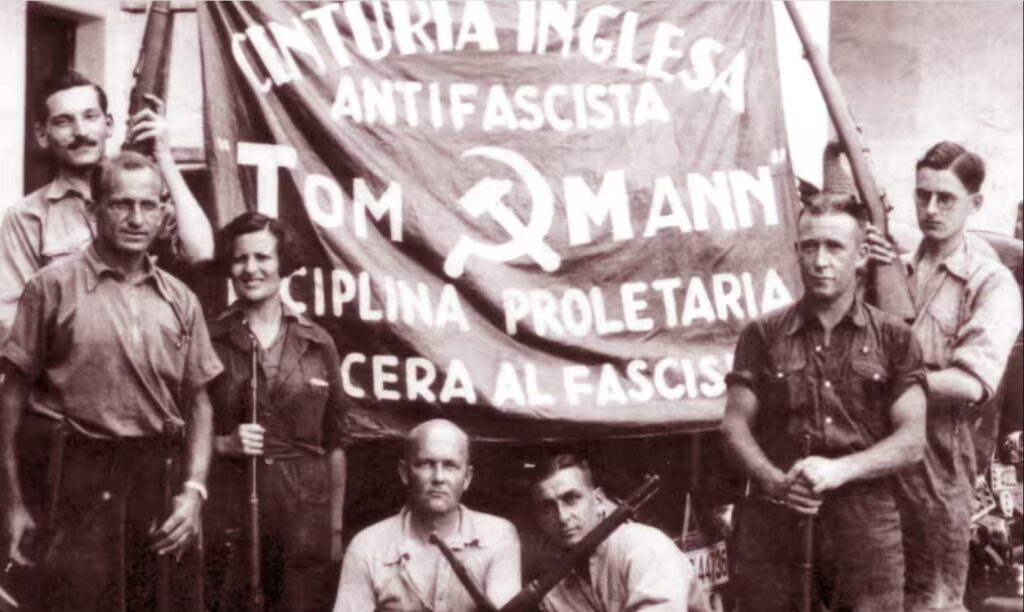
British volunteers in the International Brigade, 1937
I’m no more consistent than anybody else and my attitudes have their exceptions and contradictions. I (predictably) don’t philosophically differentiate between the military and mercenaries, because what ‘serving your country’ means in practical terms is carrying out whatever the policy of your current government is that week, with no certainty that it won’t be contradicted by a new policy (or a new government) the following week. If enemies suddenly turn out to be allies or vice versa, the dead remain dead. That said – here’s the contradiction – I’m not a pacifist absolutist either, and I think, or like to think, that if an invading army arrived in my country I’d take arms against it.
These things are particular though; everybody likes to think they’d fight for a good cause. The Spanish Civil War stands out for the number of anti-fascist fighters from all over the world who took up arms in defence of Spain, but that happened partly because so many people were ready to – and wanted to – fight. Many of those, George Orwell is a prominent and typical example, belonged to the generation who had been just too young to fight in World War One and whose feelings about war – including a considerable amount of survivor’s guilt – had been shaped by it. The fascist attack on the Spanish republic gave them a clear-cut situation to intervene in, in a way that the more gradual, more political rise of fascism in Italy and Germany didn’t.
But anyway, the death penalty. People of course do terrible things, but although lots of them are significantly more horrific than a lethal injection or the electric chair, the end result is the same. Being – odd, brief segue but bear with me, it’s relevant – a fan of black metal music, the subject of death and murder is one you come across in a different way from just being, say, a fan of horror movies. Because the poser-ish ‘darkness’ of black metal spills over (though less than it used to) into ‘real life,’ almost as if the kind of art you make bears some relation to the kind of person you are. I won’t go into the tedious-but-fascinating Lords of Chaos stuff about Mayhem & Burzum or Absurd because it’s not quite relevant here, but the story of Smutak (Pavel Selyun) who ran Morak Production record label in Belarus is.
In 2012, Selyun discovered that his wife, the artist and singer Frozendark (Victoria Selyunova) was having an affair with the artist, zine editor and musician Kronum (Alexey Vladimirovich Utokva). Sticking with the pseudonyms seems appropriate to the melodrama, so I’ll do that from here on. Smutak murdered both Frozendark and Kronum then dismembered them and was apprehended on the subway three days later with Kronum’s head (or skull; – some accounts say he boiled the head – same difference I suppose but I don’t need to know) in a bag. After his arrest, he was imprisoned in Minsk and after a confession gained under torture and the failure of various appeals he was executed two years later, by being shot in the back of the head.
A horrible postscript that demonstrates how the death penalty punishes the innocent as well as the guilty; after Smutak’s execution the authorities failed to hand over his body to his mother or tell her where he’s buried, the case was handed to the UN Court of Human Rights.
Not many people (and certainly not me) would say that Selyun didn’t ‘deserve’ his treatment. But still. He possibly tortured and definitely killed people and then was tortured and killed. There is a kind of Elizabethan revenge tragedy balance there, but it’s one in which the act of torturing and killing itself is made neutral. Whoever tortured and killed Smutak doesn’t need any kind of defence and won’t face any kind of judgement, because they did it in the name of the law. But the idea that torturing and killing becomes morally neutral because you don’t have any emotional investment in the act is an odd one. Smutak had nothing to gain from his actions other than some kind of horrible satisfaction. The person or people who did the same to him had nothing to gain accept for their wages. Which is morally, what? Better? He reportedly felt the same kind of fear as his victims; well good, I guess, but that did nothing to benefit those victims. It may have pleased the victims’ relatives but I wouldn’t want to examine that kind of pleasure too closely.
The current case of Luigi Mangione is far stranger. It’s the only time I can recall that the supporters (in this case I think ‘fans’ would be just as correct a word) of someone accused of murder want the suspect to be guilty rather than innocent. Whether they would still feel that way if he looked different or had a history of violent crime or had a different kind of political agenda is endlessly debatable, but irrelevant. It looks as if the State will be seeking the death penalty for him and for all the reasons listed above I think that’s wrong. But assuming that he is guilty, which obviously one shouldn’t do (and if he isn’t, Jesus Christ, good luck getting a fair trial!) Mangione himself and some of his fans, should really be okay with it. If he’s guilty, he hasn’t done anything to help a single person to get access to healthcare or improve the healthcare system or even protested against it in a way that people with the political power to affect change can positively react to. UnitedHealthcare still has a CEO, it still has dubious political connections and it still treats people very badly. That doesn’t mean that it’s an unassailable monolith that can never be changed, but clearly removing one figurehead isn’t how it can be done.
But more to the point; why does the killer (assuming their motives are the ones that are being extrapolated from the crime) care anyway? If actually shooting someone dead in the street is okay, then surely being indirectly responsible for the misery and possible deaths of others is barely even a misdemeanour. It amounts to the kind of Travis Bickle movie logic I’m sure I’ve sneered about elsewhere; complaining about the decay of social values and then committing murder is not reducing the sum total of social decay, it’s adding to it. A society where evil CEOs are shot dead in the street is a society where human beings are shot dead in the street and that becoming acceptable is not likely to be the pathway to a more just, equal or happy society.
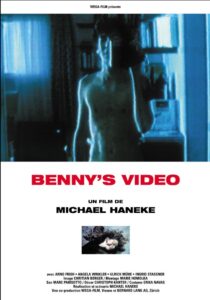
Michael Haneke’s disturbing Benny’s Video (1992)
What the death penalty does do, and probably a key part of why it’s still used in some countries, is offer a punishment that seems (in the case of murder at least) to fit the crime. Interestingly, public executions – which counterintuitively seem to have no better track record as a deterrent than any other kind of execution – are now vanishingly rare. Part of that is no doubt to do with public disgust and part with institutional secrecy and shame, but I imagine that part of it is also the fear that the public would enjoy it too much.
I’m not sure if I’d think that if it wasn’t for the spate of Islamic State beheadings that were so widely watched on the internet back in the early 2010s (was it?) I watched one, like most people seem to have, and still wish I hadn’t; but you can’t un-ring a bell. That was at the back of my mind when I wrote about saints and martyrdom for this site a while ago and I can bring images of it to mind horribly easily.
But even before that, it shouldn’t have surprised me – like many other teenage horror movie fans in the pre-internet era I watched exploitation videos like Face of Death that featured executions, accidents etc, and in doing so realised that I was specifically a horror fan and not a fan of whatever that is. I should have learned my lesson there, but it’s undeniable that these things have a murky kind of fascination; since then, thanks to one of my favourite writers, Georges Bataille, I’ve ended up reading about Lingchi (‘Death by a Thousand Cuts’) and looking at the chilling and depressing photos of it, been appalled by postcards of lynchings, seen revolting photographs of soldiers’ desecrated bodies and murder victims. I haven’t gotten used to those images and I hope I never will. Teenage me would no doubt sneer at that because he thought that things that are ‘dark’ are cool, but that seems like a laughable and childish attitude to me now, so I can take his sneering. It might seem that I’m edging towards the point that Michael Haneke is making in Funny Games (1997), which I find a bit tiresome and preachy (even more so the remake), but I’m not. I disagree with the premise of that film because I do think there’s a difference between fictional horror and real horror, and that enjoying one isn’t the same as enjoying the other. I think his 1992 film Benny’s Video makes a similar but much more subtle and complex point far better.
Imprisonment (whatever your views on the justice system) is a pretty unsatisfactory solution for most crimes, but it’s difficult to think of a better one which doesn’t essentially exonerate the kind of behaviour we want to characterise as abnormal or criminal. ‘An eye for an eye’ is the thinking behind the death penalty but its illogical nature can be seen when applied to any other crime. Stealing from a thief is obviously ‘justice’ in that sense, but as a punishment it would be laughable. Raping a rapist would be grotesque and would double the number of rapists in the room every time it happened. But even so, it’s never going to be comfortable that the tax payer is contributing to the relative comfort of someone like (I’ll only mention dead ones, this isn’t a complaint about the legal system being soft on psychopaths) Fred West.
A solution l think I might suggest is one which I’m extremely dubious about myself from lots of different humanitarian, psychological and philosophical points of view; why not offer (and that word alone would make people angry) ‘monsters’ – that is, the kind of killers in a category of their own, who admit to horrendous acts of murder and torture and whose guilt is not in doubt – the ones that will never be allowed freedom – the choice of a lethal injection rather than life imprisonment? That’s a horrible thing to contemplate – but then so is paying for the meals and upkeep of someone like Ian Brady, especially when he essentially had the last laugh, exercising his tiny bit of remaining power over the families of his victims and having his self-aggrandising bullshit book The Gates of Janus published.
That last part was kind of icky and uncomfortable, but so it should be – the whole subject is. So for what it’s worth, those are my thoughts on the death penalty. Time for a shower; until next time, don’t murder anyone please.






 I loved Nechochwen’s
  Ghost World have made some of my favourite albums; I was immediately smitten with their 2017 debut album, which was my
  Hmm. I gave this a go because, despite the fact that industrial metal is one of my least favourite genres of music in the world, Swiss black metal has a special place in my heart and LADLO is a very dependable label. And..? Well, not exactly my cup of tea, but it’s good, there’s a nice chaotic, noisy atmosphere and it reminded me at times of Abigor (who I do like) and Blacklodge (who I occasionally like). The atmospheres and the choral bits are really cool and the noisy stuff with sirens etc is impressively alarming, though not nice if you have a headache.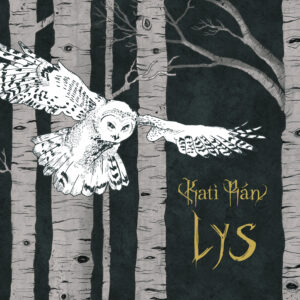
 I
I 
 The current case of Luigi Mangione is far stranger. It’s the only time I can recall that the supporters (in this case I think ‘fans’ would be just as correct a word) of someone accused of murder want the suspect to be guilty rather than innocent. Whether they would still feel that way if he looked different or had a history of violent crime or had a different kind of political agenda is endlessly debatable, but irrelevant. It looks as if the State will be seeking the death penalty for him and for all the reasons listed above I think that’s wrong. But assuming that he is guilty, which obviously one shouldn’t do (and if he isn’t, Jesus Christ, good luck getting a fair trial!) Mangione himself and some of his fans, should really be okay with it. If he’s guilty, he hasn’t done anything to help a single person to get access to healthcare or improve the healthcare system or even protested against it in a way that people with the political power to affect change can positively react to. UnitedHealthcare still has a CEO, it still has dubious political connections and it still treats people very badly. That doesn’t mean that it’s an unassailable monolith that can never be changed, but clearly removing one figurehead isn’t how it can be done.