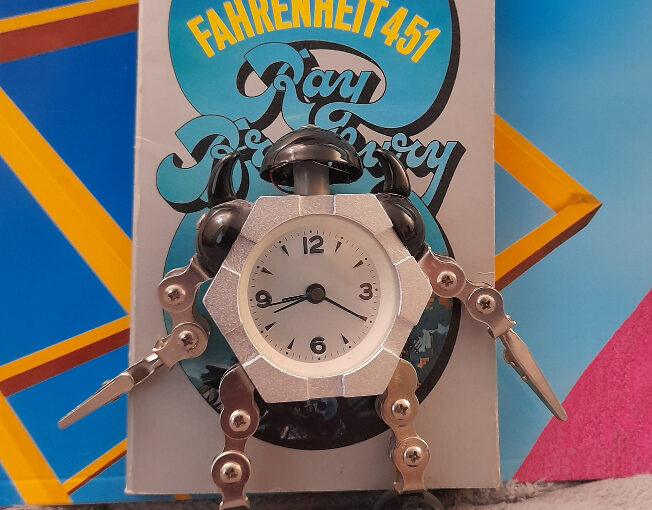
Alas, I am not a young writer; I have been writing for many years. But recently I came across Ray Bradbury’s advice for young writers, put in the simplified form of a challenge: read one poem, one short story and one essay per day, preferably from different eras and different fields and write one short story per week. I first saw a version of it as a 30-day challenge, but then saw something else that said Bradbury’s bigger theory was that if continued over the course of a year, nobody could write 52 bad stories in a row, which I dispute. But still, it’s a fun idea.
I already read every day, I already write every day; but it’s nice to get better at something and the discipline of it is (I think) oddly appealing.
In fact, what Bradbury said (at least in 2001 at The Sixth Annual Writer’s Symposium by the Sea) – is considerably more elaborate and quite a lot less appealing – but probably even better as advice:
“I’ll give you a program to follow every night, a very simple program…one poem a night, one short story a night, one essay a night, for the next 1,000 nights. From various fields: archaeology, zoology, biology, all the great philosophers of time, comparing them…But that means that every night then, before you go to bed, you’re stuffing your head with one poem, one short story, one essay—at the end of a thousand nights, Jesus God, you’ll be full of stuff, won’t you?”
So anyway, I started my own version of the challenge last Friday (though truth be told, I didn’t do my reading before bed in every case, just at various times during the day). So far been a very nice thing to do. A sort of caveat is that so far I’ve been relying on books I already own and that therefore one might assume I’ve already read. In most cases I had, but as everyone who accumulates books knows (especially if some have been bought for a specific purposes, such as academic studies) there are things that remain unread, or at least not fully read for decades, while remaining on your mental I will read this list.
I only chose things that, if I had read them it was so long ago that I had little or no memory of them. As it turned out, I tended to have a very different idea of what they were like from how they seem to me now; it was interesting.
What struck me most forcibly over the course of a few days was how I value different things in different media. Understanding is the main one: reading a story and feeling that I didn’t fully grasp it really bugged me and spoiled my enjoyment of it. Reading an essay and feeling that I didn’t fully understand it made me think that the writer had failed to communicate their ideas as well as they might have (for someone of my mental capacity at least; I am not, and don’t pretend to be everyone’s ideal reader). But in poetry the feeling that comes from the work is (to me) almost independent of the meaning, which had little to do with how much I did or didn’t engage with a poem. I’m not sure I felt that way when I was younger and read a lot more poetry than I do now.
The first poets I really loved as a teenager were to an extent ‘difficult’ – Sylvia Plath, early WH Auden and TS Eliot. But at some point in my 20s my favourite poet became Philip Larkin (whose work I still love) and I think to some extent I absorbed his attitudes toward obscure or modernist poetry and began to value clarity of meaning more than anything. Now, decades later I find that clarity needn’t be one thing: no poem I read this week had anything more immediately vivid and clear than the opening lines from Seamus Heaney’s Cairn-Maker. Whether I ‘understand’ the poem as a whole I don’t know, but these lines feel miraculously precise and evocative and the rest of the poem is no less impressive: I loved it
He robbed the stones’ nests, uncradled
As he orphaned and betrothed rock
To rock…Seamus Heaney, ‘Cairn-maker’, from Wintering Out (Faber & Faber, 1972).
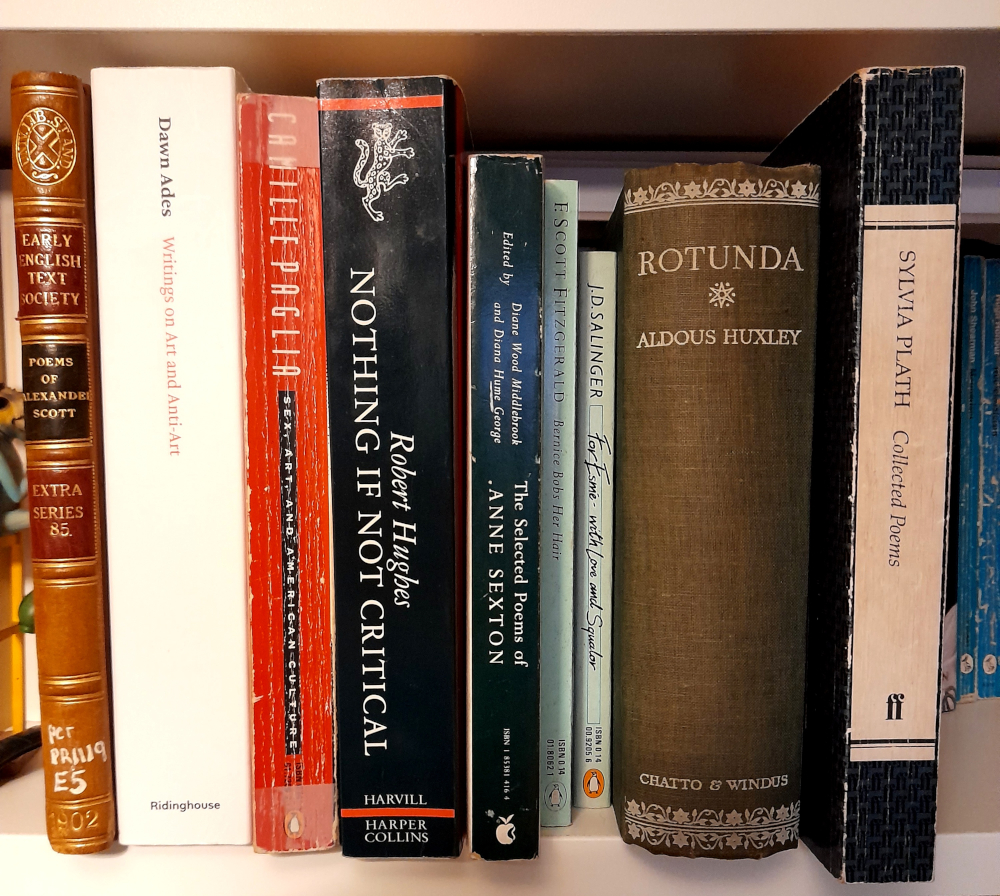
So anyway, here’s my first week, or 8 days since apparently I can’t count. Hang around at the end for my own (lack of a) story:
FRIDAY
Essay: Camille Paglia – Sexual Personae: the cancelled preface (1990) Back in the early 90s, before libertarianism became almost exclusively a right-wing preserve I loved Camille Paglia’s macho & egotistical writing: it was exciting and stimulating. Turns out it still is, but to 21st century me it’s also as infuriating as it is interesting and it seemed like every time she makes a good point (which is often) she unfailingly follows it up with some reactionary/annoying point that feels uncannily like something from the unpleasant side of the current culture war.
Poem: Wang Wei – Written at My House near the Wang River at a Time of Incessant Rain (c.750 AD). This is a very pretty and mysterious poem, more a collection of brilliantly delicate images than any kind of narrative.
Short Story: JD Salinger – Pretty Mouth and Green My Eyes (1948). I love The Catcher in the Rye, but aside from that was always a bit disappointed by Salinger’s work. Having not read this since I was probably 21 I was quite taken aback by how good it is: incredibly bitter and ironic, I loved it.
SATURDAY
Essay: Robert Hughes – Paul Gauguin (1988) I half expected to find this a little dated given the advances in Gauguin scholarship since the 80s (especially as I recently read Sue Prideaux’s phenomenal and game-changing biography Wild Thing) but in fact Hughes’ disdain for the various conflicting legends of Gauguin and his focus not on his supposed primitivism, but his actual sophistication and technical skill make this an excellently concise overview of a sometimes misunderstood artist
Poem: Anne Sexton – For John, Who Begs Me Not to Enquire Further (1960). I love Anne Sexton and this is a typically raw, intense and enigmatic poem, which may (I’m not sure) be saying ‘don’t just dismiss me as my mental illness.’ The thought that lingered with me after reading it was a very relatable one; it’s the hope that gets you.
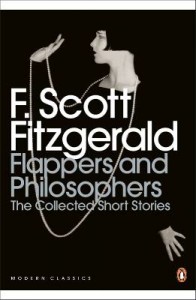
Short Story: Story: F. Scott Fitzgerald – A Short Trip Home (1927) This was very gripping and atmospheric, more of a tough thriller type story than I’d normally associate with FSF (who I like a lot). I really enjoyed reading it, but the ending felt like a letdown and definitely not something a (much less literary) genre writer would have done. After I’d read it I kind of felt like I’d missed the point somehow; not my favourite sensation after reading a story (this was a late night one though, so might have to revisit it when wide awake in case it was just me)
MONDAY
Essay: Olivia Laing – Lamentations (2017) This was an excellent little essay about religious art which I was bound to like, partly because I like religious art, partly because Laing’s point aligns with my beliefs – basically, there’s no need for afterlife, we have life – but mostly because she is a very good writer.
Poem: Douglas Dunn – 13 steps and the 13th of March (1985) and After the War (1972) – I ended up reading two Dunn poems because I’d just heard that he died. He’s not a poet whose work I’ve ever loved (though I’ve never disliked him either), but these were good. The first, from a book of poems about the death of his wife is very sensitive and restrained and moving, but I think I preferred the second, which was about childhood and war and trauma and had a kind of oblique intensity that I thought was very effective
Story: Will Self – Between the Conceits (1994) – One of my favourite stories I read this week. Self’s surrealism was perhaps over-hyped in the early 90s but I really loved his work. At some point (not for any particular reason) I stopped keeping up with his stuff, though I still like it whenever I read it (especially his journalism). This was very funny, very straightforwardly written and deeply weird, it reminded me, very unexpectedly, of Clive Barker, another of my favourite writers in that period, though their prose styles are wildly different
MONDAY
Essay: Christopher Hitchens – The New Commandments (2010) – I love Christopher Hitchens, both before and after his transformation from being a radical left-wing writer to being am unusual right-wing one (more is made of that transformation than I think should be – almost all of his political beliefs remained the same, from reading his excellent memoir Hitch-22 it was mostly a reaction – I think an unfortunate one, it certainly didn’t bring him any happiness – to the aftermath of 9/11). But this was a fun, very sensible and amusing deconstruction/reconstruction of “the” 10 commandments (which as he points out are really only 10 of the many commandments in the Bible).
Poem: Thomas Hoccleve – On Richard II’s Burial at Westminster (1413) – This was unexpectedly one of the poems I loved reading the most. Reading medieval English can be difficult but there’s something very vivid and moving about the language. This poem is basically a religious/political one that’s filled with a sense of relief, it’s about how Henry V was putting things back on track after a period of chaos and strife (which wasn’t however over) by treating the bones of a dead king with the appropriate respect.
Story: Aldous Huxley – Half-Holiday (1926) – again I loved this – Monday was a good reading day! My favourite Huxley isn’t the Brave New World/Doors of Perception/Heaven & Hell Huxley, but the one that wrote uncomfortable and sometimes bitter social comedies like Antic Hay and Point Counter Point. This was a typically sad little story about a poor, awkward young man with a bad stutter who fantasises about picking up fashionable, posh girls and tries to do so, with painful results.
TUESDAY
Essay: George Orwell – World Affairs, 1945 (1945) This was a depressing but extremely accurate prediction of what was about to happen (the Cold War), that was written after VE day but before the atom bombs dropped.
Poem: Seamus Heaney – Cairn-Maker (1972) I first read Heaney at school and therefore had a slight aversion to his work, but at some point in my 20s I ended up getting all of the books he’d written to date, which got harder to understand as they went along. This is a superbly-written poem, the imagery is so immediate that it took me by surprise. In the end I couldn’t decide if it’s a purely a descriptive poem or not – I think it probably isn’t but it worked for me on that level. I think it has the most precisely chosen words I read for this ‘challenge’- loved it.
Story: Charles Bukowski – Swastika (the title is actually a swastika, not the word) (1969-72?) – God this was lame. Very enjoyable but completely silly story about an unnamed US president (Nixon, presumably) being kidnapped and having his body taken over by Hitler while he is put in Hitler’s body. Okay, Charles. I do like Bukowski but his quality control was non-existent.
WEDNESDAY.
Essay: Karl Marx – Investigation of Tortures in India (1857) I like Marx the journalist a lot; this was a good, clear (oddly Orwell-like, or the other way around, logically) examination of the scandal then coming to light of torture being used by the British administrators in India, for the purpose of extorting money. Typically there was an official inquest, but it blamed the Indian enforcers and so on and cleared the higher up white people of blame. Marx cuts through their bullshit nicely.
Poem: Sylvia Plath – Private Ground (written 1960/1, published 1971) – Sylvia Plath was my favourite poet for years, but the poems I remember are mostly famous ones from Ariel (1965). This one, about cleaning up a (family I assume) garden and draining the pond before winter, has superb word choices, especially for the dead baby fish (like orange peel). The overall mood is full of a chilly melancholy rather than Plath’s more dramatic horror etc.
Story: JG Ballard – The Reptile Enclosure (1963) – I’ve read so many Ballard stories over the years and I know I’d read this but I couldn’t remember what happened in it. It’s an excellent and very ‘Ballardian’ surreal little story that begins in a kind of mundane way being about a married couple who are unromantically putting up with each other, but typically ends in catastrophe.
THURSDAY
Essay: Charles Baudelaire – The Modern Public & Photography (1859) – This was an excellent & extremely prescient article about how the virtues of art and photography are different & how photography was being weaponised by the talentless in a war against art: seemed a bit over the top in a way but there was one paragraph which could have been written today about AI and would be just as true.
Poem: Andrew Motion – Leaving Belfast (1978) – this was a very nice, straightforwardly written but ambivalent poem about leaving Belfast and with it ‘the troubles’ – very effectively evoking the strain of living with an implicit but rarely openly stated threat.
Story: Thomas Burke – Tai Fu and Pansy Greers (1916) – I bought Thomas Burke’s sensational (and often pretty racist) short story collection Limehouse Nights when I was very interested in silent cinema (several of his stories were made into highly successful films like Broken Blossoms). The stories are all concerned with street life in what was then London’s Chinatown and the characters are down-and-outs, drug users, prostitutes etc: it’s shockingly un-genteel for English writing of the era. This was a sleazy, melodramatic but very readable and in some ways quite modern story. It felt quite Americanised in a Damon Runyan way, but I think that’s because it’s so rare to read the street slang etc of pre-war Britain, which was far more modern than the acceptable fictionalised speech of the era.
FRIDAY
Essay: Dawn Ades – Paolozzi, Surrealism, Ethnography (1985) – Dawn Ades is one of my favourite writers on art and this was interesting piece about the relationship between surrealism & ‘the primitive’ which was quite different from the usual modernist primitvism of Picasso or the German Expressionists. The strong anti-colonial aspect of Surrealism (which people often overlook) made their use of ‘foreign’ art quite different and in this case Ades talks about using ethnographic material as much to highlight the alien qualities of contemporary Western art and culture as to make foreign art seem alien and new
Poem: Alexander Scott – Departe, Departe, Departe (c.1550s) – I love reading medieval Scots even more than medieval English (though they are very similar; but there’s something so nice and distinctive about the way Scots has ‘Qu’ instead of W: I love ‘quhat’ instead of what, ‘quha’ instead of who etc). This is a beautiful, very conventional romantic ballad but I loved the way that reading (quietly but aloud to myself) it makes it comprehensible where at first it looks opaque. It’s full of odd words like ‘spreit’ which, from context you quickly realise is ‘spirit’.
Story: Milan Kundera – The Hitchhiking Game (1969) – This was interesting because it was the first Kundera story I ever read, back when I was a teenager. At the time I found him very grown up and kind of cool, but now he seems like the kind of unreconstructed 60s man who would call women ‘chicks’. It’s a good, horrible little story and (a distinction I’m not sure is worth making) sexist without I think being actually misogynistic: Kundera likes women, he just thinks of them as a species apart from men. But really, it’s a gripping little story about the illusion/delusion of romance, that’s looked at in such a ‘manly’ way that it’s kind of funny. When I was younger I would never have thought of Milan Kundera as a simple-minded, macho Hemingway kind of writer (no offense to either of them) but that’s how he seems in this story.
***
So, I did the reading – but although I have written a lot in the past week (my favourite thing was writing up an interview I did with the Faroese singer Eivør, who was great) I didn’t write a story. I do write fiction occasionally (as a teenager I kind of assumed I’d be a novelist one day; so far, I’m not) and over the years have written quite a lot of stories of one kind or another, mostly horror.
I’m sure at some point during my – to put it in tedious online speak – ‘Bradbury journey’ I will write a story. I did have the germ (or seeds: which is smaller?) of an idea which could be a story but which I don’t feel inclined to develop at present, so here’s that:
The idea comes from the possible relationship between two sources: there’s a famous passage in the Bible (Mark 5:9, the internet says) in which Jesus meets a possessed man. Even for an atheist, the Bible is an endless source of fascinating ideas, but why this particular passage popped into my head I don’t know – maybe because it’s nearly Halloween? Jesus talks to the possessor(s) of the man – although I see online that people who don’t understand the meanings of words are following the tradition of referring to ‘a demon named Legion.’ FFS; it’s hardly unclear: the voice even says “we are many.” Look up what legion means! I don’t think it’s intended as the ‘Royal we’. Maybe if the translators responsible for the King James version, instead of writing “My name is Legion” had used the just as accurate “We have many names,” people would get it. But it would be a sad loss; it’s a powerfully sinister and resonant phrase.
Anyway; I was also thinking about something I’d read where a newspaper (can’t remember which, I think the Times, but wouldn’t like to state it with authority) cited in a story either ChatGPT or Claude as a source, like they would any interviewee. The journalist did not take into account that the ‘Claude’ who a teenager is asking about their acne, the ‘Claude’ that someone is asking to sift through a lengthy legal document to point out its salient points and the ‘Claude’ who is being used to select military targets aren’t one person called Claude; Claude the agony aunt is not aware of the information that Claude the legal aid and Claude the missile-aimer are giving to different users, although if asked it could probably find out. Claude’s name, in other words is Legion: how that is developed into the narrative of a short story I don’t know, but I do know that it could be. So that’ll do for now. Onwards!




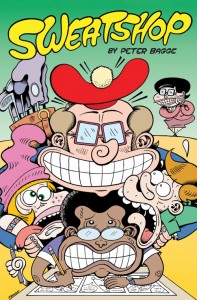 At first, Sweatshop feels more like one of Peter Bagge’s more lightweight, knockabout strips like Batboy or Studs Kirby, and compared to the brilliant Woman Rebel it is, but there’s more substance to the characters in Sweatshop than you’d think. This is perhaps because the situation (a group of ambitious young cartoonists working for a grouchy, reactionary, but famous old cartoonist to produce his well-known but trivial newspaper strip) is one close to the hearts of Bagge and his own team of artists. It’s funny and silly, but also well plotted and with some sharp observations about the world of cartooning as well as human relationships etc; a good book in fact.
 The selection I have was collected by
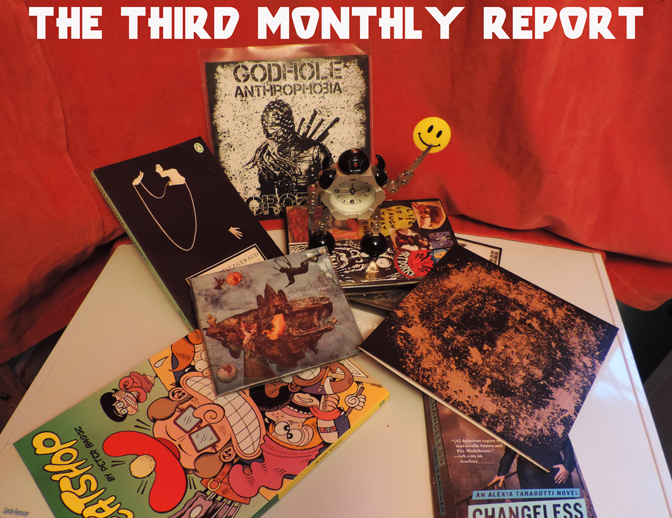
 I had already heard both of these great releases but when I saw that Mind Ripper were selling them on vinyl 7″s ridiculously inexpensively. Anthrophobia is a brilliant meeting of two very different musical personalities, with Godhole’s intensely emotive and strangely catchy powerviolence being distorted almost to the point of non-music by Crozier’s harsh noise; it’s bracing and not at all pretty, but it has a real impact and is worryingly addictive. The same is true of the Godhole EP, although it is relatively more disciplined insofar as it sounds like a band, rather than a catastrophic nightmare.
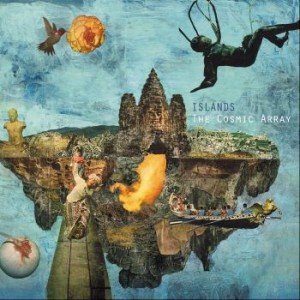 For 99% of the time, a complete contrast with the above (though the second half of Drones is surprisingly noisy and atonal), I was especially impressed by the forthcoming Cosmic Array album because I didn’t expect to like it at all. “Alt country/Americana”, ‘immersive and cinematic’ or not, is not really my thing* but in fact this album brings together a beautifully peculiar space-age melancholy that has (to me) hints of the Flaming Lips, Spacemen 3, My Little Airport and even the BMX Bandits and a sound that is a hybrid of UK indie and alt country (Fire Up The Sky is, strangely, almost shoegaze-alt country; actually, Moose’s XYZ was a great shoegaze/Americana album, so maybe not so strange?). Anyway; the songs are catchy and nice, Paul Battenbough and Abby Sohn are really good, expressive vocalists and it really is a big, widescreen cinematic sound as advertised; so put aside anti-country prejudices (if like me you have them) and give it a listen.

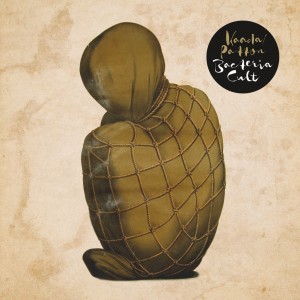 The third collaboration between Mike Patton and John Erika Kaada is, despite the ominous title, an extremely wide ranging and often light-toned (if moody, in the film-soundtrack sense) collection of dramatic and sometimes operatic (but not always melodramatic) pieces, ranging from the strangely Tom Waits-like Papillon to the Morricone-ish Black Albino. It’s a perfectly judged album, Mike Patton’s voice(s) interweaving with the orchestra to create individual pieces that are at the same time short and vast;too involving to be ‘background music’ it really does sound like an epic soundtrack in search of who knows what kind of film.